
 Chimney Repointing: When and How It Is DoneChimney repointing renews the mortar joints between the bricks of a stack. This guide covers the signs that it is…Guide · 10 min read
Chimney Repairs in Crawley
Stack, flashing, flaunching and pots, checked from the roof.
We repair chimney stacks across Crawley and the towns around it: crumbling mortar, cracked flaunching, failed lead flashing, leaning brickwork and redundant stacks. Every job starts with a survey, photos and one written price.

- Survey photos of your own roof
- One written price
- Repairs, re-roofs and emergencies
- Tidy site, waste taken away
Signs your chimney needs repair
- A brown stain on a ceiling below
- Crumbling mortar or sand in the gutter
- Cracks across the flaunching or around a pot
- Flakes of brick face on the roof below
- A stack that leans or looks off-vertical
What our chimney repair service covers
 Chimney repointingLoose mortar raked out and joints filled again, so rain runs off the brickwork on every face of the stack.
 Flaunching and potsCracked mortar collars chipped off and relaid with a fall, with loose pots rebedded so they sit square and stay put.
 Lead flashing and traysFailed flashings and back gutters renewed in lead where the stack meets the tiles, with the tiles dressed back properly.
 Chimney stack rebuildsBulging, leaning or flaking top courses taken down and rebuilt in sound brick, or the whole stack above the roofline.
- Chimney removalRedundant stacks taken down to a planned height, the roof made good, and the open flue closed off and ventilated.
 Cowls and cappingRain caps, cowls and flue covers fitted to pots, or a disused chimney capped with air let through the flue.
Repair, rebuild or remove the stack?
- RepairThe brick is sound, and the fault is mortar, flaunching or flashing.
- RebuildThe brick is flaking or leaning, and you still want the chimney there.
- RemoveNo fire or flue is used, and the stack keeps costing you money.
How a chimney repair runs
- 1Send a photo of the stackPicture the stack from the garden and tell us where the damp or the crumbling shows.
- 2We survey at the stackWe climb to the stack, check mortar, flaunching, pots and flashing, and photograph each fault where it sits.
- 3One total in writingOne written total for the chimney work arrives with the photos and a clear note on what failed and why.
- 4Work, check, final photosWe carry out the work, check the tiles and gutter around the stack, and send the finished photos.
The chimney diary
Inside a chimney repair job
Six stages of chimney work around Crawley, from reading the stack at ground level to the last look at the flashing.
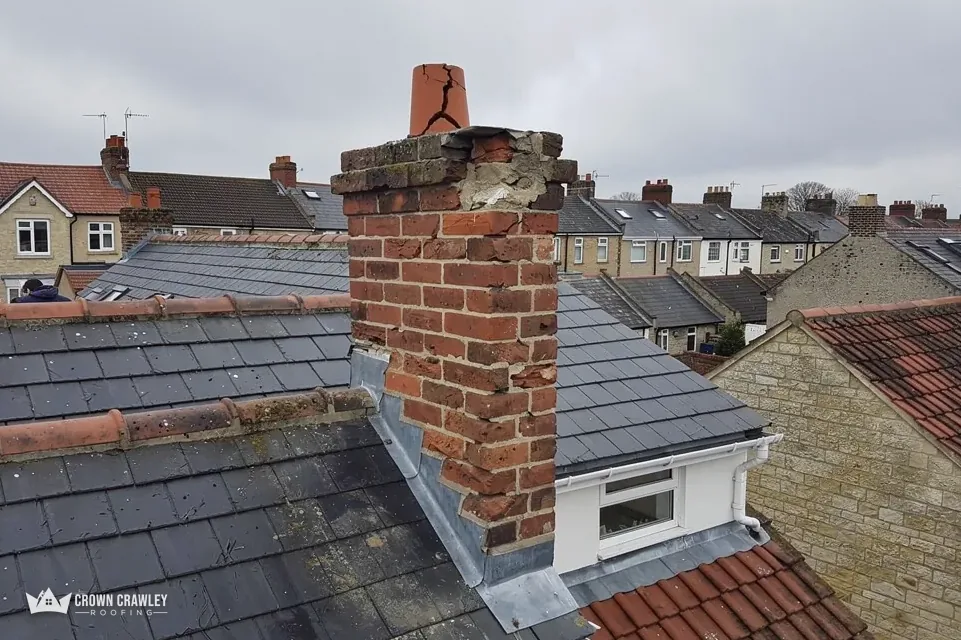
Stage 01 · First look
Chimney repair services in Crawley
The stack is the most exposed brickwork on your house. A damp patch indoors can start there, at the flashing, or beside it.
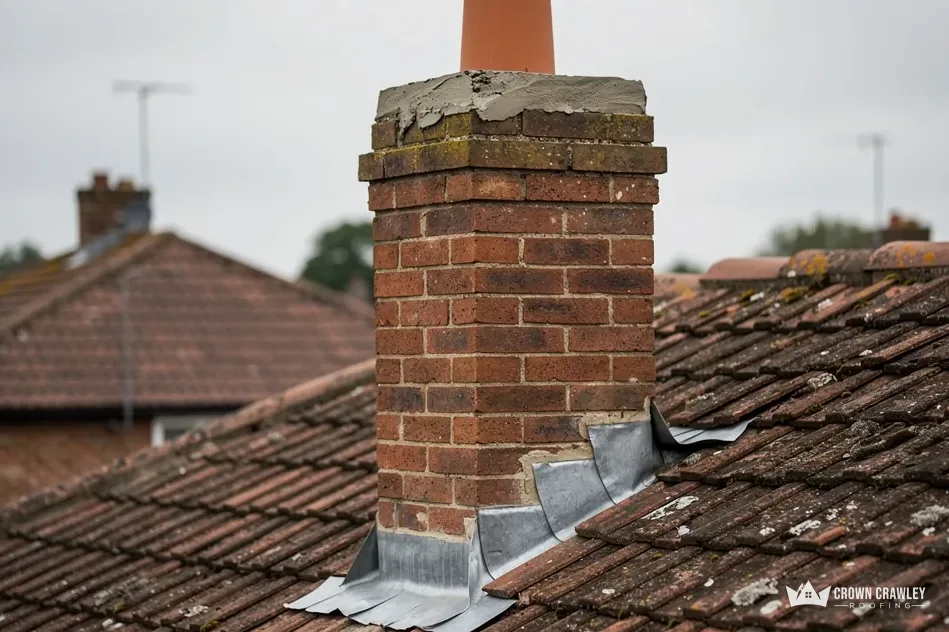
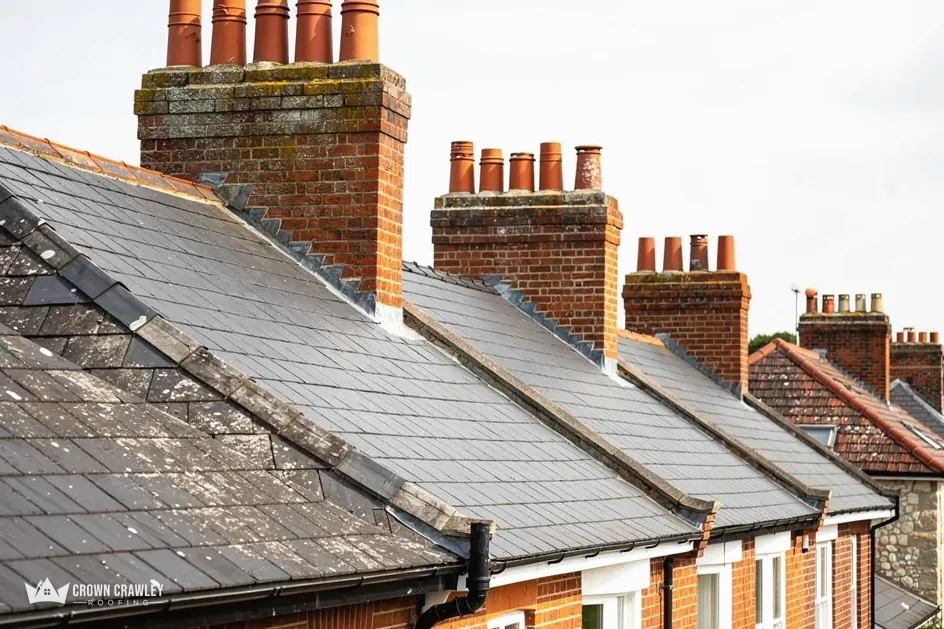
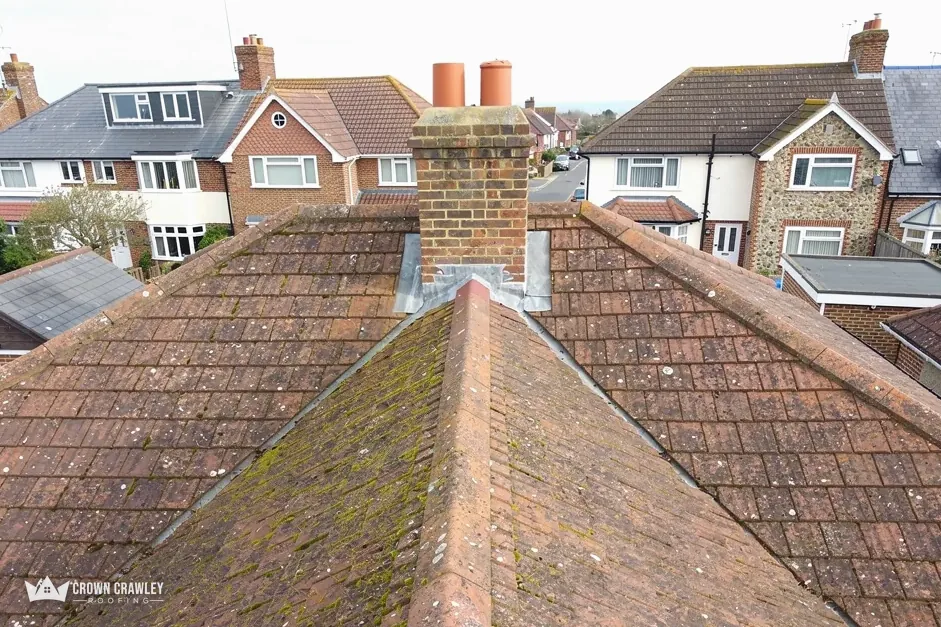
The chimney stack is the part of the chimney that stands above the roof: the brickwork, the sloped mortar collar on top called flaunching, the pots, and the lead flashing where brick meets tiles. Inside the house, the chimney breast is the brickwork that juts into the room. Our chimney repairs in Crawley start at the roof end, because that is where the weather does its damage. A stack has four faces open to rain and wind, sits well above the shelter of the house, and is rarely looked at from one year to the next.
Is the leak coming from the stack, the flashing or the roof?
A brown stain on a bedroom ceiling, or a damp breast in the room below, can have three different sources, and each needs a different repair. Rain can soak through open mortar joints and tired bricks. It can run past a failed flashing and in behind the tiles. Or it can get in through a cracked flaunching and travel down the flue. On a survey we check all three, and the tiles around the stack as well, because a slipped tile beside a chimney often gets the blame that belongs to something else. Binoculars from the garden will often show which of the three you have.
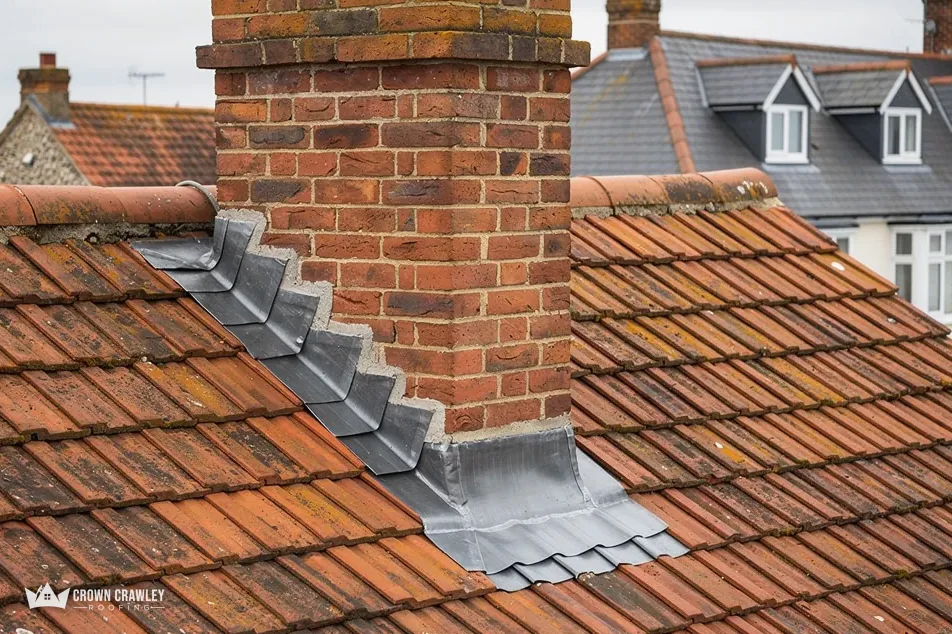
- Chimney pot
- Flaunching on top
- Stack brickwork
- Lead flashing at base
Do I need a sweep or a roofer?
A sweep cleans the flue from inside and can send a camera up it. A roofer works on the outside: brickwork, mortar, flaunching, flashings and the roof around them. If the flue is sooty or blocked, call a sweep. If water is getting in, or the mortar and brick are failing, call a roofer. Some jobs need both in turn, and if a sweep's camera has found a damaged flue, tell us when you send the photos so we plan the work around it.
What chimney work do we carry out?
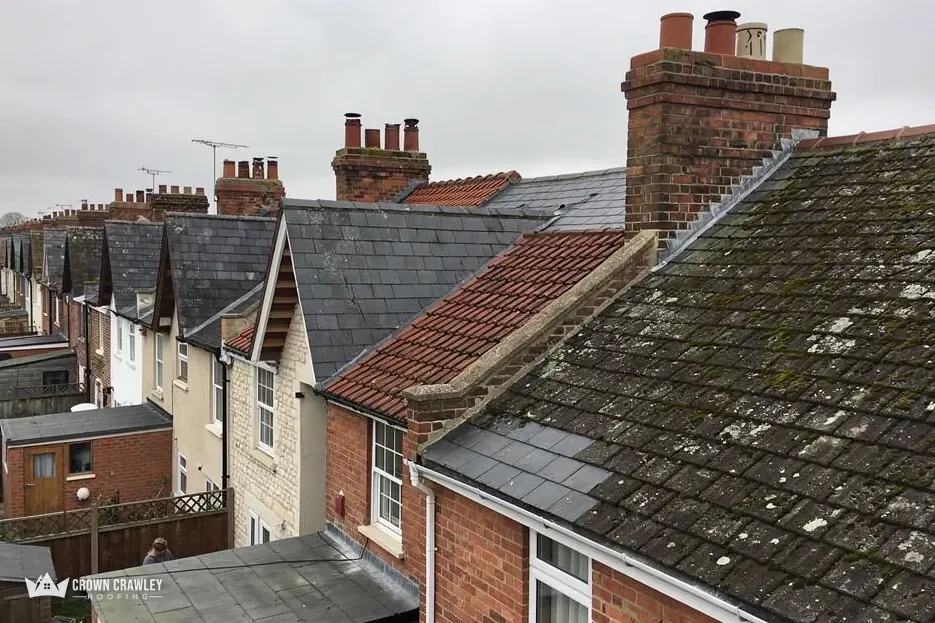
For chimney repairs Crawley homes need most often come down to a short list. We repoint, renew flaunching, replace flashings, rebed pots, fit cowls and caps, rebuild leaning or flaking stacks and take redundant stacks down. We work on houses in every Crawley neighbourhood and the towns within about 30 road miles. Crawley was designated a new town on 9 January 1947 and grew a neighbourhood at a time, so the stack on one street can be a different age and a different brick from the stack on the next. That is why we read your own stack rather than assume anything from the postcode.
Keep reading
Roofs around a chimney also need to work as one piece. If the slope beside the stack has slipped tiles or tired battens, our pitched roofing service deals with those in the same visit, so you hear about the whole area once and pay one total.
Stage 02 · Brickwork
Chimney repointing and flaunching
Mortar is meant to wear before the brick does. On a stack it wears faster than anywhere else on the house.
Repointing means raking the loose and crumbling mortar out of the joints to a sound depth and filling them again, so that rain runs off the brickwork instead of soaking into it. Chimney repointing Crawley houses need follows the weather: a stack's top courses dry out and freeze over and over through the winter, and mortar softens under that treatment first. Nobody can judge mortar from the ground, so we look at it close up before we say a word about price.
How do I know the mortar has failed?
Look for joints that have receded and left a dark line, grit or sand in the gutter, cracks that run through several courses, and bricks that move when pressed. A stack that has been repointed badly in the past shows smeared cement, joints that stand proud of the brick, or a patchwork of different colours. Our guide to chimney repointing explains what the job involves, step by step, and why we match the mortar to the age and hardness of the brick rather than reaching for one mix every time.
What we check on the brickwork
- Joints
- Full depth, no gaps or hollows
- Bricks
- Faces whole, no flaking or cracks
- Flaunching
- Unbroken, falling away from the pot
- Pots
- Square, tight, not rocking in the mortar
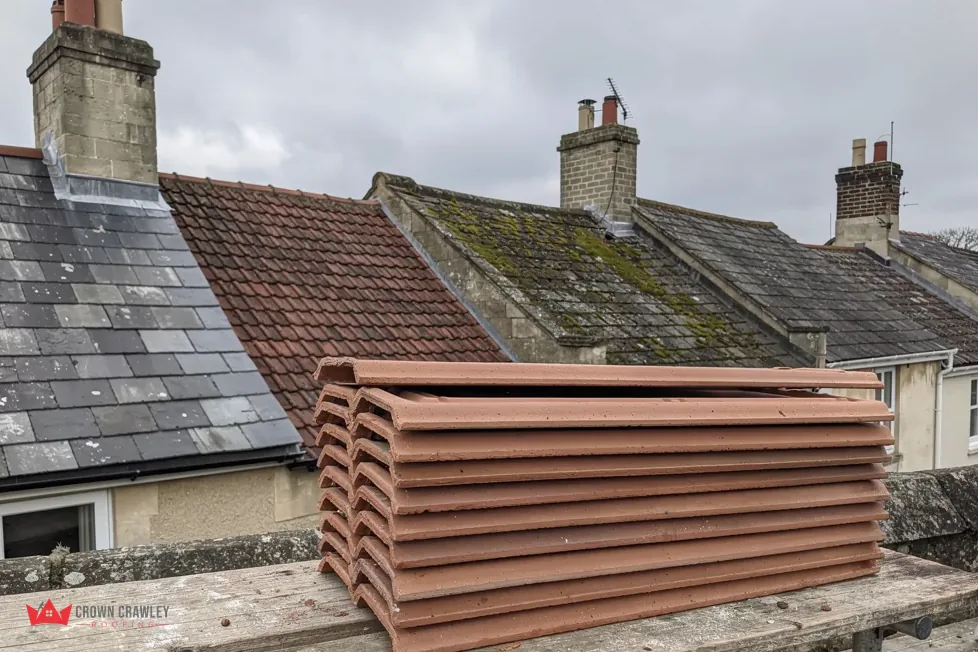
What is flaunching and why does it fail?
Flaunching is the sloped collar of mortar on top of the stack. It holds the pots in place and throws rainwater outward, away from the flues. It takes the worst of the weather, so it cracks first. Once water gets under the collar, frost opens the crack wider each winter, the pots begin to rock, and rain finds a straight route into the stack. The cure is to lift or support the pots, chip off the old collar and lay a new one with a proper fall, then bed the pots back square. Our page on chimney flaunching repair goes through the job in more detail.
Can the brick be saved, or does the stack need rebuilding?
Spalling is when the face of a brick flakes or peels away, leaving a rough, powdery surface. A few spalled bricks can be cut out and replaced. Spalling across the top courses, or joints so far gone that the bricks lie loose, means taking those courses down and laying them again, which is stage four of this diary.
A hairline crack in the flaunching today is a loose pot after a hard frost.
When several of these signs show at once, chimney stack repair Crawley wide usually means mortar first, flaunching alongside it, and a closer look at the brick and the flashing before anyone writes a figure. A repair that treats a single symptom and leaves the cause behind is the one that fails again, which is why the survey covers the whole stack and the slope beside it.
The order of work matters. We clear the old mortar first, brush the joints clean and damp the brick before filling, so the new mortar does not dry too quickly and crack. The flaunching is renewed at the same visit as the repointing, since there is no sense in sealing the sides of a stack and leaving the top open. Afterwards we clear the mortar dust and broken pieces out of the gutter and the valley below, and send you photos of the finished stack from the same angles as the survey.
- £300 to £1,000chimney repointing, April 2026
- Around £750average repointing job, October 2026
- £300small stack on a low roof

Stage 03 · Weatherproofing
Chimney lead flashing and leak repairs
Where a stack meets the tiles, a lead flashing does the sealing. When it lifts or splits, water goes straight into the roof.
A chimney stack punches through the roof, and every join between the brick and the tiles is a place where water can get in. Lead flashing is the sheet metal that seals those joins. It is cut and dressed to follow the slope of the roof, tucked into a joint in the brickwork and held there with wedges and mortar. Chimney flashing repair Crawley houses call for is work we carry out on stacks of every age, and a failed flashing is a frequent reason for a ceiling stain beside a chimney breast.
How is a chimney flashing built?
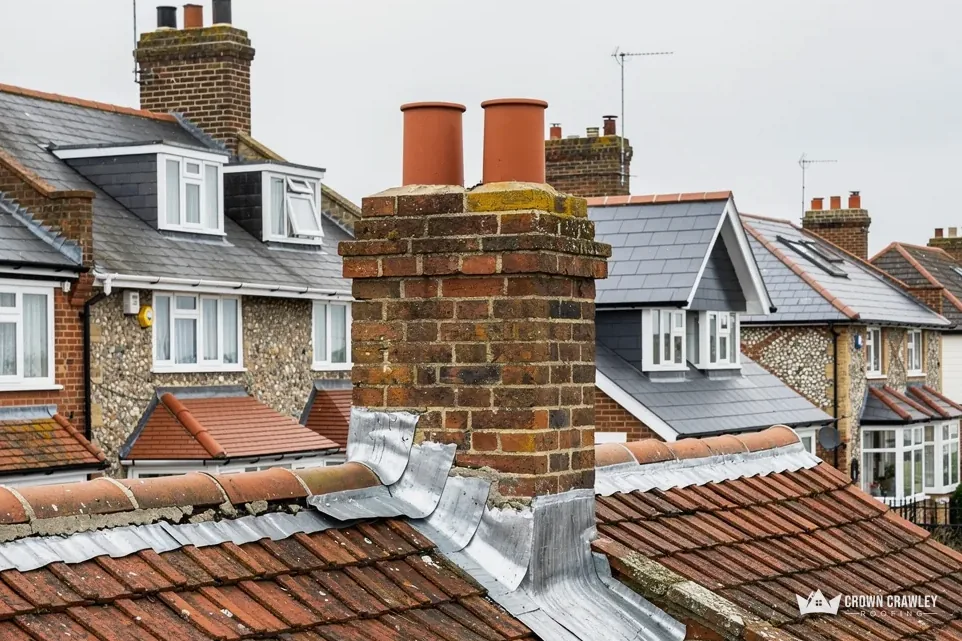
On a stack in the middle of a slope there are four parts. An apron sits across the low side. Stepped flashings climb the two side faces, each step cut into a brick joint. A back gutter sits behind the stack on the high side, taking water round the stack instead of letting it pile up against it. Small lead pieces called soakers are interleaved with the tiles beside the stack. Our page on chimney flashing replacement describes each part, and the same craft is behind our lead work service for abutments, valleys and parapets.
Why does a flashing fail?
The most common cause is the mortar holding it in the brickwork. It crumbles, the lead lifts, and wind drives rain behind it. Others are splits where the lead has been bent too sharply or has moved with the heat of the day, and flashings that were sealed with a bead of mastic that has since cracked and shrunk. Lead itself lasts a long time: MyJobQuote's chimney leadwork guide, updated September 2026, says lead flashing can last for over 80 years. So a failed flashing usually points to the way it was fixed, not the metal, and a good repair rewedges and repoints the joints, not just smears a sealant over them.
Chimney flashing words
- Apron
- Flashing across the low side of the stack
- Step flashing
- Lead stepped up the stack's side faces
- Back gutter
- Channel behind the stack carrying water round
- Soaker
- Small lead piece interleaved with the tiles
- Cover flashing
- Lead tucked into the brick joints
Repair the flashing or renew it?
If the lead is sound and only the pointing has failed, we reset it. If it is split, thin or in poor shape, we renew the section or the lot. Royston's cast lead brochure lists Code 4, 5 and 6 sheet for flashings, with Code 3 recommended for soakers only. For a chimney we choose the code to suit the exposure and the shape of the stack, and the survey notes say which we propose.
On a cost basis, Checkatrade's June 2026 repair table gives £50 to £70 per metre for repairing lead flashing and £80 to £120 per metre for stepped flashing in Code 5, excluding VAT. Those are national guides, not a quote for your stack, and the tiles must be lifted and dressed back after the lead goes in.
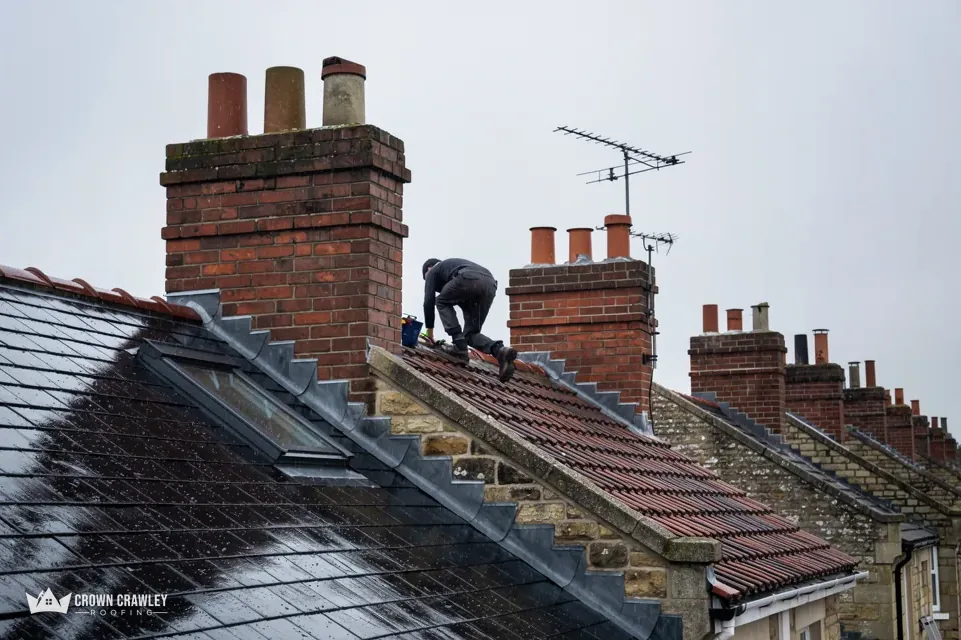
Stage 04 · Big decisions
Chimney stack rebuilds and removal
When the brick has gone, you can rebuild the stack top or take it down. The choice depends on what the chimney is for.
Some stacks are past repointing. The bricks are loose, the top courses bulge, or the whole stack leans away from the house. A chimney rebuild Crawley owners choose follows the same path every time: we survey, photograph the weak points and agree with you whether the answer is to rebuild the stack or remove it. Both start with taking the stack down, course by course, to the first sound brickwork.
When does a chimney stack need rebuilding?
The warning signs are a visible lean, bricks that fall out or rock when touched, wide cracks that run through the stack, and top courses that have pushed out of line. Wind loads the stack from one side, so a lean worsens in each storm, and a stack that falls through a roof can cause serious damage to the house and anyone near it. If we see a risk of that, we tell you plainly, make the area safe and agree the safest route with you before any repair begins. Each course is cleaned, checked and laid again on fresh mortar.
Rebuild or removal checks
- Lean
- Plumb line against the stack
- Brick
- Soft, flaking or loose courses
- Flue use
- Open fire, stove, boiler or none
- Shared stack
- Neighbour's flues in the same brick
Should I take down an unused stack?
If you do not use the fire and there is no boiler or stove flue in the stack, taking it down can end a long list of future repairs. The stack comes down to a height agreed with you, often just above the ridge or the roof slope, and the roof is made good with matching tiles and the flues are sealed and vented. Our guide to chimney stack removal covers the process. Shared stacks, where a neighbour's flues sit in the same brickwork, need agreement from both sides first, and nothing comes down until that is settled.
What permission does a chimney removal need?
Taking out a chimney breast inside the house is different from taking down the stack on the roof. The Planning Portal says Building Regulations approval will always apply when removing chimney breasts, because they are part of the building's structure. For the stack above the roof, ask your council's planning team before you start, and with a listed building you need listed building consent for any work that would affect its character. In Crawley that means Crawley Borough Council's planning team; elsewhere, the council for your address. We say at the survey whether we expect approval to be needed, and the written price tells you what we have allowed for.
A stack nobody uses still faces every gale, so it needs a decision, not neglect.
Chimney removal Crawley households book tends to be a tidy job. We take the stack down by hand, brick by brick, lower the debris to a chute or sheeted area and take the waste away with us, so the garden stays usable. Roofers also make the slope weathertight at the end of each day, because a half-removed stack is open to rain. The tiles around the old position are relaid to match, and the flues below are left closed, vented and photographed for your records.
Costs follow the same logic as the work. Checkatrade's October 2026 chimney removal guide gives £260 to £340 per metre of stack and around £1,800 for a typical project, with a removed chimney breast around £2,500 where the stack stays. A rebuild above the roofline appears in Checkatrade's repointing guide at £1,000 to £3,500. The number of courses, the height, the access and what the brick is made of decide where your stack falls in those ranges.
- £1,000 to £3,500rebuild above the roofline, October 2026
- £260 to £340per metre, stack removal, October 2026
- Around £1,800typical stack removal project
Stage 05 · The top
Capping, cowls and venting disused flues
Pots, cowls and caps keep rain, birds and downdraught out of the flue. A capped chimney still needs air moving through it.
The top of a chimney is where small parts do big jobs. A pot gives the flue an outlet. A cowl sits over the pot to shed rain and calm a draught that gusts. A cap closes off a flue that will never be used again. Chimney cowl Crawley work is usually a quick job once we are on the stack, and the right choice depends on what lies below it, so we ask about the fireplace before we suggest anything.
Which chimney pot or cowl suits my flue?
That depends on what burns beneath. An open fire needs a pot that lets smoke out freely, perhaps with a cowl that keeps rain out without choking the draught. A wood-burning stove has its own needs, and the stove's installer should advise on what the manufacturer calls for. A gas fire may sit on a flue with a liner and a terminal that a gas engineer has specified. We fit or replace the part, but we do not change anything that affects how an appliance burns without the appliance engineer's say-so.

How do you cap a chimney you no longer use?
Capping a disused chimney means closing the top of the flue so rain, birds and debris cannot get in. Done badly, it traps damp air in the flue and the moisture comes out through the chimney breast, which shows up as stains and a musty smell on the wall indoors. So the cap is not a sealed lid. A vented cap, or a vent fitted low in the room, lets air pass through. Our guide to capping a disused chimney explains how the pieces go together.
What about birds and bats in the chimney?
If a bird has built a nest in the pot, wait. It is an offence to intentionally take, damage or destroy a wild bird's nest while it is in use or being built, so we plan the work around it. For bats, government guidance lists repairing or replacing a roof among the activities that can affect them, and bats and their roosts are fully protected, so if we see signs of one we stop and talk to you before going further. A bird guard fitted once the nest is empty prevents a repeat.
Pot and cap words
- Chimney pot
- Clay or metal outlet sitting on the stack
- Cowl
- Cover that sheds rain and steadies draught
- Rain cap
- Simple lid above an unused flue
- Bird guard
- Mesh stopping birds nesting in the pot
- Vented cap
- Cap with gaps that let air through
Where the old fireplace has been blocked up inside, ask whoever did it whether a vent was fitted. If not, tell us on the survey. We look for it and can often fix it from the roof end.
Pots do wear out. A cracked clay pot can drop pieces into the flue or onto the roof, and a loose one can come off in a gale. We replace like for like where the pot is part of the look of the street, and we show you the old one before it goes in the skip.
Stage 06 · Pricing
Chimney repair costs and access
A chimney repair costs what it takes to reach the stack safely, plus what is found when we get there.
Our written price for chimney work is one total, set after the survey. Four things move it every time: how we reach the stack, how tall and exposed it is, how much needs doing, and what lies under the first layer of damage. The chimney itself is often the smaller part of the bill. Reaching it safely is the larger part.
How much do chimney repairs cost in the UK?
Checkatrade's chimney repair guide, with a table dated April 2026, gives flashing repair at £250 to £1,000, repointing at £300 to £1,000 and a new cap at £180 to £520. Its October 2026 repointing guide puts a typical job at around £750, with a small stack on a low roof at about £300 and a mid-terrace ridge stack needing scaffold at about £1,000. For lead alone, MyJobQuote's September 2026 guide gives £350 to £460 without scaffold and £700 to £920 with it. These are national guides, not our prices. Use them to sense-check a quote, high or low, but they cannot price your stack.
Four things behind the figure
- Access
- Roof ladder, tower or scaffold
- Height
- Low roof or tall ridge stack
- Extent
- Patch repair or whole stack
- Findings
- Brick and flashing condition
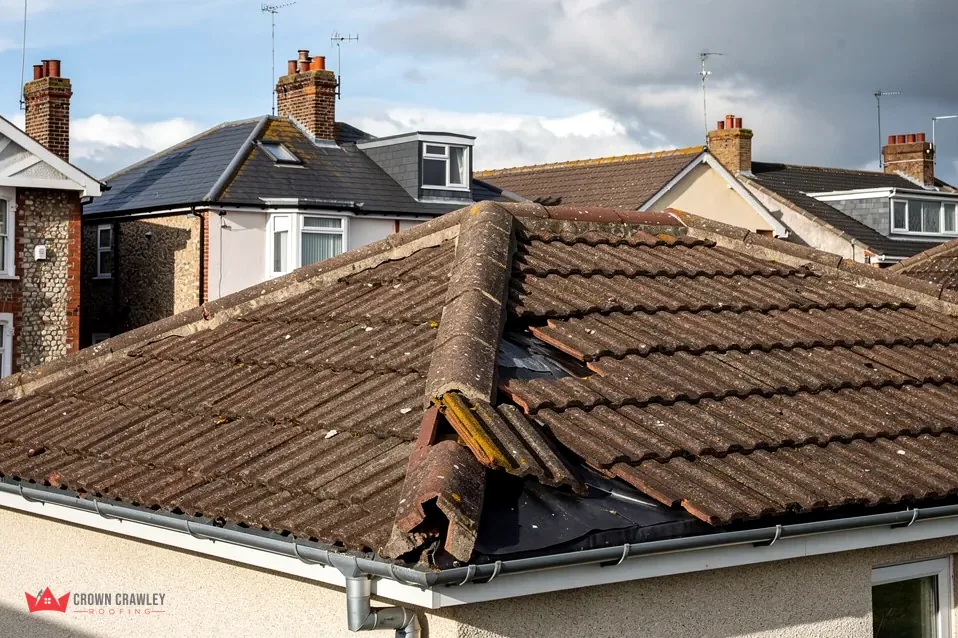
Can a chimney be repaired without scaffolding?
Sometimes. A small stack on a low roof, reached safely from a roof ladder or tower, may not need full scaffold. A tall ridge stack on a two-storey house usually does. Safe access protects the people working and the roof they stand on, and it gives room to do the job without rushing. Checkatrade's repointing guide, October 2026, gives about £300 for a low stack and about £1,000 for a mid-terrace ridge stack needing scaffold. Our page on scaffolding for chimney repair shows how the options compare.
Does scaffold on the pavement need a licence?
Scaffold on the pavement or road needs a scaffold licence from the highway authority; on private land it does not. For a Crawley address that is West Sussex County Council, whose licence page lists £266 for one month and asks for at least 10 working days' notice. Ask who applies for the licence, and whether the fee sits inside the price. Check whether any quote includes VAT as well.
When the survey cannot see something, such as the inside of the stack or the timber under old lead, our price names what we will inspect once the work is open, and nothing extra goes ahead until you have agreed it. To get a price, send a photo of the stack from the garden, tell us where the damp or crumbling shows and say how many storeys the house has. That tells us what access to plan.
Keep reading
The same logic applies to a small job. A quick flaunching repair on a low stack is a different price from the same repair on a ridge stack above a three-storey terrace, even though the mortar is identical. Access is the difference, and we explain it with the quote.
Typical UK prices for chimney work
| Work | Guide price |
|---|---|
| Chimney flashing repair | £250 to £1,000 |
| Chimney repointing | £300 to £1,000 |
| New chimney cap | £180 to £520 |
| Rebuild above the roofline | £1,000 to £3,500 |
Figures above are UK guides and belong to Checkatrade, not to us. Our own price is a single written total, set after the survey and photos of your stack.
Checkatrade cost guides: chimney repair, April 2026; chimney repointing, October 2026; chimney removal, October 2026.
Chimney repair guides and answers
Longer guides and quick answers on mortar, flashings, rebuilds, caps and cowls, for anyone weighing up work on a stack.
Guides and posts
Chimney Repointing: When and How It Is DoneChimney repointing renews the mortar joints between the bricks of a stack. This guide covers the signs that it is…Guide · 10 min read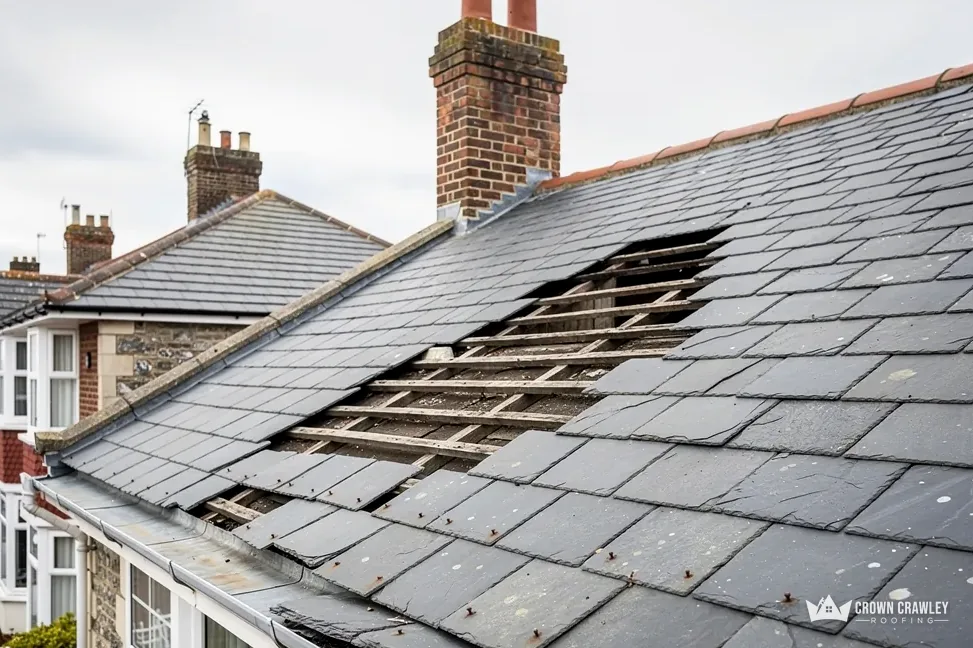 Chimney Flaunching RepairFlaunching is the sloping mortar collar that holds chimney pots in place and sheds rain off the top of a stack. This…Guide · 10 min read
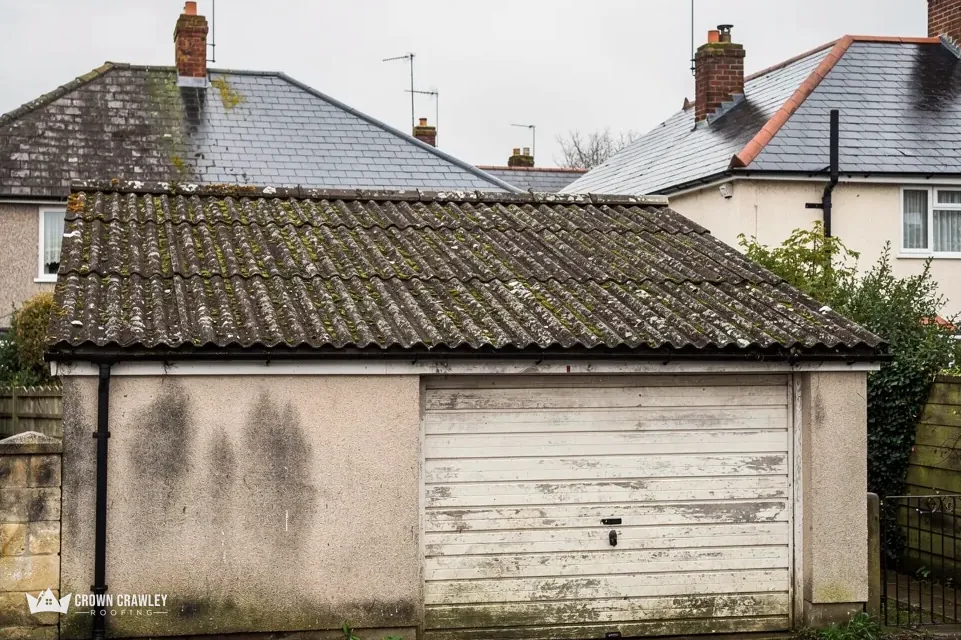 Chimney Stack Removal: What Is InvolvedTaking down a chimney stack that nobody uses removes a maintenance burden but changes the roof and the house. This…Guide · 10 min read
 Capping a Disused ChimneyA chimney nobody uses can still soak a bedroom wall. This guide explains how rain and trapped air cause the damage…Guide · 10 min read
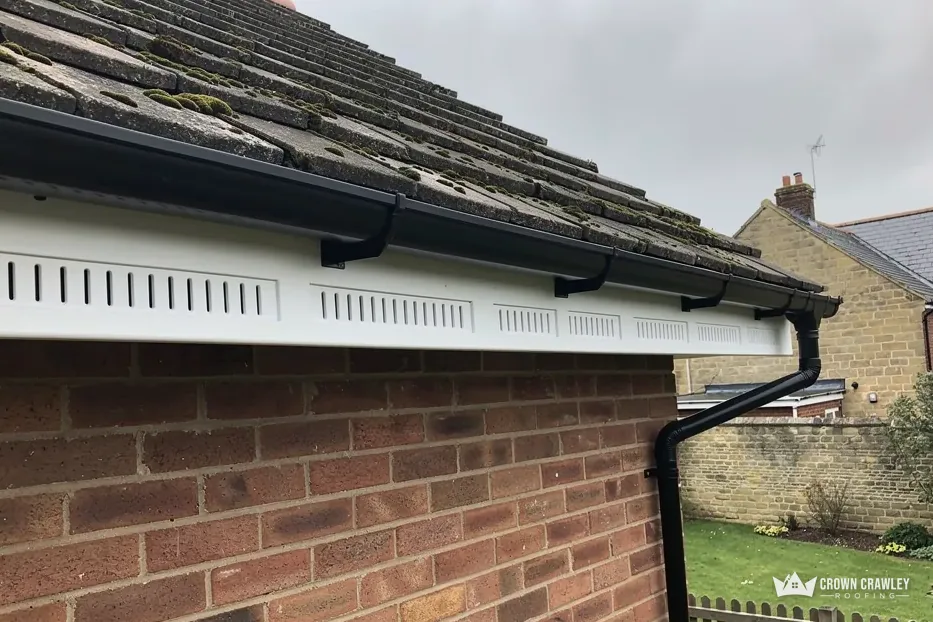 Chimney Pots and Cowls: Which Type Do You Need?Not every cowl solves every problem, and the wrong one can make smoke worse. This guide sorts the main types by what…Guide · 10 min read
 Leaning Chimney Stack: Causes and FixesA stack that leans has lost its grip somewhere between the chimney pot and the roof. This guide covers how to check a…Guide · 10 min read
 Rebuilding a Chimney StackSome stacks are past repointing. This guide explains how a roofer decides that a rebuild is the better buy, and what…Guide · 9 min read
 Damp on a Chimney Breast: Finding the SourceA brown patch on the chimney breast is a clue, not a diagnosis. This guide helps you work out whether the water comes…Guide · 9 min read
 Scaffolding and Access for Chimney RepairsHow a roofer reaches your chimney sets how safe the job is and much of the bill. This guide sets out the options, the…Guide · 9 min read
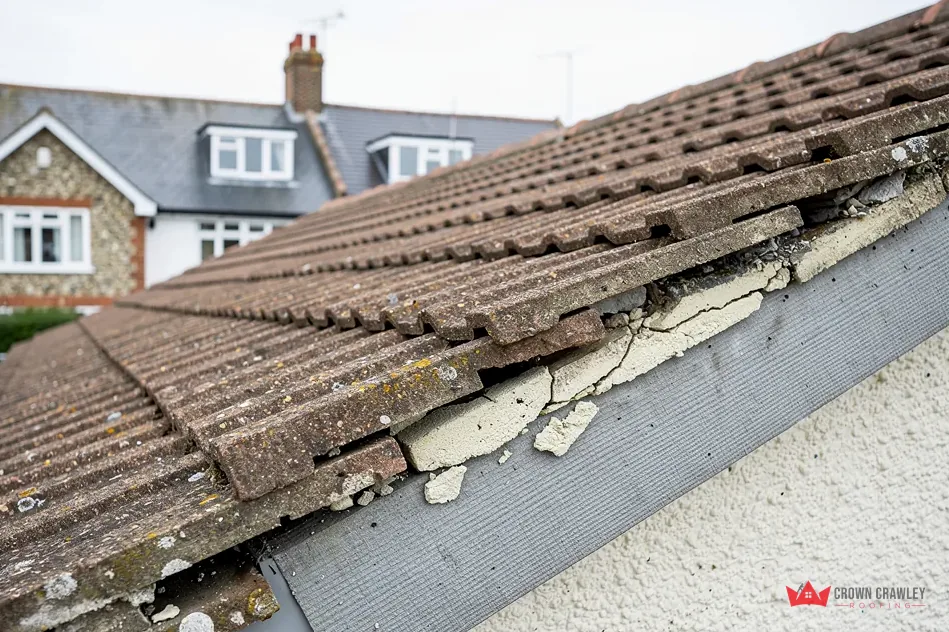 Chimney Repairs on Listed and Older BuildingsAn old chimney is repaired with different questions in mind: what is original, which mortar suits it and who has to…Guide · 10 min read
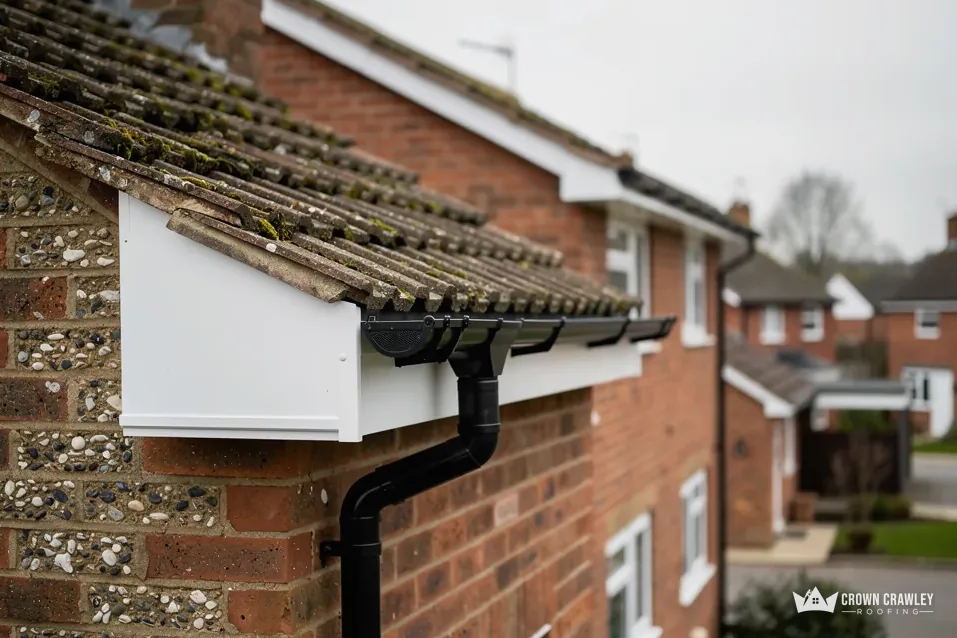 Chimney Flashing ReplacementWhere a chimney meets the roof, the lead is the only thing between rain and your ceiling. This guide explains each…Guide · 9 min read
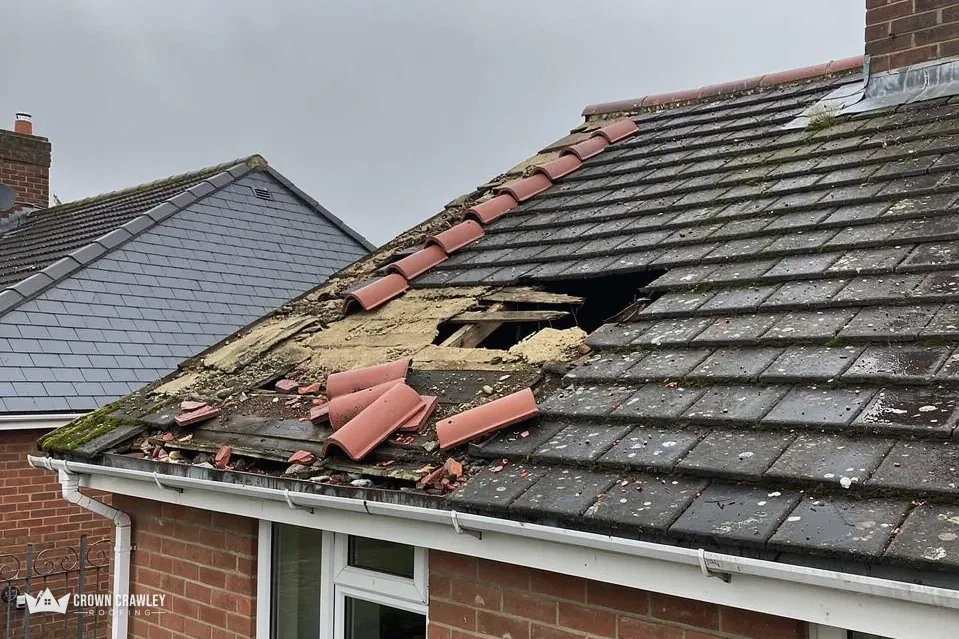 Chimney Leaks: Flashing, Flaunching or Stack? How to Find the CauseRain can enter a chimney through the flashing, the back gutter, the flaunching, the brickwork or the pots. Here is…Blog · 9 min read
Quick answers
- How Much Does a Chimney Repair Cost?
- Can a Chimney Be Repaired Without Scaffolding?
- Do You Need Permission to Remove a Chimney?
- How Long Does Chimney Repointing Take?
- What Are the Signs a Chimney Needs Repair?
- Cracked Chimney Pot: Replace or Remove?
- Birds Nesting in Your Chimney: What Can You Do?
- Chimney Breast Removal and Building Regulations
- Who Repairs a Shared Chimney Stack?
- Why Are My Chimney Bricks Spalling?
- Do Chimney Waterproofing Sprays Work?
- Chimney Problem: Call a Sweep or a Roofer?
- Why Does a Capped Chimney Need Ventilation?
- Can You Lower a Chimney Stack?
- Does Home Insurance Cover Chimney Repairs?
- What Are the White Marks on My Chimney Bricks?
- Can a TV Aerial Damage a Chimney?
- Can Chimney Repairs Be Done in Winter?
- Does a Gas Fire Need a Chimney Liner?
- Should a Chimney Be Repointed in Lime Mortar?
Related services
 Pitched roofingOur pitched roofing service covers tiled and slate roofs across Crawley and Sussex: slipped tiles, tired battens…
 Lead workOur lead work covers chimney flashings, step flashings, valleys, back gutters, bay and porch tops, dormer cheeks and…
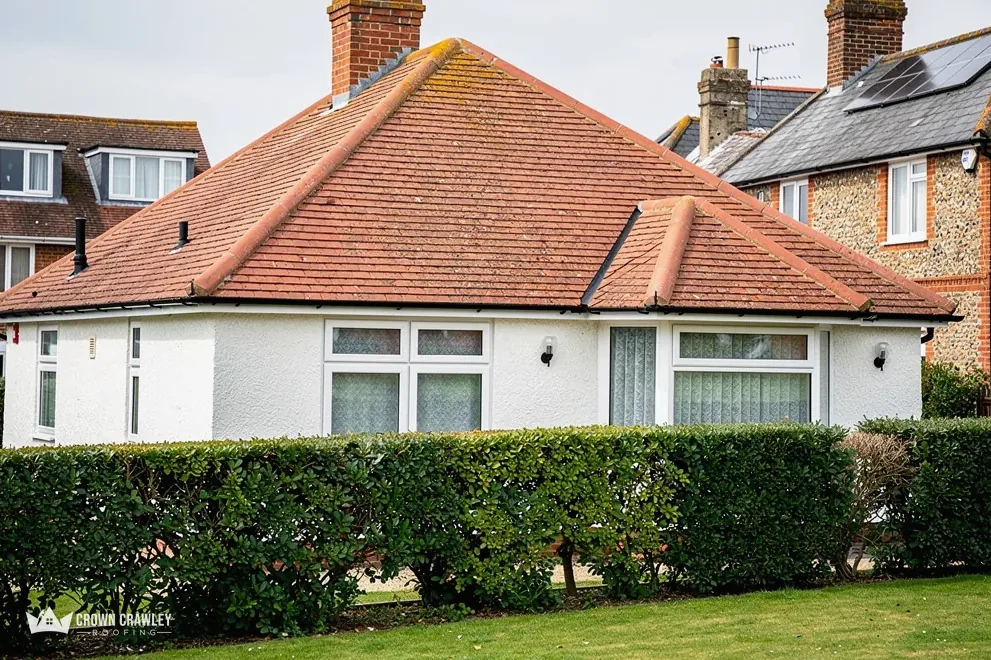 Dry ridge & dry vergeOur dry ridge work in Crawley covers loose ridge tiles, failing verge mortar, rattling verge caps and full dry-fix…
Chimney repair questions
How much does chimney repointing cost?
Checkatrade's guide, updated October 2026, puts an average job at around £750, with a small stack on a low roof at about £300 and a mid-terrace ridge stack with scaffold at about £1,000. Its April 2026 repair table gives £300 to £1,000. Height, access and the extent of the loose mortar decide where yours falls, and the written price follows the survey.
Can a leaking chimney be fixed without scaffolding?
A low stack that a roof ladder or tower reaches safely can be, and so can a small flashing patch. A tall stack on a two-storey house usually needs full scaffold, because working at that height needs safe footing and room. We tell you at the survey which applies, and the one written price already includes the access we choose.
Is it worth removing a chimney stack I never use?
It can be, when no flue serves a fire, stove or boiler and the stack keeps needing repairs. Checkatrade's October 2026 guide gives around £1,800 for a typical removal project. A shared stack needs your neighbour's agreement first, and the flues left below the roof must be closed and vented, so we look at the whole picture before advising.
Do I need permission to take a chimney down?
Removing a chimney breast always brings Building Regulations into play, says the Planning Portal. For the stack above the roof, check with your council's planning team before work starts. A listed building needs listed building consent for work affecting its character. We say at the survey whether we expect approval to be needed, and the written price shows what we allowed for.
Can older or listed houses have their chimneys repaired?
Yes, but the method changes. Old soft brick and lime-based mortar may call for a gentler repair than a modern stack, and a listed house needs listed building consent for work that affects its character. Part of Ifield lies in a conservation area too. Check with Crawley Borough Council's planning team first, and tell us the age of the house when you send photos.
How long does a chimney repair take?
A flashing or a patch of flaunching can be a short visit, while repointing a whole stack or rebuilding the top courses takes longer, and wet or windy weather can pause the work. The survey gives you the plan for your stack. You hear from us each day, and the roof is left weathertight every evening.
Show us the stack that worries you
Photograph the stack from the garden, note where the damp or crumbling shows, and count the floors of your house for us.