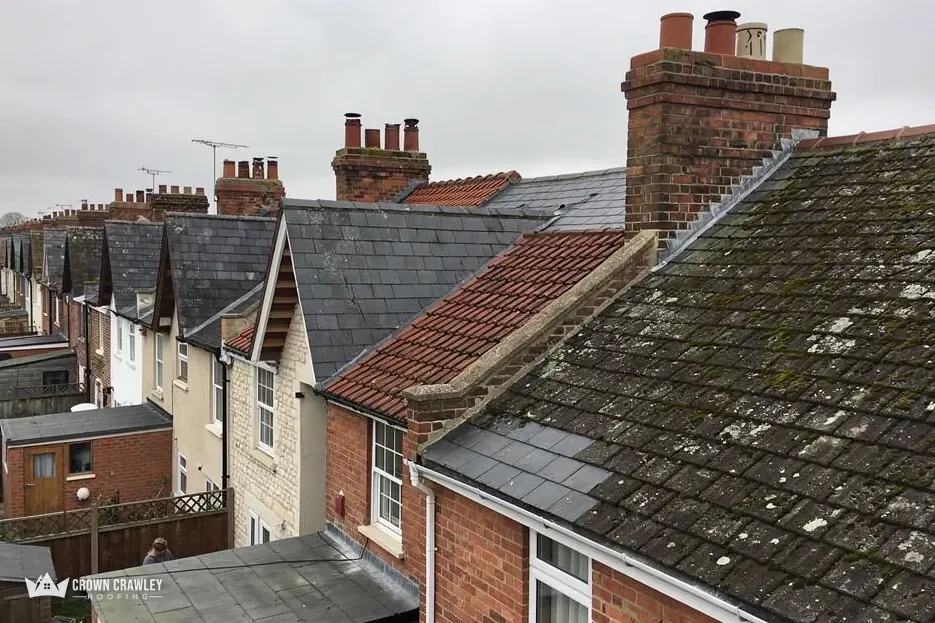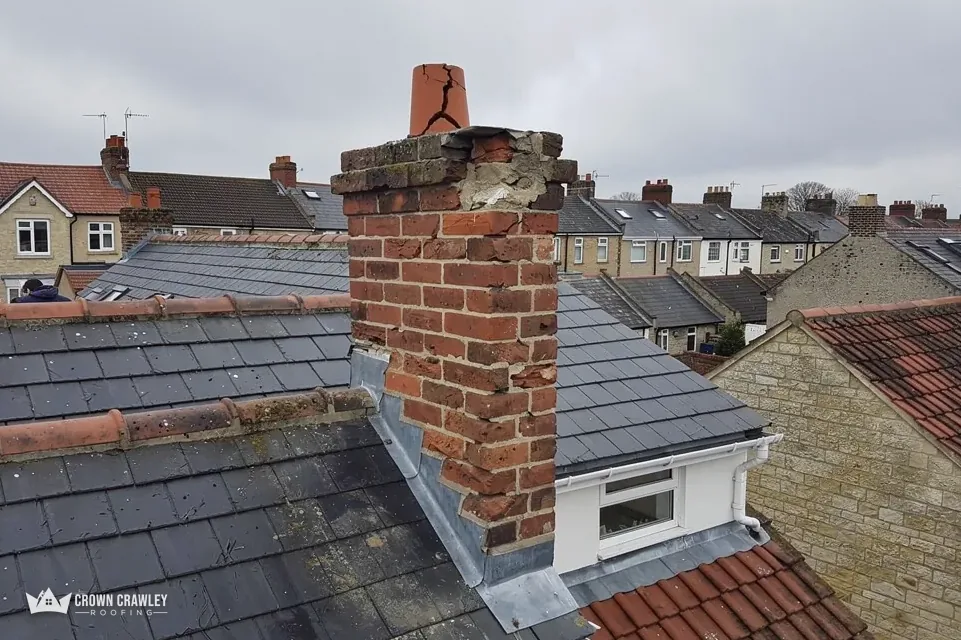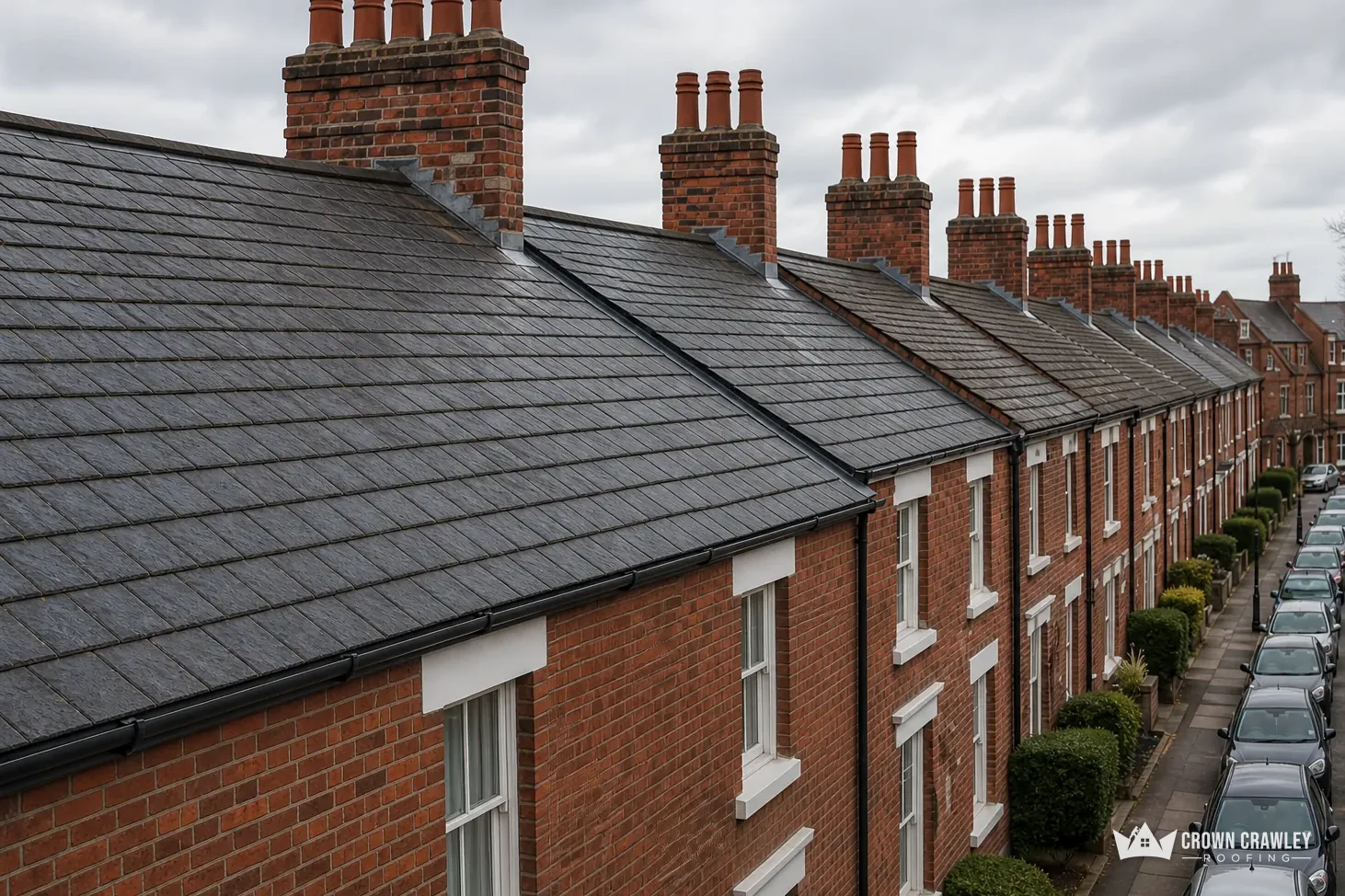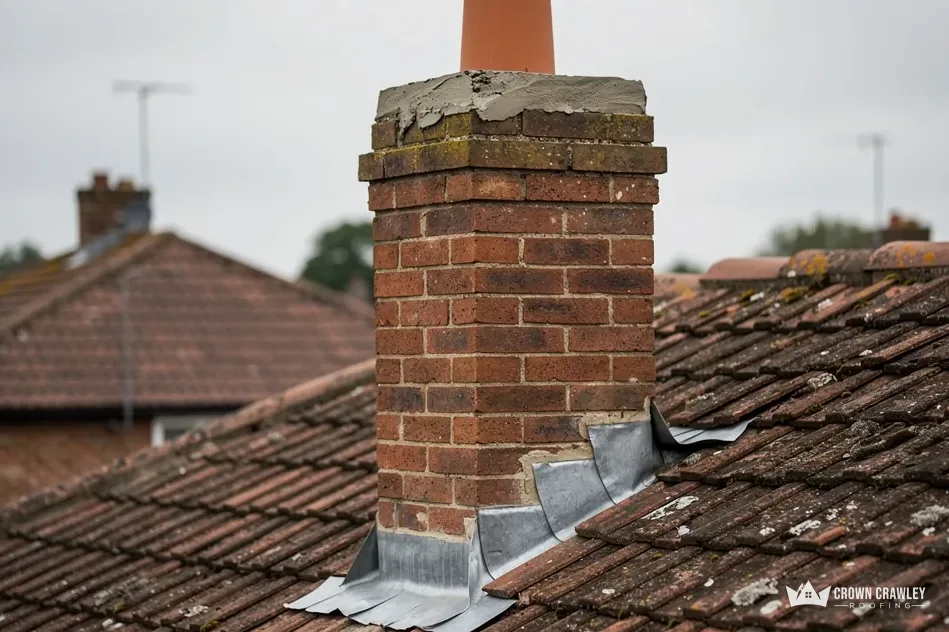
Look along a roofline and the chimneys look alike, but the tops are anything but. Some pots are bare clay, some wear a metal hat, a few sport a little spinning cap, and plenty have a wire dome pushed on by whoever last had the sweep round. Each of those fittings does a different job, and each can turn out to be a mistake on the wrong flue.
The pot is the clay or metal tube at the very top of the stack. Its purpose is to lift the flue outlet clear of the brickwork and give the smoke a clean exit. A cowl is the cover or fitting placed over it. Cowls exist to keep out rain, stop birds getting in, calm a gusty draught or help a sluggish one. Which of those you need turns on what burns below. This guide goes through the main types, shows which flues they suit, explains how they are fixed and what to check on the pot itself, and gives a national price to expect. For the wider job of looking after the stack, start with our chimney repairs page.
What a pot and a cowl each do
Before choosing a cowl, it helps to see what the bare pot is already doing and what it leaves undone.
Why is there a pot at all?
A pot raises the outlet above the flaunching, the mortar collar that holds it in place, and gives the flue a smooth, round mouth. Without one, smoke would curl out across the top of the brickwork and stain it. On an open fire the pot also helps the flue keep a steady draw. Old pots vary in height and shape, from short round ones to tall tapered and decorative ones, and the cowl you can fit depends partly on what is already there.
What does an uncovered pot leave open?
Three things. Rain can run straight down the flue, birds and squirrels can climb in, and wind can push air down the flue against the smoke, which sends it back into the room. Each cowl type deals with one or more of those weaknesses and leaves the others alone. Much of the trouble people have with cowls comes from asking one fitting to solve a problem it was never designed for.
Does an unused chimney need one too?
Yes, though the choice is different. A flue nobody uses has no warm air rising through it, so water that gets in stays in. We deal with that case in detail in our guide to capping a disused chimney, where ventilation matters as much as the cover.
One more point on terms. People use cap, cowl, hood and terminal as if they were the same thing, and roofers use them loosely too. When you ask for a quote, ask the roofer to say which type is going on, what it does and what material it is made from.
Rain caps and bird guards
These are the simplest fittings and the ones most often found on roofs that have been left alone for a while.
What does a rain cap do?
A rain cap is a roof held above the flue outlet on short legs, so smoke escapes sideways while rain falls on the roof and runs off. It comes as a metal hood, a clay pot with a pitched or flat top, or a slate or tile slab set on supports. It suits an open fire or a solid-fuel stove that is in regular use, and it keeps a flue dry in the months it sits cold. A rain cap does not stop a downdraught, though, and a badly proportioned one can gather soot.
How does a bird guard differ?
A bird guard is a mesh cage or dome that fits over the pot. It lets smoke through but keeps jackdaws and pigeons from building in the flue, and a nest in a flue can block it and send smoke or fumes back into the room. A guard on its own lets rain in. Many householders pair a guard with a rain cap, or buy a cap with an integral mesh. The mesh should be generous enough that soot does not clog it, which is a reason to have it checked when the flue is swept.
What if birds are already nesting?
Leave them be. The Wildlife and Countryside Act 1981 protects an occupied nest from deliberate interference, so the guard goes on after the young have flown. Our page on replacing a cracked chimney pot covers what else to look at while you are up there, since a guard needs a pot that is sound enough to hold it.
Anti-downdraught cowls: calming a gusty flue
Smoke that puffs back into a room on a windy day is the classic sign of a downdraught. It happens when wind swirling around the roof, a nearby tree or a taller neighbouring building pushes air down the flue faster than the fire can send it up.
How does an anti-downdraught cowl work?
It is a fixed fitting shaped to deflect the wind. Most are a cylinder with a conical or domed top and slots or louvres around the side. Wind that hits it is turned up and over, and the slots let smoke leave from whatever direction the air is moving. Nothing inside it turns, so there is little to wear out.
Which flues is it best for?
Open fires and stoves in exposed spots, or houses where a taller building or tree sits close by and distorts the airflow. It does the job of a rain cap as well, since the top is closed. On a stove it can also help the flue keep a steady pull in changing weather.
What are its limits?
It cannot fix a flue that is too short, a room that has no air supply, or a fireplace that was never designed to draw. If smoke still enters the room on calm days, the cowl is not the cause, and your sweep or a stove installer should look at the flue height, the room ventilation and the lining. A cowl is also no substitute for repairing a cracked or leaning pot, and the fitting should never be used to hide one.
Cannot tell whether wind, a blocked flue or an undersized one is behind it? Tell us when the smoke comes back: in wind, in a particular direction, or all the time. That detail narrows the cause much faster than a general description.
Spinning cowls: when a rotating head earns its place
A spinning cowl, sometimes called a rotating or wind-driven cowl, uses a vane or a set of blades on a pivot. It turns to face the wind so that its outlet always points away from it.
What does a spinning cowl do well?
It helps in places where the wind direction changes a lot, such as a roof sitting on a ridge or beside a larger building. As it turns, it can draw smoke upward. The effect is real on open fires and some stoves, and it is why such cowls are common on older houses with downdraught problems.
What are the drawbacks?
Moving parts wear. The bearing in the head can seize with soot and weather, and a seized cowl faces one way and gives no protection when the wind changes. Others rattle or squeak in a gale. Soot clogs the vanes too. A spinning cowl needs inspecting when the flue is swept, and it may need replacing sooner than a fixed one. For some households the extra upkeep is worth it, and for others a fixed anti-downdraught cowl is the sensible choice.
Is a spinning cowl allowed on any chimney?
Not on every one. In a conservation area or on a listed building, the look of the stack matters, and a modern metal head can be unwelcome. Ask the council's planning team before fitting anything that changes the appearance of a listed or protected house. Where the stack is shared or sits on a boundary wall, tell the roofer before any work is priced, because neighbours may be affected.
Gas flues, liners and capped chimneys
The right cowl depends on what the flue serves. Getting this wrong can be dangerous, so treat this section as the one to read twice.
Can any cowl go on a gas flue?
No. A flue serving a gas fire or boiler works with a particular terminal or cowl chosen for that appliance, because the combustion products must leave freely. A rain cap, mesh or cowl that restricts the outlet can create a hazard. Do not fit one over a gas flue without a qualified gas engineer confirming it is suitable. The same goes for a liner, the sleeve that carries the flue gases; our separate liner page for a gas fire covers that.
What suits an open fire or a wood burner?
An anti-downdraught cowl or a rain cap with a wide, open outlet. Solid fuel makes more soot and tar than gas, so any fitting must be easy to reach and clean, and the mesh on a bird guard needs to be coarse enough not to clog. If a stove has a metal liner, the terminal belongs to the stove installation and should be left to match it.
What about a flue that is no longer used?
The answer there is a vented cap that keeps rain out and lets air move through, not a solid cover. Sealed flues hold damp. We explain the whole arrangement in the guide to capping a disused chimney.
Whatever the flue, a cowl is only as good as the pot underneath it. A cracked pot, or flaunching that has crumbled, cannot carry a heavy fitting through a gale, so the pot gets checked before anything is put on top.
Materials, fixing and what a cowl costs
Cowls come in clay, terracotta, galvanised steel, stainless steel and copper. Clay and terracotta suit period roofs and last well, though they are heavy and can crack from frost. Stainless steel resists weather and soot and is often chosen for stoves. Galvanised steel costs less and ages sooner. Copper looks good but changes colour and costs more.
How is a cowl fixed?
Most metal cowls clamp or strap to the outside of the pot, sometimes with a bracket that tightens on the rim. Clay cowls sit on the pot or are bedded into fresh flaunching. Whichever way it goes on, the fixing must be strong enough for a gale. A cowl on a loose pot is a falling hazard for the people below, which is why the pot and flaunching are checked first. Our page on chimney flaunching repair explains the collar.
What does it cost?
Checkatrade's chimney repair cost guide (April 2026) gives £180 to £520 for a chimney cap. Cowl types sit within or around that range depending on material and design, so expect the fitting to cost less than the access. A stack on a tall house may need scaffold, and Checkatrade's repointing table (October 2026) names about £1,000 for a scaffolded stack on a mid-terrace ridge. These are national figures, so confirm VAT is included and ask for one written total after the survey.
To choose well, send us a photo of the stack and tell us what the flue serves: open fire, stove, gas or nothing. We check the pot, flaunching and brickwork first, then match the cowl to the flue.
Part of our Chimney Repairs in Crawley
Cowl and pot questions
Why does my chimney smoke back into the room on windy days?
Wind swirling around the roof or a nearby tree can push air down the flue faster than the fire sends smoke up. An anti-downdraught cowl often helps. If smoke also returns on calm days, look at flue height, room ventilation and the lining instead.
Do I need a cowl on a chimney that has a gas fire?
Not necessarily, and the wrong one can be dangerous. A gas flue needs a terminal chosen for that appliance, so ask a qualified gas engineer before anything is fitted. A roofer can repair and flash the stack, but should not choose the outlet for a gas appliance, and nor should you guess.
How often should a chimney cowl be checked?
Look at it whenever the flue is swept, and again after a severe storm. Spinning heads need the most attention because the bearing can seize. Check the fixings, the mesh for soot build-up, and the pot beneath for cracks or loose flaunching, then photograph anything odd.