Roofers in Bewbush

Roofs on a neighbourhood begun in 1974 on Crawley's western edge.

Bewbush was begun in 1974-5, its first houses were occupied in 1976 and building was still going on in 1985. We read each roof before we price it in writing.

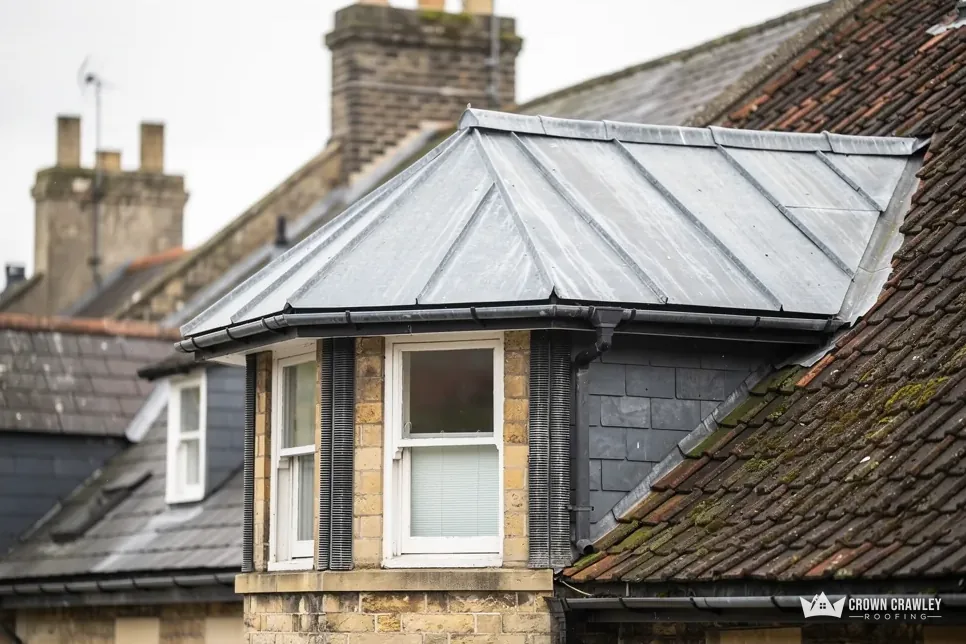
Lead-covered bay roof and chimney stack on a slate and tile roof

Bewbush roofs, house by house and flat by flat

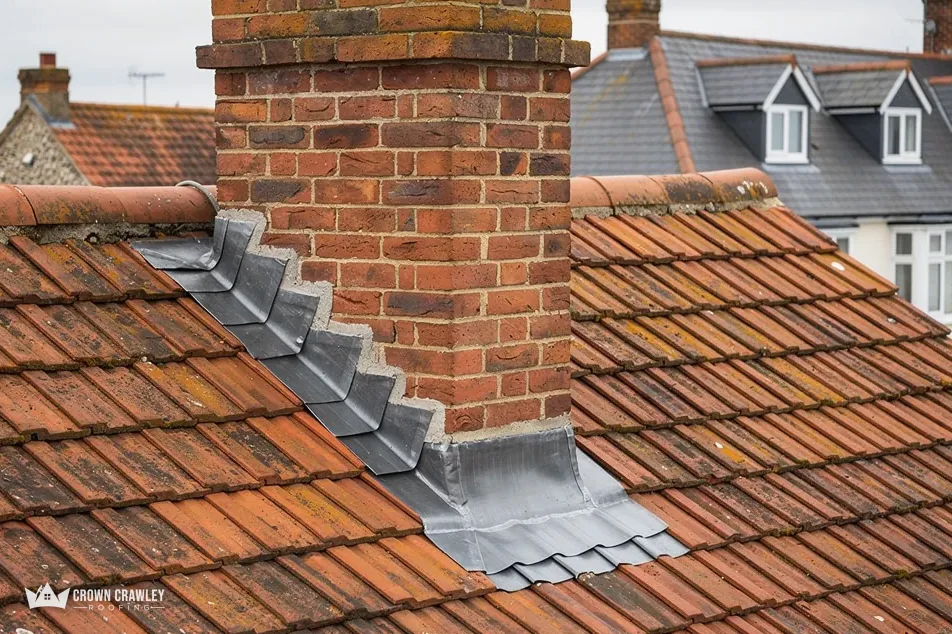
Stepped lead flashing around a brick chimney on a red tiled roof

Houses occupied from 1976

The first houses were occupied in 1976, on a plan covering 385 acres. Ridges, verges and gutters of that age may carry several generations of repair, so we separate original work from patching before we advise.

Tiled houses on a 1970s estate

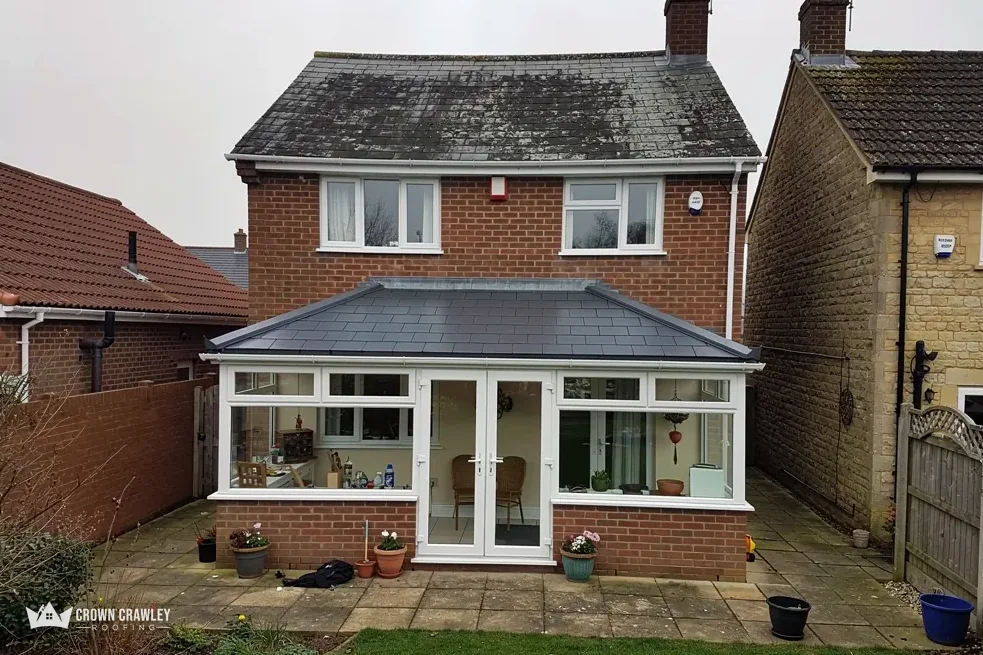
Rear of a brick house with a glazed extension and slate-effect roof

Flats and houses round courts

Houses and flats were built around courts and walkways, away from traffic. Where a block shares a roof, we write up our findings so that every owner under it can follow them.

Low-rise flats with pitched roofs

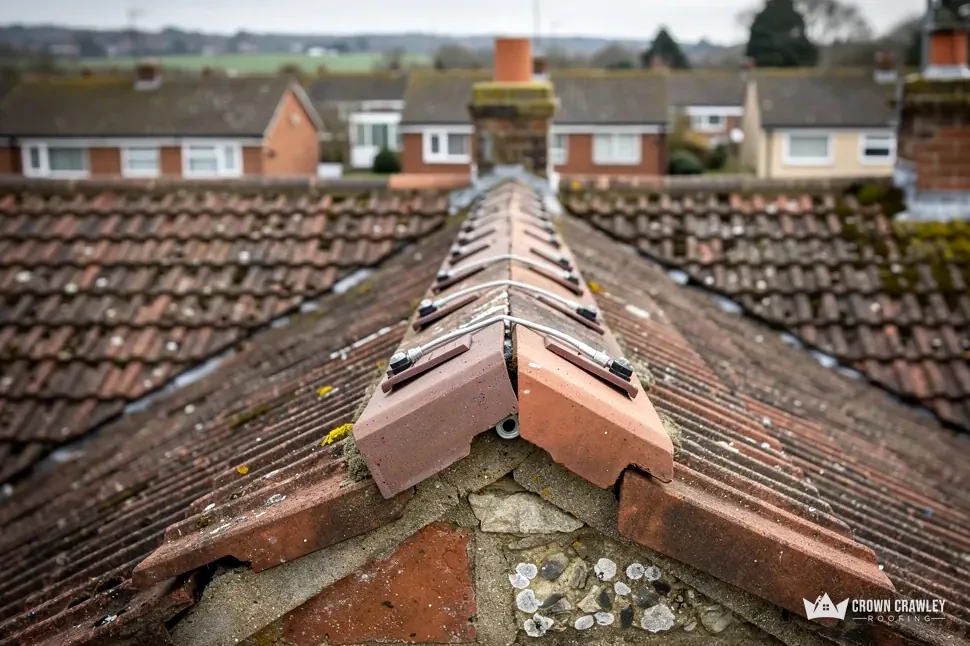
Clay ridge tiles along a hip on a pitched roof

Building into the 1980s

The shopping centre had been completed by 1985, when houses were still being built, and Hyde Drive was developed in the early 1980s. Roofs from different phases can differ in their details.

Ridge tiles on an estate roof

Bewbush, west of Broadfield

Map of Bewbush and the neighbourhoods around it, with Crawley for reference.

Bewbush is a large neighbourhood of the 1970s and 1980s on the western edge of Crawley, west of Broadfield.

Distance
2.1 road miles from Crawley, to the south-west
Drive
About 6 minutes
Council
Crawley Borough Council and West Sussex County Council
Planning authority
Crawley Borough Council
Ward population
11,239 (Census 2021, Bewbush & North Broadfield ward)
Planned size
385 acres
Get a free quote

The Bewbush roof file

From the first houses of 1976 to the last of the plan

Three chapters on a decade of building, the flat roofs and walkways that tie courts together, and the Crawley approvals that follow a bigger job.

Stage 01 · Background

Houses and flats from 1976

Bewbush was begun in 1974-5 and its first houses were occupied in 1976, which gives its roofs a long record of weather and repair.

Bewbush was begun in 1974-5 on land that drew objections for being green belt, and it was planned to cover 385 acres. The first houses were occupied in 1976. By 1985 the shopping centre was finished and houses were still going up. The neighbourhood therefore took roughly a decade to build, and that matters on a roof, because a house finished in 1976 and one finished in 1984 may share a street name and little else under the tiles.

Does a Bewbush roof of 1976 need replacing?

Not on age alone, and not on a hunch from the pavement either. Concrete tiles are given a life of around 60 years by Marley, which also says that is no guarantee, so a roof of this vintage has some way to run if it has been looked after. What gives way first can be the supporting detail. Mortar under ridge tiles cracks, edge tiles at the verge work loose, nails rust, and old eaves felt can droop into the gutter, where it traps rain. A ridge bedded before the 2014 revision of BS 5534 may rely on mortar alone. We add mechanical fixings whenever we rebed, which is the standard that revision sets for bedded tiles.

On a Bewbush survey

Tiles
Cracked, slipped or worn
Ridge
Bedding firm, or caps fixed
Verge
Edge sealed against wind
Gutters
Level, clear and not leaking
Loft air
Gap at the eaves kept open
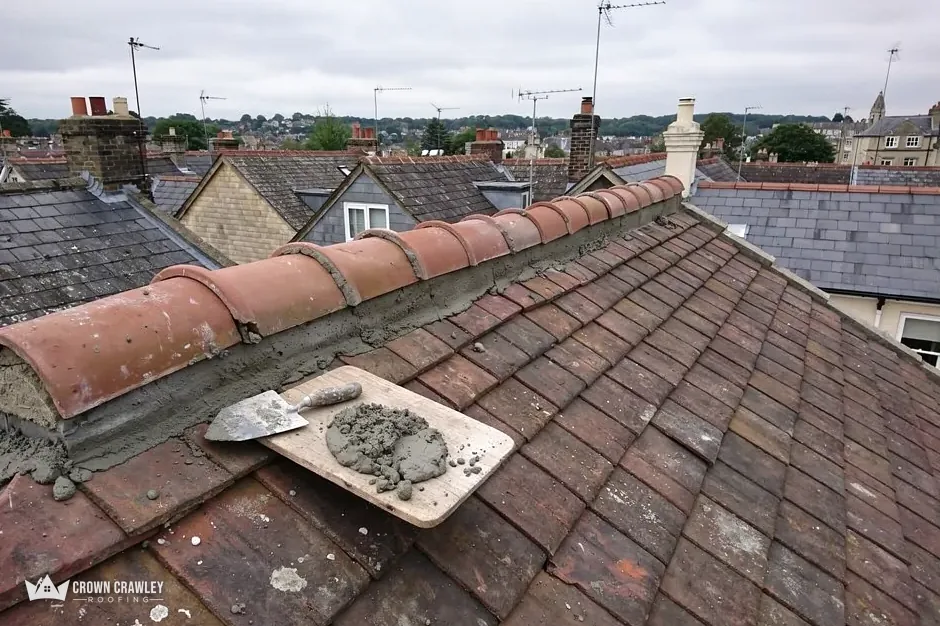
Ridge tile bedded in fresh mortar with a trowel resting on the roof

Why are some flats under a different set of rules?

Planning rules for a house do not simply carry over to a flat. The legislation defines a dwellinghouse as excluding a building that contains flats, so permitted development rights for householders do not apply in the same way to a flat or maisonette. If you are thinking of altering a flat roof or adding a window, ask Crawley Borough Council first. Repairs that keep the same look are a different matter. For who pays for a shared roof, our answer on leaseholder roof repairs sets out the usual arrangements, and a written price with photographs gives a freeholder or managing agent something solid to act on.

Fascias and soffits get the same attention as the tiles. A board repainted through many winters can hide rot under a good-looking finish, so we probe it, and where it has failed we explain whether capping or full replacement is the better choice for your house.

For houses, our pitched roofing work starts from the survey and ends with a tidy site. Through the job you hear from us about the day's plan, the place where materials are stacked and the date the scaffold is due to come down.

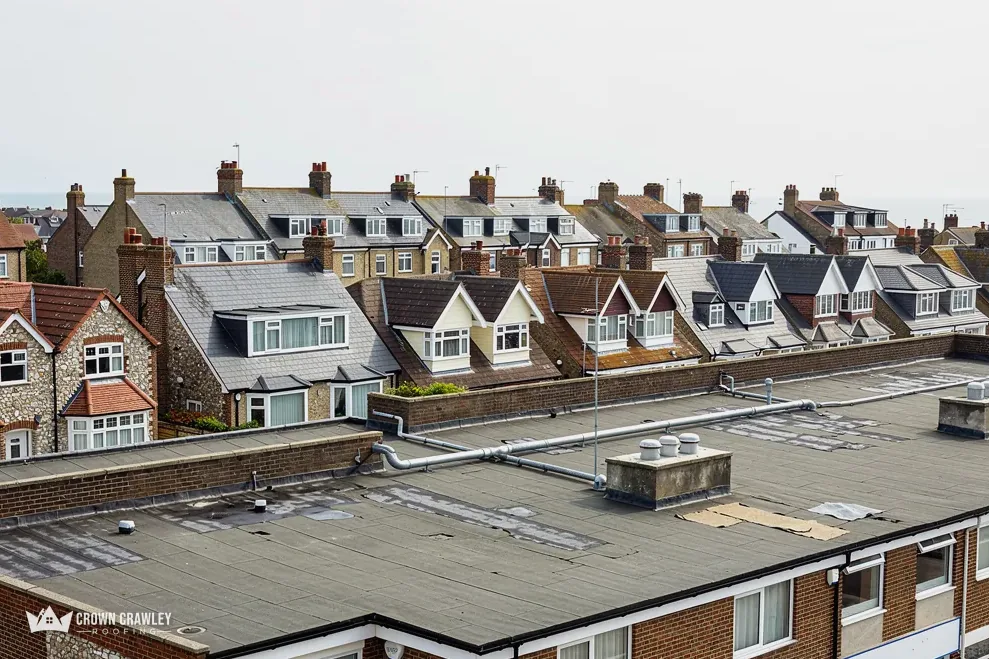
Flat roof in the foreground of a street of dormer-roofed houses

Stage 02 · Layout

Courts, walkways and flat roofs

A plan built around courts and walkways leaves small flat roofs and awkward gutters between the buildings, and water finds every one of them.

The county history records that Bewbush's houses and flats were built around courts and walkways, set away from traffic. That plan gives the neighbourhood its character, and it also produces junctions where one roof meets another, small lower roofs beside taller walls, and gutters shared between neighbours. A walkway or link with its own roof gets looked at on every survey, since a leak from one can surface as a ceiling stain in a room some distance away.

How long does a flat roof last in Bewbush?

It depends on the covering, not on the postcode. For EPDM, GreenSpec expects a service life of 20 to 30 years, while the cost guide site Less quotes 25 to 40 years for GRP and 10 to 20 years for felt. Those are typical ranges, never promises, and a poorly drained roof can fail in far less. So we look at the fall, the outlets and the upstands before we judge the covering, because ponding water shortens life whatever the material. BS 6229:2025 keeps a minimum finished fall of 1:80 for general areas, and a roof that sits flatter than that will hold a puddle. Our flat roofing page sets out how we repair, re-cover and renew.

Flat roof words explained

EPDM
Single sheet of synthetic rubber
GRP
Glass-reinforced plastic, laid wet
Fall
Slope carrying water to the outlet
Upstand
Membrane turned up a wall

Where a court has a flat roof, water has nowhere to hide from a proper survey.

Can a flat roof be patched, or must it come off?

Where the covering is sound and a single seam or upstand has opened, a patch is the sensible repair, and we will recommend it over a new roof. Where the deck is soft underfoot, where water has travelled under the membrane, or where the same roof has been patched more than once, a new covering is the better buy. We open up a small area to confirm what lies beneath, photograph it, and explain the choice. Single-ply and GRP are both worth discussing on a roof between two buildings, and neither is right for every court.

A flat-roofed porch or garage that shares a wall with the house gets a look as well, because the junction with the wall is a place where leaks can start and where flashing needs to be tight. Access matters here too. On a court with shared paths, we plan where the ladder stands, where the skip sits and how waste leaves without crossing a neighbour's front door. We tell the households next door what is happening and when. Your next step is simple: photograph the stain or the pooling water, note where it appears indoors, and send both with your court or road name.

Stage 03 · Permissions

Approvals for a bigger Bewbush job

Bewbush answers to Crawley Borough Council on planning and to Crawley Building Control on building control, and both come into play on a re-roof.

For many roof jobs in Bewbush the approvals answer is short: a like-for-like repair needs no form, and we say on the survey visit which side of the line your job sits. The picture changes when the job is a strip and re-cover on a house with a long run of slopes, when the covering is changing, or when the building is a block of flats.

When does Crawley Building Control need to be told?

Crawley Building Control wants an application once repairs or replacement cover more than 25% of a roof's surface area. That is the borough's own line, and it sits alongside the Planning Portal's test for England, which asks two things: whether less than 25 per cent of the building envelope and less than 50 per cent of the roof are affected. If your survey finds that a whole slope has to be renewed, we raise it with the team before fixing a start date. A heavier covering is a second trigger: the Planning Portal wants approval where the new one weighs at least 15 per cent more. For a complete re-roof, our roof replacement page follows the job from survey to sign-off.

Questions to settle first

Planning
Crawley Borough Council
Building control
Crawley Building Control
Flat or house
Different planning rules apply
Wildlife
Bats or nests mean a pause
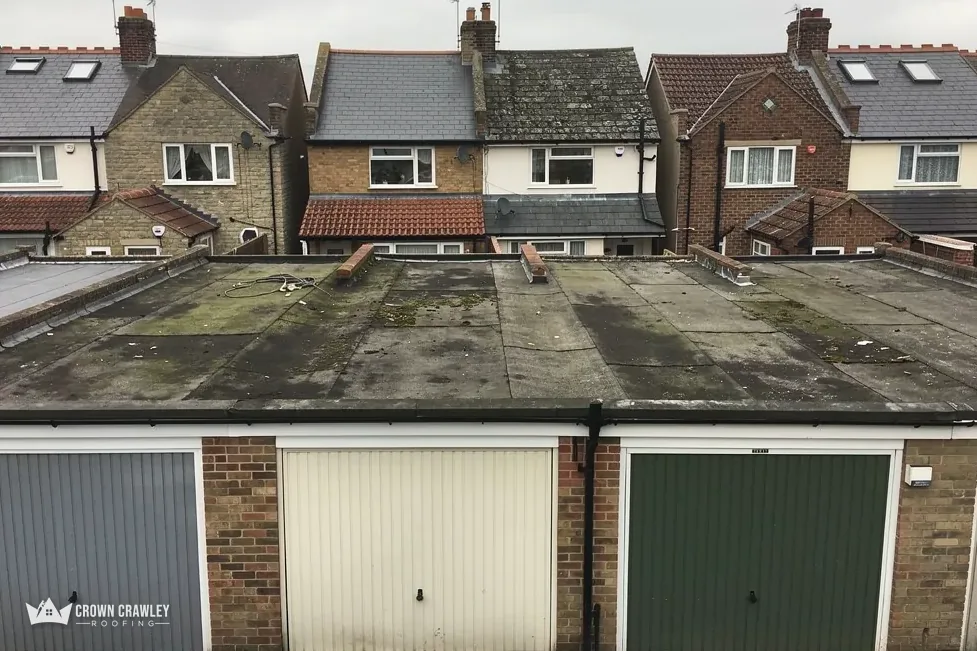
Mossy flat-roofed brick garage block with three up-and-over doors

Who has the planning say over a Bewbush court?

The Gossops Green Neighbourhood Centre Conservation Area lies a short walk away in neighbouring Gossops Green, and the neighbourhood lies outside the South Downs National Park, so Crawley Borough Council is the planning authority. For a Bewbush house outside that boundary, a repair in the same materials raises no conservation question. For a flat, or for any change to a roof's outline or appearance, the council's planning team should have the first word.

Bats and nesting birds are protected, and the government's bat guidance counts roof repair and replacement among the work that can affect them. If the survey shows signs of either, we stop and talk to you, and the start date may move to keep both the animals and the work safe. Scaffold on a drive or in a garden needs no highway licence, whereas a frame on the pavement does, from West Sussex County Council, and we sort the application out with the scaffolder. The written price states what the job needs, so you can weigh it against anything else you are offered. If you have had earlier work done, a receipt or a photo of it is worth sending, because it tells us what the survey is likely to find.

Questions about Bewbush roofs

Why might two Bewbush roofs from the same estate need different repairs?

Building ran from the first occupations in 1976 until the mid-1980s, so houses on one street may come from different phases, and later owners have repaired them in different ways. One roof may need its ridge rebedded while its neighbour needs new gutters and eaves underlay. The survey reads yours directly and shows you photos of what it found.

Who pays to fix the roof above a Bewbush flat?

That depends on your lease. The freeholder may be responsible for the roof and passes the cost on through a service charge, sometimes via a managing agent, so report a leak to them first. If you hold the freehold, alone or with neighbours, you can instruct us directly, and we give one written price with photographs for everyone to see.

Can a flat roof between Bewbush buildings be patched?

Yes, if the covering is sound and a single seam or upstand has opened. If the deck is soft, water has travelled under the membrane or the roof has been patched repeatedly, a new covering is the better buy. EPDM is quoted at 20 to 30 years and GRP at 25 to 40, so age tells us something too.

Do Bewbush's planning rules differ from other Crawley neighbourhoods?

Crawley Borough Council is the planning authority, as it is across the town, and the Gossops Green Neighbourhood Centre Conservation Area sits next door in Gossops Green rather than in Bewbush itself. For a house, a like-for-like repair needs no application. A flat is treated differently from a house under the permitted development rules, so ask the council's planning team before altering the roof of one, and check any re-roof against Crawley Building Control.

Your Bewbush roof, priced after a proper look

Send your court or road, a photo of the damage, and whether it is a house or a flat, and we will plan the survey.

01293 974253

10-year workmanship guarantee, in writing.

Call Get a free quote