Houses of 1956 to 1958
The houses were built between 1956 and 1958, once roads and sewers were in. On roofs of that age we check the ridge (top line), the verge (gable edge) and the eaves (lowest edge) first.
Tiled homes on a 1950s estate
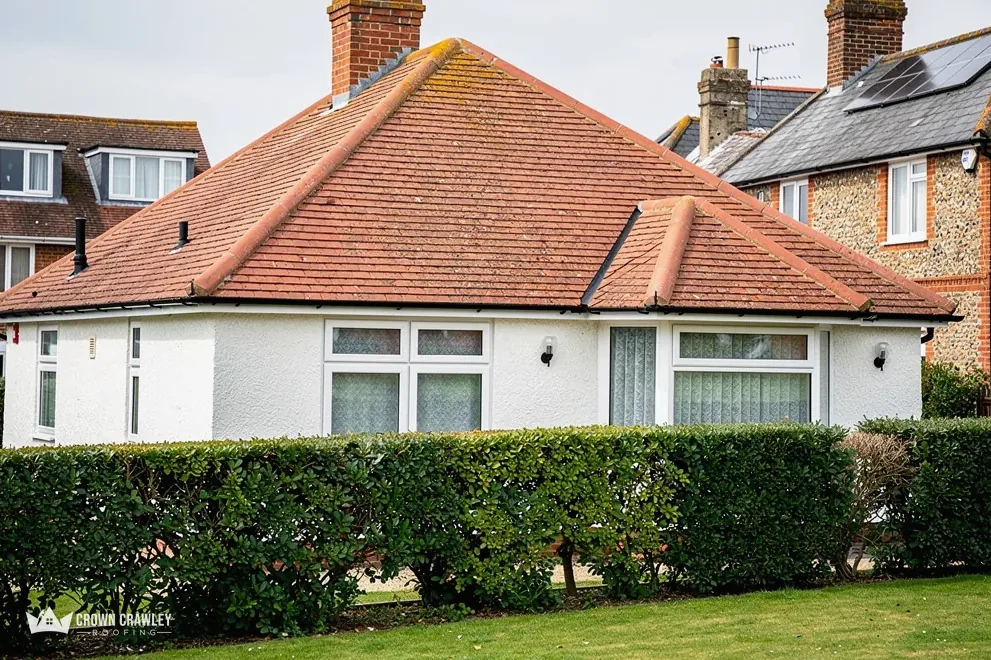
Roofs on 1956 to 1958 houses beside Tilgate park and forest.
Tilgate's houses went up between 1956 and 1958, next to a park and a forest. We check ridges, gutters and shaded slopes, share photos of your roof and put one price in writing.

The houses were built between 1956 and 1958, once roads and sewers were in. On roofs of that age we check the ridge (top line), the verge (gable edge) and the eaves (lowest edge) first.
Tiled homes on a 1950s estate
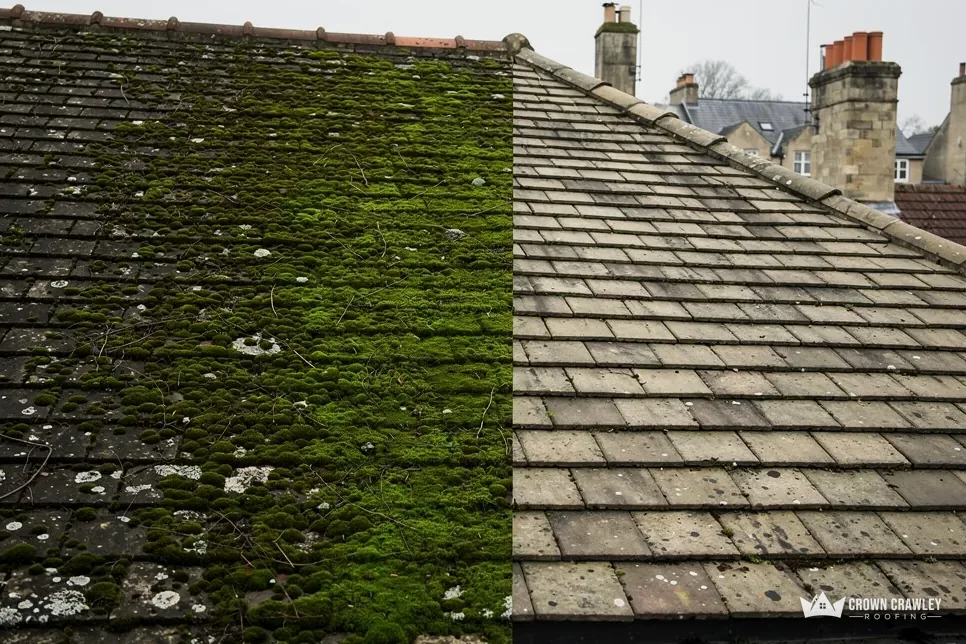
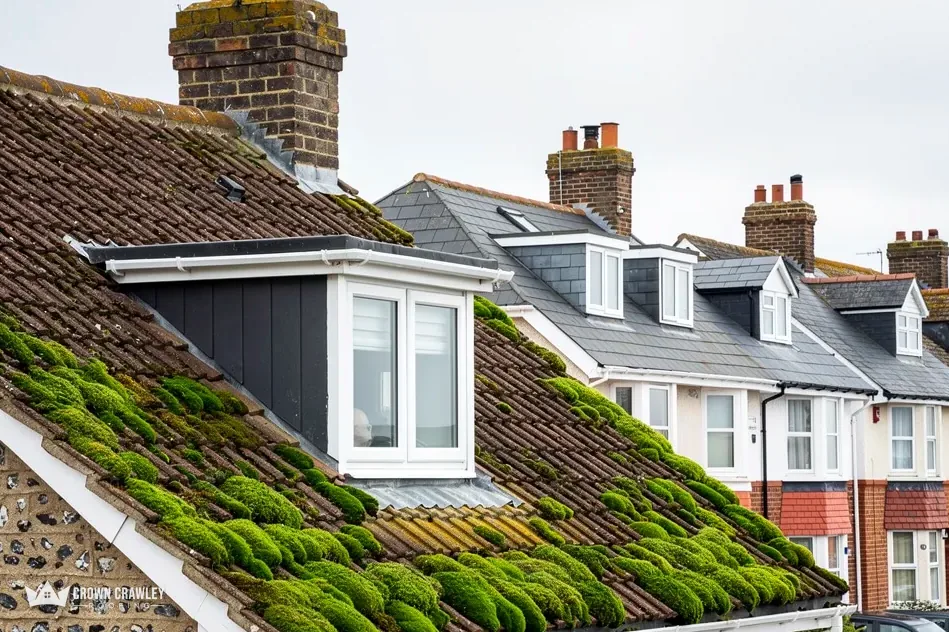
The county history records a 72-acre Tilgate park, with forest beside it. Roofs near trees catch leaves and grow moss, so we look hard at gutters, valleys and slopes that stay in shade.
Moss growing on roof tiles
An army camp in the park housed building workers from 1950 to 1957, and the estate rose over a period of years. Each roof is read as it is today, not by the name of its street.
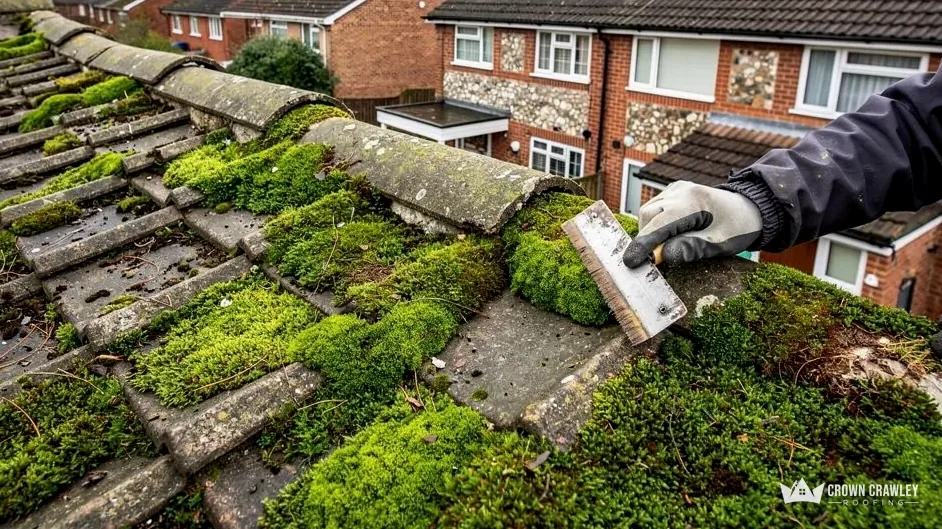
Residential roofs with chimney stacks
Map of Tilgate and the neighbourhoods around it, with Crawley for reference.
Tilgate lies south-east of Crawley town centre, next to Tilgate park and to the forest that rises to the west of the railway.
Diary of a Tilgate roof
Three short chapters on what a roof from 1956 to 1958 needs, how trees change the job, and the wildlife and council points to settle first.
Stage 01 · Background
Roads and sewers went in during 1955 and the houses followed between 1956 and 1958, so a Tilgate roof has seen close to seventy winters.
Tilgate's roads and sewers were laid in 1955, and its houses were built between 1956 and 1958. That puts a first-build roof here at roughly seventy years old. That is the age at which owners start asking whether a roof is finished, and the answer is seldom a plain yes or no.
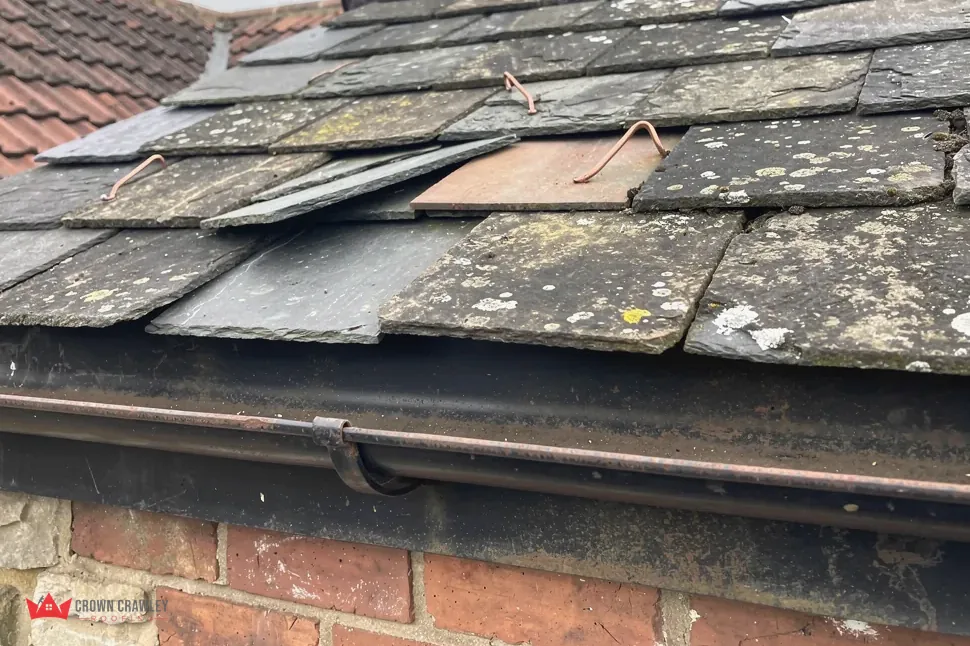
It needs a look at the parts that hold the tiles on. A nib is the little lug that hooks a tile onto its batten, and nibs snap with age. Nails rust through, underlay dries out and tears, and the mortar that once bedded the ridge and verge cracks away. If your covering is concrete tile, Marley's life figure is around 60 years, and Marley itself says the number carries no guarantee. Clay tiles carry a minimum of 60 years from the Building Research Establishment. Neither figure is a countdown. It is a reason to look closely and not to guess.
National cost guides give a feel for the scale, although your own quote is fixed after the survey. Checkatrade's October 2026 guide shows £170 to £500 when as many as five tiles are swapped, with scaffold accounting for the upper end. For dry-fix work, its June 2026 repair guide lists a dry ridge at £50 to £70 a metre and a dry hip at £70 to £100 a metre, while its September 2026 dry verge guide gives approximately £10 to £25 per linear metre. These are typical UK ranges. Access, height and the state of what lies underneath decide where a job lands.
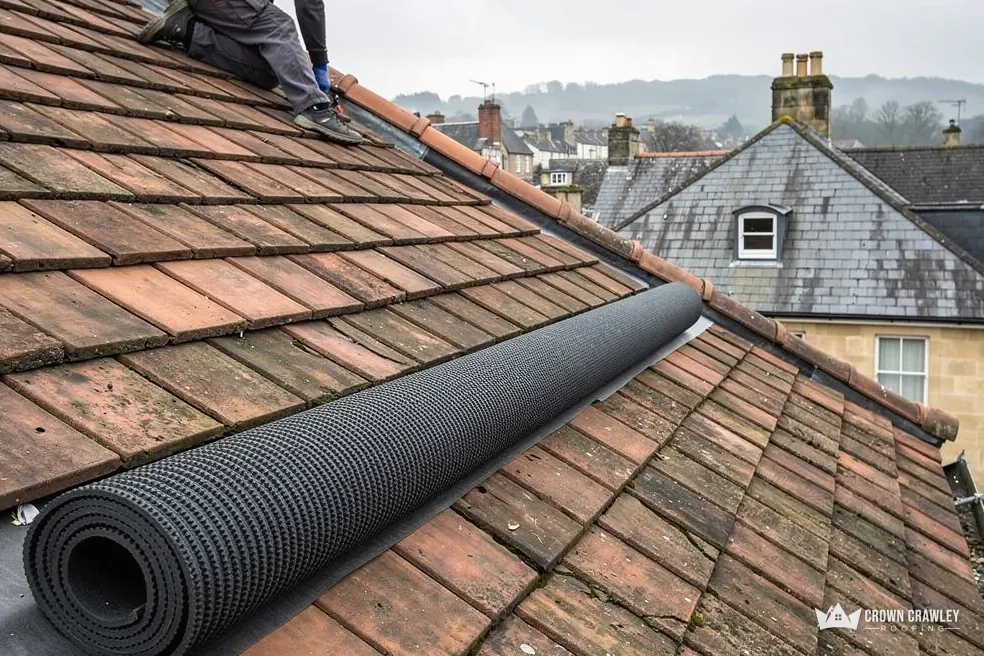
The loft matters on a roof of this age too. If yours still has non-breathable felt, Marley's reading of BS 5250 asks for a continuous 25mm opening at the eaves on slopes of 15 degrees or less, and 10mm on steeper ones. On a 1950s Tilgate house added loft quilt can end up rammed into that opening, and damp then settles on the timber. Opening the gap up again is a modest job that spares the battens.
Terms on the survey sheet
Dry-fix systems are tested to BS 8612, and since the 2014 revision of BS 5534 bedded tiles should be held mechanically as well as by mortar. Marley says installing to BS 5534 is not required by law, but it is the benchmark. Our dry ridge and dry verge page sets out both systems, and our pitched roofing page covers the tiles, battens and underlay below them. When we finish a repair we send the after photos with the before photos, so the work can be checked from the ground.
Stage 02 · Upkeep
A park and a forest on the doorstep mean leaf fall, damp shade and moss, and each of those has a plain fix.
The Victoria County History describes a 72-acre Tilgate park passed to the urban district council around 1964, and Tilgate Forest, west of the railway, climbing to about 440 ft. Trees close to a house change what its roof needs, and we plan the survey around that.
It can, if it is done gently. Marley does not recommend high-powered jet washing, because it can damage the surface of a tile or slate and cut the expected life of the covering considerably. So we do not blast. Moss comes off by hand, and a biocide treatment goes on afterwards. The treatment must be a product authorised for the job, used as its label says, because HSE warns that the public should never use biocidal products meant for professionals only. Checkatrade's April 2026 roof cleaning guide gives £8.50 to £14 per m² as a typical UK range. Our roof cleaning and moss removal page explains the process and what each stage involves.
Beside the trees
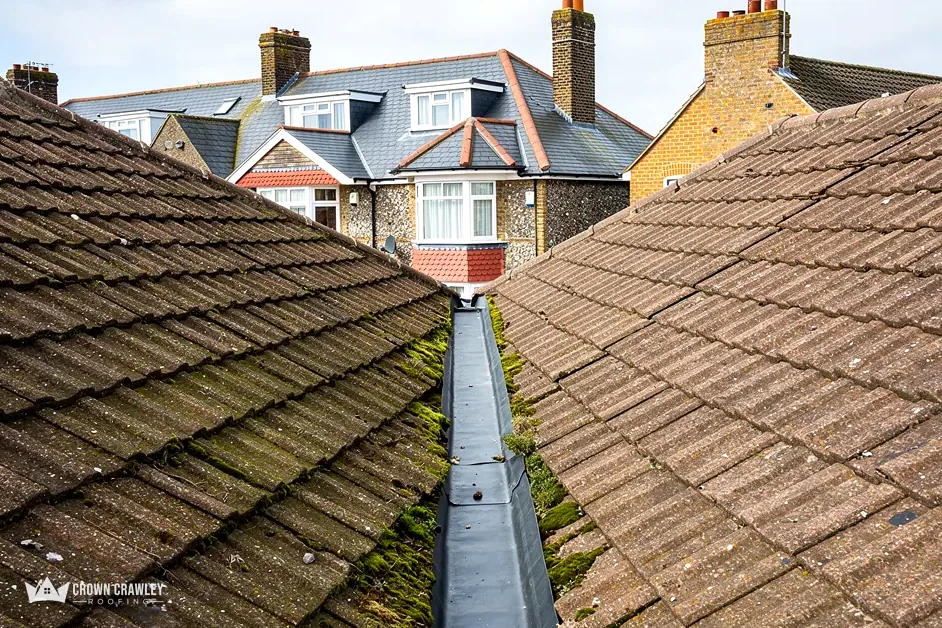
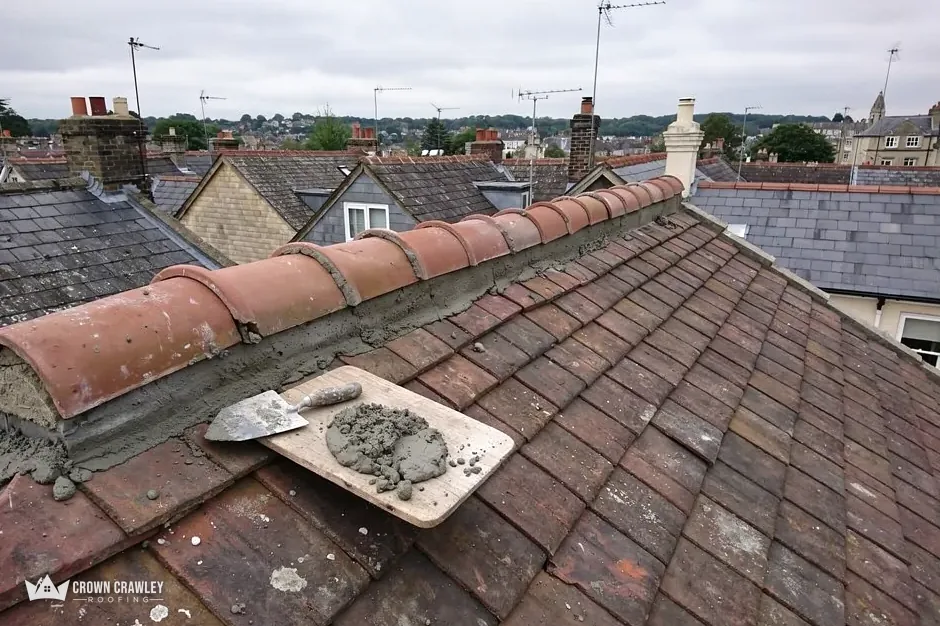
They block gutters and valleys, and a blocked channel overflows. Water then backs up under the lowest course of tiles, soaks the fascia or runs down the wall, and the stain on a bedroom ceiling looks like a tile fault. Before pricing anything we follow the water back up the slope. A Tilgate leak can end with a cleared gutter and one resealed joint, a fraction of what re-covering would cost. We check that outlets are open, that the fall runs the right way and that brackets are holding.
Boards and gutters matter more beside trees, because wet leaves sit on them. Checkatrade's September 2026 guide puts fascias and soffits at around £150 per linear metre, and its October 2026 guide gives £650 to £1,700 for new gutters over 15 to 20 metres with three downpipes. Both are typical UK figures. Your own house gets its figure only once we have been up there, and it arrives as one sum in writing.
A blocked gutter can pass for a bad roof until someone climbs up and looks.
Overhanging branches are a second concern. They rub on tiles, drop wet debris on to the slopes and keep a roof damp that would otherwise dry. Cutting them back is for you and a tree surgeon to arrange, not something we do on the roof, but we point out where they are touching. A roof that stays shaded and wet will keep growing moss however often it is cleaned, so the sensible plan is to treat the cause as well as the symptom.
Stage 03 · Permissions
Close to green space, wildlife in roofs is a real possibility, and a few council points are worth knowing before a job is booked.
Roofs near parks and forest can have lodgers. Birds nest in gutters, eaves and under tiles, and bats use roof spaces. Both are protected, and knowing the rules ahead of time stops a job from stalling halfway.
Wild birds are covered by the Wildlife and Countryside Act 1981. Section 1 bars anyone from intentionally harming a wild bird's nest during building or while the birds still use it. So if our survey finds birds nesting under a Tilgate eave, work on that stretch waits. We can still plan the job and write the price, and we agree the timing with you. Losing a week costs far less than harming a brood. Once the birds have gone, we close the gap properly so they cannot move straight back in.
GOV.UK gives full legal protection to every bat species and to the spots where bats breed or shelter, and it names roof repair among the work that may disturb a roost. If we see droppings, staining around a gap or a bat itself, we stop, leave the area as we found it and explain the next step. Specialist advice may be needed before work goes further, and that is not something to guess at. Because roosts can be hard to spot from the ground, we examine the gable edges, the top line and the lowest courses from close range during the survey.
Crawley Building Control wants an application once the repair or replacement passes 25% of a roof's surface area, so any big Tilgate job gets that question early. Weight matters too, since the Planning Portal sets a 15 per cent line for how much heavier a new covering may be before approval is needed. West Sussex County Council licenses scaffolding on a public highway in Tilgate, with an application at least 10 working days ahead. Where one is needed, it is part of the plan we agree with you before any date is fixed. Crawley's Southgate Neighbourhood Centre and Malthouse Road conservation areas lie in neighbouring Southgate, so ask the council if your house is close to either; like-for-like work stays simple. Our post on planning permission for roof work covers the planning side in more detail. To get things moving, take a picture of the troublesome slope or gutter from the garden and email it over with your postcode.
Terms worth knowing
It can be the small parts, not the covering. Nibs snap, nails rust, underlay tears and ridge or verge mortar breaks away. Marley's 60-year guide for concrete tiles comes with no promise attached, and a sound tile can sit on tired fixings. A survey with photos shows which parts need attention and which can wait.
Yes, by hand with an authorised biocide that is used as the label directs. Marley advises against high-powered jet washing, since it can damage tiles and shorten their life. We also clear gutters and valleys, because leaves block them and cause leaks that look like tile faults. If shade keeps the roof wet, moss will return.
Not near an active nest. Under the Wildlife and Countryside Act 1981, intentionally harming the nest of a wild bird is an offence while the birds are building it or still using it. We look for nests at the survey, plan around them and agree a start with you once the brood has gone. We can price the job in the meantime, so you are not left waiting for an answer.
It can. Crawley Building Control wants an application where over 25% of a roof's surface area is repaired or replaced, and the Planning Portal adds a test for coverings that make a roof 15 per cent heavier or more. We flag both at the survey, contact the council before agreeing a date and pass on what it says.
Share a view of the roof from your garden with your postcode, and say how close the trees are.
Message us on WhatsApp