

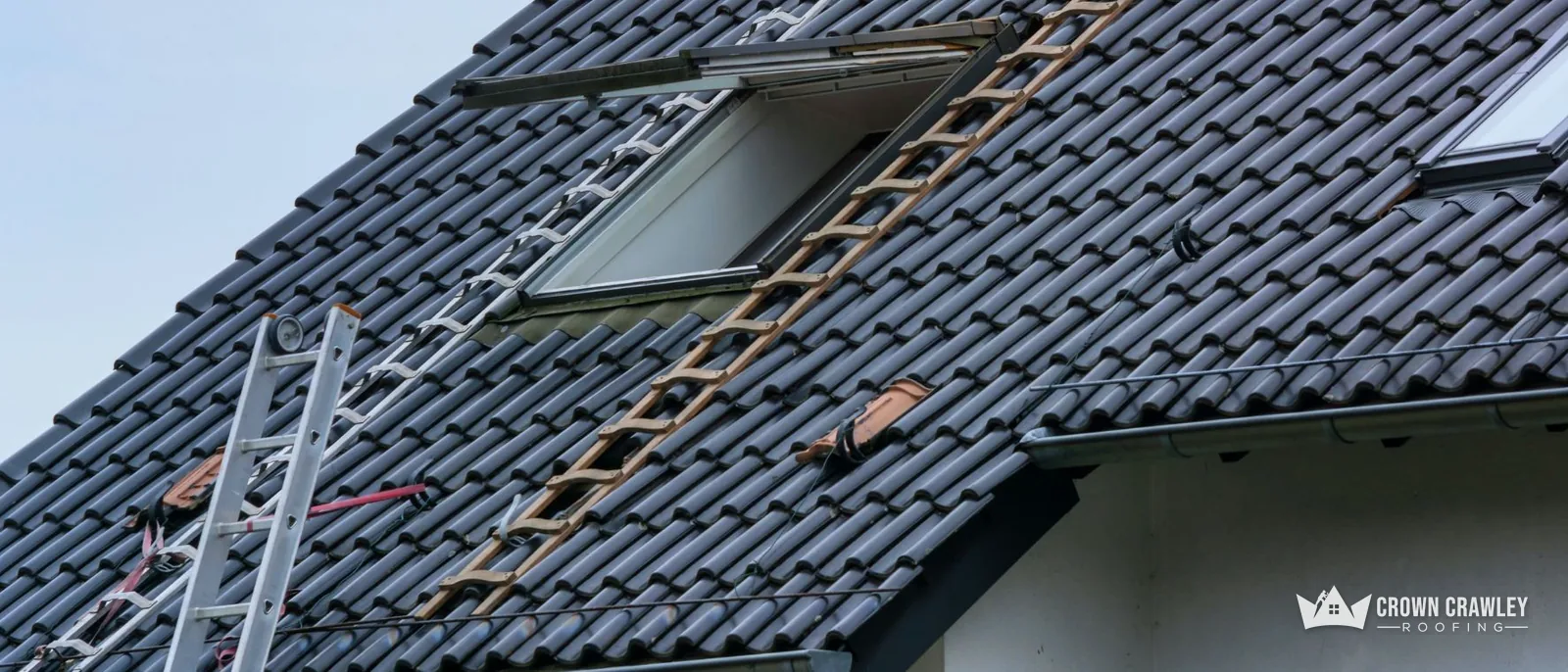
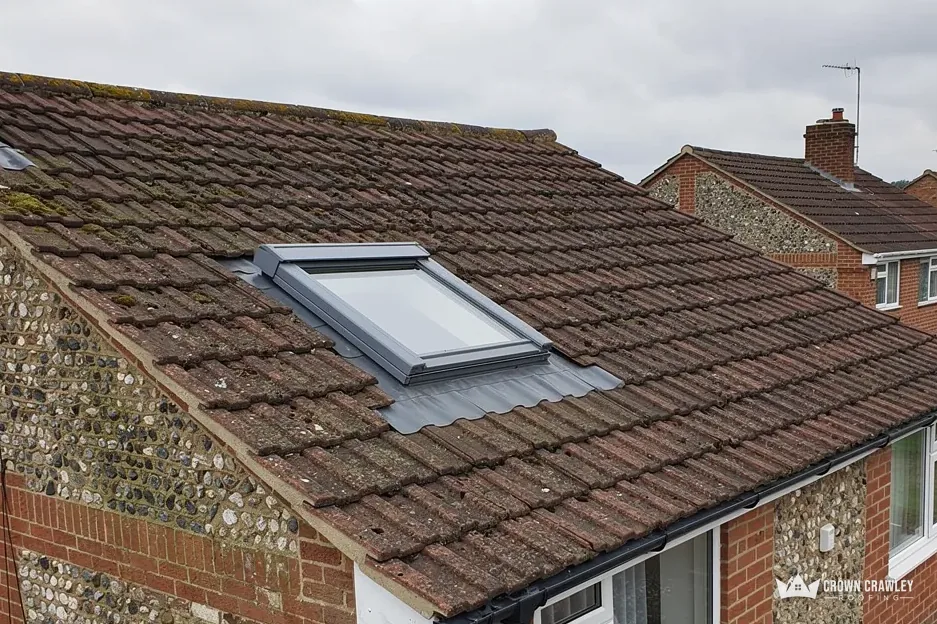
 Fascia Capping vs Full ReplacementCapping covers the old fascia with new plastic, and replacement takes the old board away. Here is when each is the…Guide · 9 min read
Gutters, Soffits & Fascias in Crawley
Fascia, soffit and gutter work from one survey.
We replace fascias and soffits in Crawley and across Sussex, repair and clean guttering, and take out failing concrete gutters. Each job begins with a survey of your own eaves, shared photos and a single written price.

- Survey photos of your own roof
- One written price
- Repairs, re-roofs and emergencies
- Tidy site, waste taken away
Signs your roofline needs attention
- Paint peeling or timber soft under a thumb
- Gutters spilling over at one point in rain
- Green staining or dripping at a gutter joint
- A gutter run sagging between its brackets
- Gaps or dark patches under the soffit
What our roofline service covers
 Fascia board replacementRotten timber fascias taken off and renewed in uPVC, with new boards fixed square to the rafter ends and the gutter refitted.
 Soffit renewalFailed soffit boards replaced with plain or vented panels to suit the eaves, so the roof space still breathes and birds stay out.
- Capping over old fasciasWhere the old board is sound, a new cover goes over it. We probe the timber first and say plainly when capping is enough.
- Gutter repairsLeaking joints, slipped brackets and sagging runs put right, with the fall rechecked so water reaches the downpipe.
 Gutter cleaningLeaves, silt and moss cleared from gutters and downpipes, then the outlets flushed to prove the water runs freely.
 Concrete gutter replacementFailing concrete gutters taken out and replaced with a modern rainwater system, or repaired where the survey shows they are sound.
Cap over, replace or repair?
- Cap overThe old timber is dry and straight, and only the finish has worn out.
- ReplaceThe boards have rotted or split, so a new fascia and soffit are needed.
- RepairThe boards are sound, and the fault is a joint, a bracket or a blockage.
How a roofline job runs
- 1A photo of the eavesYou send a picture of the fascia, soffit or leaking gutter and tell us where the water goes.
- 2A survey along the eavesWe check boards, gutters and downpipes from safe access, taking a photo of every fault we find on the way.
- 3One written priceThe price arrives as a single total, with the photos and a plain reason for the work proposed.
- 4Fit, test, photographWe complete the work, run water through the gutters to test them and email the finished photos.
The roofline diary
Inside a fascia, soffit and gutter job
Six stages of roofline work around Crawley, from reading the eaves from the garden to the last water test at the downpipe.
Stage 01 · First look
Fascias and soffits in Crawley, board by board
Fascias and soffits are the boards at your eaves. They look minor, yet they hold the gutters, close the roof edge and keep water out.
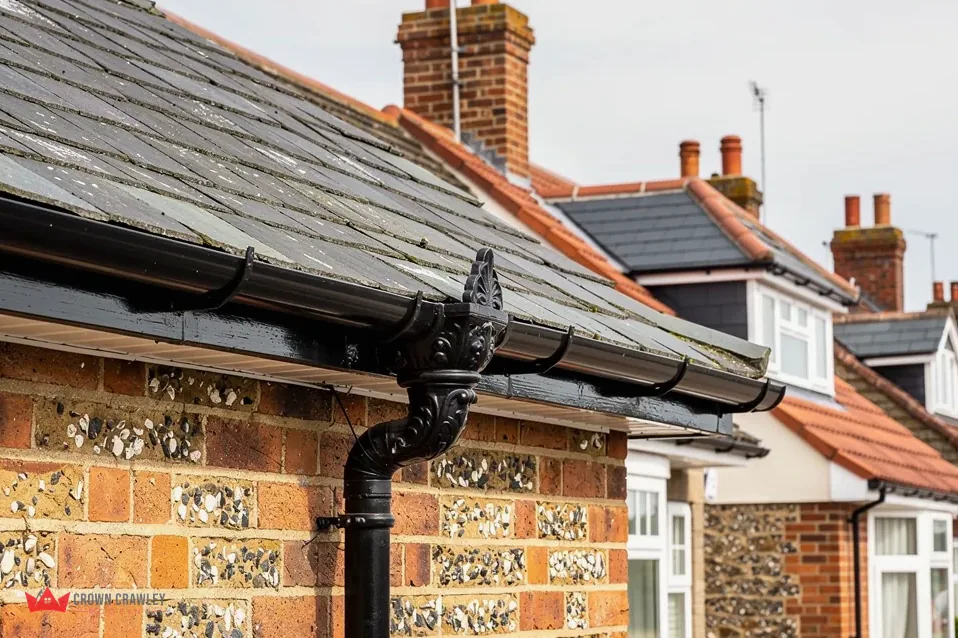
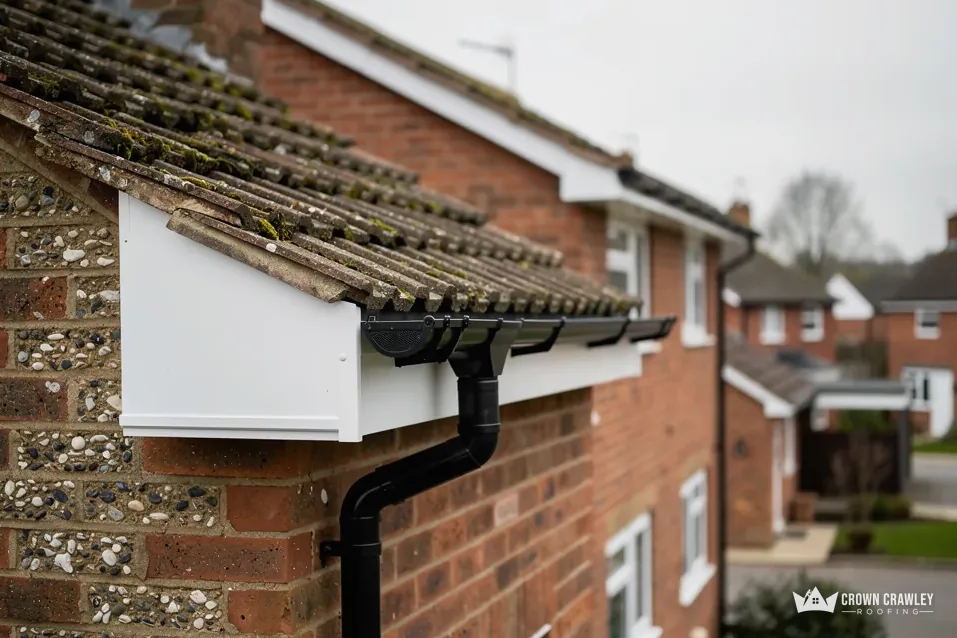
Look up at the edge of your roof and you see three parts working together. The fascia is the board that runs along the ends of the rafters, facing outward, and it carries the gutter. The soffit is the board or panel on the underside, closing the gap between the wall and the roof edge. The gutter sits on the fascia and sends rain to the downpipe. Together they make up the roofline. When people search for fascias and soffits Crawley firms can fit, they usually have one of these three failing. Work on soffits and fascias Crawley wide starts the same way, with a look at all three. We survey all three on every visit, because a fault in one is often the cause of a fault in another. A dripping gutter joint, for instance, can be the real reason a fascia board is rotten three metres along from it, and we want to find that link before quoting.
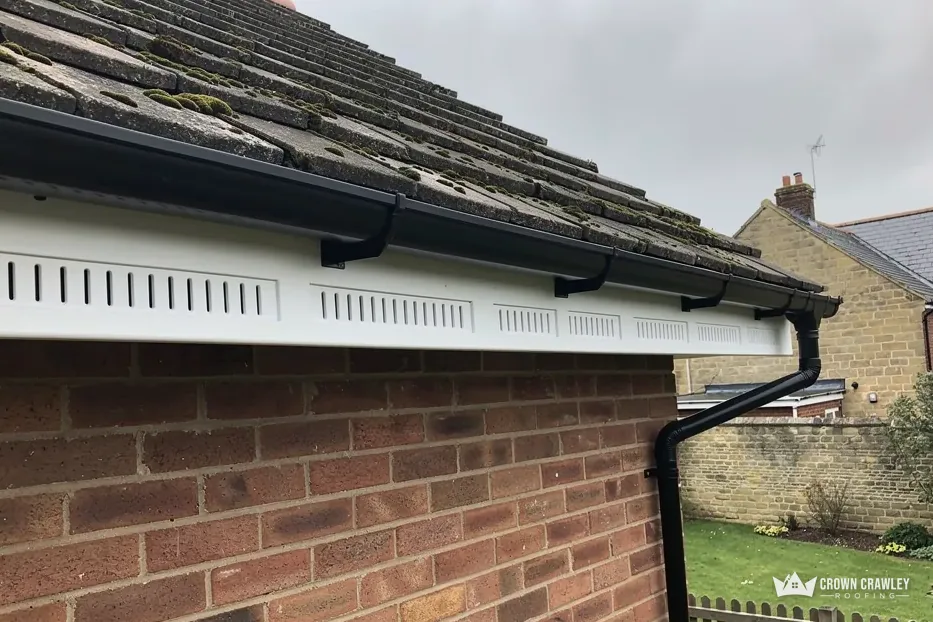
- Fascia board
- Soffit panel
- Gutter bracket
- Rafter end
Why do fascias and soffits fail?
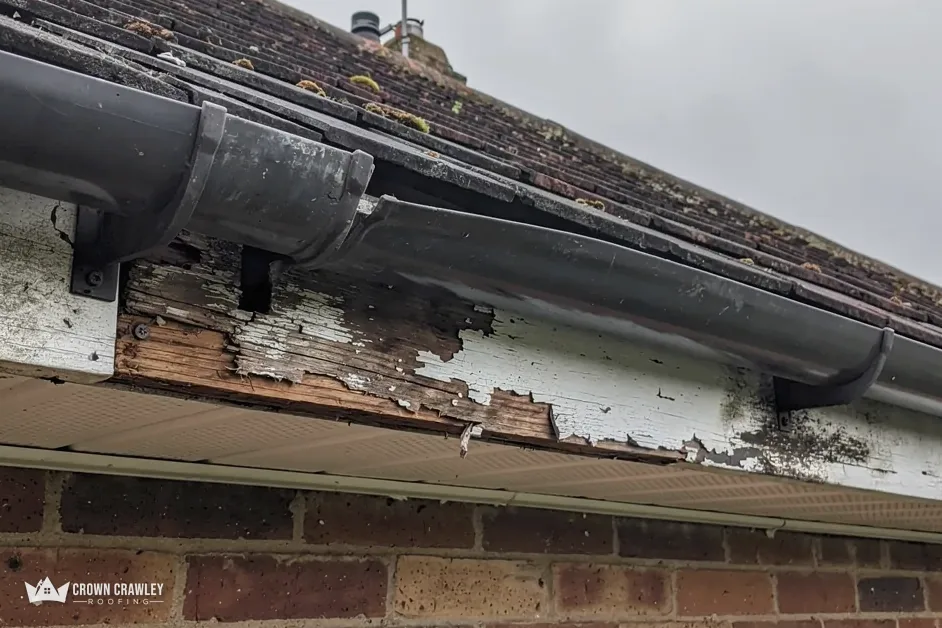
Water is the usual cause. A gutter that leaks at a joint, or overflows at a blocked outlet, drips onto the fascia, and old painted softwood soaks that water up. The board swells, the paint lifts and the timber starts to rot from the back, where you cannot see it. The soffit goes next, because it sits directly under the wet fascia and shares the same damp air. Rot at the rafter ends comes later and costs far more to put right, which is why we look behind a board at the survey instead of judging it by the paint.
What can you see from the ground?
Stand in the garden on a dry day and look along the eaves. Peeling paint, dark streaks under a gutter joint, a board bowing away from the wall or a gap where two boards meet all point to trouble. From inside the loft, daylight at the eaves where there should be none, or a damp smell, says the same thing. A sagging gutter matters too, because a gutter pulling away from a soft fascia has nothing sound left to hold it. Send us a photo along the eaves and we will tell you what we think it shows before we visit. Take it from the garden on a dull, dry afternoon, and tell us which wall it is, so we can pair it with the right bit of the survey.
Keep reading
Could the soffit contain asbestos?
If your house was built or refurbished before 2000, the HSE says to assume there is asbestos in it. The HSE also lists external soffits among the places where asbestos insulating board turns up, and it is hard to tell that board from the modern non-asbestos kind by eye. Removing insulating board is mostly licensed work, so on an older house we raise the question at the survey, leave a suspect board untouched and talk it through with you first. Our answer on whether soffit boards could contain asbestos explains what happens next.
Stage 02 · Choosing
Fascia replacement in Crawley: cap or renew
Capping over is quicker and cheaper than full replacement, but only when the board beneath is sound. The survey settles which one you need.
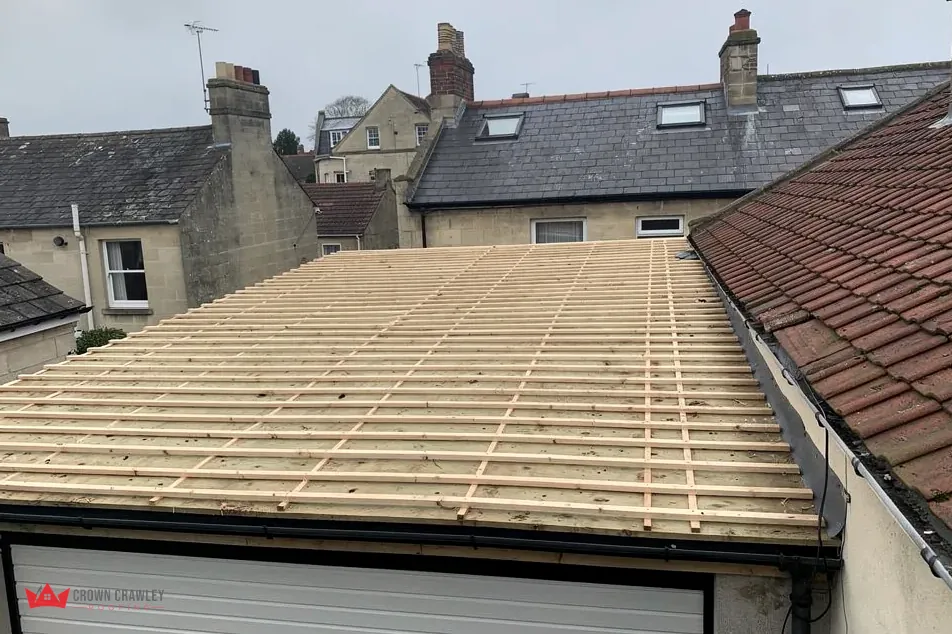
Fascia replacement Crawley homeowners ask about comes in two forms. Full replacement strips the old fascia and soffit, and sometimes the bargeboards, back to the rafters and fits new boards. Capping leaves the old timber in place and wraps it in new uPVC. Both look the same from the road, so the real difference is what is hidden underneath. Our answer on fascia capping versus full replacement sets out the trade-offs in more detail.
Roofline words
- Capping
- New uPVC cover fixed over an old board
- Bargeboard
- Board along the sloping gable edge
- Rafter end
- Timber the fascia is fixed to
- Eaves
- The lower edge of the roof
When is capping over a sound choice?
Capping suits a fascia that is dry, straight and firmly fixed, where the only complaint is flaking paint or a tired finish. It is quicker, produces less waste and costs less. Checkatrade's fascia, soffit and guttering guide, updated for September 2026, gives around £85 per linear metre for capping and around £150 per linear metre for replacement. Those are national figures, not our prices, and they cover boards and fixing on a typical run. We press a bradawl into the board at several points, and look at the rafter ends from the loft side where we can. If the point goes in without effort, capping would only seal rot in, so we tell you that straight away and show you where it sank. A board can look fine from the road and still be soft behind the paint.
When does the old board have to come off?
Soft or split timber, boards that have bowed, fixings that no longer bite and soffits that have dropped all call for replacement. So does any roofline where water has been getting behind the boards for a while. Stripping back lets us see the rafter ends, cut out any damaged timber, fix new boards square and refit the gutter on firm brackets. It is also the moment to check the eaves of the roof itself. Where the underlay has perished at the edge, a short piece of new eaves protection carries water into the gutter instead of behind the fascia. That is the kind of detail covered on our pitched roofing page.
A cap hides the board beneath it, so we check the timber before we offer one.
Why does the survey matter before the choice?
Because the cheaper option is only cheaper when it works, and the dearer one is only worth it when it is needed. A cap fitted over damp timber can leave you paying twice. A full replacement fitted where the old boards were fine spends money you did not need to spend. The photos we take along the eaves show you the same thing we see, so you can judge the advice for yourself and ask questions before agreeing the written price. If you would like to see the board we are worried about, we can show you the bradawl mark and the rafter end together, from the ladder or on the photo, so the reasoning is plain.
Bargeboards follow the same logic at the gable end, where the roof edge meets the wall under a sloping verge. They can be capped or replaced in the same visit as the fascia. If the verge itself needs attention at the same time, that is a good moment to ask about a dry-fixed edge, which our dry ridge and dry verge page explains. One scaffold set-up can then serve both jobs, which keeps the access side of the price down.
- £85capping, per linear metre, September 2026
- £150replacement, per linear metre, September 2026
- £2,750average small semi, same Checkatrade guide
Stage 03 · Materials
uPVC roofline in Crawley: colours and materials
Choose a material for how it ages and a colour for how it sits with your windows, doors and brickwork.
The uPVC roofline Crawley houses now carry is the usual choice for a replacement, because the boards are washed rather than repainted and they do not rot. Timber still has its place on some older and listed buildings, and aluminium is sometimes chosen for gutters. What matters is that the boards, soffits and gutters are fitted as one system, so that the profiles line up and the brackets sit where they should. Mixing old gutters with new boards often leaves a join that leaks within a season.
How long does a uPVC roofline last?
One roofline supplier puts uPVC fascia boards at between 20 and 40 years. Treat that as a guide from a company that sells them, not a promise, because sunlight, fixing quality and how well the gutters are kept all change the answer. A warranty is not a lifespan either. What you can count on is that a board that stays dry stays sound. What wears first is usually the gutter seals and brackets, not the board, which is another reason to fit the system together.
Roofline material checks
- Material
- uPVC, aluminium or painted timber
- Colour
- Matched to windows and doors
- Soffit
- Vented where the eaves need air
- Gutters
- Profile and brackets suit the boards
- Gable end
- Bargeboard finished to match
Which colours and finishes are available?
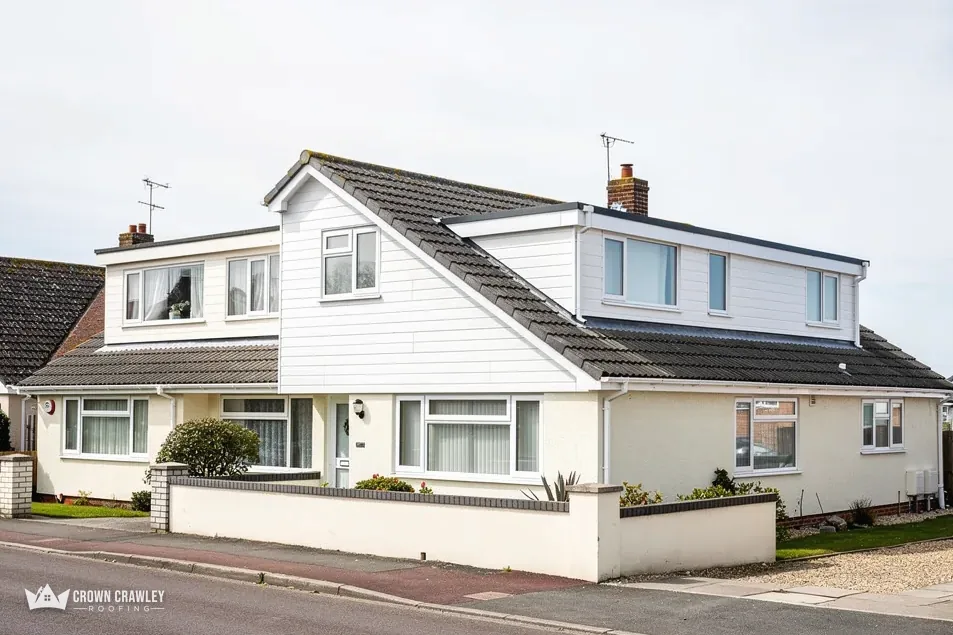
White is the plain choice and goes with most window frames. Black and anthracite grey suit darker windows and brick, and wood-effect finishes are offered for those who want the look of timber without the upkeep. Ask what is made for the profile your house needs, because not every colour comes in every board. Our guide to fascia and soffit colours and finishes shows how to choose. A like-for-like swap rarely counts as development under the planning Act, because that Act leaves out work which keeps the outside looking the same. Listed buildings are a separate matter, as alterations that change their character need listed building consent first. If yours is listed, or sits in a conservation area, check with Crawley Borough Council's planning team before you order anything.
What about soffit vents, birds and bats?
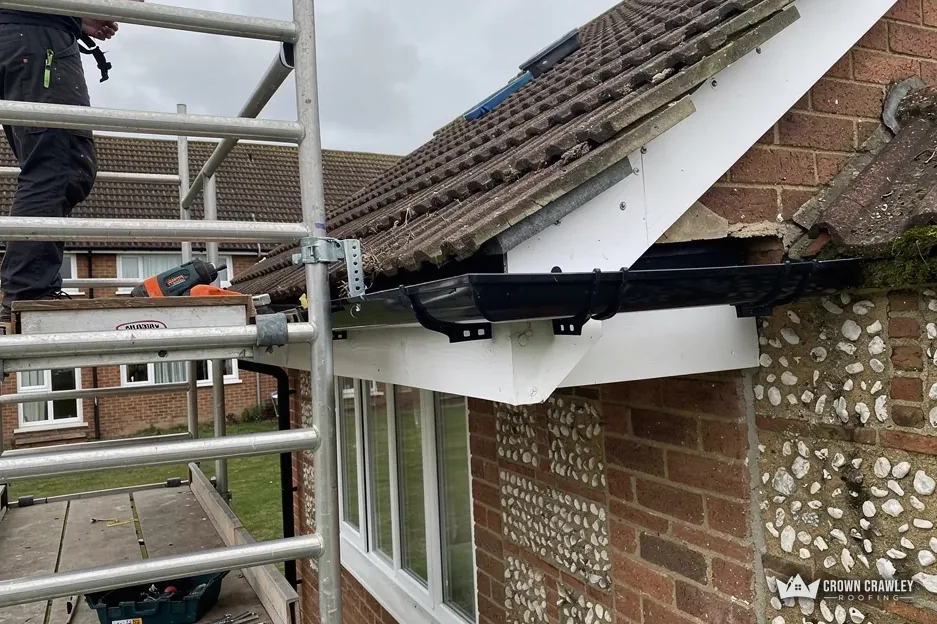
A roof space needs air. For a cold roof with non-breathable felt, Marley's reading of BS 5250 asks for eaves ventilation of 25mm along the eaves at pitches of 15 degrees or less, and 10mm above that. A vented soffit supplies it. Replacing a roofline also opens the eaves, where birds and bats sometimes live. The Wildlife and Countryside Act protects a nest while birds are building it or using it. Government guidance treats bats and their roosts as fully protected, and it lists roof repairs among the work that can disturb them. If we meet either behind an old board, the work pauses while we agree the next step with you. Our answer on soffit vents, birds and bats has the detail.
Stage 04 · Gutters
Gutter repairs, unblocking and cleaning in Crawley
Many gutter faults are small ones: a joint, a bracket or a blockage. Fixing the small fault first can save the whole run.
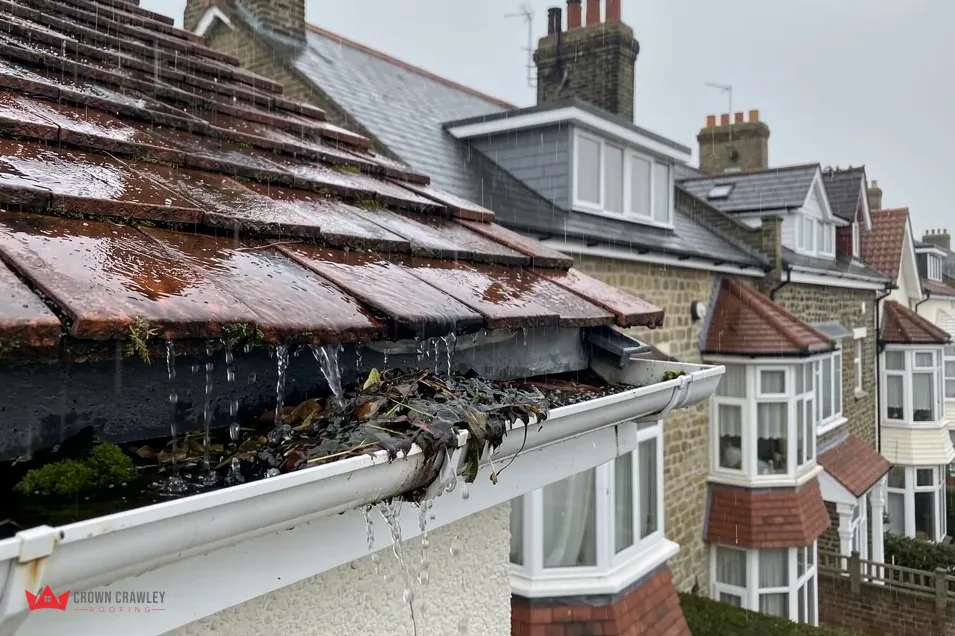
Guttering Crawley houses depend on is forgotten until a wet week reveals the fault. Then it shows at once: a waterfall over the edge, a dark stain down the wall, a green streak beneath a joint. Gutter repairs Crawley homeowners need are often modest ones, and fixing the cause in the right order is cheaper than replacing a run that was never really broken.
Can a leaking gutter joint be repaired?
Often it can, and that is the cheaper answer when the gutter is otherwise sound. At the survey we clean the joint, check the seal and see whether the run still sits at the right angle. A perished seal can be renewed and the union refixed. A brittle or cracked gutter, or one that has been painted and moved so many times that it no longer holds its shape, is better replaced than patched. Our post on replacing concrete Finlock gutters covers the heavier end of the same question. For ordinary plastic and aluminium runs, a quick look from a ladder or tower is usually enough to decide.
How much fall should a gutter have?
Water must run towards the outlet or it will sit and overflow at the lowest point. Brett Martin, a gutter manufacturer, advises 1mm of fall for every 600mm of gutter, and BS EN 12056-3 covers the layout and calculation of roof drainage. Standing water in a gutter after rain, even a thin film, tells us the fall has gone, often because a bracket has slipped or the fascia behind it has softened. We reset the brackets, or renew the board if it will not hold them, and then run water along the gutter to check it clears.
What does gutter cleaning involve?
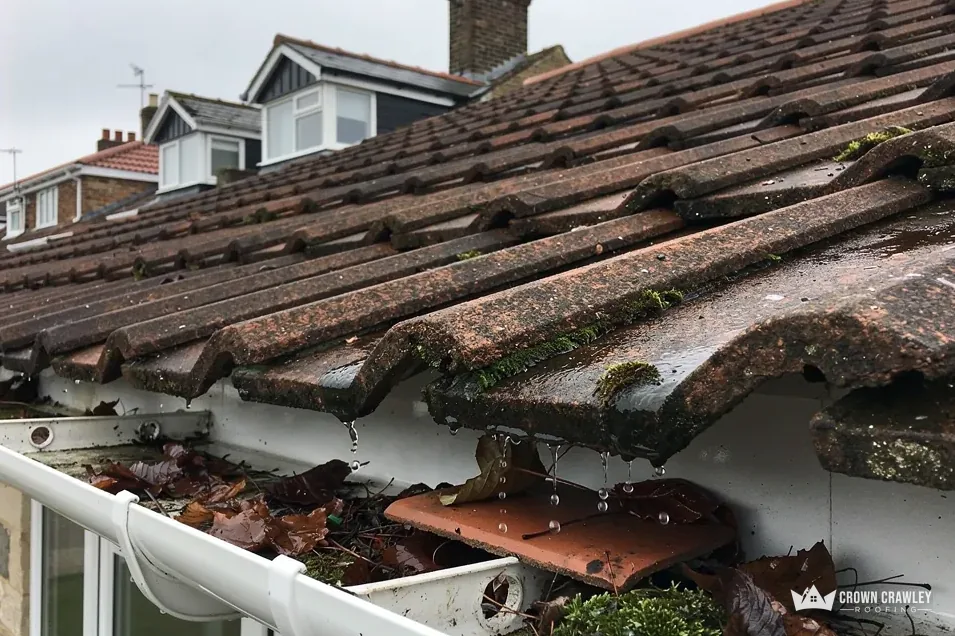
Gutter cleaning Crawley residents book usually follows autumn leaf fall, moss from a roof edge or seeds blown into a run. We reach the gutters from a ladder or tower, scoop out the silt by hand, clear the outlets and flush the downpipes, then look for cracks and loose brackets while we are there. A blocked downpipe is traced from the top, and where a clog sits at the base we check the drain it empties into. You get photos of the clean run, and of any fault we found, so you can see why the gutter overflowed. The price for cleaning is set after the survey, like every other job, because the length of the run and the height of the house change the access we need. Trees close to the house, and roofs covered in moss, mean the gutters will fill again sooner. Clearing the roof as well as the gutter stops the same moss washing back down.
Guttering words
- Outlet
- Opening that feeds the downpipe
- Union
- Joint connecting two gutter lengths
- Stopend
- Cap closing the end of a run
- Fall
- Slight slope towards the outlet
- Bracket
- Clip carrying the gutter on the fascia
Stage 05 · Concrete gutters
Concrete gutter replacement in Crawley
A concrete gutter is part of the house, not something bolted on. Whether it can be saved depends on its joints and its lining.
Concrete gutters are built into the eaves of some 1950s houses, and when one leaks, the damage is not limited to a wet wall. If your house dates from that period, it is worth looking at the profile of the gutter along the front, and at the wall beneath it for streaks or damp. A deep, square-edged trough in concrete, rather than a plastic or cast iron half-round fixed to a board, is the sign. Concrete gutter replacement Crawley owners ask about needs a survey before anything else, because the first question is whether the gutter has to go at all.
What is a Finlock gutter?
It is a concrete gutter formed from sections that are built into the structure of the wall. The RICS defects record on Finlock gutters shows a 1950s local authority-built house with them. RICS records that leaking joints have badly damaged a good many of these gutters. It adds that concrete laid in the trough of the inner sections forms "a lintel over the first-floor windows", and that this lintel is exposed to harm whenever a joint weeps. That is why a weeping joint on a concrete gutter is worth attention sooner than a weeping joint on a plastic one, and why we look at the wall below it.
Concrete gutter checks
- Joints
- Staining or dripping where sections meet
- Lining
- Any earlier lining split or lifting
- Lintel
- Cracks or damp above upper windows
- Downpipe
- Clear and joined to a drain
Does a leaking concrete gutter always have to come out?
No. RICS says careful examination can separate the gutters that need major replacement from those that stay sound with proper management, and that nobody should take removal for granted. Earlier repairs fail too, since a gutter relined with steel sections to stop joint leaks may now need that liner renewed. At the survey we check the joints, any lining, the area above the windows and the downpipes, and we explain which of repair, relining or removal fits. Whichever applies, you see the photos of the joints before you decide.
What does replacing a concrete gutter involve?
Taking out a gutter that forms part of the structure is slower than unclipping plastic, so it is planned as a proper job with scaffold, protection for the wall and a clear order of work. You hear from us about each day's plan before it starts, the access stays tidy and the old concrete leaves with us. Concrete is heavy, so it comes down in controlled pieces rather than dropping. Once the concrete is out, new fascia and soffit boards and a modern rainwater system are fitted in its place. If the survey suggests the lintel above the windows is affected, the written price says so and we recommend a structural check before work begins.
Never assume a concrete gutter has to go. The survey decides between repair, lining and replacement.
Once the old gutter is out, the eaves detail is rebuilt to suit the roof, not copied from the original. The new boards, soffit and gutter fall are set out together, with the roof covering carried properly over into the new gutter. We photograph the open eaves before they are closed up, so you see what was behind them, and the final price already reflects what we saw there.
- £650 to £1,700gutters, 15 to 20 m, October 2026
- 1mm in 600mmgutter fall, manufacturer guidance
- £300 to £600scaffold per elevation per week, September 2026
Stage 06 · Pricing
Typical roofline costs in Crawley
Four things set the price of roofline work: the length of the eaves, the access, the material and what we find behind the boards.
The written price for roofline work is a single total, set once the survey is done. The guide price we publish for guttering, soffits and fascias runs from £1,000 to £3,000, and where your job falls in that range depends on the same four questions every time: how long the eaves run is, how we reach them, what the boards and gutters are made of, and what lies behind the old ones. A short terrace costs less than a wide detached house, and a bungalow is simpler to reach than a three-storey end.
What do national guides say a roofline costs?
Checkatrade's guide, updated for September 2026, gives around £150 per linear metre for fascias and soffits, around £85 per linear metre for capping, and an average of £2,750 for a small semi-detached house. Its October 2026 gutter guide gives £650 to £1,700, averaging £1,000, for 15 to 20 metres of guttering with three downpipes. These are national figures, not ours. They help you judge whether a quote is far out, but they cannot price your house.
- Eaves run to measure
- Scaffold lift at the eaves
- Downpipe base
- Gable end board
Do fascias need scaffolding?
On a two-storey house, usually yes, because the work is at the edge of the roof and needs a safe platform for the whole length of the run. A week of scaffold on one elevation runs to £300 to £600, according to Checkatrade's September 2026 fascia and soffit table. Where the scaffold stands on the pavement or road, the highway authority has to grant a licence. West Sussex County Council lists £266 for one month and Surrey County Council lists £208 per 28 days. We deal with the licence together with the scaffolder, and a scaffold on your own land needs none. Our answer on scaffolding for fascia replacement goes through when a tower or lift will do.
What should you check in any roofline quote?
Check that the total says whether VAT is included, whether scaffolding is included, and which boards, soffits and gutters it covers, including the bargeboards and downpipes. Ask what happens if rot is found once the old boards are off. Ours is a total that already allows for what the survey and photos showed, and where part of the eaves was out of sight, the price names what we will look at once the boards are open. Any change is agreed with you first.
Keep reading
A contract signed in your own home after our visit counts as off-premises, and consumers usually have a 14-day cancellation window, running from the day it is made. Take your time over the price. Whenever you are ready, send us a photo along the eaves and tell us where the water spills over, so we know what to check first on the day of the survey.
Typical UK prices for roofline and gutter work
| Work | Guide price |
|---|---|
| Guttering, soffits and fascias (our guide price) | £1,000 to £3,000 |
| New gutters, 15 to 20 m, three downpipes | £650 to £1,700 |
Row one is our own guide price, and row two is a national guide figure. Your price is one written total, fixed after the survey of your eaves and the photos that go with it.
Checkatrade cost guides: fascia, soffit and guttering replacement, September 2026; gutter replacement, October 2026.
Roofline and guttering guides
Short answers and longer guides on capping, colours, soffit vents, gutter falls and concrete gutters, for anyone weighing up work on their eaves.
Guides and posts
Fascia Capping vs Full ReplacementCapping covers the old fascia with new plastic, and replacement takes the old board away. Here is when each is the…Guide · 9 min read Fascia and Soffit Colours and FinishesThe roofline frames the whole house, so the colour you pick shows from the street for years. This guide compares the…Guide · 9 min read
 Soffit Vents, Birds and BatsSoffit boards hide a gap that air, birds and sometimes bats all find useful. This guide explains what the vents do…Guide · 9 min read
 Soffits and Fascias: The Unsung Heroes of Roofline ProtectionTwo thin boards under your roof edge do more work than they get credit for. Here is what a fascia and a soffit each…Blog · 9 min read
 Soffits and Fascias Maintenance: Care for a Healthy RooflineFascias and soffits take the weather for the whole roof edge. A simple cleaning and checking routine keeps them sound…Blog · 9 min read
 The Benefits of New Soffits and Fascias for Your Home's ExteriorPainted timber boards need attention every few years or they rot. Here is what changes when you swap them for uPVC…Blog · 9 min read
 Upgrading Your Guttering: Better Flow, Better LooksIf your gutters spill in every downpour, a patch will not cure it. Here is how the main profiles compare on capacity…Blog · 9 min read
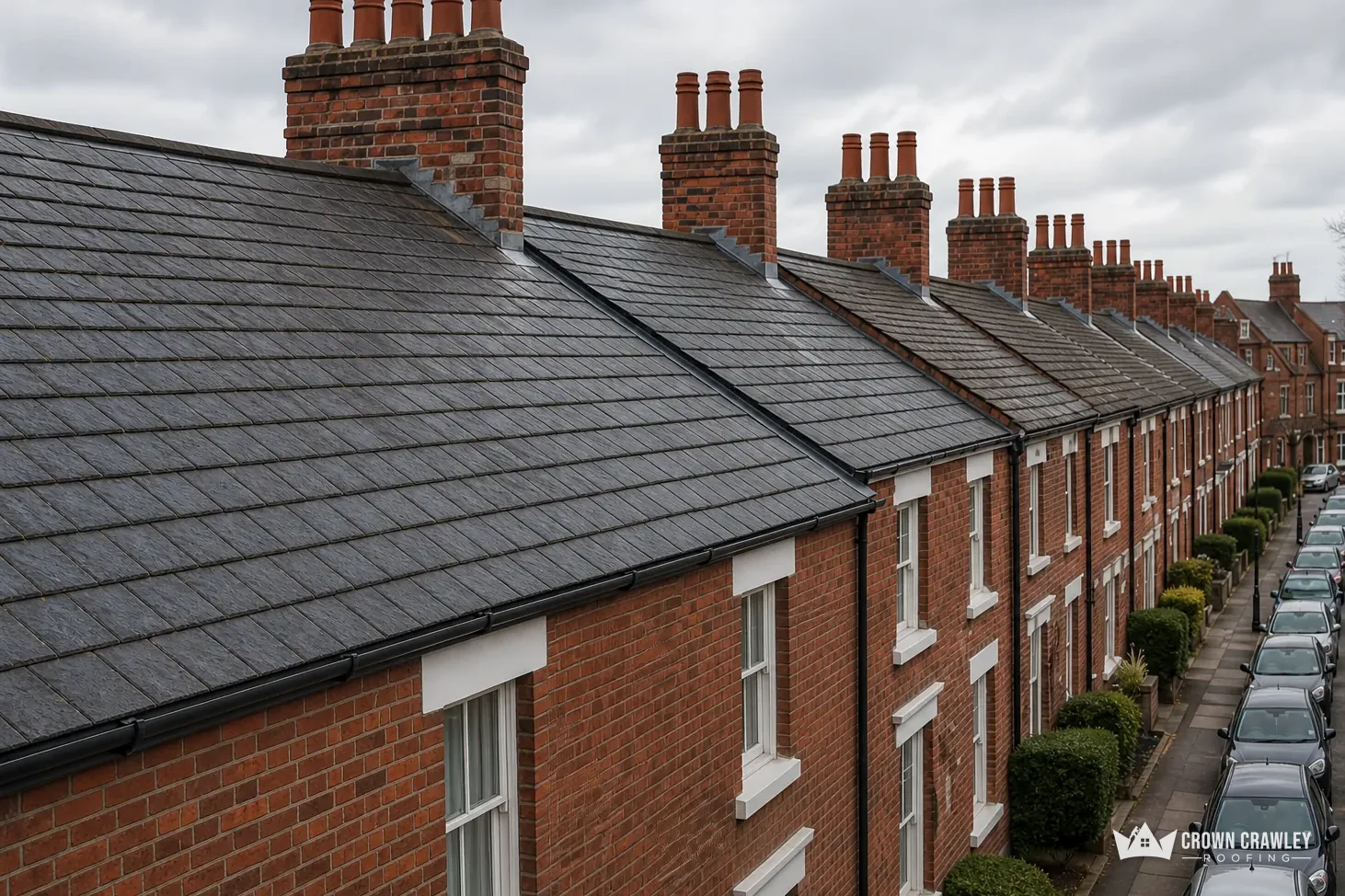 Guttering Maintenance Tips for Reliable PerformanceGutters ask for very little, but they do ask. A short routine twice a year keeps the channel clear, the joints sealed…Blog · 9 min read
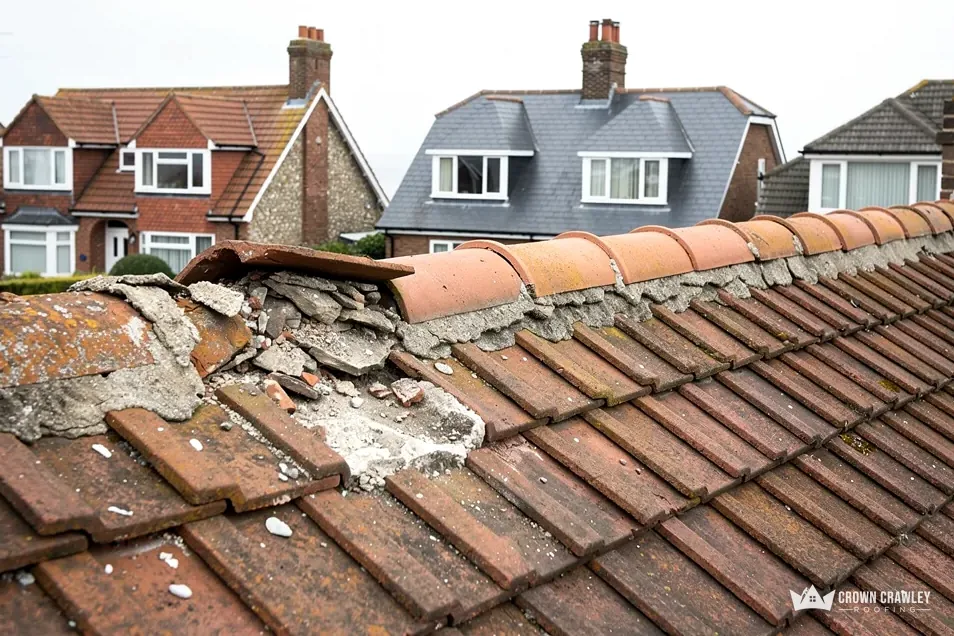 Guttering 101: Protecting Your Home From Water DamageA roof sheds a lot of rain, and the gutters decide where it lands. Here is what happens to a house when they fail…Blog · 9 min read
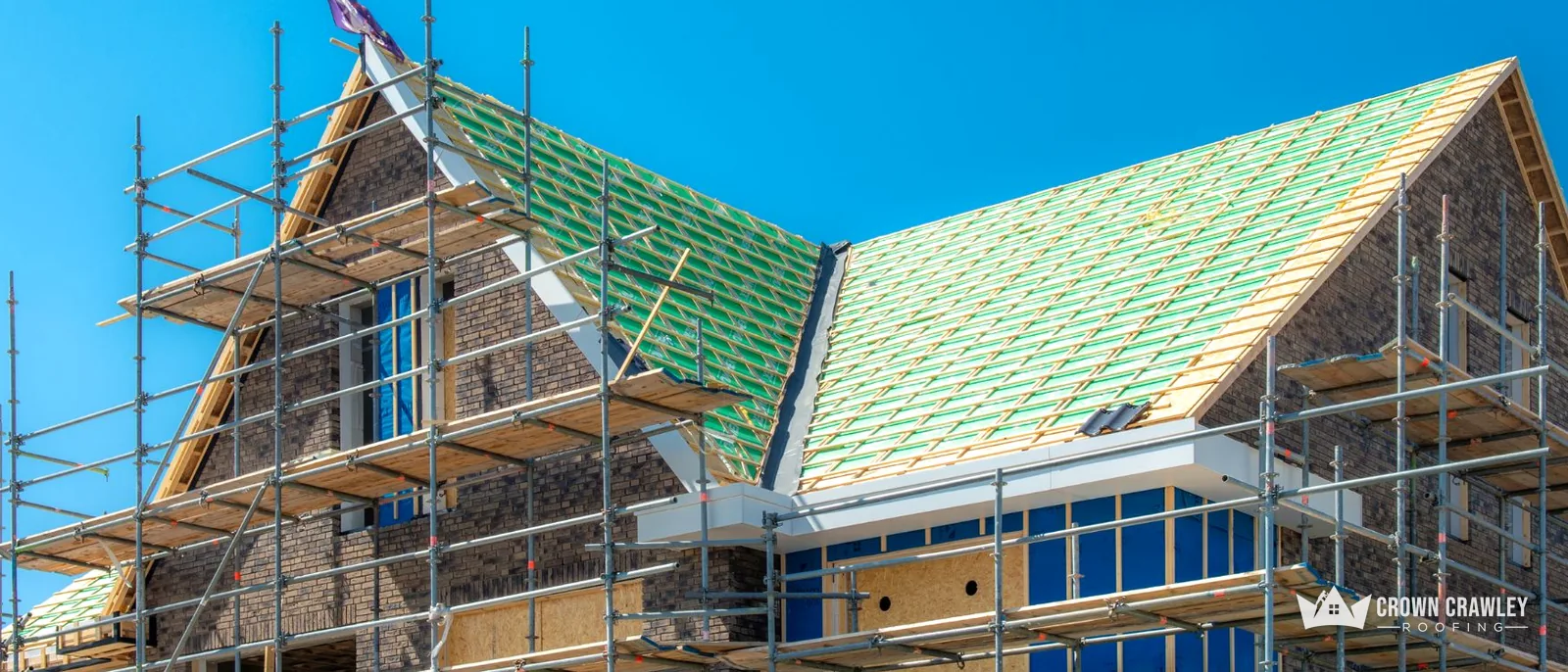 Soffit and Fascia Materials: Balancing Function and StyleThe boards under your roof edge are chosen once and seen every day. Here is how uPVC, timber, aluminium and composite…Blog · 9 min read
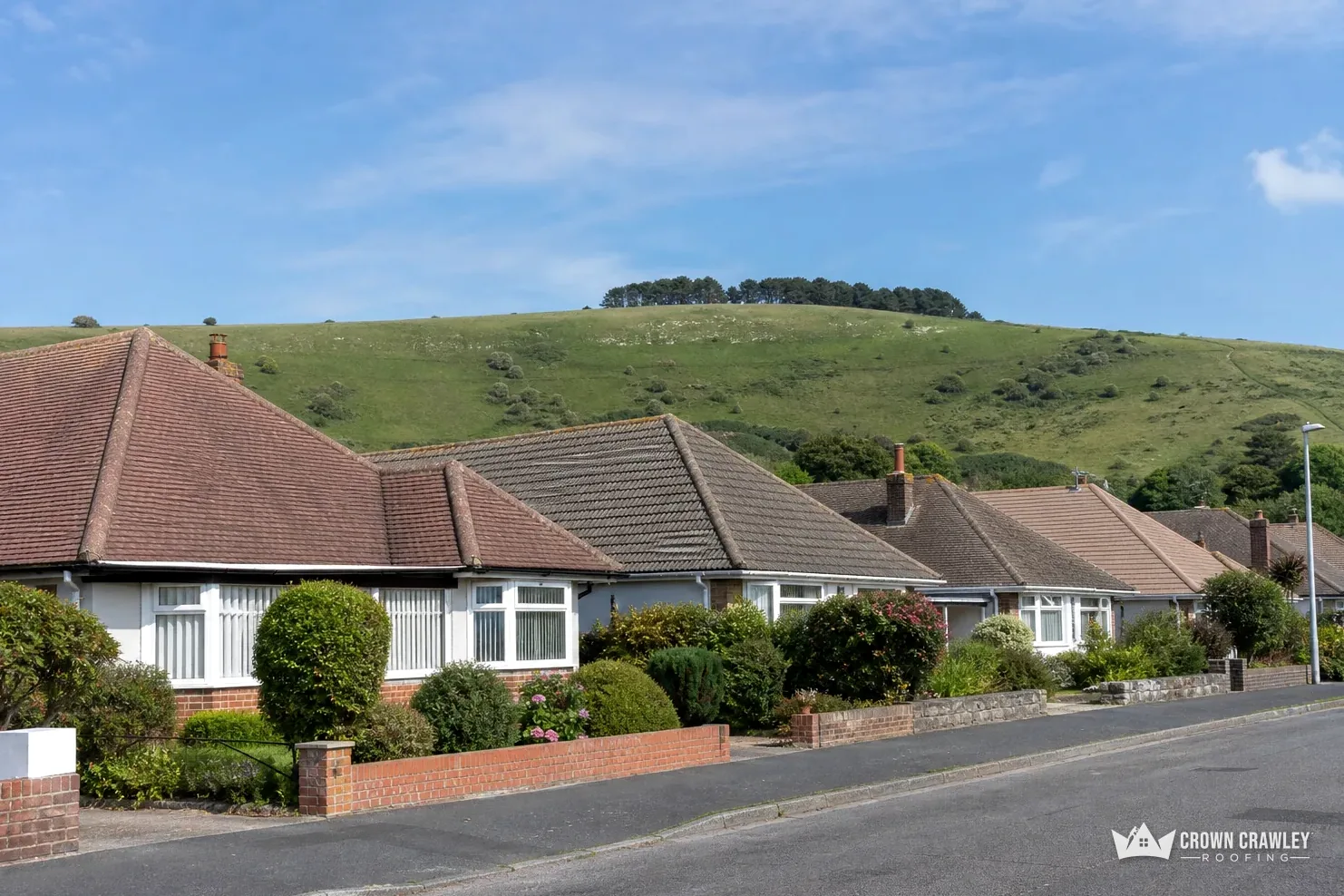 Choosing the Right Guttering System: Materials and StylesGutters look alike from the pavement but behave very differently. Here is how the five common materials and the main…Blog · 10 min read
 Replacing Concrete (Finlock) Gutters: Costs, Process and OptionsConcrete gutters built into the eaves of post-war houses can leak at the joints. Here is how to recognise them, what…Blog · 9 min read
Quick answers
- How Much Do New Fascias and Soffits Cost?
- How Long Does uPVC Roofline Last?
- Do You Need Scaffolding to Replace Fascias?
- How Much Does Gutter Cleaning Cost?
- Why Are My Gutters Overflowing?
- How Do You Fix a Leaking Gutter Joint?
- Why Is My Gutter Sagging?
- How Do You Clear a Blocked Downpipe?
- Are Gutter Guards Worth It?
- Can Cast Iron Gutters Be Repaired?
- Can Finlock Gutters Be Lined?
- Who Fixes a Gutter Shared With a Neighbour?
- How Much Does Gutter Replacement Cost?
- What Are the Signs of a Rotten Fascia Board?
- What Are Eaves Guard Trays?
- Aluminium vs uPVC Guttering
- How Much Fall Should a Gutter Have?
- Where Should a Downpipe Drain?
- Could My Soffit Boards Contain Asbestos?
- What Are Bargeboards?
Related services
 Pitched roofingOur pitched roofing service covers tiled and slate roofs across Crawley and Sussex: slipped tiles, tired battens…
 Dry ridge & dry vergeOur dry ridge work in Crawley covers loose ridge tiles, failing verge mortar, rattling verge caps and full dry-fix…
 Roof cleaning & moss removalOur roof cleaning in Crawley and across Sussex and Surrey removes moss, lichen and algae by hand and with gentle…
Roofline and gutter questions
Can new fascias be fitted without replacing the gutters?
Sometimes. The gutter has to come off to fit a new fascia, so sound gutters can be refitted on new brackets. Old plastic often turns brittle and cracks when it is unclipped, and a run that has lost its fall is easier to reset while it is off the wall. We tell you at the survey which case yours is.
Will new soffits stop birds getting into my roof?
Tight new boards close the gaps birds use, but only once any nest has finished. A nest is protected while birds are using it or still building it, so if one turns up while the old boards come off, we pause and call you. Bats are fully protected too. Vented panels keep the roof space breathing while the gaps stay shut.
Is it worth repainting a failing timber fascia?
Only if the wood underneath is sound. Paint over damp or soft timber lifts again within a season, and rot carries on behind it. We press the board at several points. If it holds, repainting or capping can work. If the point sinks in, the board and the rafter end behind it need to be looked at.
Do the gutters have to match the fascia colour?
No. White fascias with black gutters, or black throughout, are both common, and some homes carry anthracite grey to echo the windows. What matters is that gutters and boards come from a range whose profiles and brackets fit together. We bring samples to the survey so you can hold them against your brickwork. Samples held up to the brickwork settle the choice quickly.
How do I know if a leaking concrete gutter can be saved?
Look at where it leaks and what lies around it. RICS advises that taking the gutter out should not be presumed, because a run with sound sections and failing joints may be managed instead of replaced. Staining above upper windows is a stronger warning. A survey of the joints, any lining and the lintel gives a clear answer.
Do I need permission to change my fascias?
A straight like-for-like swap does not normally need planning permission, since the planning Act does not treat work that keeps the outside looking the same as development. Listed buildings need consent for alterations that change their character. Unsure, or in a conservation area? Ask Crawley Borough Council's planning team first. We can point you to the right page on the council's site.
Send us a photo along your eaves
Send a photo along the eaves and tell us where the water spills in rain. That tells us which boards and gutters to check first.