

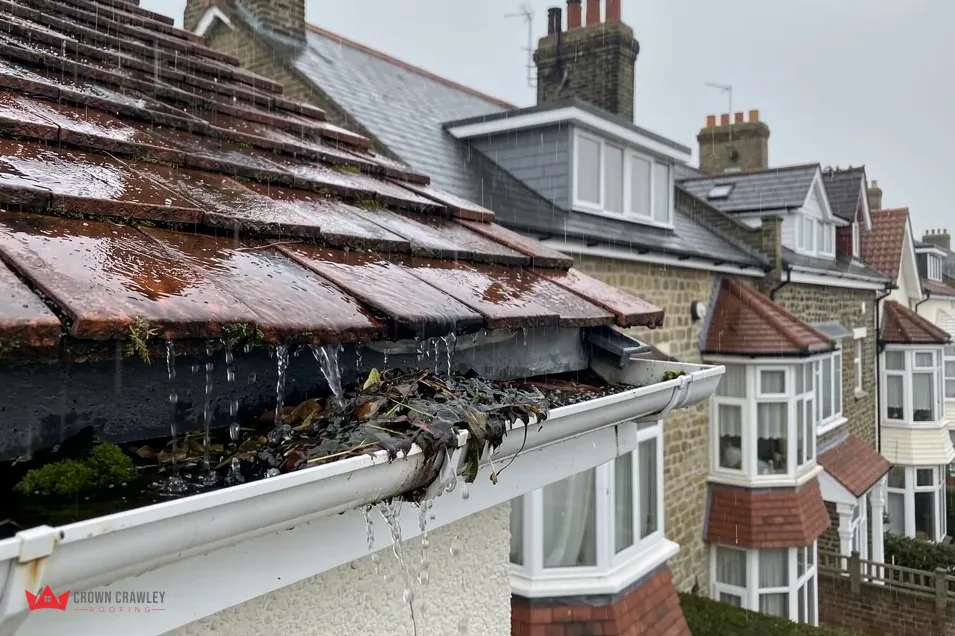
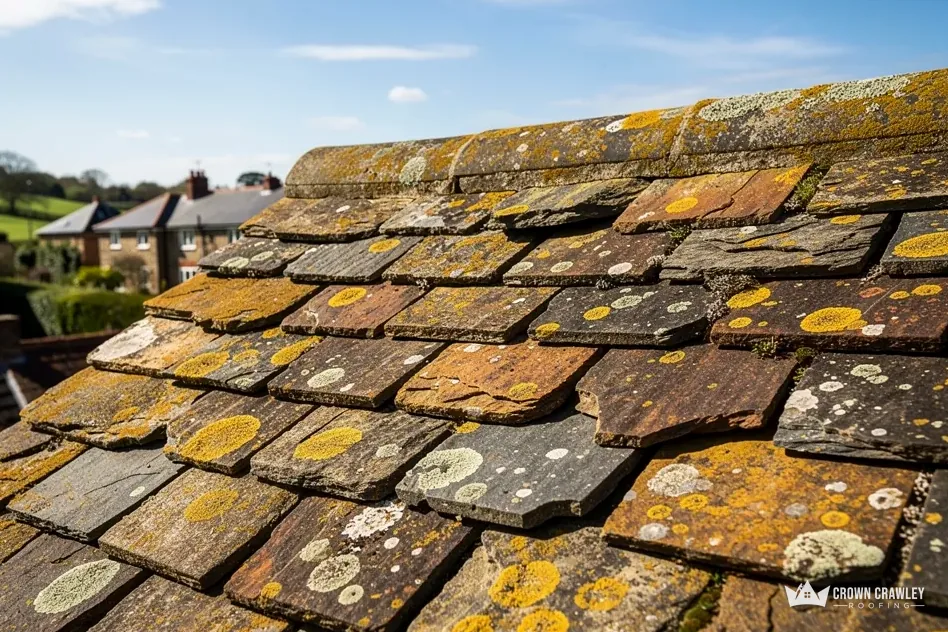
 What Is a Roof Make-Safe?A make-safe is the first job after storm, fire or impact damage: stop the water, secure what is loose and protect the…Guide · 9 min read
Emergency & General Roof Repairs in Crawley
Leaks made safe first, then repaired properly.
Emergency roof repairs in Crawley start with making the roof safe, then finding the real cause. We cover leaks, storm damage, slipped tiles and flat roofs, and you receive one written price after a survey.
- Survey photos of your own roof
- One written price
- Repairs, re-roofs and emergencies
- Tidy site, waste taken away
Signs your roof needs attention now
- Water marks spreading across a ceiling
- Tiles or ridge pieces lying on the lawn
- Dripping into the loft while it rains
- Flat roof felt lifting or flapping in wind
- Daylight showing round the chimney or verge
What our roof repair service covers
 Leak tracing and repairWe follow the water from the stain to the opening, then repair that opening rather than painting over the symptom.
 Temporary weatherproofingA secured cover or relaid tiles keep rain out while the roof dries and the proper repair is planned.
 Slipped and blown tilesLost or cracked tiles are swapped for a close match and clipped down so the next gust cannot lift them.
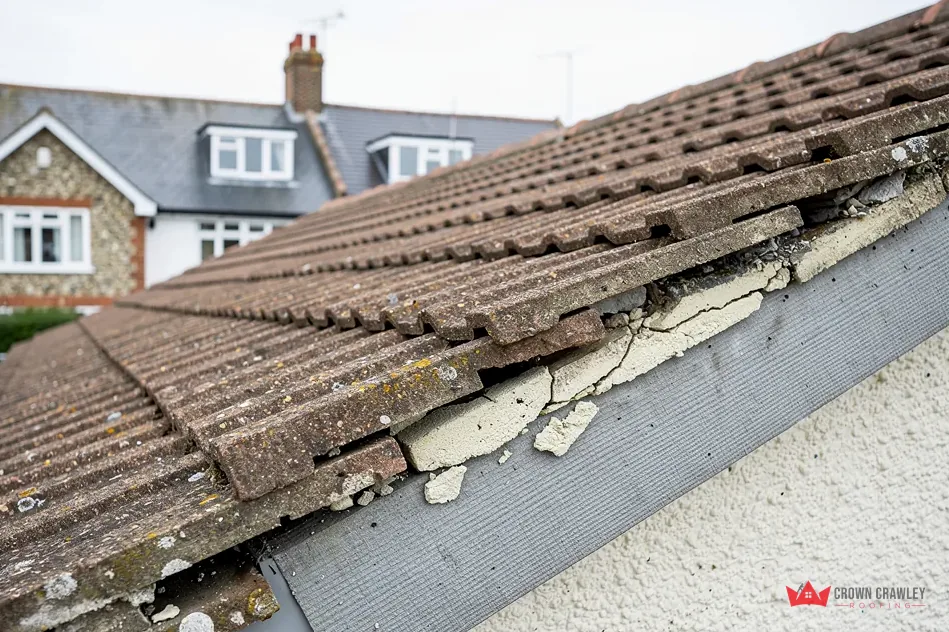
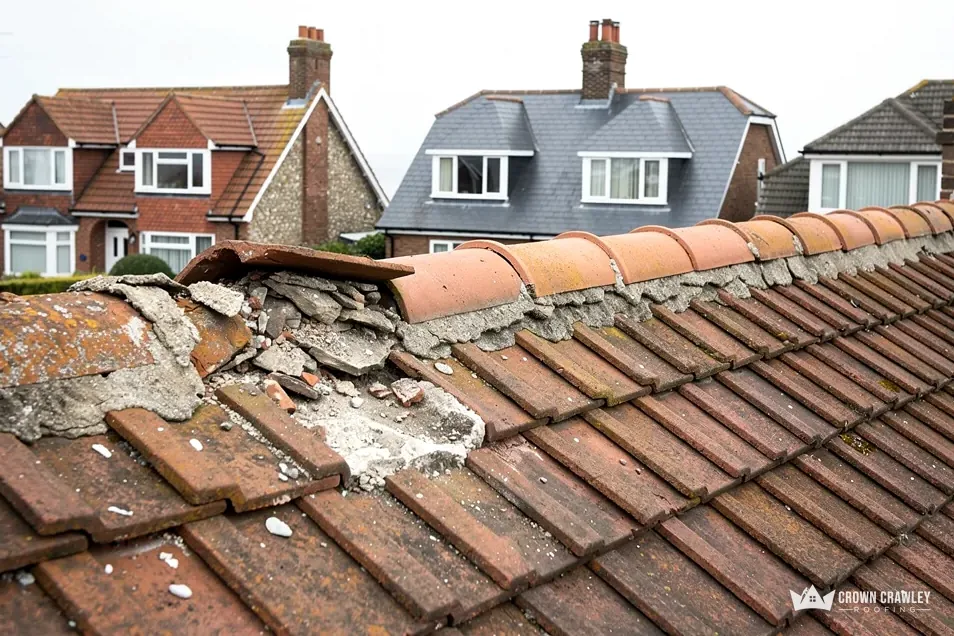
 Ridge, hip and verge fixesLoose ridge pieces and cracked verge mortar are rebedded with mechanical fixings, or switched to dry-fix units.
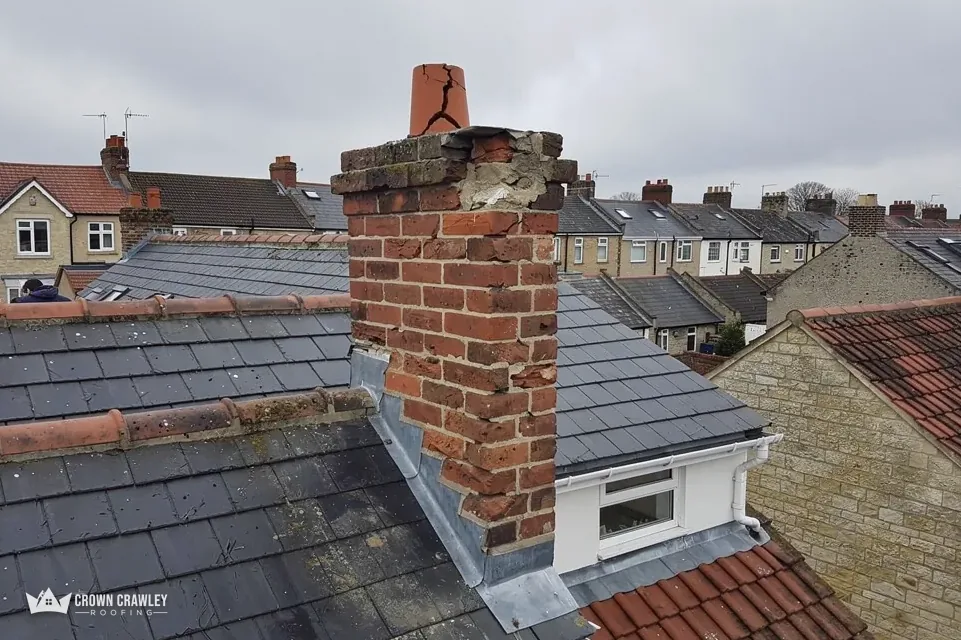
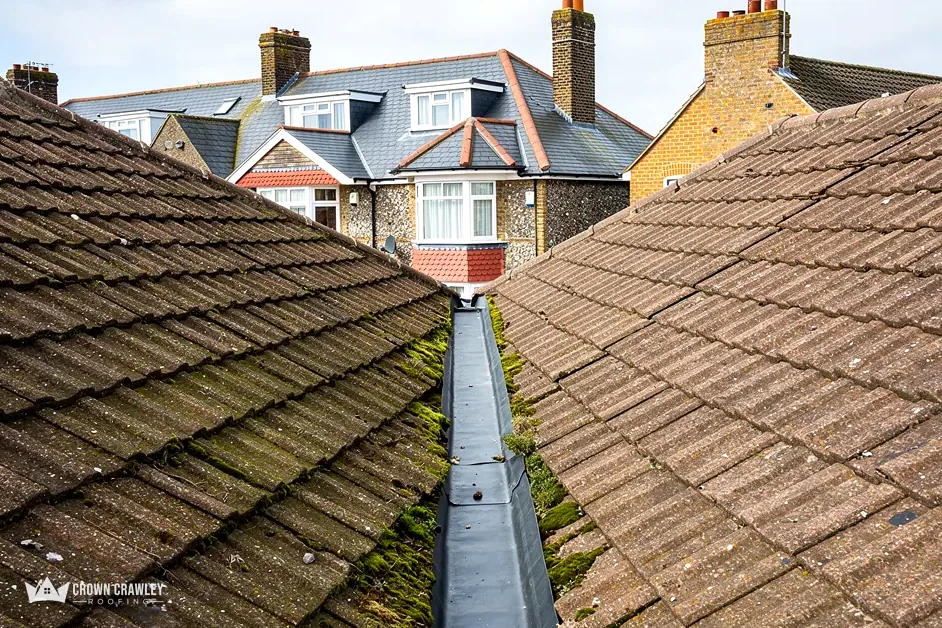
 Flashings and valleysLead and mortar joins at chimneys, walls and valleys are resealed or renewed where water has found a way in.
- Flat roof and gutter repairsSplit felt, lifted edges, blocked outlets and leaking gutter joints are repaired or sealed back to a sound state.
Make safe, repair or replace?
- Make safeWater is coming in now, so we cover the opening before anything permanent is done.
- RepairThe fault sits in one place and the covering around it is sound enough to keep.
- ReplaceWear or damage runs across a whole slope, and patching it would only postpone the job.
How an emergency call-out runs
- 1Call, message or send a photoYou ring 01293 974253 or WhatsApp us, and tell us where the water shows and how fast it is coming.
- 2We make the roof safeWe cover the opening or relay the loose tiles, so the house is dry while the cause is worked out.
- 3A survey and one written priceWe look at the whole fault, photograph it, and send a single total for the proper repair.
- 4The repair, then after photosWe repair the cause, clear the gutters and send photos so you can see exactly what was done.
The repair diary
Inside an emergency roof repair
Six stages of a leak or storm job around Crawley, from the first phone call to the last check of the ceiling below.
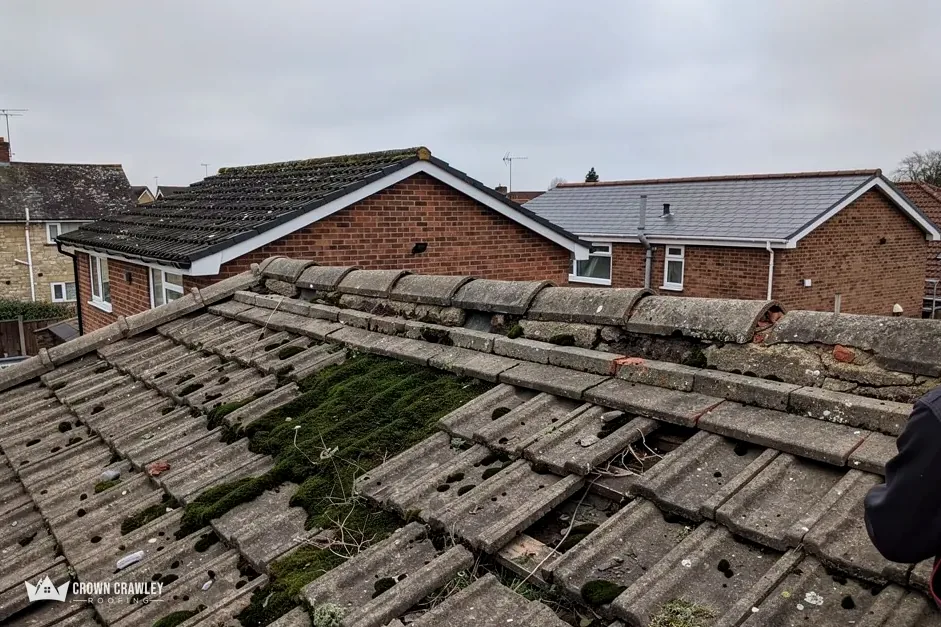
Stage 01 · First call
Emergency roof repairs in Crawley
A roof emergency is a hurry to stop water, not a hurry to sell you a roof. The order of work protects the house first.
An emergency roof repair is any fault where water is entering the house now, or where something loose could fall onto a path, a car or a person. Our emergency roof repairs, Crawley and the villages around it, follow one order: stop the damage growing, then work out the proper fix once the roof can be read clearly. It helps to know how that works before you need it, so here it is.
What does an emergency roofer actually do?
Calling an emergency roofer, Crawley households included, means asking for a roofer who can come out when the fault will not wait for a planned booking. The job is narrower than it sounds. The first visit is about stopping water and removing danger: a loose ridge piece that could drop, a gap where tiles have blown away, a flat roof split that is pouring into a bedroom. The repair that lasts usually comes second, and sometimes the weather makes it a separate visit. A slipped tile on a dry day, with nothing coming in, is a booked repair and not a rush, and we will tell you that plainly on the phone. If the situation is dangerous, such as a loose chimney stack or a sagging ceiling, we will tell you to keep clear and call the right service first.
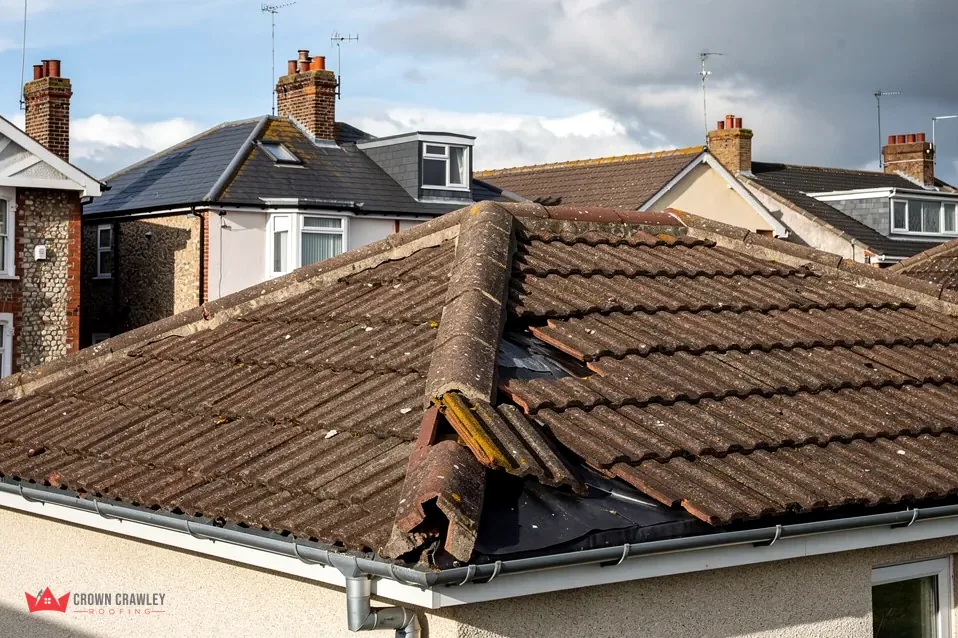
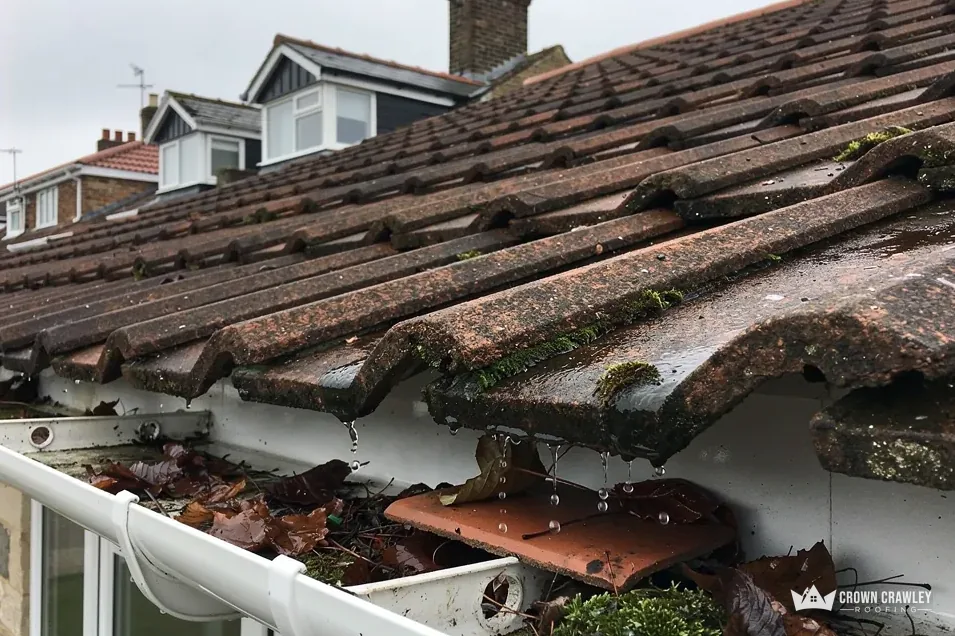
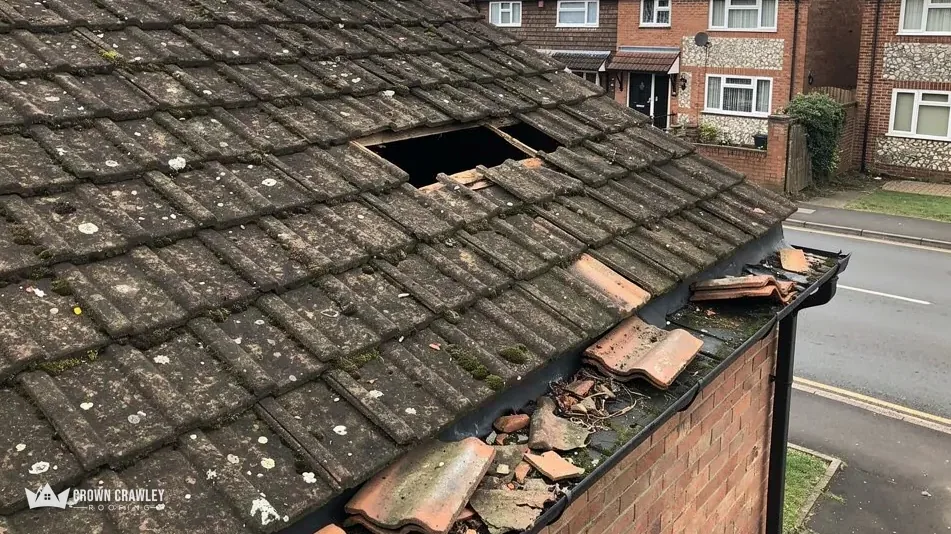
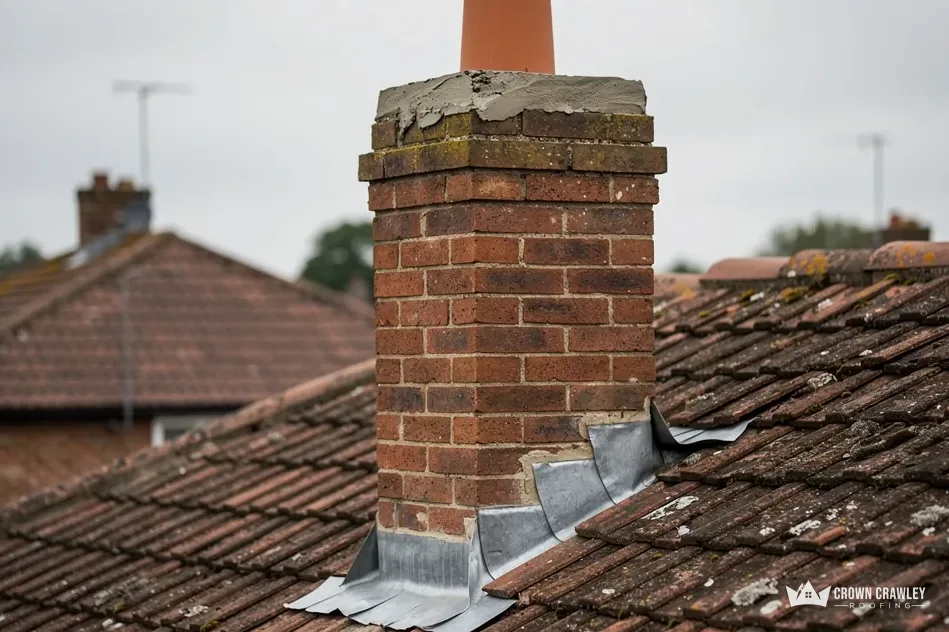
- Missing tile gap
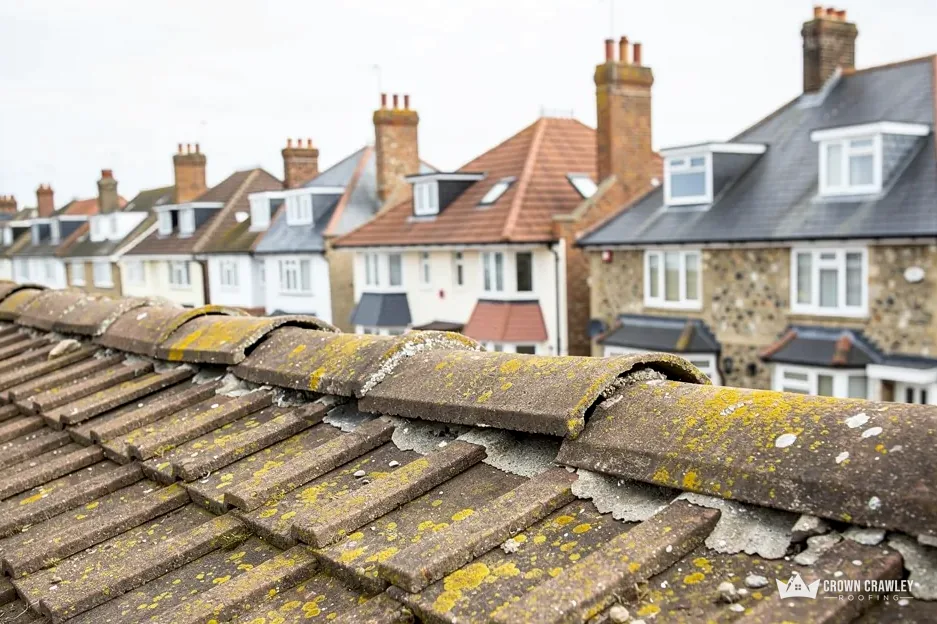
- Cracked ridge piece
- Verge edge
- Roof valley
What happens when you call?
We ask where the water shows, what the weather is doing, and whether anyone can look into the loft without climbing on anything unsteady. A photo of the ceiling and one of the roof from the garden, sent by WhatsApp, saves time because it shows us which slope to look at first. We then agree a visit with you. Every call-out is a roof job like any other in one respect: we survey, we photograph, and the price you receive is one written total.
Why do we make it safe before we repair it?
Wet tiles, wind and fading light can all make a roof unsafe to work on, and a rushed permanent repair in those conditions is the one most likely to fail. A make-safe is the sensible first move: a secured cover over the opening, or sound tiles relaid over the gap, so the loft stays dry. Our guide to what a roof make-safe is explains what it includes and what it leaves for the second visit. A make-safe is temporary by design. It buys time to dry the roof, read the damage and give you a proper price.
Some people want to stand a ladder against the wall and try something themselves first. We would rather you stayed on the ground, kept the family out of the room below the leak, and sent us the photos.
Keep reading
If you can do one useful thing before we arrive, put a bucket under the drip and move furniture and bedding clear. Note the time you first saw the water, and which way the wind was blowing then. Those two details often point us at the slope that took the weather. Everything else can wait for the visit. If you can safely take a photo of the wet ceiling with a coin or ruler beside it for scale, that helps us judge the size of the problem before we leave.
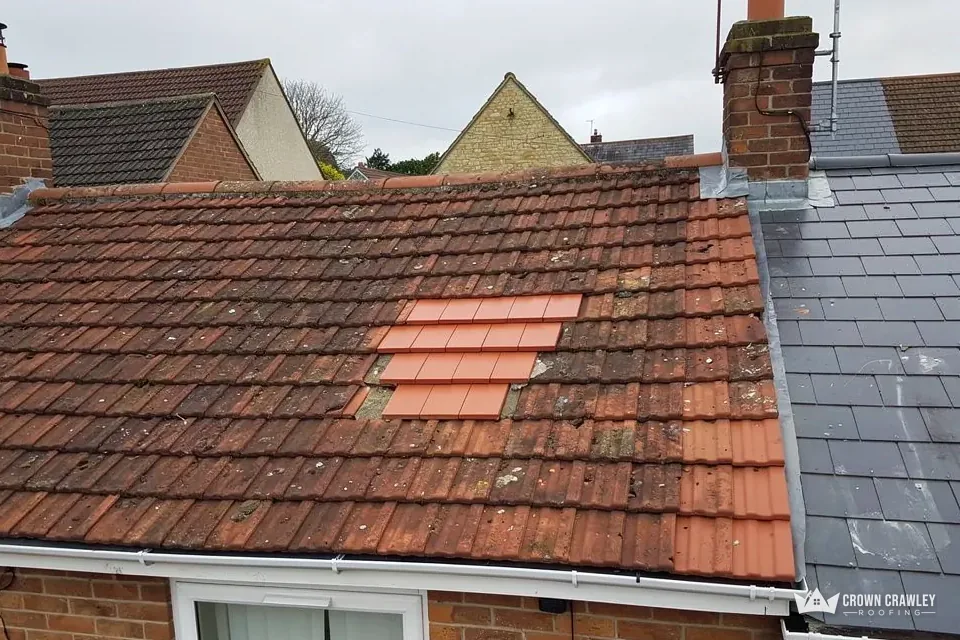
Stage 02 · After the storm
Storm damage roof repair in Crawley
After a gale the damage is rarely one tile. We read the whole roof, then deal with what is loose, open or about to fail.
Storm damage roof repair, Crawley and the surrounding towns included, tends to follow the same pattern. Wind gets under the edge of a roof, lifts the first tiles, and then works along the course. Verges, ridges and the eaves are the usual first casualties because they are the most exposed. A fallen branch, a shifted chimney pot or a flapping sheet of felt can add to the list. Our job after a storm is to find every opening, not only the one that is dripping.
Storm damage words
- Uplift
- Wind lifting tiles off their battens
- Verge
- Edge of the roof at a gable end
- Ridge
- Top line where two slopes meet
- Make-safe
- Temporary cover that keeps water out
What should you do first after a storm?
Stay off the roof, and check from the ground. Look for tiles on the lawn, a sagging ridge line or a gap in the gutter run. Photograph everything you can see from where you stand, including the ground around the house, because the position of fallen pieces shows where they came from. Keep people away from any area where something could still drop. If a tree has come down on the house, keep everyone out of the rooms beneath it and tell us what you can see from outside.
How do you handle the insurance side?
Tell your insurer first, then arrange a temporary repair to stop further damage, and keep every photograph and receipt. The Institution of Structural Engineers says: "Photographs are vital for your insurance claim, as they provide visual evidence of the damage." Which? reports Financial Conduct Authority figures showing that only 32% of storm-related claims made in 2024 resulted in a payout, so nothing about a claim should be taken for granted, and we cannot promise how yours will go. We can supply photographs of the roof and a written account of what we found and what we did. If you are unhappy with how a claim is handled, the Financial Ombudsman is the route for complaints. Our post on storm damage roof insurance claims goes through the steps in order.
A storm exposes a roof's weak points. Repair the weak point, not only the hole.
Does storm work need scaffold?
Sometimes. A cover over a gap near the eaves can often be fixed from a ladder and roof ladder, while a ridge or chimney two storeys up may need a tower or full scaffold to be done safely. A scaffold that stands on the pavement or road needs permission from the highway authority in the form of a licence. West Sussex County Council asks for at least 10 working days' notice, and a fast-track application costs an extra £52, which you would arrange by email first. The licence is something we sort out alongside the scaffolder. A scaffold standing wholly on private land needs none. Where access is the difficulty, the make-safe may be done from a ladder first, with the scaffold booked for the repair that follows.
Some storm jobs call for tall lifting equipment. Gatwick Airport requires a permit for a crane used within 6km of the airport, with exceptions for equipment under 10m or screened by taller trees or buildings. If your job needs a lift, we check the permit position before booking it, because the application has to go in ahead of the work.
- 32%of 2024 storm claims paid out
- £266West Sussex scaffold licence, one month
- 10 working daysnormal notice for that licence
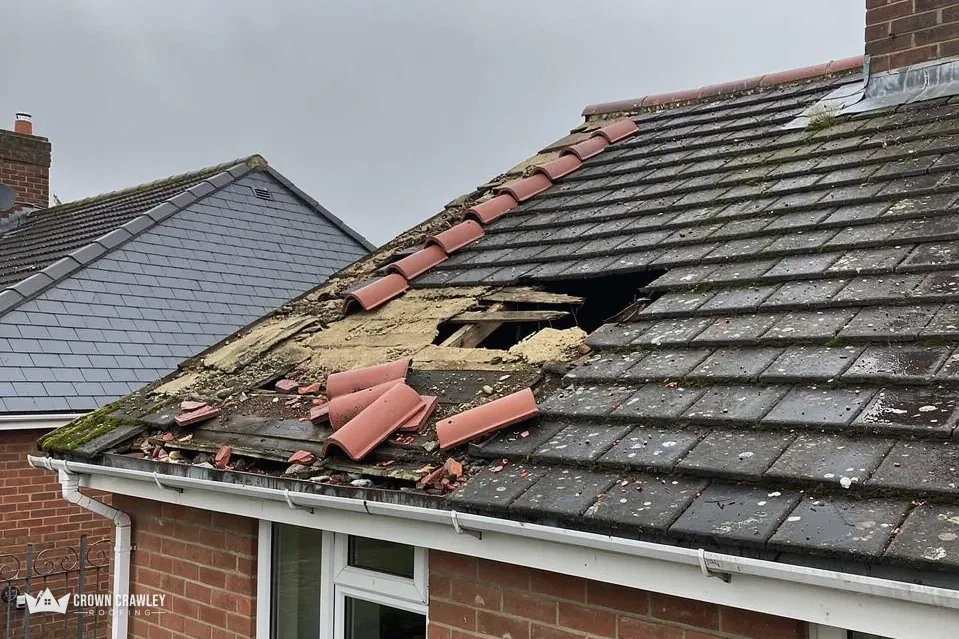
Stage 03 · Finding the leak
Roof leak repair, from stain to source
Where a ceiling stain shows is rarely where the roof is open. Tracing the water properly is half of a lasting roof leak repair.
A good roof leak repair, Crawley or anywhere else, depends on one thing: finding the real entry point. Water runs along rafters, underlay and plasterboard before it drips, so a stain over the sofa can sit well below an opening much higher up the slope. We start inside, work outwards, and compare what we see from the loft with what the roof shows from above.
How do roofers find where a roof is leaking?
We look at the stain, then at the loft above it for dark timber, wet insulation, rusted nail tips or a pinprick of daylight. Then we go to the slope and look at what sits above that spot: a cracked tile, a slipped tile, a failed lead flashing, a cracked valley line or a blocked gutter that has backed water under the tiles. When the weather is dry and the cause is not obvious, a hose test, with one person inside and one outside, shows which area lets water through. Our guide on how to find where a roof is leaking sets out the method.
Where we look for a leak
- Ceiling
- Stain shape and where it spreads
- Loft
- Damp timber, wet insulation, daylight
- Slope
- Cracked, slipped or missing tiles
- Joins
- Flashing, valley and chimney edges
- Gutters
- Blocked outlets, overflow marks
What should you do while you wait for us?
Move belongings away from the wet area and put a container under the drip. If water is gathering in a bulge in the ceiling, make a small hole at the lowest point with something like a screwdriver so it drains into a bucket rather than bringing the whole section down. Keep well away from light fittings, switches and sockets that are wet or near the drip. If water is reaching a fitting, turn the power off at the consumer unit, and have an electrician look at it before it is used again.
Is it a roof leak, or is it condensation?
The two look alike. A roof leak tends to get worse during or just after rain, and the marks are often brown at the edge. Condensation appears in cold spells on cold surfaces, with black mould speckling a corner and wet windows nearby. Both can exist in one house. If the loft has little ventilation, damp air from the house can collect there and drip, which then looks like a leak. We check both on a survey, because the cure for one will not fix the other.
Once the cause is plain, the repair is usually small: a few tiles, a flashing resealed, a valley relined. Water that has found its way in over weeks may have soaked insulation and timber on the way, so we look at those as well and tell you if anything needs drying out or replacing. We photograph the fault and the finished repair, and we check the ceiling below once it has had time to dry.
Stage 04 · The repair
Slipped tiles, ridges and general roof repairs
Most roof repairs in Crawley are small ones done well. A slipped tile or loose ridge costs far less to fix early than to ignore.
Roof repairs, Crawley homes included, are mostly modest jobs. A tile slips, a ridge piece loosens, a flashing opens, and water finds the gap. The aim of a general repair is to fix that fault and the weakness behind it, not to sell a bigger job.
How are slipped tiles repaired in Crawley?
Slipped tiles repair, Crawley or elsewhere, looks simple and often is. The tiles above are raised, the broken one comes out, and a sound replacement is hooked over the batten and fixed down so it cannot lift. The question is why it slipped. A tile hangs by small lugs called nibs, and often by a nail or clip as well. If a nail has rusted through or the batten beneath has gone soft, a new tile alone will slip again. So we check the battens around the gap, and if several tiles have moved, we look underneath before fixing anything on top.
Repair words
- Flaunching
- Mortar that holds a chimney pot
- Soaker
- Lead piece under tiles at a wall
- Dry-fix
- Mechanically screwed ridge or verge
- Batten
- Timber strip each tile hangs from
- Underlay
- Second layer beneath the tiles
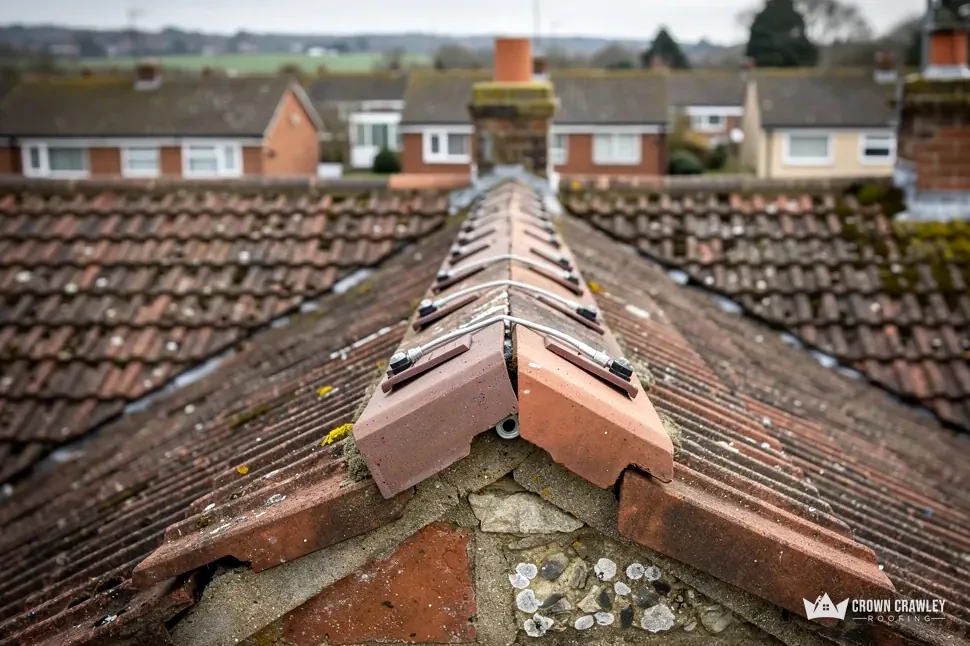
Why do ridge and verge repairs matter so much?
The ridge caps the roof and the verge finishes the gable end, so both take the most wind. Marley says that since BS 5534 was revised in 2014, "all bedded roof tiles and fittings should include mechanical fixings", because mortar alone cannot be relied on. When we rebed a ridge or verge, we add the fixings. On a newer house, the ridge may be a dry-fixed system, and then only the units that have failed need replacing. Our page on dry ridge and dry verge covers changing a whole roof to it.
What does general roof maintenance involve?
A maintenance visit is a planned version of the emergency one. We walk the roof, clear gutters and valleys, reseat loose pieces and note what is nearing the end of its life, with photographs. Lead flashings and chimney joins are checked, because a failed flashing can leak for months before a stain appears, and the gutters are cleared so water leaves the roof the way it should. For concrete, clay and slate roofs, our repair-type guide to common roof repairs lists the faults, what each typically costs and when each is the better buy compared with a new covering.
Tiles move for a reason: a rusted nail, snapped nib or soft batten.
On repairs generally: we match tiles as closely as a current or reclaimed profile allows, and we place a new tile where it will show least. A single bright tile among weathered neighbours fades in time, and a sound roof with one mismatched tile is better than a leaking roof with a perfect match. If the same job comes up repeatedly on one slope, we flag it, because at that point re-covering the slope costs less than another patch.
The Energy Saving Trust advises against spraying foam onto a roof that is leaking and has not been fixed: "We don't recommend doing this." RICS also suggests asking your lender whether its policy allows spray foam at all. Repair the leak first, and think about insulation afterwards. Sealing a roof from underneath can trap moisture against the timbers, so the cause is always dealt with from above.
Stage 05 · Flat roofs
Flat roofs, garage blocks and gutters
Flat roofs, garage blocks and old concrete gutters fail in different ways from tiles, and they need different emergency measures.
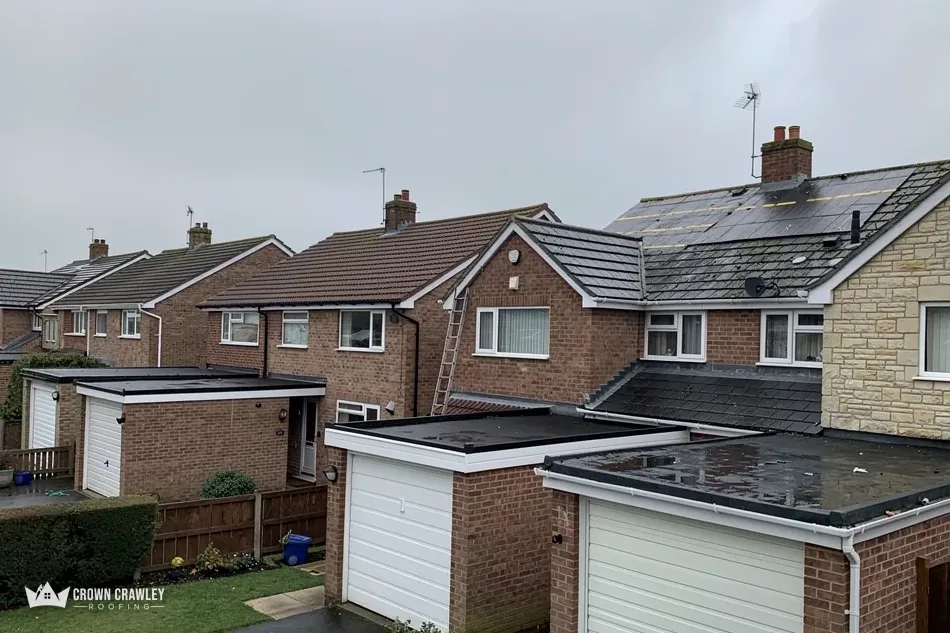
Crawley grew as a post-war new town, and flat-roofed garage blocks, extensions and porches are part of that story. A flat roof has no tiles to slip, so its faults are different: a seam opens, an upstand lifts, a pond forms where the water cannot drain, or the covering simply wears out. The principles of an emergency repair are the same, though. We stop the water, then repair the cause. Garage blocks with several roofs side by side often share gutters and walls, so water entering one roof can show up inside another unit, which is worth remembering when you trace a leak.
Can a flat roof be repaired in an emergency?
Yes, in many cases. A split in felt, a lifted edge or a failed joint around an outlet can often be sealed or patched, either as a lasting repair or as a make-safe until the covering is renewed. EPDM, GRP and felt are all repaired differently, so we identify the covering first. Our answer on emergency flat roof repair explains what can and cannot be done. For a roof that is beyond patching, our flat roofing page covers full replacement.
- Flat roof upstand
- Split felt seam
- Gutter outlet
- Garage roof edge
How long do flat roof coverings last?
GreenSpec gives an expected service life of 20 to 30 years for EPDM. Less puts GRP at 25 to 40 years and felt at 10 to 20 years. These are typical ranges, not promises, and they assume the roof drains. BS 6229:2025 keeps a minimum 1:80 finished fall, but ponding water shortens the life of any covering. If the roof holds puddles for days after rain, it is worth telling us when you call.
What about old concrete gutters and fragile garage roofs?
Concrete gutters of the Finlock type were used on some 1950s houses, so if your house has them, expect the joints to be the weak point. RICS describes leaking Finlock joints as the known problem, and adds that removal is not automatically the answer. We examine the gutter before recommending anything. Where the covering is sound but one seam has opened, a repair at the seam is often the better buy. Where felt is blistered right across the surface, a patch buys little time, and we tell you that before you pay for it.
Older garage roofs are a separate safety issue. HSE advice is to assume asbestos is present in any property built or refurbished before 2000, and it describes asbestos cement roofs as always fragile. Do not walk on a garage roof, drill into it or break it up. If the sheets are cracked and leaking, tell us when you call, and we will explain what is safe before we visit.
Keep reading
Blocked gutters cause more roof damage than their size suggests. Water that cannot reach a downpipe backs up under the first course of tiles or soaks the fascia. Clearing and resealing a gutter is a small job that often ends a leak that looked like a roof fault. On a flat roof, check the outlet first for leaves and debris, because standing water finds every weak seam.
- 1:80minimum finished fall, BS 6229:2025
- 20 to 30 yearsexpected EPDM service life
- 25 to 40 yearstypical GRP life
Stage 06 · Pricing
Prices, permissions and the written quote
A repair price is set by access, the extent of the fault and what lies beneath it. The written total follows the survey.
Our guide price for roof repairs runs from £150 to £1,000, and what you pay within that range depends on what the survey shows. It is a guide, not a quote. The quote is one written total for the job, set after we have looked at your own roof and sent you the photographs. Four things set it: how we reach the work, how much of the roof is involved, what the covering is, and what we find beneath the fault.
How much does a few slipped tiles cost?
Checkatrade's tile replacement guide, with a table dated October 2026, puts up to five roof tiles at a range of £170 to £500: £170 for a simple job, £225 with ladder access and bedding, and £500 where scaffold is needed. Its repair guide, dated June 2026, lists typical UK costs per m² for repairs up to 3 m², excluding VAT: £90 to £120 for concrete tiles, £110 to £160 for plain clay and £150 to £220 for natural slate. A roofer's day is given as £280 to £360. Treat those as national guide figures and not as our own. Our answer on how much an emergency roof repair costs goes through what pushes a call-out up or down.
What moves a repair price
- Access
- Ladder, tower or scaffold
- Extent
- A few tiles or a full slope
- Covering
- Tile, slate, felt or membrane
- Findings
- Rotten battens or wet insulation
Do roof repairs need permission?
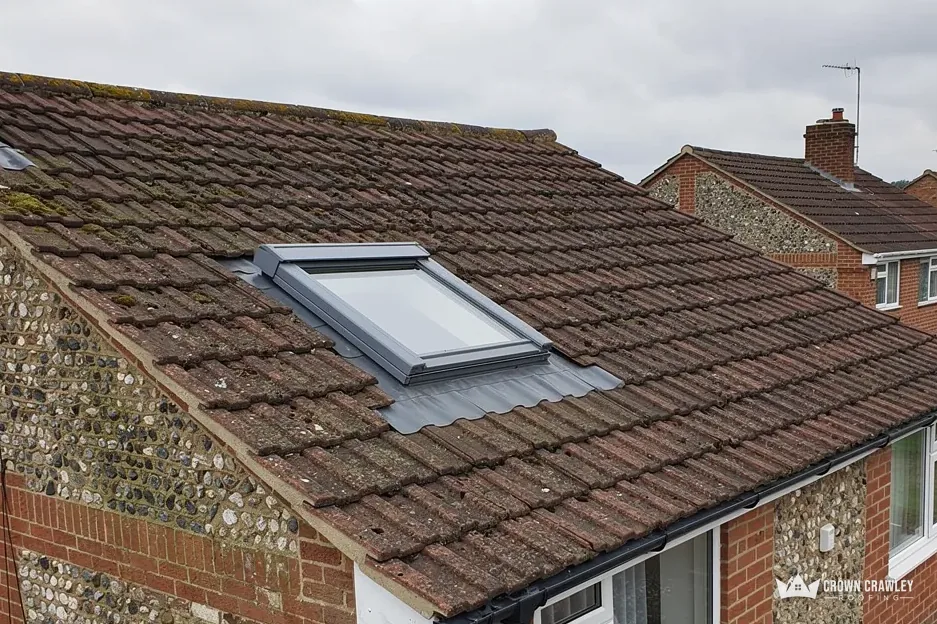
Planning law leaves out works that do not materially change how a building looks outside, so a like-for-like repair normally needs no planning permission. For larger jobs, Crawley Building Control says repairing or replacing more than 25% of a roof's surface needs approval, so we check with them. The Planning Portal's national test differs: normally no application is needed unless 25 per cent or more of the building envelope, or 50 per cent or more of the roof, is affected. If your home is listed or in a conservation area, talk to the council's planning team before booking the work. A flat or maisonette may also need the freeholder's agreement.
What are your rights if you sign at home?
A contract signed at your home is an off-premises contract, and consumers usually have 14 days to cancel. The rule has an exception: the right does not apply where you have specifically asked a trader to visit to carry out urgent repairs. Extra work sold to you during that visit is still covered by the right. Either way, read the written price carefully, and ask whether scaffolding and VAT are included.
Bats are protected by law, and GOV.UK includes roof repair in its list of work likely to disturb them. Should droppings or a roost turn up, work halts while we talk it through with you. For your own next step, photograph the damage from the ground and note where water shows indoors. That tells us what to bring and which slope to check first.
Keep reading
Setting quotes side by side only works if each covers the same job. Ask every roofer which parts of the roof are included, whether scaffolding and VAT are in the total, and what they will do if rotten timber appears under the tiles. A figure that assumes nothing is hidden can rise later. Anything we could not see at the survey is named in writing and agreed with you before it is touched.
Guide prices for roof repairs
| Work | Guide price |
|---|---|
| Roof repairs, our guide price | £150 to £1,000 |
| Up to five slipped or broken tiles | £170 to £500 |
| Concrete tile repair | £90 to £120 per m² |
| Plain clay tile repair | £110 to £160 per m² |
| Roofer's day rate | £280 to £360 per day |
The first row is our own guide range and the rest are national figures. What you pay is a single written total, fixed after a survey of your roof and a look through the photographs together.
Checkatrade cost guides: roof tile replacement table, October 2026; roof repair table, June 2026 (per m² figures for repairs up to 3 m², excluding VAT).
Emergency repair guides and answers
Quick answers and fuller guides on leaks, storm damage, temporary covers, call-out costs and what to do while you wait for a roofer.
Guides and posts
What Is a Roof Make-Safe?A make-safe is the first job after storm, fire or impact damage: stop the water, secure what is loose and protect the…Guide · 9 min read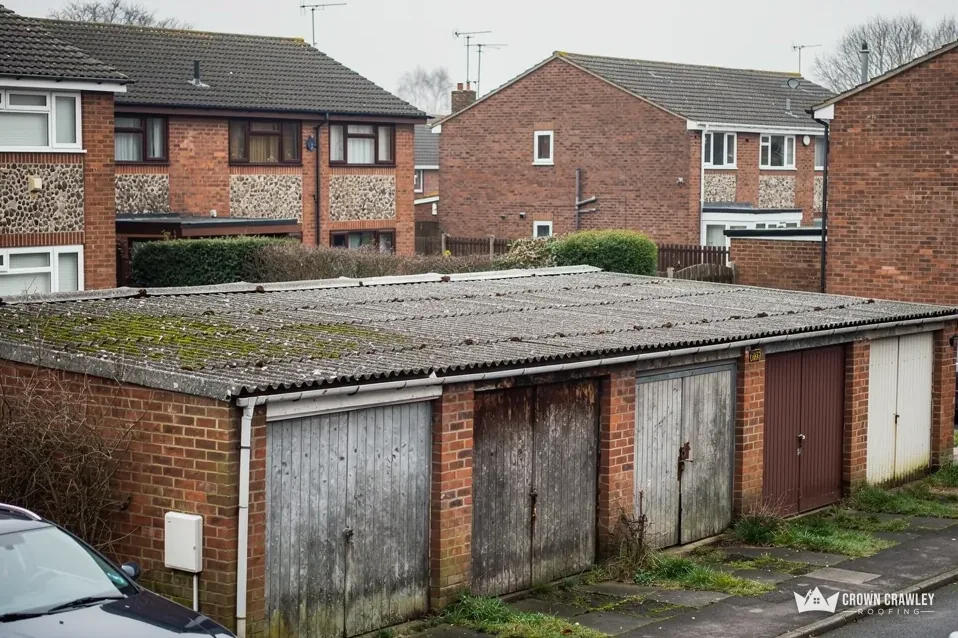 How Roofers Find Where a Roof Is LeakingA ceiling stain tells you water got in, not where. This guide follows the method a roofer uses to trace a leak back…Guide · 10 min read
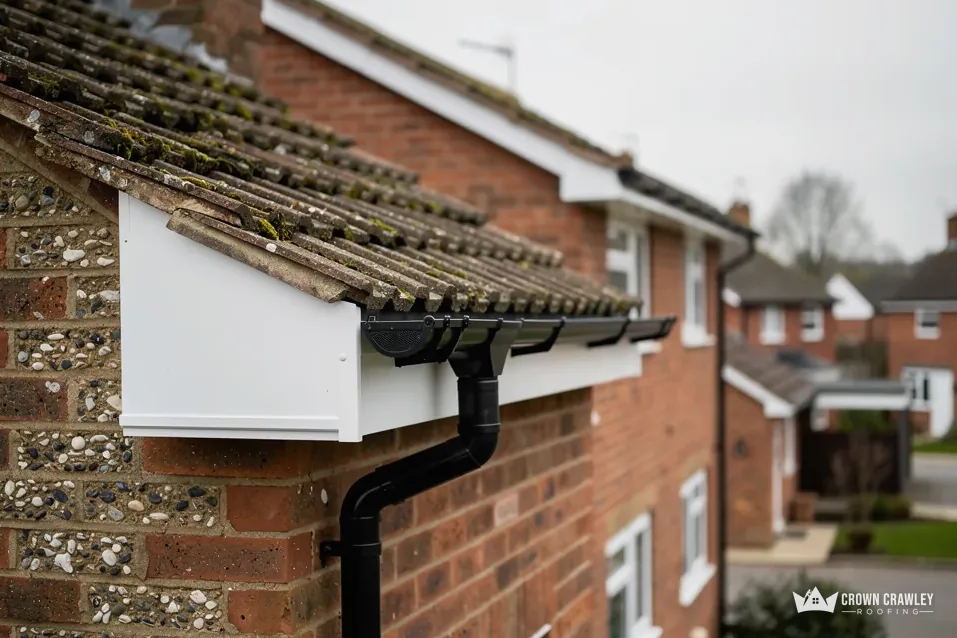 Emergency Roof Tarpaulins and Temporary CoversA tarpaulin buys time when wind, a branch or a failed covering has opened up a roof. Here is when it helps, how it…Guide · 9 min read
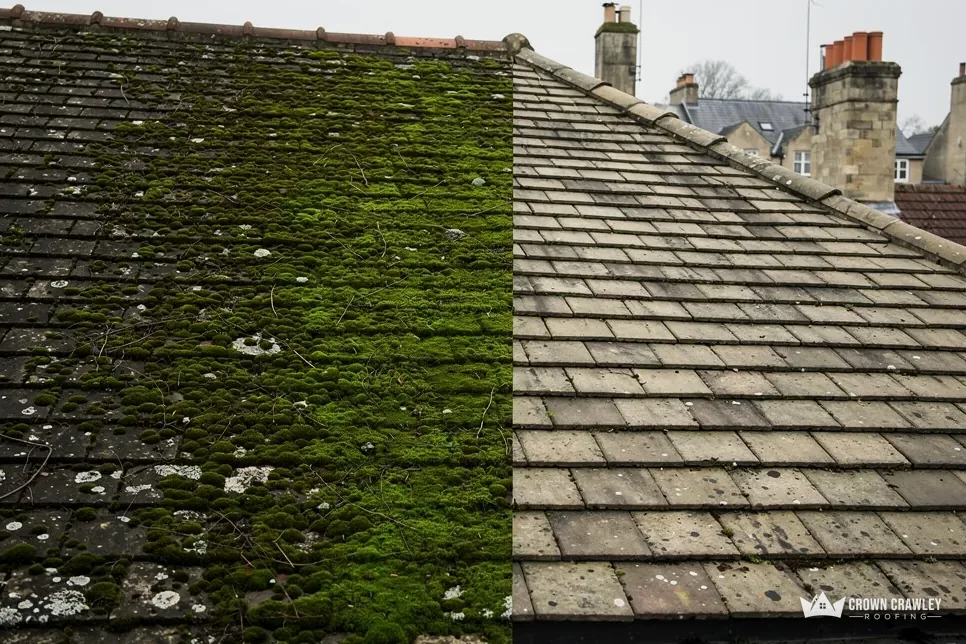 What Wind Speed Damages Roof Tiles?No single wind speed tears tiles off every roof. Gusts, exposure, age and how the tiles are fixed decide what fails…Guide · 9 min read
 A Tree Has Fallen on My Roof: What Now?A fallen tree is frightening and the first hour matters less than the first decisions. This guide covers safety…Guide · 9 min read
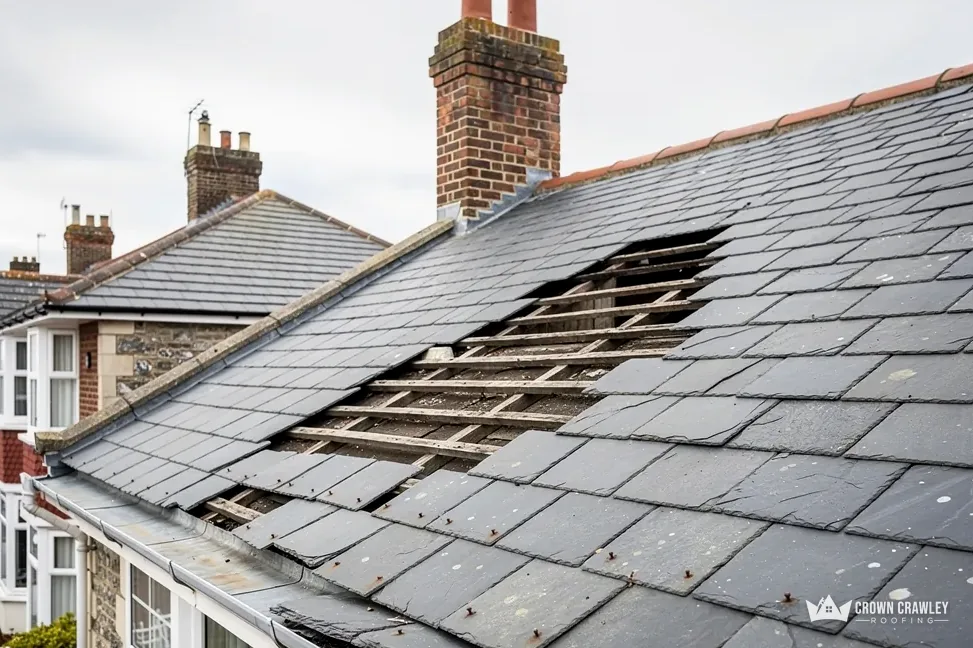 Common Roof Repairs: A Repair-Type GuideMost roof faults fall into six types. This guide sets out the signs of each, the usual fix and a typical UK cost…Guide · 9 min read
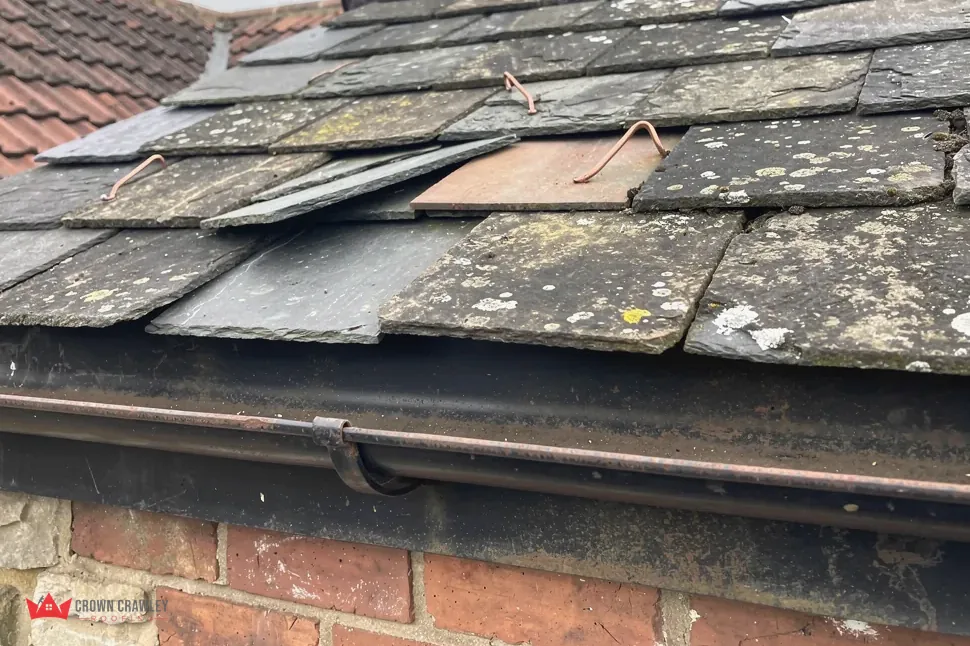 Weathering the Storm: Quick Fixes for Emergency Roof RepairsWind and rain attack a roof in different ways. This guide goes through the common storm faults, from tiles to felt…Blog · 10 min read
 DIY Emergency Roof Repairs: Temporary Fixes Until Help ArrivesWhen a roof starts leaking, the safest temporary fixes happen on the ground and in the loft, never on the slope. Here…Blog · 10 min read
 Dealing With Roof Emergencies: Steps for Immediate Damage ControlWater is coming through the ceiling and you need a plan for the next sixty minutes. Here is the order to work in…Blog · 10 min read
 Choosing an Emergency Roof Repair ServiceWhen water is coming through the ceiling you want help fast, and that is exactly when mistakes are made. Here is how…Blog · 10 min read
 How to Fix a Leaking Roof From the InsideFrom inside the loft you can trace a leak, catch the water and protect the house. You cannot repair tiles or flashing…Blog · 10 min read
 Storm Damage Roof Insurance Claims: A Step-by-Step GuideAfter a storm the order of your actions matters as much as the repair. This guide walks through making safe…Blog · 10 min read
Quick answers
- Do Roofers Charge a Call-Out Fee?
- Can a Roof Be Repaired in the Rain?
- Can a Roof Leak Be Fixed in One Visit?
- Why Is My Roof Leaking After Heavy Rain?
- Water Coming Through the Ceiling From the Roof
- Roof Tiles Blown Off in a Storm: What to Do
- Roof Leak at Night: What Should You Do?
- Can You Choose Your Own Roofer for an Insurance Claim?
- Damp Ceiling After a Roof Leak: What Next?
- Roof Leak Near a Light Fitting: Is It Dangerous?
- Is It Condensation or a Roof Leak?
- Is a Slipped Roof Tile an Emergency?
- Emergency Flat Roof Repair: What Can Be Done?
- Can Snow Damage a Roof?
- Do You Need Emergency Scaffolding for a Roof Repair?
- How Much Does an Emergency Roof Repair Cost?
- My New Roof Is Leaking: Who Is Responsible?
- Do Roof Leak Sealants Work?
- Why Is the Roof Felt Flapping in the Wind?
- Roof Leaking After Solar Panels Were Fitted?
Related services
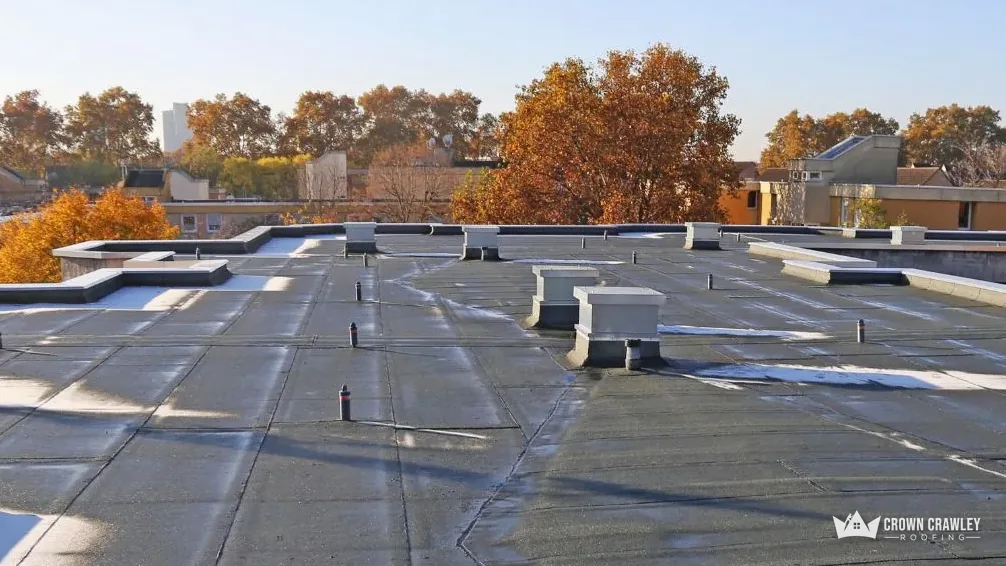 Flat roofingOur flat roofing service covers garage, extension, dormer and balcony roofs in Crawley and the towns around it: GRP…
 Pitched roofingOur pitched roofing service covers tiled and slate roofs across Crawley and Sussex: slipped tiles, tired battens…
 Roof replacementOur roof replacement service strips the whole roof and covers it again: new battens, underlay, tiles or slate, ridge…
Emergency roof repair questions
What should I tell my insurer after a storm?
Contact your insurer first, describe the damage, and arrange a temporary repair so it does not get worse. Keep photographs of the damage and receipts for everything you pay for. We can supply photos of the roof and a written account of the work, but we cannot promise a claim will succeed. Complaints about a claim go to the Financial Ombudsman.
What happens if it is still raining when you arrive?
We judge the roof when we get there. If rain, wind or fading light make working on the slope unsafe, we cover the opening and return to repair it once the roof is dry enough to read properly. The cover keeps the house dry in the meantime, and a repair made on a wet roof tends to fail first.
Can one visit cover a flat garage roof and the tiled house roof?
Usually, yes. Tell us about both when you call, because the tools and materials differ, and we bring what each roof needs. Felt, EPDM and GRP need different repair products from tiles, ridge pieces and lead. We survey each roof separately, photograph both, and the written price covers the whole job as one total, with nothing left vague.
When does a repair stop making sense?
When the same roof keeps needing repairs, or the covering has failed across most of a slope. Tired tiles, rotten battens and perished underlay cannot be patched for long. We tell you plainly when a re-roof is the better buy, show you the photographs of the worn areas, and give you time to think it over, because a new roof is a large decision.
How do I know a roofer who turns up after a storm is genuine?
Be wary of anyone who knocks unasked, and of a trader who only gives a mobile number. Citizens Advice advises collecting written quotes from three or more traders and looking up any membership a trader claims. Ask for the price in writing before anything starts and check what it covers. Good traders can give you a name, a landline or an address, and examples of recent work.
Is a hole in the ceiling bulge a good idea?
If water is pooling in a bulge in the ceiling, releasing it at the lowest point into a bucket can prevent a larger collapse. Stand to one side, and keep away from light fittings. If water is near any electrics, switch off at the consumer unit and have an electrician check them before they are used again.
Send us a photo of the damage
Send a photo taken at ground level and say where the water is showing inside. We will tell you what to expect before we visit.