A tarpaulin is a stopgap, not a repair. It is a heavy waterproof sheet pulled over damaged roof so that rain runs off it instead of through the hole. When a tree has come down, a run of tiles has gone in a gale, or a section of flat roof has torn open, a tarp can stop the damage spreading into ceilings, insulation and wiring while a proper repair is arranged. Done well, it can leave a house dry again after a single visit.
Done badly, a tarp does harm. A sheet that flaps in wind can drag at tiles, scrape off more of the covering and let water in underneath, and a person putting one up in poor weather is taking a real risk of a fall. This guide covers when a tarp is the right answer, how a roofer fixes one without making the damage worse, how long it can be expected to last, how it fits with an insurance claim, and why we do not suggest doing it yourself. With a leaking roof we begin by making it safe, then plan the lasting repair after the damage has been seen in daylight.
When a tarpaulin is the right answer
A temporary cover is worth fitting when water is getting in and the permanent repair cannot be done yet. That can be because the weather is too wet or windy to work safely, because materials need to be ordered, or because an insurer needs to see the damage first.
Which kinds of damage suit a tarp?
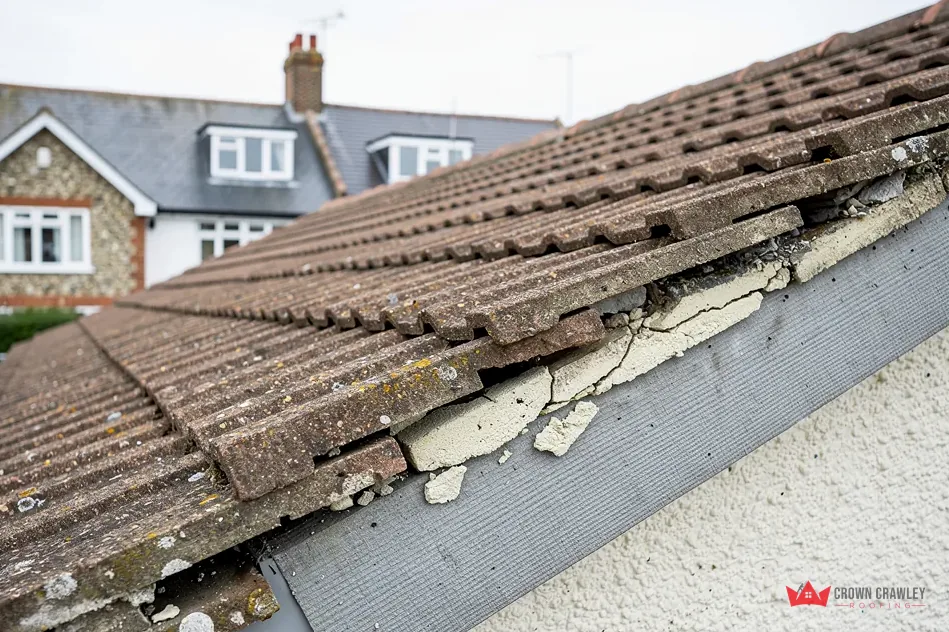
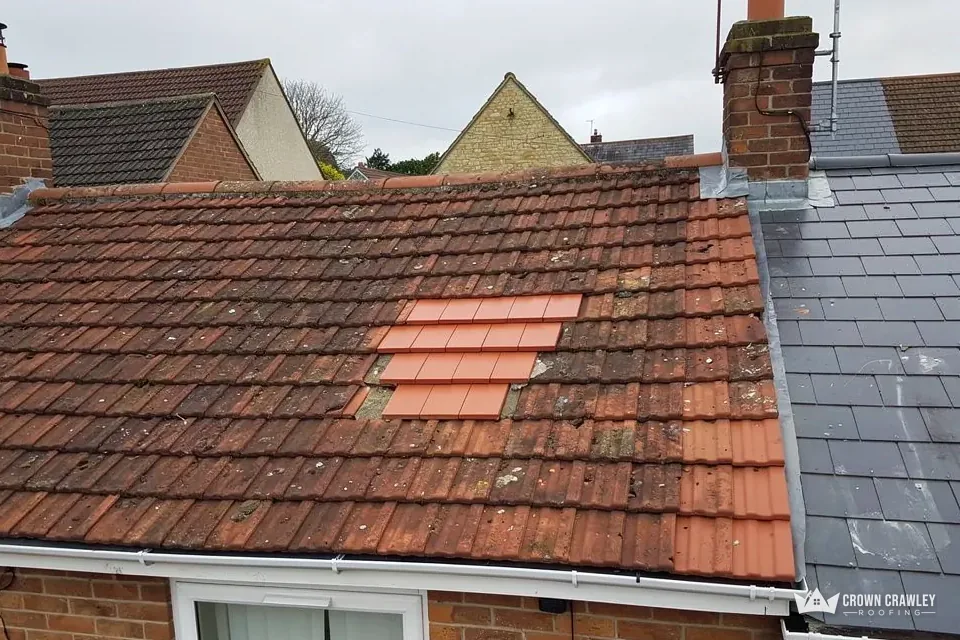
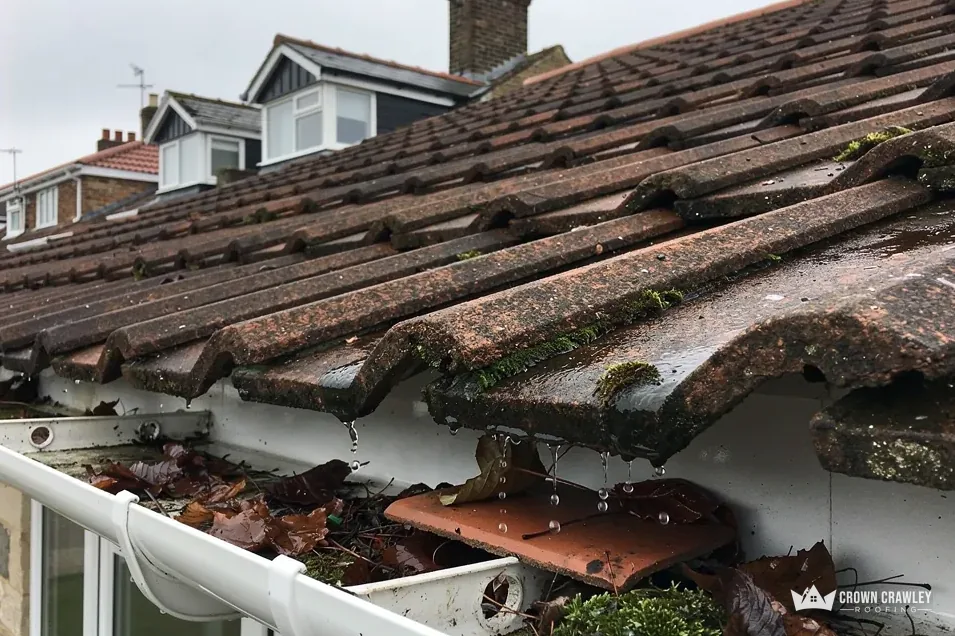
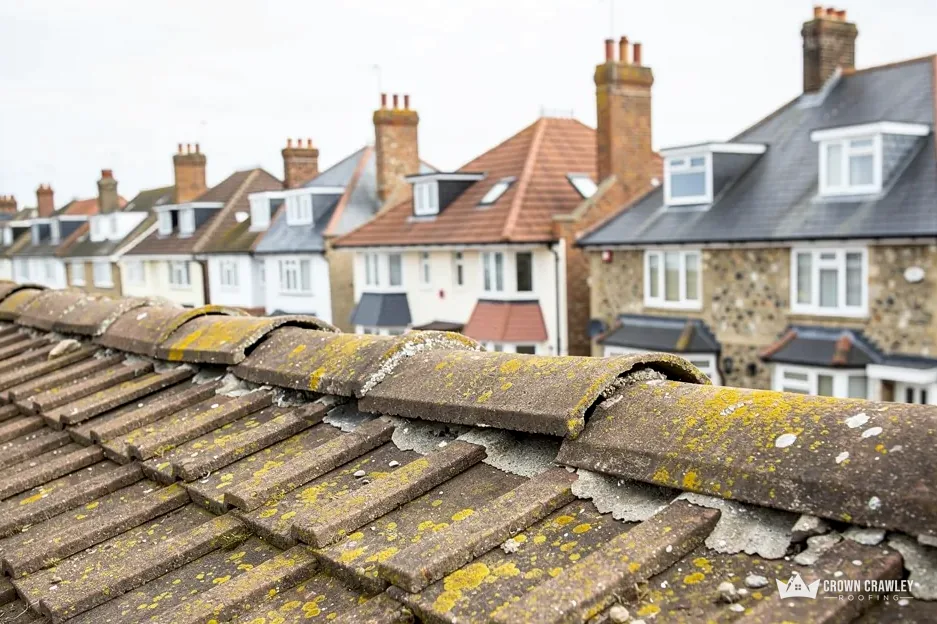
A tarp suits a missing patch of tiles or slates, a hole punched by a fallen branch, storm damage to a ridge, a gap left after a chimney has come down, or a torn flat roof. It does not suit every fault. A slow leak at a flashing, or a damp ceiling caused by condensation, is not helped by a sheet over the outside.
When is a tarp the wrong choice?
If the roof structure itself is unsafe, with sagging rafters or a collapsed section, nobody should be putting weight on it. The first step then is to keep people out of the rooms below, and the roofer decides whether any access is safe. If the problem is a few slipped tiles in calm weather, a proper repair may be quicker than a cover. Our page on whether a slipped tile is an emergency helps with that call. For the wider picture, see our emergency roof repairs page.
How a tarpaulin is fixed without causing damage
Fixing method is what separates a useful tarp from a harmful one. Wind is the enemy, because a sheet is a large flat sail, and the aim is to hold it down without puncturing the covering that is still sound.
What does a good fixing look like?
The sheet is cut large enough to run over the ridge and down both sides of the damage, with a generous overlap onto sound roof beyond the hole, so rain meets the top edge and runs down over the sheet. Timber battens are wrapped into the edges, which spreads the load, and those battens are fixed to the roof structure and not just to the tiles on top. Fixing into rafters or into good battens gives a hold that a tile alone cannot.
What should be avoided?
Nailing through the sheet into a tile cracks it and makes a new hole. Weighting a tarp down with bricks looks tempting, but a gust can lift the sheet and the load can slide off the roof. Loose edges flap, and flapping wears holes. A roofer will also tuck the top edge so that water cannot run underneath, and carry the sheet down to the gutter or beyond the eaves so water runs clear of the wall.
What about flat roofs?
A flat roof is often covered with sheeting weighted at the edges or fixed to the parapet or upstand. The same rules apply: no loose edges, no pools of water sitting on the sheet, and no new holes in sound membrane. Our page on emergency flat roof repair covers that case in more detail.
How long a tarp lasts
A tarpaulin is a short-term measure, and nobody can promise a lifespan for one. How long a sheet holds depends on the weather it meets, the exposure of the roof and how well it was fixed. A sheet on a sheltered slope in calm weather may be fine for a while. A sheet on an exposed corner of the roof may need rechecking after the next storm.
What should you watch for?
Look from the ground after every period of strong wind. Check that the edges are still tight, the battens have not shifted and there is no pool of water forming. Inside, check the loft or the ceiling below. If a stain is growing or a drip has started, the cover is not doing its job and the roofer should be told.
Why does the permanent repair need to follow soon?
Water that runs under a poor cover, or condensation trapped beneath a sheet, can keep timber wet for weeks, and wet battens, rafters and insulation do not dry on their own. Rot then starts, and a one-tile repair becomes a re-batten of the slope. Treat the tarp as a bridge to a dated repair, and agree that date with the roofer before they leave. If a few weeks pass with the sheet still on and nobody has been back, chase it, because the timber below is the part that pays for the delay.
Why fitting a tarp is not a DIY job
It is natural to want to cover a hole yourself, especially at night, with water coming through the ceiling. We would ask you not to climb up there.
What are the risks?
Roofs are slippery when wet, and a damaged roof may not hold weight. Tiles move underfoot, a cracked slate gives way, and a flat roof with a weakened deck can fail. Wind makes it worse, because a large sheet in your hands can pull you off balance. A fall from the edge of a house roof is a serious injury, and a ladder placed against a wet gutter can slip.
What can you safely do instead?
Work from inside. Move furniture and valuables away from the leak, put a bucket or tub under the drip, and lay towels around it. If a ceiling is bulging with water, pierce it carefully at the lowest point to let it drain into a container, standing clear of the spot. Switch off the lights and any circuits near the wet area if you can do so safely, and do not use sockets that are wet. Take pictures of the damage outdoors from the lawn or pavement and indoors around the stain, since they help both the roofer and any insurer.
Then ring a roofer. Our first step on a leaking roof is a make-safe visit, and the lasting repair gets planned after we have climbed up and seen the extent. Tell us which room the water is reaching and send whatever pictures you have.
Access, scaffold and the neighbours
Reaching the damage safely may need more than a ladder. For a larger hole, or a roof with a steep pitch, a scaffold tower or a full scaffold may go up first, so that the roofer has a firm platform and edge protection.
Does scaffolding need a licence?
A scaffold that stays within your own boundary needs no licence from anyone. Once it stands on, or reaches over, the pavement or the road, Section 169 of the Highways Act 1980 brings in a licence from the highway authority, usually the county council. We arrange that with the scaffolder, and if anyone asks you to handle it, ask who applies. Notice periods and fees differ from council to council, and the written quote after the survey says what applies at your address.
What does access add to the cost?
Quite a lot. In Checkatrade's October 2026 roof tile replacement guide, small tile jobs run from £170 to £500 for as many as five tiles, and the £500 end is the one with scaffold in it. The same site's roof replacement guide gives £700 to £1,300 for scaffolding a whole new roof, a national figure that tells you little about one address. Covering a roof from a tower costs more than doing it from a ladder, but on a steep or high roof it may be the only safe method.
What if birds or bats are involved?
Tell the roofer before work starts if bats use the roof or a bird is nesting near the damage. The GOV.UK bat guidance names roof repair as a job that can disturb roosts, and roosts are protected. For nesting birds, the Wildlife and Countryside Act 1981 is the law that applies. A temporary cover can often go on in a way that leaves their way in alone, and if it cannot, the next step is to pause and take advice before anything is disturbed.
Tarps, insurance and the next step
If the damage came from a storm, a fallen tree or another sudden event, your home insurance may respond. We do not handle claims, and we cannot say whether yours will succeed. What we can do is describe sensible steps.
What should you do first?
Tell your insurer first, before any permanent repair, and ask what they want to see. A temporary cover is the usual way to stop further damage in the meantime, which is what a tarp is. Keep every receipt for that work. Photograph the roof before, during and after: IStructE advice is that pictures are the evidence an insurer needs to see. Which? notes that insurers commonly run emergency helplines, so look for the number on your policy documents.
What if the claim goes badly?
Should you end up unhappy with the outcome, finish the insurer's own complaints process first, and the Financial Ombudsman Service can then look at the case. Do not assume a payout, and read the policy for exclusions, since gradual wear is usually not covered while sudden storm damage may be.
What happens at our end?
We survey the roof, take photos you can keep and send you one total price in writing for the permanent repair. Our roof make-safe page explains that first visit. To get started, send photos of the damage and the address, and mention anything you know about birds or bats using the roof.
Part of our Emergency & General Roof Repairs in Crawley
Tarpaulin questions
Can a tarpaulin be left on a roof over winter?
It is not meant to be. A sheet is a short-term cover, and winter wind and rain test it repeatedly. If a permanent repair has to wait, the roofer should recheck the cover after each storm and agree a date for the real fix before leaving.
Will a tarp damage my tiles?
Not when it is fixed properly. A roofer fixes battens into the roof structure, keeps edges tight and avoids nailing through sound tiles. Damage comes from loose sheets that flap, or from weights and nails placed without thought. A good cover leaves the roof as it found it.
Is a tarp enough for my insurer?
Insurers generally expect you to limit further damage, and a temporary cover does that. Check your policy and ring your insurer first, keep receipts and photos, and ask what they need for the permanent repair. We cannot say whether a particular claim will be paid.