A storm leaves you with two problems at once: a damaged roof and a claim to make. Tiles lie on the lawn, a ceiling is stained, and somewhere in a drawer is a policy you have not read since the day you bought it. The way you handle the first few days affects both the state of your home and how smoothly the insurer deals with you.
This guide follows the usual sequence. First you stop further damage, then you record what happened, then you tell your insurer and read what the policy actually promises. After that you get a roofer's findings, arrange the repair in the right order and, if the answer seems wrong, use the route that exists for complaints. We are roofers, not insurers, so we cannot tell you whether a claim will succeed. What we can say is what a roofer sees on site, what evidence is useful and how to avoid the mistakes that make a claim harder than it needs to be. Check your own policy wording before you act on anything here.
Step one: make the house safe
Before any forms, deal with the danger. Keep everyone away from loose tiles, hanging chimney pots and anything that could fall. Where water is reaching a light or socket, cut the power to that room at the mains and leave the fitting unused. Catch drips in buckets, move belongings out of the wet room and open a window so the area can start to dry.
Should you go up and cover the damage?
No. The roof is at its most dangerous straight after a storm. Wet tiles are slippery, the wind may not have finished and the structure may be weaker than it looks. Leave the roof to a professional with proper access. Our guide to DIY emergency roof repairs covers the limited jobs that are safe for a householder standing indoors or on the lawn.
What does a make-safe involve?
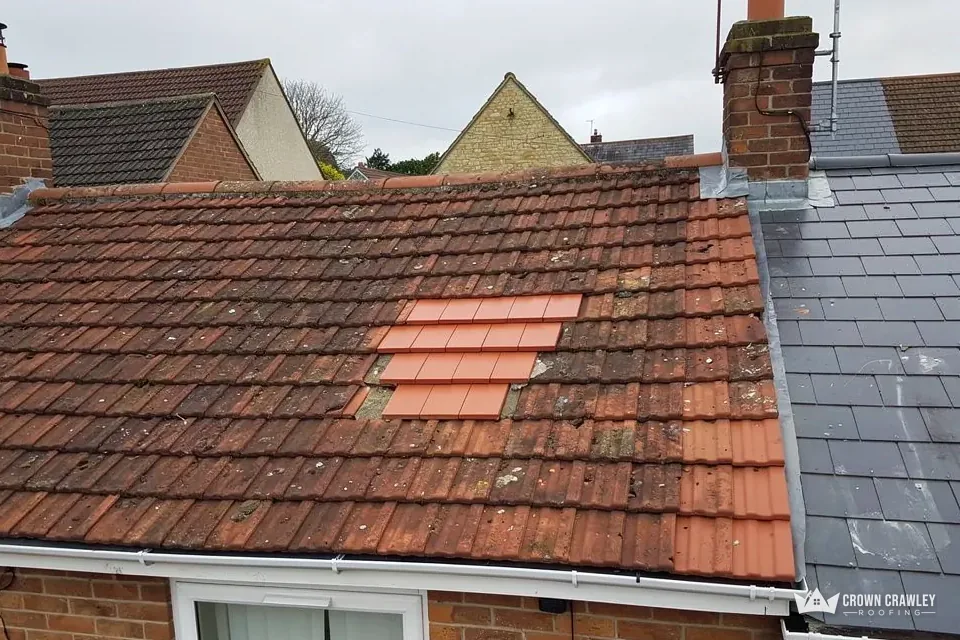
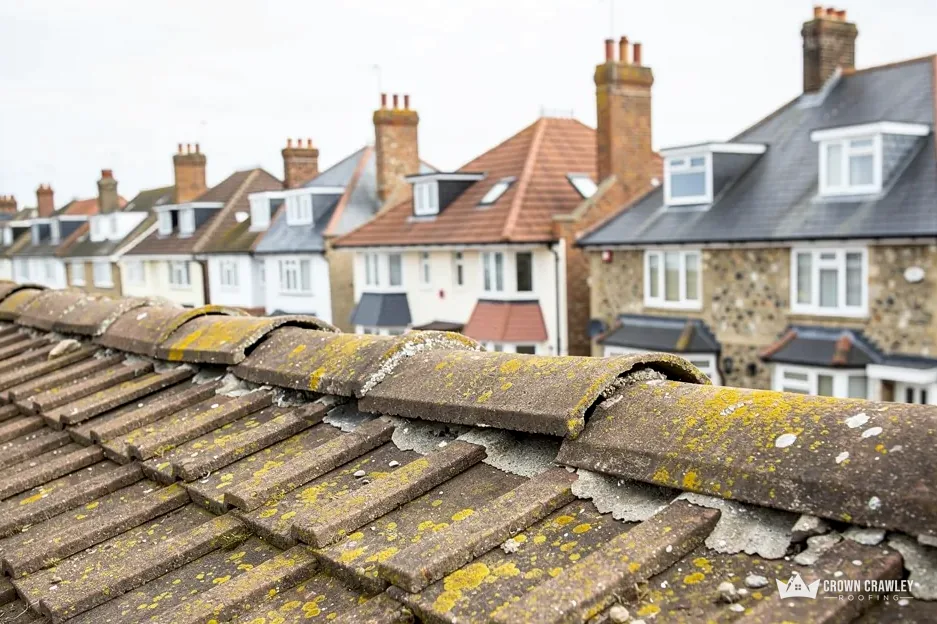
A roofer attending a storm-damaged house first checks that the roof is stable, then closes the openings. That might mean covering a gap with a sheet fixed from safe access, refixing a ridge tile, or clearing a section where tiles have slipped. The aim is to stop more water getting in, not to finish the job on the day. Permanent work is priced afterwards, once the survey has shown the full extent. Ask the roofer for photographs taken as the work happens, because they record the condition of your roof before and after.
Keep every receipt. A policy normally expects you to take reasonable steps to prevent further loss, and the costs of those steps may be part of what you claim for. Read the wording to see.
Step two: record the damage
Evidence is the part of a claim you control. Insurers decide on the information in front of them, and the more complete it is, the fewer follow-up questions you face.
What should you photograph?
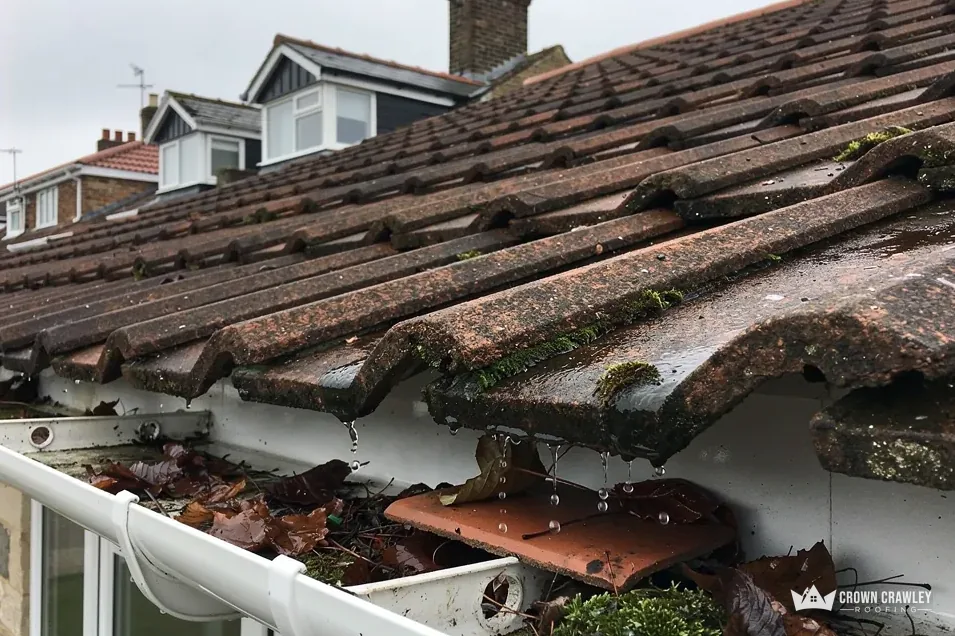
Start inside. Photograph the stain on the ceiling, the damp insulation, any buckets and the damaged belongings, wide shots first and then close-ups. Then go outside and photograph from the ground: tiles on the lawn, a bent television aerial, a fence panel or tree that has hit the house, damaged guttering, and the roof itself with binoculars or a zoom lens. A structural engineers' body, the IStructE, tells homeowners that photographs are the main visual evidence of damage, which is why they come before everything else on this list.
What else is worth keeping?
Write a short log with the date, time and weather of the storm and when you first noticed the damage. Keep any messages from neighbours who saw it happen. Hold on to damaged items, such as a broken tile, until the insurer says you can dispose of them. Date your photographs, and save copies somewhere other than your phone, such as an email to yourself or a cloud folder. If neighbours were hit as well, note which houses and which roof types suffered; a pattern across a street suggests a weather event rather than a one-off fault. Keep a running list of every call and email too, with the name of the person, because claims often pass through several hands.
Do not tidy up in a way that removes the evidence. Clearing slates from a patio is fine once they are photographed; throwing them in a skip before your insurer has seen the damage is not. If a tree has come down, photograph it where it landed before anyone cuts it up.
Step three: tell your insurer first
Contact your insurer before you commission anything permanent. The details are in your policy papers or on the insurer's website, and a Which? report from November 2025 found that insurers generally run emergency helplines, so a phone call is the quickest way to open a claim. Call from the house if you can, with the damage in view. Say plainly what you can see, that you have photographs and that you have taken steps to limit further harm.
What will the insurer ask?
Expect questions about when the storm happened, what was damaged, whether the house is occupied and what you have done so far. Have your policy number, your photographs and your log to hand. Write down the name of the person you spoke to and the date, and ask for a claim reference. Follow up any phone call with an email that confirms what was said. Ask what the excess is, whether cover for the contents and for the building sit under separate claims, and whether the insurer needs to see the damage before anything is moved. Answers given on the phone are easy to forget under stress, so write them down as you hear them.
Can you start repairs straight away?
Emergency measures, yes. Permanent repairs, wait for the insurer's instructions. Some insurers ask to inspect first, some appoint their own contractors and some accept a roofer's written findings. Do not sign a contract for a full repair until you know which route yours takes. A temporary make-safe that stops further damage is a different matter, and your policy will usually expect it.
Is a claim worth making?
That depends on your excess, the size of the damage and your policy. Be realistic about outcomes. Which?, citing Financial Conduct Authority figures, reported that only 32% of storm-related claims made in 2024 resulted in a payout. A claim made with good evidence is on firmer ground, but nobody can promise the result in advance.
Step four: what counts as a storm?
Most policies cover damage caused by storm, and many define it in the wording. That definition is the part to read carefully, because it can decide whether a claim is accepted.
How do insurers define a storm?
The definition lives in your policy document, usually in the glossary or the section on perils. Some set a wind-strength test or describe violent weather in general terms. Wording differs between insurers and between policies from the same insurer, and the only version that applies to you is the one on your own schedule. Read it, note the section number and quote it when you report the claim.
What is excluded?
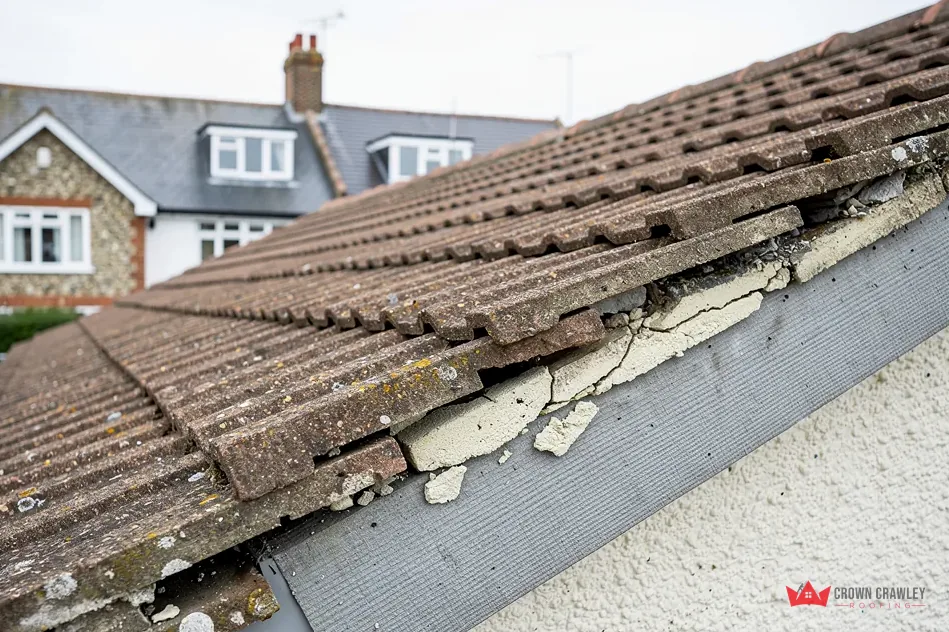
Wear and tear is commonly excluded, as is damage that builds up slowly. If a tile slipped over time and a storm then finished the job, expect the insurer to ask which caused the loss. That is where a roofer's findings help: a survey with photographs can show the condition of the fixings, the age of the covering and whether the damage fits a sudden event. Some policies also limit cover for roofs in poor condition, or require the home to be kept in good repair, so tell your insurer the truth about the roof's age.
Does the cause matter for the claim?
Yes. A roof that failed because of a storm is treated differently from one that failed because it was neglected. Be factual and avoid guessing in either direction. If you do not know what caused something, say so. Our page on wind speed and roof damage explains how wind actually harms a roof.
Step five: a roofer's findings and the repair
Many insurers will want to know what the damage is and what it will cost to put right. A written report from a roofer who has actually inspected the damage, with dated photos, usually settles both questions fastest.
What should a roofer's findings include?
Ask for the date of the visit, a description of each fault, the part of the roof it affects and photographs of your own roof. A good account also says what has been done to make the roof safe and what permanent work is needed. Our survey photographs are shared with every customer, and you are free to pass them on to your insurer. We cannot advise on the policy, and the insurer makes its own decision on the claim.
Can you choose your own roofer?
Check your policy. Some insurers allow you to use any contractor, some ask for their own approved firm on larger jobs and some want an estimate from you first. Our page on choosing your own roofer for an insurance claim sets out what to ask your insurer before you hire anyone. Our emergency and general roof repairs service is where a make-safe visit starts, with the permanent repair quoted once the survey is done.
How should you compare quotes?
Citizens Advice advises collecting three written quotes before you pick a trader. When a claim is involved, ask every firm for its total price on paper and find out if VAT and the scaffold are included, because either can shift the figure a long way. The Checkatrade guide to roof tile replacement, updated in October 2026, puts the typical UK range for up to five tiles at £170 to £500, rising to the top of that range when scaffolding is needed. A roofer should be able to explain every difference between a quote and the insurer's figure.
Step six: if the claim is refused or reduced
Not every claim ends well. A refusal, a partial settlement or a long delay can all leave you out of pocket with a damaged roof. You have options, and it helps to know the order they come in.
What should you do first?
Ask the insurer to explain its decision in writing and to point to the policy clause it relied on. Compare the reason with your evidence. If the insurer says damage was wear and tear, check whether your roofer's findings and photographs show a sudden break instead, and send them in. Many disagreements end at this stage, with more information and a second look.
Where can you complain?
Begin with the insurer's own complaints procedure, and keep copies of every letter, email and call note. If you remain unhappy, the Financial Ombudsman Service takes complaints about how insurers have handled claims. It looks at whether the insurer acted fairly under the policy and the rules, not at whether you would have liked a different answer.
What if the roof cannot wait?
Leaking water causes damage every day, so do not hold the roof in limbo while you argue. A temporary make-safe protects the house, and you can keep arguing over who pays for the permanent repair. Keep every receipt. Your photographs and findings stay useful throughout, and they are the first things to send us when you ask for a written price for the permanent work.
Part of our Emergency & General Roof Repairs in Crawley
Storm claims: short answers
Do I need the insurer's go-ahead before the roof is made safe?
No. Policies commonly ask you to stop the damage spreading, and delay only lets more water in. Take photographs first, tell your insurer promptly, keep receipts and avoid permanent repairs until the insurer has given its instructions. Read the wording, because each policy treats emergency work a little differently.
Will the insurer pay for a storm-damaged roof?
Nobody can promise that. Policies cover storm damage but often exclude wear and tear, and the wording of the storm definition matters. Good evidence, an honest account of the roof's age and a roofer's written findings give a claim the best footing. If you think a decision is unfair, the Financial Ombudsman Service takes complaints.
What evidence do I need for a storm damage claim?
Dated photographs inside and outside, a note of the storm date and what you noticed, receipts for emergency costs and any damaged items you can keep, such as a broken tile. A roofer's written findings with photographs of the roof add weight, especially when the question is whether damage was sudden or gradual.