After a gale, the question is always the same: how strong does the wind have to be before it takes tiles off? People want a number, and a number would make it easier to decide whether the damage was an act of weather or a sign of a tired roof. The trouble is that wind does not act on a roof as a single figure. It arrives in gusts, it speeds up over open ground and round building corners, and it presses on some parts of the roof while pulling on others.
So the straight answer is that the roof matters as much as the wind. A well-fixed roof in a sheltered street can ride out a gale that strips a poorly fixed one on a hill. This guide explains why, in plain terms. It separates gusts from average speeds, shows which parts of a roof take the worst of it, looks at the fixings that make the difference, and explains how insurers treat the word storm, which matters if you need to claim. It ends with what to check from the ground after a blow.
Gusts and average wind are not the same
Forecasts and weather reports usually give an average wind speed over a short period, plus a figure for the strongest gusts. The two can be far apart. A gust is a brief surge, lasting a few seconds, and it is the gust that does most of the damage to a roof, because a tile or ridge piece only has to be overloaded for a moment to lift.
Why do gusts do the damage?
Wind passing over a pitched roof creates suction on the leeward side and on the roof edges, in the same way an aircraft wing generates lift. A sudden gust raises that suction sharply. The tile is held down by its own weight, by its nib catching the batten, and by whatever clip or nail secures it. If the suction exceeds what those can resist, even briefly, the tile can lift and fall. Repeated gusts then work on the tiles around the gap, which is why damage often spreads from one hole.
What should you look at in a forecast?
Check the gust figure and the direction as well as the average. A wind from a direction your house is exposed to, strong gusts and heavy rain together are the worst combination, since rain gets under tiles that the wind has already disturbed. No single speed marks the point at which every roof fails, and a roofer who names one is simplifying. Our post on tiles blown off in a storm explains what to do once it has happened.
Exposure: where your house sits
Two identical houses can experience very different winds. Exposure describes how much shelter a building has and how much the surroundings channel or accelerate the air. It is the reason one street loses tiles while the next one barely notices.
Which locations take the worst?
Open ground is the obvious one: houses on a ridge, on the edge of a field, at the end of a terrace or beside a wide road face the wind with little to slow it. Height matters too, because wind speed rises with height above the ground, so a tall house takes more than a bungalow beside it. Coastal and hilltop sites see stronger gusts, though most of our work is inland, where sheltered and exposed plots can sit side by side. A new estate may be open until trees and hedges grow, and it can change when a neighbouring building is demolished or a belt of trees is cut down.
Which parts of the roof are most exposed?
The edges and corners of a roof see the highest suction. The verge at a gable end, the eaves, the ridge and the hips all take more load than the middle of a slope, and that is where tiles and caps are usually lost first. A roof with a large overhang catches wind underneath it, lifting the eaves and the felt. A garage or porch roof with a shallow pitch behaves differently again, and the covering must suit it. Our emergency and general roof repairs page lists the repairs we carry out after wind damage.
How tile fixings decide the outcome
Roofs usually lose tiles because the fixings are weak, rather than because the wind is extraordinary. Each tile has to resist suction with some combination of its own weight, a nib, a nail and a clip, and the right combination depends on the tile, the pitch and the exposure.
What are the main ways tiles are held?
Concrete and clay tiles hang on their nibs over timber battens, and many are also nailed or clipped, particularly at the edges and in exposed spots. Slates are nailed. The code of practice for fixing tiles and slates is BS 5534. Marley says installing to it is not a legal duty, although roofers treat it as the yardstick for how a covering should be held down. Where roofs were laid long before the current version, tiles may rely on weight and nibs alone, with no clips. That can hold in ordinary weather and still fail in a gust.
What makes a roof under-fixed?
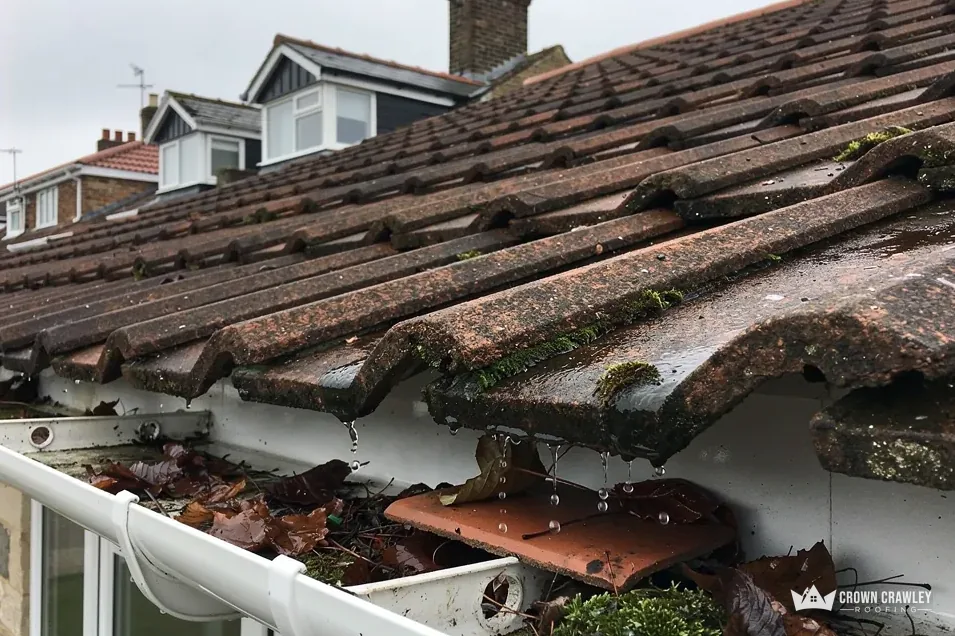
Several things. Original fixings may have been light by today's standards. Nails corrode over the decades, especially where the timber has been damp, and the tile loses its grip. Battens may have softened, as we explain in our guide to battens. Past repairs sometimes replaced tiles without fixing them as the rest were fixed. Wind will find the weakest tile, lift it, and then work on its neighbours. If more than one or two tiles go in a single event, or the same area goes twice, the cause is usually the fixing, not the weather, and a roofer can add clips or renail the area to prevent it recurring. A second look at the whole slope is sensible.
Ridges, hips and verges go first
The ridge, hips and verge are the roof's edges, and they sit where the wind is strongest. They are also made of separate pieces, which must be fixed to the roof and to each other, so their performance depends entirely on how well they were fixed.
Why does mortar fail?
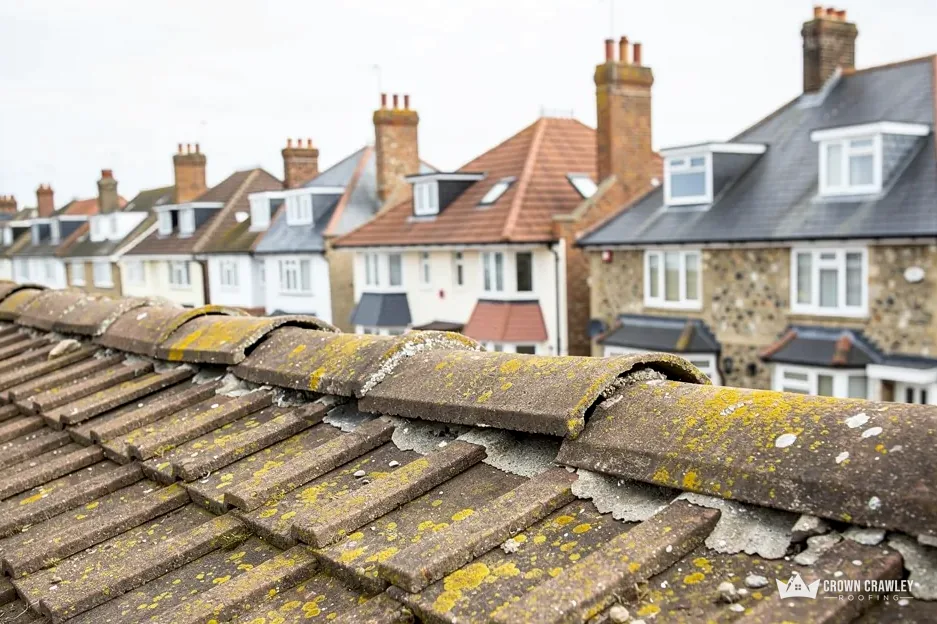
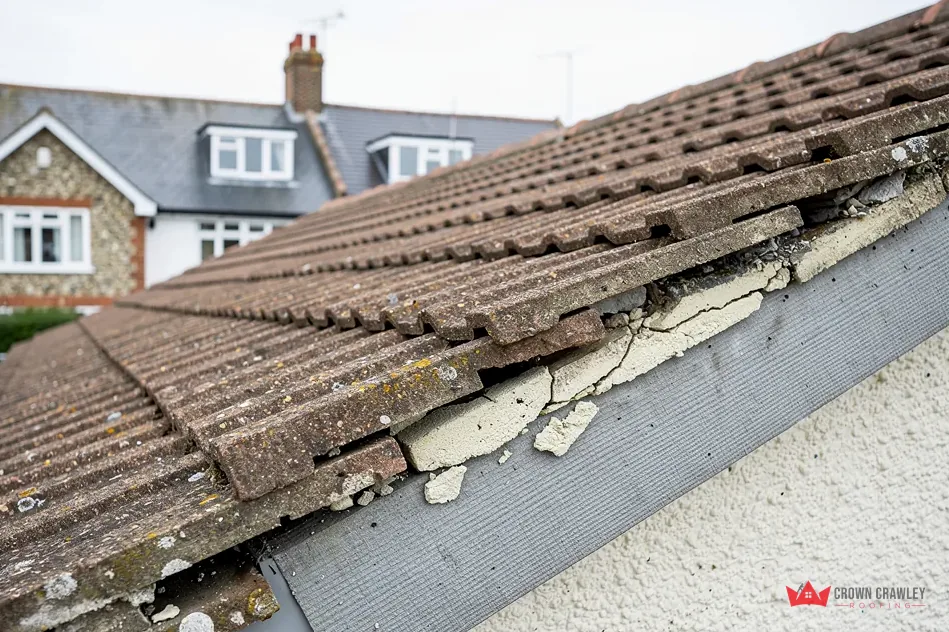
Traditional ridge and hip tiles are bedded in mortar. Mortar cracks as the roof moves with temperature and moisture, and frost and rain loosen it over the years. Marley explains that since the 2014 revision of BS 5534, bedding ridge and hip tiles in mortar alone no longer counts as enough, and each one now needs a mechanical fixing too. That is one reason a roofer who finds a mortar-only ridge will usually suggest adding fixings or changing the system.
What does dry-fix change?
Dry-fix systems hold ridge, hip and verge tiles with clips, screws and ventilated or sealed strips instead of relying on mortar. BS 8612 is the test specification for these systems. They resist wind more predictably and need less upkeep, but they are not maintenance-free. Clips can break, seals can fail and fixings must match the system's instructions. A roofer should check them after storms. If your verge or ridge has shed pieces, the repair may be a patch or a full re-bed, and we explain when each makes sense in our hub pages for dry ridge and dry verge. Take photographs of any loose or missing pieces from the ground, because they help a roofer plan the right fix and the right materials.
What insurers mean by a storm
Many home insurance policies cover storm damage, and the word storm is defined in the policy. That matters, because a claim for wind damage can turn on whether the weather met the insurer's definition. Insurers differ, and some define a storm by wind speed, while others use wider wording about violent weather.
How do you find your insurer's threshold?
Read the policy document, not the summary. Look for the section that defines storm, and for any exclusions that mention gradual wear, poor maintenance or damage to old or defective roofing. If a wind speed is written in, note it, and ask the insurer how it checks the weather for your postcode on the date of loss. A figure from one insurer may not apply to yours, so go by your own wording. A roofer cannot decide whether your weather counts as a storm, and we cannot promise an outcome.
Why does the roof's condition matter to a claim?
Insurers separate sudden damage from wear. A tile lost in a named storm is one thing, a roof whose fixings have corroded is another, and an assessor may ask which applies. A written record of the roof's condition, such as photographs and a roofer's report taken before and after, helps. Which? quoted Financial Conduct Authority figures in November 2025: only 32% of storm-related claims made in 2024 resulted in a payout. Ring your insurer early, photograph everything, keep receipts and see our guide on choosing your own roofer for a claim before you appoint anyone.
After a gale: checking from the ground
When the wind drops, resist the urge to climb up. Most injuries happen when people go onto a wet, damaged roof, and tiles that look sound can break underfoot. Everything you need to see first can be seen from the ground or from an upstairs window.
What should you look for?
Walk round the house and the garden. Look for tile pieces, ridge fragments or lead on the ground, and for gaps in the pattern of the roof, especially along the edges, ridge and hips. Check gutters and downpipes for movement and for debris that could cause overflow. A pair of binoculars shows displaced tiles, curled lead and damaged chimney pots from the safe side of the garden wall. Then check the loft for daylight, damp patches or insulation that has become wet. Move anything that fell away from paths and doors, because broken tile has sharp edges, and keep a few pieces to show the roofer.
What happens next?
If water is coming in, or pieces are hanging, a roofer should make it safe first, and then arrange the permanent repair. Our jobs begin with a survey and photos from your roof, and the written price is one total. Send us your pictures of the damage, the age of the roof if you know it and which way the wind came from, through WhatsApp or the enquiry form, or call 01293 974253. Those details help us judge what to bring and whether fixings have gone along with the tiles.
Part of our Emergency & General Roof Repairs in Crawley
Wind and roof tile questions
Can a roof be damaged by wind without any tiles falling?
Yes. Wind can lift tiles slightly, crack them, loosen clips, disturb lead flashing or lift the underlay without anything landing in the garden. The signs show later as drips, a rattling sound in the loft or tiles that sit out of line. A roofer's survey after a gale can find damage before rain does.
Will new tiles stay on in the next storm?
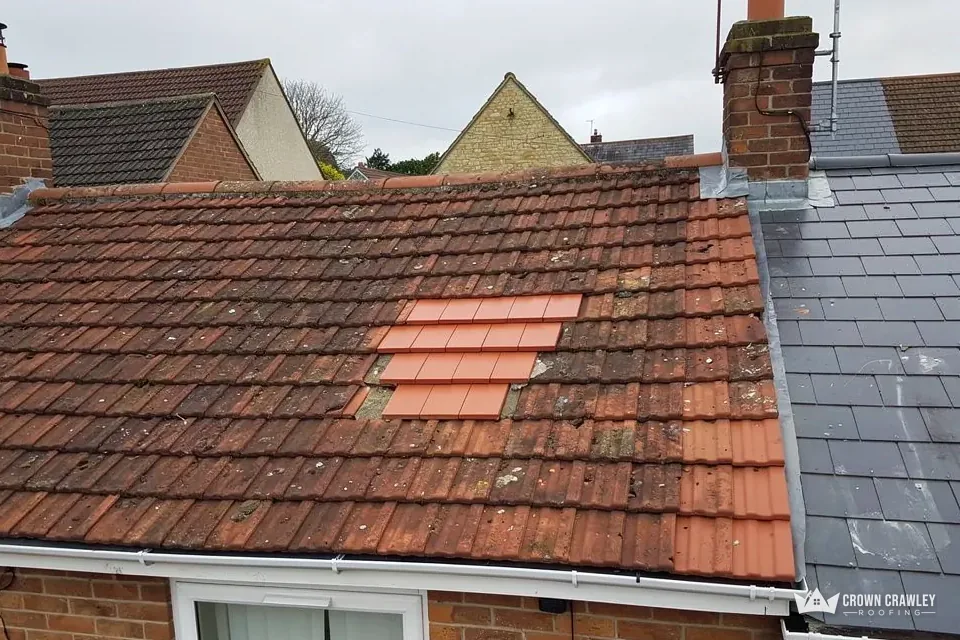
They will if the fixings are right. A replacement tile should be fixed in the same way as the others and to the standard the roof needs, with nails or clips as appropriate. If the area has slipped before, the roofer should check battens and fixings around it, because a new tile on a weak area can still lift.
Is wind damage to a roof usually covered by insurance?
Often it can be, where the policy covers storm damage and the damage is sudden, but cover varies and wear and tear is normally excluded. Read your definition of a storm, tell your insurer first, make the roof safe and keep photographs and receipts. We cannot say whether a claim will succeed.