Roofers in Maidenbower

Roofs on the private neighbourhood Crawley planned in the 1980s.

Maidenbower was announced in 1986 as a privately built neighbourhood of about 3,700 houses and flats. We check its tiles, ridges, verges and lofts, then price in writing.

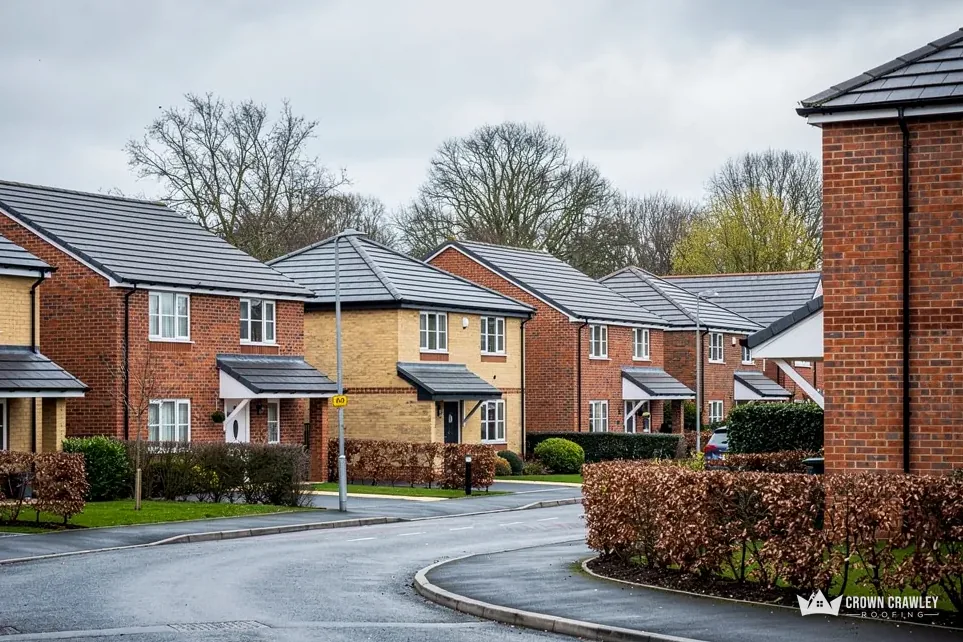
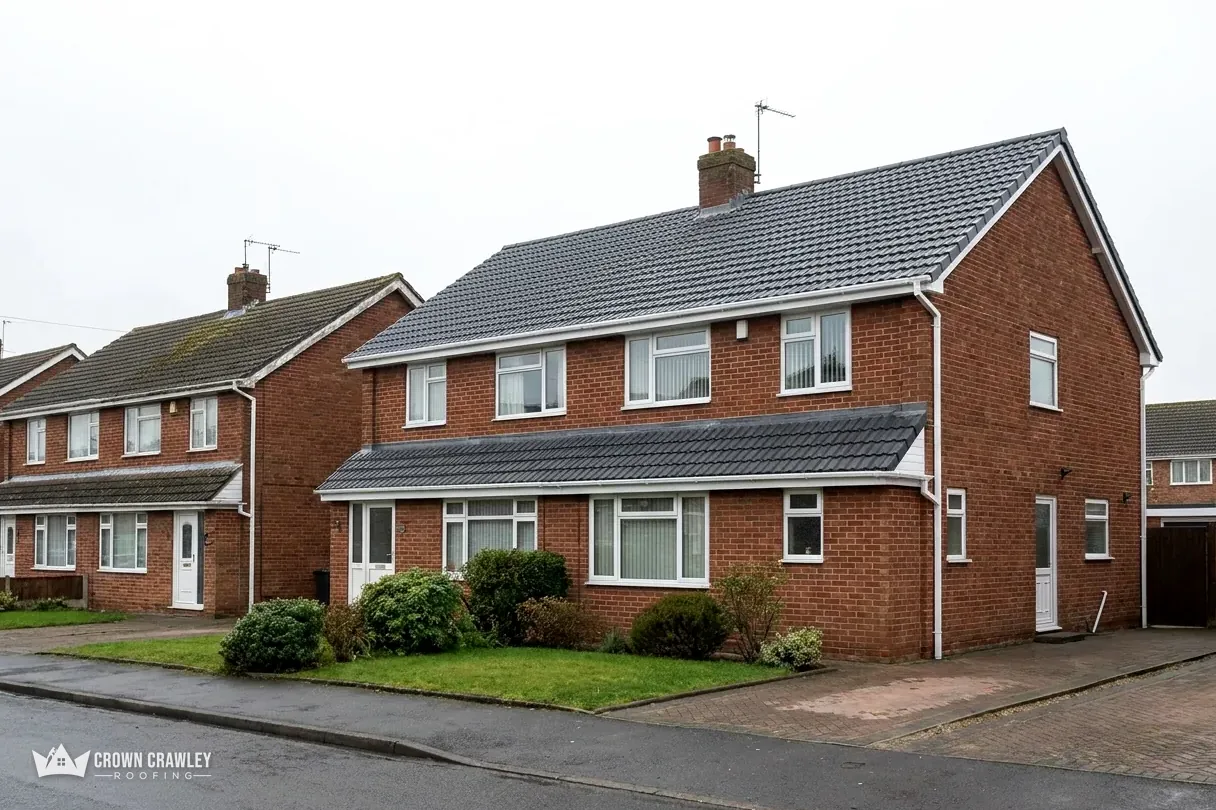
Detached red brick houses with grey tiled roofs on a quiet road

Maidenbower roofscapes, close up

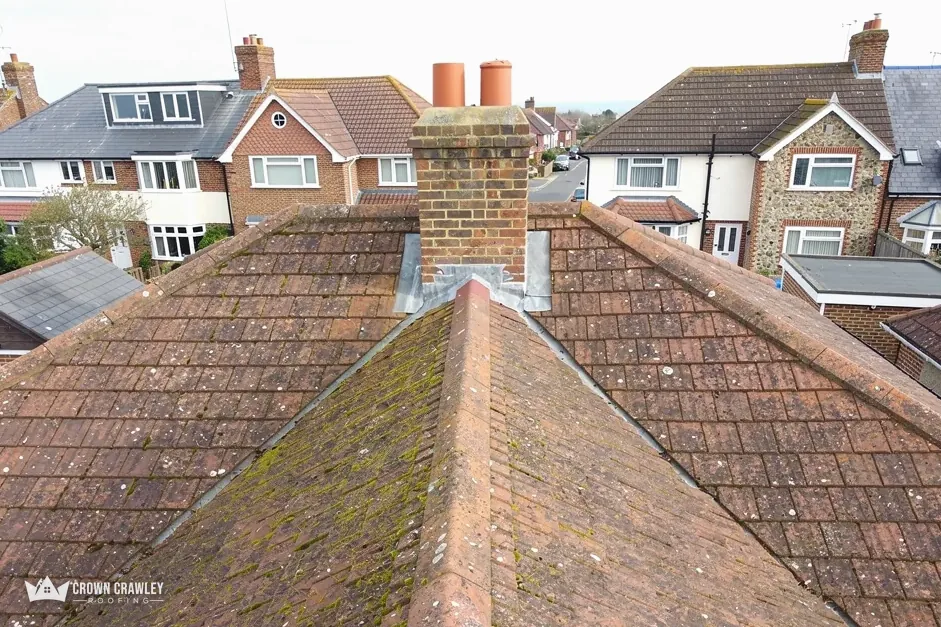
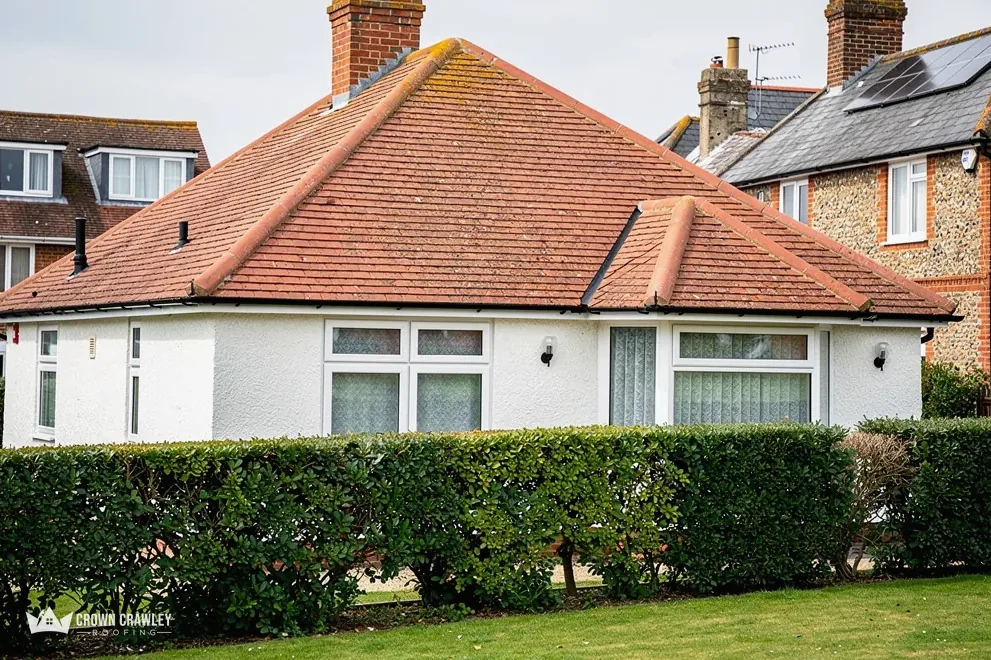
Hipped tiled roof with a chimney at the ridge

Houses from the 1986 scheme

The outline scheme announced in 1986 was for a privately built neighbourhood. We read each roof as we find it, checking the covering, the fixings and the loft rather than assuming every street was built the same way.

Tiled roofs on a modern estate

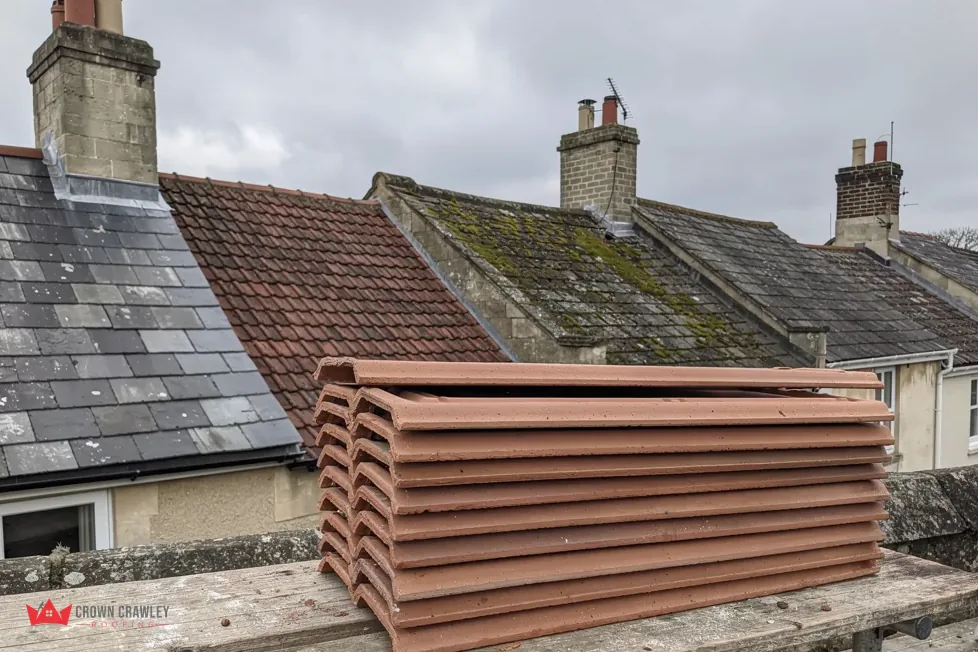
Stack of clay ridge and hip tiles on a flat roof

Flats and their shared roofs

The scheme mixed houses and flats. On a block, the roof belongs to everyone under it, so we price for whoever orders the work and explain the findings in a way the other owners can follow.

Low-rise homes with pitched roofs

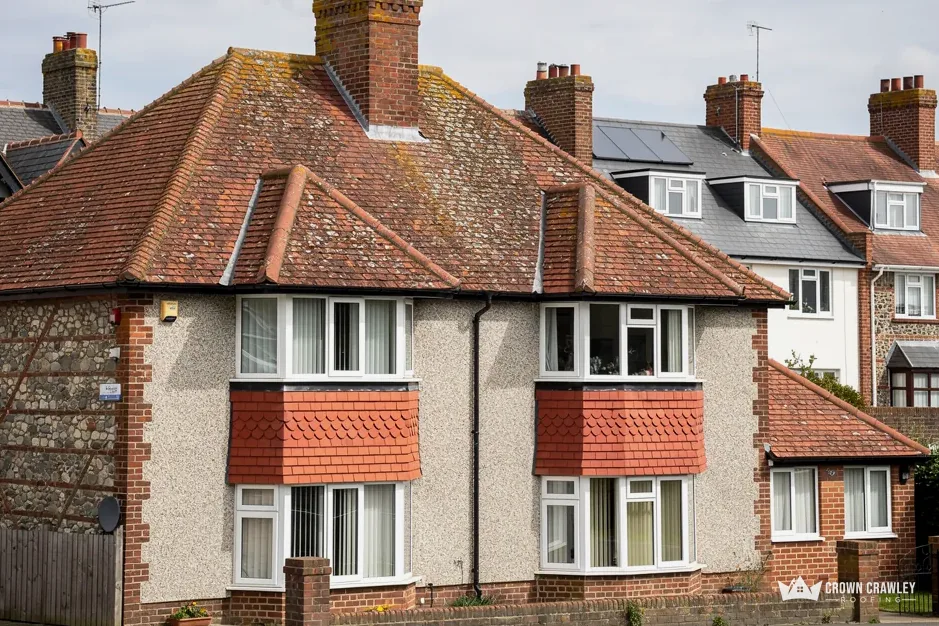
Pebbledash semi-detached house with a red clay tiled roof and bay windows

Ridges built before 2014

A roof finished before the 2014 revision of BS 5534 may have its ridge and verge held by mortar alone. We check the bedding, add mechanical fixings when we rebed, and say plainly if dry-fix would suit better.

Mortar-bedded ridge on a tiled roof

Maidenbower, south of Pound Hill

Map of Maidenbower and the neighbourhoods around it, with Crawley for reference.

Maidenbower sits on the south-east edge of Crawley, south of Pound Hill and outside the area first designated for the new town.

Distance
3.4 road miles from Crawley, to the east
Drive
About 9 minutes
Council
Crawley Borough Council and West Sussex County Council
Planning authority
Crawley Borough Council
Ward population
9,349 (Census 2021, Maidenbower ward)
Building control
Crawley Building Control
Get a free quote

Maidenbower roofing record

Reading a roof from the 1986 scheme

Three short chapters on how Maidenbower came about, who looks after a shared roof, and the Crawley rules that apply once a repair grows.

Stage 01 · Background

A neighbourhood chosen in 1980

Maidenbower was picked in 1980 to meet Crawley's future housing needs and was built privately, which shapes how we approach its roofs.

Maidenbower came late to Crawley's story. The Development Corporation that built the first neighbourhoods was wound up in 1962, and by 1980 the town needed somewhere new to grow. The Victoria County History records that the area known as Maidenbower, south of Pound Hill and outside the original designated area, was chosen that year as the most likely to meet Crawley's future housing needs. In 1986 an outline scheme was announced for a privately built neighbourhood of about 3,700 houses and flats.

What does a private scheme mean for the roofs?

Unlike the neighbourhoods begun under the Development Corporation, Maidenbower was a privately built scheme, so we come to each street with an open mind and read the roof in front of us: the tile profile, how the ridge and verge are held, what the underlay is and how the loft is ventilated. A semi and a detached house a few doors apart can be quite different under the tiles, and a roof that has already been repaired once may have a mix of details. The survey photos show you exactly what we found on yours.

Looking over a Maidenbower roof

Tiles
Slipped, cracked or worn at the nibs
Ridge
Mortar sound, or caps screwed tight
Verge
Edge mortar whole or caps clipped
Underlay
Felt or breathable, and still whole
Loft air
Eaves gaps clear of insulation
Modern estate road with brick houses and grey roof tiles

Is a roof from this era near the end of its life?

Not by age alone. If your roof is in concrete tiles, Marley's figure for their life is around 60 years, and it stresses that this is not a guarantee. Clay tiles carry a minimum life expectancy of 60 years from the Building Research Establishment. What tends to tire first on a roof of this age is everything around the tile: the mortar on the ridge and verge, the nails, and the underlay at the eaves where it drapes into the gutter. Those are repairs, not reasons for a new roof. At the eaves we also look at the fascia boards, soffits and gutters, because a blocked gutter at the foot of a slope can push water back under the first course of tiles. We note the tile profile and colour as we go, so any replacement matches.

The loft gets as much attention as the slopes. With non-breathable felt, BS 5250 guidance calls for ventilation along the eaves, and insulation pushed hard into the eaves can block it. When that happens, damp from the house condenses under the roof and can mark the battens. Clearing the gap is a small job. Our pitched roofing page explains how we repair tiles, battens and underlay.

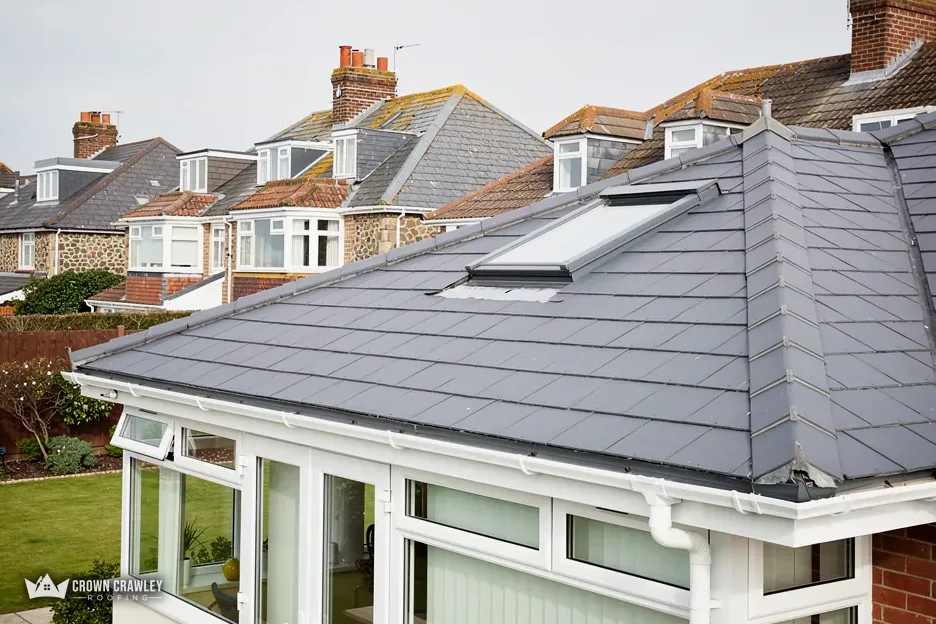
Slate-effect roof over a conservatory on a suburban house

Stage 02 · Ownership

Flats, maisonettes and shared roofs

With flats in the mix, the first question on some Maidenbower roofs is not what has failed but who has the job of fixing it.

Because the 1986 scheme mixed houses with flats, Maidenbower has roofs that one family owns outright and roofs shared by several households. The repair is the same either way: a slipped tile is a slipped tile. What changes is who decides, who pays and who we need to speak to before the scaffold goes up.

Who is responsible for the roof over a flat?

That depends on the lease, not on which flat is under the leak. In many blocks the freeholder keeps the roof and recovers the cost through a service charge, often through a managing agent. A top-floor leaseholder with a stain on the ceiling usually needs to report it to them rather than book a roofer directly. Our answer on leaseholder roof repairs and who pays goes through the usual arrangements. If you are not sure who holds the freehold, your lease or the management pack from your purchase will say, and the managing agent can confirm it. If you own the freehold of your block, or share it, you can instruct us yourself. For a leaseholder, a written price with photos is also useful evidence when you ask the freeholder to act.

Who's who on a shared roof

Freeholder
Owner of the building, roof included
Leaseholder
Owns a flat under a long lease
Managing agent
Runs the block for the freeholder
Service charge
Upkeep costs shared between the flats
On a block of flats, the first call is often to the managing agent, not the roofer.

How do we work on a shared roof?

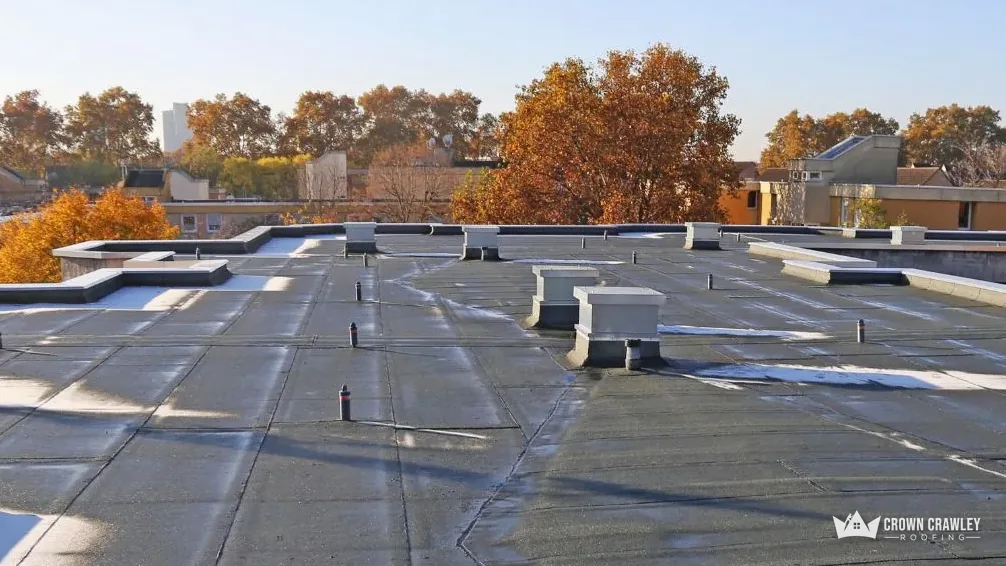
We give one written price to whoever orders the work, with photos that the other owners can see for themselves. Access is planned around shared paths, parking and bin stores, and we tell every household when the scaffold is going up and coming down. If the loft is a shared space, we arrange a time to get in with whoever holds the key. On a pair of semis or a terrace the ridge, valleys and party wall line can also be shared, so a repair on one side may involve the neighbour's roof. We explain that before work starts and leave both sides sound. Where a small flat roof covers a stairwell, bin store or link between blocks, we look at that as well, because water from it can show up in a flat some distance from where it gets in.

Flats are treated differently from houses under planning rules, so if anyone wants to change the look of a block's roof, check with Crawley Borough Council's planning team first. For a repair that keeps the same tiles and the same look, that question does not arise. On the roof itself the repair is the same as on a house; the paperwork is the only real difference.

Stage 03 · Permissions

Crawley's rules for a Maidenbower re-roof

Maidenbower comes under Crawley Borough Council for planning and Crawley Building Control for approvals, and both matter once a repair turns into a re-roof.

A like-for-like repair never touches a form. Replacing tiles like for like, rebedding a ridge or renewing a valley keeps the house looking as it did, and that is the end of it. The rules start to matter when a job grows into a re-roof, when the covering changes, or when scaffold has to stand on the road.

Maidenbower survey: what we note

Planning
Crawley Borough Council
Approvals
Crawley Building Control on bigger jobs
Scaffold
Highway licence if on the pavement
Notice
10 working days for West Sussex
Wildlife
Work pauses if bats are found
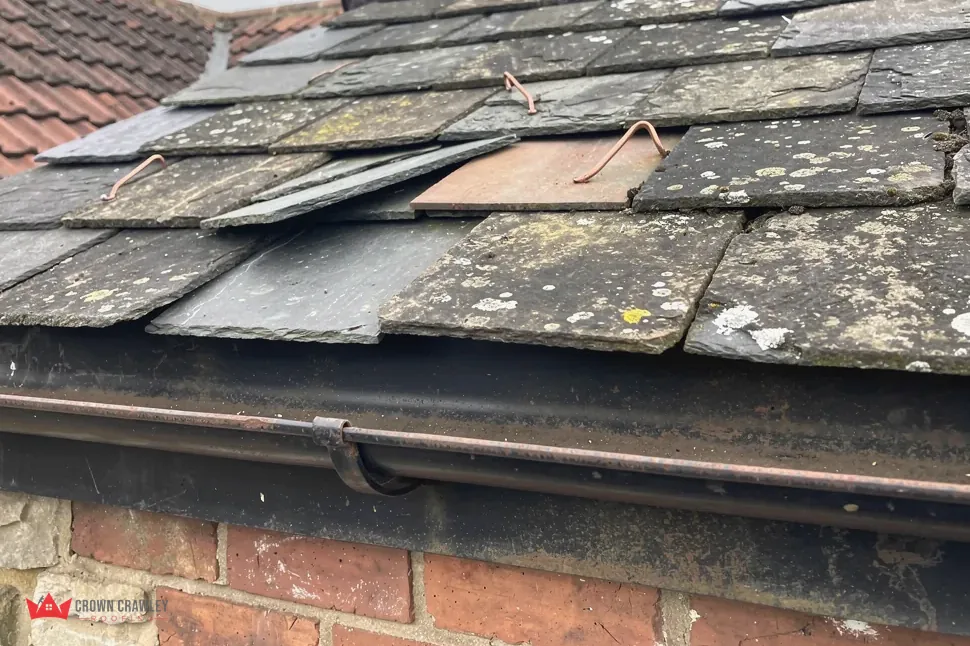
Old slates, damaged and slipped, above a cast-iron gutter

When does a Maidenbower re-roof need approval?

Crawley Building Control is the borough's own building control service, and among the domestic jobs it says need approval is repairing or replacing more than 25% of a roof's surface. Maidenbower falls within its area. So if a survey points towards stripping a whole slope or more, we check with them before we fix the start date, and the written price says so. A new covering 15 per cent or more heavier than the old one also needs approval under the Planning Portal's test, and the Portal's advice is to have a structural engineer or surveyor check the roof first. Changing from concrete to clay or slate is a bigger step than it looks, because the weight and the minimum pitch both change, so the original type of covering is usually the safer choice. Two Crawley conservation areas, Worth and Forestfield and Shrublands, lie within a kilometre of Maidenbower, so a house near either should be checked against its boundary before a re-roof. If the whole roof does need renewing, our roof replacement page shows how that job runs.

Does the scaffold need a licence here?

A licence is needed when scaffold stands on the public highway, and the pavement counts. West Sussex County Council asks for at least 10 working days' notice and charges £266 for one month. If your house has room on a drive or in the garden, the scaffold can stand there instead, and no highway licence applies on private ground. Where one is needed, the scaffolder and we sort it out between us and set the start date to suit. Scaffold also needs a safe route along the side of the house for materials and waste, which we check at the survey.

Keep reading

Bats are fully protected, and repairing or replacing a roof is named in government guidance as activity that may disturb them, so if we spot signs during the survey, we pause and discuss it with you. If your worry is a ridge or a verge, our dry ridge and dry verge page covers both systems. To start, take a picture of the slope, ridge or verge that is bothering you from the garden or the pavement, and send it with your postcode.

Common Maidenbower roof queries

Is a Maidenbower roof old enough to need replacing?

Usually not on age alone. The neighbourhood was announced in 1986, and the Marley life figure for concrete tiles is around 60 years, with the warning that it is not a guarantee. On roofs of this age the mortar, nails and eaves underlay tend to need attention before the tiles do. A survey with photos tells you whether a repair will do.

Why do some Maidenbower roofs have plastic verge caps and others mortar?

It depends on how and when each roof was built or last repaired. Older practice bedded verges and ridges in mortar; since the 2014 revision of BS 5534, bedded tiles should have mechanical fixings too, and a dry verge system is the other route. Both can be sound. We check which you have and repair it in the same style unless you choose otherwise.

Will a conservation area affect my Maidenbower roof?

Possibly, if your house lies near the Worth Conservation Area or the Forestfield and Shrublands Conservation Area, both close to Maidenbower. Outside those boundaries, a like-for-like repair or re-roof raises no conservation questions. If you plan to change the look of the roof, or you live in a block of flats, check with Crawley Borough Council's planning team before you commit, as different rules can apply.

Will the scaffold for my Maidenbower roof go on the road?

Only if there is no room on your own drive or garden, since private ground needs no highway licence. For scaffold on the pavement, West Sussex County Council wants at least 10 working days' notice and charges £266 a month. The scaffolder and we arrange the licence between us and plan the start date around it, then let your neighbours know when it is going up.

Roof work in Maidenbower? Ask for a price

Photograph the slope, ridge or verge you are unsure about and send it with your Maidenbower postcode, and we will book the survey.

01293 974253

10-year workmanship guarantee, in writing.

Call Get a free quote