Roofers in Worth

Roofs around a pre-Conquest church hamlet inside Crawley borough.

Worth is a church hamlet half a mile south of Pound Hill, with a conservation area and listed buildings. We survey each roof with that history in mind and write up one price.

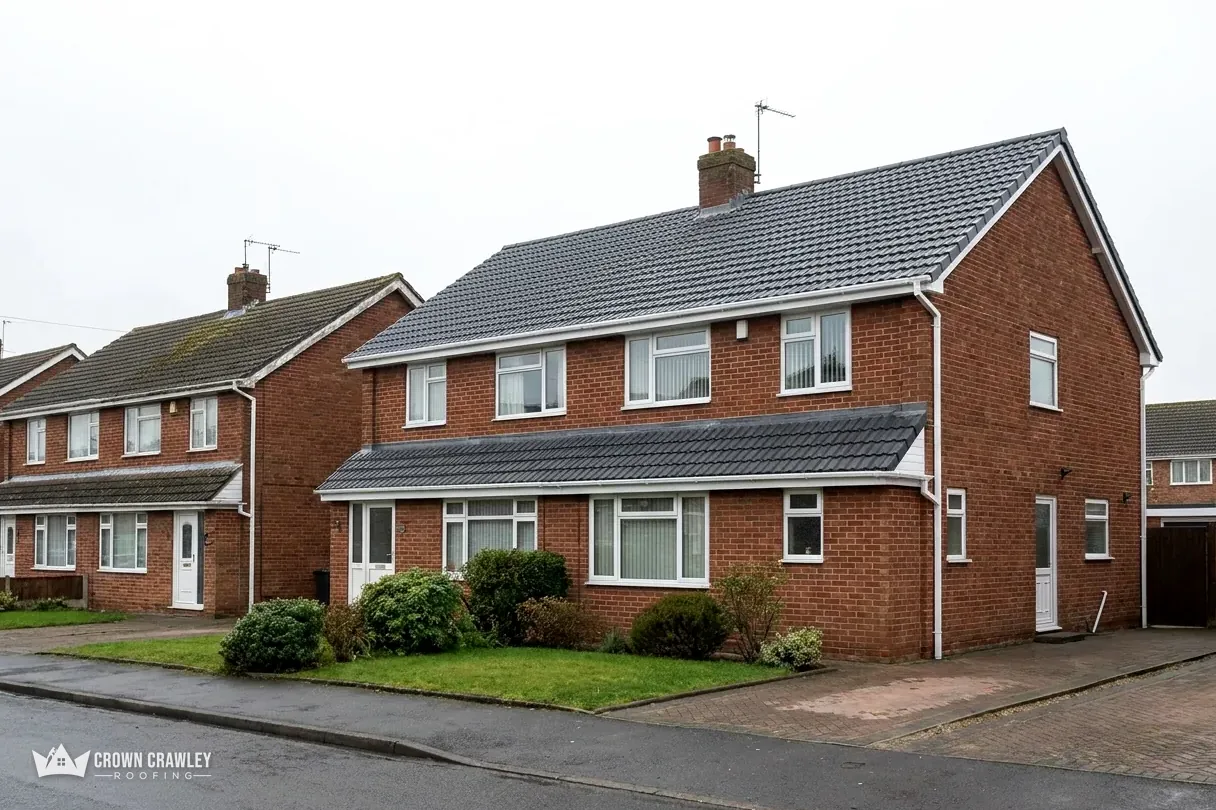
Detached red brick houses with grey tiled roofs on a quiet road

Roofs in Worth: what to expect

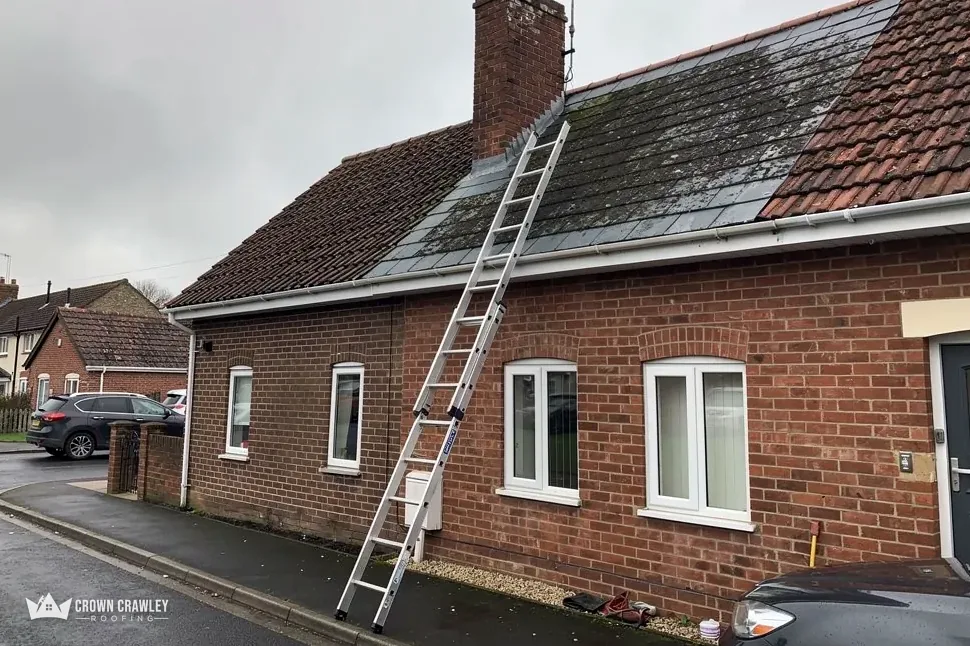
Brick bungalow with a ladder leaning against its tiled roof

Houses in the conservation area

Part of Worth lies in the Worth Conservation Area. Crawley Borough Council drew it around St Nicholas, so if a roof is to look different afterwards we point you to its planners first; matching tiles are the easiest route.

Tiled roof on a village house

Brick chimney with lead flashing on a clay tiled roof

Listed farmhouses and cottages

Historic England lists Frogshole Farmhouse and Green Lane Old Cottage at Grade II. On roofs like these, covering, timbers, lead and chimney are all examined before we propose any repair.

Old clay tiles on a cottage

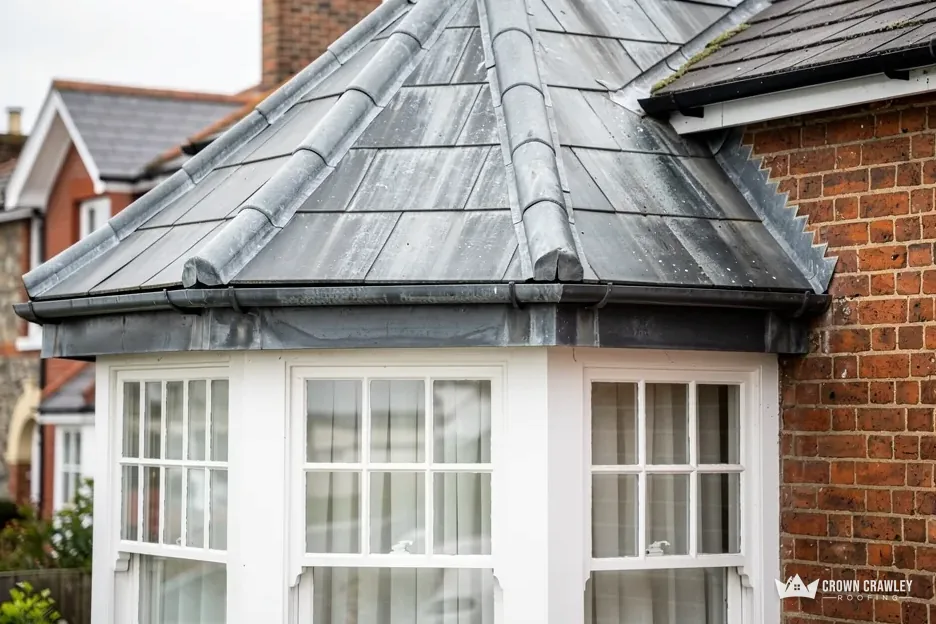
Lead-covered bay window roof on a brick house

Walls of ironstone rubble

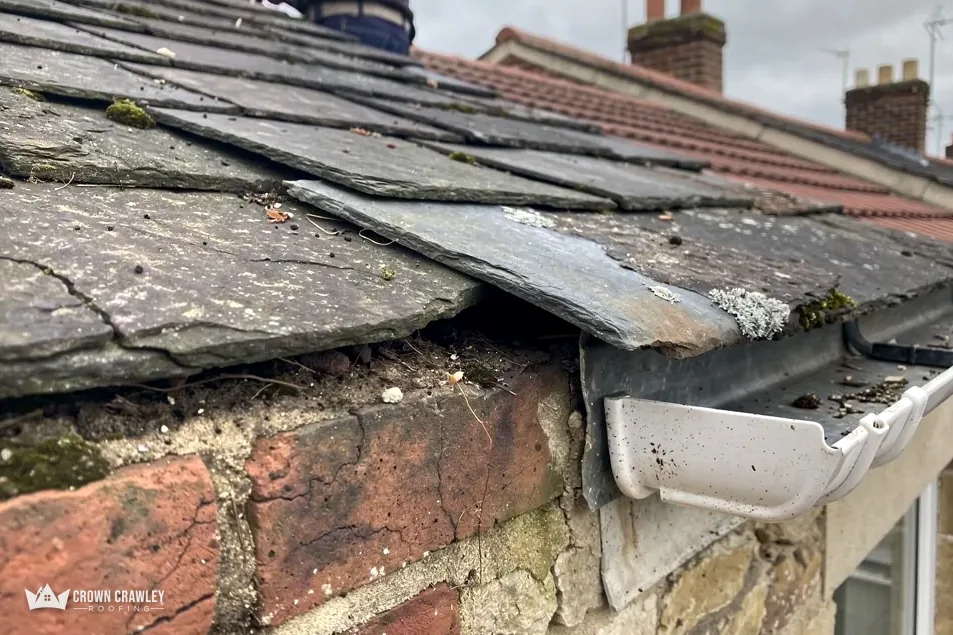
St Nicholas has walls of irregular ironstone rubble. Beside old stone or rubble, wall junctions and lead flashings need close study, and any house with a wall like that gets it.

Lead flashing against a stone wall

Worth, half a mile south of Pound Hill

Map of Worth and the neighbourhoods around it, with Crawley for reference.

Worth is a small church hamlet in the old parish of Worth, half a mile south of Pound Hill, inside Crawley borough.

Distance
3.1 road miles from Crawley, to the east
Drive
About 9 minutes
Council
Crawley Borough Council and West Sussex County Council
Planning authority
Crawley Borough Council
Conservation area
Worth Conservation Area
Parish church
St Nicholas, Grade I, first listed 1957
Get a free quote

A job in Worth

Reading roofs beside a pre-Conquest church

Three short chapters on old walls and the lead that seals them, life in a conservation area, and the Crawley rules that matter for a bigger job.

Stage 01 · First look

Old walls and the roofs beside them

Worth's parish church is pre-Conquest in origin, and roofs near buildings of that age meet old walls that call for careful lead and pointing.

The Victoria County History describes St Nicholas, Worth, as a pre-Conquest church of cross plan with an apsidal chancel. The tower and spire north of the chancel were added in 1871 and the south porch in 1886, and the walls are of irregular, wide-jointed rubble containing much ironstone. Historic England lists it Grade I. The same source says the medieval manor house probably served as a hunting lodge for the forest of Worth, with letters dated there in 1318, 1320 and 1384. We are roofers, not historians, but that past explains why a survey in Worth begins at the walls. Where a house has a wall of stone or rubble, we read the roof from the junction outwards, because water finds the join before it finds anything else, and a damp patch indoors often traces back to a few inches of failed pointing outside.

Where roof meets old wall

Flashing
Lead set in firm mortar joints
Pointing
Mortar whole around the lead
Soakers
One under each tile course
Gutter
Not spilling onto the wall
Chimney
Flaunching and flashing intact
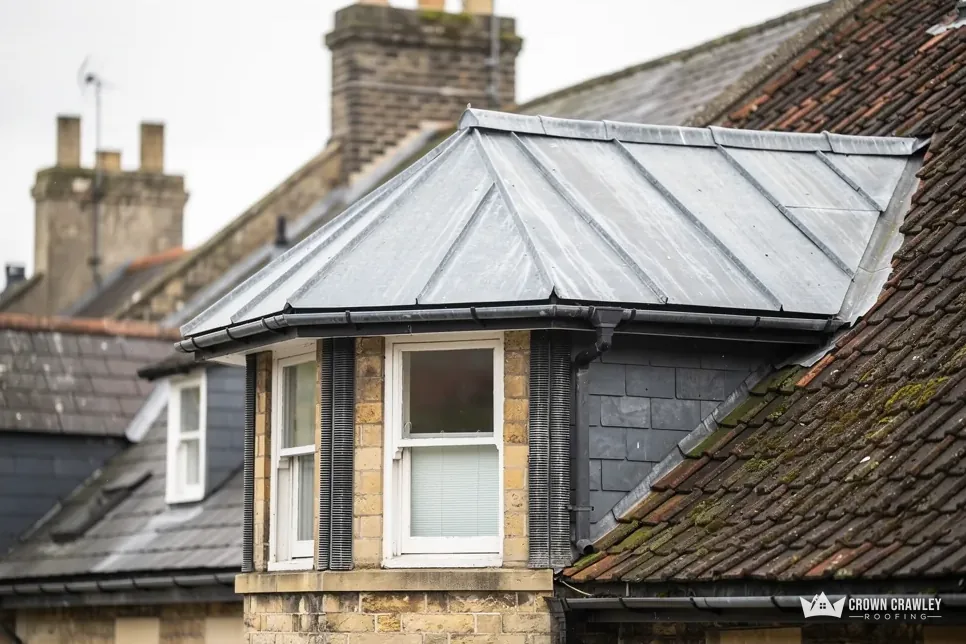
Lead-covered bay roof and chimney stack on a slate and tile roof

What does an old wall mean for the roof beside it?

Where a tiled slope ends against a wall, the join is sealed by lead flashing, a strip tucked into a groove in the masonry and dressed down over the tiles. Beneath the tiles, small folded pieces of lead called soakers sit under each course and carry water out over the surface. On old stone or rubble, the mortar joint that holds the flashing is often the weak point, because it crumbles before the lead does. We rake out the joint, repoint it and refix the lead, which usually costs less than replacing the whole length. Checkatrade's June 2026 guide gives typical UK repair figures of £50 to £70 per metre for lead flashing, and £80 to £120 per metre for stepped flashing. Our lead work page covers the codes and details.

How do you check a chimney against an old wall?

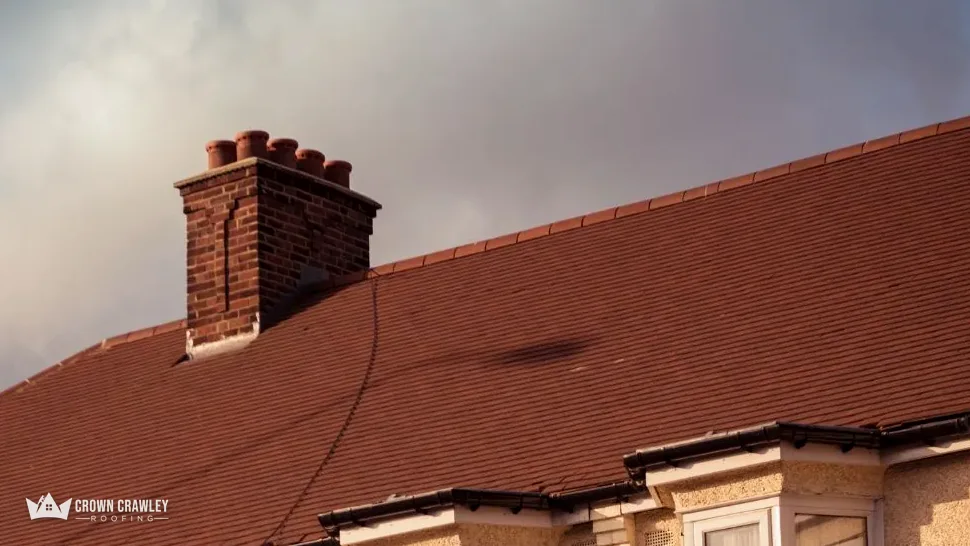
The stack is another junction. Flaunching, the sloped mortar bed holding the pot, cracks with age and lets water run down the flue. We examine the pointing, the flashing round the base and the cap, from a ladder and from the ground, and send you the photos. Myjobquote's guide, last updated on 22 September 2026, puts replacing chimney leadwork at £350 to £460 without scaffold and £700 to £920 with it. Our chimney repairs page explains the options.

Keep reading

Lead itself lasts: Myjobquote credits flashing with more than 80 years. When the lead itself is sound and only its fixing has failed, a repair is the sensible answer, and we leave the original lead where it is.

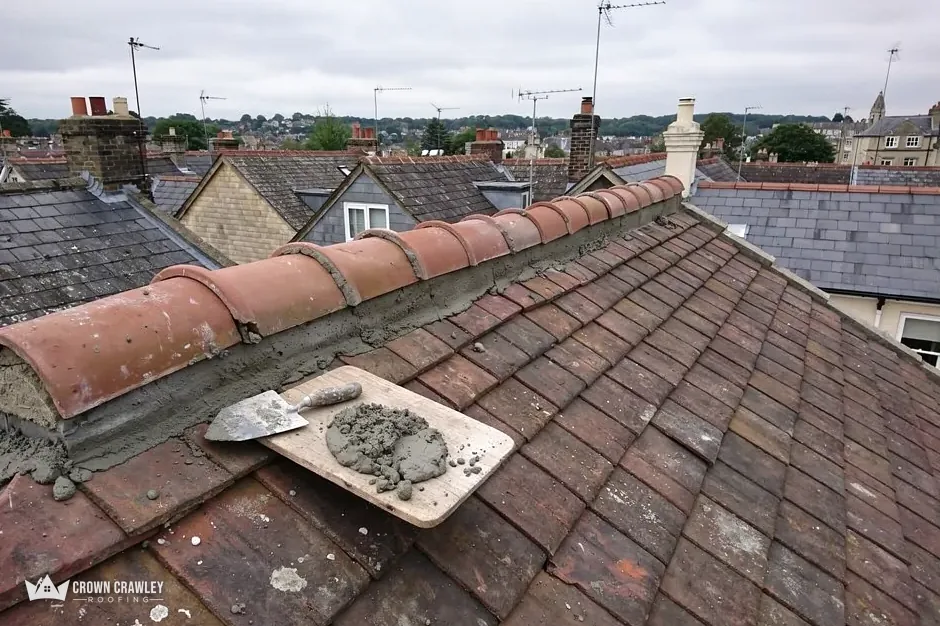
Ridge tile bedded in fresh mortar with a trowel resting on the roof

Stage 02 · Heritage

Living in a conservation area

Part of Worth lies in a conservation area and listed houses stand near the church, so the first question is what the council must hear.

The national dataset records the Worth Conservation Area, with boundaries supplied by the council. Crawley Borough Council designated it in March 1987 and revised its conservation area statement in February 2018. The Historic England list also records Frogshole Farmhouse and Green Lane Old Cottage at Grade II. This does not rule out roof work; it shapes the order of events: first learn which category your house falls into, then agree what the work will look like, then price it.

Does the conservation area change a repair?

Re-laying matching tiles to the existing pattern changes nothing a passer-by would notice, which makes it the safest kind of job. A different covering, a front-slope roof window or an altered ridge is another matter, because conservation areas carry extra planning controls. Ask Crawley Borough Council's planning team whether your property is inside the boundary, since only part of Worth is. The council's map is the final word, not a postcode or a street name, because a boundary may follow the centre of a road and split neighbours. Our answer on re-roofing in a conservation area explains the choices.

Heritage terms in Worth

Conservation area
Area with tighter planning control
Listed building consent
Council approval for character changes
Faculty
Consent route for Anglican churches in use
Like for like
Same covering and same appearance

Ask the council before the tiles change, not after the scaffold goes up.

What about listed houses and the church?

For a house on the national list, alterations that affect its special character need listed building consent, and that is a conversation with Crawley Borough Council before any quote is accepted, so ask early. We supply photographs and a written scope that you can send to the conservation officer. A good scope names the covering, the fixings, the flashing material and what will happen to the old tiles, so the officer can answer in one reply instead of several. Churches follow different rules. Anglican churches in use go through the diocesan faculty system rather than listed building consent. St Nicholas is an Anglican parish church, so that is the route for works to the church itself, and it does not concern the houses around it.

Which tiles suit an older roof?

The ones already there, whenever they are sound. Reclaimed clay tiles often carry colour and texture that new ones do not match, so we keep what can be kept, store it carefully and make up the shortfall with tiles chosen for size and shade. BS 5534 concedes that its recommendations may not suit every old roof, notably one laid with salvaged or traditional stock, so any compromise on fixings or materials is explained to you in writing before it goes ahead.

Stage 03 · Permissions

Crawley's rules for a Worth re-roof

Worth lies inside Crawley borough, so the borough council decides planning and its own building control team signs off approvals.

Crawley Building Control is the council's own service for the borough, and Worth falls under it. It took over all building control work for the borough, and its contact details are published on the council's site. Crawley Building Control says that renewing more than 25% of a roof's surface needs its approval. That is Crawley's own line, so on a Worth survey we measure every slope and check the plan with the team before the programme is set. We are happy to share the plan with it on your behalf.

What happens at the survey on a larger roof?

We measure each slope, photograph the covering, battens and underlay where they can be seen, and count how much of the roof would be renewed. If the answer is close to Crawley's quarter, we tell you so and ask the council first, so the start date is never the thing that holds up an inspection. Swapping to a heavier covering is a separate trigger for approval, and the Planning Portal says a structural engineer or a surveyor should look at the roof structure first. Our roof replacement page describes the steps of a full re-roof.

What to settle before work

Planning
Crawley Borough Council
Approval
Crawley Building Control above a quarter
Heritage
Part of Worth is a conservation area
Road scaffold
Licence from West Sussex County Council
Church works
Faculty for a Church of England church
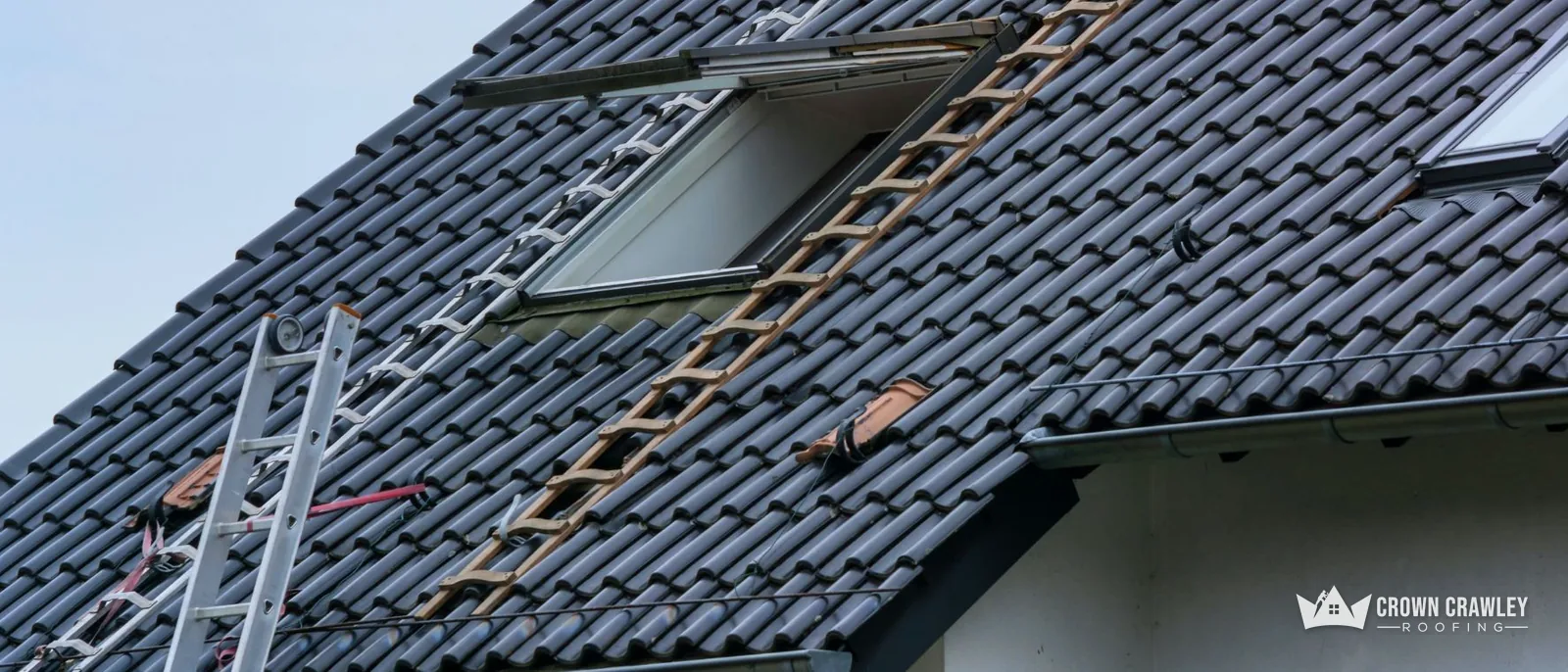
Black roof tiles with a roof window and ladder against a house

Do you need a scaffold licence in Worth?

Not for a scaffold on your own land. Poles that stand on a pavement or other public highway need the highway authority's licence, which in Worth means West Sussex County Council under Highways Act 1980 section 169. Applications need a minimum of 10 working days, one month of scaffold is listed at £266, and a fast-track request adds £52. Ask who applies; our office handles it alongside the scaffolding firm and times the start so the licence is in hand first. Narrow lanes and parked cars are worth raising at the survey, because they decide where the scaffold can go, where the skip can stand and where deliveries of tile and timber can be left without blocking the road for neighbours.

How do we keep a village roof job tidy?

We tell neighbours when scaffold goes up, keep gardens and paths clear, and take the waste away as we go. Your quote names the covering, says what is included and arrives as one total price, with photos of your own roof from the survey. Check any other quote for VAT and scaffolding, since leaving either out can make a figure look lower than it will end up.

Frequently asked in Worth

Can a Worth house in the conservation area be re-roofed in the same tiles?

Usually that is the simplest route, because the roof looks the same afterwards. Only part of Worth is inside the conservation area, so ask Crawley Borough Council's planning team whether your address is. We match the tile colour, shape and pattern, keep sound old tiles where we can, and put the details in the written price before work starts.

How are roofs repaired where they meet old ironstone or rubble walls?

We rake out the failed joint, repoint it and refix the lead flashing so it sits in sound mortar. If the lead has cracked or lifted we replace that length and renew the soakers beneath it. The new lead goes only into sound mortar, never loose stone. The survey photos show the condition of each joint, so you can see what has failed.

Does a listed cottage near St Nicholas need consent for roof repairs?

Alterations that affect a listed building's special character need listed building consent, so ask Crawley Borough Council before agreeing any scope. A repair in matching materials is the usual starting point. We supply photos and a short written scope for you to hand to the conservation officer. The church itself follows a separate faculty route.

When does Crawley Building Control need to hear about a Worth re-roof?

Crawley Building Control says renewing more than 25% of a roof's surface needs its approval. We work out the share from the survey measurements and, when the figure is close, speak to the team before fixing a date. A heavier covering or new openings in the roof can need approval as well, so we check those at the same time and write the answer into your quote.

Start with one clear photograph

Send a photo of the chimney, wall junction or slope in question with your Worth postcode, and ask for a survey date.

01293 974253

10-year workmanship guarantee, in writing.

Call Get a free quote