Roofers in Forge Wood

Roofs in the newest of Crawley's fourteen neighbourhoods.

Forge Wood, in the north-east of Crawley, is the newest of the town's 14 neighbourhoods. A newer roof still gets a full survey with photos, then one written price.

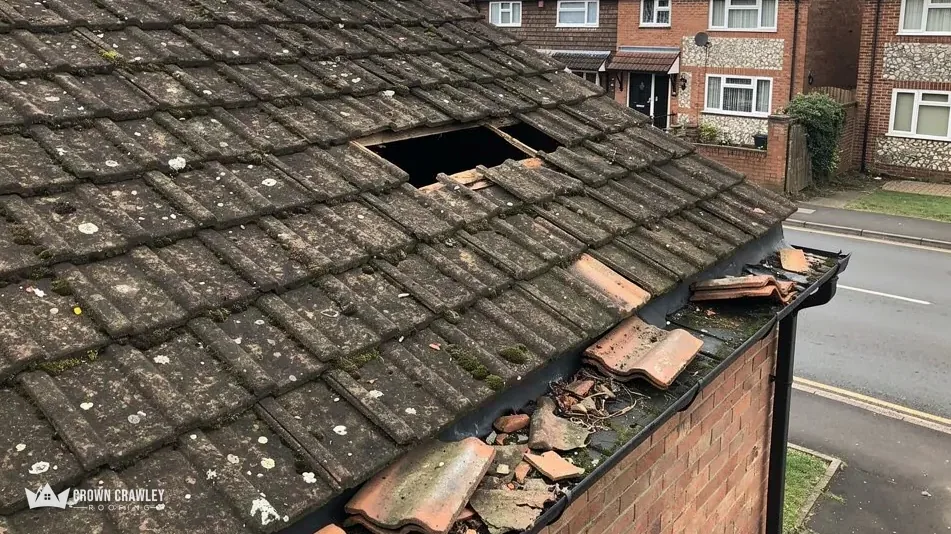
Storm-damaged tiled roof with the battens exposed and tiles on the ground

Roofing materials around Forge Wood

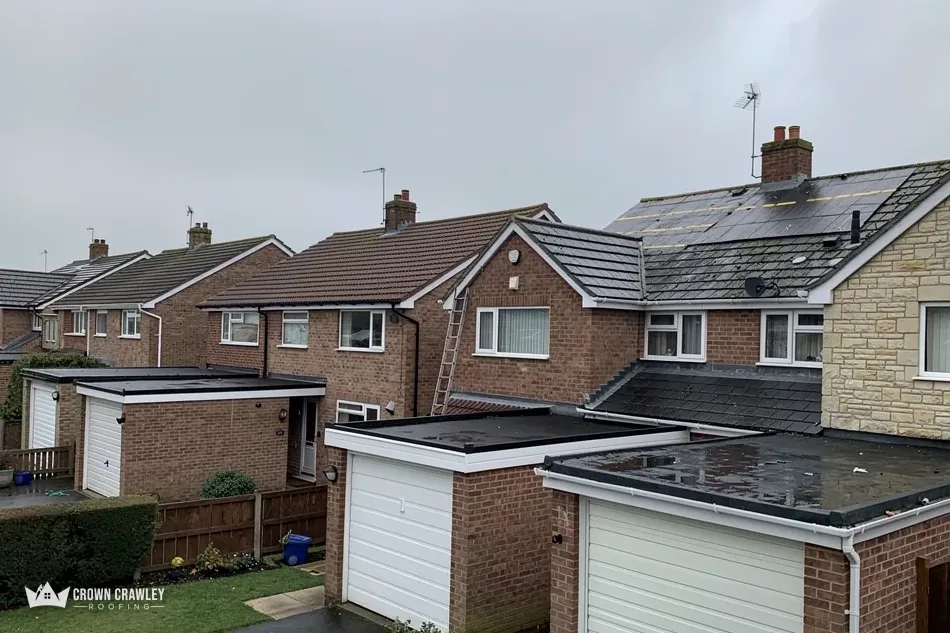
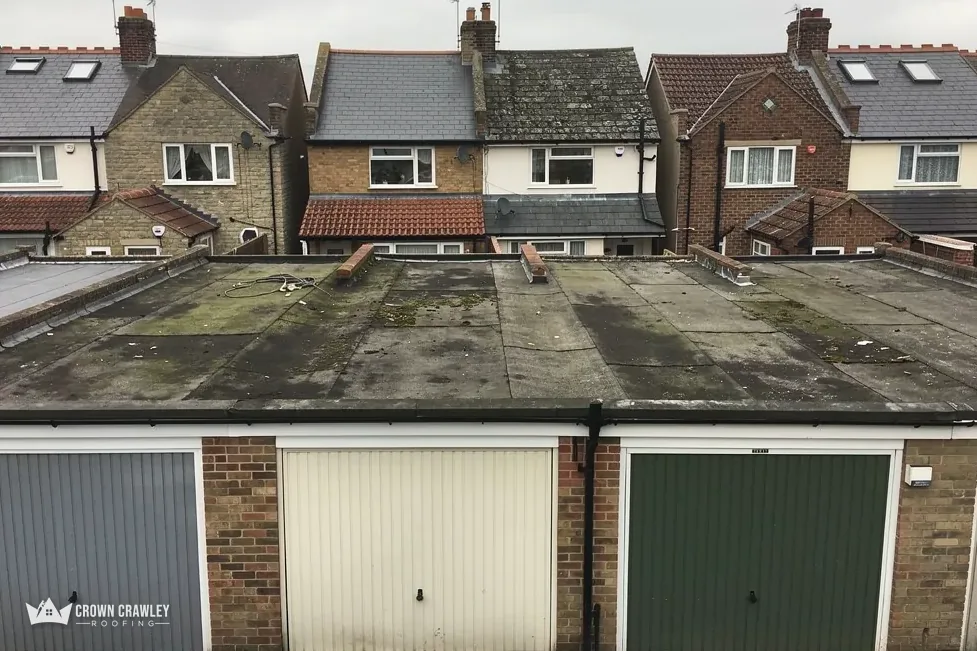
Flat-roofed garages at the back of semi-detached houses

The town's newest neighbourhood

Crawley Borough Council calls Forge Wood the newest of the town's 14 neighbourhoods. A newer roof still gets a close look at ridge, verge, flashings and gutters rather than a glance from the pavement.

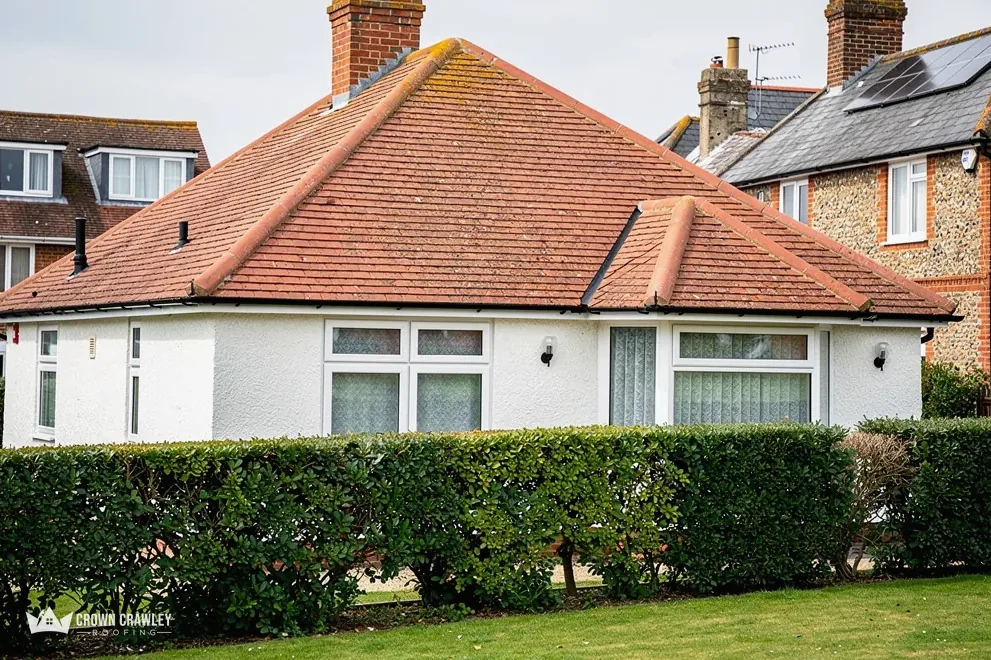
Tiled roofs on a modern estate

Brick chimney with lead flashing on a clay tiled roof

Heathy Ground Farmhouse

Heathy Ground Farmhouse is listed Grade II, under Historic England list entry 1250230. Altering the character of a listed building calls for consent, so its status is settled before we quote.

Farmhouse roof in clay tile

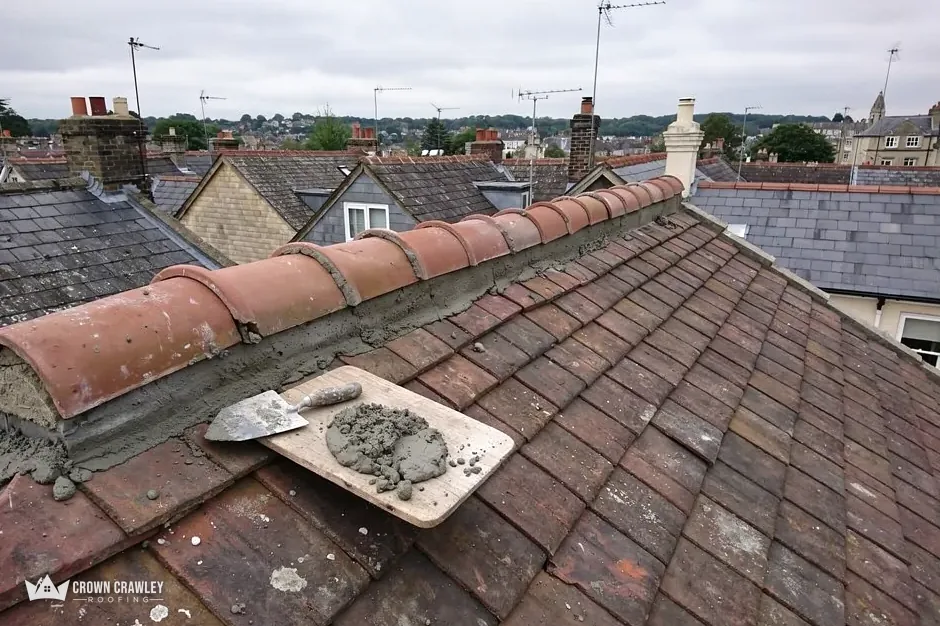
Ridge tile bedded in fresh mortar with a trowel resting on the roof

Fixings on newer ridges

Since the 2014 revision of BS 5534, Marley says mortar-bedded fittings need a clip or screw as well. Whatever a roof's age, we check how the ridge and verge are actually held, and which system was used.

Ridge tiles on a pitched roof

Forge Wood, north-east of the town

Map of Forge Wood and the neighbourhoods around it, with Crawley for reference.

Forge Wood is Crawley's north-eastern neighbourhood, and one borough council handles both planning and building control approvals for it.

Distance
3.7 road miles from Crawley, to the north-east
Drive
About 7 minutes
Council
Crawley Borough Council and West Sussex County Council
Planning authority
Crawley Borough Council
Ward population
9,479 (Census 2021, Pound Hill North and Forge Wood ward)
Get a free quote

Forge Wood roofing record

Reading the roofs of a newer neighbourhood

Three short chapters on checking a newer roof, the listed farmhouse in the neighbourhood, and how flat roofs and gutters are judged.

Stage 01 · First look

What a newer roof still needs

Being the newest neighbourhood does not make a roof maintenance-free, because the small details give way before the tiles do.

Crawley Borough Council describes Forge Wood, in the north east of the town, as the newest of Crawley's 14 neighbourhoods. Crawley was designated as a new town on 9 January 1947, and Forge Wood belongs to a much later chapter of that story. That is useful background, never a substitute for a survey.

Does a newer roof still need a survey?

Yes, because age is only one clue. Concrete roof tiles are put at around 60 years by Marley, with the warning that this is not a guarantee, so the covering itself is not the first thing to worry about. The parts that let a young roof down are the joints around the tiles: a ridge cap with a weak fixing, a flashing that was never dressed tight, a gutter joint that weeps, or underlay that has dropped at the eaves. We find them by working along the roof with a camera and sending you what we see. The ridge comes first, each slope after it, then edges, any chimney and roof windows, and the loft last, where staining on the timbers can show a slow leak long before a ceiling marks.

What gets checked in Forge Wood

Ridge
Caps fixed, not only bedded
Verge
Dry caps clipped, edges sealed
Flashings
Tight at walls and abutments
Gutters
Joints dry, running to outlets
Loft air
Eaves gaps open and clear
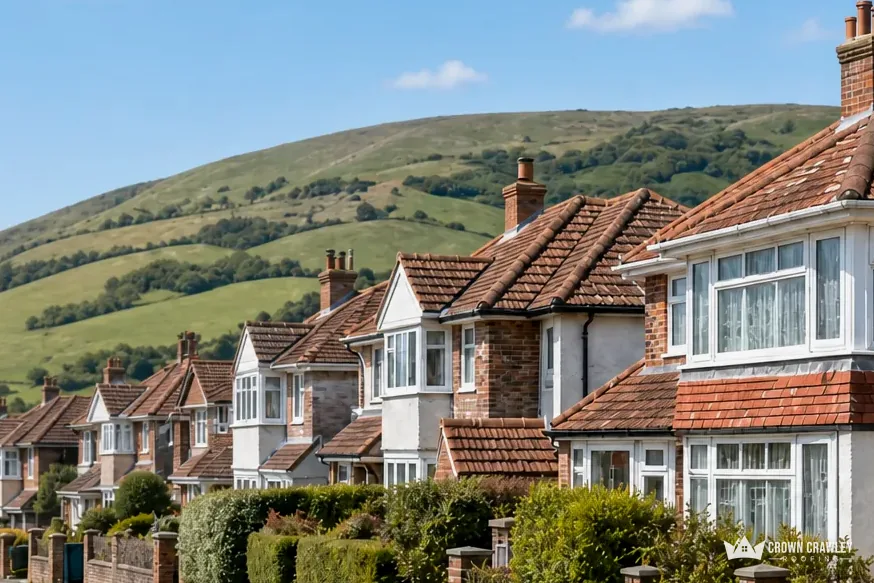
Row of suburban houses with tiled roofs below green downland

How are ridge and verge held on a modern roof?

Mortar alone was long the way to fix ridge and verge tiles. According to Marley, BS 5534 in its 2014 form stopped trusting mortar alone to hold ridge, hip and verge pieces, so bedded fittings now want clips or screws as well. Dry systems, which use clips and screws in place of mortar, are tested to BS 8612. Marley adds that working to BS 5534 is not required by law, so what you find on your own roof is a matter of how it was built. We check which system you have and repair it in kind. Our dry ridge and dry verge page explains both systems, and a ridge can be rebedded with fixings added if you would rather keep the mortar look.

What if the roof is still under a builder's cover?

Read the terms before you book anyone, including us. If a defect shows up soon after a build, ask the builder, or whoever issued the warranty, what it covers and who must carry out the repair. Our survey photos still help in that conversation, because they show the fault clearly and in context. Photographs from the survey also help if you later sell, since a buyer's surveyor may ask what has been looked at. Where cover has run out, we price the repair in writing and explain what caused the problem, so the same fault does not return. If a leak needs stopping straight away, the first visit is about stopping the water, and the lasting repair is discussed once it is dry.

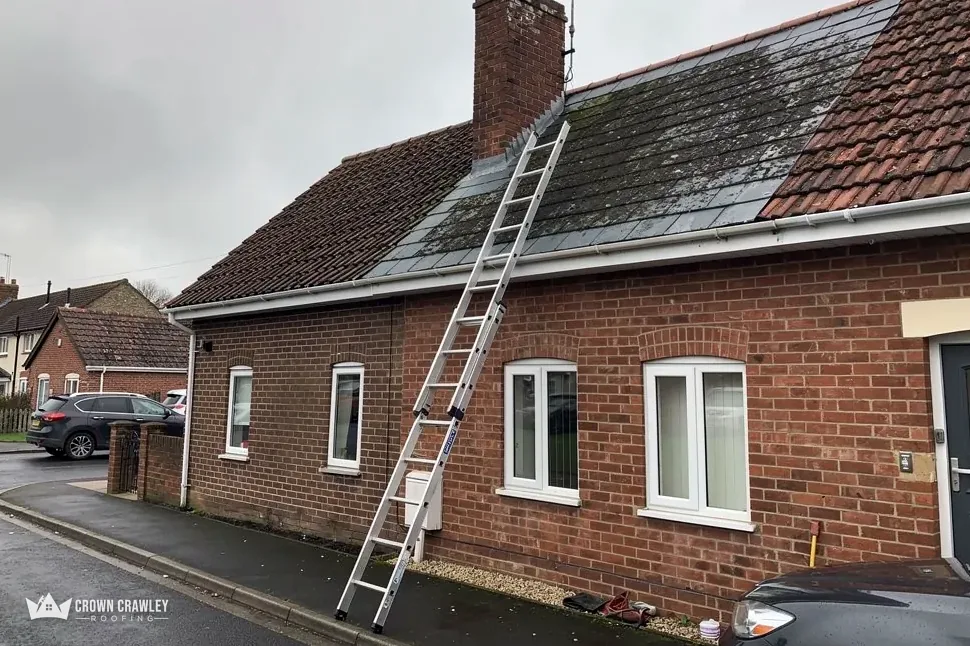
Brick bungalow with a ladder leaning against its tiled roof

Stage 02 · Heritage

A listed farmhouse nearby

Among the newest streets in Crawley sits a Grade II farmhouse, which is a reminder to check a building's status before planning roof work.

Heathy Ground Farmhouse is listed Grade II. Historic England first listed it on 10 March 1992 and holds it as list entry 1250230. It stands in a neighbourhood known for being new, which makes the point neatly: a modern address does not mean modern surroundings, and nobody should assume their own home is free of designation. For conservation area status, put your Forge Wood address to Crawley Borough Council's planning team.

Do a neighbour's listing rules apply to my house?

No. A listing applies to the building named in it, so the farmhouse's status says nothing about the houses around it. What matters is whether your own address appears on the list, which is a separate question from anything a neighbour or a nearby farm has been told. Owners sometimes assume the answer from the age of the street, and that is a risky way to decide. If your address is on the list, the Planning (Listed Buildings and Conservation Areas) Act 1990 requires authorisation for works that would affect the building's character, and the owner can ask Crawley Borough Council's planning team what that means for a roof repair.

Listing in plain words

Listed building
Protected for its special interest
Grade II
The grade Heathy Ground Farmhouse holds
Consent
Written approval before changes
Flashing
Metal strip sealing a roof joint

Could a Forge Wood home be on the heritage list without the owner knowing?

It is unlikely on the newest streets, but a check costs nothing: Historic England's list can be searched by address, or the council will tell you, and that avoids a stalled job. If the answer is yes, send it to us with your first photos, because it changes the order in which we do things: the council's view comes first and the written price follows.

What do we do differently on a listed roof?

We photograph every slope before touching it, so the condition before work starts is on file. We match the covering and the ridge detail to what was there instead of improving on it, and we note where lead flashings meet walls and chimneys, because water can find its way in wherever two materials meet. Our pitched roofing work follows the same pattern, and the same care applies to a single repair as to a full strip. When the council has a view on materials, we follow it and price accordingly in the one written total. If the work turns out to be a like-for-like repair of a few tiles or a ridge, the council can tell you that quickly, and a short written reply from them is worth keeping with your survey photos in case the house is ever sold.

A modern address does not mean a modern building, so check the list first.

Stage 03 · Details

Flat roofs, canopies and gutters

Where a porch, bay or garage has a flat roof, and wherever gutters run, falls and lifespans decide how long the water stays away.

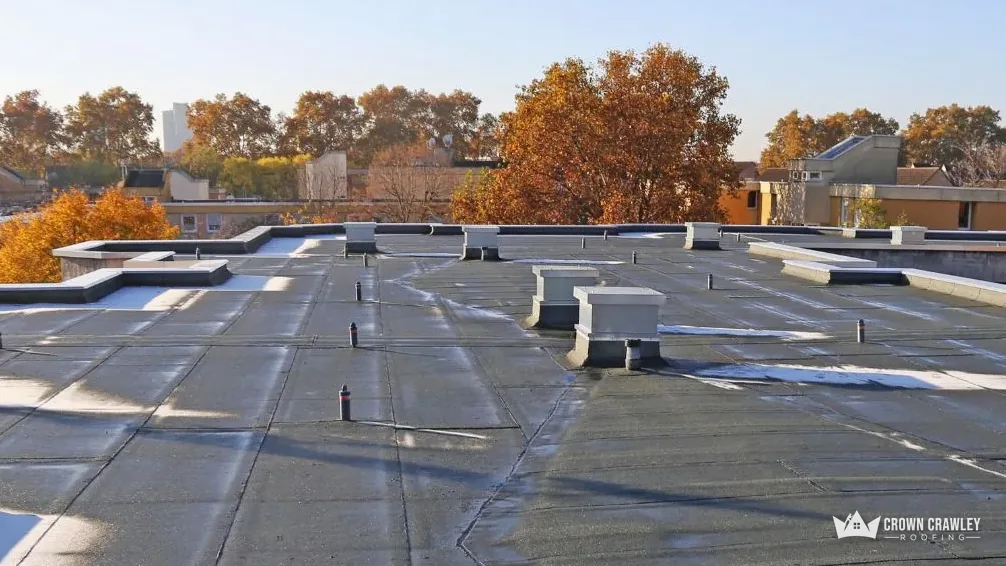
Pitched slopes get the attention, but small flat roofs and gutters often decide whether a loft or a wall stays dry, on new streets as much as old ones. A flat-roofed porch, bay or garage beside a pitched slope needs different care from the tiles above it. EPDM is a rubber membrane laid in one sheet, GRP is glass-reinforced plastic, and felt is the older bitumen covering; each fails in its own way.

How long does a flat roof covering last?

For EPDM, GreenSpec lists an expected service life of 20 to 30 years. The Less guide of March 2026 quotes 25 to 40 years for GRP and 10 to 20 years for felt. Treat those as published ranges, never as promises, because the workmanship at edges, outlets and upstands matters as much as the material. Our flat roofing page explains how each system is laid, and how we finish the edges. On a small canopy the job can be a patch, or a new membrane, and the survey tells us which is sensible.

Published figures to know

Flat fall
1:80 finished minimum
EPDM life
20 to 30 years quoted
GRP life
25 to 40 years quoted
Felt life
10 to 20 years quoted
Gutter fall
1mm per 600mm of run
Mossy flat-roofed brick garage block with three up-and-over doors

What fall should a flat roof have?

BS 6229:2025 retains a 1:80 minimum finished fall across the main roof area and any internal gutters. A manufacturer, IKO, citing the 2018 edition, recommends designing for a steeper 1:40. A roof flatter than that holds standing water at the low points, which shortens the life of any membrane. We check for ponding, soft spots and blocked outlets during every survey, and we look at the upstand where the felt or membrane turns up a wall, since water can find a way in at that edge.

Why do gutters overflow on a newer house?

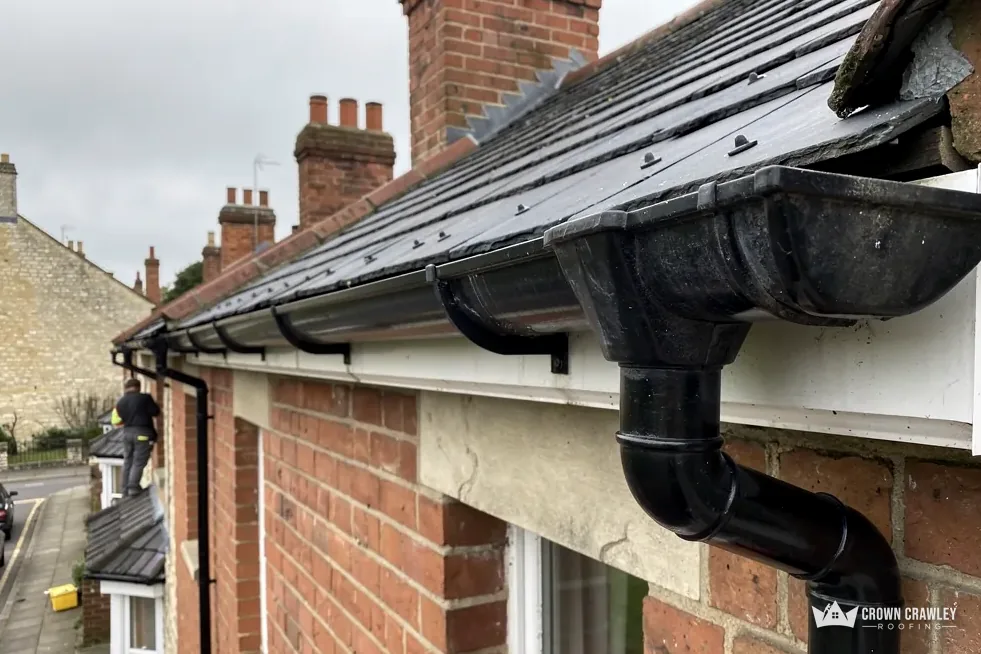
Check the joint first, then the brackets, then whether the run was set level; none of those depends on how old the gutter is. Brett Martin gives 1mm of fall for every 600mm of run, so a long run set dead level will hold water and spill at the joints. We look at brackets, falls, outlets and the fascia behind, then give you one price for what the survey shows. See our gutters, soffits and fascias page for how that work is done. If you see water marks below the eaves after rain, send us a picture of the run and we can point you to the likeliest spot.

Questions from the newest streets

Is a Forge Wood roof too new to have problems?

A newer roof can still have problems at its details. Ridge caps, verge edges, flashings, gutter joints and eaves underlay are where faults tend to show first. Published lifespans for tiles run to decades, so a survey with photos is the way to tell a repair from a re-roof. We send you the pictures and the reasoning alongside one written price.

Is there a listed building in Forge Wood?

Heathy Ground Farmhouse is listed Grade II, under Historic England list entry 1250230. Its listing covers that building only and does not extend to nearby houses. If you think your own home may be listed, look your address up on Historic England's list or ask Crawley Borough Council's planning team before booking roof work.

Is my Forge Wood ridge dry-fixed or bedded in mortar?

Look at the ridge from the garden. Mortar shows as a pale or grey band under the caps. A dry ridge has caps held by clips or screws with no visible bedding, often with a vented strip beneath. A photograph from the ground is enough for us to say which it is, and a survey then confirms how it is fixed.

Who approves a bigger roof job in Forge Wood?

Crawley Borough Council handles planning, and Crawley Building Control is the borough's own approvals service. Crawley Building Control puts re-roofing beyond 25% of a roof's surface area on its list of domestic work needing approval, so we check with them before any larger re-roof. A like-for-like repair of a few tiles or a ridge normally raises no such question.

Show us the Forge Wood details

Send a photo of your ridge, verge or gutter run with your postcode, and say whether the roof is still under a builder's cover.

01293 974253

10-year workmanship guarantee, in writing.

Call Get a free quote