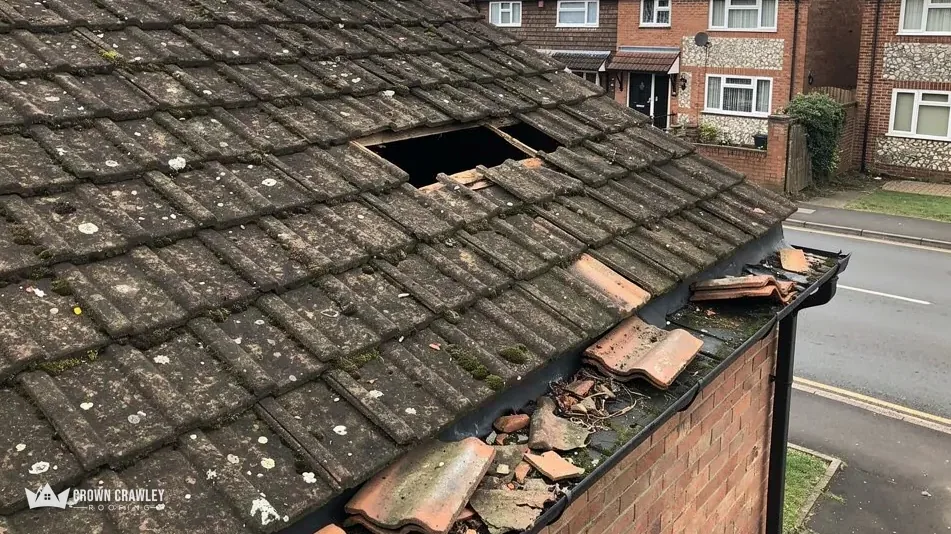
Roofers in Copthorne

Roofs in a village that became its own parish in 1881.

Copthorne grew on the northern edge of the old Worth parish, close to the Surrey border. We survey the roof you have, share photos of it and price the work in writing.

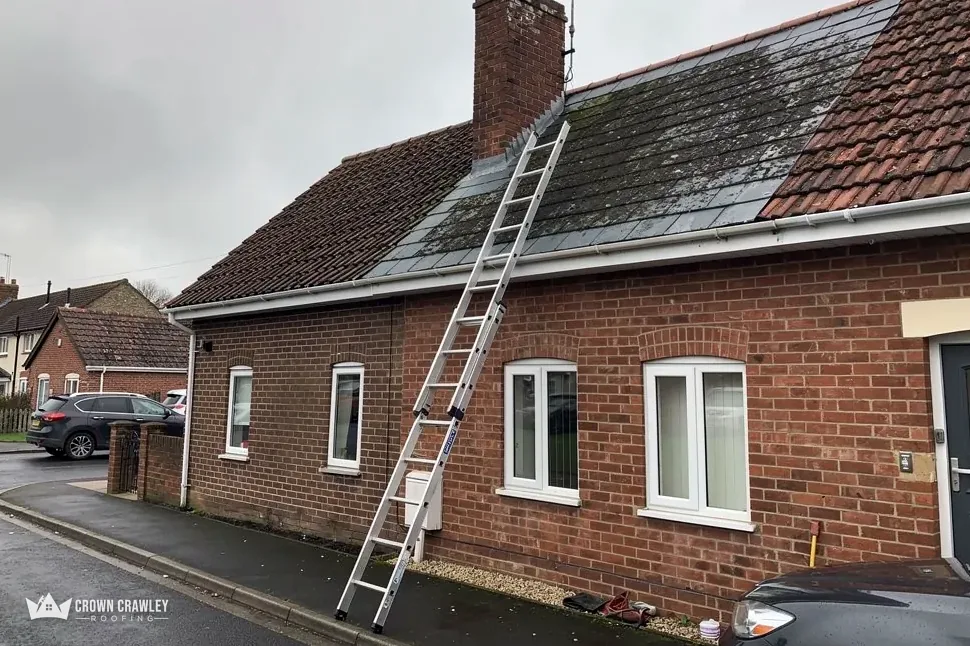
Brick bungalow with a ladder leaning against its tiled roof

Three kinds of roof around Copthorne

Dormer window with white cladding in a clay tiled roof

A village parish from 1881

Copthorne became its own ecclesiastical parish in 1881, served by St John the Evangelist. A village with that much history can hold roofs of several ages side by side, so each house is surveyed on its own merits.

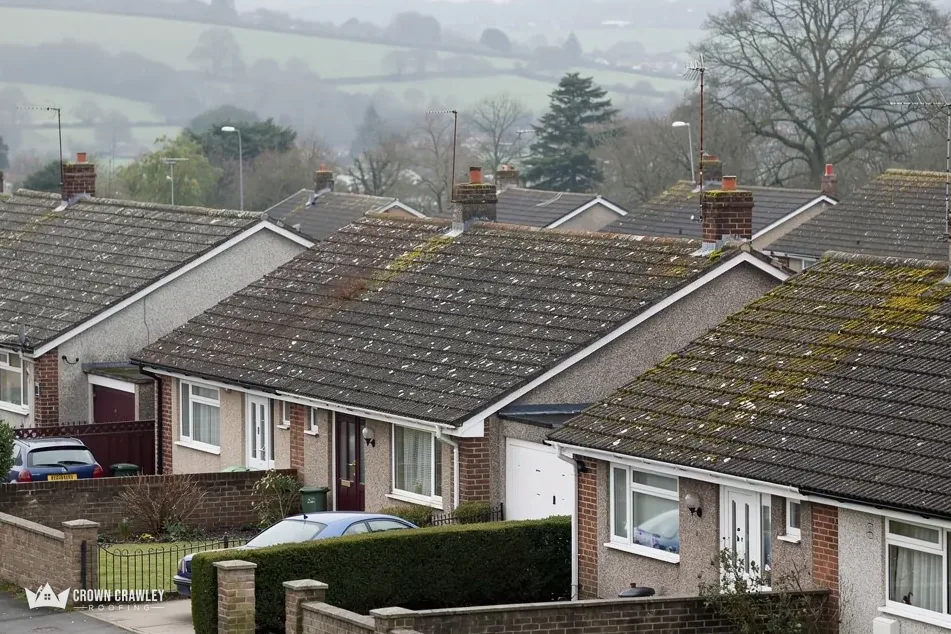
Tiled houses along a village road

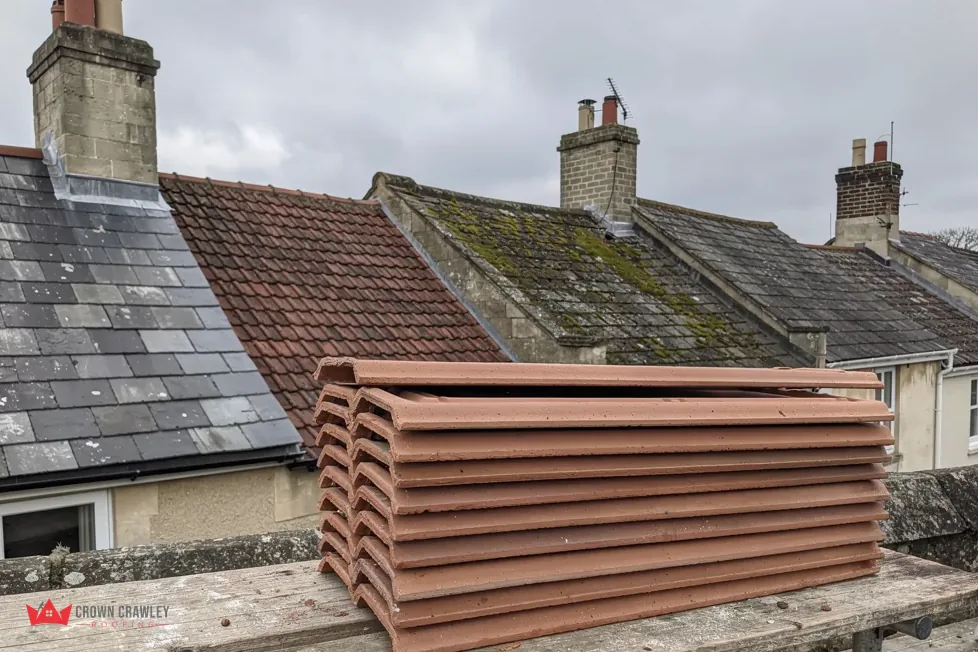
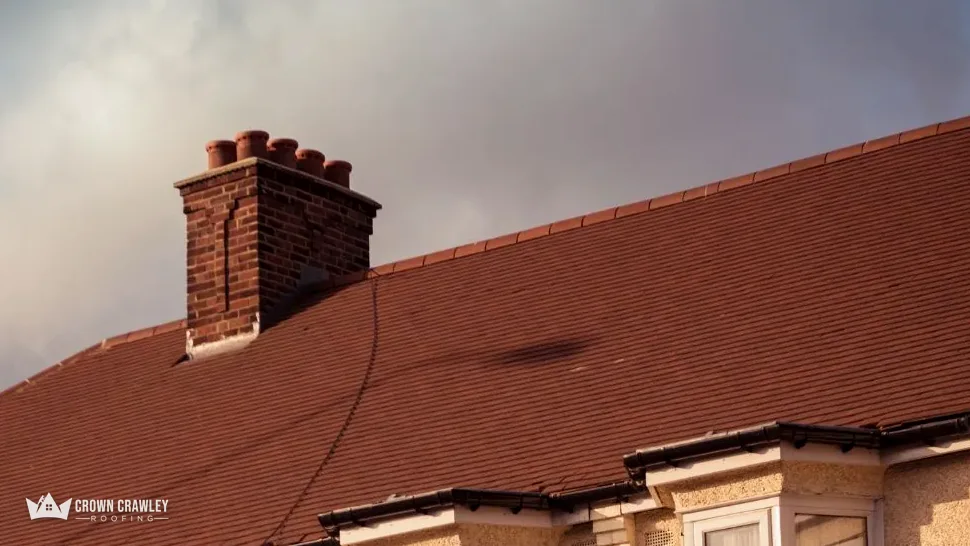
Stack of clay ridge and hip tiles on a flat roof

A late-16th-century farmhouse

Smugglers' Farm, on the road from Copthorne to East Grinstead, is a late-16th-century house. On older farm buildings we begin in the loft, where the timbers show what the roof can carry before any tile is touched.

Old farmhouse roof with chimneys

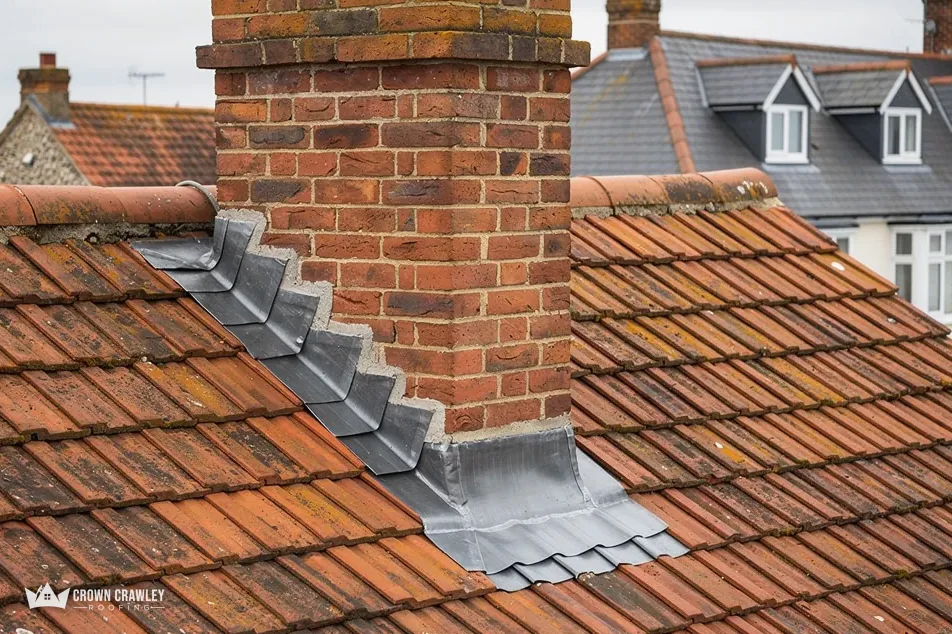
Stepped lead flashing around a brick chimney on a red tiled roof

Grade II listed neighbours

Stonelands Farm House and Simmonds Cottage are both listed Grade II. On a listed house, listed building consent can apply, so Mid Sussex District Council hears from us before the look of the roof is altered.

Lead flashing around a chimney stack

Copthorne, north-east of Crawley

Map of Copthorne and the neighbourhoods around it, with Crawley for reference.

Copthorne lies in West Sussex on the northern edge of the old Worth parish, close to the Surrey border and within Mid Sussex District.

Distance
4.7 road miles from Crawley, to the north-east
Drive
About 8 minutes
Council
Mid Sussex District Council and West Sussex County Council
Planning authority
Mid Sussex District Council
Population
4,915 (Census 2021, Copthorne built-up area)
Get a free quote

Copthorne roof diary

What a Copthorne survey looks at, from loft to chimney

Three short chapters on a village of mixed ages, the older and listed houses among its roofs, and the Mid Sussex questions a bigger job raises.

Stage 01 · Background

A village parish since 1881

Copthorne became a parish of its own in 1881, and a village that old holds roofs put up and mended by many different hands.

Copthorne sits on the northern edge of what was once Worth parish, close to the Surrey border. In 1881 it became an ecclesiastical parish served by St John the Evangelist, and by 1940 the village also had a Countess of Huntingdon chapel. The 2021 Census counted 4,915 people in the Copthorne built-up area. That describes a settled village rather than a single estate, and its roofs reflect it.

Why does each Copthorne roof get its own survey?

Because a village that has grown and been mended in stages holds roofs of different ages, covered in different ways, and nothing we can point to says which is which. So we do not name a covering for the village as a whole. We look at your roof from the ground, then from a ladder or the loft, and note the tile type, the pitch, how the ridge and the gable edges are fixed and what lies beneath the tiles. Each part is photographed and annotated for you. We also record the gutters and fascia boards at the eaves, since a sagging gutter can push rainwater back under the first row of tiles and rot the board behind it. If the roof has been patched before, the notes show where, so you can see which earlier repairs held and which did not.

What the Copthorne survey covers

Tiles
Nibs sound, no slipped courses
Eaves
Air gap clear of insulation
Underlay
Type identified, laps intact
Ridge
Bedding or caps held fast
Gutters
Falls right, joints sealed
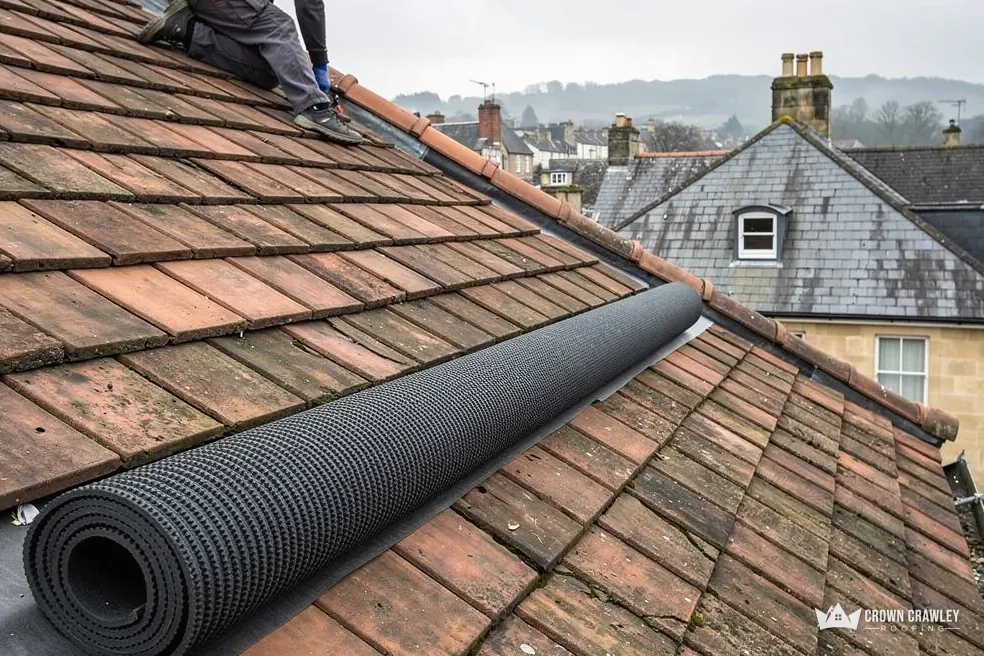
Roll of roofing membrane lying on a clay tiled roof

Is the loft part of a roof survey?

It is, because a stain on a ceiling can come from damp air in the loft as well as from a hole in the covering. Where the underlay is a non-breathable type, the cold-roof guidance that Marley publishes asks for ventilation along the eaves: 25mm for pitches of 15 degrees or less, and 10mm for steeper ones. Quilting stuffed hard into the eaves can block that gap, and then moist air from the house settles on cold timber, so the battens and the underlay show it first. Freeing the gap costs little and keeps the timber dry for far longer. After the loft we turn to the tiles. Concrete tiles carry a published life of around 60 years, though Marley adds that the figure promises nothing, and clay carries a minimum life expectancy of 60 years from the Building Research Establishment. On the slopes we look for cracked nibs (the small lug that hooks a tile over its batten), tiles that have slipped and nails that have worked loose, then we price what the survey finds. Our pitched roofing page walks through tile, batten and underlay work step by step.

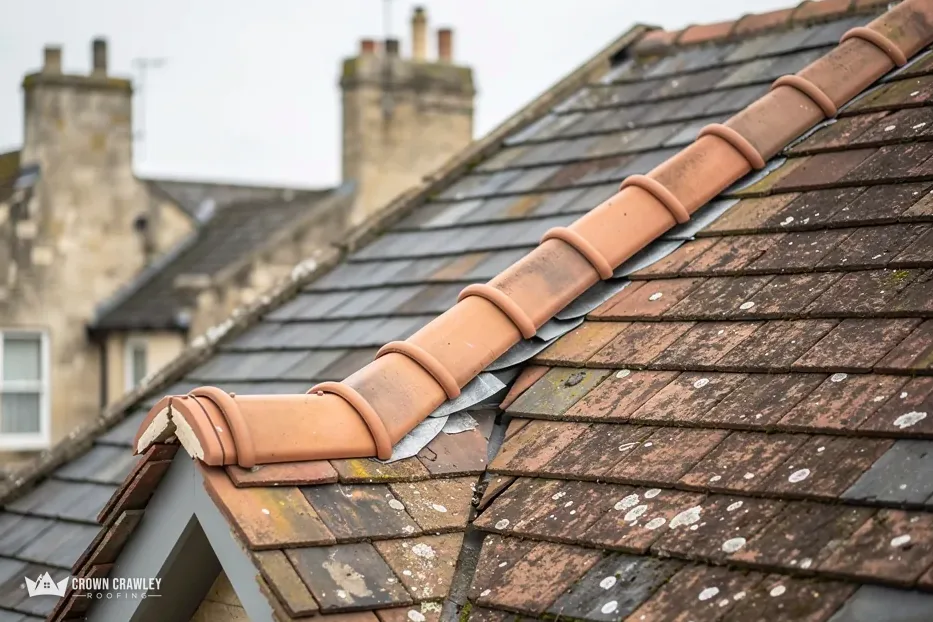
Clay ridge tiles along the hip of a weathered tiled roof

Stage 02 · Older buildings

Listed houses and older farm roofs

Smugglers' Farm, Stonelands Farm House and Simmonds Cottage show that Copthorne has old and listed buildings, which changes where a roof job begins.

Smugglers' Farm, on the north side of the road from Copthorne to East Grinstead, is a late-16th-century house. Stonelands Farm House is listed Grade II, first listed on 25 April 1984, and so is Simmonds Cottage. A roof on a house of that standing carries more than weather. It carries the rules that protect the building, and they come before the repair does.

What does listing mean for a Copthorne roof repair?

Yes, but the route depends on what the work is. Section 7 of the Planning (Listed Buildings and Conservation Areas) Act 1990 says no one may alter a listed building, without authorisation, where the change would touch its special character. Whether a given repair counts is a judgement, and the person who makes it is the planning officer at Mid Sussex District Council. We ask before we price anything that changes the tile, the ridge or the pitch, and we never begin on the strength of a guess. If your house is not listed, a repair in matching tiles needs no planning thought. Where the council does say consent is needed, we supply the survey photos, a description of the materials and a written method for the application, and the application goes in from you or an agent acting for you.

Words on an old roof

Soaker
Folded lead tucked under the tile courses
Stack
The brick chimney above the roof
Listed building consent
Council sign-off for changes to a listed home
Lead code
A number giving the sheet's thickness
Where a house is listed, the first call is to the council, not the roofer.

What happens to chimneys and lead on an older roof?

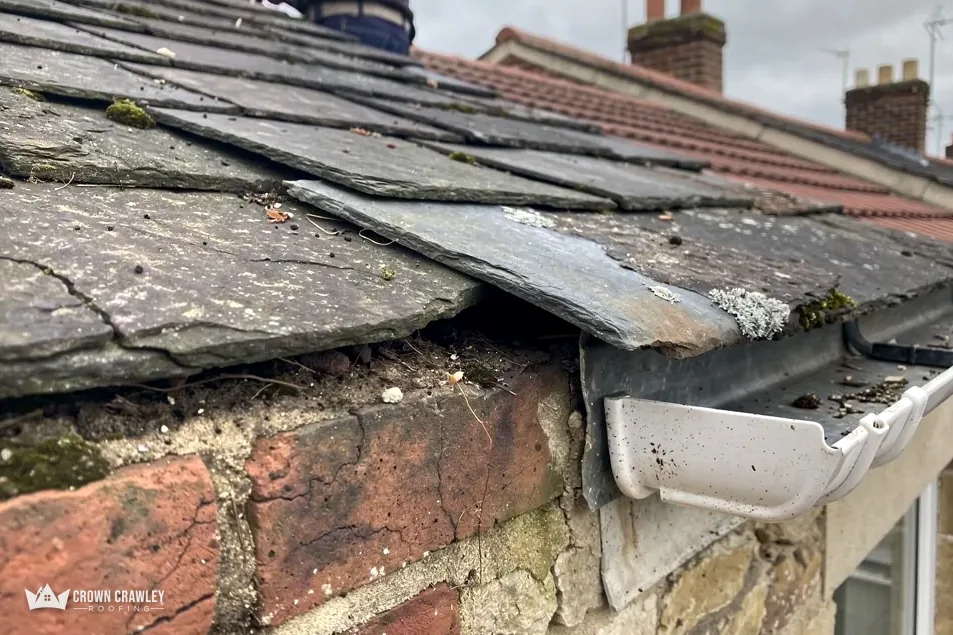
Chimneys and lead are where an old roof can fail, because the metal and the mortar that seal the stack have to cope with every kind of weather. A stack on a roof that old can have flashings that have lifted, a soaker (a small folded sheet of lead slid under each course of tiles where the roof meets a wall) that has split, or pointing that has worn back. Lead flashing can last for over 80 years, so the first question is whether it can stay. Where old tiles are being reused, we sort them on the ground into sound, cracked and doubtful piles, and lay the sound ones back on the slope that faces the road. Cast lead comes in codes: one manufacturer lists Code 4 for soakers and Code 5, which is 2.24mm thick, for flashings and valley gutters. We check that new lead matches the job. On a stack we also check the flaunching, which is the mortar collar bedding the pot or cap, and the top courses of brick. Our chimney repairs page explains how a stack is repaired or taken down in stages.

Stage 03 · Permissions

Mid Sussex questions for a bigger job

Copthorne falls within Mid Sussex District Council for planning and building control, and a few questions are worth asking before a larger job.

Mid Sussex District Council is the local planning authority for Copthorne, and it also runs its own building control service for the area. That means one council can answer both the planning and the approvals question. On a straight repair you may never speak to either. Contact with the council begins once the work gets bigger, the material is swapped, or the house is on the list.

When do I need building control for a Copthorne roof?

The Planning Portal sets the national test. A re-roof normally avoids approval under that test when under 25 per cent of the building envelope and under 50 per cent of the roof is involved. Weight matters as well: a new covering that adds 15 per cent or more to the load needs approval, and it is worth having the rafters checked by a structural engineer or surveyor before you settle on it. A re-roof in matching tiles is usually simple, and a quick question to Mid Sussex settles your road's conservation area status. If a survey points to a full strip, we raise it with the council before dates are agreed, and your quote reflects the answer. The roof replacement page follows a job from stripping to sign-off.

Questions before work begins

Planning
Mid Sussex District Council
Building control
Council's own service
Listed house
Ask about consent first
Scaffold
Licence only if on the road
Nests
Checked before the strip
Terraced bungalows with grey tiled roofs along a cul-de-sac

Will my Copthorne scaffold need a licence?

A licence is only required when the scaffold occupies the pavement or the road. Here the licence comes from West Sussex County Council, which asks for at least 10 working days' notice and charges £266 for one month. Scaffold kept entirely inside your boundary sits outside that licence. For the full picture, read our answer on scaffolding for roof repairs.

A leak cannot wait for paperwork, so a leaking roof gets a temporary cover first, and the lasting repair is planned once the survey is done. Making it safe comes before pricing it. If a storm caused the damage, take dated pictures before anything is moved and keep every receipt, since IStructE advice for storm-hit homeowners puts photographs at the heart of an insurance claim.

Active birds' nests have legal protection, so before the first tile comes off we check the eaves, the ridge and the gable ends. Any sign of bats halts the work until we have talked it over with you. To get started, send a photo of the stack, ridge or slope that worries you, along with your Copthorne postcode.

Copthorne roof questions before you commit

My Copthorne house is Grade II listed. Who decides whether a roof repair is allowed?

Mid Sussex District Council's planning team decides whether the work needs listed building consent, because the law protects any alteration that affects a listed building's character. Stonelands Farm House and Simmonds Cottage are both Grade II in the village. Ask the council first, then send us its answer, and we price the repair with that in hand.

How do you tell if a Copthorne farmhouse roof needs a repair or new tiles?

We start in the loft, looking at the rafters and the underside of the covering, then walk the slopes. A farmhouse such as Smugglers' Farm, which dates from the late 16th century, can have sound timber under tired tiles. The survey photos show you which areas need work, and the written price is for those areas only.

Does Copthorne have protected-area rules beyond listing?

That depends on your street, which Mid Sussex District Council can check against its conservation area records. That is a separate question from listing, though, because a house can be listed with no conservation area around it. Check your own house with Mid Sussex District Council's planning team before you agree any work that would change how the roof looks to passers-by.

Does a chimney repair on a Copthorne roof mean scaffold on the road?

Not by itself. A stack can sometimes be reached from a drive or garden, where no highway licence is needed. If it must go on the pavement, West Sussex County Council licenses it, with at least 10 working days' notice and £266 for one month. We work out access at the survey and say which applies before you accept a price.

Get your Copthorne roof priced in writing

A photo of the stack, ridge or slope that troubles you and your Copthorne postcode are enough for us to book the survey.

01293 974253

10-year workmanship guarantee, in writing.

Call Get a free quote