Stage 01 · Background
A village that grew on a triangle
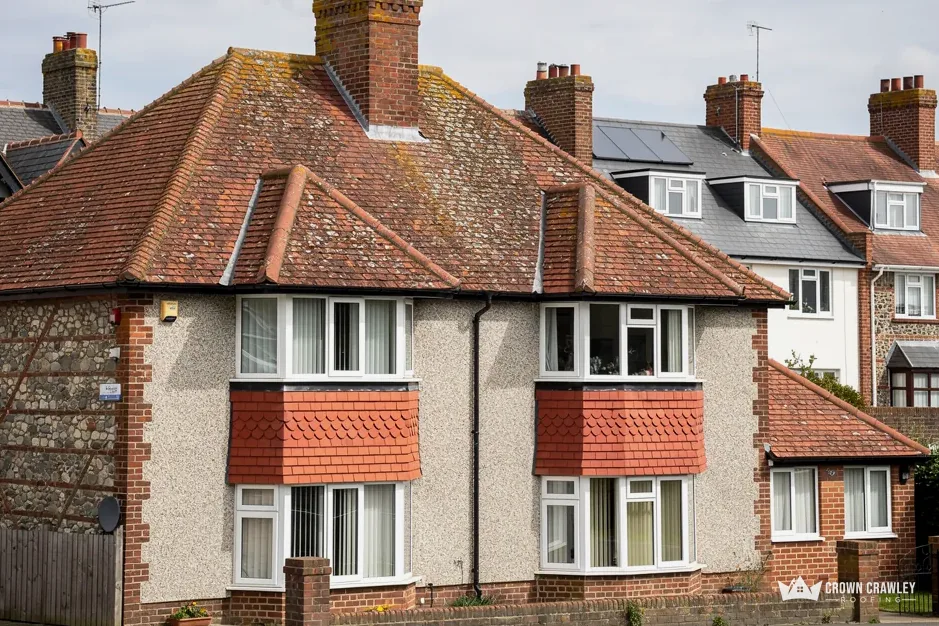
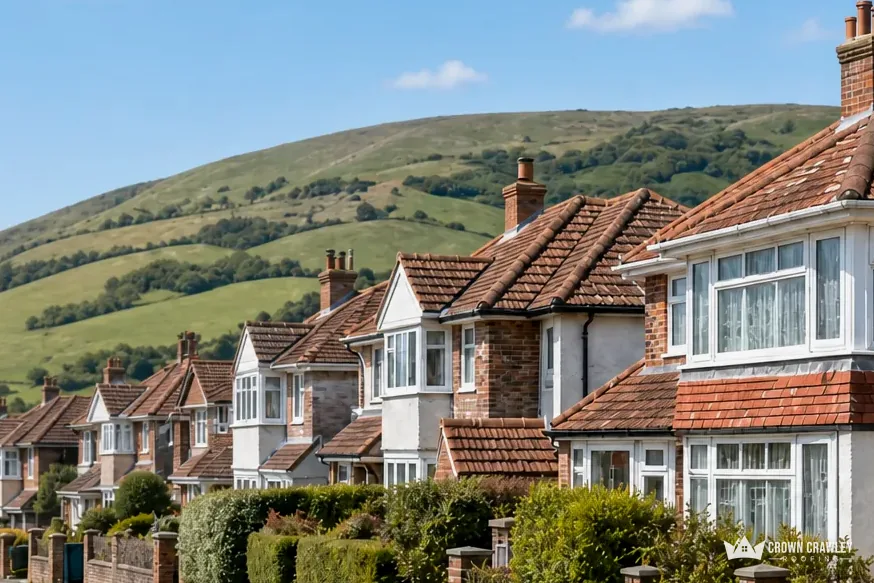
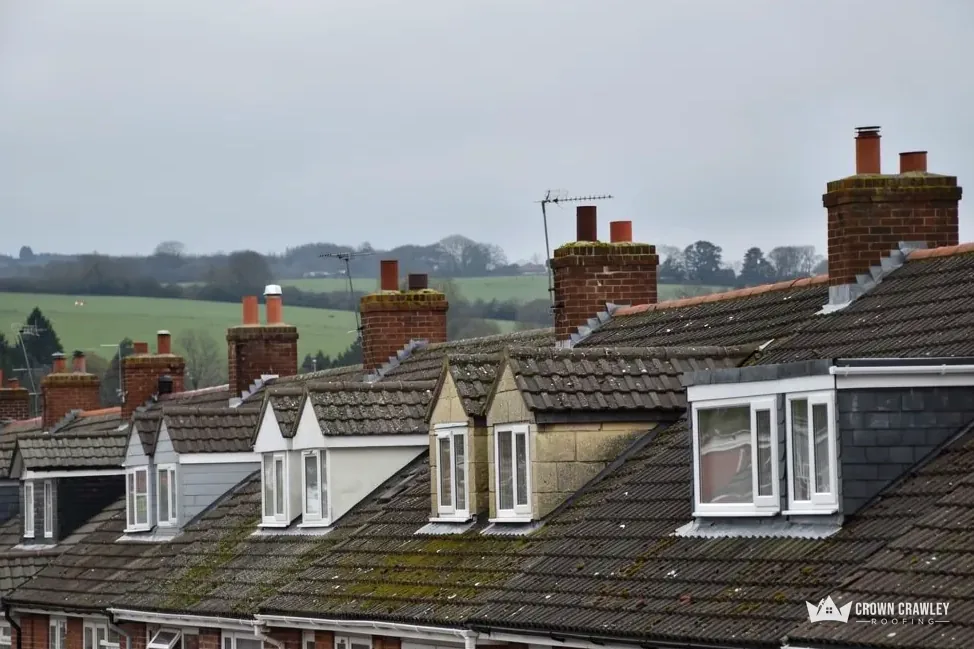
Crawley Down took shape around three roads and a church, so its houses were not all built together and its roofs are not alike.
The story of Crawley Down is told in its roads. The village grew up on a triangle of roads, with the church standing in the southern angle, and All Saints became the centre of a separate parish in 1862. A 1940 survey of the parish adds two nonconformist chapels, one Countess of Huntingdon and one Methodist, to the village scene. It sits in the north-east of the old parish of Worth and is not one of Crawley's post-war neighbourhoods, so we leave the new-town assumptions about eras at the door.
How do you price a roof when the street has no single build date?
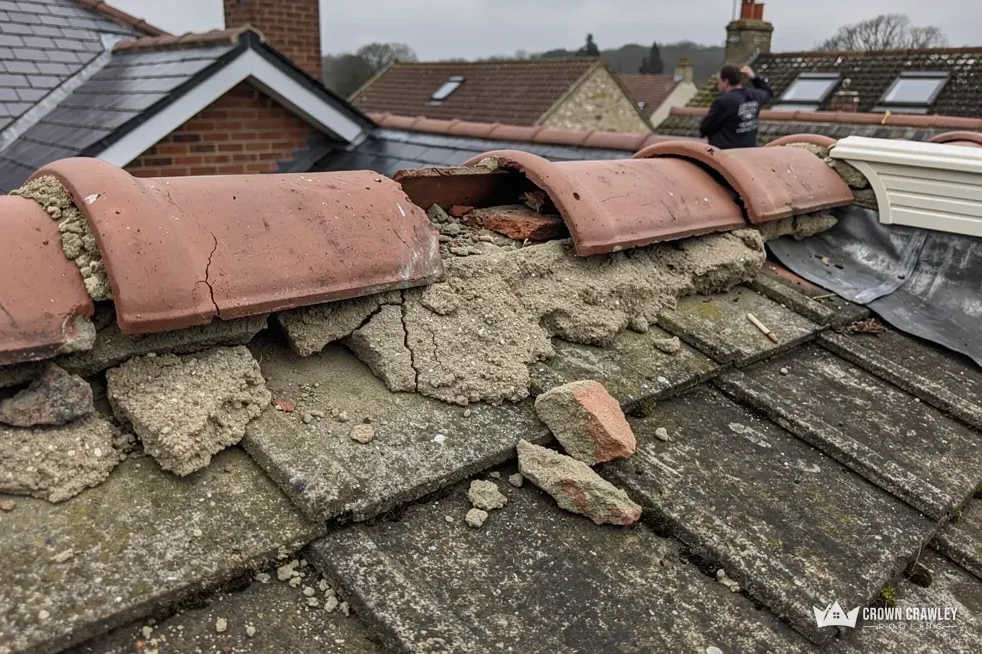
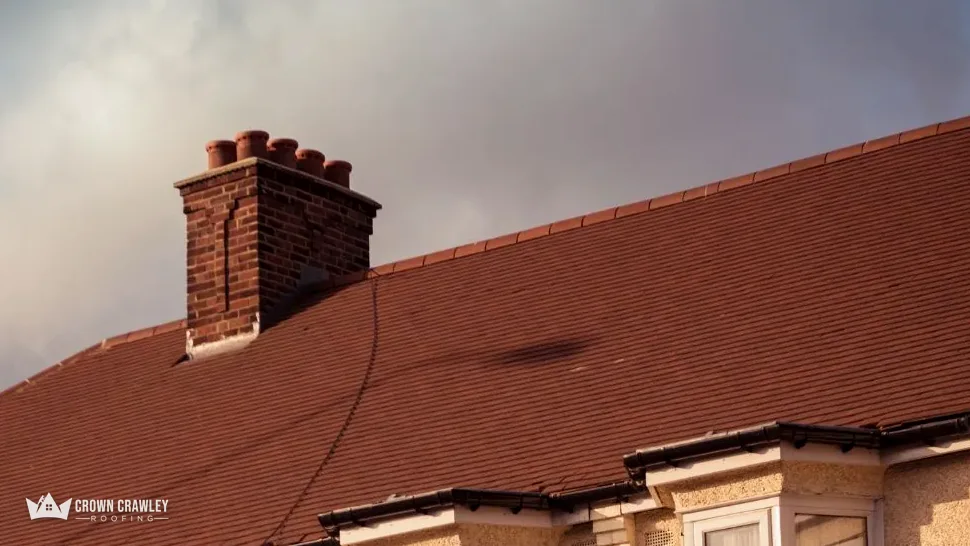
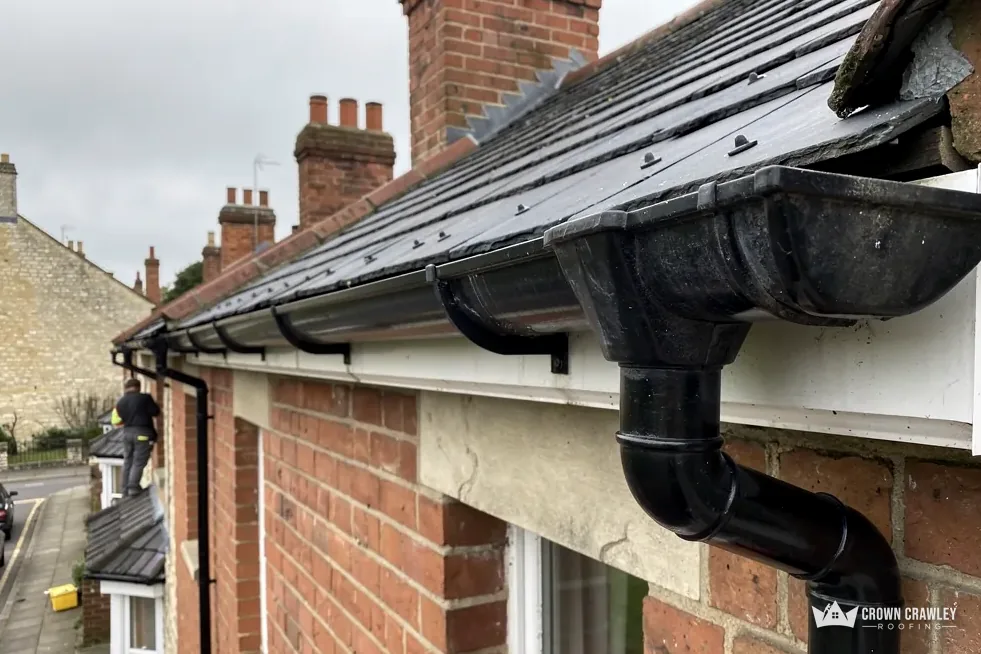
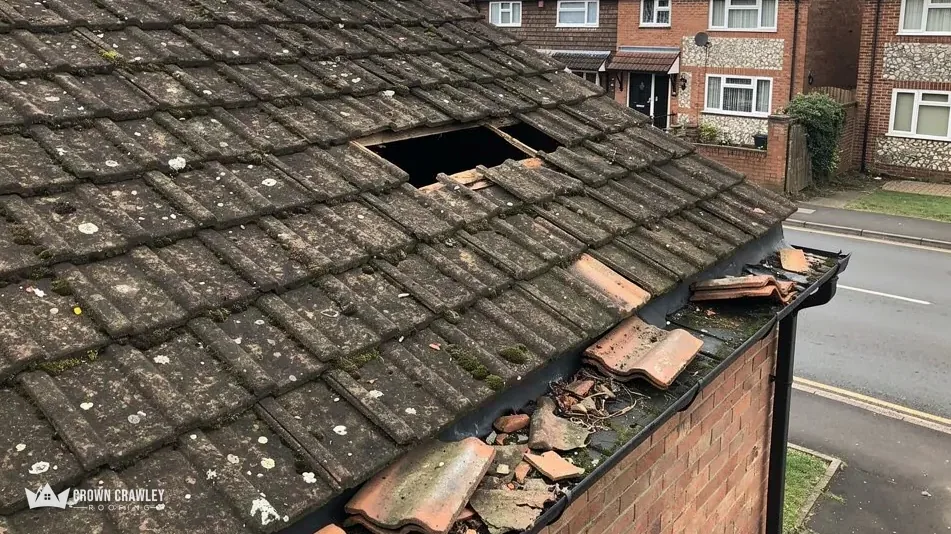
We begin on the roof itself. The survey takes in the covering, the ridge and hips, the flashings (thin metal strips, often lead, that seal the joint between a roof slope and a chimney or side wall), the timbers you can see from the loft hatch, and the gutters. Photos of your own roof come back to you with the findings, so you can see a cracked tile or a gap in the ridge bedding for yourself. The price that follows is one total in writing, and it covers the repair the survey supports rather than a bigger job we would like to sell.