Roofers in Southgate

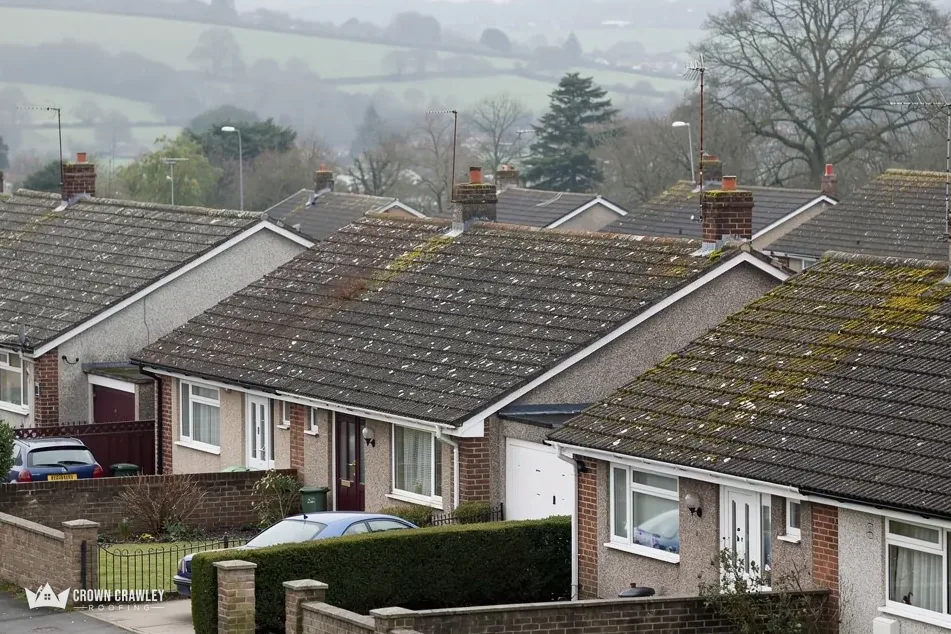
Roofs from Southgate's 1950s east side and its 1970s west side.

Southgate was planned as the largest of Crawley's original nine neighbourhoods and went up in two phases. We look hard at the roof you have, share photos and fix one price on paper.

Terraced bungalows with grey tiled roofs along a cul-de-sac

Three things we look at on a Southgate roof

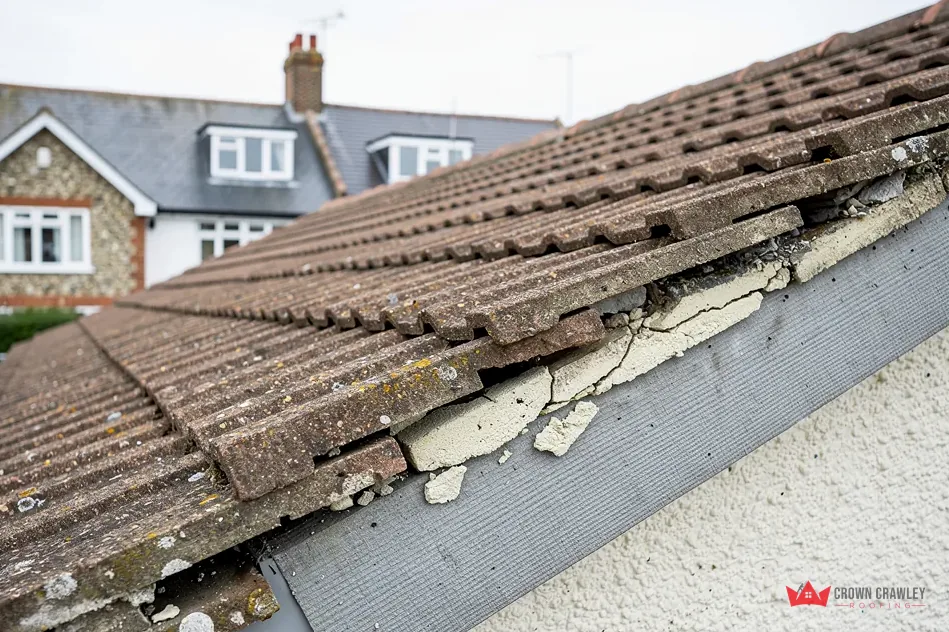
Lifted tiles and worn verge along a gable end

East side, started in 1955

Southgate East was mainly built up by 1957. A roof from those years has met a lot of weather, so we start high: the ridge capping the top, the verge finishing each gable, and the flashings, metal strips sealing each joint.

Pitched tiled roofs on terraced homes

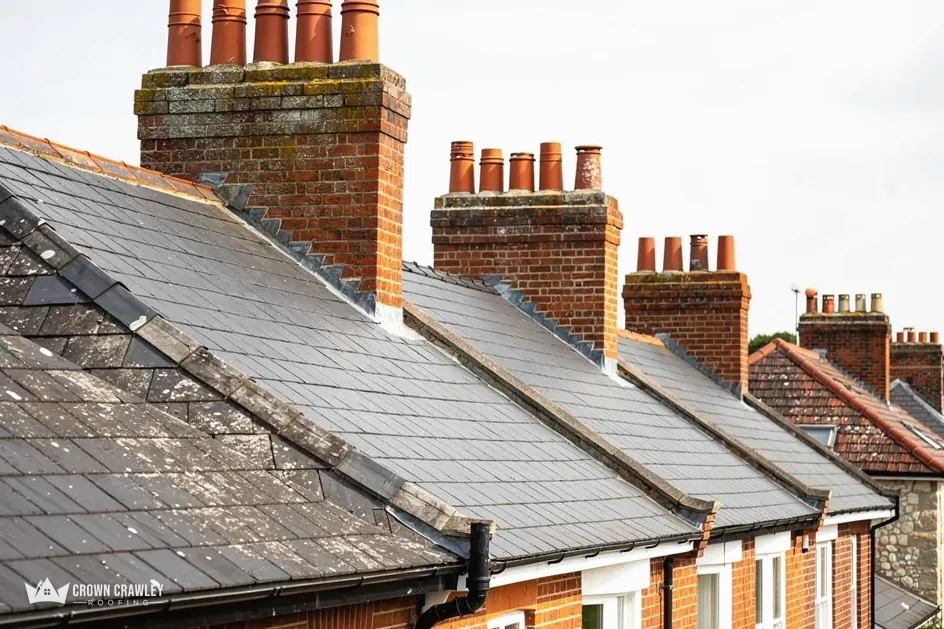
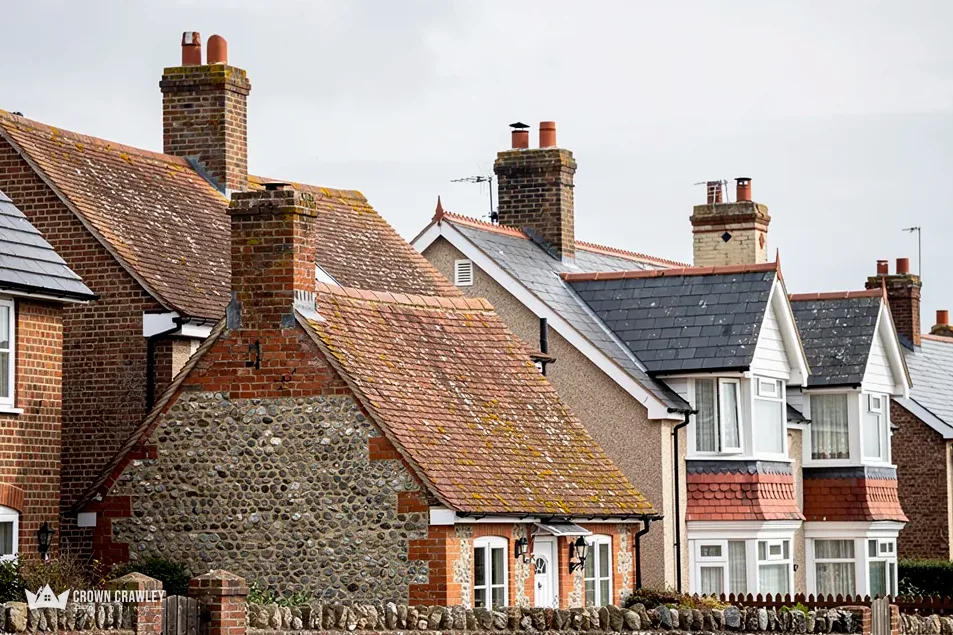
Row of terraced chimney stacks above slate roofs

A western part kept for private owners

The western part was reserved for private housing, so neighbouring roofs may have been repaired by different people at different times. We read each one on its own and photograph what we find.

Semi-detached houses with tiled roofs

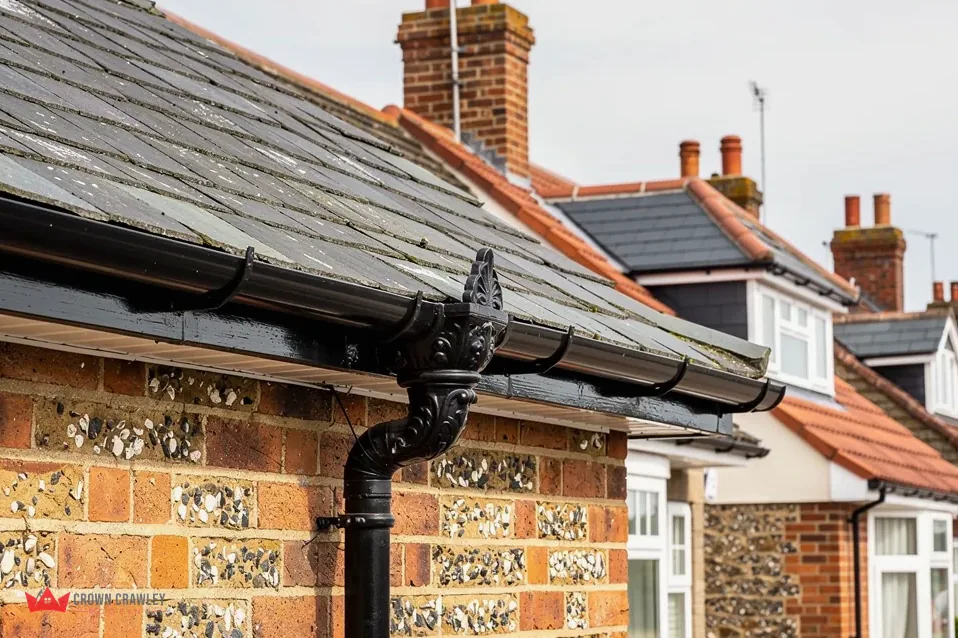
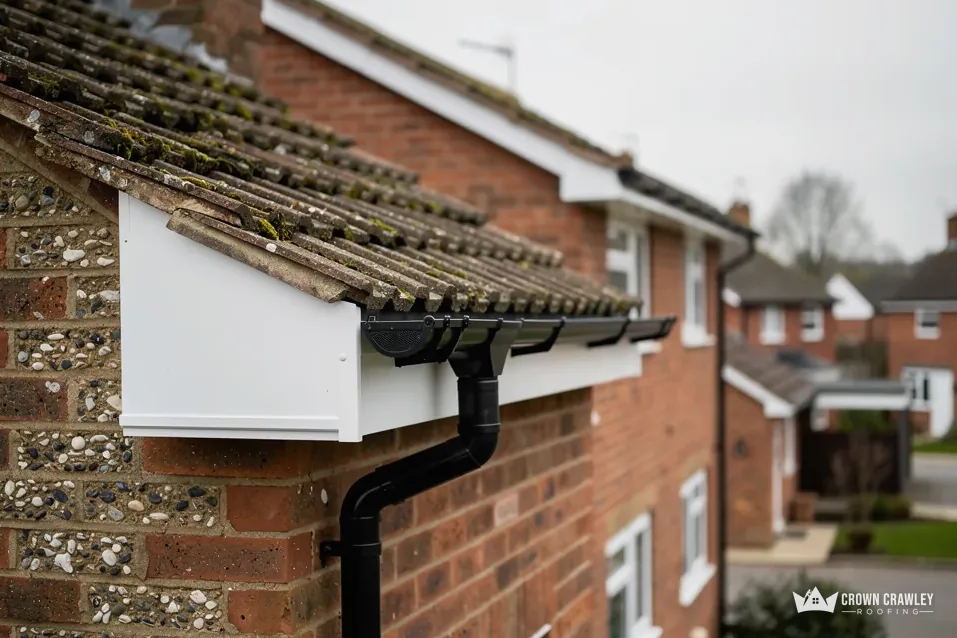
Black cast-style gutter and downpipe on a flint and brick wall

West side, finished in 1972

Southgate West began in 1968 and was held up by failures of industrialised building methods before it was completed. We check how each roof was put together before we say what it needs.

Roof edge and gutter on a house

Southgate, between the old town and the southern ring road

Map of Southgate and the neighbourhoods around it, with Crawley for reference.

Southgate lies south-west of Crawley town centre, between the old town and the ring road that runs round the south of the town.

Distance
0.9 road miles from Crawley, to the south-west
Drive
About 3 minutes
Council
Crawley Borough Council and West Sussex County Council
Planning authority
Crawley Borough Council
Ward population
9,604 (Census 2021, Southgate ward)
Original plan
Largest of the nine neighbourhoods, 342 acres
Get a free quote

Working in Southgate

A neighbourhood built twice, roof by roof

Three short chapters on the two halves of Southgate, the private streets in the west, and what changes when a small job grows into a whole new covering.

Stage 01 · Background

Two builds inside one name

Southgate was the biggest of Crawley's first neighbourhoods, and its east and west halves went up more than ten years apart.

Southgate was planned as the largest of the new town's original nine neighbourhoods, covering 342 acres. House building began in 1955 and the east side was mainly built up by 1957. Then came a long gap. Building in Southgate West did not start until 1968, and failures of industrialised methods slowed it so badly that by 1970 only 284 houses and 213 flats, just over half the planned total, were finished. The west side was completed in 1972. So two sets of houses sit inside one name, and one side tells you little about the other.

Does the age of a house tell us what is on the roof?

It tells us when the building work was done, which is a start and not an answer. Roofs get repaired, patched, re-covered and extended, so what you can see from the street may not be what the builders left. We begin each survey with what is there now. On a Southgate house we write down the tile profile, how the top and edge courses are secured, which underlay lies beneath and whether the timber is firm. The pictures then come to you, and you can check every point for yourself.

First look at a Southgate roof

Ridge
Caps bedded and mechanically held
Verge
Edge mortar whole, no gaps
Tiles
Slipped, split or worn nibs
Gutters
Joints dry and falls running true
Loft
Underside of the roof dry
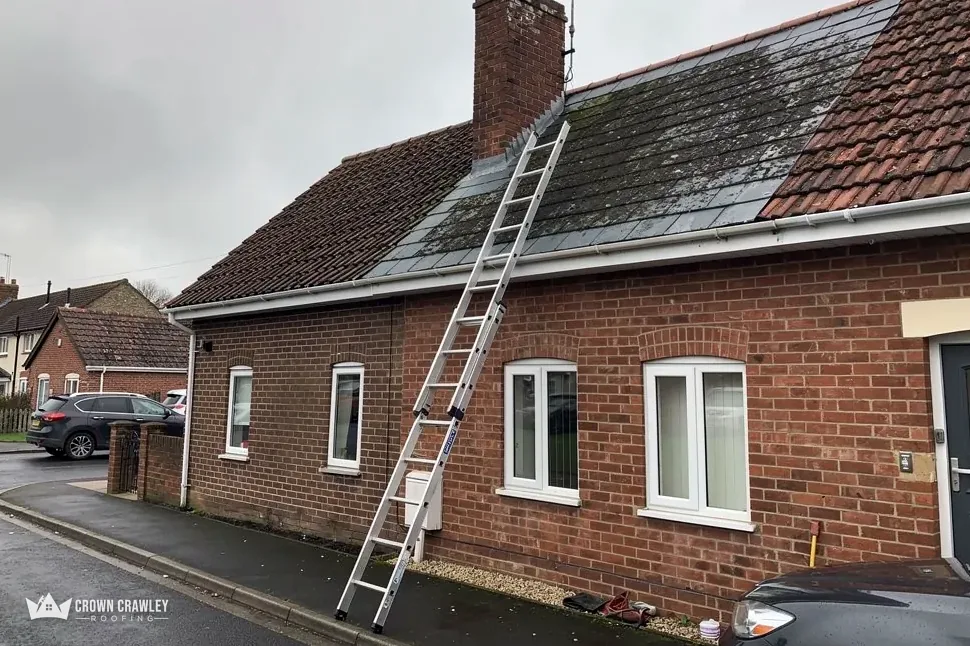
Brick bungalow with a ladder leaning against its tiled roof

Which parts take the weather first?

The high and outer edges, plus the bottom course. Bedding mortar at the top and sides crumbles in frost and rain, nails rust through, and underlay (the sheet under the tiles) can tear where it laps over the fascia board. Marley explains that since BS 5534 was revised in 2014, the tensile strength of mortar alone can no longer be relied on, and every bedded fitting should carry a mechanical fixing as well. Any ridge we rebed gets those fixings, and if you would rather have a dry-fix system, we explain the difference before you choose. Our dry ridge and dry verge page covers both.

If your covering is concrete tile, Marley puts its life at around 60 years, a figure it expressly declines to guarantee. The tile itself may be fine while the fixings and mortar around it are tired, which is when a repair beats paying for a whole new covering. If the survey shows that, you will read it in our write-up, and if it shows the opposite, you will read that instead. We check the guttering too: a dripping union above a Southgate front door can wet the fascia and brickwork, and that damp is easily blamed on the tiles. If the roof has reached the point where it needs a full re-cover, our roof replacement page sets out each stage, from scaffold up to sign-off.

A street number on its own never tells us what is under the tiles.

Flint and brick houses with clay tiled roofs and chimneys

Stage 02 · Care history

Private streets beside the rest

From the first year of building, the western part of Southgate was kept for private owners, and that shapes how its roofs have aged.

When building began in 1955, the western part of Southgate was reserved for private housing. For a roofer, that matters in one practical way: private owners make their own decisions. Over the years, one house may have had its ridge rebedded, the next a patch of new tiles, and the third a full re-cover. Neighbouring roofs can end up with different tiles, different underlay and different details at the verge, even when the houses were built together.

Why does the roof next door look different from mine?

Usually because someone did something to one of them. Tiles fade and weather, so a repaired patch can stand out, and new tiles are rarely a perfect match for old ones. Before swapping tiles on a private Southgate roof we record the profile, size and colour, and we look at what the existing roof is really made of before we order anything. If a few tiles will not match, we tell you where on the roof the replacements can go so they show least, and we say what a full slope of matching tiles would involve.

What happens when the roof is shared with a neighbour?

In a row of terraces or a pair of semis, the ridge, the valleys and the boundary line between two houses can be shared. A repair on your side may mean working beside the neighbour's roof, so we explain that at the survey and check what each side needs before the work starts. We tell the neighbours when access is going up and when it comes down, keep the shared line tidy, and clear every bit of waste from the site. If your neighbour wants work done at the same time, we can look at both roofs in one visit, though each owner still gets a separate written price for their own house. Our gutters, soffits and fascias page covers the boards and gutters along the shared eaves.

Words on a survey sheet

Eaves
Foot of a slope, above the wall
Batten
Sawn lath carrying each course
Fascia
Board fixed along the eaves
Soffit
Panel under the roof overhang

Roof timber gets its own look. A batten (the timber strip each tile hangs from) that has gone soft will not hold a nail, and tiles on it will slip again. Fascia and soffit are tested by hand too, since a rotten board can let water and birds into the roof space. Where the roof space is dry and the timber is firm, we tell you so, and the repair stays small. The loft gets a look too, because staining on the underside of the roof tells us where water is getting in long before it reaches the ceiling below.

Stage 03 · Permissions

When a Southgate repair becomes a re-roof

Southgate falls under Crawley Borough Council and Crawley Building Control, and both matter once a job reaches a whole slope or more.

A like-for-like repair, such as new tiles in the same pattern or a rebedded ridge, keeps the look of the house. Our post on planning permission for roof work sets out when permission comes into it. The points below are the ones that matter most in Southgate, and each one is something we check at the survey before any price is written down.

Does a bigger roof job in Southgate need approval?

Crawley Building Control is the borough's own service. Crawley Building Control's published list of domestic work needing sign-off includes replacing more than 25% of a roof's surface area. Should the survey show that a full slope or more has to come off, we put the question to them ahead of fixing any start, and the price in writing reflects their answer. The Planning Portal sets a separate weight test. If replacement tiles push the covering's weight up by 15 per cent or more, approval follows, so on a 1950s Southgate frame we want an engineer or surveyor to look before any heavier tile is chosen. That is why swapping light tiles for heavy ones is a bigger decision than the swap sounds. Southgate holds two conservation areas, its neighbourhood centre and part of Malthouse Road.

Before a bigger job

Building control
Crawley Building Control
Planning
Crawley Borough Council
Heavier tiles
Weight check first
Scaffold
Needed over the footway
Notice
10 working days, West Sussex
White fascia and black downpipe on the eaves of a brick house

Where does the scaffold stand, and does it need a licence?

Poles on a Southgate pavement or road must be licensed by West Sussex County Council, at £266 for a month, with no less than 10 working days of notice. A drive or front garden is off the highway, so the poles can often go there instead. When a licence is needed, the scaffold firm and we handle it, and we do not fix a start until it is granted. Before any of that, we walk the side access, because materials and waste need a safe route in and out of the garden.

What if we find a bat roost?

Bats are protected wherever they roost, roof spaces included, and gov.uk lists repairing a roof as work that may harm a roost. Droppings under the ridge, or a gap with signs of use, make us pause and talk to you before carrying on, because the next step depends on what is there. Nesting birds are covered too, so a gutter or eaves job can need a pause if a nest is in use. Tell us what you can spot from the pavement, and the survey team comes ready for it.

Southgate roof queries answered

My house is in the older part of Southgate. Is the roof close to needing replacement?

Not necessarily. Building began in 1955 and the east side was mainly built up by 1957, but age alone does not decide it. Marley's figure for concrete tile is about 60 years, offered as a guide only. The mortar, the nails and the eaves underlay can need work well before the tiles do, and a survey with photos shows which applies to you.

Southgate West was built from 1968. Does that change how you survey it?

It changes where we look first, though the care is the same. Building there was delayed by failures of industrialised building methods and finished in 1972, so we check how the roof is put together instead of assuming. We photograph the timbers, the fixings and the edges, then explain what each repair would involve and what it would cost.

Could the hump-backed roof of St Mary's affect work on my Southgate house?

No. St Mary's, completed in 1958, is a reinforced concrete church clad in flint and brick under a sweeping hump-backed roof, and its roof is the church's own business. Southgate does have two conservation areas, though, so check your address. If you plan to change how your own roof looks, raise it with Crawley Borough Council's planners first, ahead of any price or date.

Will the scaffold for my Southgate roof block the road?

Only if there is nowhere else for it to stand. A frame on your drive or in the back garden is off the highway. Over the footway or carriageway, West Sussex County Council must license it, given at least 10 working days. The scaffold firm and we sort that out, then the neighbours hear the dates for erecting and striking it.

Free quote in Southgate

Share a picture of whichever slope or gutter is bothering you, add your postcode, and tell us which half of Southgate you are in.

01293 974253

10-year workmanship guarantee, in writing.

Call Get a free quote