The old manor of Gatwick
Land in Charlwood held by John de Gatwick from 1241 probably formed part of the manor of Gatwick, which his family held until the 14th century. We read any older roof from the evidence on site.
Old tiled roof with a chimney
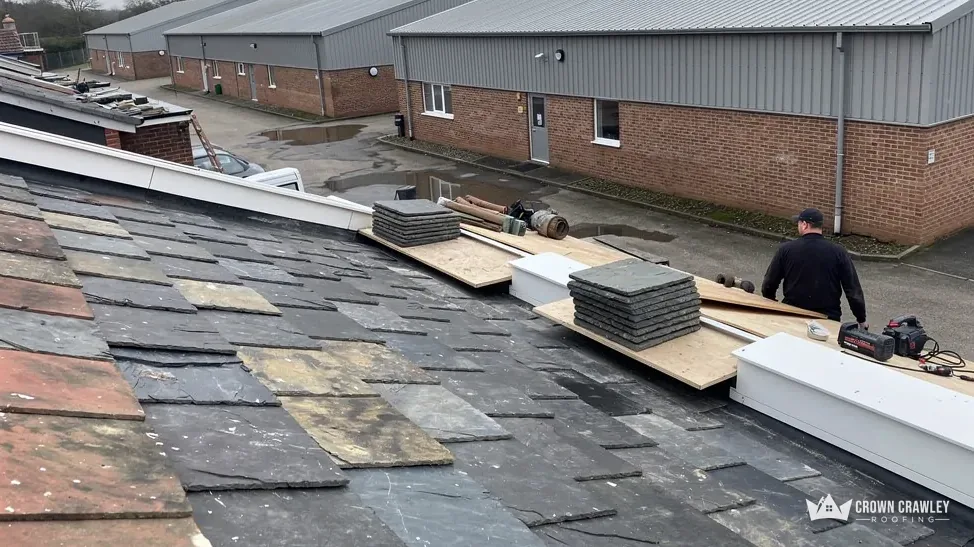
Roofs on the old manor and racecourse land by the airport.
Gatwick was a medieval manor, then a racecourse from 1891, before it became an airport. We survey each roof with photos and check any tall lifting kit before we price in writing.
Land in Charlwood held by John de Gatwick from 1241 probably formed part of the manor of Gatwick, which his family held until the 14th century. We read any older roof from the evidence on site.
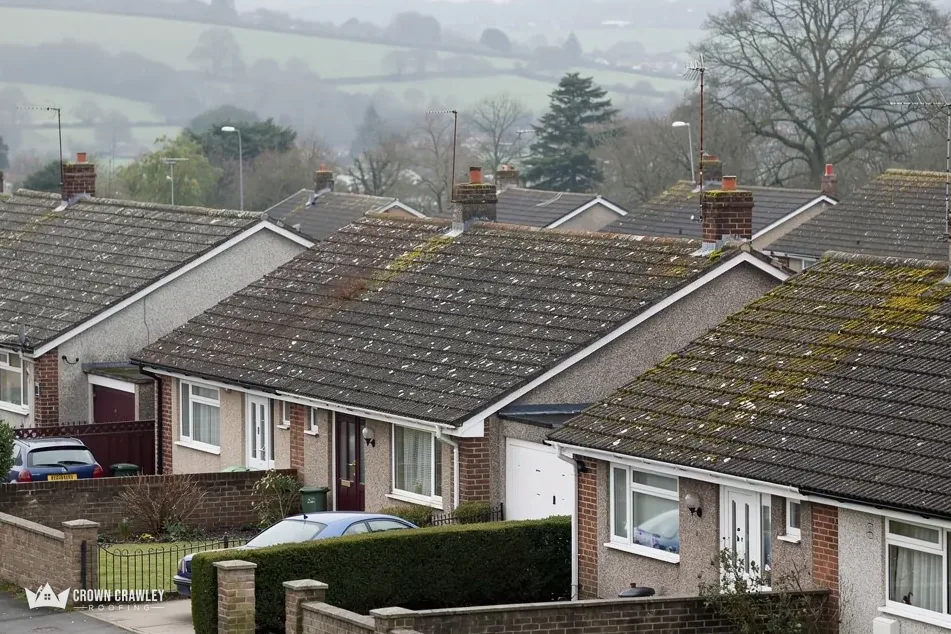
Old tiled roof with a chimney
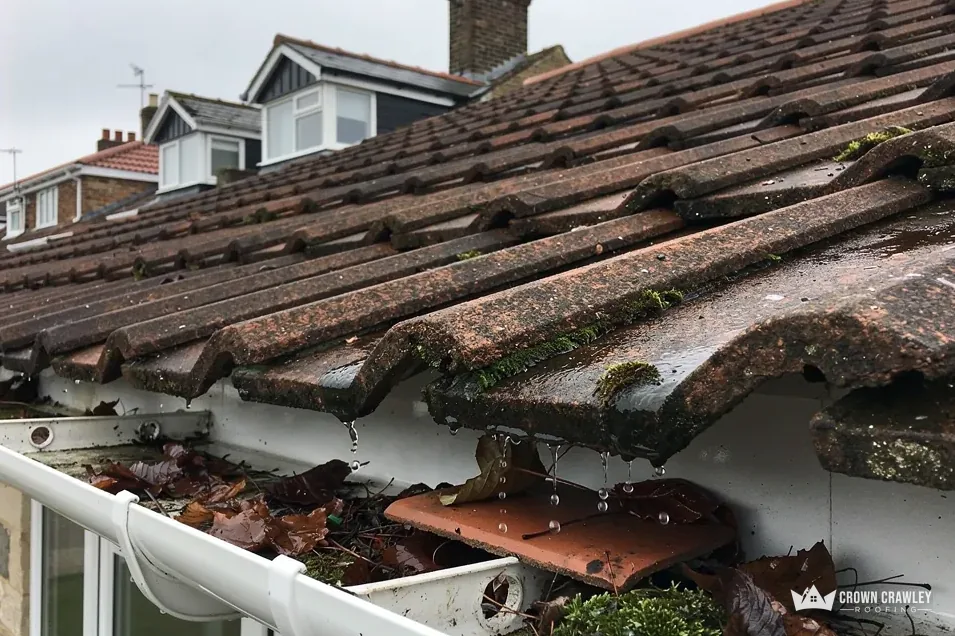
The Gatwick Race Course opened in 1891, a year after its company bought the estate and manor house. A building from any period gets the same survey of covering, fixings and gutters.
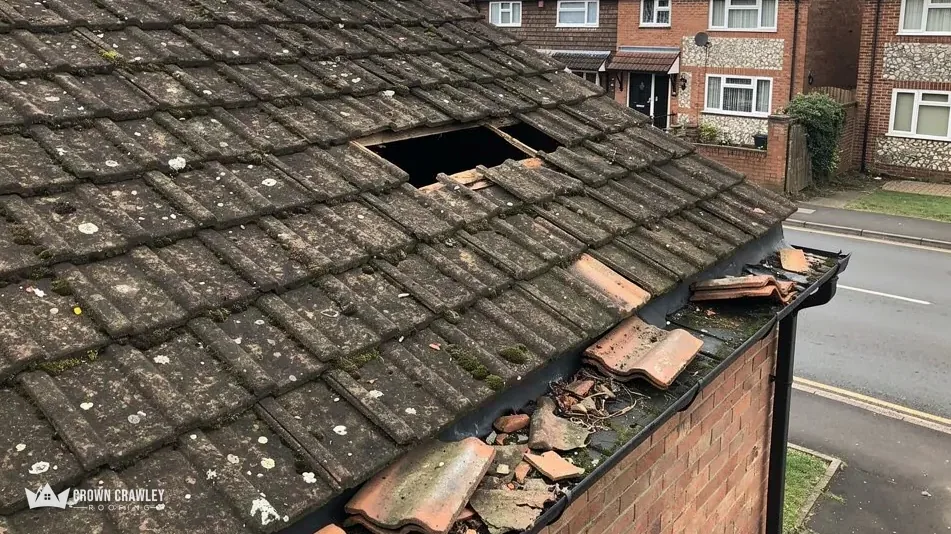
Pitched roof with tiles and gutters

Lifting heavy materials can mean a crane, and Gatwick requires a permit for cranes within 6 km of the airport unless the kit is under 10 m or shielded. We check before any lift is booked.
Roof with scaffold and hoist
Map of Gatwick and the neighbourhoods around it, with Crawley for reference.
Gatwick's old manor land lay in Charlwood parish, ground the airport now covers, with Crawley Borough Council as planning authority.
A Gatwick roof diary
Three short chapters on the land's history, the crane and tall-equipment rules, and the council and highway steps that come with a bigger roof job.
Stage 01 · Background
Gatwick's story runs from a medieval family manor to a Victorian racecourse and then an airport, so no single roof type goes with it.
The records for Charlwood parish, kept on British History Online, say that land held by John de Gatwick from 1241 probably formed part of the manor of Gatwick, and that the de Gatwick family held that manor until the 14th century. Centuries later, the Gatwick Race Course Company bought the Gatwick estate and manor house in 1890. Gatwick Race Course opened in 1891, after the old Croydon course closed.
The history of Crawley's new town records that the bandstand in Queens Square was brought from Gatwick racecourse, and that the unexpected growth of the airport from the mid 1950s affected Crawley's planned green belt. Our own interest is simpler. The site has been a manor, a racecourse and an airport in turn, which means the buildings around it come from different periods and were put up for different purposes.
By looking at it. We never take a covering from the name of a place. We climb up and photograph the tiles or sheets, the ridge along the apex, any hips running down the corners, the lead or metal dressed into each wall junction and the gutters, then check the loft from inside. Then we send you the pictures with an explanation in plain words.
Survey findings in Gatwick
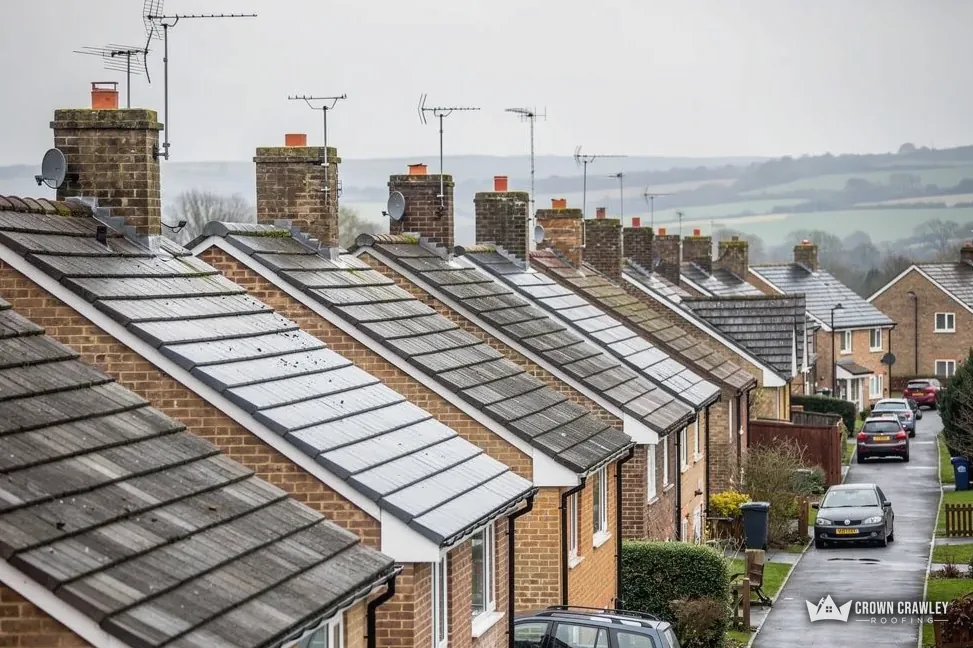
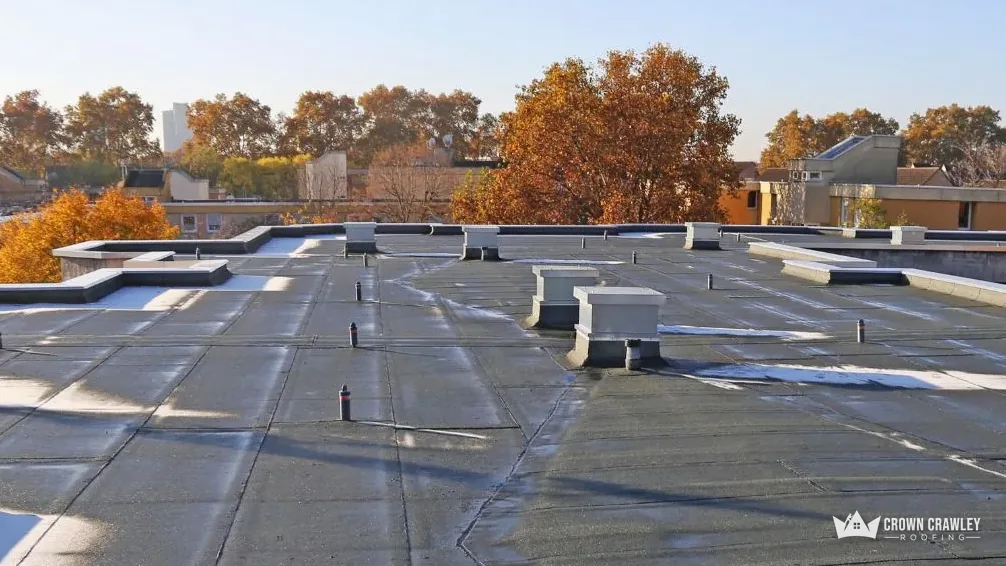
Each needs a slightly different approach, and we ask at the first call. A house with a pitched roof is usually reached from scaffold or ladders. A shop or a unit may have a flat or low-pitched roof with a sheet or membrane covering, and getting equipment onto it can take more planning. Our commercial roofing page explains how we approach those, and a pitched house roof gets the same survey of tiles, battens and underlay. Whichever it is, a single written figure follows our visit, and the photos stay with you so you can show a landlord, a managing agent or a buyer exactly what was found.
One practical point on every roof here: tell us if there is a lease, because it decides who pays and who must agree before work starts. On a unit or a flat that can be the landlord, and a short email from them saves a delay once the scaffold is booked.
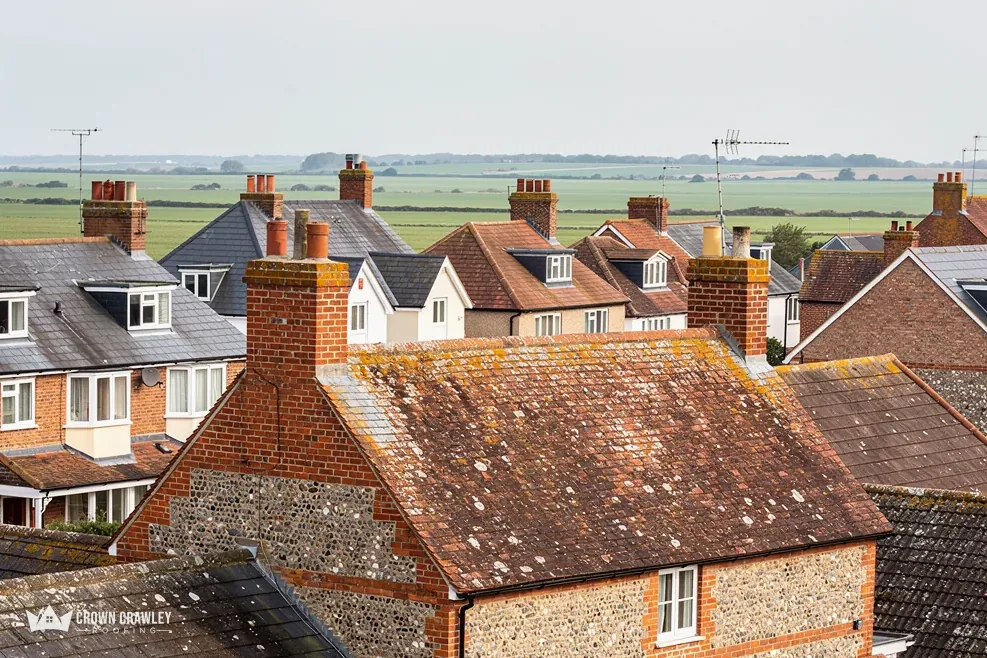
Stage 02 · Equipment
Near an airport, the question for a roof job is sometimes not the roof but what we lift onto it, and how high.
Gatwick publishes a simple rule for lifting kit. Inside a 6 km ring around the airport, anyone planning to use a crane needs the airport's permit first. Kit that stays below 10 m, or that taller trees or buildings screen on every side, falls outside the rule. The permit request runs in tandem with any application to the Civil Aviation Authority and goes to the airport's crane team by email. A permit can come with conditions on working hours, height and obstacle lighting, so the plan has to allow for them.
Lifting heavy materials onto a high or hard-to-reach roof, such as packs of tiles, long rolls of lead or a large roof window, can call for one. Plenty of work never does, because a hoist and scaffold reach the eaves and the ridge perfectly well. We decide at the survey, and if a crane is the sensible way to do the job, we raise it with you before the price is final and check the address with Gatwick before anything is booked.
Words on a crane permit
From 1 March 2022, Gatwick charges for all crane permit applications. A level 1 standard permit, without technical assessment, is £300 plus VAT, and the higher levels that need technical assessment cost more. Gatwick's guidance says that working a crane or large construction plant inside the ring without a permit breaks the Air Navigation Order, which makes it a criminal matter. For that reason we treat the permit as part of planning the job and never as an afterthought, and its fee is folded into the single figure we quote.
Gatwick states that using a drone within 5 km of the airport is restricted. For a roof survey that is a good reason to leave the drone at home. A set of photographs from a ladder, a scaffold platform or the loft is enough for us to see tiles, flashings and fixings clearly.
Many roofs need only ladders, scaffold and a hoist, so this rule may never touch your job.
Ordinary scaffolding is not mentioned on the crane page, so we ask the highway authority and the airport about the specific job rather than assume. Our flat roofing page describes the membranes we lay on low-pitched roofs, where lifting is most likely to come into the plan. If you manage a building here and want to know whether a past or planned lift was covered, ask whoever arranged it for the permit paperwork.
Stage 03 · Permissions
A bigger roof job here involves Crawley Borough Council, West Sussex County Council and, for planning, an airport consultation as well.
Mending like with like here involves very little paperwork. Swapping the material, adding a roof light or stripping a large area is when the bodies listed below get involved.
Planning here belongs to Crawley Borough Council. Gatwick Airport Ltd describes itself as a statutory consultee in the Town and Country Planning process, and since November 2024 its safeguarding zone has reached out to 55 km. In practice that means a tall structure can draw comment from the airport, while a like-for-like re-tiling normally does not. The extra reach of the zone is a reason to ask early about anything that rises above the existing roofline, such as a new chimney, a mast or a plant enclosure on a flat roof. Planning.data.gov.uk maps Article 4 direction areas around here, so it is worth asking the council's planning team whether one affects your address before you change the look of a roof.
Who you may hear from
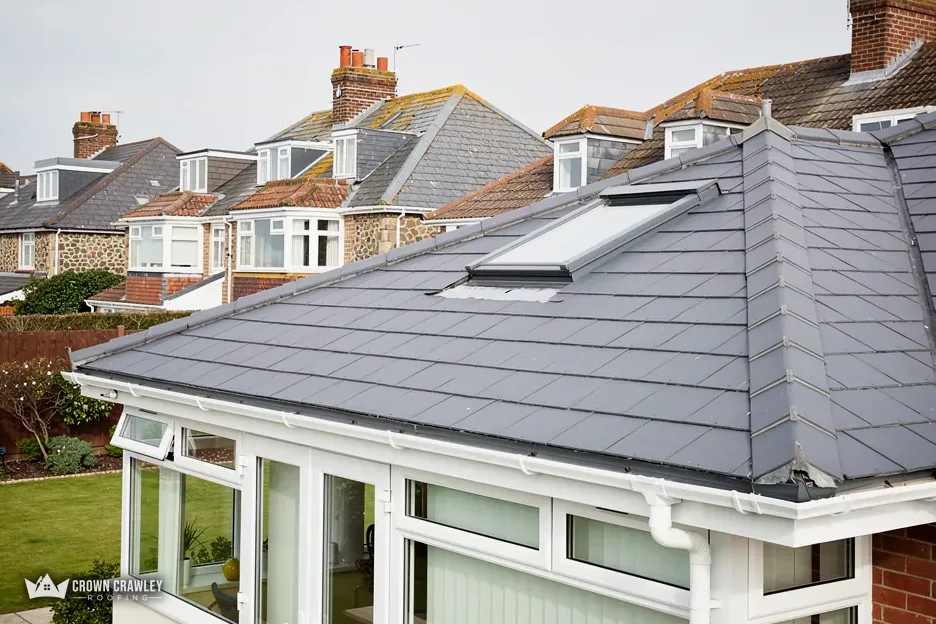
Crawley Building Control lists repairing or replacing more than 25% of a roof's surface among the domestic jobs it must approve, and Gatwick sits inside the borough. When a survey shows that a slope or more is coming off, we talk to them first. The Planning Portal adds that a covering which raises the weight by 15 per cent or more also needs approval. Our roof replacement page sets out each stage of a complete strip and re-cover.
Where the poles go up on the pavement or carriageway, the licence comes from the highway authority, here West Sussex County Council. The council wants at least 10 working days' notice and charges £266 for a month, with fast-track processing available for £52 more. Paperwork is handled between us and our scaffolder, and your start date is fixed only once the licence is in hand. A frame that stays on your own land never touches the highway, so no licence arises.
Last, wildlife. Bats and the places they roost are fully protected, and GOV.UK's guidance for developers names roof repair or replacement as work that can affect them. Droppings or other signs found at the survey pause the job while we agree next steps with you. A picture of the roof, plus a word on whether the building is a home, a shop or a unit, lets us send the right person.
Only if the job involves a crane or similar tall equipment. The airport's rule covers a 6 km ring, with kit under 10 m or fully screened by taller trees or buildings left out. Many roofs can be reached by scaffold and a hoist, and we raise any lift with you before the written price is fixed.
Gatwick states that using a drone within 5 km of the airport is restricted, so our surveys use ladders, scaffold platforms and the loft instead, with photographs of the tiles, ridge, flashings and gutters. You see every picture, and the survey and the quote reach you together, so nothing about the roof is hidden from you.
The lease decides it. A lease sets out who looks after the structure and who looks after the interior, and the wording varies, so read yours and ask the landlord or managing agent before you instruct anyone. Our survey photos make a good record to send them, and we explain findings in a way a non-roofer can follow.
If a crane is needed, Gatwick charges for permit applications: a level 1 standard permit without technical assessment is £300 plus VAT, and the higher levels cost more. We tell you before the price is fixed whether a permit is likely to be needed, and any permit cost is included in the one written total.
Send a photograph of the roof, say whether it is a house, a shop or a unit, and add any lease details.
Message us on WhatsApp