Roofers in Smallfield

Smallfield roofs, from Horsham slabs to later tile.

Smallfield lies on Wealden clay east of Horley, in the old parish of Burstow, with a moated 17th-century house, a Victorian school and listed buildings. We survey first, then quote once.

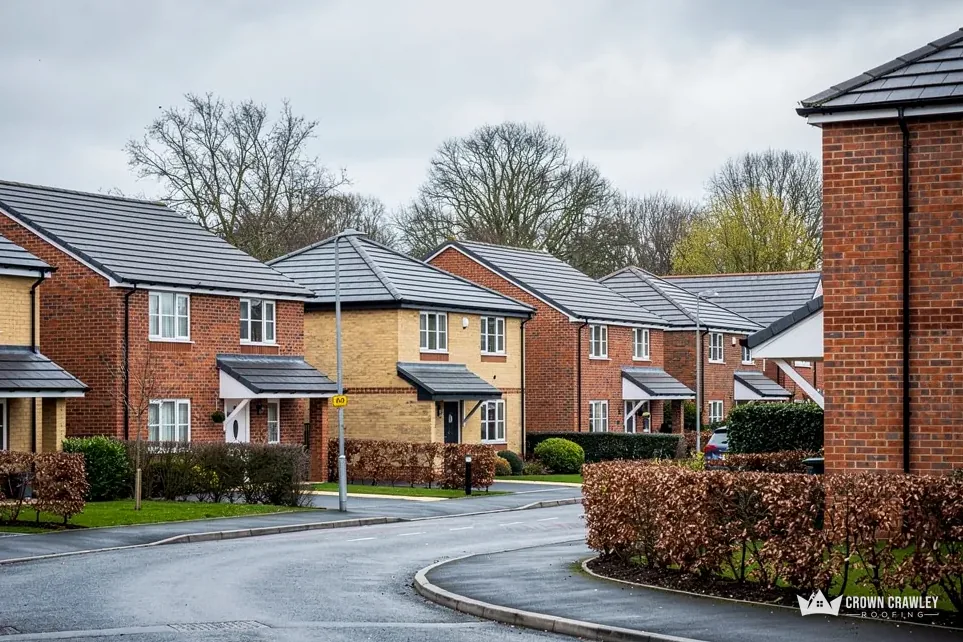
Modern estate road with brick houses and grey roof tiles

What we look for on Smallfield roofs

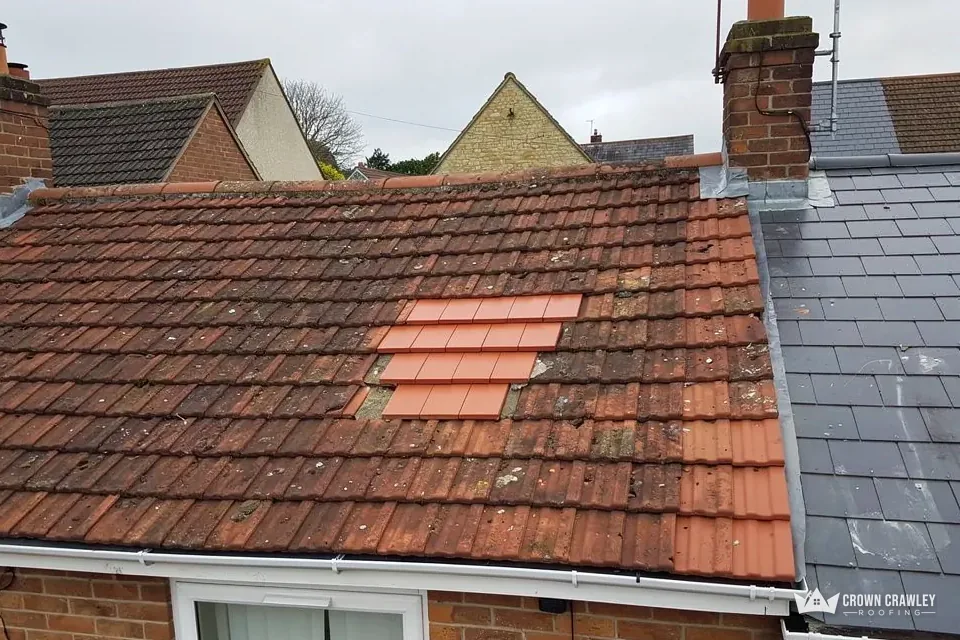
Roof slope with a patch of replacement tiles beside a slate roof

Moated manor houses

Smallfield Place was built, apparently, in the 17th century by Edward Bysshe, in local sandstone with a roof of Horsham slabs, and moat remains lie to its west. On a house of that age the frame and the walls under it get our attention before the covering does.

Old tiled roof on a country house

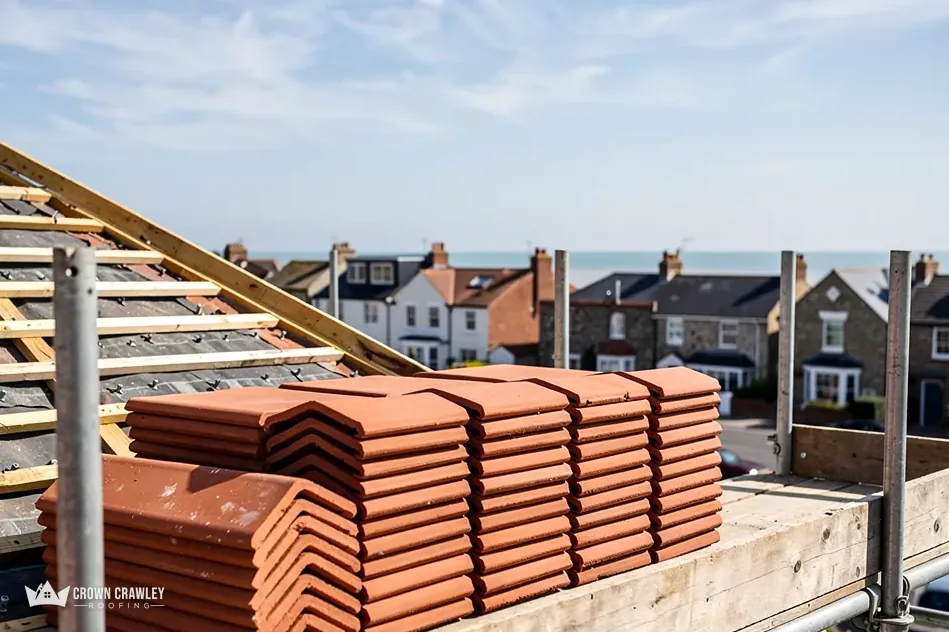
Stack of new clay tiles on scaffold beside roof timbers

Listed farmhouses and cottages

Green Farm House and Manor Cottage are both listed Grade II. Listing affects what a repair may change, so on a listed roof we describe the condition and the repair first, then ask the council before work is planned.

Clay-tiled farmhouse with a chimney

Rear of a brick detached house with a tiled roof and garden

A Victorian school and later homes

The village school was built as a Church school in 1859 and enlarged in 1861, and houses have followed since. Whatever the date, we write down what covers the roof, how it is fixed and the state of the loft.

Brick building with a pitched roof

Smallfield, north-east of Crawley

Map of Smallfield and the neighbourhoods around it, with Crawley for reference.

East of Horley, Smallfield grew within the old Burstow parish, where the retentive clay made moats the natural defence of the older houses.

Distance
7.1 road miles from Crawley, to the north-east
Drive
About 14 minutes
Council
Tandridge District Council and Surrey County Council
Planning authority
Tandridge District Council
Population
2,613 (Census 2021, Smallfield built-up area)
Article 4
One mapped on land east of the A22, by the railway
Get a free quote

Smallfield, stage by stage

Smallfield roofs, from moated houses to modern estates

First Burstow's moats and Horsham slabs, then the listed buildings and a mapped Article 4 area, and last the Tandridge offices and Surrey licence behind a larger job.

Stage 01 · Background

Moats, clay and an iron past

Smallfield belongs to a parish with moated houses and an ironworking past, so some roofs sit on far older frames than their tiles suggest.

Smallfield was once part of Burstow parish, and the Victoria County History tells a good deal about it. Smallfield Place was built, apparently, in the 17th century by the Bysshe family on land called Crullinges that was renamed Smallfield, and there seem to be moat remains to its west. The same history says Burstow was once a seat of the Wealden iron industry, and that the clay soil made moats the natural defence for its old houses. The village school was built as a Church school in 1859 and added to in 1861. In 1911 the same account described Smallfield Place as a house of local sandstone with a roof of Horsham slabs, heavy stone flags that need a frame strong enough to carry them. Those few dates are enough to show that Smallfield has houses from several centuries, not one.

Survey notes from Smallfield

Frame
Rafters, plates and purlins in good order
Covering
Tiles seated, nails and clips holding
Chimney
Stack, flaunching and flashing watertight
Gutters
Free-running with firm brackets
Loft
Dry, with no daylight showing
Dormer window with white cladding in a clay tiled roof

What does a 17th-century frame mean for a Burstow repair?

It can. A roof on a house of the 1600s is carried by timbers that have moved and settled over centuries, so the slopes may not be perfectly flat and the walls may not be perfectly square. A repair method that assumes a true surface can leave gaps. We take the roof as it is, fit tiles and flashings to its shape, and keep the repair in proportion. If one tile is cracked, we replace that tile. If a rafter has rotted at its foot, we tell you, and the written price shows what is needed to make the roof sound again. That is cheaper than discovering it halfway through a bigger job.

How long do the usual coverings last?

Roofing sources give typical figures, never promises. The Building Research Establishment names a minimum life of 60 years for clay tiles, although old peg tile is a different story. Marley quotes about 60 years for concrete tiles, with the note that no warranty is implied. Slate that is looked after can outlast a century, by the reckoning of the Confederation of Roofing Contractors. What matters on your own roof is how the individual tiles are behaving, and whether the nails and battens beneath still hold them in place against wind and rain.

Keep reading

You receive photos from our survey, covering the slopes, the ridge and the loft, and then one total price in writing. Our pitched roofing page describes the usual repairs, and our chimney repairs page covers the stacks that old houses tend to carry. Neither page replaces the survey, because every roof here has its own history.

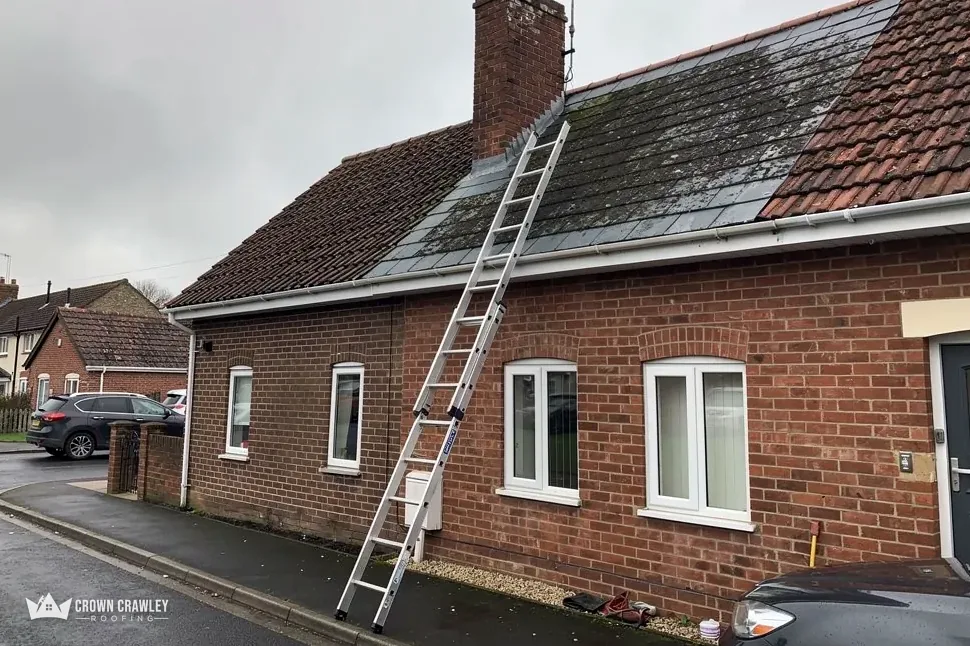
Brick bungalow with a ladder leaning against its tiled roof

Stage 02 · Check first

Listings and a mapped Article 4 area

Before a Smallfield roof job, check two points: is the building on the national list, and does a mapped Article 4 direction reach the address?

Green Farm House was first listed on 25 April 1984, at Grade II, and Manor Cottage carries the same grade. The national conservation area map shows nothing at Smallfield. It does show an Article 4 direction area on land east of the A22, below the Redhill and Tonbridge line.

What does an Article 4 direction mean for a roof?

Under an Article 4 direction a council can take away named permitted development rights within a mapped boundary. It does not stop repairs, and a map line alone does not tell you its effect, because each direction lists the rights it removes. Some take away very little, and some reach roof alterations such as roof windows. If your house is anywhere near that boundary, ring Tandridge's planners, give them the address and ask which rights the direction removes, before you draw up any change a neighbour would notice from the lane.

Planning words explained

Article 4
A direction removing certain rights
Grade II
Listing for a building of special interest
LPA
The council that decides planning
Like for like
Same tiles, same look as before
What if the house is listed?

Under section 7 of the Planning (Listed Buildings and Conservation Areas) Act 1990, changing a listed Smallfield house in ways that bear on its special interest is unlawful until consent is granted. That authorisation is listed building consent, and Tandridge handles it here. Not every repair touches character, but the council decides that, not the roofer. Our part is to describe the roof accurately: what is there, what has failed, and what the repair would involve, with photographs, so the council can answer a specific question and not an abstract one.

A listing covers more than the front elevation. Chimneys, roof timbers and the original covering can all be part of what is protected, which is why we photograph every slope and the stack before suggesting a repair. If a tile or slate needs replacing, matching it in size, colour and texture usually counts for more than saving a little on the materials. The council is far more likely to say yes to a repair that visibly respects the existing roof.

A mapped direction tells you to ask the council, not what it says.

Ordinary maintenance, like swapping a cracked tile for a matching one, is the least likely to need consent, but a listed roof deserves a phone call first. If you are buying or selling a house in the village, an unclear roof can slow things down, and a survey report with photos is useful evidence for the other side. A buyer wondering whether the roof has years left gets a truer answer from the state of the tiles, battens and flashings than from the date on the deeds. Our post on planning permission for roof work explains the general rules that apply to a visible change.

Stage 03 · Permissions

Tandridge, Surrey and the Southern partnership

Smallfield sits in Surrey, so the council names change from our Crawley jobs, and so do the building control and highway licence routes.

Crossing into Surrey changes the names on the letterhead. Planning decisions for Smallfield are made by Tandridge District Council, while Surrey County Council looks after the roads. Building control comes from the Southern Building Control Partnership, which describes itself as a shared service covering Mole Valley, Reigate and Banstead, and Tandridge. It is not Crawley Building Control, so Crawley's own wording about roof area does not carry over.

Does a Smallfield re-roof go to building control?

The Planning Portal gives the national guide. Normally no application is needed while under 25 per cent of the total building envelope is affected and under 50 per cent of the roof is, which makes a repair or a single slope a likely exception. Approval is needed, the Portal adds, if the new covering makes the roof covering 15 per cent or more heavier, or if its fire behaviour would be markedly unlike the old one's. Swapping clay for Horsham slabs, or the reverse, can trip that test, so a structural engineer or surveyor should check the frame first. The Southern partnership can advise on the approval route; we raise the point at the survey, and your written price takes it into account.

Who decides what in Smallfield

Planning
Tandridge District Council
Building control
Southern Building Control Partnership
Road scaffold
Surrey County Council licence
Fee
£208 per 28 day period
Lead time
10 working days before the start
Roll of roofing membrane lying on a clay tiled roof

How does a scaffold licence work in Surrey?

Where a Smallfield scaffold has to stand on the pavement or carriageway, Surrey County Council licenses it. The charge is £208 per 28 day period, applications should go in no later than 10 working days before you want the frame up, and processing takes up to 10 days. Surrey keeps the application fee whatever happens. Poles that never leave your drive or garden are off the highway. Surrey leaves the question of who files the form open, so the scaffold firm and we settle that early between us, because a slow application can push the start date back.

Wildlife can halt a Burstow job too. Bat roosts are legally protected wherever they are, GOV.UK includes roof repairs among works that may harm them, and a bird's nest that is being used or built has its own protection. If droppings turn up in the loft, the job stops and we phone you. For a full strip and re-cover, our roof replacement page runs through the stages one by one.

Smallfield roof questions answered

My Smallfield cottage has moat remains nearby. Does that change the roof work?

The moat itself does not, but the age of the house might, and so might a heavy stone covering like the Horsham slabs on Smallfield Place. Older frames settle and lean, so tiles and flashings have to be fitted to the roof as it is. We survey the timbers from the loft, photograph anything that has moved, and say whether a repair will hold or whether the frame needs attention first.

Does the Article 4 area near the A22 affect my Smallfield roof?

Only if your house falls inside the mapped area, and what the direction removes depends on its own wording. Repairs are not the issue. Changes to how a roof looks, such as new windows, might be. Give Tandridge's planners your address and postcode and ask them before you commit to a design.

Is the building control body for Smallfield the same as in Crawley?

No. Smallfield is in Tandridge, whose building control comes from the Southern Building Control Partnership, a shared service with Mole Valley and Reigate and Banstead. Crawley Building Control serves Crawley borough only. We raise any approval question at the survey, and the price you get says how it will be handled and who deals with the paperwork.

What does the Surrey scaffold licence cost for my Smallfield house?

Surrey County Council charges £208 per 28 day period when the frame is on the road or pavement, and says the application fee is non-refundable. Applications should be in at least 10 working days before the start. A frame kept inside your boundary needs neither licence nor fee. We work out which applies when we survey.

A Smallfield roof, surveyed before priced

Send your postcode, a photo of the roof or the ceiling stain, and whether the house is listed. Then we book your survey.

01293 974253

10-year workmanship guarantee, in writing.

Call Get a free quote