Roofers in Kilnwood Vale

Roofs on a new neighbourhood on Crawley's western edge.

Kilnwood Vale is a new neighbourhood beside Faygate, in Horsham district. Newer roofs fail in different ways from old ones, and we look for those early signs before we write one price.

Storm-damaged tiled roof with the battens exposed and tiles on the ground

The roofs you see around Kilnwood Vale

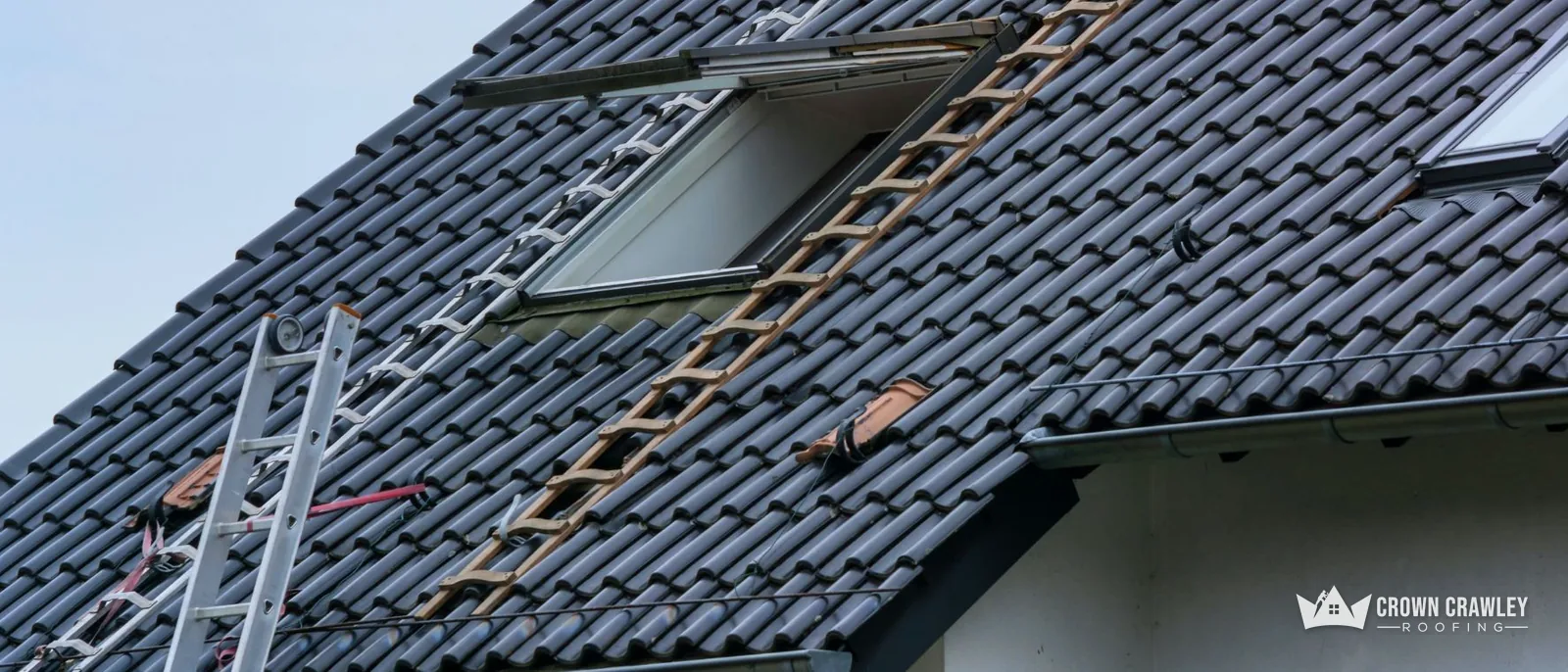
Black roof tiles with a roof window and ladder against a house

Young roofs in a new neighbourhood

Kilnwood Vale is described as a new neighbourhood near Faygate. On a young roof we look for early movement: slipped tiles, loose caps, and flashings or fixings that have shifted since they were fitted.

Newer tiled roof on a house

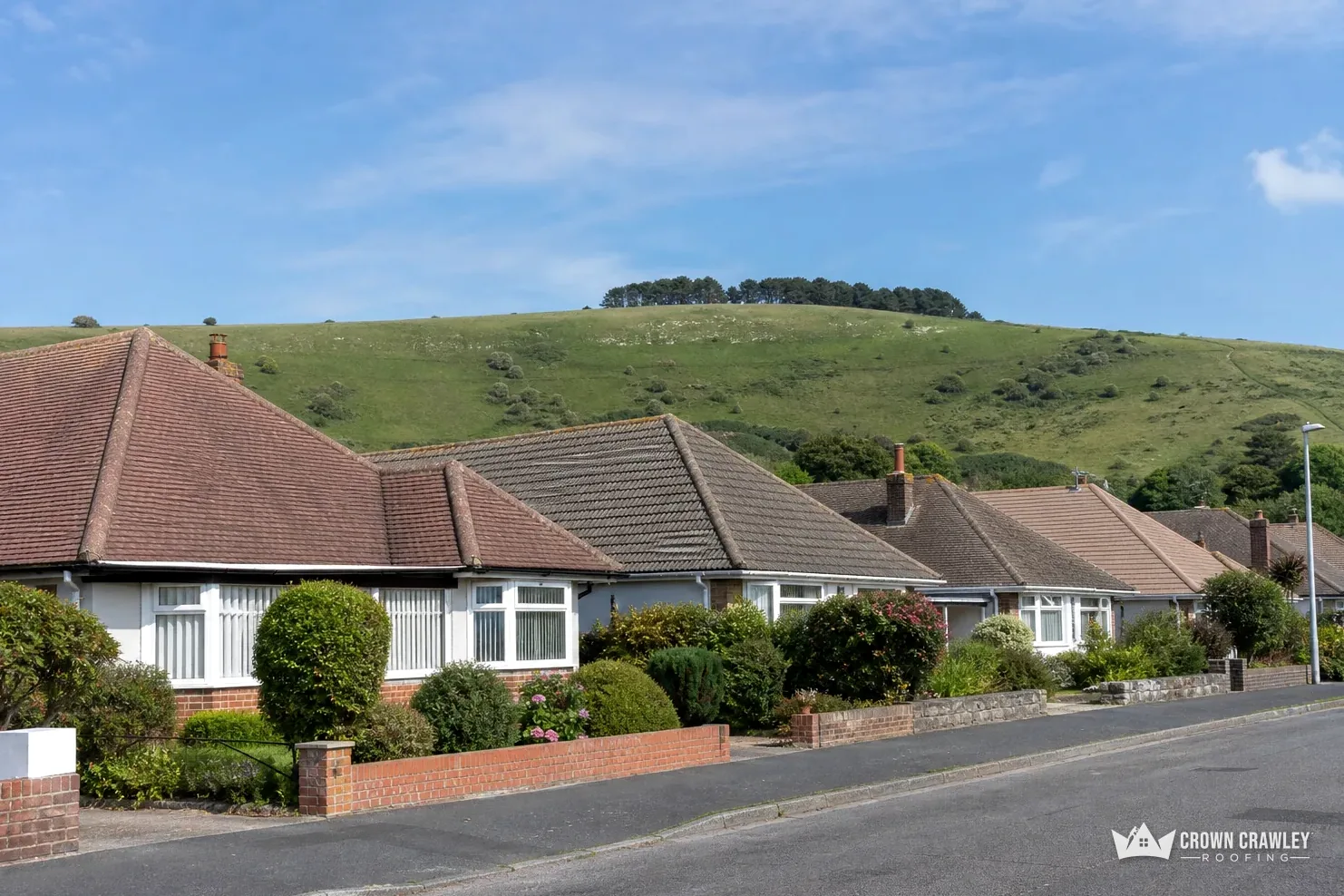
Bungalows on a suburban road beneath rolling downland

Ridges and verges fixed in different ways

Since the 2014 revision of BS 5534, mechanical fixings are advised for bedded ridge and verge tiles. We check whether yours are mortar, dry-fix or a mix, and repair them in kind.

Dry verge caps on a gable edge

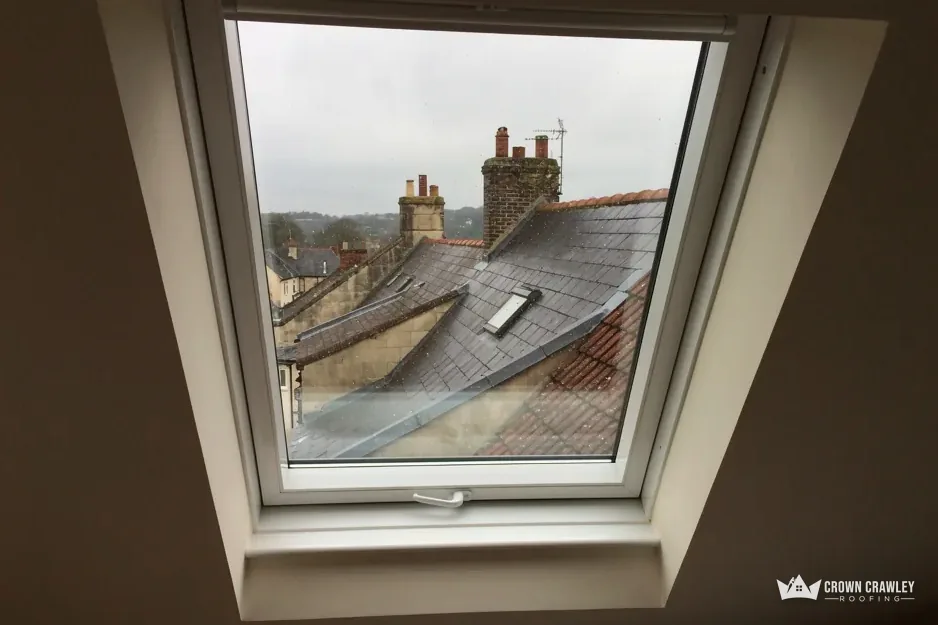
View through an open roof window over neighbouring tiled roofs

Lofts, eaves and insulation

Where a roof space has been insulated, air still has to move through it. We check the eaves gaps, the underlay and the insulation so damp has a way out of the loft.

Insulation and rafters in a loft

Kilnwood Vale, by Faygate

Map of Kilnwood Vale and the neighbourhoods around it, with Crawley for reference.

This is a new neighbourhood on Crawley's western edge, close to Faygate and inside Horsham district.

Distance
3.5 road miles from Crawley, to the west
Drive
About 7 minutes
Council
Horsham District Council and West Sussex County Council
Planning authority
Horsham District Council
Building control
Horsham District Council, as Sussex Building Control
Get a free quote

Inside a Kilnwood Vale roof job

Reading a roof where the houses are newer

Three short chapters on early faults in young roofs, the air and underlay in the loft, and the Horsham District rules behind a bigger job.

Stage 01 · First look

Early signs on a younger roof

In a new neighbourhood the roofs are young, so we look for small movements and fixing faults before we look for wear.

A neighbourhood described as new brings newer roofs, and a younger roof does not fail the way a tired one does. Nothing has worn out yet. The faults that turn up early are about how the roof was put together and how it has moved since: a cap that has worked loose, a flashing that has lifted at a corner, a tile that slipped after a gale. A roof's age is not a guarantee, and a warranty is not the same thing as a lifespan, so we look closely at young roofs rather than assume they are fine.

Is the ridge fixed with mortar or with clips?

Both are in use, and the difference matters when something fails. Marley notes that after the 2014 revision of BS 5534, mortar alone no longer counts as a reliable fixing, so any tile or fitting set in mortar should have a mechanical fixing as well. Dry systems have their own standard, BS 8612. Marley also points out that working to BS 5534 is not a legal duty, so a ridge held by mortar alone is not a defect in itself, but it is the first place we look, and we say what we find on yours. Our dry ridge and dry verge page covers both systems.

On a younger-roof survey

Ridge caps
Seated and fixed, no rocking
Verge
Caps clipped, or mortar whole
Flashings
Tight to walls and chimneys
Tiles
Sitting flat, none slipped
Underlay
Lapped, with no tears at eaves
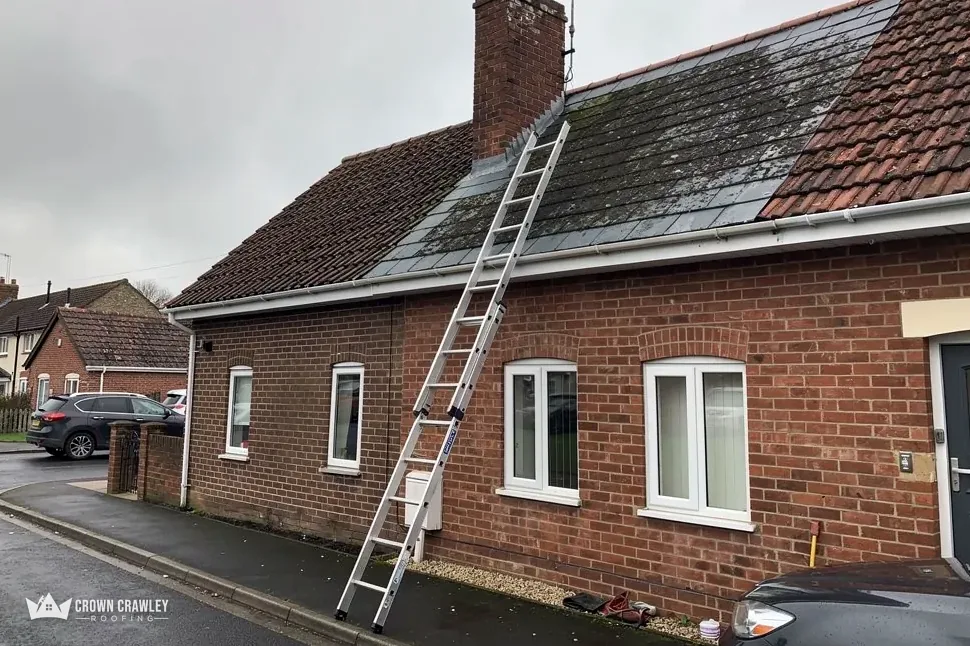
Brick bungalow with a ladder leaning against its tiled roof

What does a verge repair cost?

In September 2026 Checkatrade put dry verge at roughly £10 to £25 a linear metre with materials and labour, and about £875 for a whole semi-detached house, as typical UK figures. Those are typical UK figures, not our price. The written quote follows the survey, and it depends on the length of verge, the access and the system already on the roof. A short run on a ground-floor edge costs less to reach than a long gable on a three-storey house, which is why a single guide figure only goes so far.

Why would a verge cap come loose on a recent roof?

Clipped caps can loosen where a fixing has backed out or the wind has lifted a cap at the end of a run, and bedded ones can crack where the mortar has shrunk away from the tile. Either way the fix is local. Our post on dry verge caps falling off a new build explains what to look for, and we photograph every cap we reseat or refit so you can see which ones moved.

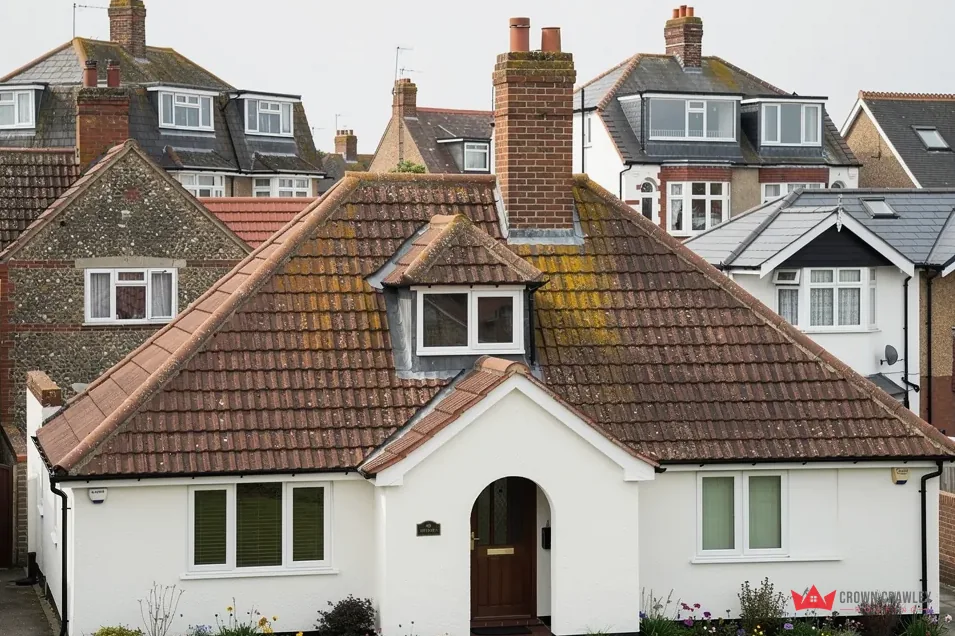
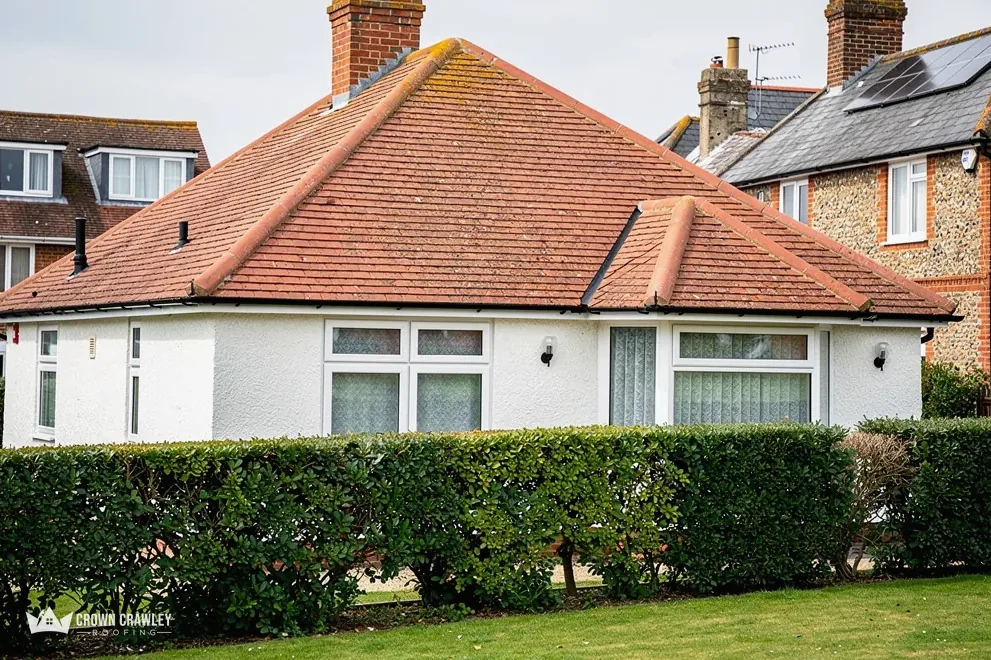
White rendered bungalow with a hipped tiled roof and dormer

Stage 02 · Inside the roof

Loft air, underlay and insulation

A roof that leaks and a loft that sweats can look alike from the landing, so we check the air before we blame the tiles.

When a homeowner finds damp in a loft, the first guess is a leak. Sometimes it is. Often the tiles are sound and the damp is moisture from the house settling on cold timber, because the air has nowhere to go. Cooking, washing and drying clothes all put water into the air, and a loft with a blocked gap gives it nowhere to leave. Telling the two apart is the point of a survey, and it saves paying for a roof repair that does not cure the problem.

How much ventilation does the eaves need?

It depends on the underlay. Marley labels non-breathable felt as HR, and for a cold roof under it, Marley's note on BS 5250 wants an opening along the eaves of 25mm on pitches of 15 degrees or less, and 10mm on steeper ones. A breather underlay, which Marley calls LR, may get by on the 3mm that ordinary eaves construction leaves, provided the ceiling is well sealed, the covering lets air through and the product carries third-party certification. We find out which kind you have by lifting a tile or looking at the underlay from the loft, and then check the gap is open. Our pitched roofing page explains how we repair underlay and battens.

Terms in the loft

Underlay
Membrane laid under the tiles
Breathable
Lets damp vapour pass through
Eaves
Lower edge of the roof
Condensation
Moisture settling on cold surfaces
A damp loft is a clue, and the cause may be air rather than rain.

Can insulation cause the damp?

It can, when it is pushed tight into the eaves and shuts off the gap. We draw it back, fit a ventilation tray if the roof needs one and look for stained battens. Battens, the narrow timbers each tile course is hooked onto, show a dark stain where damp has sat. Clearing the gap is a small job, and it is far cheaper than finding rot a few winters on. Spraying foam on the underside of a roof is a different matter. The Energy Saving Trust, in a page updated on 8 May 2026, does not recommend spraying foam onto a leaking roof, and RICS advises checking with your mortgage provider whether its policy allows the installation. Please ask before you book it, and send us the survey photos to read alongside it.

Is a stain on the ceiling always a leak?

No, but it is always worth tracing. A ring that grows after rain points to water coming in; one that comes and goes with cold nights points to condensation. We note the stain's position against the roof above it, because a mark just below a chimney, a roof window or a valley usually has a different source from one in the middle of a room.

Stage 03 · Permissions

Horsham District rules for a Kilnwood Vale job

Kilnwood Vale falls under Horsham District Council for planning and building control, while the county council deals with any scaffold standing in the road.

Kilnwood Vale is on the western edge of Crawley, but it lies in Horsham district, so Crawley Borough Council's own wording on approvals is not the rule that applies. Horsham District Council decides planning applications here and also runs building control, under the Sussex Building Control name. Horsham's planners can confirm whether any conservation area reaches a Kilnwood Vale address, though a like-for-like repair rarely meets a hurdle.

Should the developer hear about the repair first?

On a recent home, check what cover is still running before you pay anyone. The developer, or whoever issued your new-home cover, may expect to be told about a roof fault, and may want to decide who does the repair. We cannot say what your cover includes, so ask them, and use our survey photos and written description as a record of what was found on the day.

What to settle first

Planning
Horsham District Council
Building control
Horsham District Council, as Sussex Building Control
Road scaffold
West Sussex County Council licence
Conservation area
Horsham can confirm yours
Home cover
Ask what the developer still covers
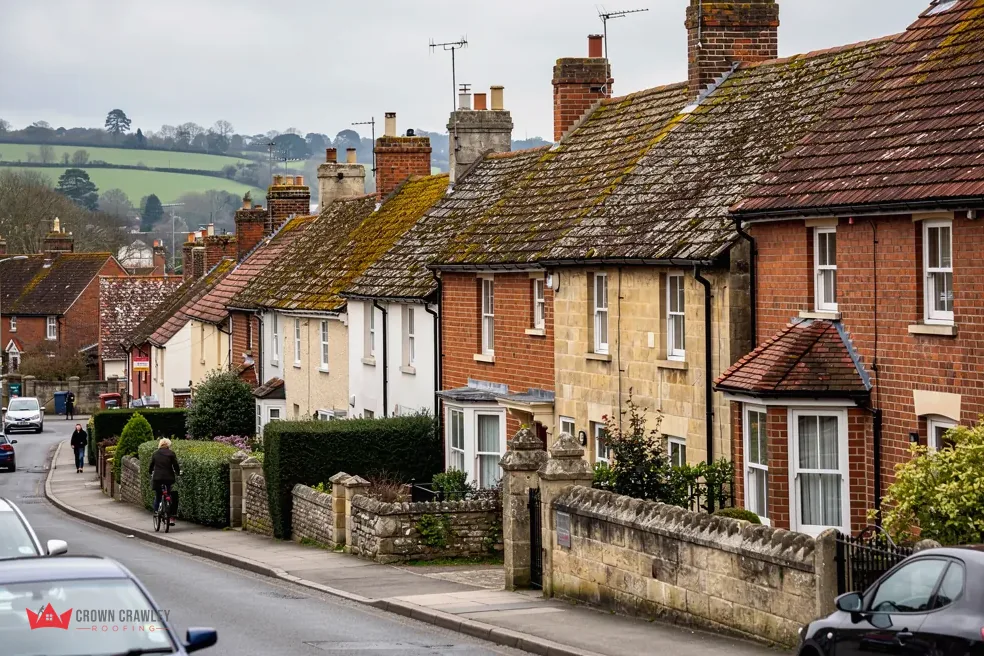
Village street of brick and render houses with old tiled roofs

Does replacing the covering mean a call to building control?

The Planning Portal sets the national test for a re-roof: no application is normally needed if under 25 per cent of the building envelope and under 50 per cent of the roof is touched. It names two exceptions: a replacement that adds 15 per cent or more to the covering's weight, and one whose behaviour in a fire would be significantly different. On a larger job we ask Sussex Building Control before fixing a start date, and we put the answer into the quote. A loft window or dormer is a planning question for Horsham District Council, so talk to its planners before settling on a layout.

Will scaffolding here need a highway licence?

Where scaffold sits on a pavement or other part of the highway, the licence is West Sussex County Council's to grant. The county wants at least 10 working days between application and the scaffold going up, and charges £266 for a month. Scaffolding set up wholly on your own plot falls outside that. Ask the scaffolder who applies; we settle that between us and fit the first day to the notice period. On a new estate the roads may still be private or awaiting adoption, so it is worth asking the developer or the council who looks after yours. Parked cars, narrow estate roads and bin collection days all affect where the scaffold and skip can go, so we walk the street at the survey and agree a plan with you before anything is delivered.

Kilnwood Vale questions, answered plainly

Why might a verge cap loosen on a newer Kilnwood Vale roof?

Clipped caps can work loose where a fixing has backed out or wind has lifted the end cap, and mortar-bedded verges can crack where the mortar has shrunk from the tile. The repair is usually local. We refit or rebed the caps that moved, check the neighbours, and photograph each one so the written quote matches what you can see.

Who should I tell about a roof fault on a recent home?

Ask the developer, or whoever issued your new-home cover, what it still covers and who should do the repair, before you pay for work. We cannot say what your cover includes. Our survey photos and written description give you a clear record of the fault to pass on, whoever ends up fixing it, and a temporary repair can stop a leak spreading while that is sorted.

Do Kilnwood Vale roofs face conservation area limits?

Only if your house lies in one, a point Horsham District Council can settle for you; matching repairs are the easy case. If you plan to alter the roof's appearance, say with different tiles or a front-facing rooflight, check with Horsham's planners before agreeing a price. Keeping the same tiles and the same roof shape is the quickest route on any house here.

Why is my loft damp when the tiles look fine?

Often the cause is air, not rain. Insulation pushed into the eaves can block the ventilation gap, and the household's moisture then condenses on cold timber. We look at the underlay type, clear the gap and check the battens for staining. A leak is still possible, so we trace the stain against the roof above.

Show us what you are watching

Which part of your roof are you watching? Send a photo with your Kilnwood Vale postcode and ask us for a survey.

01293 974253

10-year workmanship guarantee, in writing.

Call Get a free quote