What does that history mean for a roof?
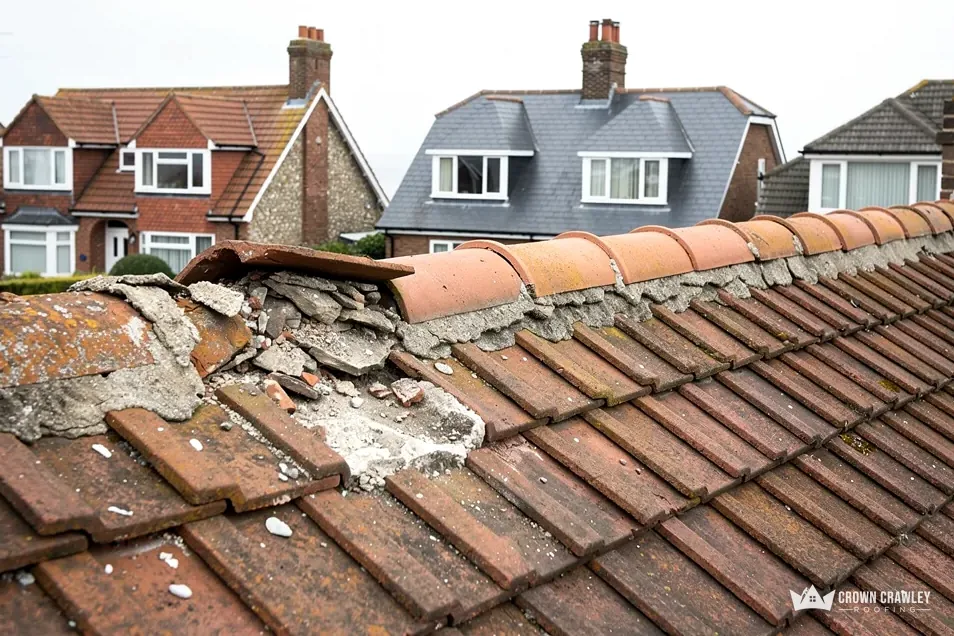
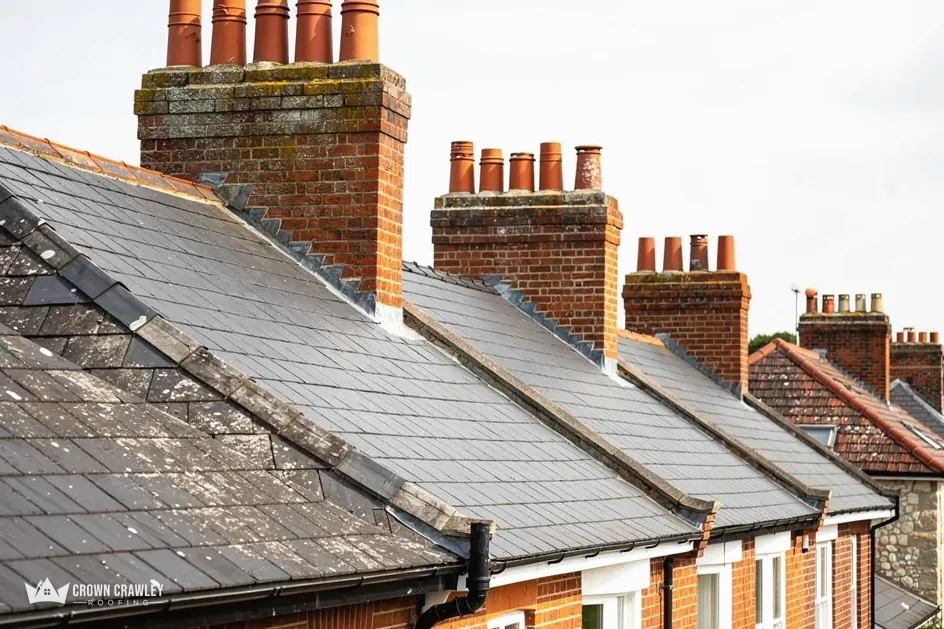
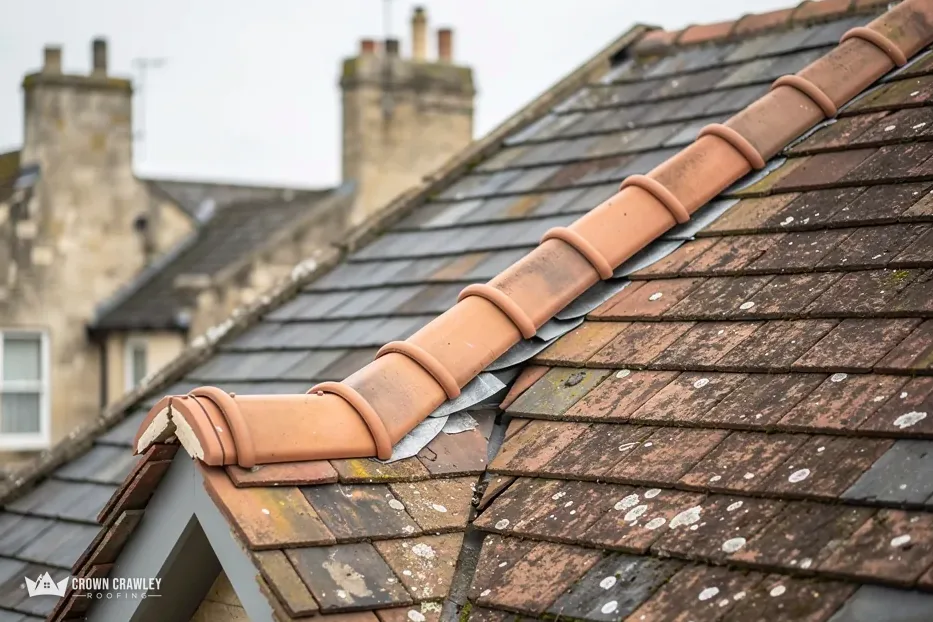
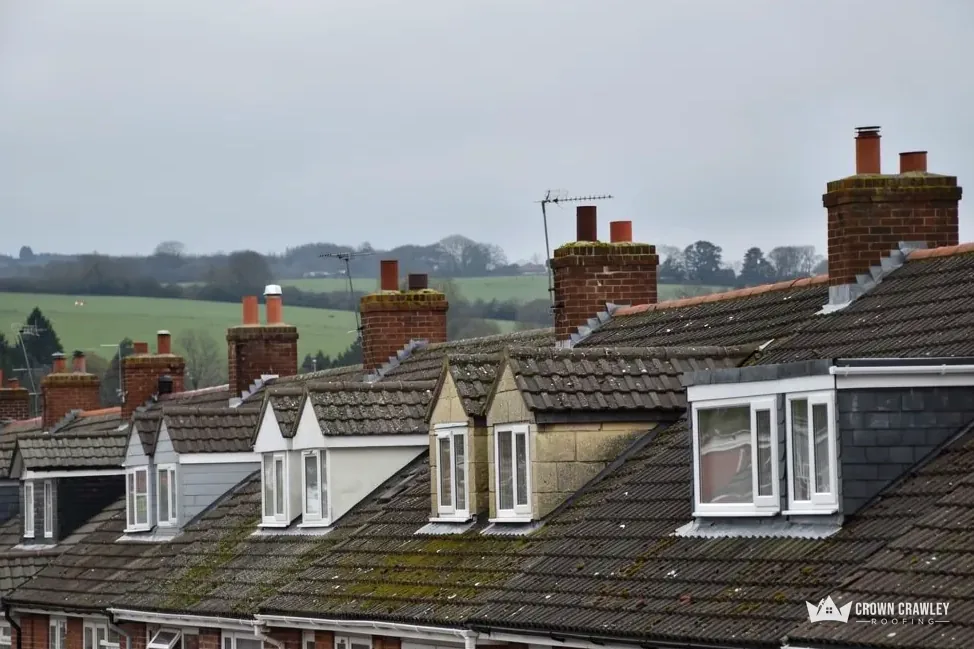
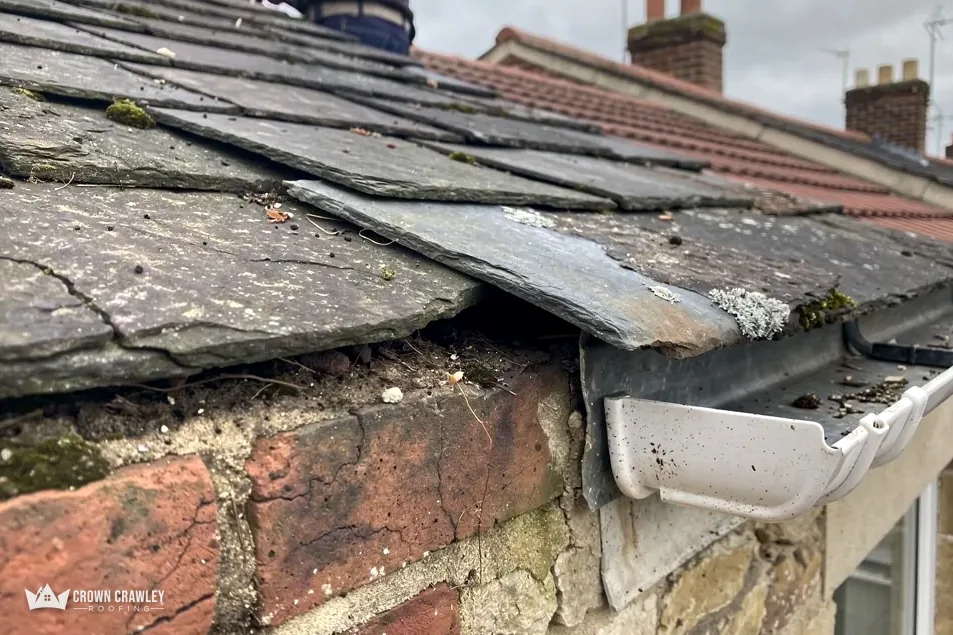
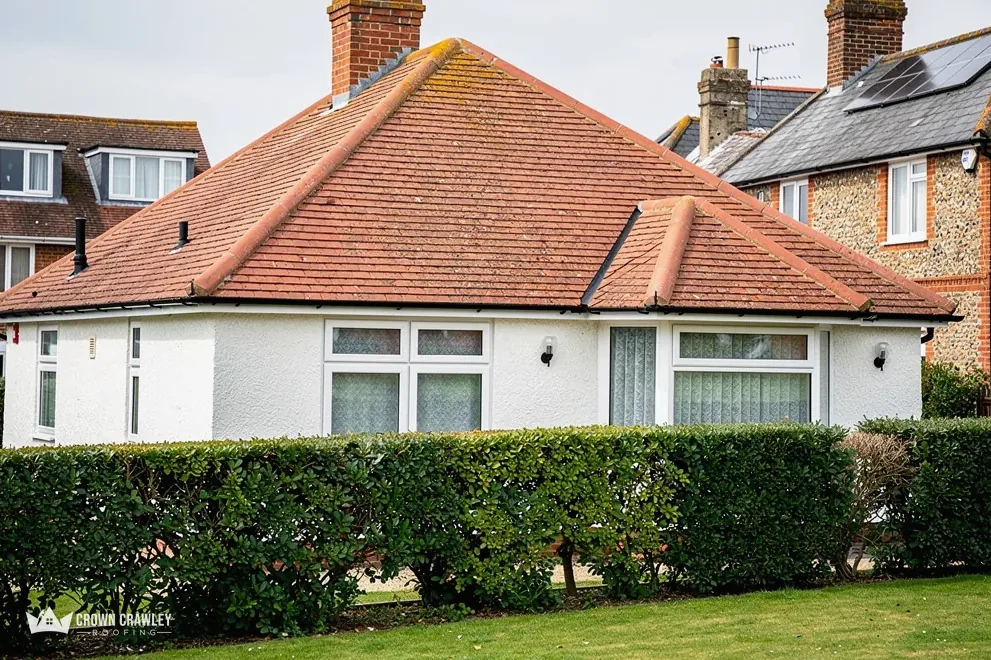
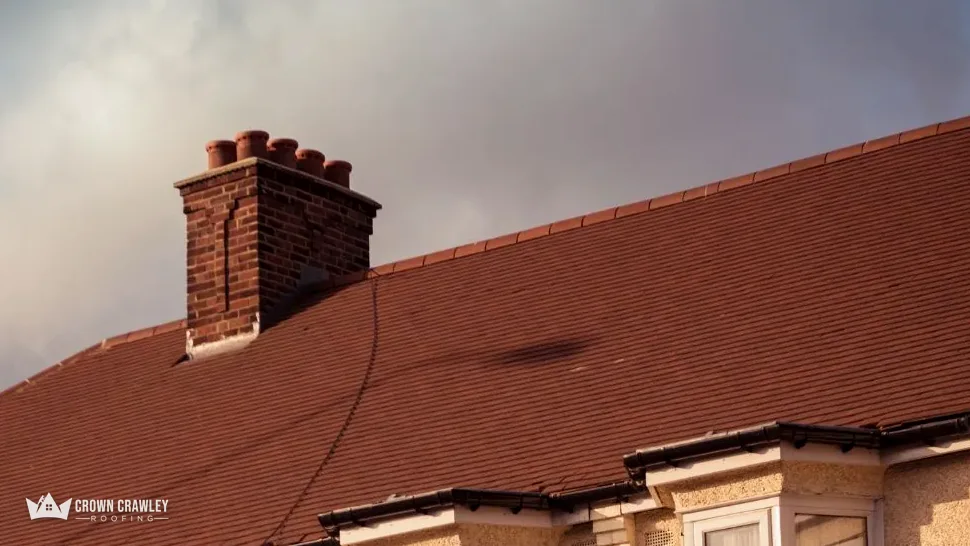
It means the street name tells us nothing about the roof, so we do not guess. We survey the one in front of us and send you photos of what we find. On a large house, the first checks are the places where roof planes meet. A hip is the sloping ridge at an outside corner, and a valley is the inside angle that carries water down into the gutter. A Victorian house on the Faygate ridge with several gables and a chimney or two has plenty of both, and a leak can start at any of those joins long before a tile slips. We also walk the verge, the sloping edge of the roof beside a gable wall, and the flashings, which are folded lead or metal sealing the joint where roof meets wall. Along a long ridge we look for shifted caps, since one loose cap lets rain into the bedding.
Is a roof from that period beyond saving?
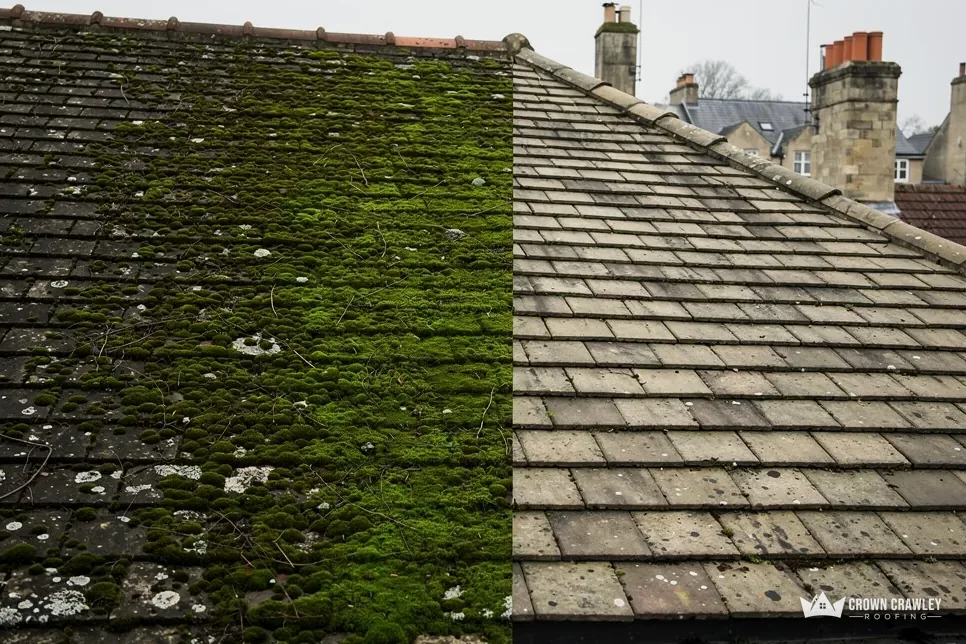
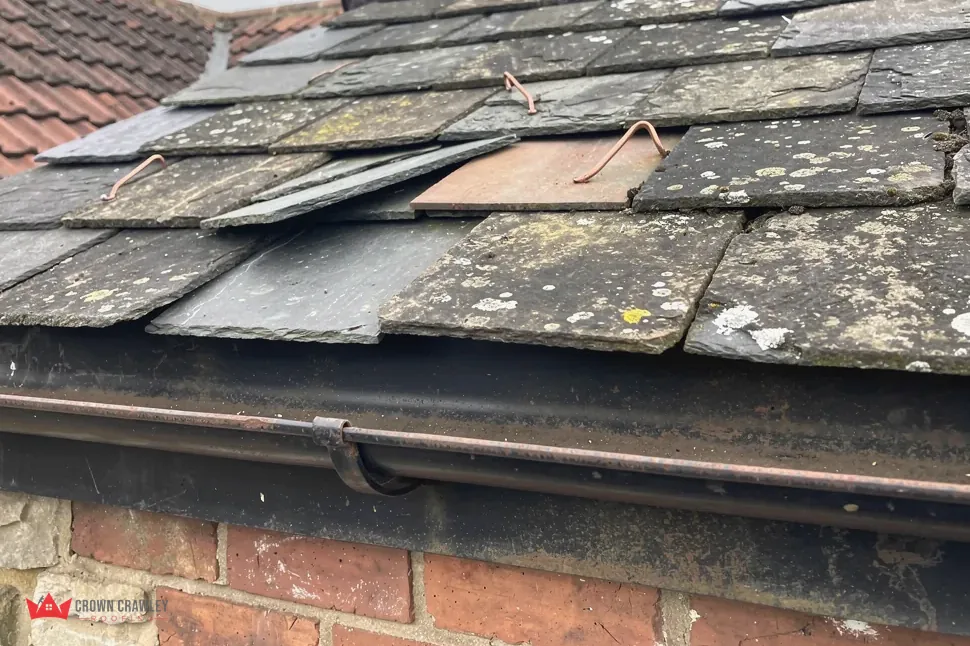
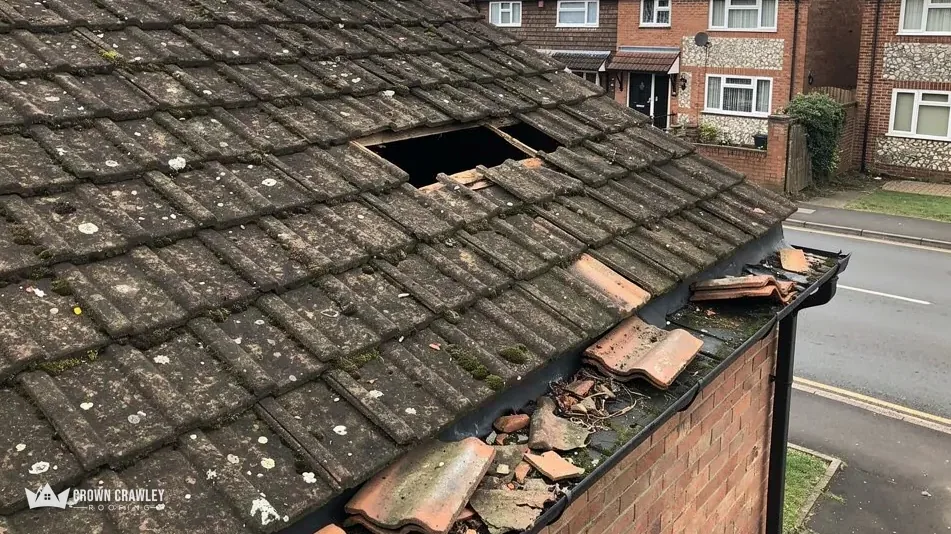
A date on the deeds settles nothing. Clay tile is credited with a 60-year minimum life by the Building Research Establishment, yet for old peg tiles that figure is called clearly not a reliable guide, because old tiles vary so much. Slate, if well maintained, can last 100+ years, and lead flashing can last for over 80 years. A roof can stay sound for a long time when the fixings, the lead and the gutters are kept up. What can tire sooner is the detail around the covering: nails that have corroded, battens (the slim sawn laths each course of tiles is hung on) that have softened where water sits, and mortar that has cracked along the ridge. Those are repair jobs, and on a Faygate roof whose covering is otherwise sound we price the repair, not a new roof. If the survey finds the battens failing across a whole slope, we tell you plainly and show you the evidence. The pitched roofing page lays out what a tile, batten and underlay repair involves, step by step.