Roofers in Roffey

Roofs in a Horsham suburb built up in the 1920s and 1950s.

Roffey is the north-eastern suburb of Horsham along the Crawley road. Most of its building came in the 1920s, with more in the 1950s, so we expect roofs that have been mended before.

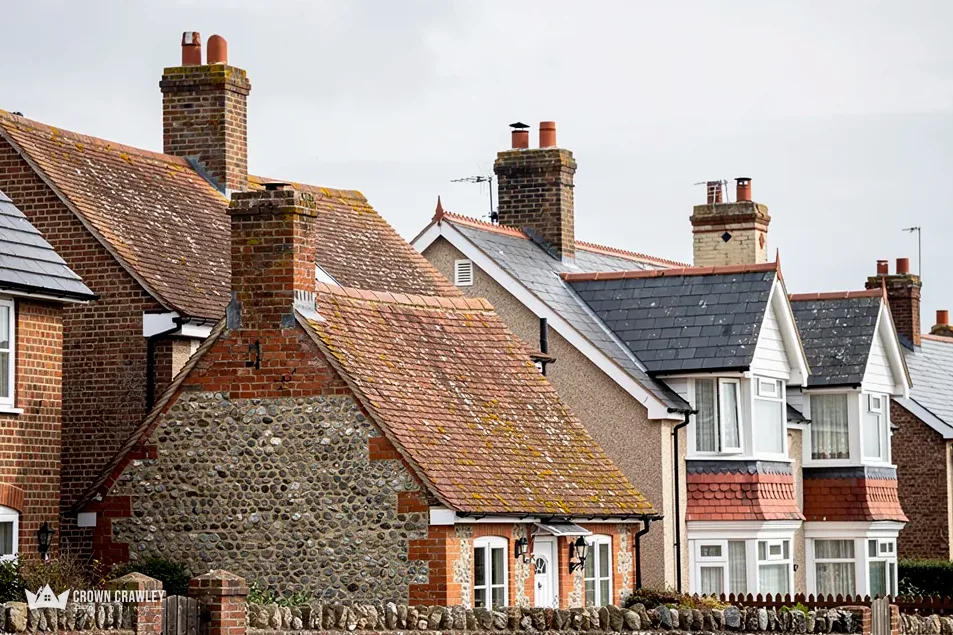
Flint and brick houses with clay tiled roofs and chimneys

Roof ages around Roffey and Littlehaven

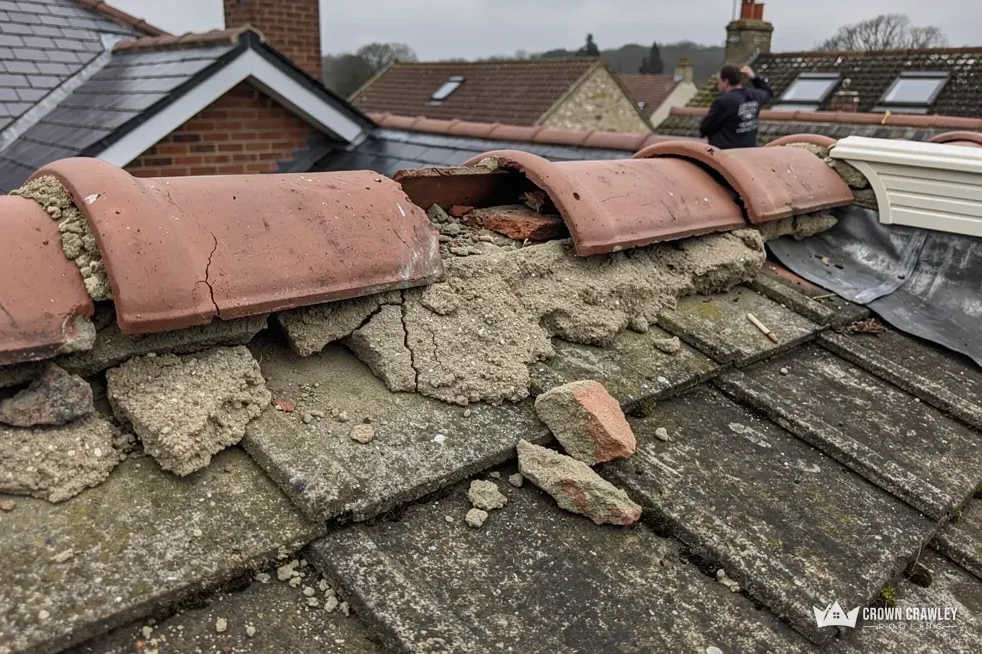
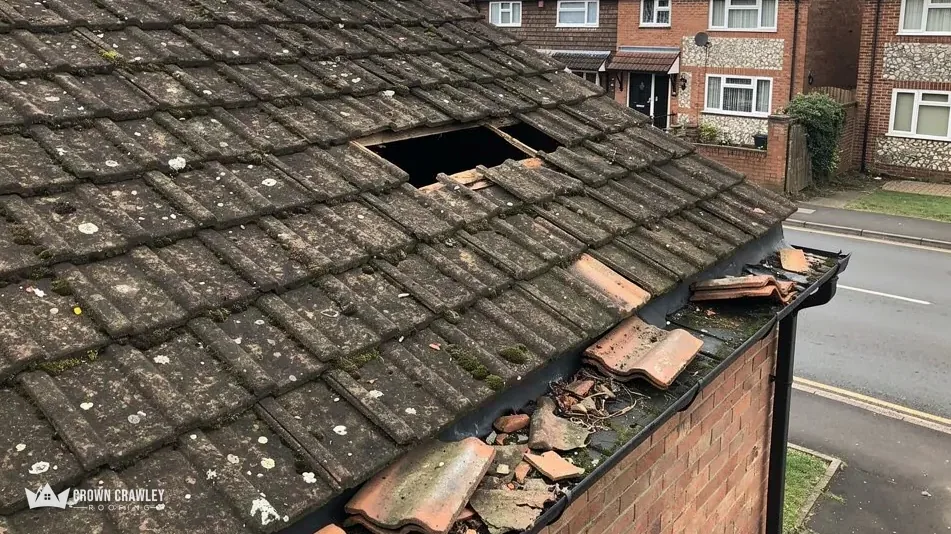
Crumbling mortar and cracked ridge tiles on a roof

Houses built in the 1920s

The county history says most development in and around Roffey took place in the 1920s. A roof of that age has had a century of weather, so we look for earlier patching, tired nails and flashings renewed more than once.

Older tiled roof with a ridge

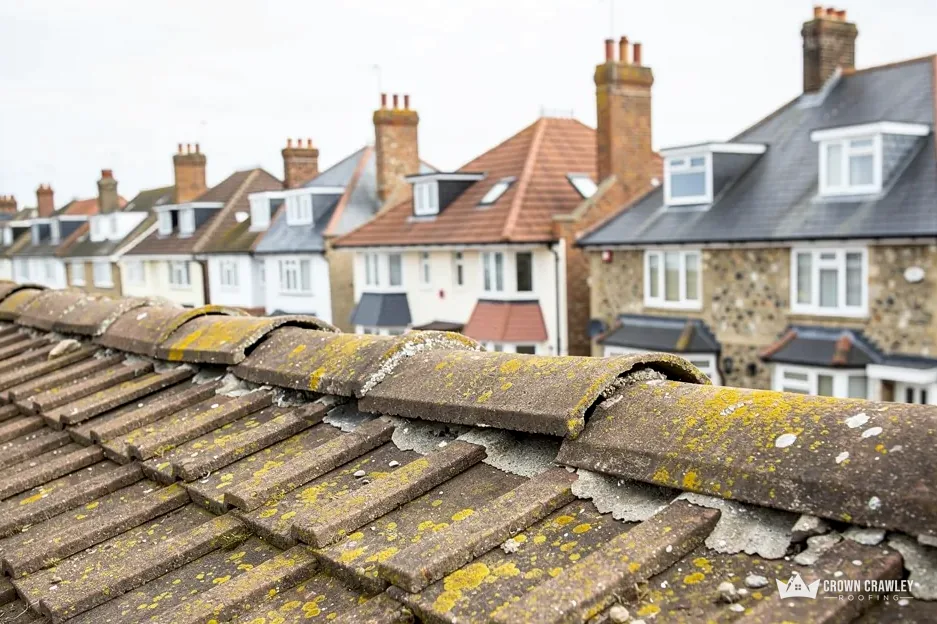
Mossy ridge tiles lifting along the ridge of a terraced roof

Roofs from the 1950s

There was much more building at Littlehaven and Roffey in the 1950s. On a roof from that decade we check the underlay and the loft ventilation, because old felt and blocked eaves are a common pair of problems.

Tiled roof on a post-war house

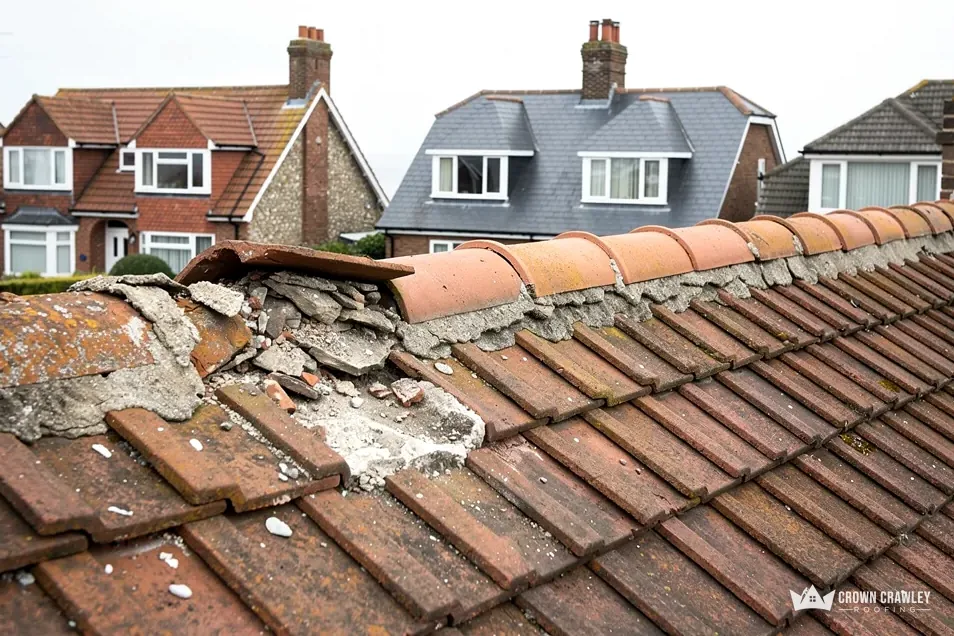
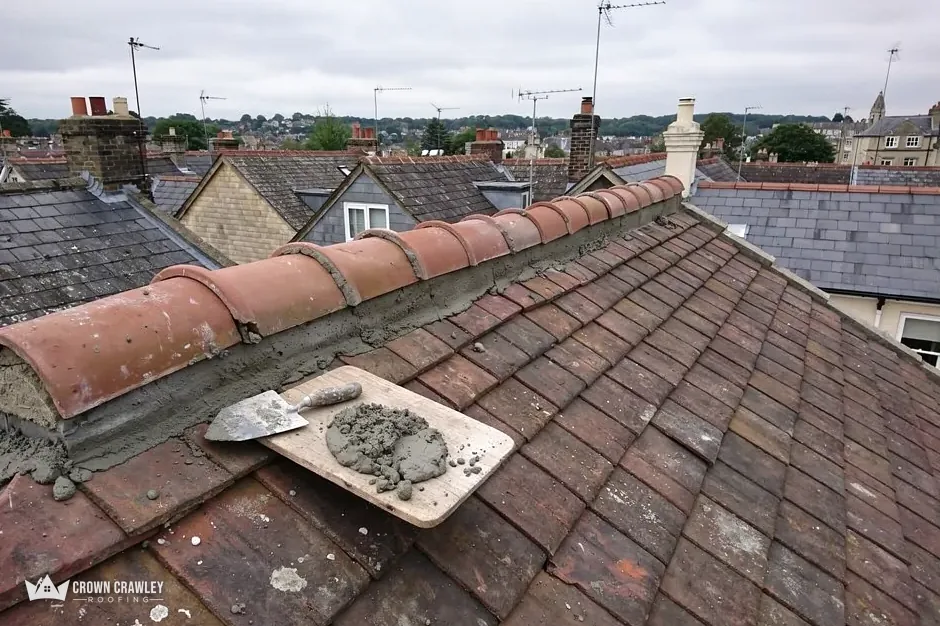
Broken mortar bedding along a clay ridge

Roofs that have been repaired

After decades of repair, a Roffey roof may carry several generations of fixes: different tiles, mortar patches, a cut-in valley. We list what is original and what is not, so the written price covers the real roof.

Tiled roof with mixed repairs

Roffey, on the Crawley road

Map of Roffey and the neighbourhoods around it, with Crawley for reference.

Roffey is the north-eastern suburb of Horsham, running along the road to Crawley. Littlehaven station opened in 1907 and gave the area its railway link.

Distance
6.1 road miles from Crawley, to the south-west
Drive
About 11 minutes
Council
Horsham District Council and West Sussex County Council
Planning authority
Horsham District Council
Listed
Church of All Saints, Grade II, listed 2002
Building control
Horsham District Council, as Sussex Building Control
Get a free quote

Roofing Roffey, in stages

Reading a Roffey roof by its age

Three short chapters on how Roffey spread north-east of Horsham, how we handle a roof that has been repaired before, and which councils have a say once a job gets bigger.

Stage 01 · History

A hamlet that gave its name away

The name Roffey moved from an old hamlet to a newer suburb, and the houses of the newer Roffey belong mostly to two building booms.

The name Roffey has moved. The old hamlet stood on the Horsham to Crawley road about a mile north-east of the modern suburb and probably existed by 1315. By 1896 the name had passed to the newer area around Star Row and Roffey church. A military camp stood at Roffey opposite All Saints' church in 1916, a reminder of how much the area has changed. Littlehaven station opened in 1907, and the Victoria County History says most development in and around Roffey happened in the 1920s, with much more building at Littlehaven and Roffey in the 1950s.

What does an interwar or 1950s date tell you about a roof?

Less about the tiles than about the years the roof has lived through. A house built in the 1920s has stood for a century, and one from the 1950s for most of seventy years, so both have had time to need work. We do not assume what covers any particular street. We look at your roof and write down what is there. What the date does tell us is where to look: the nails that hold the tiles, the felt beneath them, the lead or mortar at chimneys and walls, and the gutters, which have usually been replaced at least once.

Roffey: the survey

Tiles
Cracks, slips and worn edges
Underlay
Old felt or breathable membrane
Eaves
Air path clear of loft insulation
Valleys
Metal or liner sound and clear
Past repairs
Which parts are original
Dormer window with white cladding in a clay tiled roof

Is the underlay a worry on an older roof?

Sometimes, yes. Beneath the tiles sits underlay, a sheet that catches wind-blown rain and condensation. Marley's reading of BS 5250 asks for an air path along the eaves when that sheet is old non-breathable felt: 25 mm on pitches of 15 degrees or less, 10 mm on steeper ones. Quilt stuffed right to the wall plate can close that path, and then moisture from the house settles on the rafters in place of drifting out. Opening it up costs little and the benefit lasts for years, so the eaves get checked on every survey. A gap can look open from the garden and still be choked where the rafters meet the wall plate, so we check it from the loft too.

Once we are down, the pictures and a single written figure come to you together. Our pitched roofing page explains how we mend battens, tiles and underlay, and when a patch is enough to put things right for a good while.

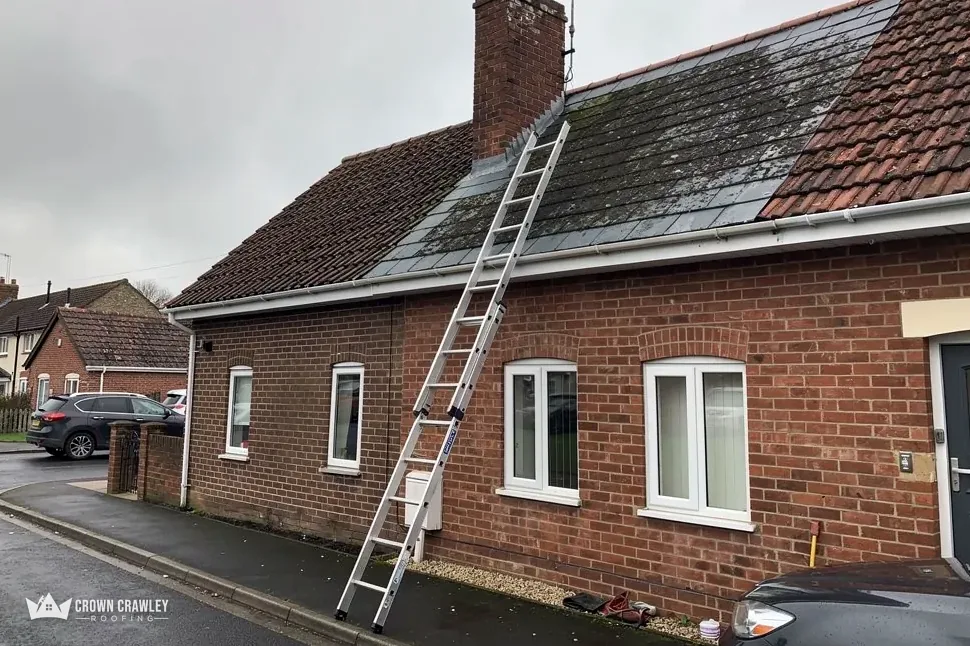
Brick bungalow with a ladder leaning against its tiled roof

Stage 02 · Old repairs

When a roof has been mended before

A suburban roof a century or seventy years old has usually had work done, and sorting original from patched is part of the survey.

Suburban roofs collect repairs the way old kettles collect limescale. A ridge has been rebedded, a few tiles came from a different batch, and the gutters are not the ones the house was built with. None of that is wrong in itself. It does mean the survey has to separate what is original from what was added, and which of the additions is still doing its job.

Can I just replace the tiles that look bad?

Often, yes. Swapping a handful of tiles, bedding a ridge afresh or fitting a new valley liner costs well below a new slope and can keep the roof sound for years. The question is what lies under the tiles that look bad. If the battens (the timber strips the tiles hang from) have gone soft at the same spot, the repair needs to include them, or the new tiles slip again within a season. If the underlay has perished, water gets past even a perfect tile. We lift a tile or two at the survey to check, and the photos show you the result.

Terms from the roof edge

Valley
The dip where two slopes join
Fascia
Board along the lower edge of the roof
Soffit
Underside board beneath the eaves
Batten
Timber strip tiles are hung from
Flaunching
Mortar bed holding a chimney pot

What about the edges of the roof?

The roofline is where age shows first. The fascia is the board along the lower edge, the soffit is the board that closes the underside of the overhang, and the gutter hangs from them. Rotten fascia boards let gutters sag, and sagging gutters overflow down the wall. At this age the three are checked as one job, because renewing a gutter without checking the fascia behind it is money spent twice. The gutters, soffits and fascias page shows how a roofline job is put together.

When the survey is over, the repairs go in order of urgency: what lets water in now, what will let it in this winter, and what can wait a year or two. You choose how much to take on, and the written price says what each choice covers. Where a chimney stands on your roof, the flaunching (the mortar bed around the pots) and the lead strip sealing stack to slope are the other places where old repairs gather. Rain getting past cracked flaunching can track down inside the breast and surface as a damp patch well away from the stack. Roffey also has a Grade II listed church, All Saints, first listed on 11 November 2002. It is a working Anglican church, so any roof work there follows the diocese's faculty process, which is for the parish to arrange, not for us.

A roof that has had three repairs needs three questions answered, not one.

Stage 03 · Permissions

Horsham's rules and the scaffold

Roffey falls under Horsham District Council for planning and building control, and West Sussex County Council for the highway.

Roffey is outside the South Downs National Park, so Horsham District Council is the planning authority. A repair or re-roof in the same style is straightforward, and Horsham District Council can confirm whether your Roffey road is in a conservation area. For building control, Horsham District Council trades under the name Sussex Building Control.

What size of Roffey job brings in Sussex Building Control?

Start with the Planning Portal's national yardstick. Building control approval is normally unnecessary while both of these hold: under 25 per cent of the building envelope is affected, and under 50 per cent of the roof. Separately, approval is required for any covering that makes the roof 15 per cent heavier or more, and for one whose reaction to fire would differ greatly from the old. A switch from heavy old tiles to a lighter product is the kind of change worth raising early. We flag at the survey any job that seems close to those limits, and Horsham's building control team decides. If you want to alter how the roof looks, read our short post on planning permission for roof work first.

Who decides what on a Roffey job

Planning
Horsham District Council
Building control
Horsham, as Sussex Building Control
Road scaffold
West Sussex County Council licence
Notice
At least 10 working days
Nests
Active nests stay undisturbed
Ridge tile bedded in fresh mortar with a trowel resting on the roof

What happens if scaffold has to go on the road?

Roffey's roads and pavements come under West Sussex County Council, and a frame over either needs its licence. The county wants at least 10 working days' notice from the application date, charges £266 for one month, and adds £52 where a fast-track application is used. A frame inside your own boundary sidesteps all of that. Parked cars can crowd a suburban road, so at the survey we study the frontage and decide where the frame, the skip and the deliveries will go. Our office and the scaffolder sort the licence between them so the dates line up, and you hear the start date only once the paperwork is in hand.

The Wildlife and Countryside Act 1981 makes it an offence to destroy a wild bird's nest intentionally during the time it is being built or used. A nest in use beneath the eaves or tucked into a gable stays put, and the work is planned around it. When stripping the entire covering is the honest answer, the job grows and gains its own steps. Our roof replacement page walks through a complete re-cover, from the strip to the final check, should you choose that route.

Answers for Roffey roofs

My Roffey house dates from the 1920s. Is the roof past repair?

Not by age alone. Published figures of around 60 years for clay and concrete tiles describe the tile, not the whole roof, and none of them is a promise, and what usually fails first is the nails, the felt and the flashings. A survey with photos shows whether patching will serve or whether a slope needs renewing, and we say which.

Will a Roffey repair in matching tiles raise any planning question?

A repair in the same style is the simplest case. It is also worth asking the council about conservation area status for your street. A listed building is different, so if yours is listed, or you plan to change how the roof looks, check with Horsham District Council's planning team before agreeing any price or booking a date.

Why does my Roffey loft feel damp under the tiles?

Often it is condensation, not a leak. Warm air from the house meets the cold underside of the roof and, where eaves ventilation is blocked, it settles on timber. Old felt underlay needs an air gap along the eaves. We check the gap and the felt, and clearing it can stop the damp without a new roof. Photos from inside the loft help us read it before we visit.

Who applies for the road scaffold licence in Roffey?

West Sussex County Council issues the licence, and its published guidance does not say who applies, so ask when you book. Our office works out the application with the scaffolding firm and picks a start date that leaves the council its 10 working days, so nobody is waiting on a licence with the poles already on the lorry. A frame kept entirely within your boundary needs no highway licence.

Your Roffey roof, read then priced

Send your postcode, the approximate age of the house and a photo of the worry, whether stain or slipped tile. We book the survey.

01293 974253

10-year workmanship guarantee, in writing.

Call Get a free quote