Stage 01 · Background
Weald clay, brick and Horsham Stone
Warnham's ground gave it both bricks and roofing stone, and that local supply left its mark on the village's roofs.
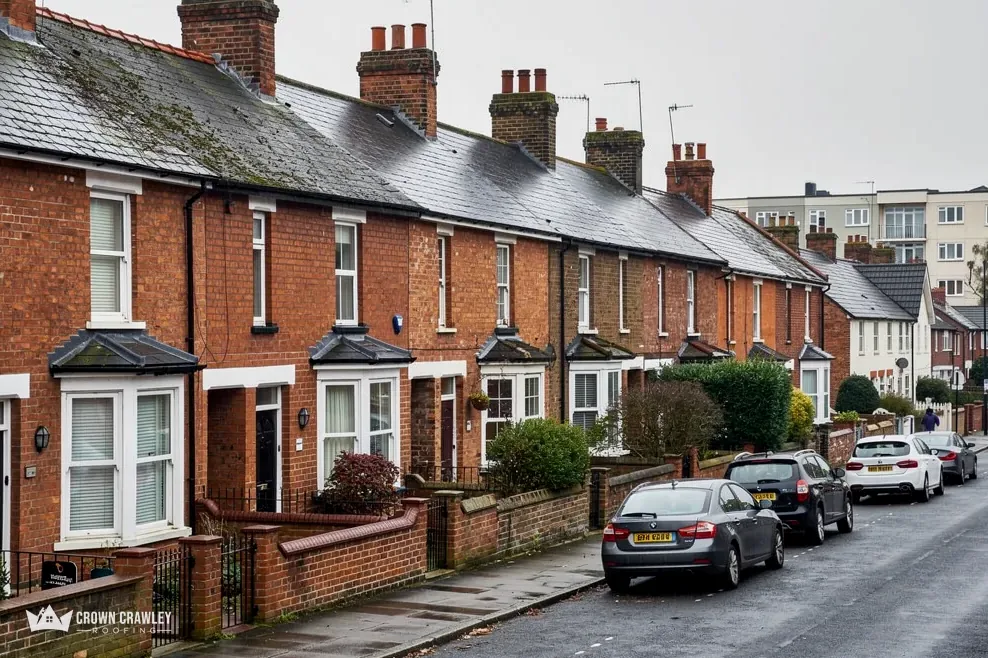
Warnham sits in the Weald on a flat platform between two hills, on tributaries of the River Arun. Horsham District Council's conservation area appraisal says the ground is Weald clay, with Horsham Stone outcropping in places, a calcareous, flaggy sandstone used as a roofing material and for flooring. The clay supplied local brickmaking, and bricks from the Warnham brickworks, set up west of Warnham station by 1896, have a more purple hue than the usual warm orange. Stone for the roof, clay for the wall: the village was built from what lay under it.
What does that mean for a Warnham roof?
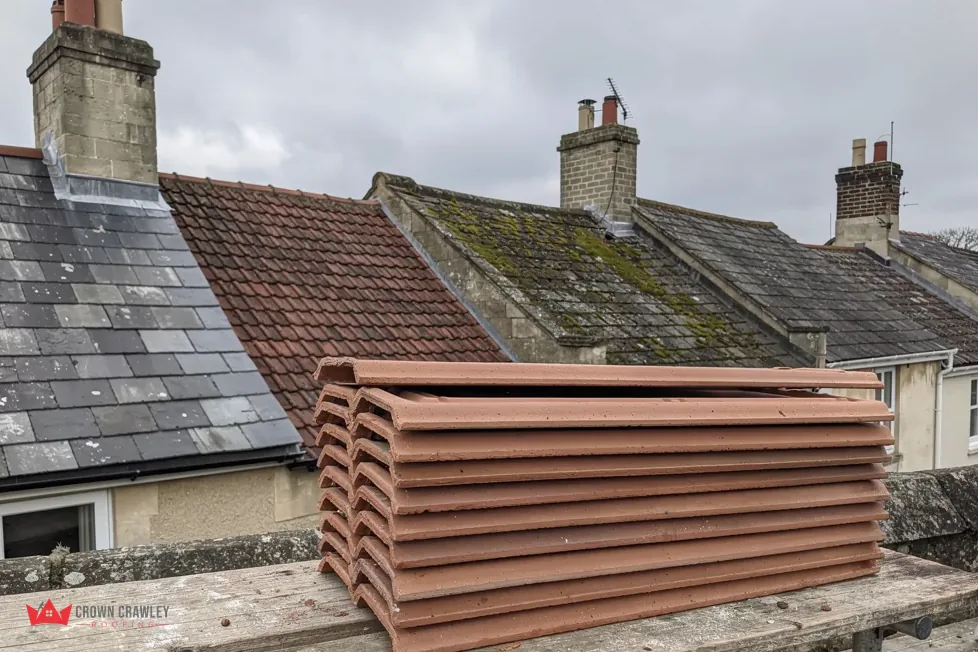
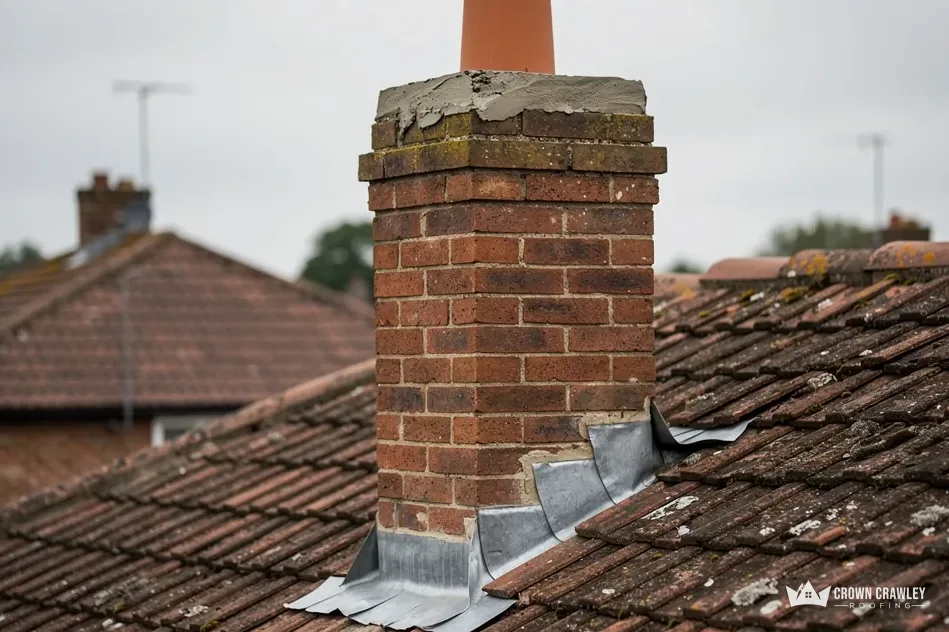
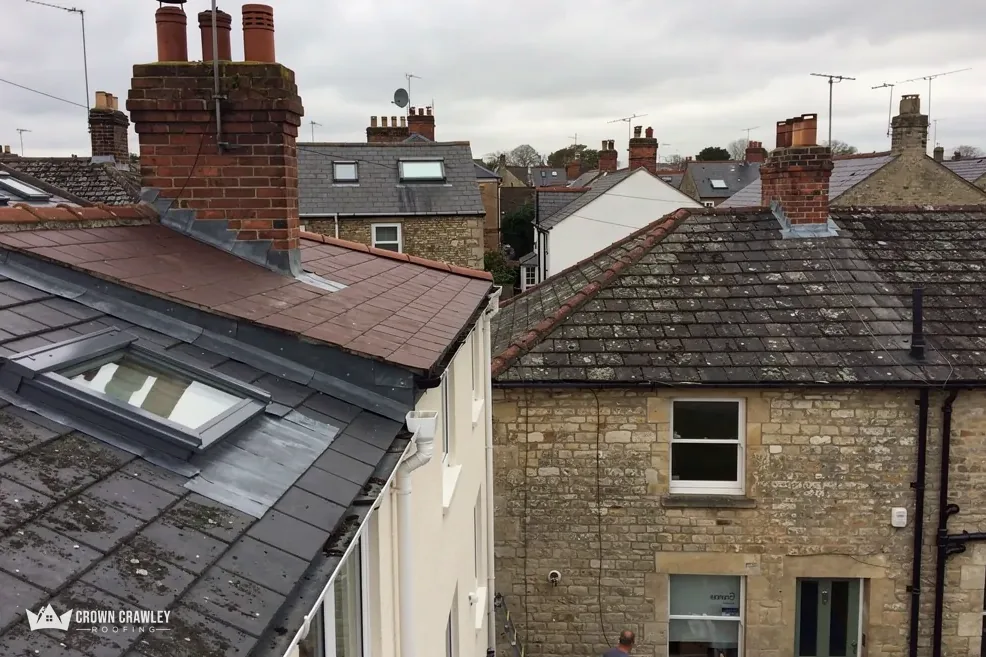
It means a roof here can differ from the one next door in ways you cannot see from the road. The covering may be stone, slate or clay tile. The walls under it may be orange or purple-hued brick, with details that were repaired at different times by different hands. We therefore start with an open mind and a camera. From the garden or lane we look at the ridge line, the hips and the gutters. Then we go up to examine the tiles close to, and into the loft to see the roof from beneath, where daylight, damp timber and rusting nails give the game away.