What roofing materials does the appraisal describe?
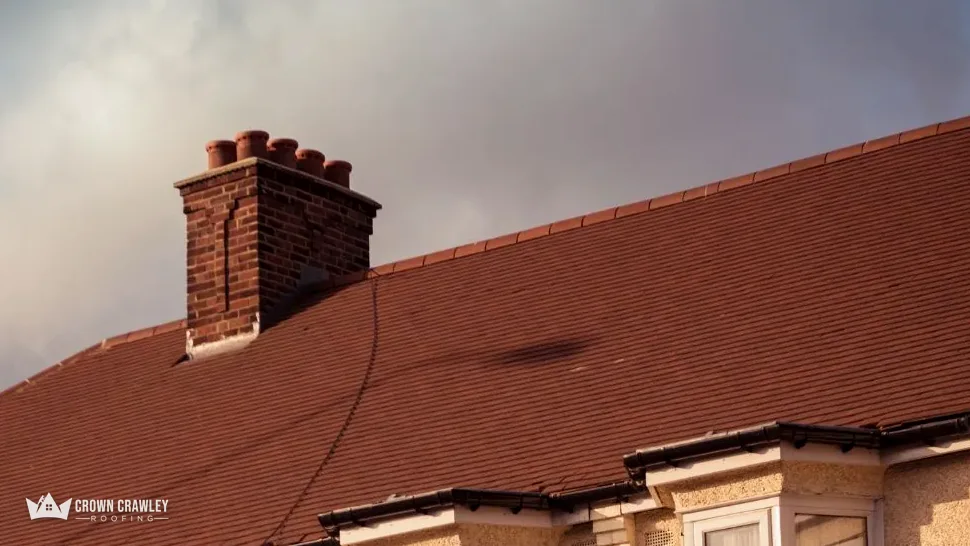
The village's oldest buildings are timber-framed, often gabled, and roofed with Horsham Stone or handmade clay tile. Victorian houses have gable roofs of tile or slate. Many humble timber-framed buildings were later refaced in brick, hanging tile or weatherboarding, so the wall you see may not match the age of the frame behind it. New houses and alterations in the later 19th century were almost always in the revived vernacular style: red brick and tile, timber framing, turrets and bargeboards. We never assume what a given street is made of, because that general description may not fit your roof. Each type fails in its own way, and the survey looks for that way. A stone slab can crack or slide, a handmade tile can flake at the edge, a slate can lose its fixing, and a bargeboard can rot at the foot where water sits. Because these coverings differ, a figure for one house says little about the house next door, which is why every quote follows its own survey.
How do you judge a clay-tile roof's remaining life?
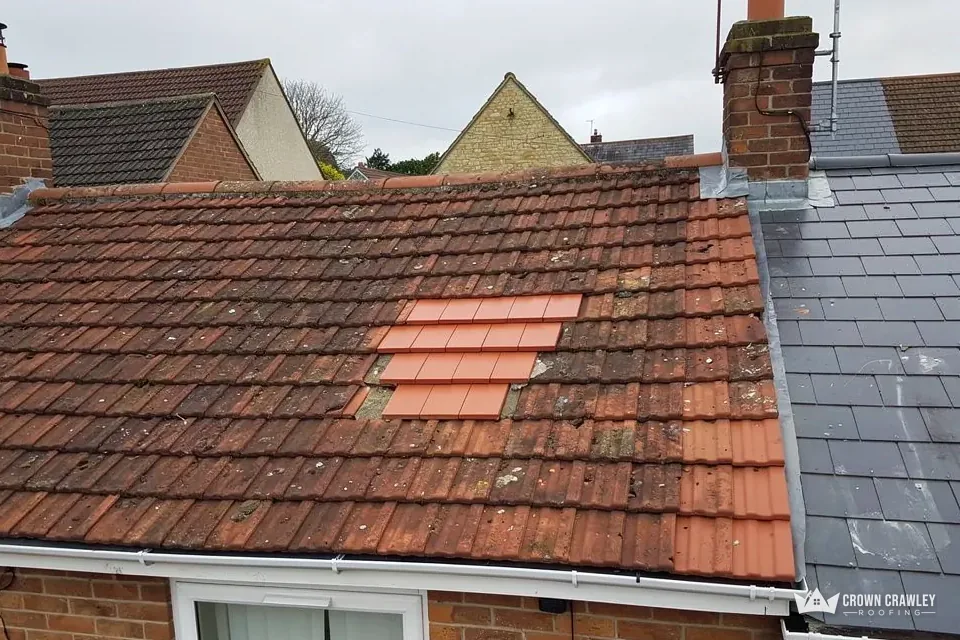
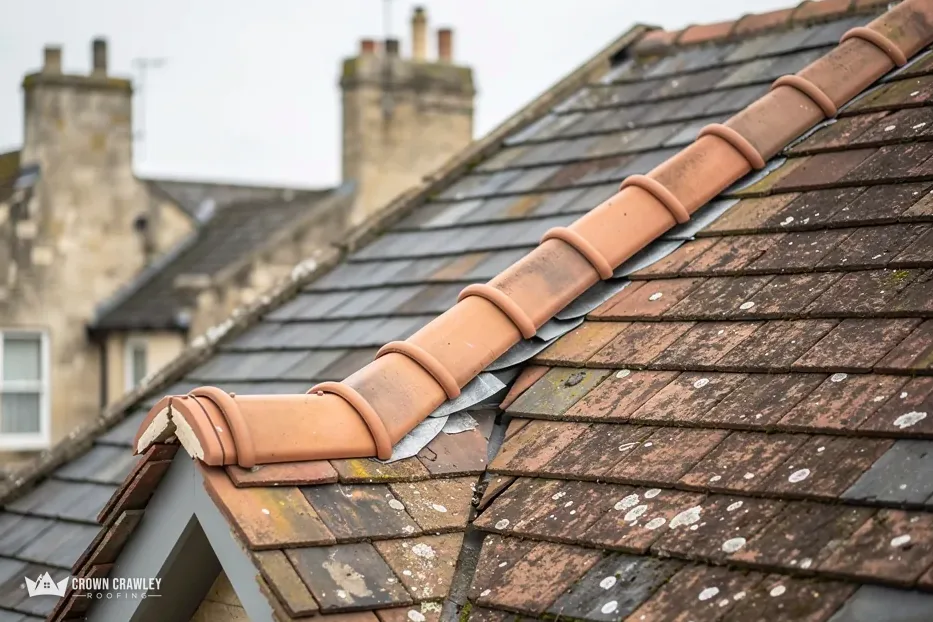
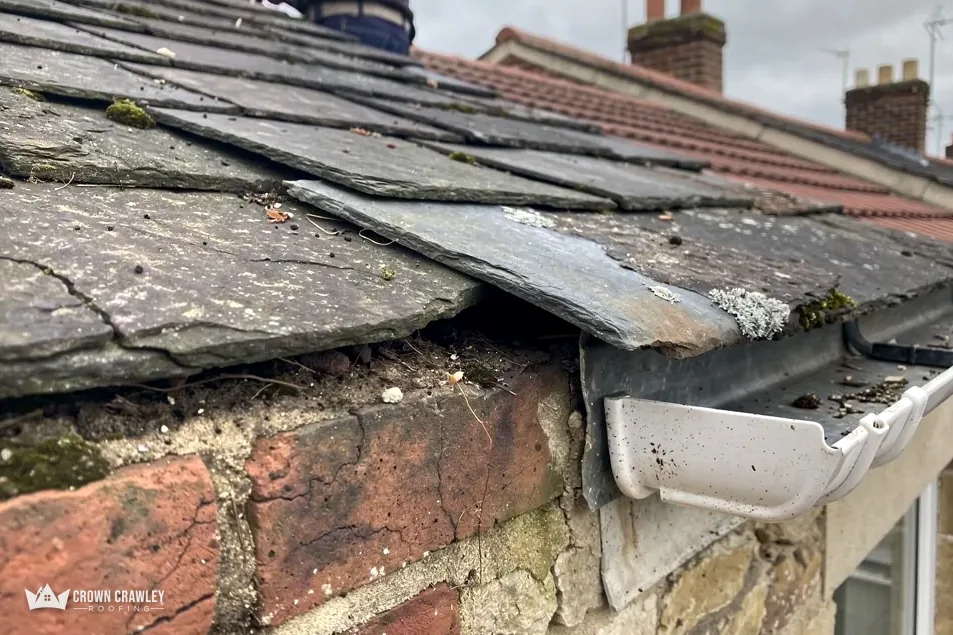
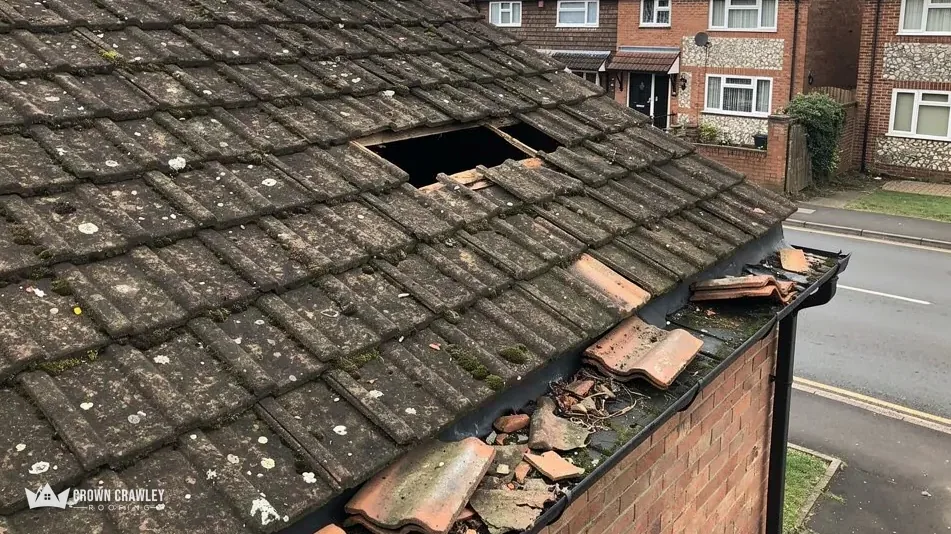
By looking, not by counting birthdays. Clay tile has a 60-year floor in Building Research Establishment figures, yet buildingconservation.com warns that the figure means little for old peg tiles, which vary so widely. Handmade tiles vary in thickness, camber and colour, which gives an old roof its uneven look and makes a modern replacement hard to match. We check each tile for cracks and flaking at the edges, and sound ones go back on while the best of the rest are kept for repairs. Slate, if well maintained can last 100+ years, says the Confederation of Roofing Contractors, though a corroded nail will drop a slate long before the stone wears out. The pitched roofing page covers the tile, slate and batten work we carry out.