Roofers in Ifield Wood

Roofs among the trees and older houses west of Ifield village.

Ifield Wood began as common land belonging to Ifield manor, and its houses include listed cottages and former farmhouses. We look at what is really on each roof, then give you one price in writing.

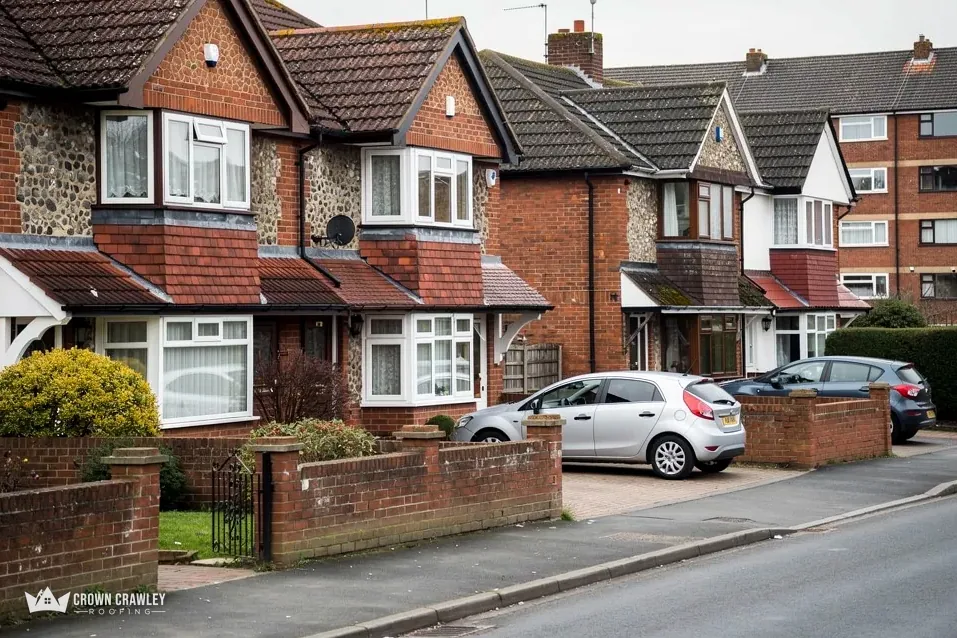
Terraced brick houses with flint detail along a wet street

Ifield Wood roofs, ridge to eaves

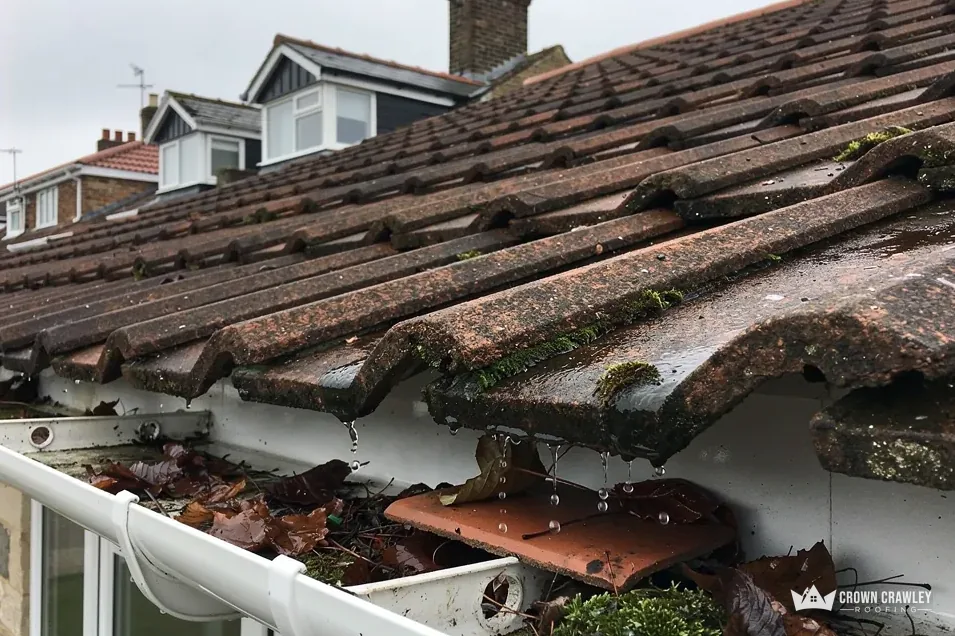
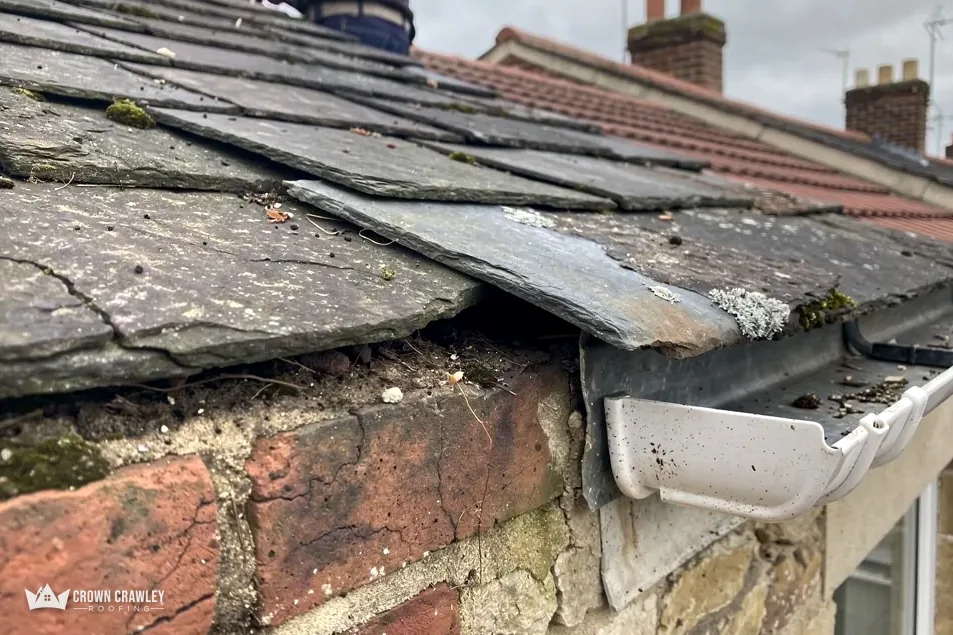
Slipped tiles lying in a blocked gutter

Houses beside the old common

In 1985 the wood was still common land, partly young woodland and partly grass clearings. Where a house stands close to trees, we check the gutters, valleys and tile faces for leaf debris, silt and moss.

Tiled roof beside tall trees

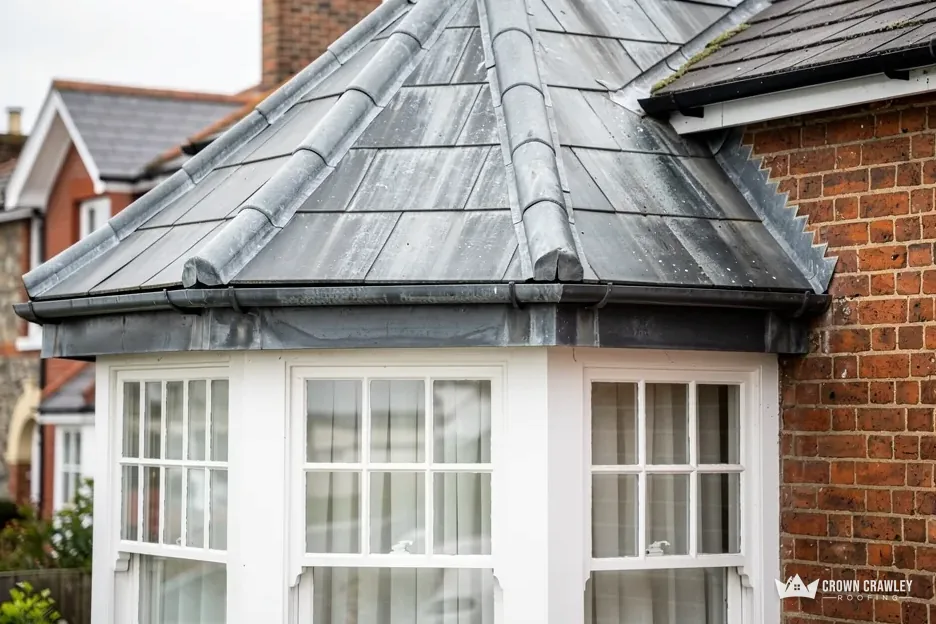
Lead-covered bay window roof on a brick house

Cottages with timber cladding

Oak Lodge is a small cottage later weatherboarded. On any timber-clad building we study the joint where roof meets wall, because the flashing there decides whether rain reaches the boards.

Lead flashing where roof meets wall

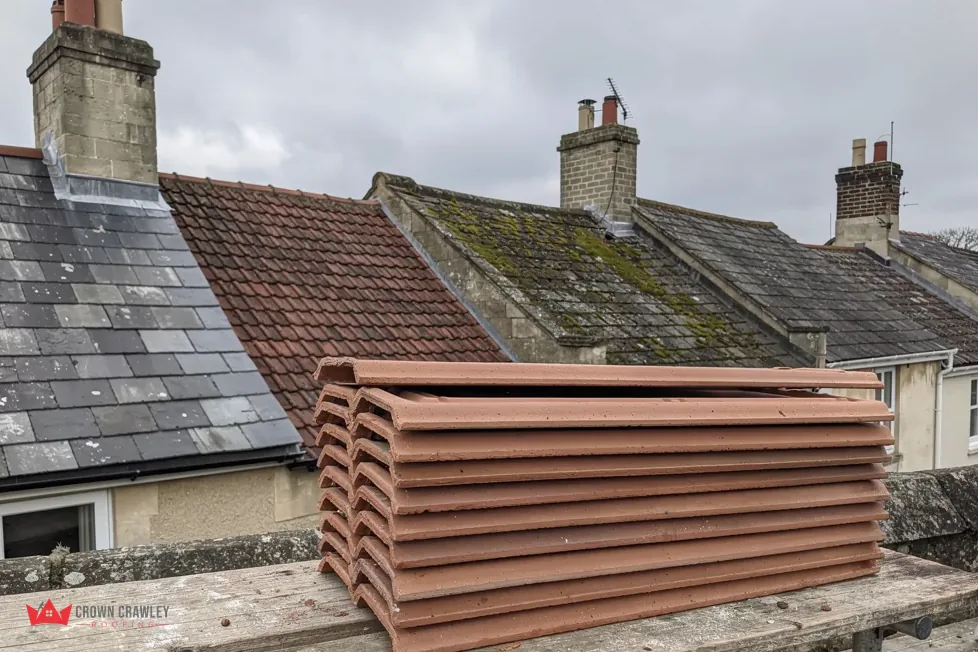
Stack of clay ridge and hip tiles on a flat roof

Farmhouses and hall houses

Red Gables was Ifieldwood Farm, and Pockney's Farm probably had an open hall. On older rural buildings we read the timbers, the pitch and the tile type before we suggest any repair.

Older tiled farmhouse roof

Ifield Wood, west of Ifield village

Map of Ifield Wood and the neighbourhoods around it, with Crawley for reference.

Ifield Wood is a rural area of woodland and scattered houses, just over the borough boundary in Horsham district and the parish of Rusper.

Distance
3.1 road miles from Crawley, to the north-west
Drive
About 9 minutes
Council
Horsham District Council and West Sussex County Council
Planning authority
Horsham District Council
Listed nearby
Oak Lodge and Pockneys Farmhouse, both Grade II
Get a free quote

Ifield Wood roof log

Reading roofs among the trees and the old houses

Three short chapters on woodland around a roof, the older cottages and farmhouses, and the Horsham District rules that matter when a repair becomes a bigger job.

Stage 01 · First look

Roofs close to Ifield's old common

Ifield Wood grew from a common of Ifield manor, so trees, leaf fall and shade are part of reading a roof here.

Ifield wood was one of the commons of Ifield manor from the 17th century, and the Victoria County History records that in 1985 it was still common land, partly young woodland and partly grass clearings. That setting shapes how we look at a roof here. A house built among trees and clearings spends part of the day in shade, and shade is where tiles stay damp, moss gets a hold and leaves pile up in the very places water is meant to run out.

Do trees near the house change what you check?

They change where we look first. A valley is the inside angle where two slopes meet, and it takes the heaviest flow of rain on the whole roof, so a few handfuls of leaves there can turn a steady trickle into an overflow. We lift the debris, check the lining and confirm the water reaches the gutter. The gutter gets the same attention. A downpipe choked with silt makes the gutter spill onto the brickwork, or soaks the fascia board (the long timber that carries the gutter) until it softens. Our gutters, soffits and fascias page explains how we repair or replace them.

On a woodland-edge survey

Gutters
Clear of leaves and silt
Valleys
Debris lifted, lining still whole
Tile faces
Moss, lichen and hairline cracks
Fascia
Dry, sound timber behind the gutter
Branches
Clear of tiles and ridge
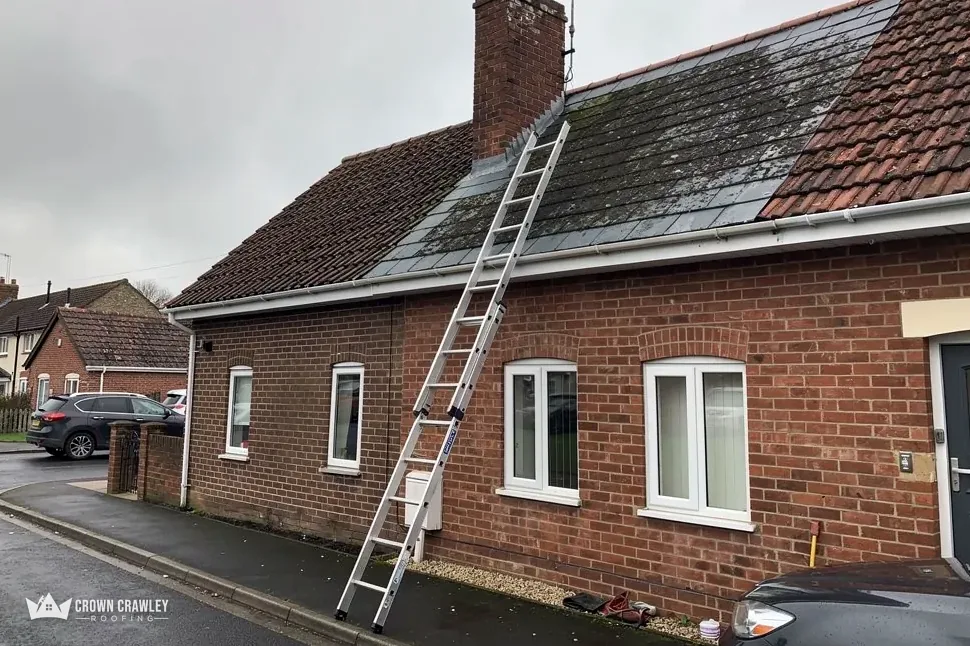
Brick bungalow with a ladder leaning against its tiled roof

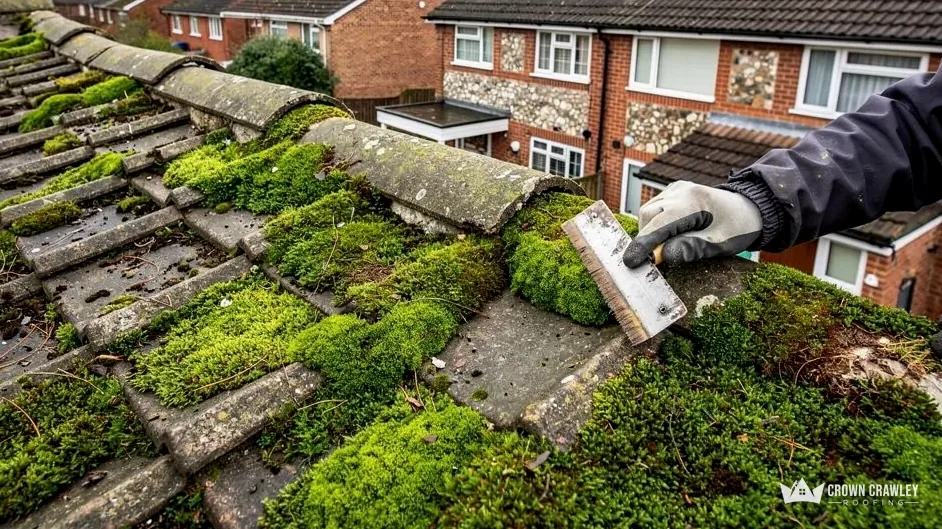
What about moss and green growth on the tiles?

Moss lifts tile edges, holds water against the surface and drops its debris into the gutter below. Taking it off by hand is slow but gentle, and a treatment authorised for the job slows its return. We follow the product label and keep the water pressure low, because Marley warns that a powerful jet wash can harm the face of a tile or slate and shorten its life considerably. Cleaning will not mend a tile that is cracked, or one whose nib (the lug that hangs it on the batten) has worn away, so we mark those for repair first. Our roof cleaning and moss removal page shows how a clean runs.

Why does the loft matter under shaded slopes?

A slope that stays damp puts more moisture into the timber, so the loft needs air. Where the underlay is non-breathable felt, Marley's guidance on BS 5250 asks for a gap of 10mm along the eaves on pitches over 15 degrees, and 25mm on flatter ones. Quilt shoved right into the eaves from the loft side closes it off. We check it from inside, clear it and tell you where the damp has been getting in.

Keep reading

Branches matter as well. A limb that rubs the tiles in wind wears the surface, and one that overhangs the ridge drops twigs behind the ridge tiles. Trimming sits with a tree surgeon, so we point out the branches and you decide.

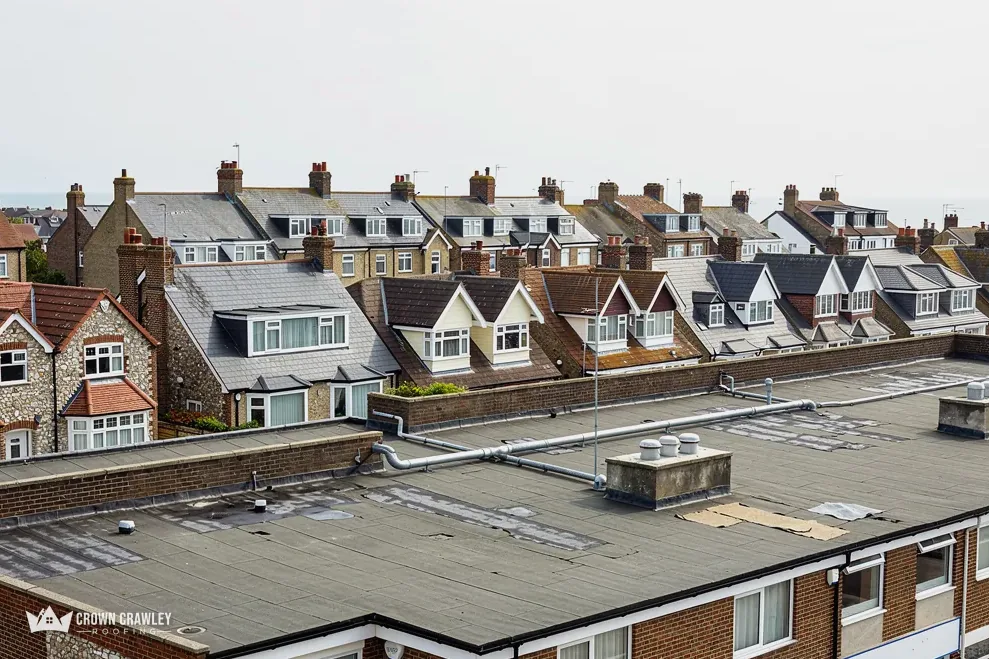
Flat roof in the foreground of a street of dormer-roofed houses

Stage 02 · Older houses

Cottages, farmhouses and timber cladding

The older houses recorded near Ifield wood, from a weatherboarded cottage to farmhouses, need a slower look than a roof of recent build.

The Victoria County History names several older houses near the wood. Red Gables was formerly Ifieldwood Farm, Oak Lodge is a small cottage later weatherboarded, and Pockney's Farm probably had an open hall. The National Heritage List gives Oak Lodge Grade II, first listed in 1980, and Pockneys Farmhouse is Grade II as well. We mention them because they show the sort of building that surrounds the wood: old, rural and put together in stages rather than to a single plan.

What goes wrong where tiles meet weatherboarding?

Start at the wall. Where a tiled roof meets cladding, rain is carried off by lead flashing, which is a strip tucked into the wall and dressed over the tiles, and by soakers, the folded pieces of lead that sit under each course of tiles along the joint. When that lead lifts, cracks or pulls away, water runs behind the boards, and the first sign is often rot in the timber rather than a stain on a ceiling. We expose the joint, show you the lead with photos, and repair or replace it. Our lead work page covers codes and detailing.

Terms on an older roof

Weatherboarding
Overlapping timber cladding on outer walls
Soaker
Folded lead piece under tiles
Flashing
Lead strip sealing roof-to-wall joints
Open hall
Hall open to the rafters

An older roof is read slowly: timbers first, tiles second, price last.

What should be checked on a farmhouse or hall-house roof?

A building that grew in stages often has several roofs in one: a main ridge, lower ridges over extensions, valleys where they meet, and pitches that differ from one part to the next. Each part gets its own look. We check the rafters and the battens, the narrow laths that carry each course of tiles, then the underlay, then the tiles. Old clay tiles vary in size and thickness, so we keep sound ones for reuse and match any replacements for colour and profile as closely as we can. For clay, the Building Research Establishment expects 60 years at least, though an old peg tile may tell you little about what is left, so the survey says more than an age does.

Who do I ask about a listed cottage near the wood?

Horsham District Council's planning team, before the work starts. Where the work would touch the character that earned the listing, the council's consent comes first. Matching the covering already there is the sensible starting point, and we price it in writing with photos you can pass on to the council or a conservation officer.

Stage 03 · Permissions

Horsham District rules for an Ifield Wood job

Ifield Wood falls under Horsham District Council for planning and building control, with West Sussex County Council as the highway authority.

Ifield Wood sits just across the boundary from Crawley, so Crawley Borough Council's own rules for the town are not the ones that apply here. The planning authority is Horsham District Council, and so is building control, which the council runs as Sussex Building Control. Crawley's Ifield Village Conservation Area lies close by on the Crawley side of the boundary, so a house at the eastern edge of Ifield Wood is worth checking against it with Crawley Borough Council. Like-for-like repair work raises no planning question, though a listed building is a separate matter, as above.

How big a re-roof can go ahead without Building Regulations approval?

On the Planning Portal's test, no application is normally needed when under 25 per cent of the building envelope and under 50 per cent of the roof is involved. A replacement covering that is 15 per cent heavier or more brings approval in, and so does one that would react differently to fire. On a bigger job Horsham's building control team hears from us before any date goes in the diary. For planning questions about a loft window or dormer, see our post on planning permission for roof work.

Before the scaffold goes up

Planning
Horsham District Council
Building control
Horsham District Council, as Sussex Building Control
Scaffolding
Highway licence for road poles
Conservation area
Ifield Village, across the boundary
Wildlife
Pause and ask if bats appear
Brick semi-detached houses with tiled roofs and parked cars

Is a road licence needed for scaffold here?

Scaffold on a verge or pavement is a highway matter, and Highways Act 1980 section 169 bars it without the highway authority's licence. For Ifield Wood that authority is West Sussex County Council, and its published price for one month is £266. Scaffold kept wholly on your land sits outside the scheme. Whoever applies, we make sure the licence exists before the poles arrive.

On a bigger job the price is set by the area of roof, how easy it is to reach, the covering you choose and what is found beneath the old tiles. You get a single written total once we have climbed up and photographed the roof. When you compare it with any other quote, check whether it includes VAT and scaffolding, since either can change the total.

What if bats or a nest turn up?

Woodland edges suit wildlife, so at the survey we watch for droppings, staining and nesting material in the loft and under the eaves. Bats and their roost sites carry legal protection, and so does an occupied nest. Should we spot any sign, the job pauses, you see what we saw, and we agree the next step together.

Your first step is a ground-level photo of the worrying area, sent with your postcode.

Ifield Wood roofs: common questions

How do trees near an Ifield Wood house affect the roof?

Trees add leaves and twigs to valleys and gutters, shade that keeps tiles damp and moss that lifts tile edges. A blocked gutter then spills onto the wall or soaks the fascia. We clear the debris, check the valley lining and gutter fall, and tell you which branches to raise with a tree surgeon. One written price follows.

Can an older cottage near the wood keep its original tiles?

Often the sound ones can stay or be reused. We lift a few to see the battens and underlay beneath, keep tiles that ring true and match replacements for colour and shape. Old clay tiles vary a lot, so the survey photos show which are worth keeping and which have failed. A listed house needs the council consulted first.

Which building control team deals with Ifield Wood?

Ifield Wood is in Horsham district, so building control is Horsham District Council, which trades as Sussex Building Control. It is not Crawley Building Control, whose own rules cover the borough. For a larger re-roof, a new covering of different weight, or a loft change, ask Horsham before work begins and we will build the date around its answer.

What if bats are found when work starts on my roof?

The work pauses while we show you what we saw. Roost sites for bats are protected, and government guidance names roof repairs and replacements as work that can harm them. You may need advice from a bat specialist before the job restarts, and we plan the programme around that, so nothing is rushed while the specialist's advice comes in.

Tell us which part of the roof worries you

A clear photo from the ground of the gutter, valley or slope in question, sent with your postcode, lets us book the survey.

01293 974253

10-year workmanship guarantee, in writing.

Call Get a free quote