Roofers in Charlwood

Roofs in a clay village with listed buildings and a conservation area.

Charlwood is a compact Surrey village on Wealden clay, where Saint Nicholas church is Grade I and a conservation area covers part of the centre. We photograph your roof first and quote after.

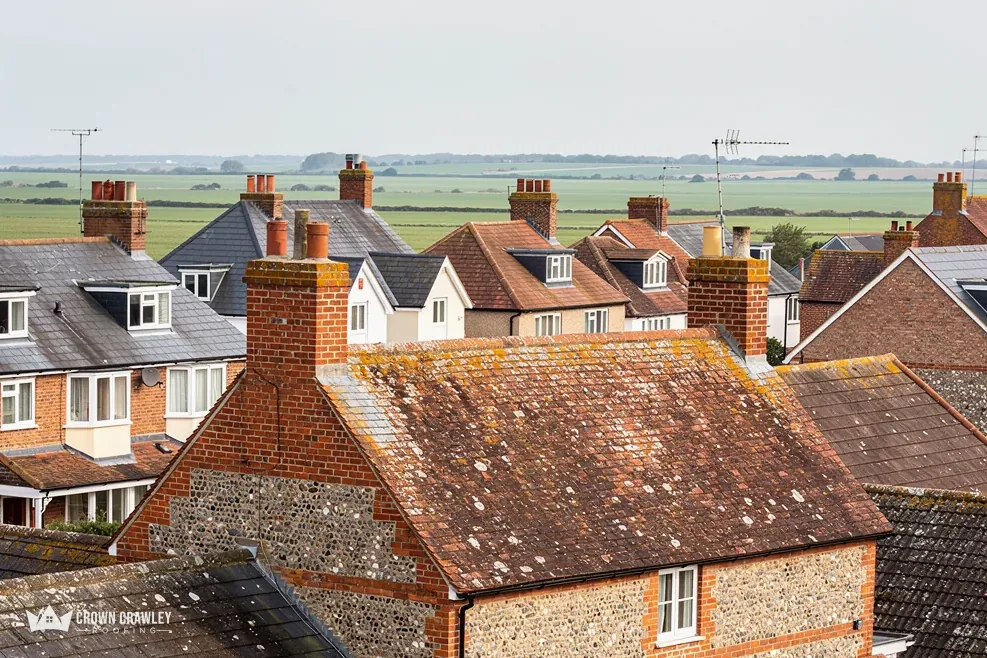
Terraced brick houses with flint detail along a wet street

The roofs that shape Charlwood

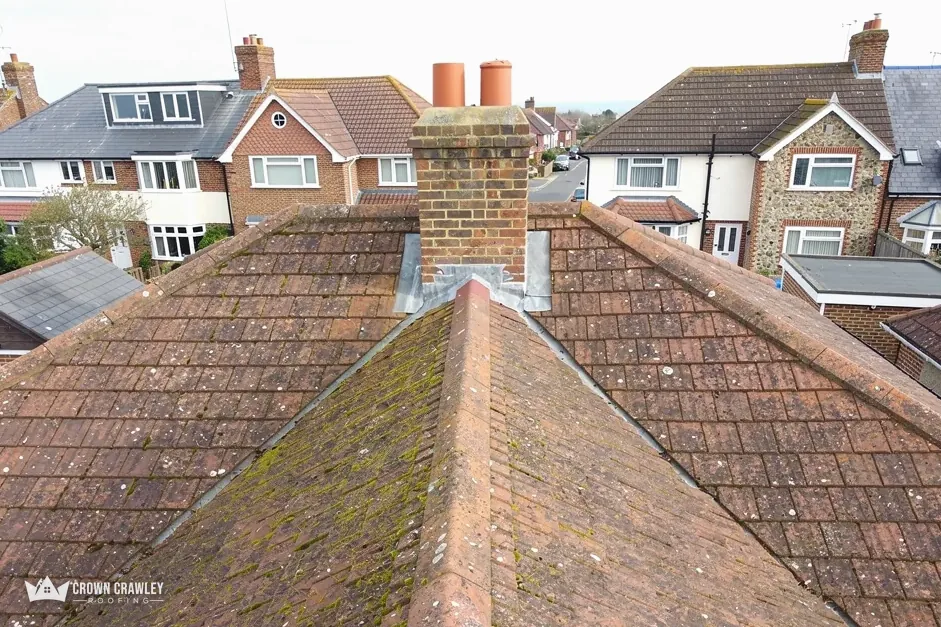
Hipped tiled roof with a chimney at the ridge

A Grade I church and Grade II* neighbours

The Church of Saint Nicholas is listed Grade I, while Providence Chapel and The Manor House are both Grade II*. Roof work on listed buildings follows listed rules, not ordinary repair rules.

Church roof in stone and tile

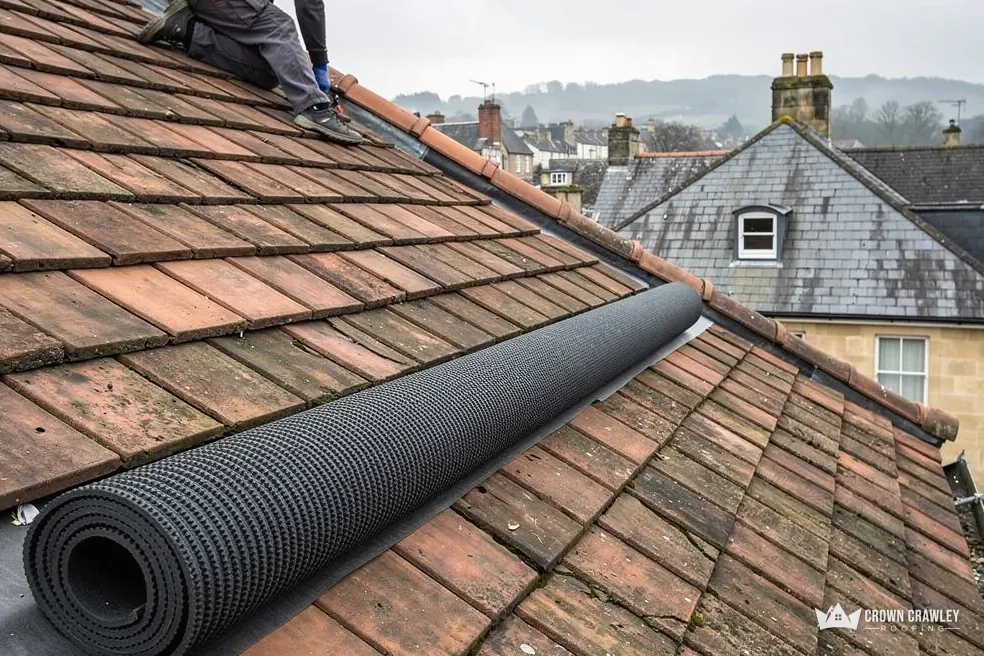
Roll of roofing membrane lying on a clay tiled roof

Part of the village is protected

The Charlwood conservation area takes in part of the village. Changing how a roof looks there can need the council's consent, so we ask Mole Valley first and match what is already there.

Village roofs in clay tile

Brick chimney with lead flashing on a clay tiled roof

Brick works on Wealden clay

In 1911 the parish was agricultural with some brick works, on Wealden clay. A parish record says nothing certain about one house, so your own covering is identified on the ladder.

Brick chimney and tiled roof

Charlwood, on the Sussex border

Map of Charlwood and the neighbourhoods around it, with Crawley for reference.

Charlwood is a compact village on the Sussex border, seven miles south-west of Reigate, with streams that run to the River Mole.

Distance
4.2 road miles from Crawley, to the north-west
Drive
About 10 minutes
Council
Mole Valley District Council and Surrey County Council
Planning authority
Mole Valley District Council
Conservation area
Charlwood
Population
902 (Census 2021, Charlwood built-up area)
Get a free quote

Stage notes: Charlwood

Reading roofs in a Wealden village

How the parish ground and its ironworking past fit together, which buildings carry listings, and what Mole Valley and Surrey ask once a job grows.

Stage 01 · Background

Wealden clay and old ironworking

Charlwood's ground and history are well recorded, but they tell us about the parish, not about the tiles on your house.

The record of Charlwood parish on British History Online says it lies entirely on Wealden clay, apart from a ridge of Paludina limestone, known as Sussex marble, that rises to 385 ft at Stan Hill, Norwood Hill and Horse Hill. Charlwood sat in the Wealden iron district and was one of the ironworking parishes exempted from the Elizabethan Act against cutting timber of a certain size. By 1911 it was farming country with some brick works, and the large village green of Charlwood Common had been enclosed apart from a small recreation ground.

Does Wealden clay tell a roofer anything?

Very little about a roof. Clay in the ground says nothing about whether your house wears clay tiles, concrete tiles or slate, and we never guess a covering from geology or a village name. We go up, photograph the tiles, ridge (the line along the top), hips and valleys (the sloping joins and the inward folds between slopes), the chimney and its flashings (metal strips that seal a joint), and then check the loft from inside. You get the pictures, our reading of them and one written total price. If the survey shows a repair is enough, that is what the price covers, and if it shows more, we explain where the wear sits.

On the ladder in Charlwood

Tiles
Whole, level and well lapped
Chimney
Pointing, flaunching and lead sound
Timbers
Battens and rafter ends firm
Gutters
Joints dry, outlets clear
Loft
No daylight or damp staining
Dormer window with white cladding in a clay tiled roof

How long should a village roof last?

The published figures give a feel for it without promising anything. Slate that is well maintained can last 100+ years, according to CORC's guide to roofing materials. The Building Research Establishment puts a minimum life expectancy on clay tiles at 60 years, though for old peg tile that figure is called an unreliable guide. For concrete tiles Marley gives around 60 years, with a warning that the figure is no guarantee or warranty of longevity. The battens, rafters and underlay behind the covering follow their own timetable, and that is what a survey checks. A tile can look fine from the lane while the timber under it has gone soft, so we check from inside the loft as well.

What about chimneys and lead?

A chimney stack usually has lead flashings round its base. Lead flashing can last for over 80 years in good order, so a stack that leaks may need only the failed flashing, the flaunching (the mortar that holds the pot) or the pointing renewed. Our lead work page sets out which lead thickness suits which joint, and our chimney repairs page covers stacks, pots and cappings. Where a stack has to be rebuilt above the roofline, you will see the cracked brick or open joints in our photographs before the quote reaches you.

Flint-walled house with a mossy clay tiled roof overlooking fields

Stage 02 · Heritage

Listed buildings and the conservation area

Charlwood has three recorded listings at Grade II* or above and a conservation area, so the first question on many roofs is permission.

Historic England records the Church of Saint Nicholas as Grade I (list entry 1248610, first listed on 11 November 1966). Providence Chapel is Grade II* (list entry 1277978) and The Manor House is also Grade II* (list entry 1248380). Some of the village falls inside the Charlwood conservation area on the planning.data.gov.uk dataset, which holds boundaries supplied by the council.

How are church roofs treated differently?

The Church of Saint Nicholas is recorded as a Church of England place of worship in use. Under the ecclesiastical exemption, repairs to a building like that are authorised by the denomination's own process, a faculty in the Church of England, instead of listed building consent. Other faiths follow different rules, and some still need listed building consent. Planning permission can also apply to work that affects the outside of a listed place of worship. Providence Chapel, listed at Grade II*, is a reminder that the route has to be checked building by building, since a name alone does not settle it. Anyone responsible for such a building should ask the denomination and the council which route applies before inviting quotes.

Terms you may be asked

Grade I
Listed as of exceptional interest
Grade II*
Listed as particularly important
Faculty
Church of England consent route
Conservation area
Area with protected character
Consent
Written approval for changes

What does the conservation area change for a house roof?

A conservation area narrows some of the planning freedoms a householder normally has, and the local planning authority here is Mole Valley District Council. For a repair that refits matching tile, ridge and verge, nothing changes in practice, but a different covering can alter the look of the street and needs a conversation first. Mole Valley also holds the boundary map, so its planning team can say quickly whether your address is affected. Our answer on re-roofing in a conservation area goes through the questions to ask. A phone call to the council costs a day at most, while a refusal after work has begun costs far more.

In a listed or conservation setting, the council's answer comes before our price.

How do we protect the character of an old roof?

We photograph every slope before work, record the tile size and the batten gauge, and keep sound tiles for reuse where we can. When a covering has to be matched, we take a sample to the supplier and compare colour and texture in daylight. Valleys, abutments and the junction with a chimney get lead or a good substitute dressed to suit the building. Because pitched roofs of this age vary a great deal, the work is described in your written price in terms you can follow, with the photographs beside it. See our pitched roofing page for how we repair tiles and battens.

Stage 03 · Permissions

Mole Valley rules behind a re-roof

Charlwood is in Surrey, so a bigger roof job here involves Mole Valley, Surrey County Council and a shared building control team.

Charlwood sits in Surrey, so its rules differ from those in the Sussex neighbourhoods a few miles away. Three bodies matter once a repair grows: the district council for planning, a shared team for building control and the county council for the highway.

Who handles building control in Charlwood?

Mole Valley names the Southern Building Control Partnership as its Local Authority Building Control team. The partnership began in 2017 and works as one team for Mole Valley, Reigate and Banstead, and Tandridge. For re-roofing, the Planning Portal's yardstick is whether the job stays under a quarter of the building envelope and under half the roof; inside both, an application is usually unnecessary. A new covering at least 15 per cent heavier, or one that would act quite differently in a fire, needs approval regardless. When a survey puts a job near those limits, we ask the team before we agree a start date.

Who you will deal with

Planning
Mole Valley District Council
Approvals
Southern Building Control Partnership
Highway
Surrey County Council
Notice
10 working days before scaffold
Fee
£208 per 28 day period
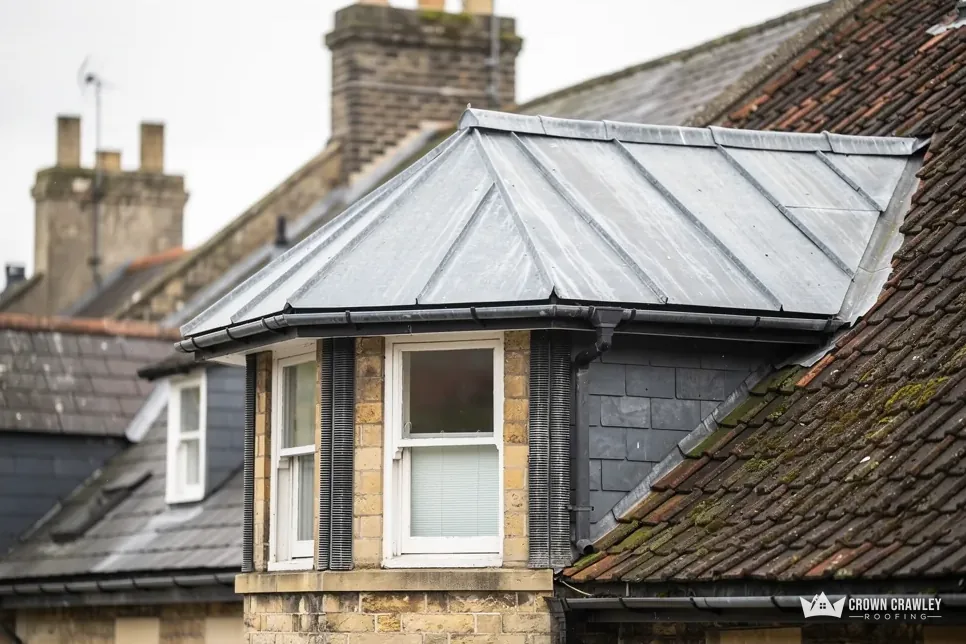
Lead-covered bay roof and chimney stack on a slate and tile roof

Does scaffold in Charlwood need a licence?

Poles standing on a public road or pavement require a scaffold licence, issued here by Surrey County Council as the highway authority. Surrey wants the application in no later than 10 working days before the poles go up, charges £208 per 28 day period, and renews at the same rate. Applicants must also supply a layout drawing. Who applies is worth settling early, and the scaffolding firm and we settle it between us so the dates stay in step. Where a drive or garden has room, the scaffold stands on private land and no licence is involved.

What if the survey turns up bats or a nest?

Under government guidance, every bat species and its roost sites are protected by law, and re-roofing can disturb a roost. Birds are covered separately: the Wildlife and Countryside Act makes intentional damage to a nest in use or under construction an offence. If a nest turns up under the eaves or in a gable, the timetable bends around it, and we tell you plainly what that means for the date. We look for droppings, staining and gaps at the eaves during every survey. If we find signs, work stops while we talk to you about the next step.

Keep reading

To begin, send a photograph of the chimney, ridge or slope that worries you, with your postcode, and say whether the house is listed or sits within the conservation area line.

Questions from the village

Can I repair a roof in the Charlwood conservation area with modern tiles?

Only after you ask Mole Valley District Council's planning team, because a different covering can change the look of the street. A repair using matching tiles, ridge and verge usually raises no such question. Send us photos and your postcode, and we will tell you what the survey shows and what to ask the council before any work starts.

Do listed church roofs in Charlwood need listed building consent?

It depends on the denomination and use. A working Anglican church such as Saint Nicholas goes through a faculty under the ecclesiastical exemption, while other faiths have their own systems or need listed building consent, and a closed church needs consent too. Planning permission may also cover exterior work. Check with your denomination and the council first, before inviting any quotes.

Which council do I ask about a Charlwood re-roof?

Mole Valley District Council handles planning, and the Southern Building Control Partnership is its building control team. Scaffold licences come from Surrey County Council as highway authority. Each answers a different question, so we tell you which applies to your job as soon as the survey shows how big the work is, and what to send them.

How much notice does road scaffold need in Charlwood?

Apply to Surrey County Council 10 or more working days ahead of the start; a licence costs £208 per 28 day period. It also asks for a layout drawing. We agree who applies with the scaffolder and plan the start around the licence. If the scaffold can stand wholly within your boundary, no licence is needed.

Show us your Charlwood roof

Photograph the stack, ridge or slope you are unsure about, add the postcode, and mention any listing.

01293 974253

10-year workmanship guarantee, in writing.

Call Get a free quote