When a fireplace is boarded up and the room is redecorated, it is easy to forget that the chimney above is still there, open to the sky and wired into the wall. Rain falls straight down an uncovered pot. Stale air sits in a flue with nowhere to go. The brickwork around the flue, never meant to stay wet, carries that moisture sideways into the breast, and a brown patch starts to spread on the wallpaper or the paint above the old fire.
Capping fixes the top end of that problem. A cap closes the flue against rain and birds, and a good one still lets air move through so the inside of the stack can dry. This guide covers why disused chimneys go damp, the main cap and vent options, how ventilation works on a sealed flue, what to sort out before anyone climbs the roof, and what the job typically costs. It also says when a cap is the wrong answer and the stack should come down. If you want the wider picture, our chimney repairs page covers the whole stack, from the pot to the flashing.
Why a disused chimney goes damp
A working chimney stays fairly dry because warm air from the fire moves up it all day. Take the fire away and that movement stops. What is left is a tall brick tube, open at the top, holding whatever the weather puts into it.
How does rain get down an unused flue?
Straight in through the pot. Wind-driven rain streams down the inner face of the flue, wets the lining or the bare brick, and soaks into the surrounding masonry. Soot and old tar in the flue hold on to that water, and the stain they make can bleed through plaster as a brown mark that keeps coming back however often it is painted over. Because the damp comes from above, patching the plaster below does nothing.
What about condensation inside the flue?
Even with no rain, a flue that has been blocked at the bottom and left open at the top still gains moisture. Warm, damp air from the room finds its way around the blocking and meets cold brickwork higher up, where it condenses. The reverse can happen too: a flue sealed tight at both ends holds still, damp air with no exit, and the breast stays clammy. This is why a plain slab of slate laid over the pot is a poor answer. It stops the rain, and it also stops the flue breathing.
Is it always the chimney?
No. Damp near a chimney breast can also come from failed flashing, cracked flaunching or tired mortar joints higher on the stack. A roofer should look at the whole stack before suggesting a cap, and our page on damp chimney breasts sets out how to tell the causes apart.
Caps, cowls and vented pots: what each one does
Several products get called a cap, and they do different things. The word to look for is what happens to the air.
What is a plain chimney cap?
A plain cap is a solid cover set over the top of the stack or over a pot: a slab of slate, concrete or clay held on corner supports, or a metal hood. It keeps rain out and is cheap. Used alone on a flue with no vent below, it risks the trapped-air problem described above, so it suits only a stack whose flue is vented somewhere else.
How is a ventilated cap different?
A ventilated cap covers the flue but has gaps or louvres at its sides, so air passes through and rain does not. It is the usual choice for a disused chimney with a flue that can breathe. Some are clay pots with a closed top and slotted sides, which look right on an old roof; others are metal or plastic hoods that fit over an existing pot.
Where do cowls come in?
Cowls are built to manage wind and draught on a flue that is in use. They do have a place on a capped flue, but a rain cap with a vent is the simpler and tidier fit. Our guide to chimney pots and cowls compares them.
What about bird guards?
A bird guard is a wire or mesh dome that stops birds nesting in the pot. It does not keep out rain, so it needs to go with a rain cap. Birds bring a legal point too: the Wildlife and Countryside Act 1981 gives an occupied nest legal protection. If birds are already nesting in the pot, the cap has to wait for the brood to leave.
Ventilating a capped flue so it can dry
A capped flue that cannot move air will start to hold damp again. Ventilation means giving the flue a way in and a way out, so that a slow current of air runs through it whatever the weather does outside.
How does the air move?
The top vent is part of the cap. The lower vent is a small grille set low in the fireplace opening or the chimney breast, normally at skirting height inside the room, or sometimes in a blocking plate across the opening. Air enters at the bottom, drifts up the flue and leaves through the cap. The gap does not need to be large; it does need to stay clear. A grille painted over, covered by furniture or blocked by a draught excluder stops the system working.
What if the fireplace has been sealed completely?
Then a vent should be added. Some homeowners are tempted to fill the opening and plaster over it, and the flue then relies entirely on the cap for ventilation. With no bottom vent the air in the flue stagnates, and the chimney breast can show damp patches within a season or two. A roofer who is asked to cap such a stack should tell you if the flue below is sealed, and ask a builder to fit the lower vent.
Can a vent make the room draughty?
A little, but the effect is mild next to the cost of repeated damp treatment. Choose a grille with an adjustable or louvred face. Our fuller answer on venting a capped chimney goes through placement and the common mistakes. If your flue also served a gas fire or boiler, read the next section before any capping happens.
What to check before the cap goes on
Capping is a short job, which makes it tempting to rush. A few checks in advance prevent the usual follow-up problems.
Was the flue ever used for gas?
If it served a gas fire or boiler, ask a qualified gas engineer to confirm that the appliance is disconnected and that the flue can be capped. A flue lined for gas may have a liner or terminal that needs removing as part of the work, and a cap fitted over a live flue is a safety risk. Your roofer should not guess; if the history is unclear, treat it as live until someone qualified says otherwise. Our page on the liner for a gas fire has more.
Has the flue been swept?
Years of soot and debris, and sometimes a fallen nest, can sit in the flue. Sweeping before capping clears loose material that would otherwise trap damp, and it shows whether the lining is sound. Your sweep can also confirm the flue is clear to the top before the cap goes on. If you are weighing who to call first, we compare a chimney sweep and a roofer.
Is the rest of the stack sound?
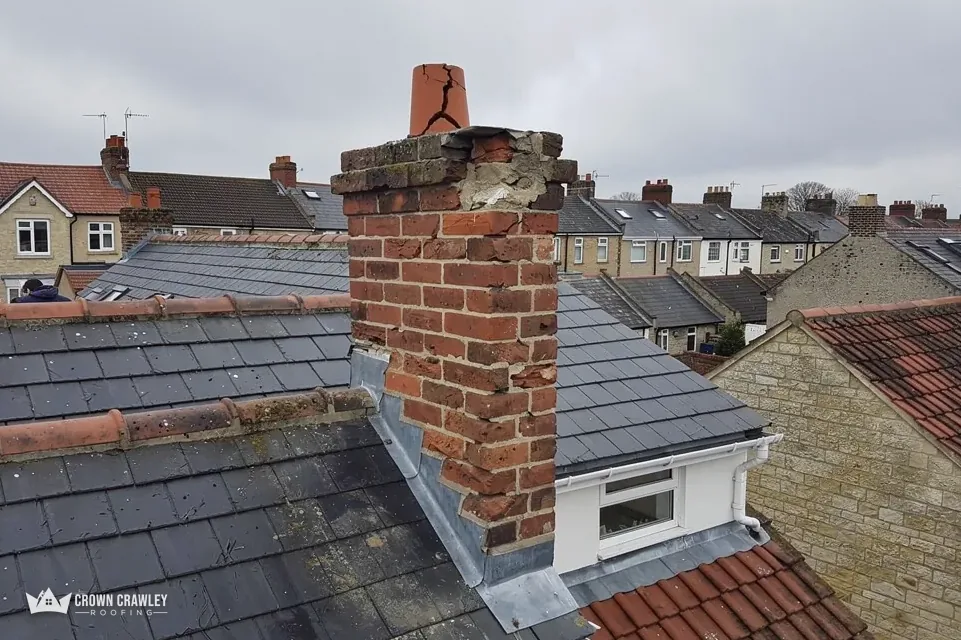
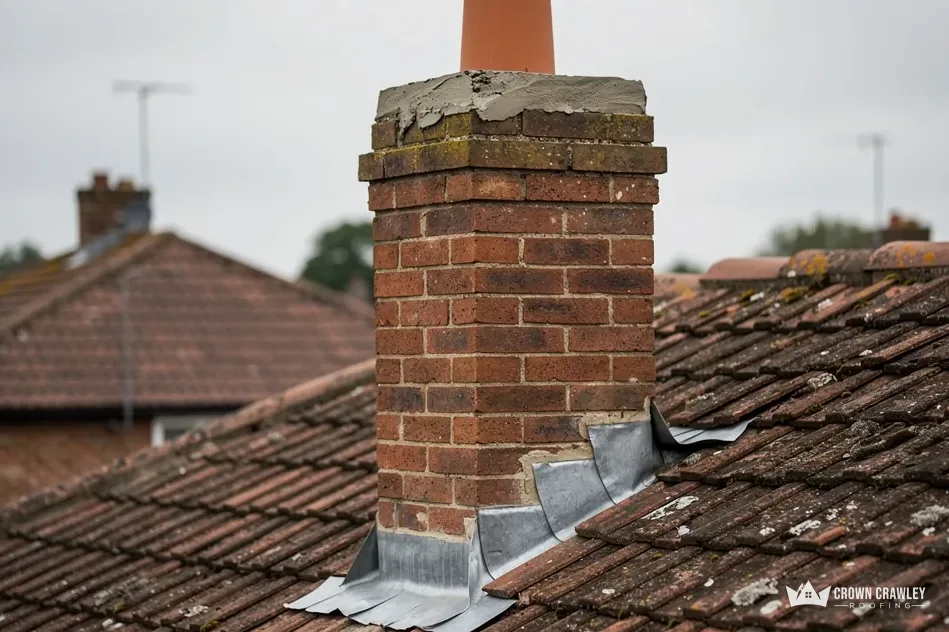
A new cap on a cracked pot or crumbling flaunching (the mortar collar that holds the pot) is wasted money, because the cap needs something solid to fix to. If the pot is loose, the flaunching is cracked or the joints are open, those repairs should come first or at the same visit. The survey looks at all of this and the written price covers the work together.
Finally, ask how the roofer will reach the top. Capping from a ladder is sometimes possible on a low stack; a taller one may need a roof ladder or a tower. A proper approach protects your roof tiles and the people working on them.
What capping costs
Capping is one of the smaller chimney jobs, but the total depends on how the roofer reaches the stack and what else the survey turns up.
What is the typical UK range?
Checkatrade's chimney repair cost guide, in its April 2026 figures, gives £180 to £520 for a chimney cap. Its flashing range is £250 to £1,000 and repointing £300 to £1,000 for comparison. Those sit nationally and say little about your chimney, and the guide does not say where VAT stands. Ask any quote whether VAT is included.
What pushes the price up?
Access, mostly. A cap on a low stack reached from a ladder is quick. A tall stack on a three-storey house, or one on the party wall of a terrace where nothing stands safely beside it, may need scaffold, and Checkatrade's repointing table (October 2026) reckons on about £1,000 for a mid-terrace ridge stack that needs it. The cap itself matters less: a ventilated clay pot costs more than a plain hood, but both are modest next to the cost of getting to the roof.
Extra work shows up in the survey rather than the pricing guide. A loose pot, cracked flaunching or failing lead flashing around the base will each be priced into the same written total once we have been up there. Where the stack is shared with a neighbour, say so early; our page on shared chimney stack repair explains how the work is usually arranged.
For other jobs, our chimney repair cost page sets out the national picture in more detail. If scaffold is being put up anyway, ask whether a second chimney job could share it.
When a cap is not the answer
A cap suits a sound stack on a house where the owner wants to keep the chimney and its look. Sometimes the better option is something else.
When does the stack need rebuilding?
If the brickwork leans, bows or flakes badly, a cap only decorates a problem. A stack in poor shape may need repointing, partial rebuilding or full replacement. Our page on the leaning chimney stack shows the signs that tell a repair from a rebuild.
Should a chimney that is never used come down?
Sometimes, yes. Removing a redundant stack above the roofline takes away a source of leaks, flashing and repointing for good. Checkatrade's October 2026 chimney removal guide gives £260 to £340 per metre for a stack and around £1,800 for a project, with removing a breast but leaving the stack at around £2,500. Taking out a chimney breast always brings building regulations approval into play, the Planning Portal advises, since the breast is structural. Capping sits outside all that, which is its attraction. See our guide to chimney stack removal for what removal involves.
What does the next step look like?
If you are not sure which side of the line your stack falls on, a survey answers it. We go up, check the pot, flaunching, brickwork and flashing, photograph what we find and give you one written price for the option that fits. Send a picture of the stack taken from the road, and tell us whether the flue ever served a gas appliance. We will start our checks from there.
Part of our Chimney Repairs in Crawley
Disused chimney questions
Can I just block the top of my unused chimney completely?
It is better not to. A fully sealed flue holds still, damp air and the breast can go clammy. A cap with side vents keeps rain out and lets the flue breathe, and a small grille low in the room completes the airflow so the brickwork dries.
Will a cap stop birds nesting in my chimney pot?
A closed or ventilated cap blocks the opening, so birds cannot get in and build. Never cap while a nest is in use, because the Wildlife and Countryside Act 1981 gives an occupied nest legal protection, so the cap waits for the brood to leave, then goes on.
Do I need building control approval to cap a chimney?
Fitting a cap is a different job from taking out a chimney breast, which the Planning Portal says always needs building regulations approval. For anything beyond a cap, such as altering the breast or the stack, ask your building control body before work begins, and keep the written confirmation.