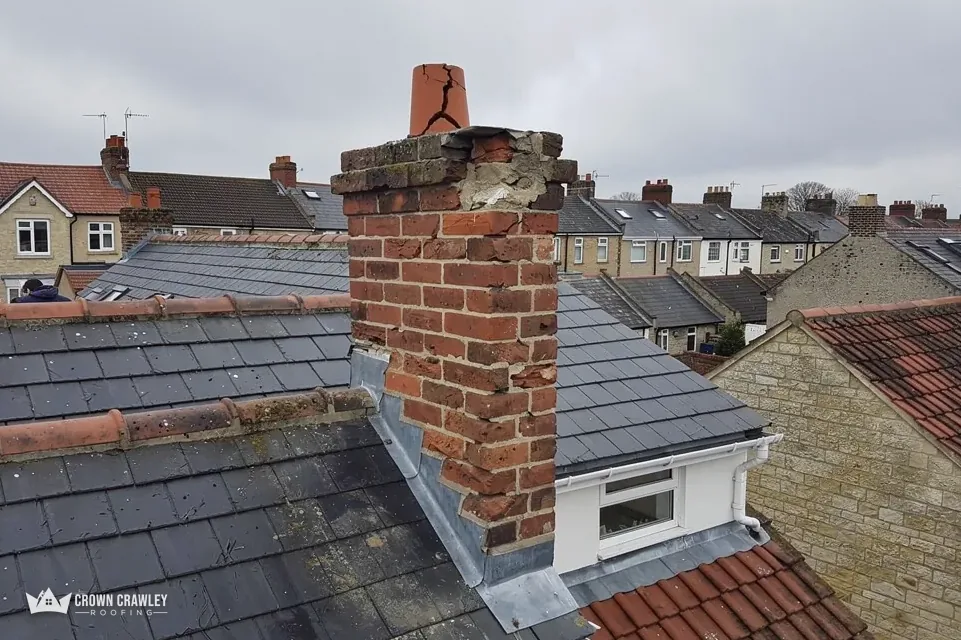
Repointing and patching suit a stack with sound brick and a few failed joints. A rebuild is for the stack where the brick itself has gone: faces that flake away, courses that have shifted, a top that rocks when touched. Rebuilding sounds drastic, yet it can cost less over the years than repairing the same weak brickwork three times.
A rebuild is also a chance to put right everything the old stack got wrong. The flue can be lined, the pots and flaunching renewed, the lead flashing replaced with the correct weight of sheet, and the brick chosen to match the house rather than whatever pallet happens to be to hand. The work is slow and very exposed to weather, which is why the sequence matters. This guide covers how to judge repair against rebuild, how the old stack is taken down and why that is done by hand, how a roofer matches brick and mortar, what happens to the flues, and how the new flashings are built in as the stack rises. It ends with the planning checks and the cost ranges you can hold a quote against.
When a rebuild beats a repair
The decision rests on the condition of the brick and the stability of the stack, not on a preference. A roofer who inspects the outside of the stack and then the part inside the loft is looking for a handful of tell-tale signs, and will show you the photos.
Which signs point to a rebuild?
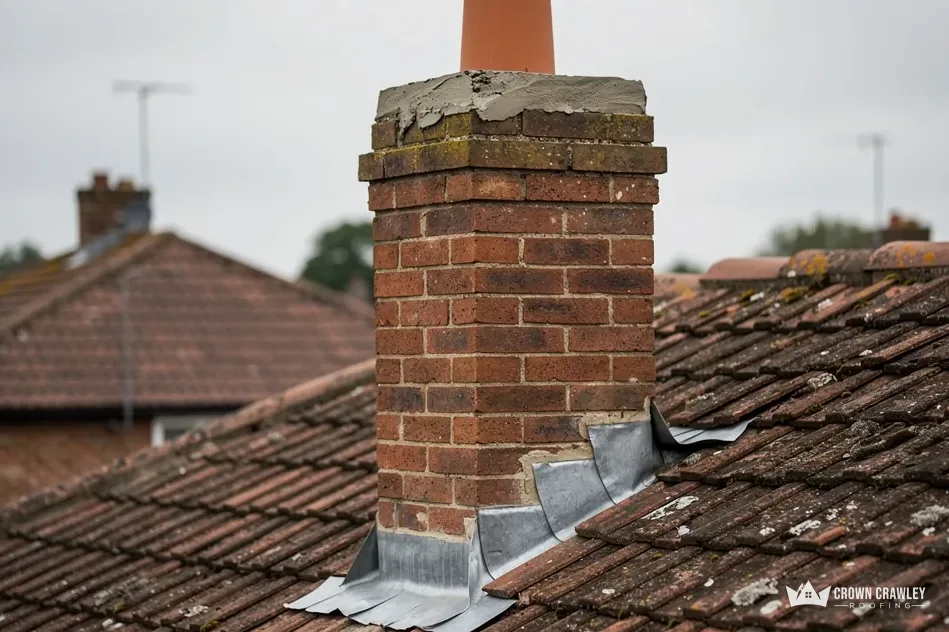
Brick faces that crumble when scraped, a stack that has moved out of line, wide cracks that run through brick and mortar alike, and joints so deep that the brick is held up by little more than habit. Loose courses near the top, where the pots sit, are another common sign. If daylight shows where the stack meets the tiles, or the lower courses have parted from the ones above them, the stack is losing its strength. Our guide to a leaning chimney stack covers how movement is judged.
When is repair still the better buy?
If the brick rings sound when tapped, the stack stands true and the damage is mostly worn mortar, repointing is cheaper and keeps the original brickwork. A stack that needs new pointing, a new flaunching and fresh lead, but nothing more, does not need to come down. Rebuilding only part of the stack, say from the roof line up, is a middle route, and it is often what the survey finds.
Whichever route suits, the quote arrives in writing as one total, so there is no guesswork about where the repair stops and the rebuild starts. The chimney repairs page shows the full range of stack work, from pointing to removal.
Taking the old stack down
A stack is taken down by hand, a few courses at a time, from the top. Machinery has no place on a chimney that sits on a roof above a living room, and the bricks are worth saving where they are sound.
What happens first?
Access goes up before anything else: a scaffold, or a tower and platform, that gives a level working space round the stack, with a protected zone below. Our page on scaffolding and access for chimney repairs explains the choices. The pots come off first and are set aside. Then the flaunching, flue liners and any cowl are taken off, and the brickwork is dismantled course by course.
How far down does it come?
The stack comes down until the roofer reaches brick that is sound and stable. That may be just below the roof line, or all the way to the ceiling in the loft, if the lower courses are damaged. The rule is to stop only on good brick. A new stack built on weak courses will fail early, whatever is built above it.
What protects the house meanwhile?
The flue openings are covered as the work goes down, the roof around the stack is sheeted and the loft below is cleared of debris. Dust and old soot fall into the flue, so rooms below should have their fire openings sealed and the furniture covered. You hear at the end of every day how far the work has got and what comes next, and the waste leaves with us when the job finishes.
Matching the brick and mortar
A rebuilt stack that does not match the house stands out for decades. Matching comes down to four things: the brick, the bond, the mortar and the joints.
Can the old bricks be reused?
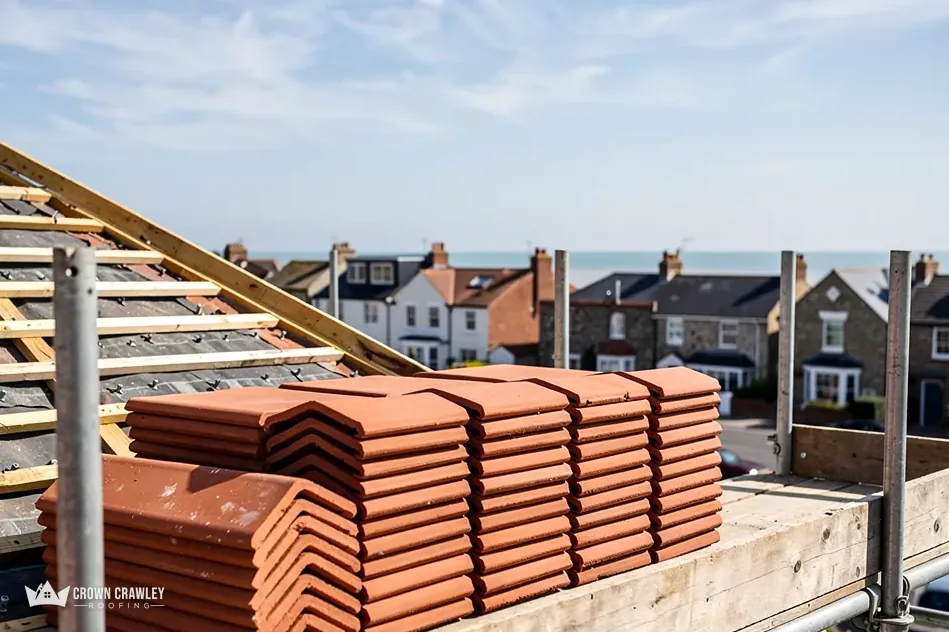
Many can. Sound bricks from the lower courses are cleaned of old mortar and put back, which keeps the original colour and size. Bricks that are spalled, meaning the face has flaked off, are set aside and replaced. A reclaimed brick of similar age is often the closest match for an older house, and a new brick chosen for colour and texture works for later ones. Sizes vary, so a sample is checked against the house before any order is placed.
What mortar goes in?
The mortar should be no harder than the brick it holds. Too strong a mix can force moisture out through the brick instead, damaging its face. On an older house with soft bricks, a lime mix is often the choice; on more recent brick, a standard sand and cement mix with the correct additives suits. The survey says which suits your brick.
Why do the joints matter?
Joint profile and bond decide whether the new stack looks right. A flush or weathered joint suits many houses, and a deep recessed joint holds water. The bond, the pattern of the bricks, is taken from the courses you can still see below the roof. A photo of the old stack before it comes down is the best brief for the rebuild.
Flues, liners and pots
The flue is the working part of the chimney, and a rebuild is the easiest moment to deal with it. Once the stack is up and capped, reaching the flue again means opening it.
What is done with each flue?
A flue still in use is lined for the appliance that serves it, and that choice depends on the fuel. A gas fire, an open fire and a wood burner each need something different, so the appliance engineer should have a say before the roofer closes the stack. A flue no longer used is usually capped and vented rather than left open to the rain.
How are pots and flaunching renewed?
New pots, or cleaned and sound old ones, sit on the finished top and are bedded in flaunching. This sloping mortar bed holds the pot in place and throws water clear of the stack. It faces the weather and is one of the first parts to fail on a poor stack, so a good mix and a properly shaped finish matter. If the pots are only decorative, a cowl or cap can stop rain and birds entering the flue.
Is the flue checked before handover?
A live flue should be checked once the stack is built, so smoke and fumes leave as they should. A gas engineer or sweep does this; the roofer's job is to build the stack, and leave clear access to each flue. Ask who signs off the flue before work starts.
New flashings and the roof junction
A stack is only as dry as the lead around it. On a rebuild the flashing is built in as the brickwork rises, which makes it much sounder than lead stuck on afterwards.
How are the flashings built in?
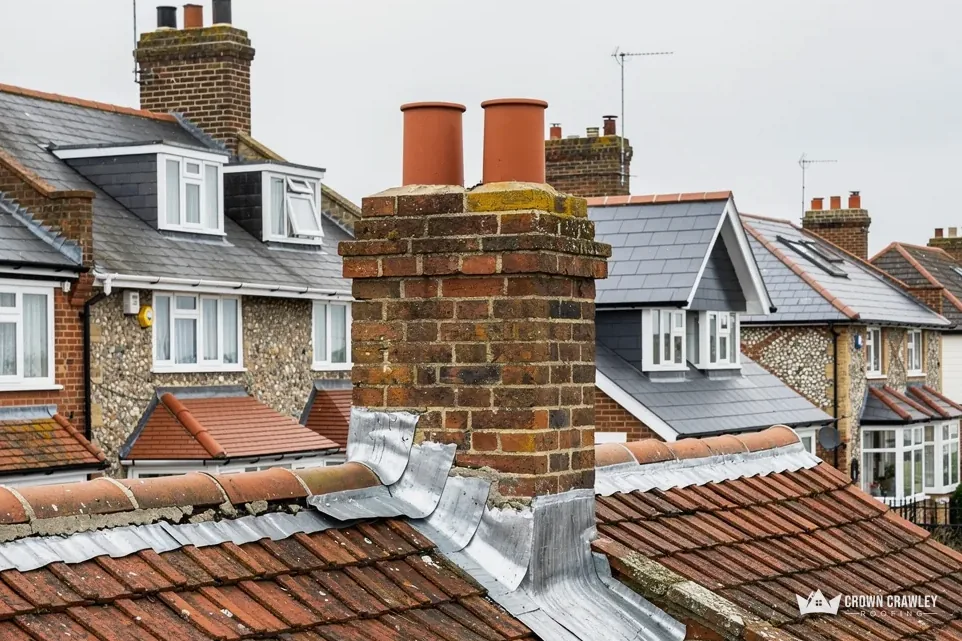
A flashing is a sheet of lead that seals the joint between the brick and the roof covering. Around a tiled roof a back gutter is formed behind the stack to carry water to either side. Step flashings tuck into the joints up each side, over small folded lead soakers that sit under the tiles. A front apron closes the downslope face. Each piece is fixed into raked-out mortar joints that are then pointed, instead of relying on sealant.
Which lead code suits?
Royston Lead's cast-lead brochure lists Code 4 for soakers and flashings, with Code 5 for flashings and gutters, and Code 3 for soakers alone. The code is chosen from the job: thicker sheet for exposed junctions, where it will move a lot with temperature. Our lead work page covers lead in more detail. MyJobQuote gives lead flashing a life of over 80 years, which describes the material in general and makes no promise for a given stack.
What about the tiles around it?
Tiles round the base are lifted and relaid over the soakers, with broken ones replaced. If the battens beneath are soft, they should be dealt with at the same time, as our guide to when roof battens need replacing explains. It costs far less to do it while the scaffold is up.
Consents, wildlife and what a rebuild costs
A rebuild is not a cosmetic job, so a few checks come before the first brick comes off.
Is permission needed?
Putting back a stack as it was is one thing, and altering its height or look is another. On a listed house, altering the stack in a way that changes its character calls for listed building consent, and a conservation area is a reason to ring the council's planning team first. A rebuild to the same size and design usually raises fewer questions, though only the council can confirm that. Removing a chimney breast below is separate again: the Planning Portal says Building Regulations approval will always apply to that.
What about birds and bats?
Look over the pots for nests before the scaffold goes up, and mention any bats you have noticed near the roof. Nests in use are covered by wildlife law, and bat roosts are protected more strictly still, so the dates for the work bend around them where they are found. A rebuilt stack with a fitted cowl stops birds settling in the flue again.
What do published figures say?
Checkatrade's repointing guide, in its October 2026 table, puts a rebuild above the roof line at £1,000 to £3,500. Its chimney repair guide, dated April 2026, shows a cap at £180 to £520 and flashing at £250 to £1,000. These are typical national ranges and no price for your stack. Ask any quote to say whether VAT is included, and whether the scaffolding is in the total. Rebuild prices climb with height, the number of flues, how much brick must be sourced and how hard the stack is to reach. Our written price after the survey fixes all of that in one figure, so nothing is added once the first course comes down.
Part of our Chimney Repairs in Crawley
Rebuild questions
Can only the top of a chimney stack be rebuilt?
Yes, when the lower brickwork is sound. The roofer takes the stack down to good brick, often at or just above the roof line, and rebuilds from there. The survey checks the courses below the cut line, because building new brickwork on a weak base only moves the failure up a few courses.
Will the new stack look like the old one?
It can, if the brick, bond and joints are matched. Sound bricks are reused where possible, replacements are chosen against the house, and the mortar mix suits the brick. A photo of the old stack before it comes down helps everyone keep the same height, shape and pot style.
Do I need to be at home while the stack is rebuilt?
Not for the roof work, though someone should be reachable. Access to the loft and to the rooms below the flue is needed at times, and fire openings need sealing and covering first. Tell the roofer about any flue still in use, so the day plan keeps it safe.