Every tile on a pitched roof hangs from a batten. These are plain strips of sawn timber, nailed in rows across the rafters at a spacing set by the tile, and they carry the whole weight of the covering. You cannot see them from the street and you rarely see much of them from the loft, because the underlay hides them. So they tend to be forgotten until something goes wrong, usually on a wet and windy night.
When battens do fail, the first sign is usually outside: tiles that slip, get put back and slip again. That pattern matters, because no amount of refixing will hold a tile to timber that has gone soft. This guide covers how battens fail, the signs you can check safely, what causes the damage, and how a roofer decides between replacing a few lengths and re-battening a whole slope. It also explains what a re-batten involves, so a quote for one makes sense when you read it.
What a roof batten does
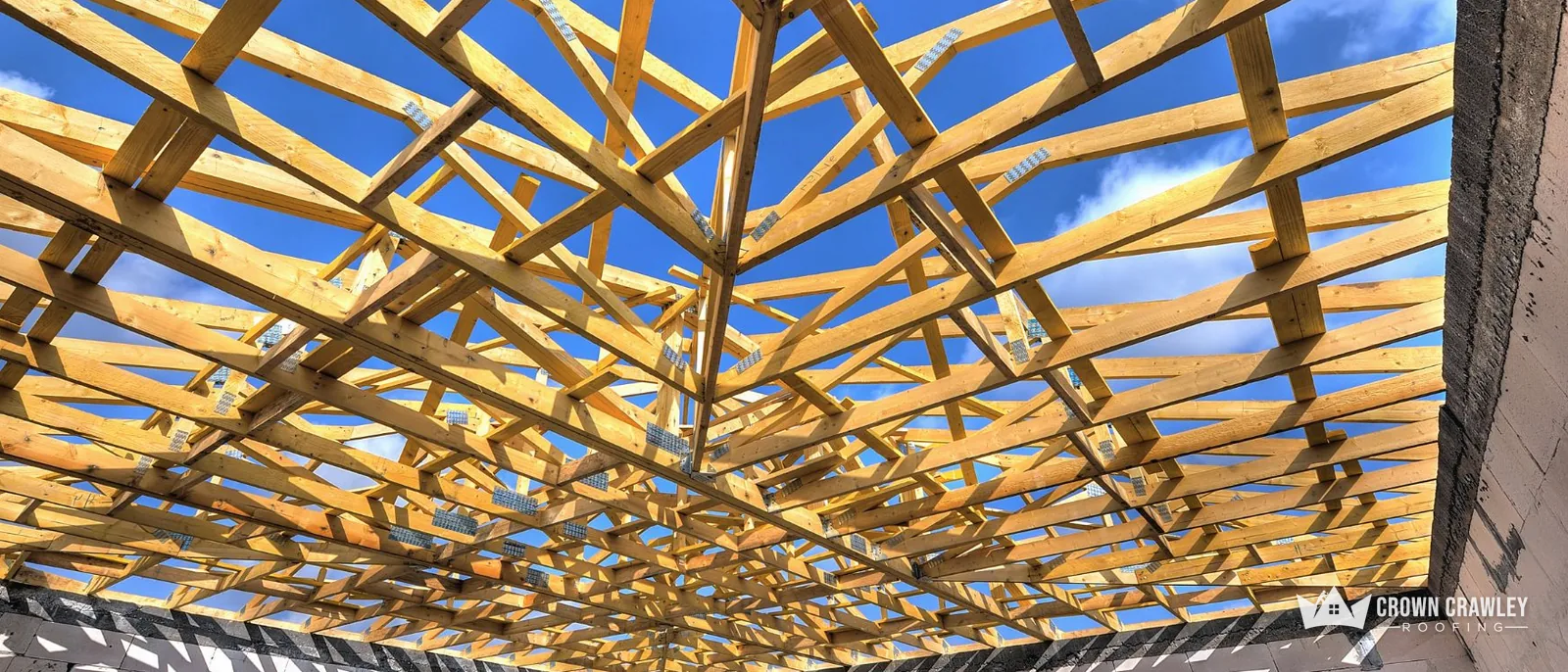
Battens do two jobs. They give each tile something to hang on, and they set the spacing between the rows so that every course overlaps the one below by the right amount. That spacing, called the gauge, comes from the tile maker's data. Get it wrong and the overlap shrinks, letting wind-blown rain through even when every tile is sound.
How are tiles fixed to battens?
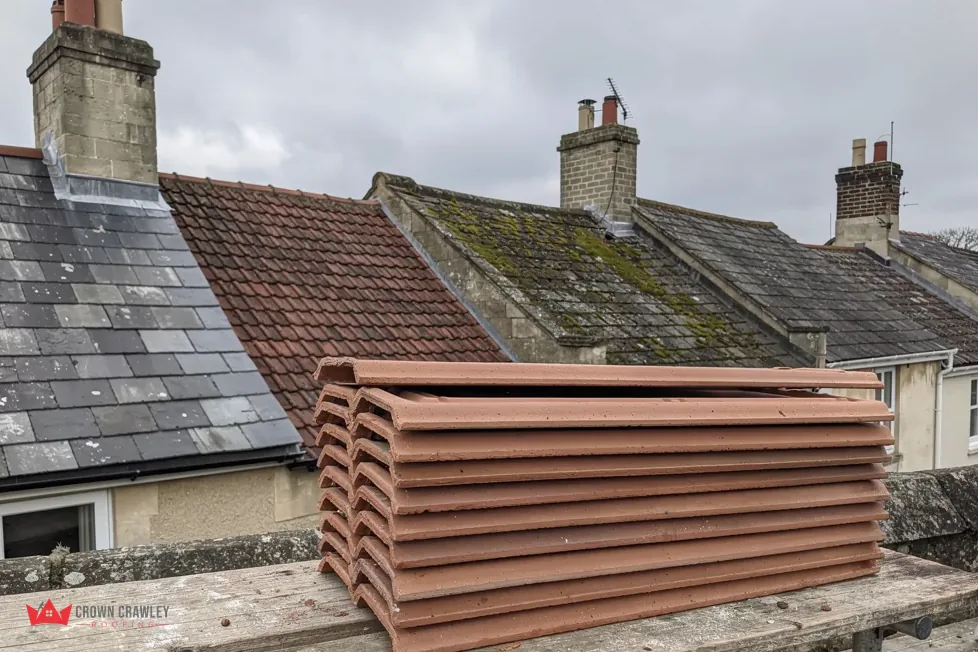
Concrete and clay tiles carry nibs, projections moulded on their underside, which catch over the batten. On top of that, many tiles are nailed through holes near the head, or held with clips at the side or tail, depending on the tile and how exposed the roof is. Slates have no nibs, so each slate is nailed straight to the battens, which is why corroded slate nails let whole areas slip. The fixings are only as good as the timber they go into.
What sits under the battens?
Below the battens is the underlay, a sheet of felt or breathable membrane laid over the rafters to carry stray water to the gutter. On some roofs counter-battens run down the slope on top of the underlay to lift the battens clear of it, giving water a path beneath them. Because the battens pin the underlay down, renewing one almost always means renewing the other in the same area. That link is the reason a batten problem can turn a small repair into a bigger one. Our pitched roofing page sets out the full range of repairs on tiled and slate roofs.
The signs that battens are failing
You can check most of the warning signs without going near the roof itself. Start outside, then take a torch into the loft on a dry day.
What will you see from outside?
The clearest sign is the same tiles slipping again and again in one area, especially after wind. Rows of tiles that look wavy rather than straight, a slope that has a soft dip between rafters, and tiles that have dropped at their tails all point to timber that no longer holds a fixing. On a slate roof, a cluster of slipped slates, or slates held up by many metal tingles, points to failing nails and often to tired battens behind them.
Look from the ground or the loft only. A batten that cannot hold a tile will not hold a person, and walking on a tiled roof breaks tiles even when the timber is sound.
What will you see in the loft?
Where the underlay allows, look at the battens between the rafters. Dark staining, a white or brown furry growth, splits along the grain and battens that bow downwards are all bad signs. Rust streaks around nail heads suggest the fixings are corroding. Damp insulation directly below, or a musty smell in one corner, often marks the spot. Take photos of anything you find and note where it is, for example the third bay from the gable on the rear slope. A roofer can then go straight to it, and our post on pitched roof repairs from tiles to structural fixes explains how it fits with the other layers.
What makes battens rot or fail
Battens are not meant to get wet and stay wet. When they fail early, one of three things is usually behind it, and finding the cause matters as much as replacing the wood. New battens put back under the same leak will rot in the same way.
Leaks from above
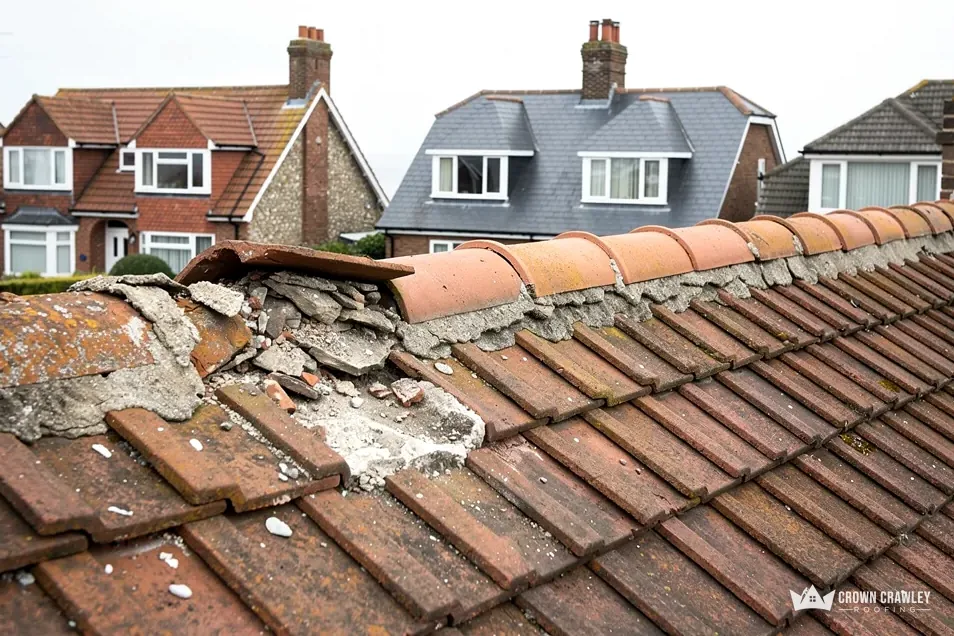
A cracked tile, a slipped slate, a leaking valley or a gap at a chimney lets water onto the underlay. If the underlay is torn, the water reaches the battens and soaks them every time it rains. Because the leak may be small, it can go on for years with no mark on the ceiling below, and by the time a stain appears the battens under it can be soft right through.
Condensation from below
Warm, moist air from the house rises into the loft. If the loft is poorly ventilated and the underlay is non-breathable, that moisture condenses against the chilly underside of the roof, then drips back onto the timbers. Marley's summary of BS 5250 says that where a cold roof has a non-breathable underlay, the eaves need a continuous ventilation gap: 25mm where the pitch is 15 degrees or less, 10mm above that. Loft insulation pushed tight into the eaves blocks those gaps, which is one of the quieter ways battens come to grief.
The third cause is the fixings themselves. Nails rust, especially where the timber is damp, and once a batten's nails into the rafters have corroded, the batten can sag or shift even if the wood is sound. On old slate roofs the slate nails go the same way, and roofers call the result nail sickness.
A few lengths or the whole slope?
The question a roofer has to answer is how far the damage reaches. A batten cannot be swapped from below, because the tiles hang on it and the underlay sits under it. Any batten repair therefore starts by lifting tiles, and the size of the job follows from how many have to come off.
When is a local repair enough?
If the rot is confined to one area under a known leak, such as below a cracked valley or beside a chimney, the roofer strips that patch, replaces the affected battens and any torn underlay, fixes the cause of the leak and relays the tiles. The rest of the roof is left alone. Sound tiles from the patch go back on, with a few new ones where the old were broken.
When does the whole slope need re-battening?
If tiles are slipping across the slope, the battens are soft in several bays, or the nails are rusting everywhere, patching just moves the problem along. At that point the honest answer is to strip the slope, renew the battens and underlay throughout and relay or replace the tiles. That is a re-roof of that slope.
Size matters for the rules. The Planning Portal says approval from building control is not normally needed where the work affects less than 25 per cent of the building envelope and less than 50 per cent of the roof. Crawley Building Control lists replacing more than 25% of a roof's surface among domestic work needing its approval, so in Crawley a single slope can cross that line. Your roofer should check with the building control body before starting. Changing to a heavier tile can also bring Building Regulations into play.
What a re-batten involves, step by step
A re-batten follows a set order, and knowing it makes a quote easier to read. Here is how a slope is usually taken down and put back together.
Stripping and checking
Scaffold goes up first, with edge protection at the eaves. The ridge and verge on that slope are taken off, then the tiles are lifted from the top down, sorted and stacked, with broken or worn ones set aside. The old battens and underlay come off, and the rafters are now in plain view. This is the moment to check them for rot, splits and woodworm, and to look at the wall plate where the rafters meet the wall. Any timber repairs happen before anything new goes on.
Rebuilding the slope
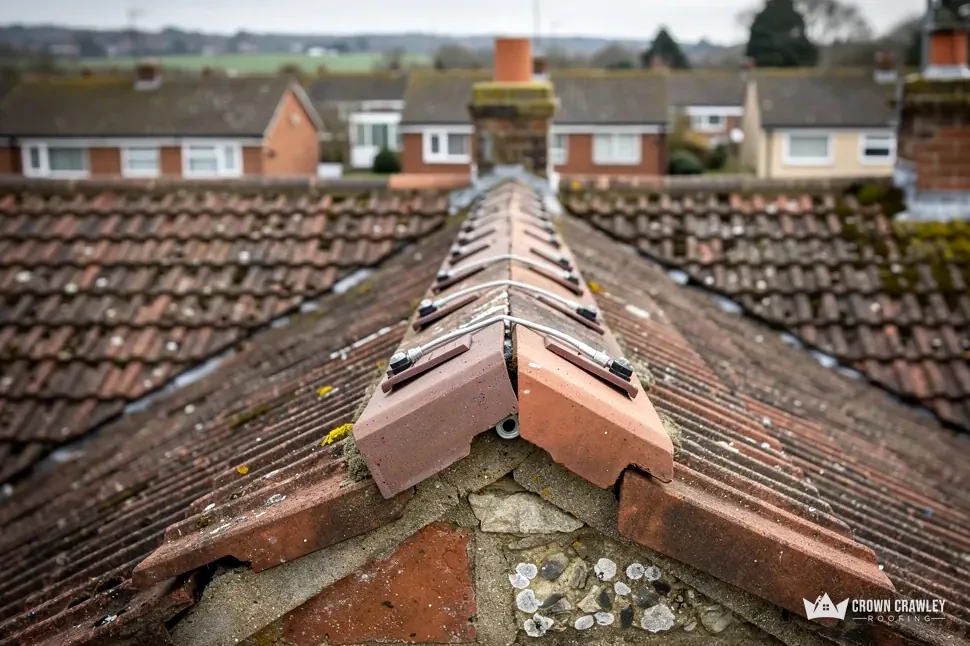
New underlay is laid, either felt or a breathable membrane, with ventilation planned to suit it. New battens are fixed at the gauge the tile needs, and the tiles are relaid with new nails or clips. BS 5534 is the British Standard covering slating and tiling, and it has been the reference for these fixings since its revision. Marley notes that mortar alone no longer holds ridge and hip tiles in place, so they are screwed or clipped as well. The ridge and verge are then refixed. BSI points out that some of the standard's recommendations will not fit every old roof, especially one that reuses traditional or reclaimed materials, so older and listed roofs need judgement as well as the book.
Answering whether a single damaged tile can be swapped without all this is simpler, and our answer on replacing individual roof tiles covers it.
Costs, timing and planning ahead
Re-battening is mostly labour and access. The timber is a small part of the bill. The work of stripping, sorting and relaying the tiles, and the scaffold that makes it safe, are what drive the price.
What does it cost, as a national guide?
Checkatrade's roof installation guide, in its October 2026 table, puts pitched tiling at £120 to £275 per m², with plain tiles at £120 to £230 and clay at £160 to £275. Scaffold adds to that; Checkatrade's roof replacement guide gives a national figure of £700 to £1,300 for scaffolding a new roof. Those are national figures, not a price for your roof, and VAT at the standard rate of 20% may need adding. A local repair over a small patch costs far less than a slope, which is why finding the extent of the damage first is worth the time.
How should you plan for it?
Ask for one written total that covers the slope, the scaffold and the waste, and check whether VAT is included. Ask what happens if rafters turn out to need work once the tiles are off. If you have the choice, combine the job with anything else that needs scaffold on that side of the house, such as gutters or a chimney. If the underlay is being renewed, ask which type is going on and how the loft will be ventilated; our guide to breathable membrane and felt explains the options. Finally, if bats may use the roof, government guidance treats the animals and their roosts as fully protected and warns that roof work can affect them, so raise it early.
Part of our Pitched Roofing Services in Crawley
Batten questions, answered
Can roof battens be replaced from inside the loft?
No. The tiles hang on the battens from above and the underlay sits beneath them, so a batten can only be replaced by lifting the tiles over it. From inside you can inspect battens and spot rot, but the repair is always done from the outside, with safe access in place.
Does new underlay always go on when battens are replaced?
In practice, yes, over the area being re-battened. Once the tiles and battens are off, the old underlay is exposed and often torn or brittle, and renewing it costs little extra compared with stripping the slope again later. The roofer should tell you which type is going on and how the loft will be ventilated.
Will home insurance pay for rotten battens?
Usually not on its own, because rot builds up slowly and policies tend to exclude gradual deterioration. If a storm caused sudden damage that let water in, that part may be covered. Read your policy, speak to your insurer before any permanent repair, and hold on to photos and receipts from temporary work.