Chimney stacks look solid, and that is part of the problem. A tall column of brick stands in the wind for decades without anyone looking at it, then one day you notice that it no longer lines up with the ridge or the neighbour's stack. Some leans are an optical trick caused by the angle you are standing at. Others are real, and a real lean in a tall, narrow structure over a bedroom or a pavement is something to take seriously.
Few stacks lean overnight. They move slowly, and the signs tend to show long before anything falls. A roofer or surveyor can often tell from the ground and the loft whether the movement is old and settled, or live and getting worse. That is the question that decides everything else, because a settled stack may only need its mortar and flashings put right, while a moving one may need taking down to a safe level and rebuilding. This guide sets out how to check, what usually causes the movement, and how the choice between monitoring, repair and rebuild is made.
Is it really leaning? Checking safely
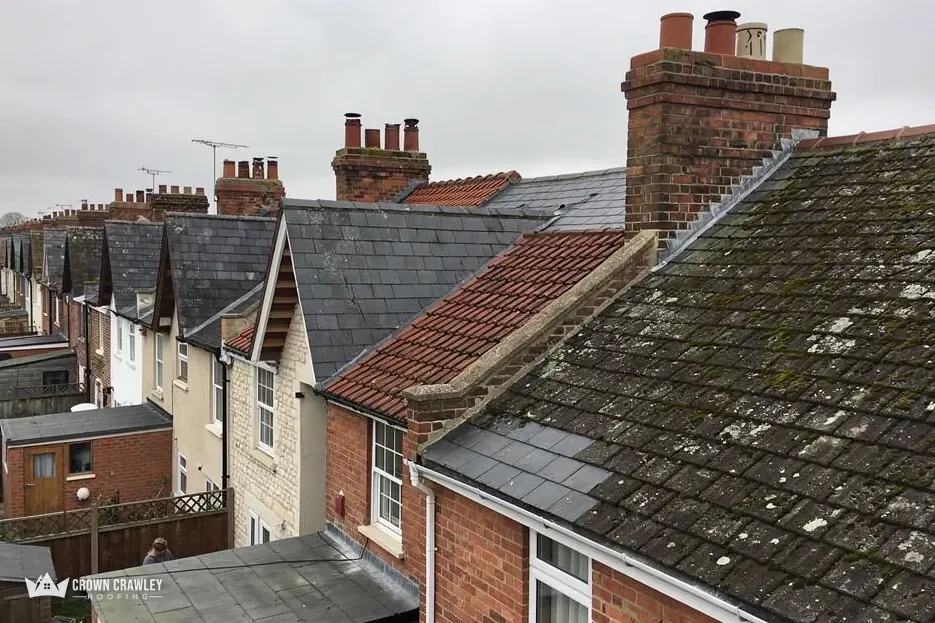
Before anyone books a scaffold, make sure the lean is real. Stand well back, on level ground, and look at the stack from two directions at right angles to each other. A stack seen from a pavement at a steep upward angle can look tilted when it is not.
How do you check a lean from the ground?
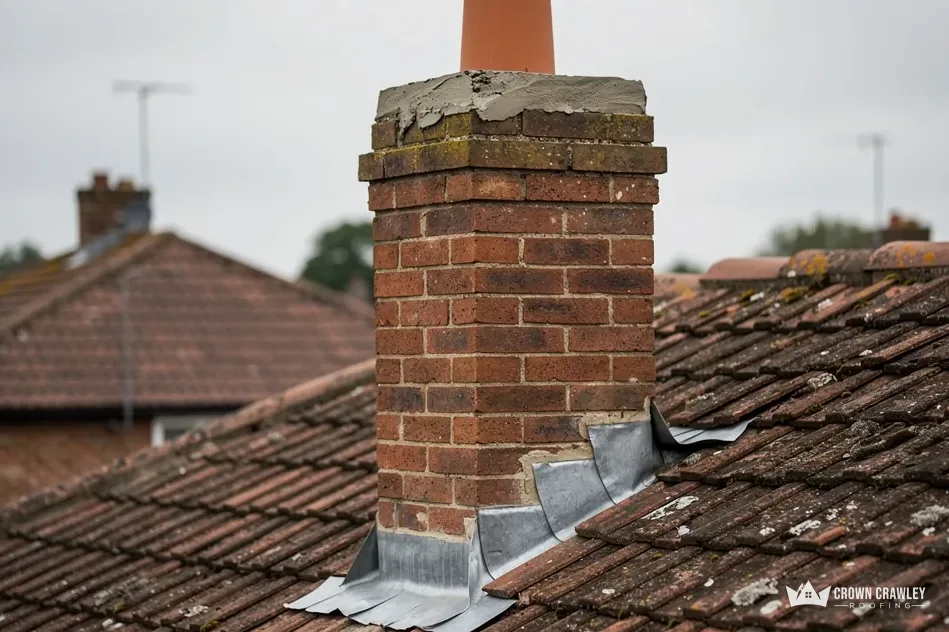
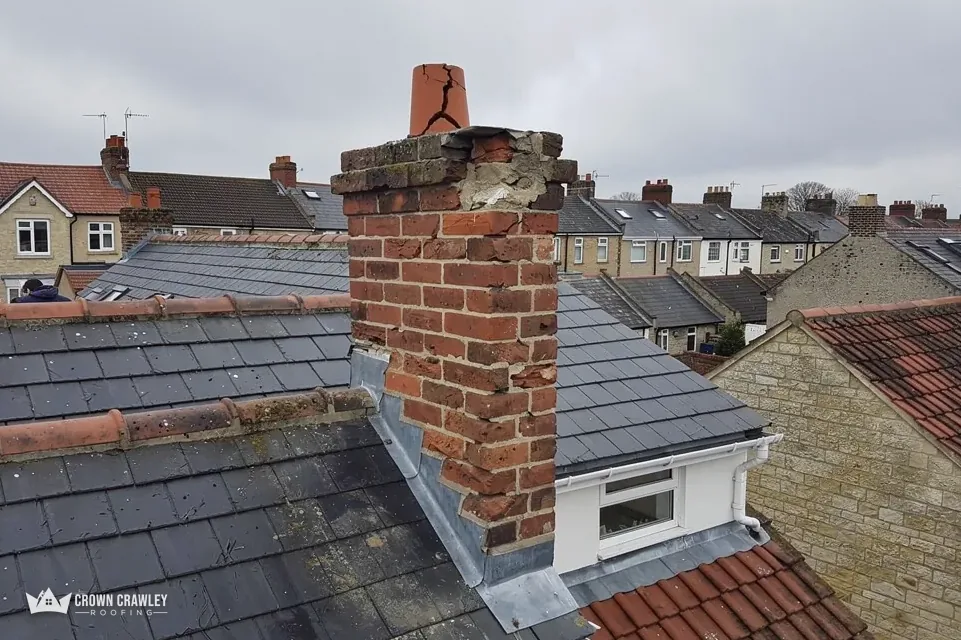
Compare the stack with something you know to be upright, such as a door frame, a downpipe or the corner of a neighbouring house, and use a plumb line held up at arm's length if you have one. Binoculars help. Look for a gap opening between the stack and the roof tiles on one side, for bricks that look stepped or offset part way up, and for cracks running diagonally through the brickwork. A stack that bows, with a belly in the middle, is moving in a different way from one that tilts as a whole.
What can you see in the loft?
The part of the stack inside the roof is often the best evidence. Look at the brickwork where it passes the rafters. Fresh mortar dust on the floor, cracks that look clean and sharp, daylight round the stack or damp staining are all signs of recent movement. Mark the ends of a crack with a pencil and date it, then check it again after a few weeks. If it has grown, tell a roofer.
Stay off the roof, and never push against the stack or tug at the pots to test them. A stack that is moving can drop bricks without warning, and walking on tiles breaks them in any case. If you can borrow a camera with a long zoom, photograph the stack from the same two spots each month. Pictures taken at the same angle show movement far better than memory does, and they give the roofer a record to work from.
What makes a stack lean: weather, wind and mortar
A stack leans when something on one side gives way before the other side does. The usual causes are slow, and several often work together.
Weathering on the exposed side
Every face of a stack is wetter and colder than the walls of the house, because it is exposed to rain and frost from all sides. The face that takes the prevailing weather loses mortar first. Where the joints have eroded, water soaks into the brick and cycles of freezing and thawing push the surface off. A stack that is losing mortar from one side more than the other can settle towards the weaker side.
Chemical attack from within
Flue gases and moisture can act on the mortar in a stack, particularly where a flue is no longer lined or has been left unused and damp. A surveyor may use the term sulphate attack for one form of this, where the mortar on the wet side swells and pushes the brickwork out of line. Nothing can be confirmed from the ground, and you should treat the term as a question to put to the surveyor rather than a diagnosis.
Wind and structural support
A tall, narrow stack acts like a sail, and gusts load it all the time. If the pointing is poor, or the stack was never well tied in, the wind finds the weak spot. Work lower down matters too. Removing a chimney breast in the rooms below can leave the stack above without proper support, andthe Planning Portal says Building Regulations approval will always apply when chimney breasts come out, since the breast belongs to the structure of the building. If a breast was taken out years ago, mention it at the survey, because the stack above may have been left carrying its own weight on very little.
Is a leaning stack dangerous?
It depends on how far it has moved, how fast and what lies beneath it. A small, old lean on a stack with sound mortar can sit unchanged for years. A new or growing lean with cracks is a different matter, because a tall stack that falls lands on the roof, the room below, the garden or the street.
What should you do first?
Keep people and pets away from the area beneath the stack. Move beds and furniture out of any room directly below it. Do not light fires or run a boiler that vents into a stack you think is damaged, because a cracked flue can leak fumes into the house, and a gas appliance needs a qualified engineer to check the flue. Close the door of any room directly below the stack, and take photos of the area before anything is moved, since they help later with any insurance conversation. Tell your insurer first if you think the cause was a storm. Then ring a roofer or a chartered surveyor for an inspection.
When is an emergency make-safe needed?
If bricks are dropping, if the stack has moved visibly within days or if it overhangs a public footpath, it needs making safe at once. That can mean a scaffold with a protective platform, taking the top courses down by hand or lowering the stack to a stable point. We make a dangerous stack safe first and talk about the longer-term repair once it no longer threatens anything. If the stack serves a neighbour as well, tell them what you have found, and read our guide to shared chimney stack repair before agreeing who pays.
Monitor, repair or rebuild?
There are three outcomes, and the survey chooses between them. None of them is a sales route; each is right in the right circumstances.
When is monitoring enough?
If the lean is small, the brickwork is sound and there are no fresh cracks, a roofer may suggest watching it. That means taking dated photos from the same spot, marking crack ends and checking again after the next storm season. It is a plan with an end date, not a way of putting the decision off. It also means dealing with the cause: repointing worn joints, replacing a cracked flaunching (the mortar bed under the pots) and renewing failed flashings so water stops getting in. A stack that stays dry often stays put.
When does repair beat rebuild?
Where the brick is good and the problem is the pointing or a few loose courses, repair is the better buy. A roofer can rake out and repoint, rebed pots, and rebuild the top few courses if they have loosened. The brick has to be dry and firm enough to take new mortar, and a tied-in repair will not cure a stack whose lower courses have started to separate. A good roofer says so plainly and points out the brick that decided it.
When must it come down?
If the lean is large or still growing, if the brick has crumbled through the stack or if the flue lining has failed, the sound answer is to take the stack down to a safe level, usually to the roof line or below, and rebuild. Our guide to rebuilding a chimney stack explains how that is done, and when taking the stack down without rebuilding is the better choice, our page on chimney stack removal covers that route.
Surveys, consents and neighbours
Stack work looks small from the street, but it can touch several sets of rules. A few checks before anything starts will save argument later.
Do you need permission?
Repairing a stack as it stands differs from altering it. Rebuilding to a new height or design may need the council's say, so ask its planning team before you commit. If the house is listed, the Listed Buildings Act requires consent for works of alteration that would change its special character, and a conservation area is another reason to ring the council first. We note on the survey what the stack looks like today, so the rebuilt version can match it.
What about the party wall?
Many stacks sit on the line between two houses, and work on one side can reach into the neighbour's loft or roof. Tell the neighbour early, show them the survey photos and agree who will be home on the days the work happens. A shared stack that leans is the owners' joint problem, and settling it before the scaffold goes up is far easier than afterwards.
What about nesting birds and bats?
A nesting bird on a stack can halt a job, because wildlife law protects nests that are active. Bats get stronger cover still, and GOV.UK warns that the rules reach roof repairs. Mention any birds or bats you have seen near the stack when we survey, and the programme can be planned around them.
Cost, access and what the quote should say
Stack work is driven by access more than materials. A repair that takes a couple of hours with a ladder on a low roof can need a full scaffold on a tall house, and that changes the figure.
What do the published figures suggest?
Checkatrade's chimney repointing guide, in its October 2026 table, shows rebuilding above the roof line at £1,000 to £3,500, against around £300 for a modest repoint. Its removal guide, also from October 2026, gives £260 to £340 per metre to take a stack down, with a whole project at around £1,800. Its repointing table also shows a mid-terrace ridge stack reaching about £1,000 once scaffold is needed. Treat all of these as national yardsticks, not a price for your house. A scaffold built wholly within your boundary needs no council licence. If it crosses the public footway, a licence is required from the highway authority, so ask who arranges it.
What should the quote say?
Our written price is a single total, sent after we have looked at the stack, and the photos show your own stack so the findings are clear. Check it says how far down the stack is coming, what the new work will match, whether the flue is being lined or capped, and whether VAT, now at 20% as standard, is included. Our chimney repairs page has the full list of stack work.
Part of our Chimney Repairs in Crawley
Leaning stack questions
Can a leaning chimney be pushed back straight?
Not safely. Brickwork cannot be straightened once the mortar has set, and forcing it risks cracking the flue or dropping bricks. A roofer either stabilises it, taking down and rebuilding the unsound part, or leaves a settled lean alone and fixes the cause. The survey decides which one fits.
How quickly do I need to act on a stack that leans?
It depends on whether it is moving. A stable, old lean can wait for a booked survey. New cracks, falling brick or a stack that has visibly shifted since last week need attention at once. Keep people clear and make the area below safe while you wait for the inspection.
Will a leaning chimney show up in a house survey?
A building survey often notes the condition of the stacks, and a lean may be flagged for a closer look. If a buyer's report mentions it, ask for a roofer's inspection with photos before exchanging, so the cost of any repair or rebuild is known and can be talked through.