The mortar joints in a chimney stack get the roughest treatment of any brickwork on the house. They face wind from every direction, they are soaked in winter and baked in summer, and the stack stands clear of the roof with nothing to shelter it. After decades the joints erode, and bricks that were once held tight start to loosen. Repointing is the repair that renews them before the damage reaches the bricks themselves.
It is also one of the repairs that gets put off, because the stack is out of sight and the early signs are small. This guide explains how to tell when a stack is due, which signs to take seriously, how the mortar is chosen, how the work is reached and what a proper repoint includes from start to finish. It also sets out the national price guides, what drives a written quote, and what to send us so the survey can start from your own stack rather than a general idea of one.
What repointing is, and why a stack needs it
Pointing is the finished surface of the joint between two bricks. Repointing means cutting out the worn mortar to a set depth and filling the joint again with fresh mortar, so the brickwork keeps out water and stays tied together. It is different from rebuilding, where bricks come down, and from a surface smear over crumbling joints, which only hides the problem for a season.
Why do chimneys suffer more than walls?
A wall under the eaves has a roof overhead and a gutter beside it. A chimney stack has neither. Rain hits it from the side and, because the top of a stack is open to the sky, from above as well. The stack is warmed from inside when a fire is lit and chilled by the same wind that cools the outside, so the brickwork keeps flexing. Smoke and flue gases leave their own mark on the inner face of the masonry, and the exposed mortar gradually loses its grip.
What happens if you leave it?
Loose joints let water into the stack. The water soaks bricks, rusts any iron fixings, and in winter freezes and pushes the brick face off. Once the bricks themselves start to flake, a repoint is no longer enough and sections need rebuilding, which costs far more. A stack that is leaning or has lost courses is a safety matter, because pieces can fall onto the roof or the ground below.
Catching the joints early is kinder to the house too. By the time water shows as brown stains on the chimney breast, the brickwork above has usually been wet for a long while, and a repoint is one of the cheaper ways to stop that.
Signs the joints are failing
You can learn a lot from the ground. Stand back from the house on a clear day and look at the stack with binoculars or the zoom on your phone. Do this from the garden or the pavement; never from the roof.
What does a tired joint look like?
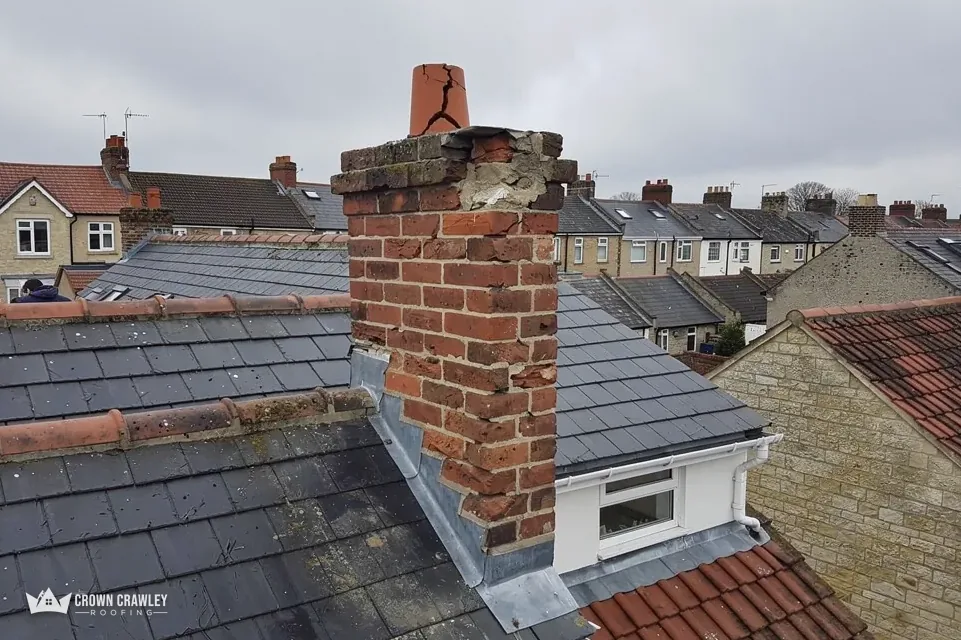
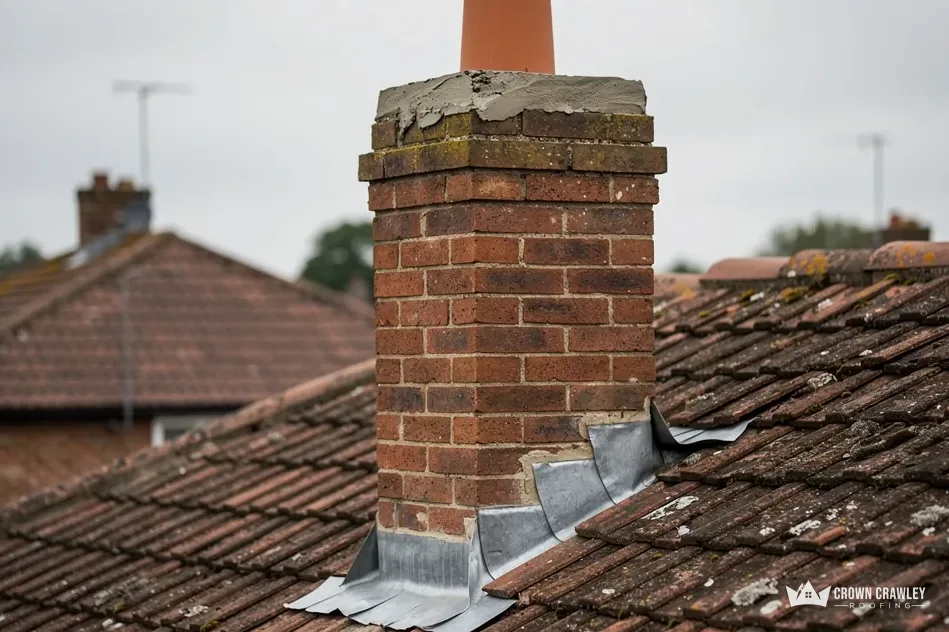
Sound mortar is firm, fairly flush with the brick and the same colour along its length. Tired mortar is recessed, sandy, cracked or missing in patches, and you can often see a dark gap between brick and joint. Look for dust or grit on the roof tiles below the stack, which is mortar that has already come away. Green staining or moss on one face suggests that side holds water. Bricks that look loose, tilted or out of line with their neighbours are more serious.
Mortar crumbs in the gutter or a brick that has shifted are reasons to book a survey promptly rather than waiting for spring.
What shows up indoors?
Damp patches on a chimney breast, wallpaper lifting, a white powdery deposit that returns after you wipe it away, and a musty smell in the room are all linked to water entering the stack. The loft can help too: look at the brickwork where the stack passes through the roof space, and shine a torch at the timbers beside it. Staining or soft wood there suggests water has been running down for some time.
Leaking flashing, failed flaunching and condensation can produce damp patches that look exactly like bad pointing. A repoint on its own will not cure those, which is why the survey checks every part of the stack before a repair is proposed.
Choosing the mortar for the repoint
The mortar is the part of the job most worth asking about. A repoint is only as good as the mix put into it, and the right choice depends on the bricks and the age of the house.
Why does the mix matter?
Brick and mortar have to move together. If the new mortar is much harder than the brick, water finds it easier to leave through the brick than through the joint, and the brick faces flake. A mortar that is too soft wears out quickly. Newer stacks built in hard bricks usually take a cement-based mix. Older brickwork, laid in softer bricks and lime, is often better served by a lime-based mortar that breathes. Before agreeing, have the roofer name the mix and give a reason for it.
How is the colour and finish matched?
A new joint that is the wrong shade stands out for years. The roofer should look at the existing joints, note the sand colour, the width and the profile, and aim to match. A flush finish suits some stacks and a slightly recessed one suits others. A sample section in a place that is not prominent shows whether the match works once dry. Some pointing is raised in a ribbon above the brick face on old work, and copying that style needs a different eye and tools from a plain flush finish.
What about older and protected houses?
Lime mortar and careful hand work matter most on older houses, and a listed building may need consent for anything beyond like for like repair. Our guide to lime mortar chimney repointing covers that method.
Reaching the stack safely
Access decides how safe the work is and a good part of what it costs. A chimney is the tallest, windiest point of the roof, and repointing means someone standing or kneeling beside it for hours with both hands busy.
Ladders, towers and scaffold
Over a low rear roof, a roof ladder and a secure working position may do for a short job. For a taller stack, a steep slope or a full repoint on all four faces, scaffold or a tower gives a proper platform with edge protection and room to work. Scaffold costs money, but it is the difference between a careful job and a rushed one. Our page on scaffolding for chimney repair explains when it is worth it.
What about scaffold over the pavement?
If the frame stands partly over a public footway, the highway authority's licence has to be in place before it goes up. Ask the scaffolder who applies and how much notice the council wants, since this differs between highway authorities. Nothing is needed for a frame wholly inside your boundary. Where the stack is in the middle of a terrace, access can mean working over a neighbour's roof, and that conversation is best held before the day.
Tidy working
Old mortar and dust come down during raking out, so we cover the roof slope below the stack, protect the flue opening and clear the debris away before leaving. Each day you hear what is planned for the next, and the stack should look clean and finished when the scaffold comes down.
Weather matters as well. Fresh mortar does not set well in a hard frost, in heavy rain or in strong midsummer sun, so a roofer will sometimes move a job by a few days. That is a good sign, not a delay to resent.
What a full repoint includes, step by step
A proper repoint follows a sequence. Knowing it helps you read a quote and spot a rushed job, because the shortcuts nearly always come at the preparation stage.
Raking out and cleaning
The old mortar is cut out of each joint to a depth that gives the new mortar something to bond to, and no deeper than the bricks allow. Loose and crumbling mortar goes, along with dust, and the joint is brushed clean. The bricks are checked as the joints open up. Any that are cracked or soft are noted for replacement, and the roofer should show you what has been found.
Wetting and filling
The brick edges are dampened so they do not suck water out of the new mortar too quickly. The mortar is pressed firmly into the joints in stages rather than smeared over the surface, so it fills the full depth. Each joint is then finished to the chosen profile.
Cleaning down and checking the rest of the stack
Once the joints have firmed, loose mortar is brushed from the brick faces. While the roofer is up there, the mortar round the pots, the pots themselves, any cappings and the lead at the junction of stack and slope all get inspected. A failing part is usually best dealt with in the same visit, as the access is up and costs nothing extra to use.
How long does it take?
It depends on the height of the stack, the number of faces and how much preparation the joints need. Our guide on how long chimney repointing takes gives a fuller picture. The plan for each day is given before the job starts.
What chimney repointing costs and what to send us
National cost guides give a useful sense of scale, though none can price your stack. Checkatrade's chimney repointing guide, in its October 2026 table, puts the average at around £750. It shows about £300 for a low, easy stack and about £1,000 for a ridge stack on a mid-terrace house that needs scaffold, and £1,000 to £3,500 for a rebuild above the roof line. Its repair guide, with an April 2026 table, lists repointing at £300 to £1,000. Treat these as national guides, not your price; VAT at 20% may be extra.
What drives the price of your quote?
Height and access come first, then how many faces need work, how deep the joints have eroded and how much brick turns out to need replacing. A stack on a tall, steep roof costs more than one on a low extension, and so does a job that includes lime mortar and hand raking. We give one written total price after the survey, and it names what is included, so you can see whether scaffold and VAT sit inside the total.
What should you send?
Two or three zoomed-in photos taken from the garden or road are enough to start. Mention whether the house is old or protected, whether the chimney breast is damp and whether a neighbour shares the stack. A survey follows, with the stack examined up close and photos of your own brickwork sent back to you. If the joints are the only problem, the repoint is the repair; if the bricks have gone too far, we explain why, show you, and set out the alternative. The wider chimney repairs page shows the other work we do on stacks.
Part of our Chimney Repairs in Crawley
Repointing questions
Can a chimney be repointed from a ladder?
On a low, easy stack a ladder with a roof ladder and a safe working position can be enough, but taller or steeper stacks need a scaffold or tower for proper edge protection and room to work. The choice is made at the survey, once the height and the roof pitch are known, and it affects the safety of the job and its price.
Is chimney repointing the same as rendering?
No. Repointing renews the joints between the bricks and leaves the brick faces showing. Rendering covers the whole face of the stack with a layer of mortar. A render over failing joints can trap water behind it. Which repair suits a stack depends on the condition of the bricks and the age of the house.
How often does a chimney need repointing?
There is no set interval, because stacks differ in exposure, brick and mortar. A stack in an open, windy position wears faster than one tucked behind a taller roof. The better guide is condition: if you can see crumbling joints, loose mortar on the roof or damp on the chimney breast, it is time to have it looked at.