Roofers in Small Dole

Roofs from the Dole green cottages to houses built across the stream.

Small Dole sits on the Henfield border of Upper Beeding parish: older buildings along the road, mid-century houses over the stream. Each roof gets a climb, photos for you, then a written total.

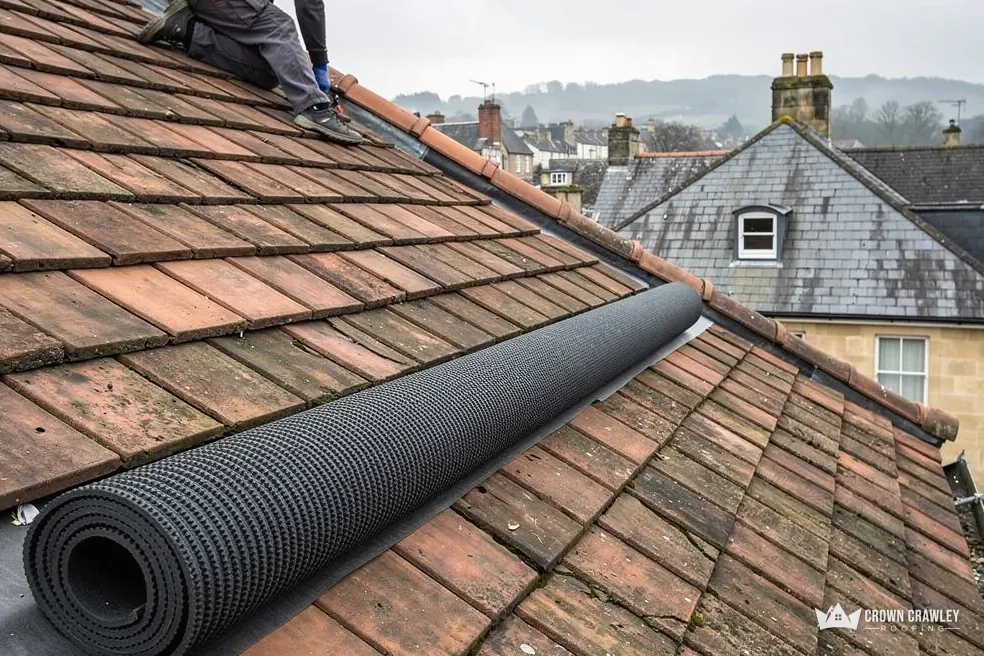
Roll of roofing membrane lying on a clay tiled roof

What stands around Dole green

Brick chimney with lead flashing on a clay tiled roof

Cottages facing Dole green

A group of cottages stood west of the road facing Dole green in 1808, and one building there, apparently early 19th century, was still standing in 1984. On a roof that old we look at timbers, battens and fixings before pricing anything.

Cottage row with a tiled roof

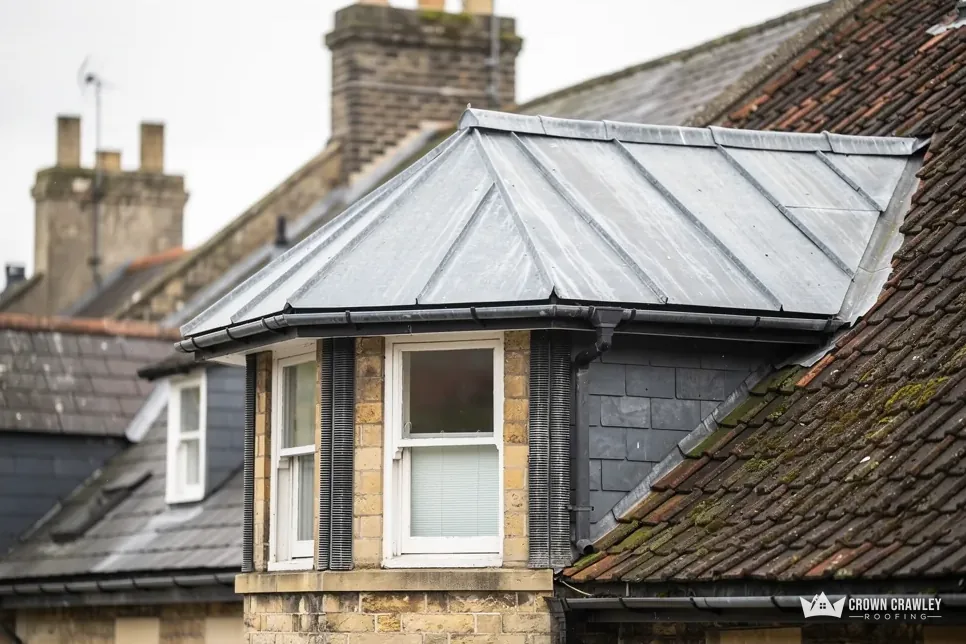
Lead-covered bay roof and chimney stack on a slate and tile roof

A smithy, a wheelwright, a post office

By 1874 the hamlet had a wheelwright and a blacksmith, and by 1896 a post office. A lean-to or flat section leaning on a taller wall meets the main roof at a flashing, so that join is checked closely.

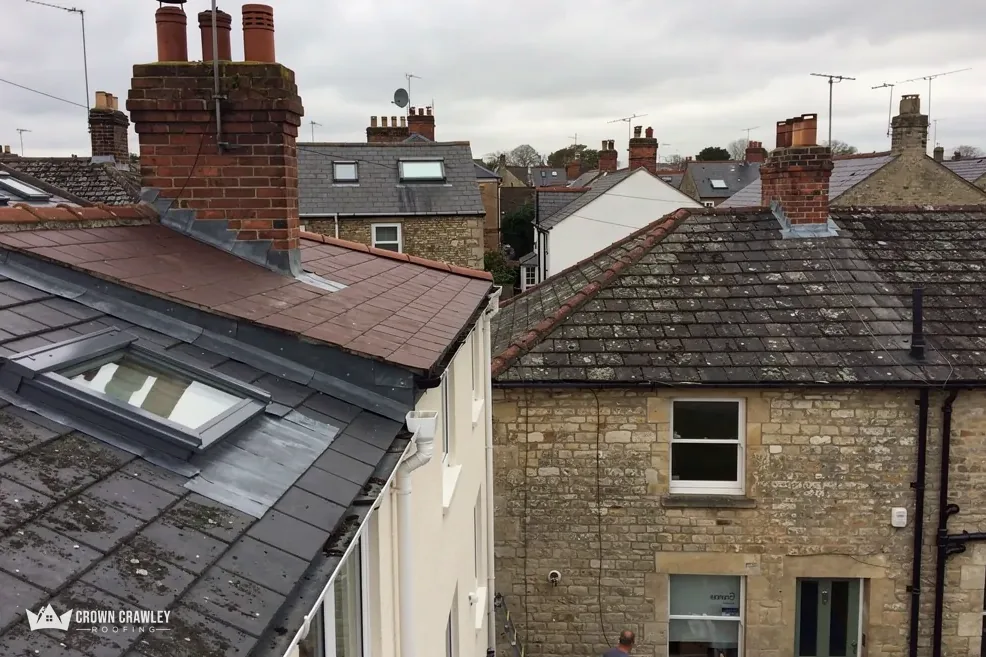
Lean-to roof against a brick wall

Slate and tiled roofs with a roof window beside a stone cottage

Houses built north of the stream

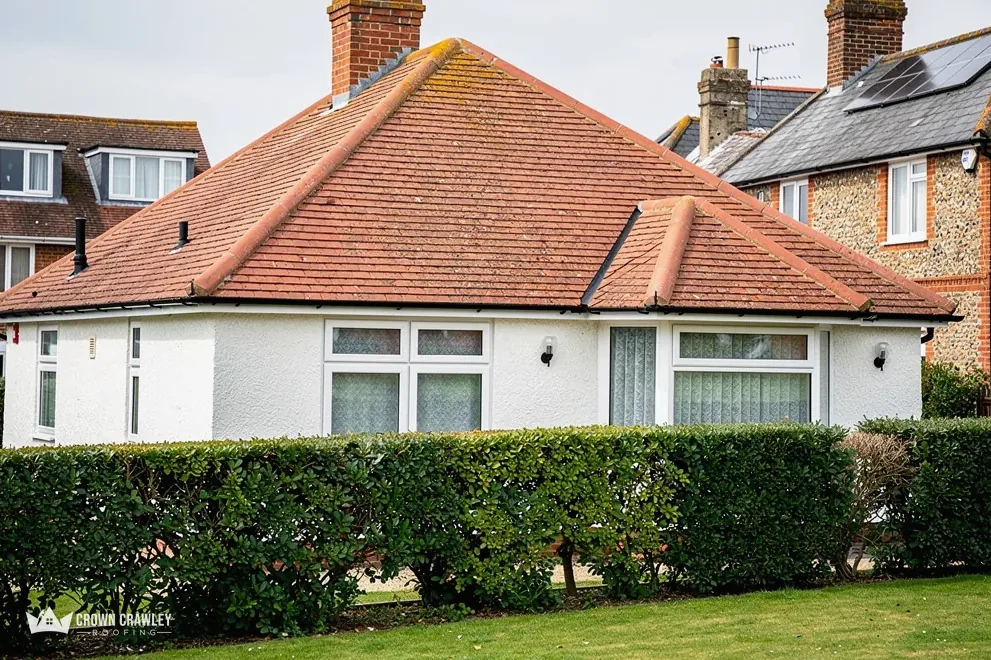
In the mid 20th century many houses went up north of the stream, partly in Upper Beeding and partly in Henfield. On a roof from those decades, the first things we read are the ridge line, the gable edges and the eaves.

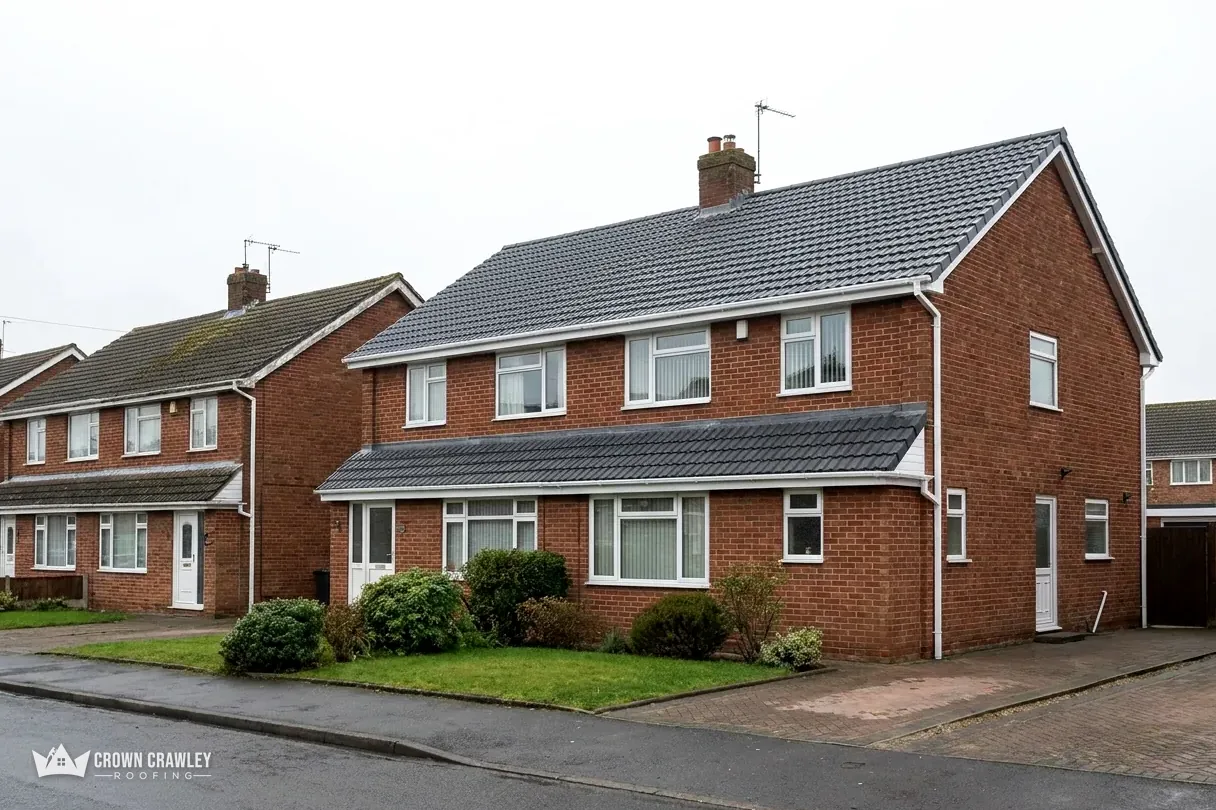
Semi-detached homes with tiled roofs

Small Dole, on the Henfield border

Map of Small Dole and the neighbourhoods around it, with Crawley for reference.

A hamlet in Upper Beeding parish, on the Henfield border, where the 2021 Census counted 786 people in the built-up area.

Distance
18.2 road miles from Crawley, to the south
Drive
About 27 minutes
Council
Horsham District Council and West Sussex County Council
Planning authority
Horsham District Council
Article 4
A 1980 direction is mapped on planning.data.gov.uk; ask Horsham what it covers
Get a free quote

The Small Dole job diary

A hamlet's roofs, read one plot at a time

Three short chapters: the old buildings by the green, the houses that arrived later beyond the stream, and the council steps that begin when a patch-up turns into a bigger job.

Stage 01 · Background

Cottages, a forge and a post office

Small Dole grew slowly alongside a road, so a single stretch of it can hold roofs from different periods with different histories of repair.

Small Dole has been on the map for a long while. The Victoria County History records it as a road destination about 1530, and by 1808 a group of cottages stood west of the road facing Dole green. A wheelwright and a blacksmith lived here in 1874, and more buildings went up before 1896, by which time the hamlet had a post office. That is a place put together in layers, one plot at a time, and its roofs carry the same story.

Why can't I judge a Small Dole roof from the road?

Neighbouring buildings can look alike from the pavement and be quite different above the tiles. One may have been re-covered once, another patched by several hands across the decades, a third may have had its ridge rebedded last decade. Guessing from the lane gets you nowhere. At the survey we get up to the roof and photograph the tiles, the battens, the ridge, the flashings and the gutters, and we send you those pictures before a price is written. You see what we see, on your own roof.

On an older Small Dole roof

Timbers
Rafters and battens firm, not soft
Tiles
Slipped, cracked or loosely nailed
Flashings
Tight where a lean-to meets brick
Gutters
Joints sealed, water running away
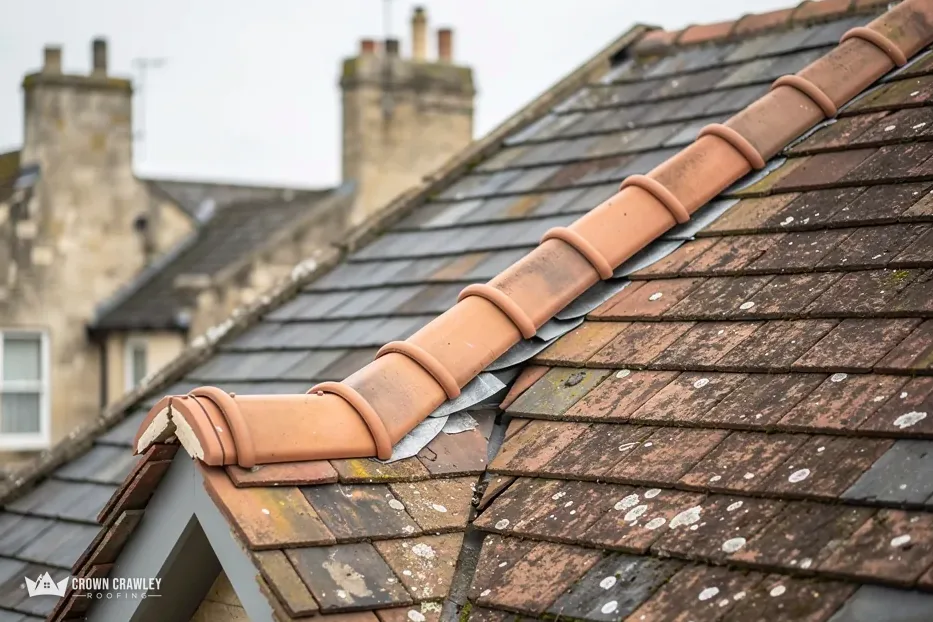
Clay ridge tiles along the hip of a weathered tiled roof

How do we handle an older cottage roof?

Slowly, and from underneath as well as above. Where repairs have piled up over the decades, the useful question is what actually holds the covering on: battens softened where water got to them, a rafter carrying an old stain, nails rusted through. A slipped tile here might be the visible end of a bigger fault or just a slipped tile, and the survey tells the two apart. If it turns out to be the tile, mending it is a smaller job than re-roofing, and the quote says so in black and white. Our pitched roofing service is where that tile, batten and underlay work sits.

On an old roof a slipped tile is sometimes just that, and sometimes the first sign of more.

What about the lean-tos and workshop roofs added later?

A small flat or lean-to roof against a taller wall is the sort of thing a hamlet with a forge and a wheelwright's yard tends to leave behind. Its weak point is the join. Flashing means a metal strip, often lead, laid across the gap between roof and wall, and when it lifts or splits, water follows the brickwork down into the room. We check the flashing and the covering together, because new metal on a tired covering only moves the leak along. Where we can reach the loft, we look at the timber on the underside as well, since a stain on a rafter shows where the water has really been travelling.

Detached red brick houses with grey tiled roofs on a quiet road

Stage 02 · Later growth

Mid-century houses across the stream

Houses built north of the stream in the mid 20th century sit partly in Upper Beeding and partly in Henfield.

The Victoria County History notes that many houses were built to the north of Small Dole's older core in the mid 20th century, across the stream, partly in Upper Beeding and partly in Henfield. For a roofer the parish line changes very little. The same practical questions come up on each of those roofs: how the covering is held down, how the loft breathes, and where the water leaves.

Is a mid-century roof worn out?

Not by age alone. If yours is covered in concrete tiles, Marley puts their life at around 60 years, with the caveat that it promises nothing. Clay has its own benchmark: 60 years is the Building Research Establishment's stated minimum for clay tile. A house from the 1950s or 60s has reached the age where we look hard without assuming the worst. What wears first is generally what surrounds the tile: bedding mortar, nails, felt at the eaves and the gutter line itself. Those are repairs, and they cost a fraction of a new covering.

Words on a survey sheet

Ridge
Highest line, where slopes meet
Verge
Sloped edge where a gable ends
Eaves
Low edge that overhangs the wall
Underlay
Waterproof sheet beneath the tiles

Why does a ridge from this period get a closer look?

Marley reads the 2014 revision of BS 5534 as the point where mortar stopped being trusted to carry ridge and hip tiles alone: anything bedded is meant to be fixed mechanically too. A ridge laid before that may be sitting on mortar and little else. When we rebed one, we add fixings, and if the roof suits it we explain what dry-fixed ridge tiles would involve. Our dry ridge and dry verge page sets out how those systems work and when they make sense.

What do we look at in the loft?

Air movement. Under old-style non-breathable felt, Marley's reading of BS 5250 calls for a ventilation gap along the eaves: 25mm on a pitch of 15 degrees or less, 10mm above that. Insulation stuffed hard into the eaves shuts the gap, and warm moist air from the house then settles as condensation on the underside of the roof. We draw the insulation back, clear the opening and look over the timber for tide marks. We also look at the fascia, soffit and gutters, because a failing gutter wets the eaves from outside while a blocked vent wets them from within. When the gutters need attention, gutters, soffits and fascias explains what the job involves, from a short run to a full replacement.

Stage 03 · Permissions

When Small Dole repairs meet Horsham rules

Planning sits with Horsham District Council, and bigger re-roofs also go past its Sussex Building Control team.

Small like-for-like jobs in Small Dole stay off a council desk. A few new tiles, a freshly bedded ridge, a renewed valley: the house looks the same afterwards, so there is nothing to approve. Things change when the work grows to a whole slope, when the material is different, or when the scaffold needs the road.

Will my Small Dole re-roof need approval?

The Planning Portal's rule of thumb has two halves: under 25 per cent of the building envelope touched, and under 50 per cent of the roof. Stay below the pair of them and approval is not normally required. Approval is needed, whatever the area, when a new covering material increases the weight of the roof covering by 15 per cent or more, so swapping light for heavy can pull a small job in. Horsham District Council trades its building control as Sussex Building Control. For larger work we ask them before fixing a date and let their answer set it. Whether a roof job needs planning permission is covered in our post on planning permission for roof work.

Who to ask, by question

Planning
Horsham District Council
Approvals
Sussex Building Control
Road scaffold
West Sussex County Council licence
Lead time
10 working days for that licence
Bats
Stop and rethink the method
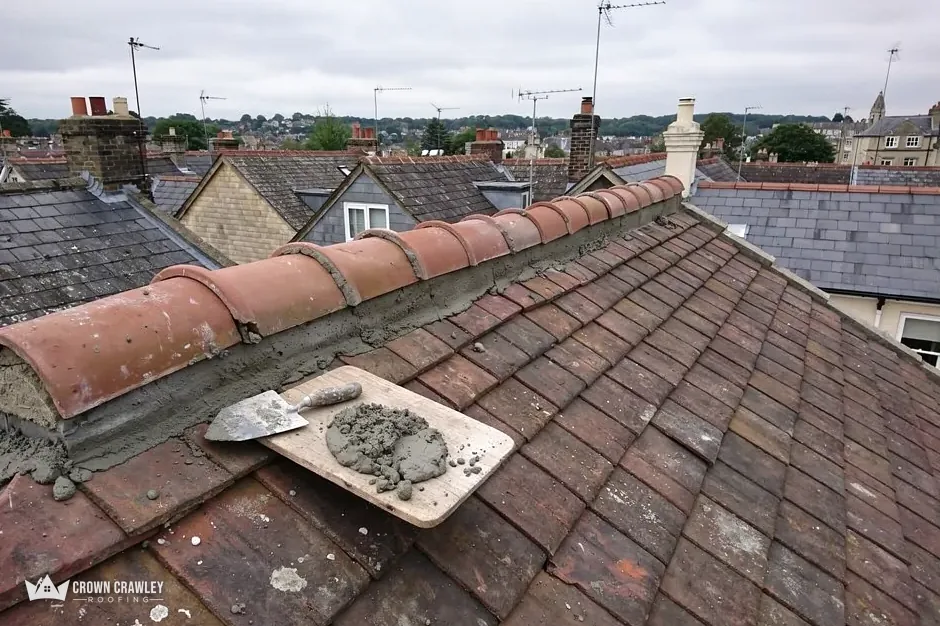
Ridge tile bedded in fresh mortar with a trowel resting on the roof

What about the Article 4 direction recorded here?

Horsham District Council can confirm whether a Small Dole house sits in a conservation area. The government's planning data site shows an Article 4 direction dated 1980, relating to land at Hoewood in Small Dole. Which rights it removes is something Horsham's planners can answer, and they are the people to call if you want a different colour, material or profile overhead. Matching tiles put back where the old ones were raise no such question, and at the survey we say which kind of job yours is.

Scaffold on the Henfield road, and bats in the loft

Scaffold needs a licence only when it takes up the public highway. In West Sussex that licence comes from the county council: 10 working days' notice, £266 for a month. Keep the scaffolding inside your boundary and the question disappears. Failing that, the road gets used, the licence is worked out jointly with the scaffolding firm, and a first day is picked to suit. The neighbours get a heads-up from us before the poles arrive.

One more thing gets checked on the survey. Bats, and the places they breed or rest, are shielded by law; GOV.UK gives repairing a roof as one example of work that may affect them. Bat droppings on the loft boards, or birds sitting on a nest under the eaves, mean we stop, show you what we found and settle the next step with you.

Need to know: Small Dole roofs

Can an old Small Dole building keep its roof with a repair?

The answer sits in the survey, not the view from the lane. A handful of slipped tiles, a lifted flashing or a tired ridge may be fixable without stripping the slope. We climb up, photograph what has gone wrong, and write down whether a repair or a re-roof is the sensible route before you commit to anything.

Which council deals with a roof in Small Dole?

Horsham District Council is the district council and planning authority for Small Dole, and its building control brand is Sussex Building Control. Highway scaffold licences come from West Sussex County Council. Some mid-century houses lie partly in Upper Beeding and partly in Henfield, so if you are unsure about your address, the planning team there can confirm it for you.

Does the Article 4 direction on planning.data.gov.uk affect my roof?

The 1980 direction relates to land at Hoewood, and which rights it takes away is a question for the council. If your house is near there, ask before planning anything visible. Elsewhere, put your plans to Horsham's planners if the roof is going to look different. Fitting the same covering in the same colour is a different matter, and at the survey we tell you where your own job falls.

What do I send to start a Small Dole quote?

Send one photo of whatever worries you, whether slope, ridge, verge or gutter, with your postcode and any stain you have spotted indoors. A survey follows, then our own pictures of your roof, then a single total price on paper. Nothing is agreed over the phone, so you can read it in your own time.

A written total for your Small Dole roof

A picture of the troublesome tile, ridge or flashing and a Small Dole postcode are enough for us to fix a survey day.

01293 974253

10-year workmanship guarantee, in writing.

Call Get a free quote