Roofers in Ansty

Roofs on old farms and listed cottages at the Brighton road fork.

Ansty is a hamlet on the Brighton road with farmhouses dating from about 1450 and several Grade II listed homes. We inspect first, share photographs of what is there and write down one total.

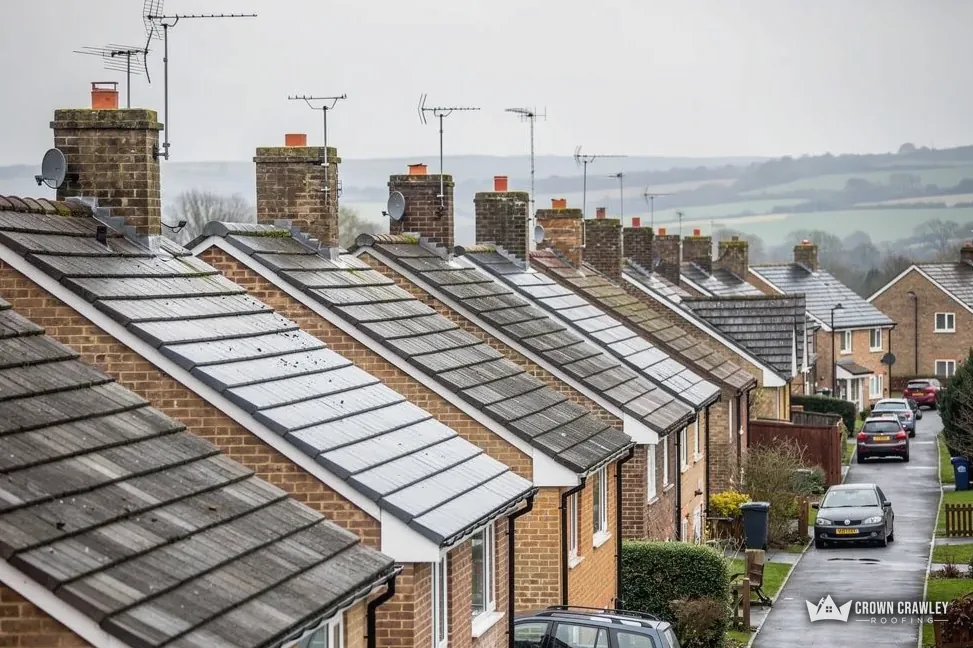
Terraced street with new grey tiled roofs

What sits over Ansty's farms and cottages

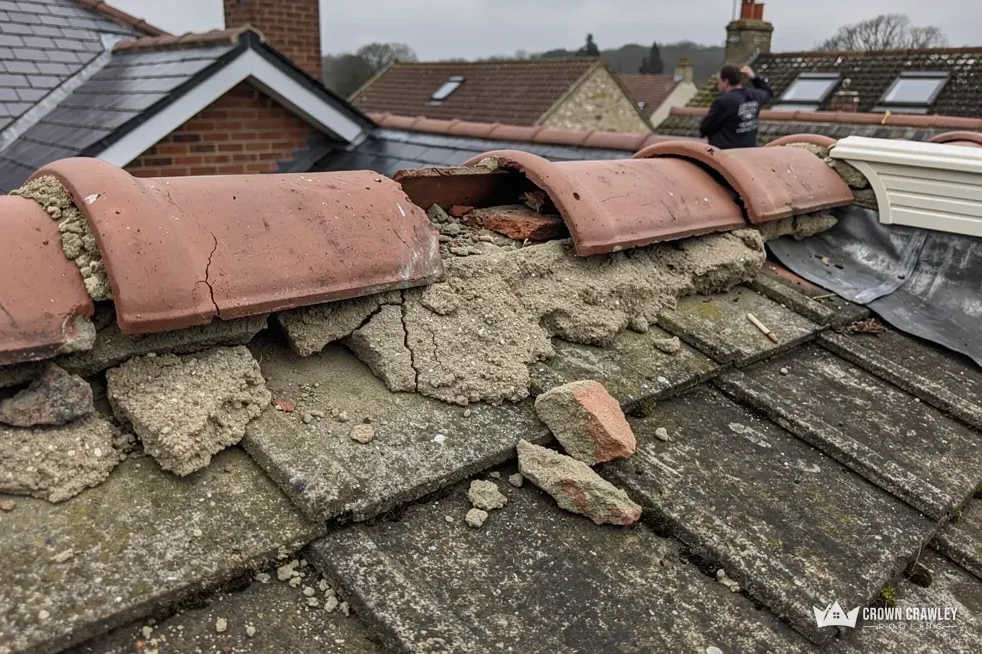
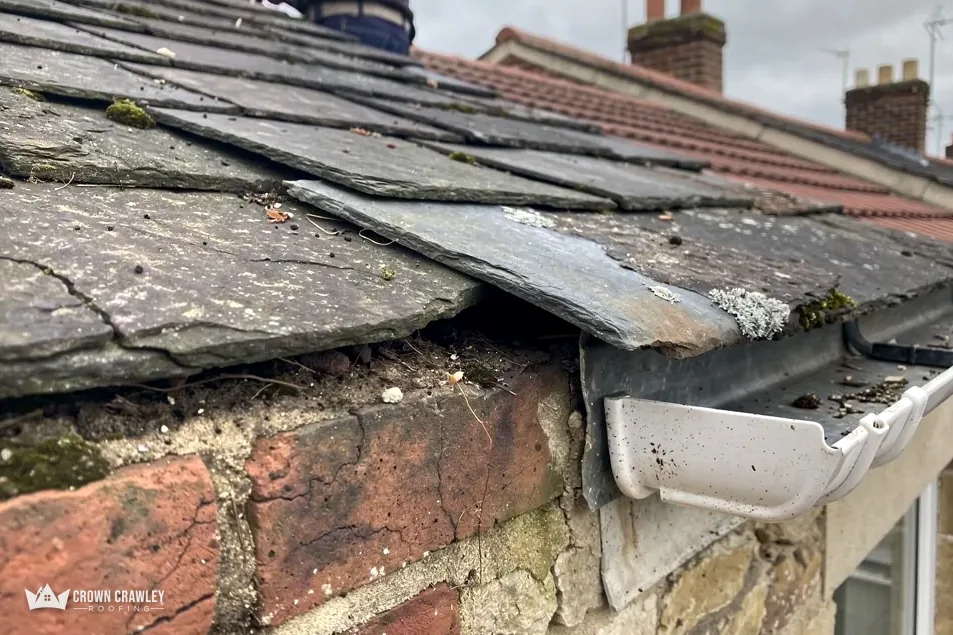
Crumbling mortar and cracked ridge tiles on a roof

Anstye Farm, a 15th-century house

Anstye Farm, at the fork of the Brighton and Bolney roads, is a house of the 15th century that still shows its two-bay hall. A roof on a frame this old is judged from the timbers outward.

Old timber-framed house with tiled roof

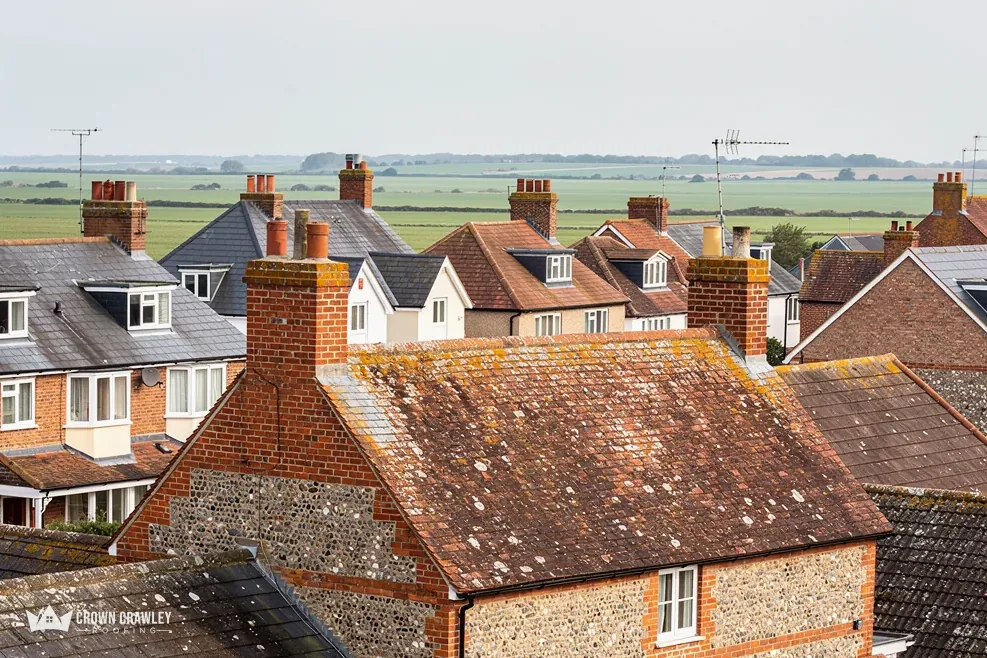
Flint-walled house with a mossy clay tiled roof overlooking fields

Butler's Farm and its exposed frame

Butler's Farm dates from about 1450, and more of its timber framing is exposed outside. Where the frame shows, so does any movement, which is why we look at the walls as well as the covering.

Exposed timber frame under a roof

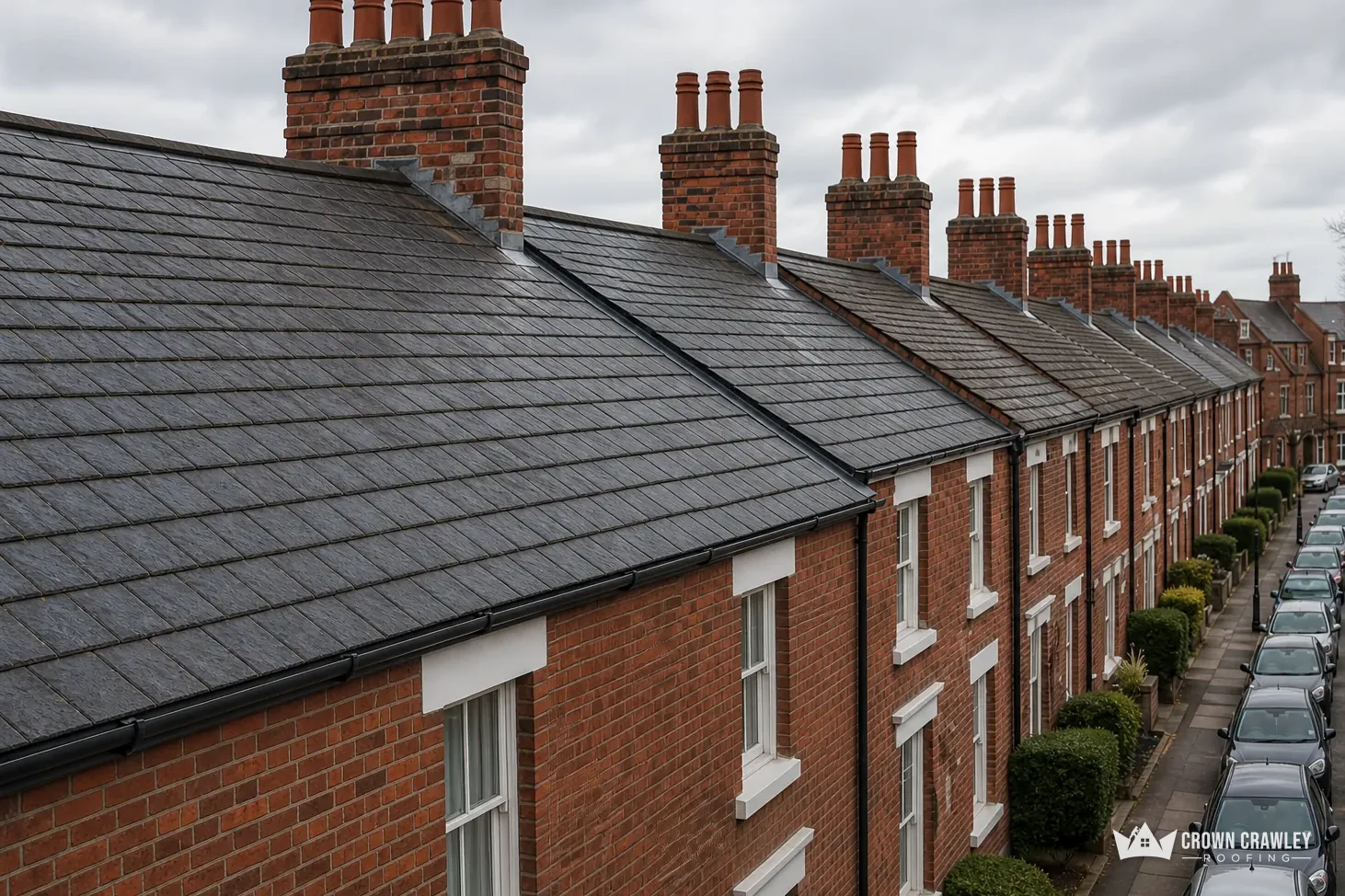
Long terrace of slate roofs with a line of brick chimneys

Listed Grade II cottages

Mount Noddy Cottage, The Old Cottage and The Ancient Farm are all listed Grade II. Listing changes what a repair may touch, so we check what applies to your house before we plan the work.

Cottage roof with a brick chimney

Ansty, on the Brighton road

Map of Ansty and the neighbourhoods around it, with Crawley for reference.

Ansty is a hamlet on the Brighton road, south-west of Cuckfield and south of Crawley, in the old parish of Cuckfield.

Distance
10.7 road miles from Crawley, to the south
Drive
About 14 minutes
Council
Mid Sussex District Council and West Sussex County Council
Planning authority
Mid Sussex District Council
Population
2,765 (Census 2021, Ansty and Staplefield parish)
Old spelling
Anstye, as the Victoria County History has it
Get a free quote

Ansty roof notes

Reading a roof on a 500-year-old frame

Three short chapters on Ansty's farmhouses and their frames, the listed cottages around them, and the Mid Sussex and West Sussex steps on a bigger job.

Stage 01 · Hamlet

Anstye Farm at the Brighton road fork

Ansty's oldest houses stand where the Brighton and Bolney roads divide, and their roofs rest on frames that are about 500 years old.

Ansty is a hamlet on the Brighton road, south-west of Cuckfield and part of the old parish of Cuckfield, which is why the Victoria County History describes it in its Cuckfield chapter and spells the name Anstye. Anstye Farm, at the fork of the Brighton and Bolney roads, is a 15th-century house that keeps evidence of a two-bay hall with a two-storeyed wing at its west end. Butler's Farm, about 500 yards to the south-west, also dates from about 1450 and began the same way.

What does a very old frame mean for the roof above it?

It means the order of the survey changes. On a modern estate house the covering tells most of the story. On a house like Anstye Farm the structure comes first: the roof timbers, the wall plates they sit on (the timbers laid along the top of a wall) and the tops of the walls themselves. A frame that has stood for 500 years has moved and settled, so a roof line that is not perfectly straight may be perfectly sound. We look for the movement that is recent, such as a sagging slope, open joints or damp timber under a leaking valley, and we photograph it for you.

On an Ansty survey

Frame
Timbers sound under the roof's load
Covering
Type, wear, fixings and any patches
Chimney
Pointing, flaunching and lead
Walls
Tops of walls dry and sound
Eaves
Gutters, boards and air gaps
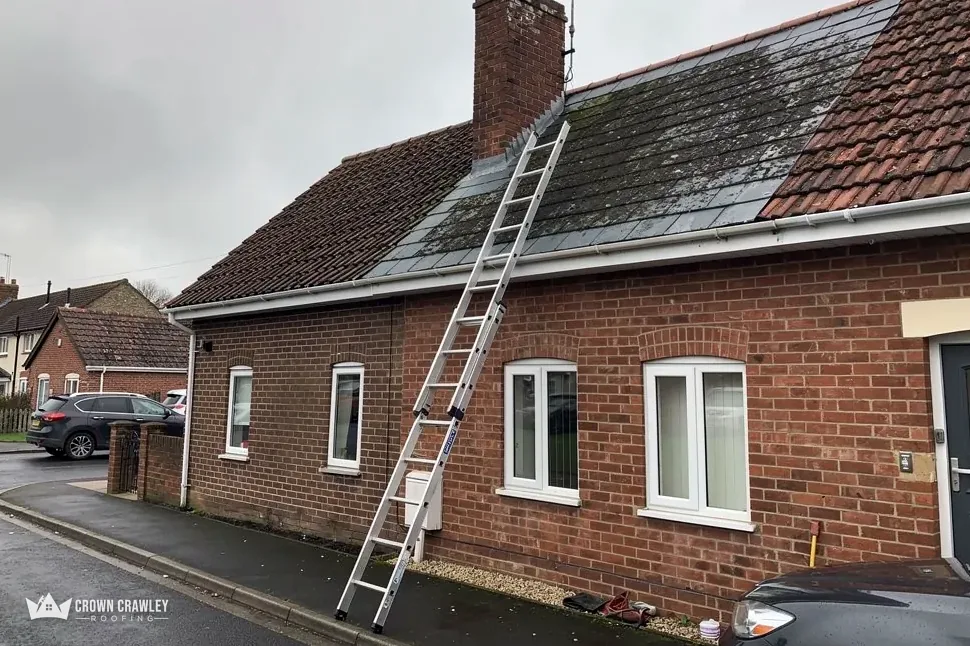
Brick bungalow with a ladder leaning against its tiled roof

How long will the covering last?

Each Ansty roof is identified on the day, tile by tile, rather than guessed from the street. Published figures give a frame of reference only. Clay tiles carry a Building Research Establishment minimum of 60 years, but the figure is said to be a poor guide for old peg tile. Marley gives concrete tiles about 60 years with no guarantee attached. Lead flashing is quoted at more than 80 years in one cost guide, while mortar, nails and underlay can fail sooner. On a chimney, the lead and the flaunching, which is the mortar cap holding the pots, are where we start; our chimney repairs page explains that work.

After the survey you receive a plain account of each fault, what it is likely to do if left, and one total in writing for the repair. If the answer is a few tiles and some pointing, the quote will say that and nothing more. Our pitched roofing page sets out how tile, batten and underlay repairs are done.

Rear of a brick detached house with a tiled roof and garden

Stage 02 · Listed homes

Grade II cottages and farm roofs

Mount Noddy Cottage, The Old Cottage and The Ancient Farm are all listed Grade II, and listing shapes what a roof job may touch.

Mount Noddy Cottage has been on the National Heritage List for England at Grade II since it was first listed on 11 May 1983. The Ancient Farm and The Old Cottage are Grade II as well. Three listed homes in one small hamlet is reason enough to ask about listing before we name a price.

What does a Grade II listing mean for a roof?

Section 7 of the Planning (Listed Buildings and Conservation Areas) Act 1990 says that works for the alteration or extension of a listed building in any manner that would affect its character must be authorised. In plain terms, if the work changes how the house looks or is made, you need listed building consent from Mid Sussex District Council. A repair in the same material, laid in the same way, is far less likely to raise the question, but the council decides, and you should ask it before booking. Keep the reply. Our post on planning permission for roof work explains how the ordinary householder rights sit alongside a listing.

Listed-building terms

Listed building
Home on the national heritage list
Listed building consent
Council permission for listed alterations
Wall plate
Timber along the top of a wall
Matching repair
Same material, laid the same way

How do we plan a job on a listed roof?

We start with photographs and a written description of the fault and the repair, so the council and you are reading the same facts. We note the tile or slate, its size, its colour and the way it is fixed, so a replacement can match. We avoid anything that adds weight to an old frame, and we say at the survey if a repair cannot be done without changing the look of the roof. In that case the sensible next step is a conversation with the council, with our description in hand, before anyone orders materials.

For these houses the listing is the first layer to think about, and the Mid Sussex planners will know if a conservation area boundary also takes in your lane. That is a short list of questions: is the building listed, which grade, and does the work alter its character. Answer those first and the rest of the job is plain roofing.

On a listed roof, the question to ask the council comes before the quote, not after.

What about the lead at the chimney?

Lead sheet is sold in numbered codes by thickness. Royston Lead's brochure lists codes 4, 5 and 6 for flashings, and recommends code 3 for soakers only, the small folded pieces that sit under each tile course against a wall. A flashing that has cracked at a bend, or lifted from the brickwork, is a common cause of a stain below a chimney. On a listed house we repair or renew the lead to match what was there, and photograph it before and after so the file shows exactly what changed.

Stage 03 · Permissions

Mid Sussex steps and the Brighton road scaffold

Mid Sussex District Council covers planning and its own building control at Ansty, and West Sussex County Council licenses scaffold on public roads.

Ansty is outside the South Downs National Park, so planning stays with Mid Sussex District Council. The council also runs its own building control service. Conservation area status is settled address by address, so put your postcode to the Mid Sussex planning officers early. Whether an Article 4 direction touches your address is something only the planning team can confirm, and a short question to them settles it.

When does a bigger job at an Ansty house need building control?

The Planning Portal frames re-roofing as two tests. First, is under 25 per cent of the building envelope affected, and under 50 per cent of the roof? If both are true, an application is normally not needed. Second, two triggers apply whatever the area: a new covering that adds 15 per cent or more to the weight of the old one, or one that would perform very differently in a fire. Both matter on an old frame, so we raise them at the survey. Our roof replacement page describes a full re-roof step by step.

Who to ask in Ansty

Planning
Mid Sussex District Council
Approvals
Mid Sussex's own building control
Conservation area
Confirm with Mid Sussex planners
Scaffold on road
West Sussex County Council licence
Wait to allow
10 working days at least
Terraced brick houses with flint detail along a wet street

Does a scaffold by the Brighton road need a licence?

West Sussex County Council requires a licence before scaffolding goes up on a public highway. Its application window is a minimum of 10 working days, and a licence for one month is priced at £266. Ask when you book who applies; we work through it with the scaffolder and build the start date around it. Scaffolding on your own land, inside the garden or on a private drive, needs no highway licence, and we check which your house allows. We also plan a clear route for materials and waste, and tell you what to expect each day. On an old house with a narrow approach, we walk the route with you at the survey, because a long ladder, a scaffold delivery and a skip all need space, and the garden gets the care it deserves.

Old roofs can shelter bats, and the law protects the places where they breed and rest. Government guidance names roof repair as work that can affect them, so any sign found at survey stage stops the job until it has been talked through with you. To begin, send a photograph of whichever part of the roof concerns you, with your Ansty postcode, and we will suggest a time for the survey. A view of the chimney and ridge from the road is often enough for a first look.

Questions about Ansty roofs

Can the roof of a listed Ansty cottage still be repaired?

Yes, but ask Mid Sussex District Council whether the work needs listed building consent before you book. Section 7 of the 1990 Act covers works that affect a listed building's character. We describe the fault and the repair in writing, with photographs of the tile or slate, so the council can answer with the facts in front of it.

Can I swap the tiles on a house near Anstye Farm for a different kind?

Often, if the house is not listed. A change of covering at Ansty turns on listing, weight and fire performance, and also on whether your plot lies inside a conservation area, which the district council can confirm. A listed house is a different matter, so check with Mid Sussex District Council's planning team if either applies to your house, and keep their answer with the survey.

What does a timber-framed Ansty house need from a roofer?

A look at the frame before the covering. We check the roof timbers, the wall plates and the tops of the walls for recent movement and damp, then the tiles, valleys and chimney. A roof line that is not perfectly straight can still be sound after 500 years. The photographs show you which signs are old settling and which need repair, so you are never asked to take a worry on trust.

Who checks the work if my Ansty re-roof needs building control?

Mid Sussex District Council runs its own building control service. Whether a re-roof needs an application depends on how much of the roof and the building envelope is touched, and whether the new covering is 15 per cent or more heavier or behaves differently in a fire. We raise it with them before a start date is fixed, and the written price shows the assumption.

Show us your Ansty roof

Tell us where the roof is letting you down, add your Ansty postcode, and we will suggest a time for the survey.

01293 974253

10-year workmanship guarantee, in writing.

Call Get a free quote