Roofers in Staplefield

Roofs around a village green, in the High Weald.

Staplefield gathers round a large triangular green where five roads meet, with a conservation area designated in 1984 and the High Weald all round. Each roof is surveyed before we put a single written figure on it.

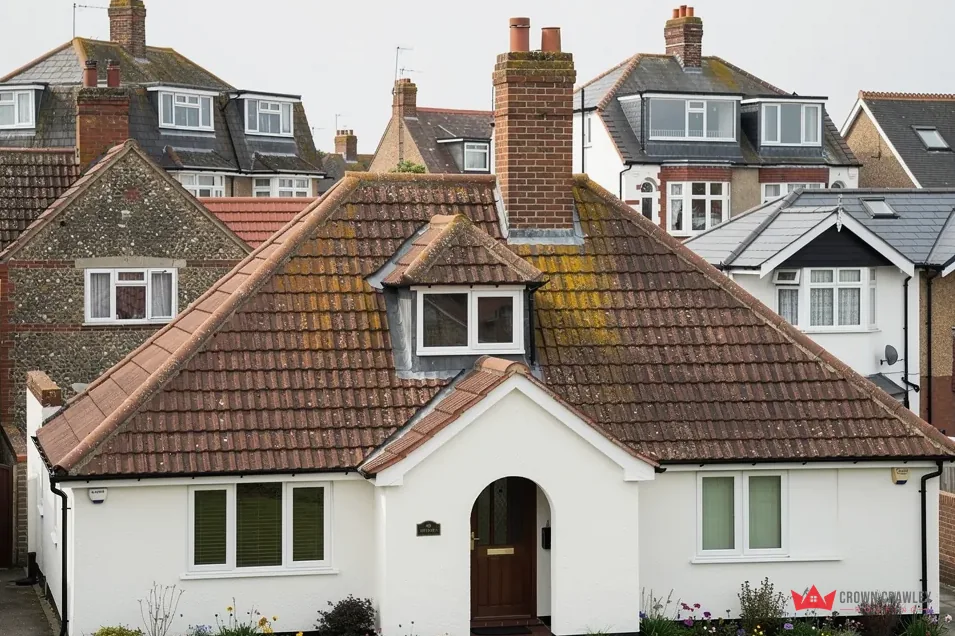
Dormer window with white cladding in a clay tiled roof

Roofs around the Staplefield green

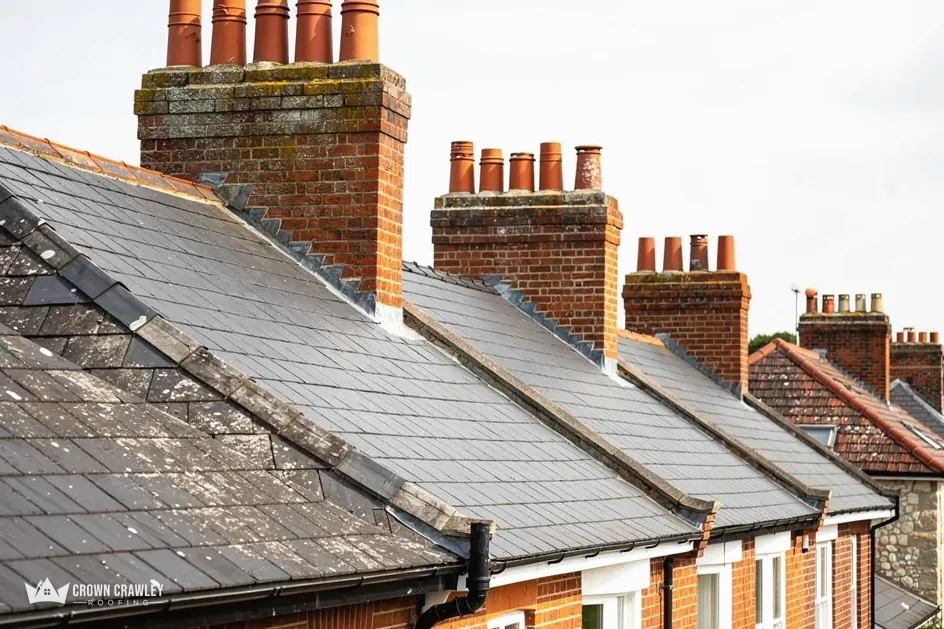
Row of terraced chimney stacks above slate roofs

Stone-built farmhouses

Rocks Farm, a stone-built house of about 1650 with mullioned windows, had a roof of Horsham slabs in 1940. Stone slabs are heavy, so on a house like this we judge the timbers and the walls beneath as carefully as the covering.

Heavy stone roof on an old farmhouse

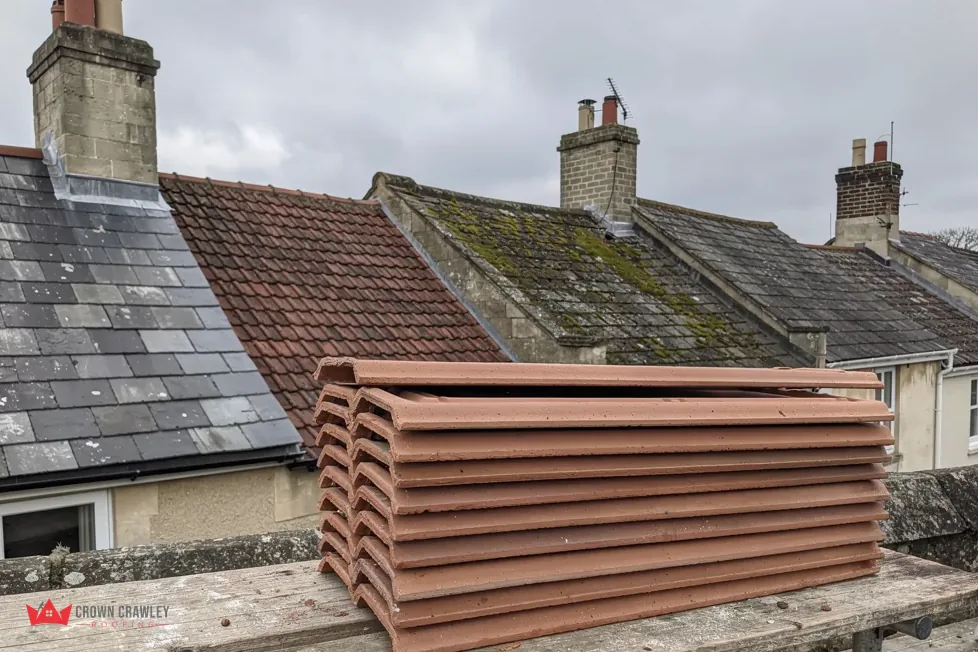
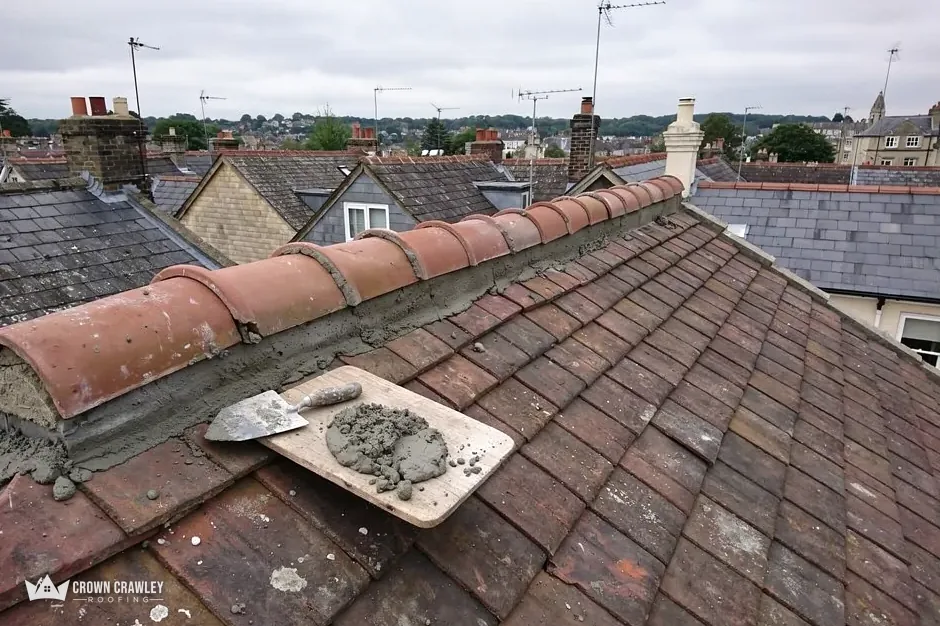
Stack of clay ridge and hip tiles on a flat roof

Listed houses and the school

Barnhall and Staplefield School are both listed Grade II, as is the Church of St Mark. On a listed Staplefield roof the council's view comes before the ladder, so we confirm the listing and the consent route before planning any work.

Older tiled roof with a stone chimney

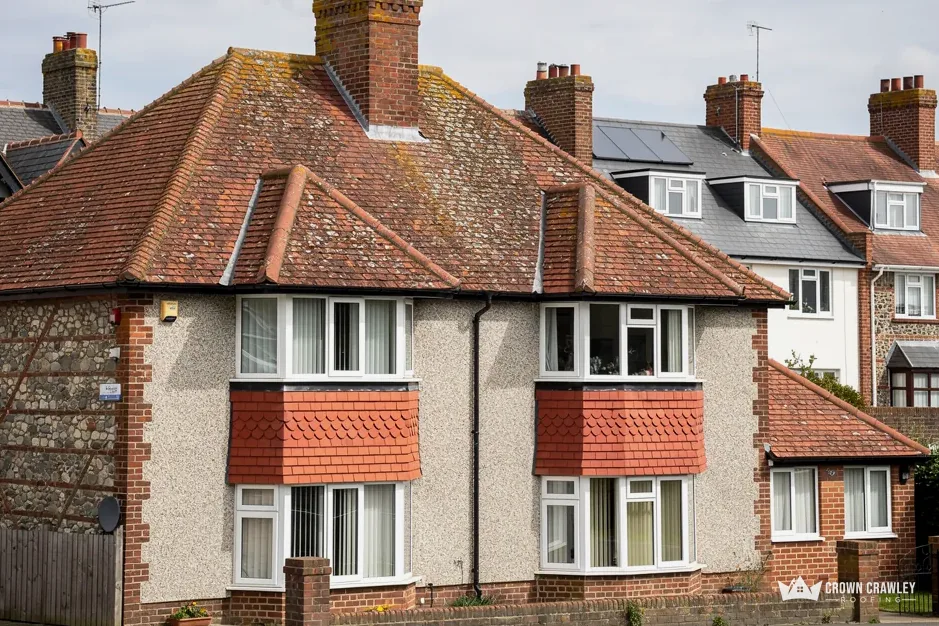
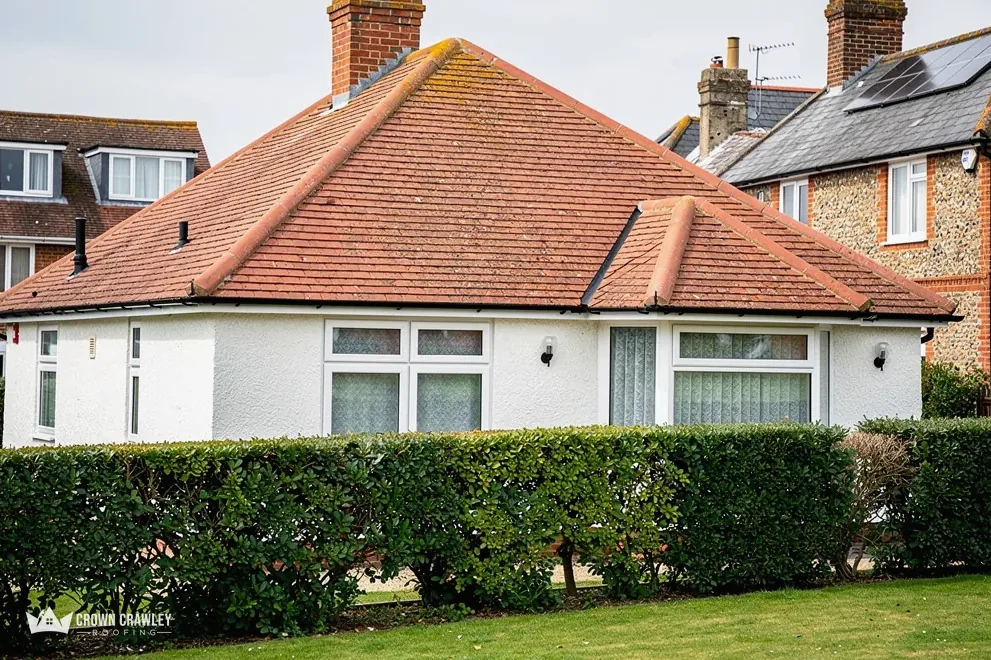
Pebbledash semi-detached house with a red clay tiled roof and bay windows

Homes inside the conservation area

A portion of the village sits within the Staplefield conservation area. We ask where the boundary runs for your address, then keep the covering, the colour and the roof line as they are unless the council agrees a change.

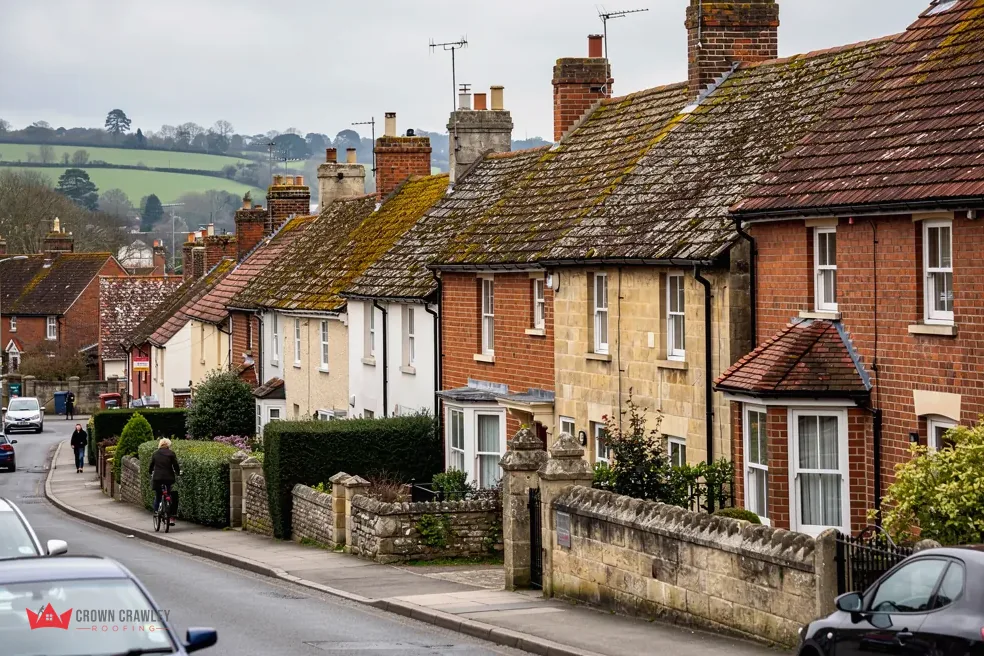
Village houses with tiled roofs

Staplefield, south of Crawley

Map of Staplefield and the neighbourhoods around it, with Crawley for reference.

Staplefield lies about three miles north-west of Cuckfield church, in what was once Cuckfield parish, a short drive south of Crawley.

Distance
5.8 road miles from Crawley, to the south
Drive
About 10 minutes
Council
Mid Sussex District Council and West Sussex County Council
Planning authority
Mid Sussex District Council
Conservation area
Staplefield
Landscape
Inside the High Weald National Landscape
Conservation area
Designated 1984, part of the village
Get a free quote

Staplefield: our notes

Roof work in a protected village

First the green and its Horsham slab roofs, then the 1984 conservation area, the High Weald and the listed buildings, and last the Mid Sussex and county steps on a larger job.

Stage 01 · Village

Five roads, one green, old roofs

Staplefield's green sits at the junction of five roads, and some of the houses around it carry stone roofs that call for a careful hand.

Staplefield is easy to picture. A large triangular green lies west of the church, at the meeting of five roads, with a granite war memorial at its eastern angle. Staplefield was split from Cuckfield to become a parish in its own right in the 1840s, and the Victoria County History describes it in its 1940 volume. St Mark's church, designed by B. Ferrey in 1847, has a chancel and nave in 13th-century style with a west bell-cote. Houses of many ages stand round the green, and each survey starts with what is actually on the roof, not with the view from the road.

Preparing for a bigger job

Covering
Stone, clay or concrete, and its wear
Roof timbers
Sound enough for the covering's weight
Chimney
Pointing, flaunching and flashing
Valleys
Liners whole and clear of debris
Roofline
Fascia and gutters true
Village street of brick and render houses with old tiled roofs

What does a Horsham slab roof ask of a roofer?

The same history records Rocks Farm, three quarters of a mile north-east of the church, a stone-built house of about 1650 whose roof was covered in Horsham slabs in 1940. It describes Staplefield Place, west of the green, as a large timber-framed building with a Horsham slab roof, and Tyes Place, east of the green, as an L-shaped house whose east wing holds a medieval hall. Horsham slabs are thick, uneven stone flags, and the frame below has carried their weight for a very long time. On a roof like that our first look is at the rafters and the timber plates they sit on, and only then at the slabs and the oak pegs or nails holding each one. Moving to a lighter or heavier covering changes the load on that old frame, which is why an engineer or surveyor looks at the timbers before any swap is priced.

What if the roof is plain clay or concrete tile?

Then the checks change a little. For clay, the Building Research Establishment names a 60-year minimum, and a conservation writer doubts that figure means much for old handmade peg tile. Marley quotes around 60 years for concrete tiles and stresses that it is not a warranty. The Confederation of Roofing Contractors reckons well-kept slate can top 100 years. Whatever the covering, the weak spots on a Staplefield house tend to be the same: the ridge, the valleys, the joints against a chimney, and the gutters at the foot of each slope, where a blocked run can push water back under the bottom course and into the eaves.

Keep reading

After the survey you get pictures of your own roof, a short written note of each defect, and one total in writing. The pitched roofing page explains what a tile, batten or underlay repair involves and when renewing a slope makes more sense than mending it. If a mend is enough for your roof, that is what we recommend.

White rendered bungalow with a hipped tiled roof and dormer

Stage 02 · Protected land

Conservation area, High Weald, listings

Staplefield has a conservation area, a National Landscape around it and several listed buildings, and each one changes who we ask before work begins.

Three kinds of protection overlap at Staplefield. Mid Sussex District Council designated the Staplefield Conservation Area in 1984, and its booklet notes that although few buildings in the village are listed, their variety gives it character. High Weald National Landscape status covers Staplefield too, though the planning rules still use the older outstanding-beauty name. And several buildings are listed at Grade II, among them the Church of St Mark, Barnhall and Staplefield School.

Does the conservation area stop a roof repair?

No. Matching tiles laid in the old pattern change nothing a passer-by on the green would see, and ordinary upkeep is not what these designations target. The picture changes when the work would alter something visible from the green or the lanes: a different covering, a dormer, or a roof window facing the green. Conservation areas and National Landscapes both count as protected land in the planning rules, and some householder rights are narrower there. Our post on planning permission for roof work explains how those rights work, and Mid Sussex District Council's planning team gives the final answer for your address. Ask about the boundary as well, because the conservation area does not take in every Staplefield house.

Protected-land terms

Conservation area
Land whose character the council protects
National Landscape
Today's title for the old outstanding beauty label
Listed building consent
Council approval for works to a listed building
Faculty
The Anglican permission for church works

Before any tile moves, we ask which of these three areas your house stands in.

Who gives consent for a listed house, the old school or St Mark's?

Section 7 of the Planning (Listed Buildings and Conservation Areas) Act 1990 requires authorisation for any alteration to a listed building that would touch its special character. For Barnhall, the school or any other listed house, that authorisation is listed building consent from Mid Sussex. St Mark's is mapped as an Anglican place of worship, so its roof falls under the diocese's faculty system instead. The parish handles that, and our part is a clear survey of the roof that the parish can put in front of whoever decides.

Whichever route applies, the order of events is the same. Tell us at the start, send a photo, and we read the roof, write up what the repair would involve, and give you something concrete to show the council before any date is fixed. Nobody wants to learn about a restriction once the scaffold is up. A written account also means the planners see the same evidence we do, which usually brings a quicker, clearer reply, and it leaves you a record of what was agreed for the day the house is sold.

Stage 03 · Permissions

From the planning desk to the road

Mid Sussex District Council handles planning and building control for Staplefield, and a West Sussex licence covers any poles on the highway.

Staplefield is not in the South Downs National Park, so Mid Sussex District Council, not the Park authority, decides planning. Building control for the village also sits with Mid Sussex, which keeps that service in-house. West Sussex County Council is the highway authority, which becomes relevant as soon as a scaffold needs the lane.

When does a bigger Staplefield re-roof need building control approval?

The Planning Portal gives the national yardstick. Below 25 per cent of the building envelope (every outer wall, floor, roof and opening, added up) and below 50 per cent of the roof, a Staplefield job is usually outside building control. A new covering adding 15 per cent or more in weight, or one that would act quite differently in a fire, brings approval back in. With Horsham slabs on some village roofs, weight is a live question here, so we bring it up when we survey, not on the morning of the job. If a job is near either line, we check with Mid Sussex before fixing a start and write the outcome into the price.

Who to ask, for what

Planning
Mid Sussex District Council
Approvals
Mid Sussex building control
Road scaffold
West Sussex County Council licence
Lead time
10 working days at least
Wildlife
Bats stop the work for advice
Ridge tile bedded in fresh mortar with a trowel resting on the roof

Does a scaffold on a Staplefield lane need a licence?

Only if the frame stands on or over the highway. West Sussex County Council issues those licences and asks for at least 10 working days' notice before erection. One month costs £266, and its fast-track service, arranged by email first, carries an extra £52. A frame built wholly on your own land is off the highway. Lanes round the green can be tight, so the survey settles where poles, skip and lorry can each go; room for a van does not always mean room for a frame too. The county leaves the applicant unnamed, and the scaffold firm and Crown sort it out.

Roosting bats are legally shielded, and the government's bat guidance includes reroofing and roof repairs in its list of risky work. Old barns, stone houses and big trees make Staplefield a place where we watch for them. Any droppings or a roosting bat pause the job, and you hear from us before anything else moves. For a full strip and recover, our roof replacement page runs through a full renewal step by step, and our chimney repairs page covers the stacks that let water into so many older houses.

Staplefield roofs: common questions

My Staplefield house is in the conservation area. Can I replace slipped tiles?

Usually yes, if the new tiles match the old and are laid the same way, because from the green the roof then looks exactly as before. Changing the covering or the roof's shape is another matter. Only part of the village is mapped as conservation area, so check your boundary and any plans with Mid Sussex District Council's planners first.

Can I add a dormer to a Staplefield cottage in the High Weald?

Possibly, but not without asking first. Mending in matching materials is unaffected by the designation, yet a dormer or a new covering changes the roof's look, and on protected land like the High Weald and the 1984 conservation area the usual householder rights are narrower. Ask Mid Sussex District Council before paying for drawings; a short note and a picture of the roof are enough to start.

Who decides about work on a listed Staplefield house?

Mid Sussex District Council decides on listed building consent for a house such as Barnhall. A church in Anglican use, such as St Mark's, goes through the faculty system instead. If your roof is listed, tell us before the survey, and we write up its condition and the proposed repair in terms the council can assess.

How will I know the price is for my own Staplefield roof?

Because the survey comes first. We go up, photograph your roof, and send the pictures with what we found. The single written price follows, covering that work and no other. Where there are two ways to fix a fault, a cheaper repair and a longer-lasting renewal, we set out both and tell you which we would choose and why.

Your Staplefield roof, surveyed first

Tell us your postcode, add a photo of the roof or stain, and note any listing or conservation area. We book the survey.

01293 974253

10-year workmanship guarantee, in writing.

Call Get a free quote