Homes along the London-Brighton road
A road branches west off the London-Brighton road here, towards Horsham. Roads throw dust and grime at gutters and tile faces, so we check what has built up before judging any wear.
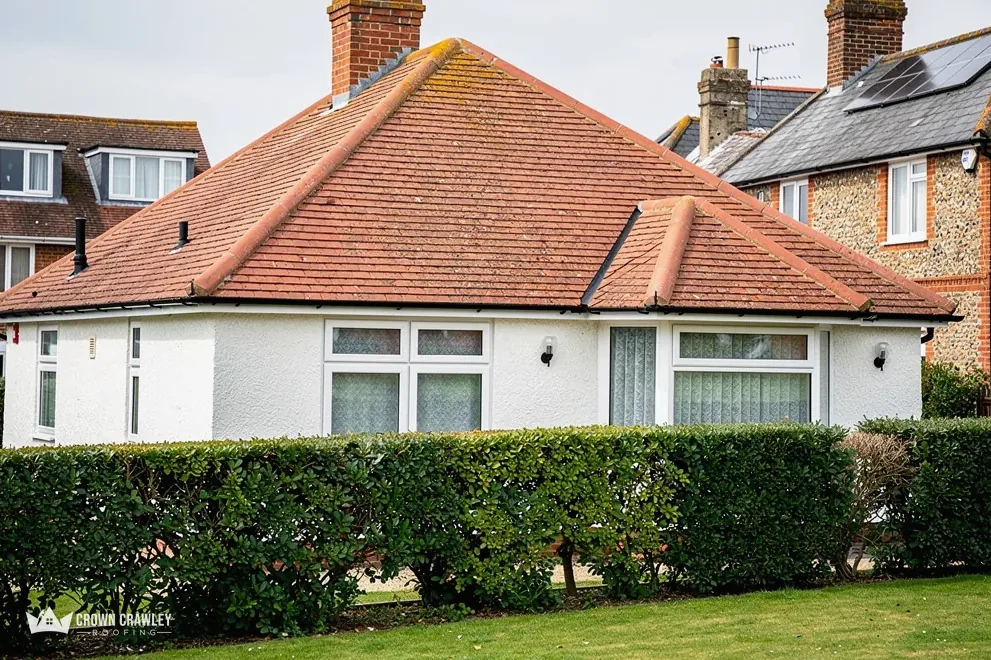
Tiled house roof beside a road
Roofs in a forest-ridge hamlet beside the London-Brighton road.
Pease Pottage is a small hamlet on the forest ridge in Slaugham parish, with 1,691 people at the 2021 Census. We check each roof closely and price it in writing.

A road branches west off the London-Brighton road here, towards Horsham. Roads throw dust and grime at gutters and tile faces, so we check what has built up before judging any wear.
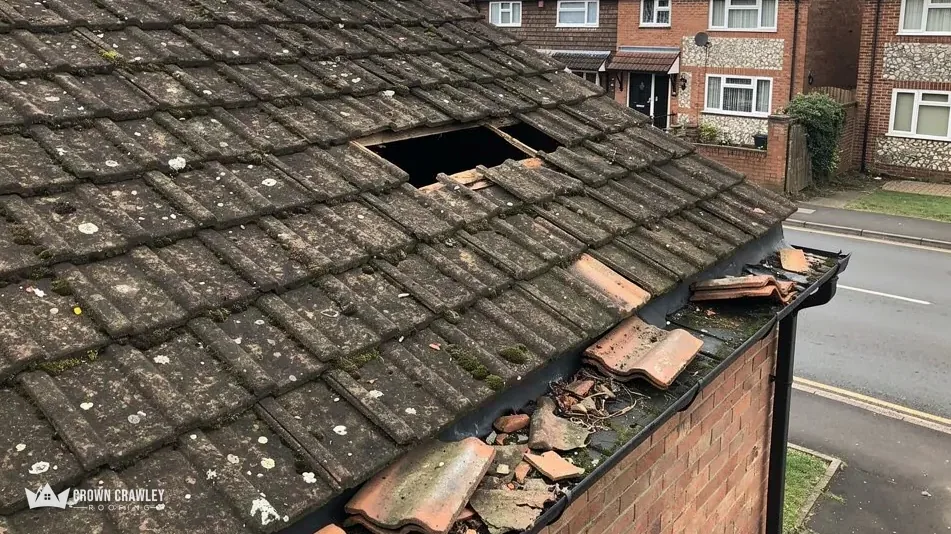
Tiled house roof beside a road
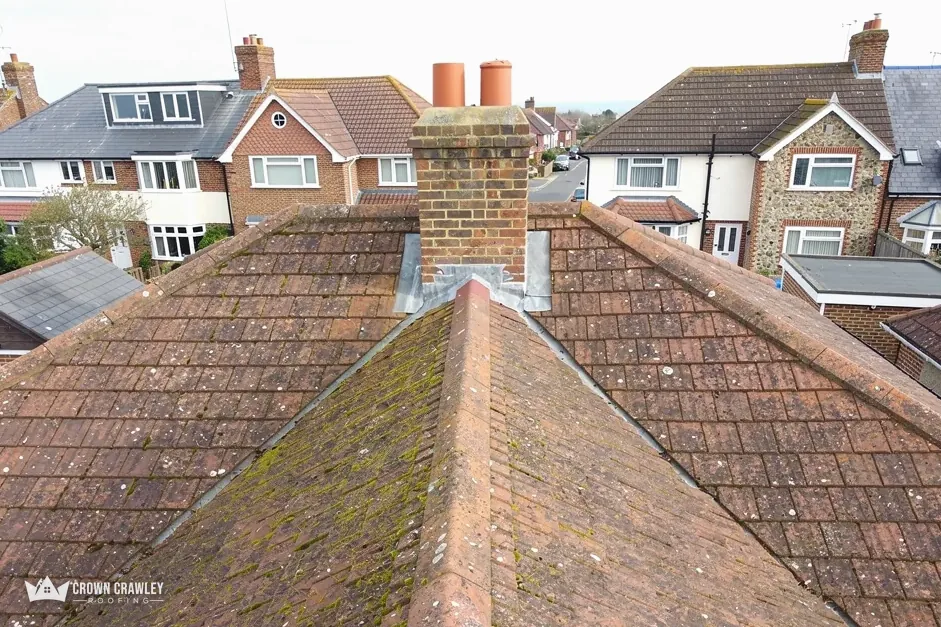
The hamlet stands on the forest ridge, high ground in the north of Slaugham parish. Up there the fixings on ridges and verges get our closest attention, since wind finds them first.
Ridge tiles on a pitched roof
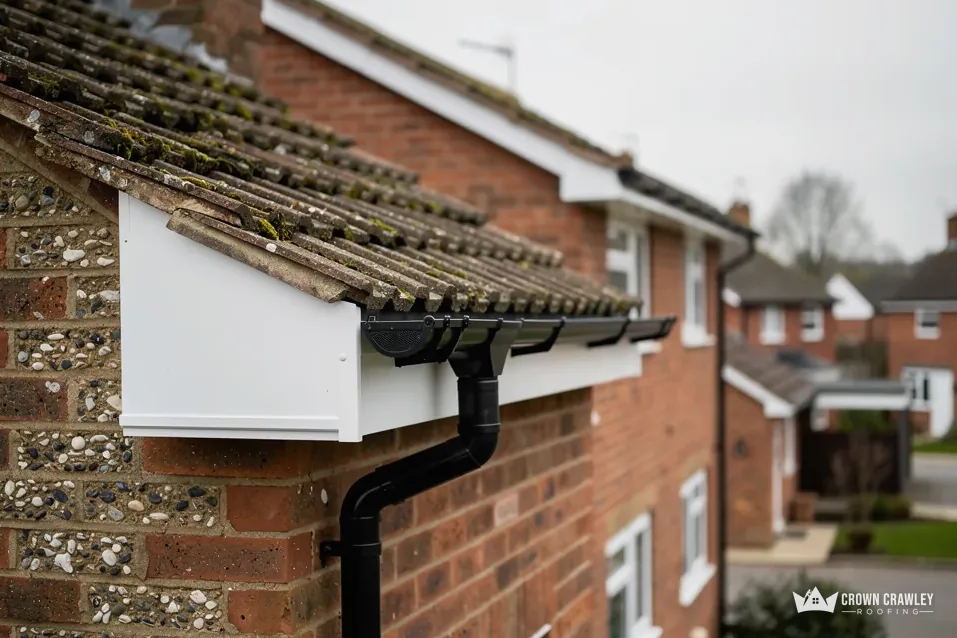
The 2021 Census counted 1,691 people in the built-up area. Neighbouring roofs in a place this size can differ, so we read yours instead of assuming it matches the house next door.
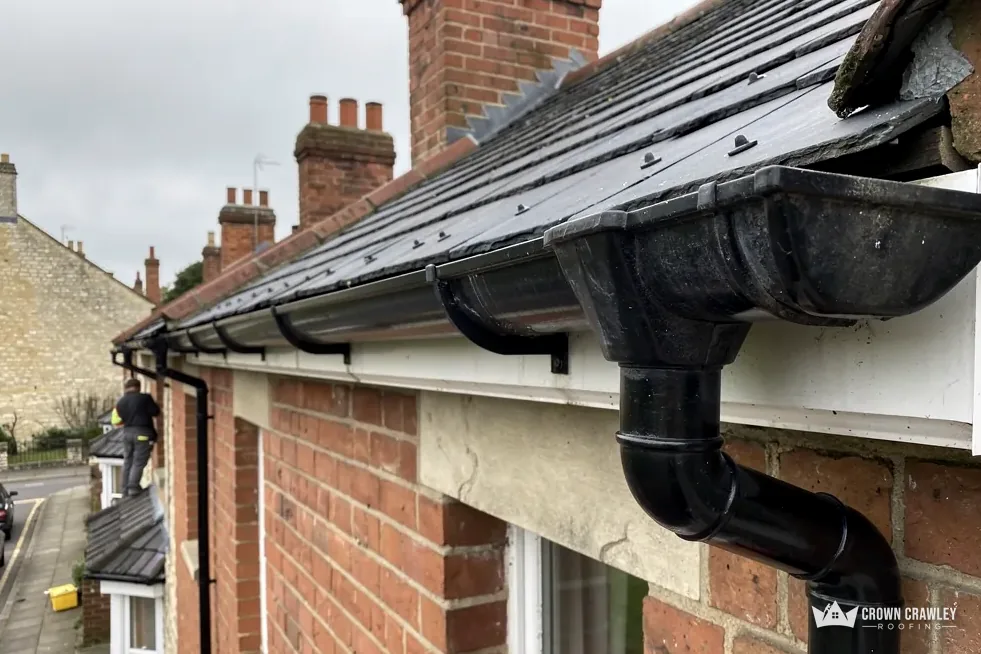
Gutters and fascia on a house
Map of Pease Pottage and the neighbourhoods around it, with Crawley for reference.
Pease Pottage is a hamlet in the north of Slaugham parish, beside the London-Brighton road, south of Crawley and within Mid Sussex district.
The Pease Pottage roof file
Three short chapters on ridge and verge fixings, the gutters and eaves that carry the weather, and the Mid Sussex rules behind a bigger job.
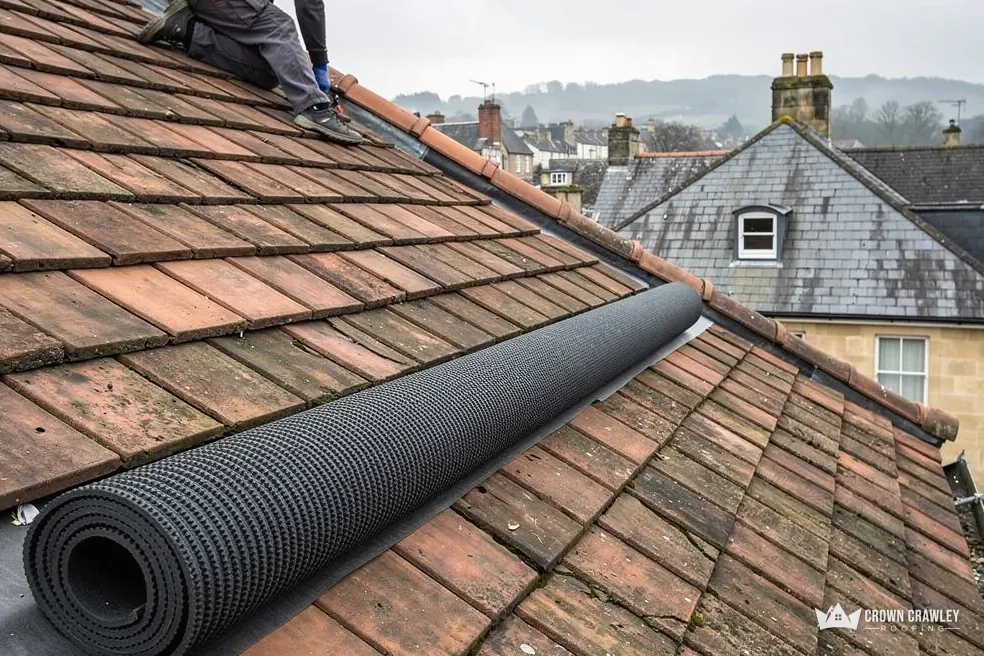
Stage 01 · First look
Pease Pottage sits on the forest ridge, so the ridge, hips and verges get our first look from the ground.
Pease Pottage stands on the forest ridge, in the north of Slaugham parish, and the roofs there face whatever weather comes over the high ground. A roof on a ridge may take the wind more directly than one tucked into a sheltered street, so the parts held on by fixings alone are the parts we study first: the ridge tiles along the top, the hip tiles down the corners and the verge, the sloping edge that finishes the roof over a gable end.
Because for many years they were simply bedded in mortar, and mortar cracks as it dries, freezes and thaws. Marley explains that since the 2014 revision of BS 5534, mortar by itself has stopped counting as sufficient for the tiles along a ridge or hip, and that bedded tiles and fittings need a mechanical fixing as well. The same guidance adds that following BS 5534 is not required by law, so older roofs are not wrong, only worth checking. A crack in the mortar is where rain gets under the cap, and a missing cap is where wind gets under the next one.
Dry-fix uses clipped or screwed fittings instead of a bed of mortar, and BS 8612 is the test specification for such ridge, hip and verge systems. It suits many roofs and it copes with movement, but it is not the answer to every roof, and a mortar ridge that is sound and properly fixed can be repaired like for like. Checkatrade's June 2026 guide gives typical UK repair prices of £50 to £70 per metre for a dry ridge and £70 to £100 per metre for a dry hip. Our written quote is a single total price after the survey, and our dry ridge and dry verge page explains both systems.
Roof edges in plain words
We stand back and look along the line for gaps, sagging tiles and caps that no longer sit square. A ladder gets us close enough for photos of any cracked mortar, loose caps or lifted tiles at the verge, and you get the pictures as well. A fault we can see from the ladder is usually a small repair, so we tell you that, instead of suggesting the whole ridge must come off.
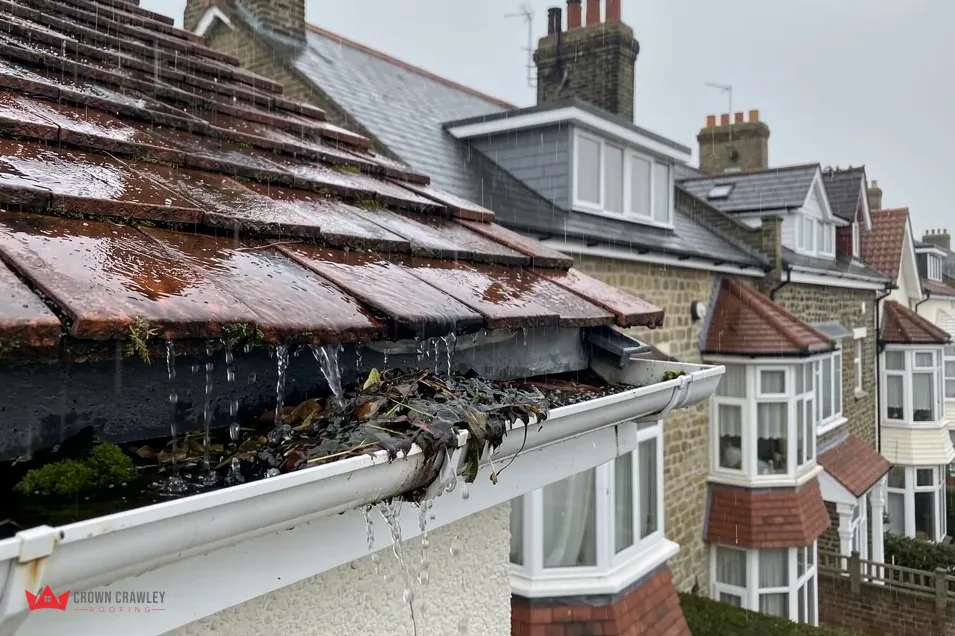
Stage 02 · Water
Rain leaves a roof by the gutters, so the eaves, fascia and downpipes are where a small fault shows first.
A roof is only as dry as the route its water takes after it leaves the tiles. At the bottom edge of each slope the water drops into the gutter, runs to the downpipe and goes to the drain. When any link in that chain fails, the water goes somewhere else, usually down the wall, onto the fascia or back under the bottom tiles.
The usual cause is the fall, or slope, along the run, rather than a blockage. Brett Martin's guidance is 1mm of fall for every 600mm of gutter, which is a tiny angle, and a bracket that has sagged or worked loose is enough to put a dip in it. Water then pools in the dip, spills over the front in heavy rain and paints the brickwork beneath with green streaks. We run water through the gutter, mark where it collects and refit or replace the brackets. Where the gutter itself has split at a joint, a new seal can stop the drip. Where it has bowed or cracked, replacement is the better buy. Our gutters, soffits and fascias page shows how that work goes.
At the eaves
The fascia is the board the gutter hangs from, and the soffit closes off the underside of the overhang. If the soffit carries vents, they feed fresh air into the loft along the eaves. Where the underlay is non-breathable felt, Marley's ventilation guidance asks for a 10mm gap along the eaves where the pitch is over 15 degrees, and 25mm where it is flatter. Paint over those vents, or push insulation hard against them, and the loft cannot breathe. We lift the insulation back from the eaves, clear the gaps and look for damp marks on the timber.
A drip at one gutter joint is cheaper to fix than the wall it soaks.
Into a drain or a soakaway, and away from the foundations. A downpipe that ends on bare ground beside the wall soaks the footings and splashes mud up the brickwork. We check where every outlet finishes, and if one empties at the foot of the wall we put it in the report with a photograph and suggest a shoe or a connection to the drain.
If rain is already coming through a ceiling, say so in your first message. A live leak is dealt with first, and the lasting repair is explained after the survey, with pictures of your own gutters and eaves to back it up.
Stage 03 · Permissions
Pease Pottage comes under Mid Sussex District Council for planning and building control, with West Sussex County Council as the highway authority.
Pease Pottage lies south of Crawley, outside the borough, so the planning authority is Mid Sussex District Council, which also runs its own building control service. The council can also confirm whether a Pease Pottage address sits in a conservation area. Like-for-like mending that leaves the house looking unchanged seldom raises any question, while a bigger change deserves a call to the council before the quote is signed. If you are buying or selling and your surveyor has marked the roof down, pass us the report's wording and we will explain what it means for the repair.
Under the Planning Portal's test, a re-roof normally avoids an application when it touches under 25 per cent of the building envelope and under 50 per cent of the roof. Two things do bring approval in: a new covering at least 15 per cent heavier than the old, and a covering that would behave differently in a fire. For a full re-roof, we check with your building control body before fixing a start date. If the job is bigger than a repair, our roof replacement page describes the steps. For a loft window or dormer, our post on planning permission for roof work is the place to begin.
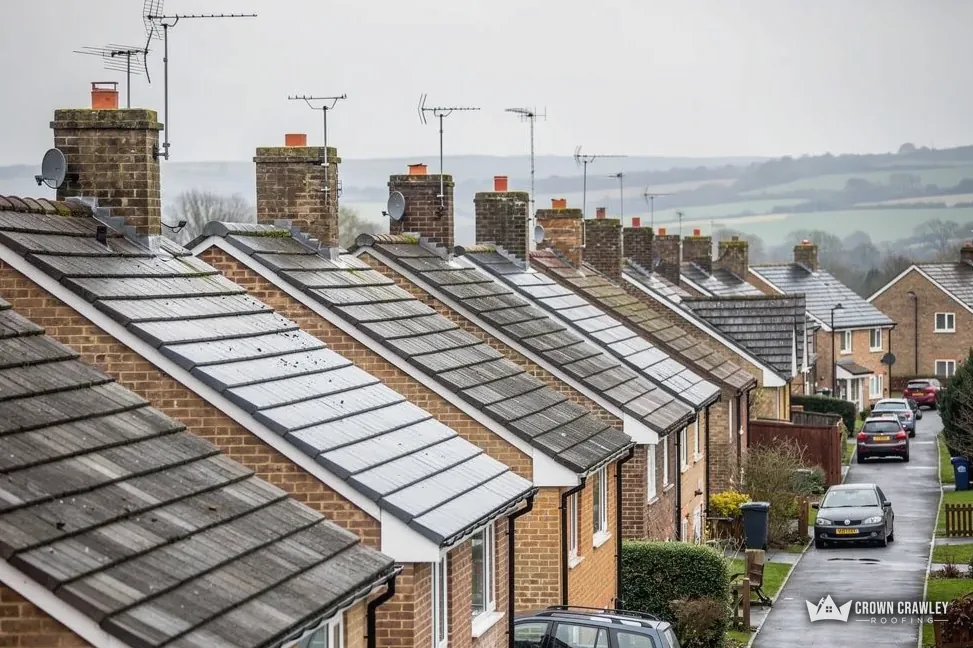
Survey day in Pease Pottage
Where poles must be set on a pavement or another part of the public highway, yes. Highways Act 1980 section 169 puts that under the highway authority, which for this hamlet is West Sussex County Council. Its fee for a single month is £266, and it expects the application a minimum of 10 working days ahead. Poles that stay inside your boundary need no highway licence. For those that cannot, ask the scaffolder who applies; we arrange the licence with them and plan the start date around the notice period.
Read whether it includes VAT and scaffolding, what covering it names and what it says about how the site will be run day to day. Our quote is a single sum on paper, sent once we have surveyed and photographed your roof, and you hear the plan for every day on site, from the first delivery to the last of the waste going away. Check any other quote for the same points, because a figure that leaves out VAT or scaffolding can look cheaper than it is.
The hamlet stands on the forest ridge, so a roof there may meet the wind more directly. Since the 2014 BS 5534 revision, Marley says, mortar by itself is not enough to keep a ridge tile fixed. We inspect the mortar, fit mechanical fixings if we rebed, and say plainly whether dry-fix would suit your roof better.
Mid Sussex. Pease Pottage sits south of the borough, so Mid Sussex District Council decides planning and provides building control itself, while West Sussex County Council licenses scaffolding on the highway. Crawley Building Control covers the borough only. For a larger re-roof, ask Mid Sussex before work starts and we will plan the start date around its answer.
It can, when the poles would sit on the pavement or verge and not on your own drive. A licence is then needed from West Sussex County Council, which expects notice well ahead of the start. Access is checked on the survey visit, the scaffolder confirms who applies, and the start date gives neighbours fair warning.
First we find out why: a blockage, a joint that has opened, or a run that no longer falls towards the outlet. Brett Martin's figure is 1mm of fall for every 600mm. Refitted brackets or a new joint seal often cure it. A bowed or cracked run is better replaced, and the written quote says which applies.
From the ground, photograph the ridge, verge or gutter that puzzles you, add your postcode, then choose a survey day with us.
Message us on WhatsApp