Roofers in Cuckfield

Roofs on high ground: Wealden clay tiles and Horsham slabs.

Cuckfield stands on high ground south of the Ouse valley, with a conservation area designated in 1969. Wealden clay tiles and Horsham stone are used in the village centre. We survey, then quote in writing.

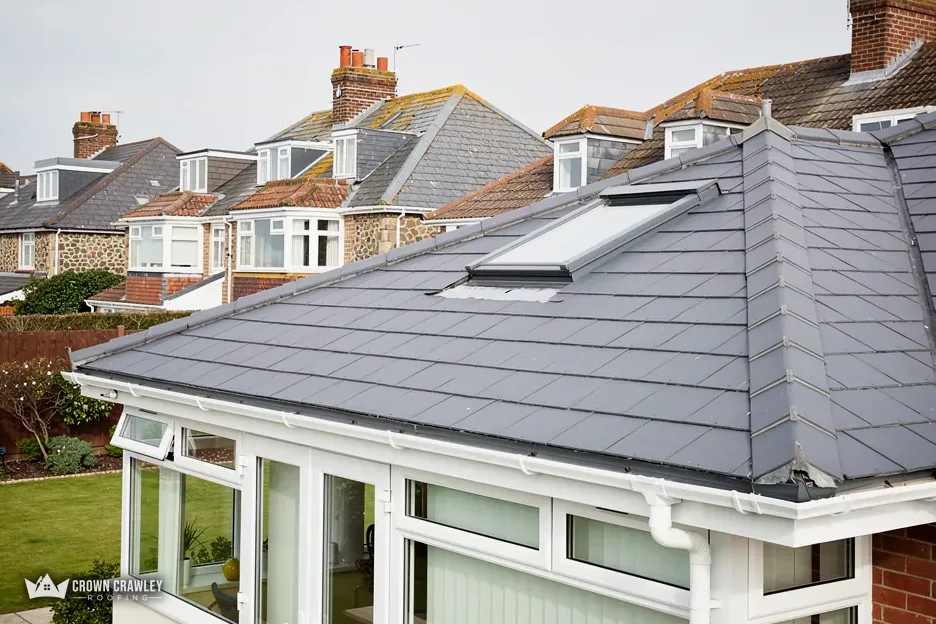
Slate-effect roof over a conservatory on a suburban house

Up on the roofs of Cuckfield

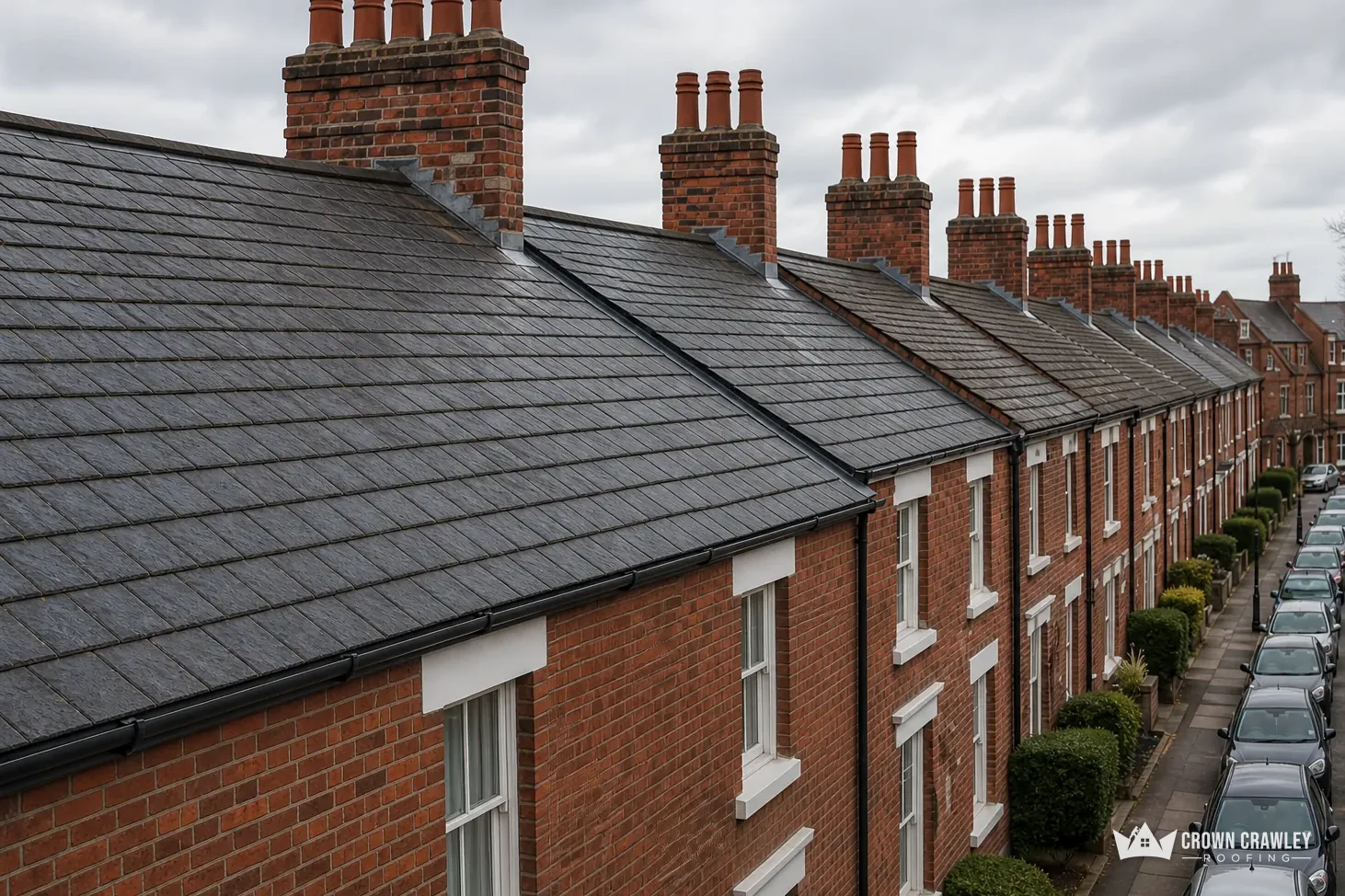
Long terrace of slate roofs with a line of brick chimneys

Horsham slabs on Holy Trinity

The Victoria County History says Holy Trinity church has roofs covered with Horsham slabs, below a tall octagonal spire clad in oak. A church roof follows its own consent route before any price.

Stone slab roof beside a spire

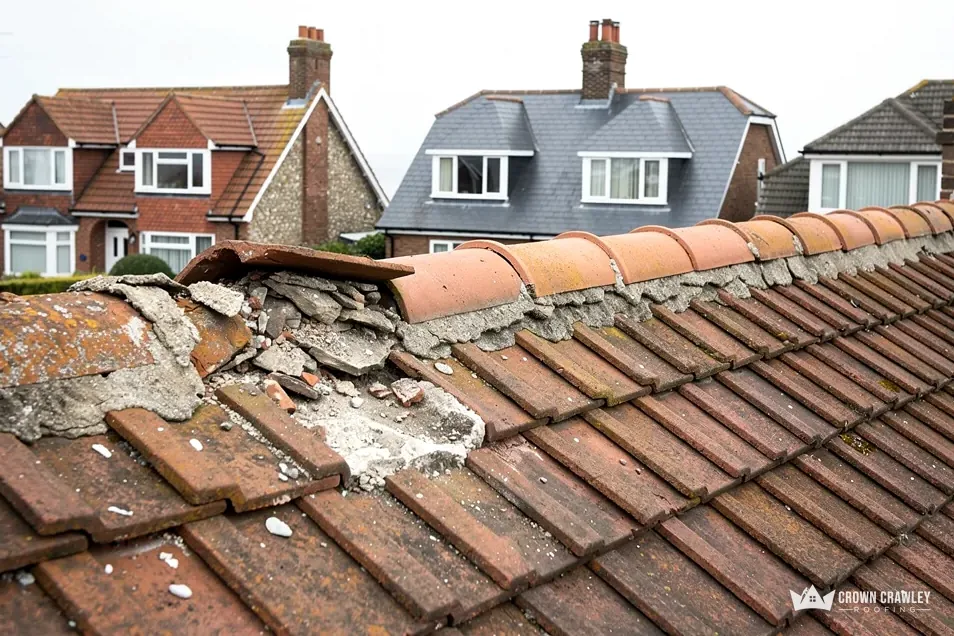
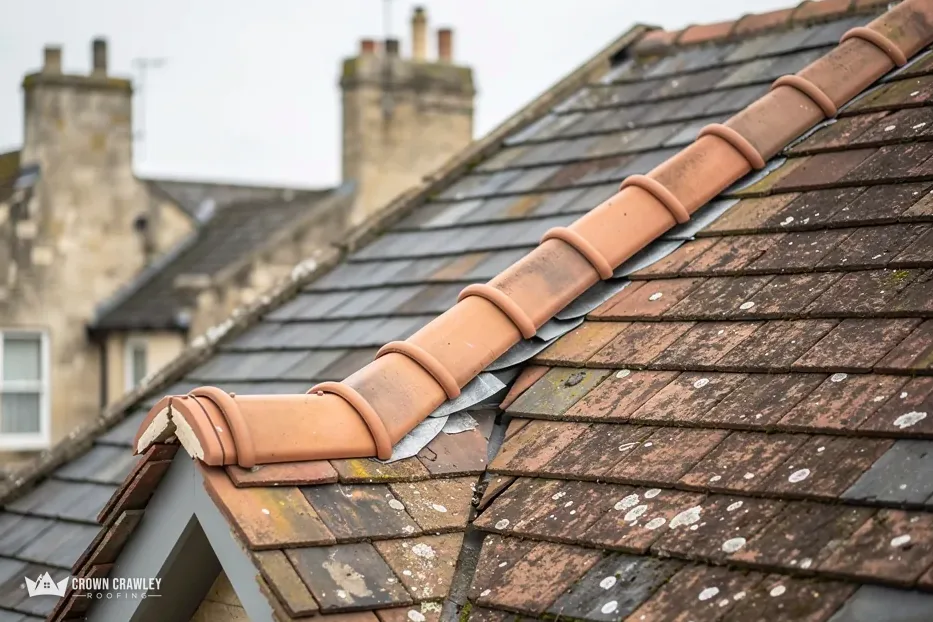
Broken mortar bedding along a clay ridge

Clay tiles and tile hanging

The Mid Sussex conservation area appraisal says Wealden clay tiles are used for roofs and for tile hanging, and Horsham Stone particularly on buildings from before 1800, so we identify each slope's covering before pricing.

Clay tile roof and hung walls

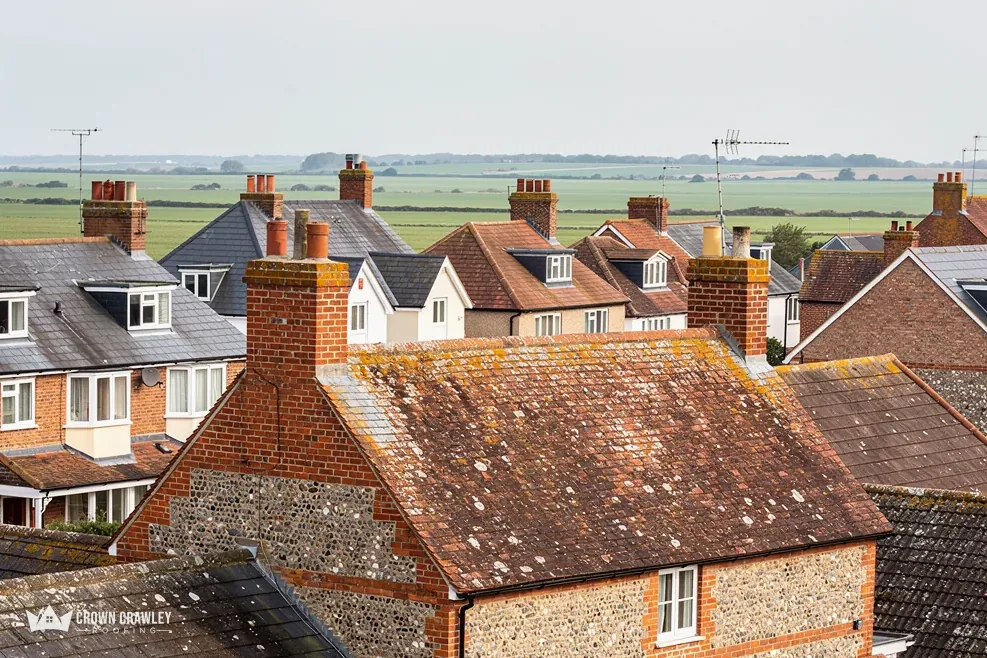
Flint-walled house with a mossy clay tiled roof overlooking fields

One building, two coverings

The Old Grammar School, founded around 1510, has Horsham slabs on its south side and tiles on the north. A single house can carry two coverings, so each slope gets its own survey.

Roof with two slopes in different coverings

Cuckfield, south of the Ouse valley

Map of Cuckfield and the neighbourhoods around it, with Crawley for reference.

Cuckfield stands on high ground, 300 to 400 ft up, south of the Ouse valley, in the Mid Sussex district.

Distance
10.1 road miles from Crawley, to the south
Drive
About 15 minutes
Council
Mid Sussex District Council and West Sussex County Council
Planning authority
Mid Sussex District Council
Conservation area
Cuckfield Conservation Area (designated 1969)
Population
3,767 (Census 2021, Cuckfield built-up area)
Building control
Mid Sussex District Council, its own service
Article 4
A 1995 direction over part of the conservation area
Get a free quote

Cuckfield on site

Reading roofs in a hill village of slabs and tiles

Three short chapters on what Cuckfield's records say about its roofs, how its conservation area and Article 4 direction work, and the council steps that sit behind a larger job.

Stage 01 · Background

Cuckfield's 1255 market and its roofs

The village has recorded roofs in clay tile and Horsham stone, but a record of other buildings is no substitute for looking at yours.

Cuckfield has been a place of trade for a long time. John de Warenne obtained the grant of a weekly Tuesday market there in 1255, and a weekly stock market was apparently moved to Haywards Heath in 1868, according to the Victoria County History. The village stands on high ground, 300 to 400 ft up, south of the Ouse valley.

What do Cuckfield's recorded roofs tell us?

They describe particular buildings, and they show variety. Holy Trinity church has walls of Sussex stone rubble and roofs covered with Horsham slabs, topped by a tall, slender octagonal spire clad in oak. The Old Grammar School, founded around 1510, has Horsham slabs on its south side and tiles on the north. One building can therefore carry two coverings, and a survey has to treat each slope on its own terms. The conservation area appraisal adds that Wealden clay tiles are used for roofs and tile hanging, and Horsham Stone particularly on buildings from before 1800. None of that says what is on your house, whether the roof was relaid in the last few decades or left alone, which is why photographs of your own roof come before any opinion.

Signs we look for in Cuckfield

Covering
Whole, level, no slipped courses
Hung tiles
Fixed firmly, no open gaps
Chimney
Flashing and flaunching sound
Eaves
Gutter outlets clear of debris
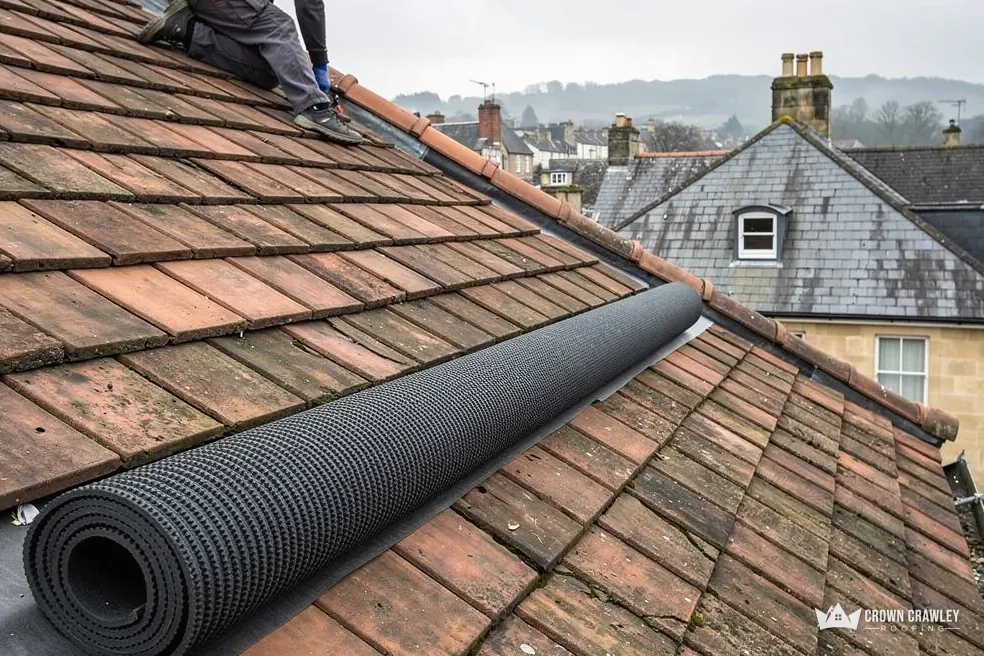
Roll of roofing membrane lying on a clay tiled roof

How long does each covering last?

Published figures vary by material. Clay tile has a 60-year floor set by the Building Research Establishment, though a building conservation writer warns that old peg tile does not follow it. A roofing trade body's guide says natural slate, well maintained, can last 100 years or more. Where a roof meets a hung-tile wall, the junction and its flashing are where we start when a stain shows on an upstairs ceiling, because water often travels before it shows. A lifespan is never a promise, and what decides it is the condition of the nails, the battens and the care the roof has had over the decades.

What if a stone slab needs replacing?

The appraisal warns that Horsham stone is expensive and difficult to source, and that is worth hearing before a survey, not after a price. We note which slabs are cracked or slipped, whether the fixings have failed, and whether a repair can keep the existing slabs in place. If new ones are needed, supply is the first question we settle with you. Our pitched roofing page covers tiles, battens and underlay for the clay and concrete coverings.

Clay ridge tiles along the hip of a weathered tiled roof

Stage 02 · Heritage

A conservation area with an Article 4 direction

Cuckfield's village centre was designated a conservation area in 1969, and part of it carries a 1995 Article 4 direction.

The village centre was designated a conservation area in September 1969, one of the first in what is now Mid Sussex, and it was extended in March 1989 to take in Courtmead Road, according to the council's 2006 appraisal. Holy Trinity, the village church, belongs to the Church of England, and where such a church is in use, roof repairs follow the Church's own faculty system rather than listed building consent.

What is the Article 4 direction in Cuckfield?

Mid Sussex's summary booklet records an Article 4(2) direction made in 1995 over part of the conservation area, "to control unsympathetic alterations to dwelling houses". The appraisal notes that Courtmead Road lacks a direction. An Article 4 direction is an order that takes named permitted development rights away within a set area. What this one removes depends on its wording, so check with Mid Sussex District Council's planners whether it reaches your address, and what it removes, before any change is drawn up.

Terms in the appraisal

Conservation area
Area whose character is protected
Article 4 direction
Council withdraws some permitted rights
Tile hanging
Tiles fixed to a wall as cladding
Horsham Stone
Local stone slabs used for roofing

In a conservation area the council's answer shapes the specification before we write a price.

Can a conservation area roof be repaired like for like?

Replacing tiles with matching ones keeps a building as it looked, and the Town and Country Planning Act 1990 does not treat work that leaves the outside looking materially the same as development. Matching in a village like this takes care: the new tile has to agree in clay, size, colour and camber, and hung tiles on a wall need the same attention. Switching to another covering is where the council steps in. Our answer on re-roofing in a conservation area goes through the steps.

Where do lead and chimneys come in?

On older buildings, lead at chimneys, valleys and abutments can last a long time: one cost guide gives lead flashing a life of 80 years and more. When it fails, the cause can be a split or a lost fixing, and the answer is a repair rather than a new sheet. Our lead work page explains how we repair it, and sound lead stays where it can. When we survey a village-centre house, we photograph the hung tiles, the eaves and every junction where the roof meets a wall, so that you and the council see the same thing. Sound lead and sound tiles stay in place, and the single written price covers only the work the roof needs.

Stage 03 · Permissions

Mid Sussex steps before a Cuckfield re-roof

A bigger Cuckfield job involves Mid Sussex twice, for planning and for building control, and West Sussex County Council for the highway.

Mid Sussex District Council is both the planning authority and, through its own local authority building control service, the body that approves larger roof work. A conservation area village adds a third question, which is whether the council wants to see the specification first. West Sussex County Council looks after the highway. Knowing which of the two answers which question saves time at the start of a job.

When does re-roofing a Cuckfield house need approval?

The Planning Portal's test for going without building control approval is under 25 per cent of the building envelope and under 50 per cent of the roof. A replacement covering that adds 15 per cent or more to the covering weight alters the answer, and so does a covering that would perform quite differently in a fire. We record the existing covering at the survey and tell you if the job sits near either line, so that you can ask Mid Sussex before work is booked. For a whole new roof, our roof replacement page shows how a re-roof runs from strip to finish.

Before a bigger job

Planning
Mid Sussex District Council
Approvals
Mid Sussex building control
Scaffold
£266 for one month
Notice
10 working days minimum
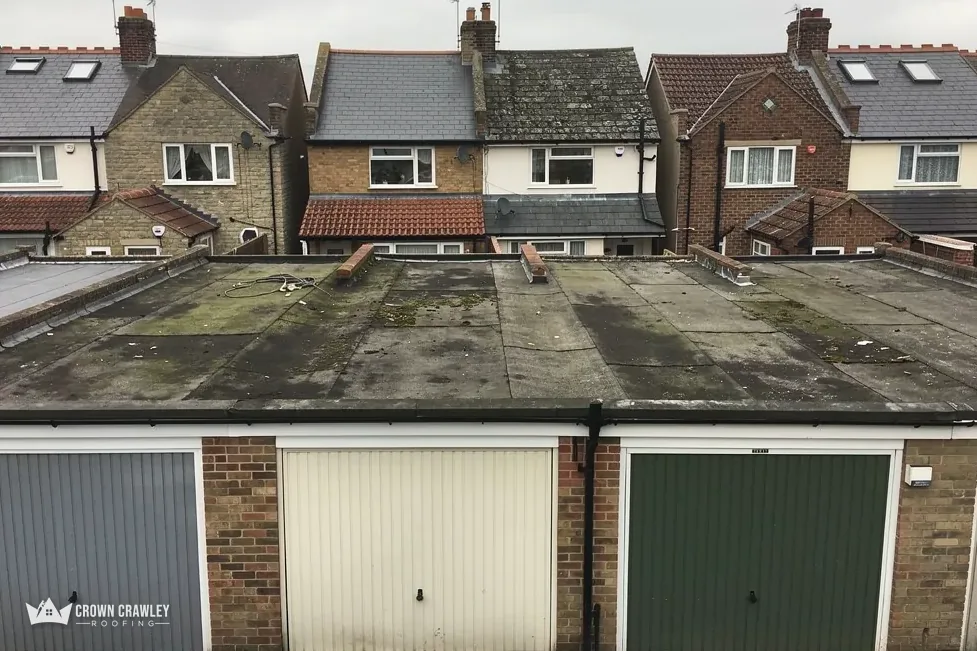
Mossy flat-roofed brick garage block with three up-and-over doors

How does a West Sussex scaffold licence work?

West Sussex County Council requires a licence to erect scaffolding on a public highway, and wants at least 10 working days between application and erection. One month costs £266 and an extension £178, and a fast-track application adds £52. Scaffolding contractors must tell the council as soon as the frame comes down. Scaffolding left up without a licence is charged at £50 per day, with a retrospective licence at £425, and a late extension carries a £335 charge, so we ask for any extension in good time rather than at the last minute. Licence paperwork is shared between us and the scaffolder, and a frame wholly inside your own boundary needs none.

What if we find bats in the roof?

The law shields bats and the places they roost, and government guidance lists re-roofing as work that can interfere with them. At the survey we look for droppings and other signs under the covering and in the loft. If we find any, the job is paused until we have spoken, and the plan is reworked with you. Older stone and clay roofs have plenty of gaps and cavities, so the check is worth making on every slope. To begin, send photos of the slope, the hung tiles or the chimney that concerns you, and your postcode.

Questions on Cuckfield roofs

Are Horsham stone slabs still used on Cuckfield roofs?

The 2006 conservation area appraisal says Horsham Stone is used for roofing, particularly on buildings from before 1800, and warns that it is expensive and difficult to source. If your roof carries slabs, the survey records which are cracked or slipped. Replacement stone is a supply question to settle with you before it becomes a price question, and it is discussed on the survey day, well before any scaffold goes up.

Does my Cuckfield house sit inside the Article 4 area?

A 1995 Article 4(2) direction covers part of the conservation area, and the appraisal notes that Courtmead Road lacks one. Only Mid Sussex District Council can confirm whether your address is covered and what the direction takes away. Put the question to its planners first, and send us your postcode so the survey notes the question.

Can I swap Cuckfield clay roof tiles for concrete ones?

Possibly, but it changes how the roof looks and how much it weighs. In a conservation area the council takes an interest in the look. For weight, the Planning Portal puts the building control line at a new covering that adds 15 per cent or more to the roof covering weight. We note the existing tile at the survey, then you ask Mid Sussex.

Does scaffold for a Cuckfield roof need a West Sussex licence?

Only when the frame stands on the public highway, in which case West Sussex County Council asks for 10 working days' notice, charges £266 for one month and £52 more for fast track. Scaffold that fits wholly on your own drive or lawn needs no highway licence. We and the scaffolder obtain it between us, and work begins once it has been issued.

Tell us about your Cuckfield roof

Send a picture of the slope, hung tiles or chimney, your postcode, and whether the house falls within the conservation area.

01293 974253

10-year workmanship guarantee, in writing.

Call Get a free quote