Roofers in Burgess Hill

Bay-fronted Victorian terraces and brick streets in a former brick-making town.

Burgess Hill grew up as a brick-making centre, and its terraces, tile hanging and ornamental ridge tiles still shape the work. We read each roof first, then give one written price.

Terraced brick houses with flint detail along a wet street

Three kinds of roof detail in Burgess Hill

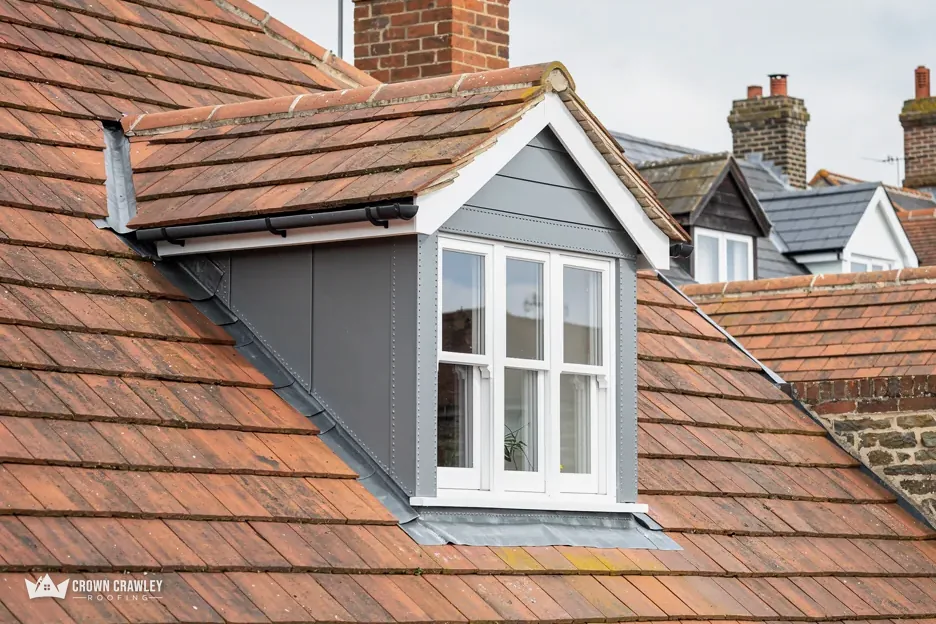
Lead-clad dormer window set into a red clay tiled roof

Bay-fronted terraces

North of Royal George Road is the largest concentration of small Victorian terraced housing in Mid Sussex, many of them bay-fronted. A bay has its own small roof and its own flashings, and those joints are where we look first.

Terraced houses with bay windows

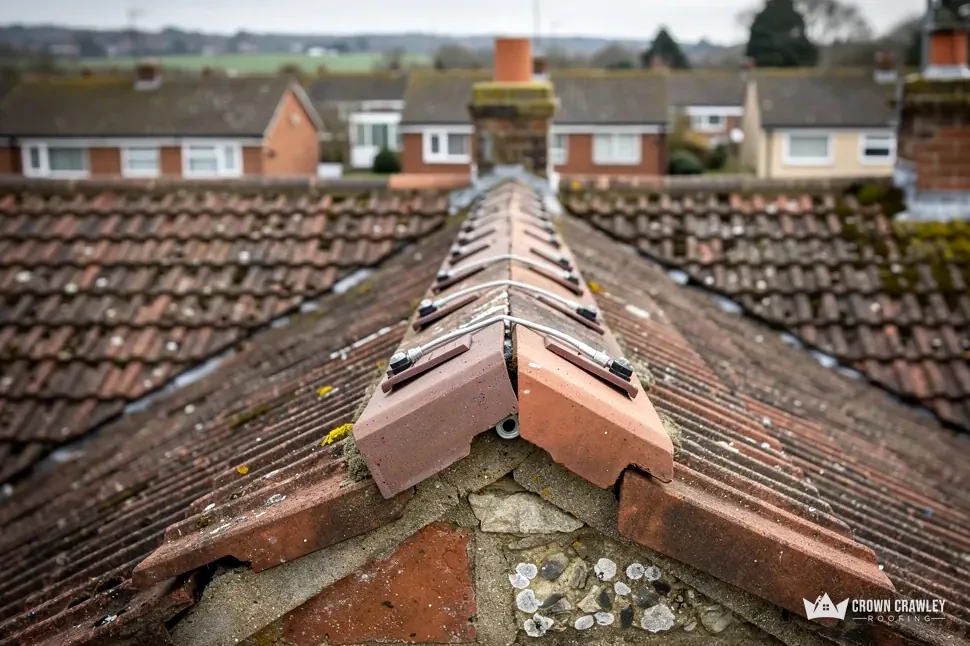
Clay ridge tiles along a hip on a pitched roof

Ornamental ridge tiles

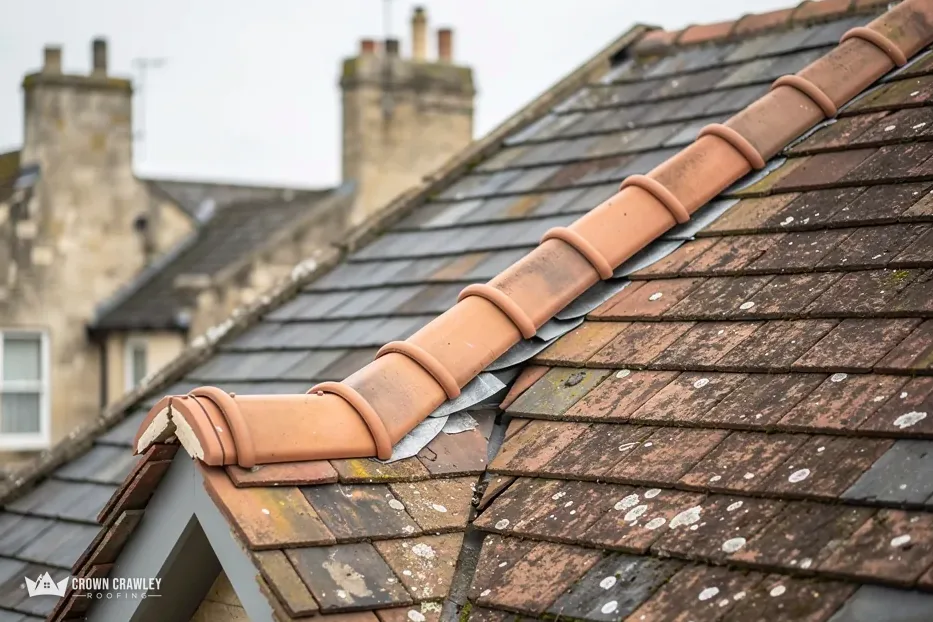
Houses around Silverdale Road and Birchwood Grove Road carry ornamental ridge tiles. When one cracks we match the pattern where we can, and we tell you what a plain replacement would change on the skyline.

Decorative clay ridge tiles

Clay ridge tiles along the hip of a weathered tiled roof

Brick, tile hanging and render

The council's conservation area notes record brick, clay tile hanging and render on Victorian and Edwardian houses here. Where hung tiles meet a roof slope, the joint needs flashing that works with both surfaces.

Clay tile hanging beside a roof

Burgess Hill, in the Low Weald

Map of Burgess Hill and the neighbourhoods around it, with Crawley for reference.

Burgess Hill sits in the Low Weald north of the South Downs, with views to the Downs and to the Jack and Jill windmills.

Distance
13.7 road miles from Crawley, to the south
Drive
About 19 minutes
Council
Mid Sussex District Council and West Sussex County Council
Planning authority
Mid Sussex District Council
Conservation area
Fairfield; Silverdale Road / Birchwood Grove Road; St John's (designated 1982)
Population
33,352 (Census 2021, built-up area)
Building control
Mid Sussex District Council's own service
Get a free quote

Burgess Hill: survey to sign-off

How to read a roof where bricks were made

Three short chapters on the terraces north of Royal George Road, the three conservation areas, and the Mid Sussex rules that apply to a re-roof.

Stage 01 · First look

Terraces north of Royal George Road

Small Victorian terraces with bay windows pack many roof joints close together, so we check flashings as carefully as tiles.

Mid Sussex District Council's conservation area summary says the area north of Royal George Road holds the largest concentration of small Victorian terraced housing in the district, and that many of the houses are bay-fronted. Nobody builds a street like that with a lot of space between the roofs. Each house has a front slope, a back slope, a bay with its own little roof, a chimney or two and a boundary wall it shares with the next house. Every one of those meeting points is a joint, and joints are where rain gets past.

On a bay-fronted terrace

Bay roof
Lead tight to the wall
Flashings
Lifted, split or pulled out
Valleys
Clear of debris, lining whole
Chimney
Pointing and flaunching sound
Gutters
Joints dry, falls clear
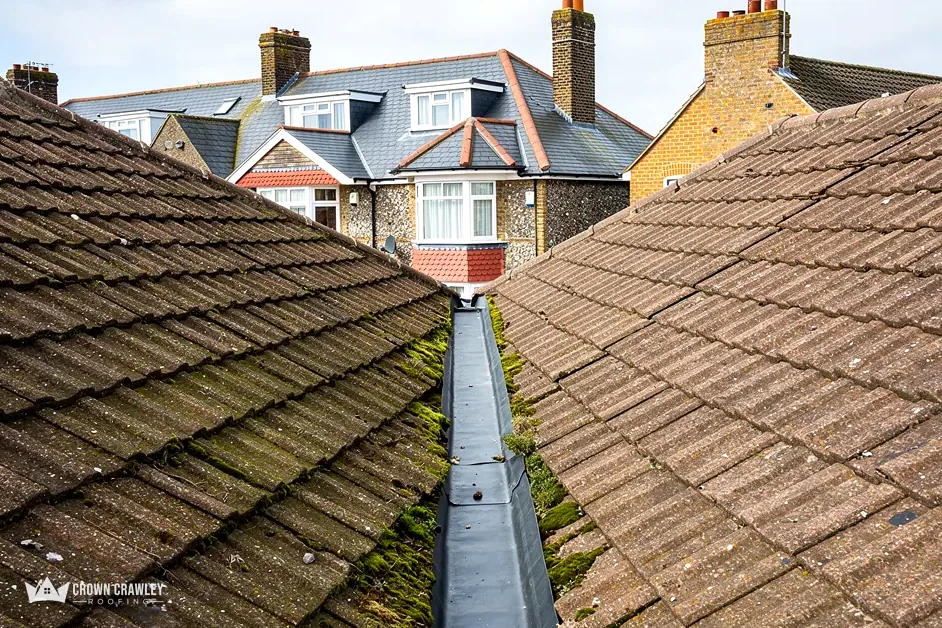
Lead-lined valley gutter between two tiled roof slopes

Why do flashings matter so much on a bay-fronted house?

A flashing is a strip of waterproof metal, often lead, dressed over the line where tiles stop against brickwork. On a bay, the small roof meets the main wall along its whole back edge, and the sides meet the bay's own walls. A soaker is a small piece of lead that is woven into the tile courses to do the same job at the sides. If the lead has lifted, split or been pulled from the mortar joint, rain runs behind it and shows up as a stain on the ceiling below the bay. Where the lead is the fault, the answer is to renew the lead, not to replace the whole bay roof, and our lead work page explains the codes and the methods we use.

What else do we check on a terrace?

We look at the valleys, the inward folds between slopes, because leaves and moss collect there. We look at the chimney stacks, since pointing and the cement cap on top, known as flaunching, weather faster than the tiles around them. Our chimney repairs page covers that work. We also check that the gutters hold water in the right direction and that the joints are dry, because a leaking joint at the eaves can look like a roof leak from inside. Indoors, we look at the ceiling under the bay and in the front bedroom for damp patches, since a small leak at a flashing can run along a timber before it shows.

Keep reading

Where a ridge or valley is shared with the house next door, we tell you at the survey what that means for the repair, photograph what we find and leave both sides sound. The photos belong to you, whether you then go ahead with us or not.

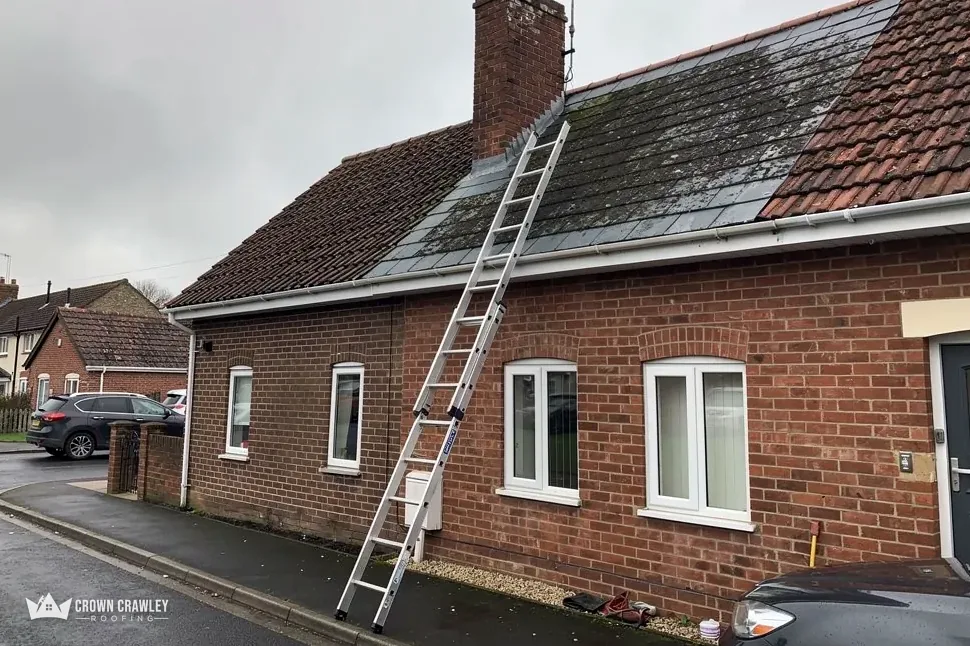
Brick bungalow with a ladder leaning against its tiled roof

Stage 02 · Heritage

Three conservation areas to check

Fairfield, Silverdale Road with Birchwood Grove Road, and St John's are all conservation areas, each with its own mix of brick, tile and render.

The council's summary booklet describes three conservation areas in Burgess Hill, each in its own terms. The Fairfield area, west of London Road, was designated in 1989 and was one of the earliest parts of the town to develop in the 19th century. Its main building material is brick, which recalls the town's origins as an important brick-making centre. The Silverdale Road and Birchwood Grove Road area was designated in 1982 and has substantial Victorian and Edwardian houses, and the council names brick, clay tile hanging, render and ornamental roof ridge tiles among its features. The St John's area, also 1989, centres on St John's Park and contains two listed buildings, St John's Church and the Providence Strict Baptist Chapel in Park Road.

Terms worth knowing

Conservation area
Area where planning protects local character
Article 4 direction
Council order withdrawing specified rights
Tile hanging
Tiles fixed up a wall face
Ridge tile
The tile capping the roof's top line
Listed building
Nationally protected for special interest

Does a conservation area stop a roof repair?

No. Putting back the same tile in the same pattern is what a conservation area expects of a repair, and it rarely raises a question. The questions begin when the look would change: a different tile colour, a new window in the roof, a plain ridge where there was a decorative one. Some conservation areas also sit under an Article 4 direction, which withdraws specified rights across a defined area. Whether one applies to your street is a question to put to the council, so ask Mid Sussex District Council's planning team before you change anything visible. Our answer on re-roofing in a conservation area sets out the usual steps.

What about the older buildings?

Not everything in the town is Victorian. Hammonds Place, now inside Burgess Hill, includes a timber-framed building of about 1500 that was faced at both ends in brick in 1566, its east front in red brick with blue-grey diaper work. That is a reminder that some roofs here sit on far older frames than a terrace does. An old frame can move over time, so the roof planes may not be straight, and a good roofer works with what is there instead of forcing a flat line onto it. We measure, photograph the sag or lean and price the repair to suit the actual roof. Those photos also record the condition before work starts, which helps if the council asks what is there now.

Which of three conservation areas your street falls in decides who we ask before we quote.

If your house stands in one of the three areas, mention it when you first get in touch and give us the street name, because the boundaries are drawn on the council's maps. It saves a week of back and forth later.

Stage 03 · Permissions

Mid Sussex rules for a Burgess Hill re-roof

Mid Sussex District Council decides planning and inspects building work itself, and West Sussex County Council sets the rules for scaffold on roads and pavements.

Most repairs on a Burgess Hill roof need no approval at all. Re-roofing is where the questions start, and two public bodies can have a say: Mid Sussex District Council for planning and building control, and West Sussex County Council as the highway authority.

At what size does a Burgess Hill roof job need approval?

By the Planning Portal's guide, work touching under a quarter of the building envelope and under half the roof usually goes ahead without an application. Swap to a covering that weighs at least 15 per cent more, or one with markedly different fire behaviour, and approval is needed. Mid Sussex runs its own Local Authority Building Control service, so that is who we would check with on a large job. If the survey shows the roof needs more than a repair, the written quote names the approvals we expect and who we will contact, so nothing arrives as a surprise halfway through. Keep every reply from the council with your paperwork, because a buyer's solicitor may ask for it when you sell. Before you plan a change from clay to concrete, or from plain tile to a heavier product, read our roof replacement page and ask for the weight difference in writing.

Before a larger job

Planning
Mid Sussex District Council
Approval
Its own building control service
Road scaffold
West Sussex County Council licence
Lead time
At least 10 working days
Roosts
Work pauses, then we advise
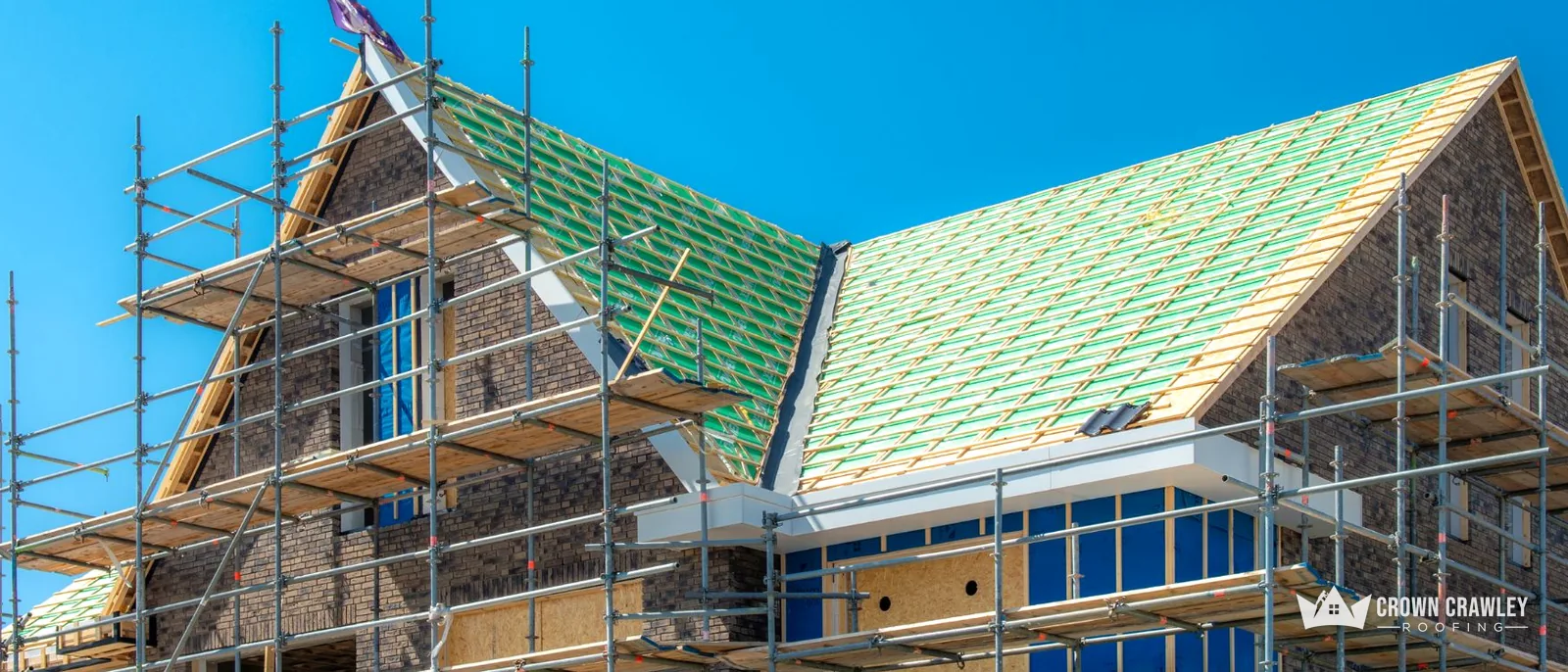
Brick house with scaffold and green roofing membrane across the slopes

Who licenses scaffold on a Burgess Hill street?

A licence is required when scaffold would sit on the road or the pavement, and it comes from West Sussex County Council. The council asks for 10 working days' notice between application and erection and lists £266 for one month. Private ground, such as a front drive, needs no highway licence. West Sussex leaves open who applies, so ask every roofer who will apply and who will pay. We work out the booking with the scaffolding firm and build the wait into your start date. A scaffold that narrows a pavement affects the neighbours, so we let the street know the dates.

Are roofs here ever home to bats?

They can be, as in any town with older buildings. Bats and their roosting places have full legal protection, and the gov.uk guidance counts reroofing as an activity that can disturb them. Birds nesting under tiles or behind a fascia are protected while the nest is in use. We watch for droppings, staining and nests during the survey. If a roost shows itself when tiles come off, we stop and agree the next move with you instead of pressing on. That is the legal position, and it protects you as well as the animals.

Burgess Hill roofs, bays and boundaries

Can a bay window roof on a Burgess Hill terrace be repaired rather than replaced?

It can be. When the fault is in the lead where the bay meets the wall, the roof itself may be sound. We lift the covering around the joint, renew the flashing and soakers, and photograph the work before it is covered. A full replacement is only worth pricing if the timber below has gone soft.

Will a plain ridge do on a Burgess Hill house that had a decorative one?

Inside a conservation area, ask first. The council's booklet describes three: Fairfield, designated in 1989; Silverdale Road with Birchwood Grove Road, 1982, where ornamental ridge tiles are a listed feature; and St John's, 1989. The boundaries are on Mid Sussex District Council's maps, and its planning team can confirm your street. Tell us when you call, because it decides who we ask before we quote any change to the visible roof.

Does the pavement outside a Burgess Hill terrace need a scaffold licence?

Only where the poles would stand on the road or footway. West Sussex County Council wants 10 working days' notice and lists £266 for one month, while ground you own needs no highway licence. At the survey we mark where the scaffold should go, and we settle the booking with the scaffolding firm so the start date holds.

How much of a Burgess Hill roof can be renewed without an application?

Mid Sussex District Council runs its own building control service. The Planning Portal's yardstick is under 25 per cent of the building envelope and under 50 per cent of the roof, and a replacement covering at least 15 per cent heavier needs approval whatever the area. We check with the council before we fix a date.

Start with your Burgess Hill street

Give us your street, a picture of the bay, ridge or chimney that concerns you, and a note on any conservation area.

01293 974253

10-year workmanship guarantee, in writing.

Call Get a free quote