Roofers in Ditchling

Roofs in a South Downs village of flint, brick and timber frames.

Ditchling lies at the foot of the Downs, inside the National Park and a conservation area. We read its tiled, slated and timber-framed roofs closely, share our photos, then give one written price.

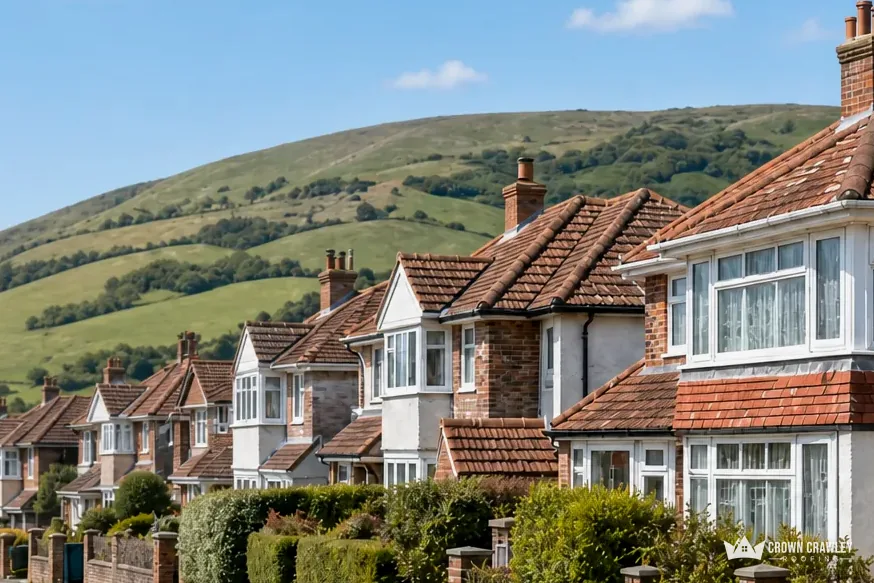
Row of suburban houses with tiled roofs below green downland

Roofs around the Ditchling knoll

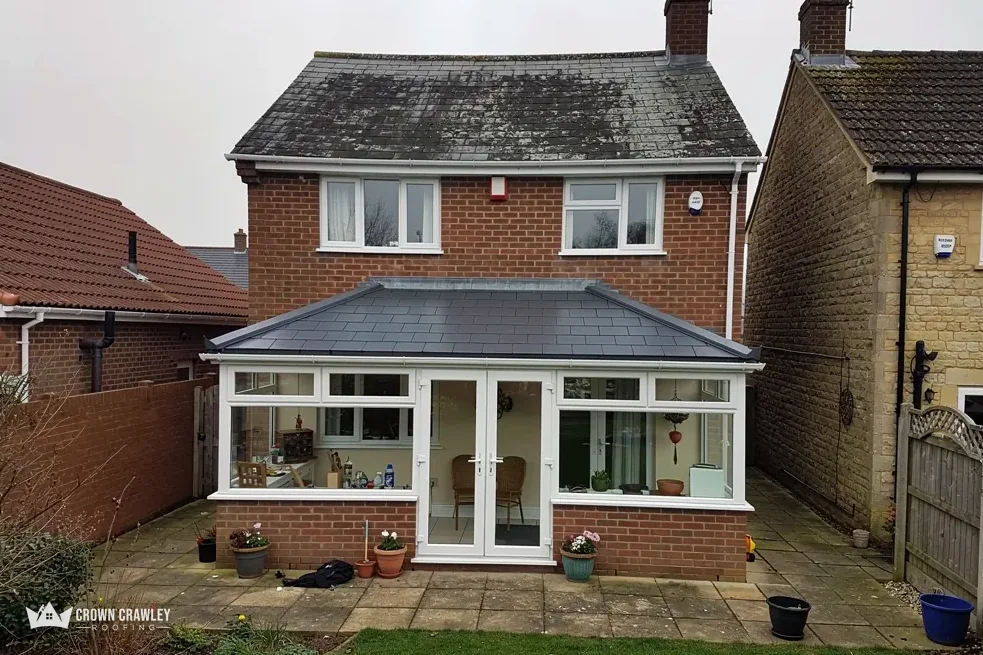
Rear of a brick house with a glazed extension and slate-effect roof

Tile and Horsham slate at St Margaret's

The village church has tiled roofs with some Horsham slates. We read your covering the same way: what it is, how it is fixed, and whether the sound pieces can be kept and re-used.

Old clay tiles on a pitched roof

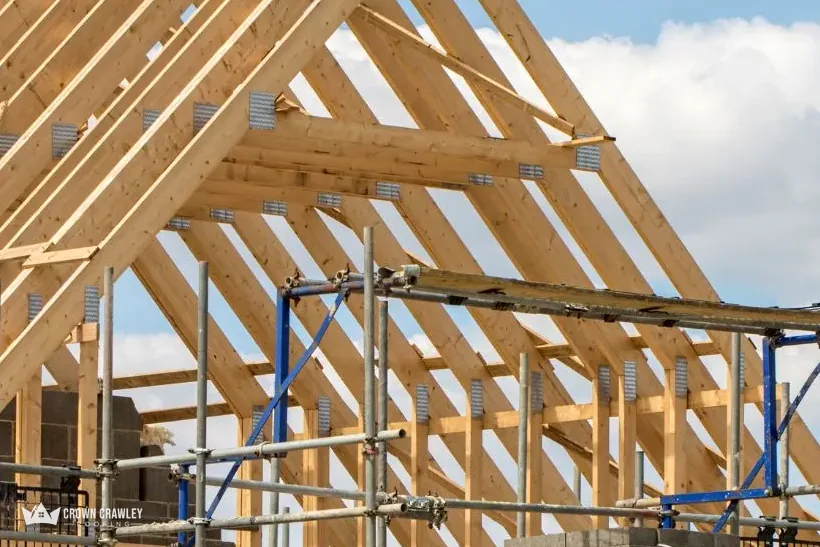
Timber roof trusses on scaffold against a blue sky

Georgian brick along the High Street

The High Street shows chiefly Georgian brick and later shop fronts. Behind a shop front the roof may meet party walls, parapets or lead, so we check every junction before we price.

Brick terrace with a pitched roof

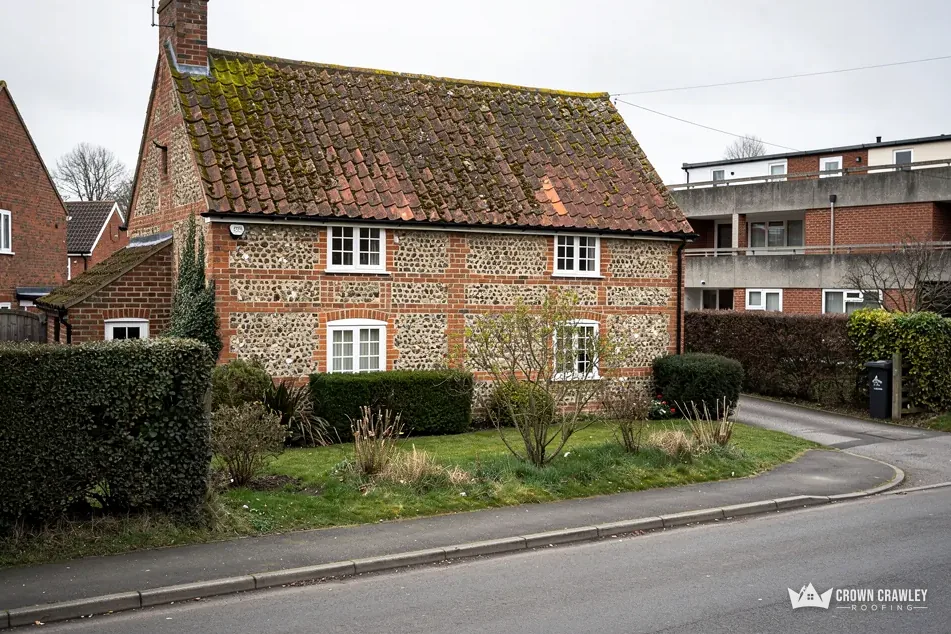
Flint-walled cottage with a clay tile roof on a village lane

Timber-framed houses from the 1500s and 1600s

Several timber-framed houses of the 16th and 17th centuries survive in the village. An old frame can shift over time, so we check the way the roof bears on it and keep the repair gentle.

Timber-framed house with tiled roof

Ditchling, below the Beacon

Map of Ditchling and the neighbourhoods around it, with Crawley for reference.

Ditchling sits at the foot of the South Downs below Ditchling Beacon, in a long parish that runs about 6 miles from north to south.

Distance
19.1 road miles from Crawley, to the south
Drive
About 25 minutes
Council
Lewes District Council and East Sussex County Council
Planning authority
South Downs National Park Authority
Conservation area
Ditchling (also Ditchling Cottage Homes)
National park
South Downs National Park
Article 4 direction
Made 1972, covering High Street and nearby lanes
Built-up area population
1,123 (Census 2021)
Get a free quote

The Ditchling roof file

Reading a roof below Ditchling Beacon

Three short chapters on the village's building stock, the National Park and conservation area rules sitting over it, and the practical side of scaffold, lead and bats.

Stage 01 · First look

A long parish under the Downs

Ditchling runs from low ground up to 813 ft, and its oldest buildings went up long before anyone wrote a roofing standard.

Ditchling is a village at the foot of the South Downs, below Ditchling Beacon. The Victoria County History describes the parish as a long, narrow strip about 6 miles from north to south, rising to 813 ft at the Beacon. For a roof that matters in a plain way. The parish runs from low ground up onto the open Downs, so two houses a mile apart can sit in quite different conditions. When we survey, we note how exposed a slope looks as well as what covers it, because a high, open slope asks more of its fixings than a sheltered one.

What roofs does the village actually have?

The same history describes St Margaret's church, standing on a knoll in the middle of the village, with flint walls, sandstone dressings and tiled roofs that include some Horsham slates. It says the High Street shows chiefly Georgian brick and later shop fronts, with several older timber-framed houses of the 16th and 17th centuries still standing. That describes a handful of buildings, not every street. We never guess what sits on your house. We climb up, look closely at the covering, and send you photos of exactly what we find.

The Ditchling roof check

Covering
Tile or slate, and fixings
Ridge
Bedding sound, caps held firm
Abutments
Flashings tight against walls
Timbers
Rafters and battens dry and firm
Gutters
Falling to outlets, joints sealed
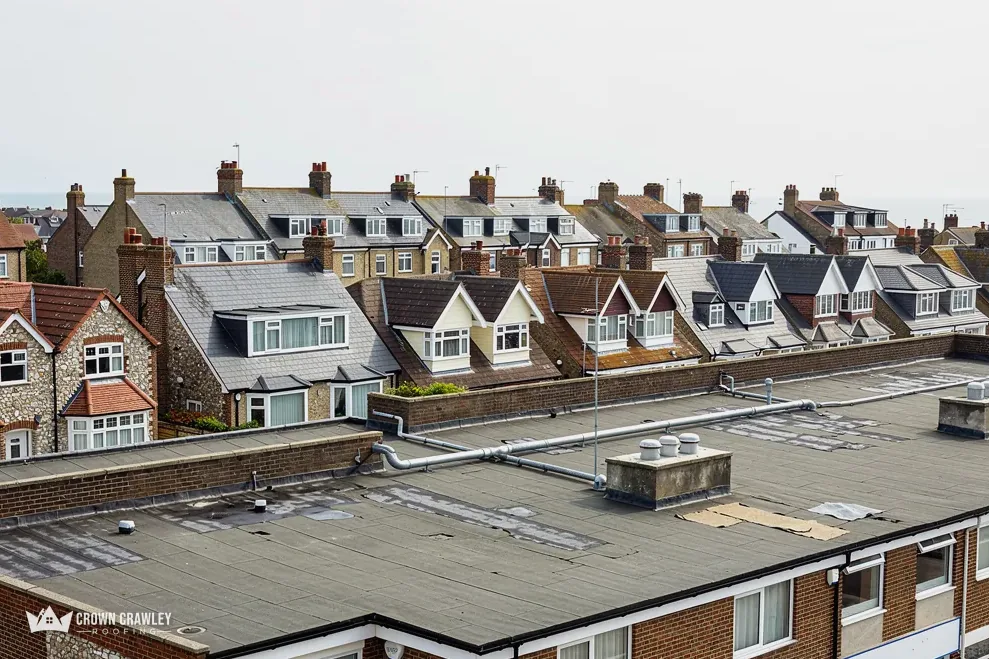
Flat roof in the foreground of a street of dormer-roofed houses

How old is too old for a tile or slate?

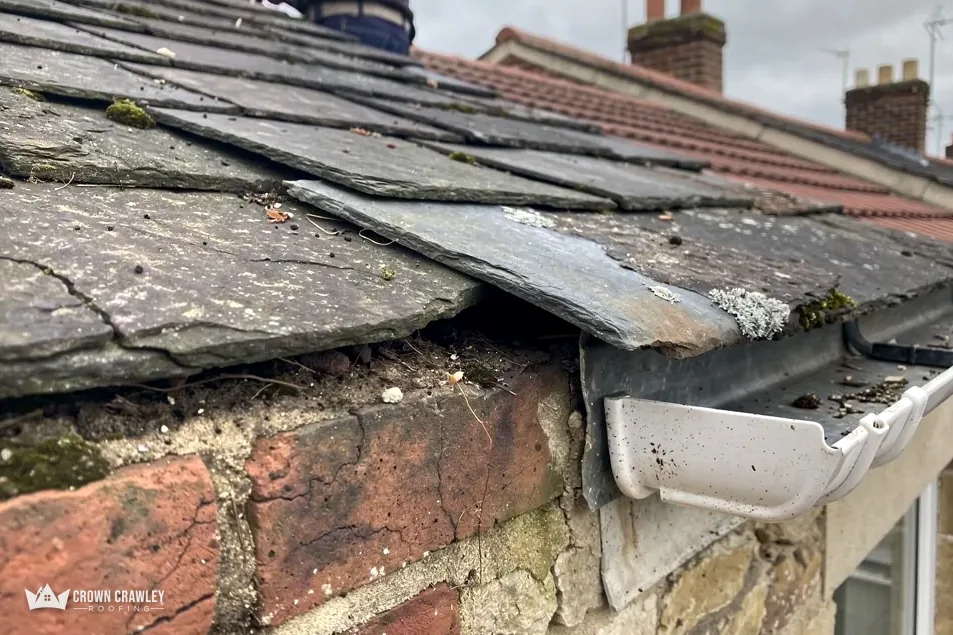
Age alone rarely settles it. Clay tile is given 60 years as a minimum by the Building Research Establishment, though one writer on clay tile says peg tiles of great age make that number a weak yardstick, so an old roof can be sound or worn out whatever its date. For natural slate, a roofing trade body says it can last 100 years or more if well maintained. Those are typical ranges, never promises. In practice the nails and fixings tend to tire before the slate or tile itself, and one slipped slate can be replaced with a matching one. A handful of careful repairs can keep a sound roof going for a long time.

Where does a Ditchling survey begin?

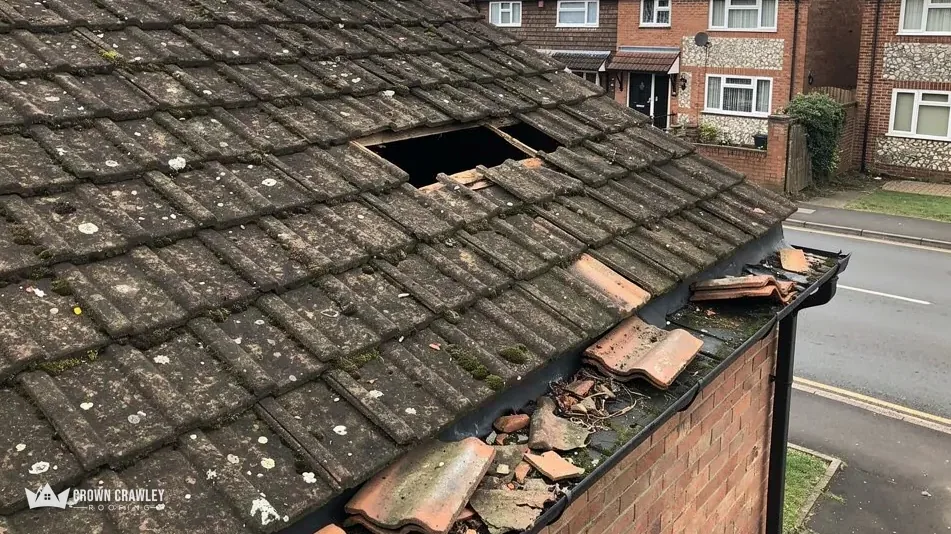
We begin at ground level, looking along each slope for slips, gaps and sagging lines. Then we go up to the ridge, the hips, the valleys and the points where the roof butts against a wall or chimney. Inside the loft we check for chinks of daylight, damp staining and the condition of the timber. Where a covering is old, we sort the pieces that can be re-used from those that cannot, because keeping good tiles keeps the roof looking as it always has. If the survey points to a strip and re-cover, our pitched roofing page shows how that job runs, and the written price follows.

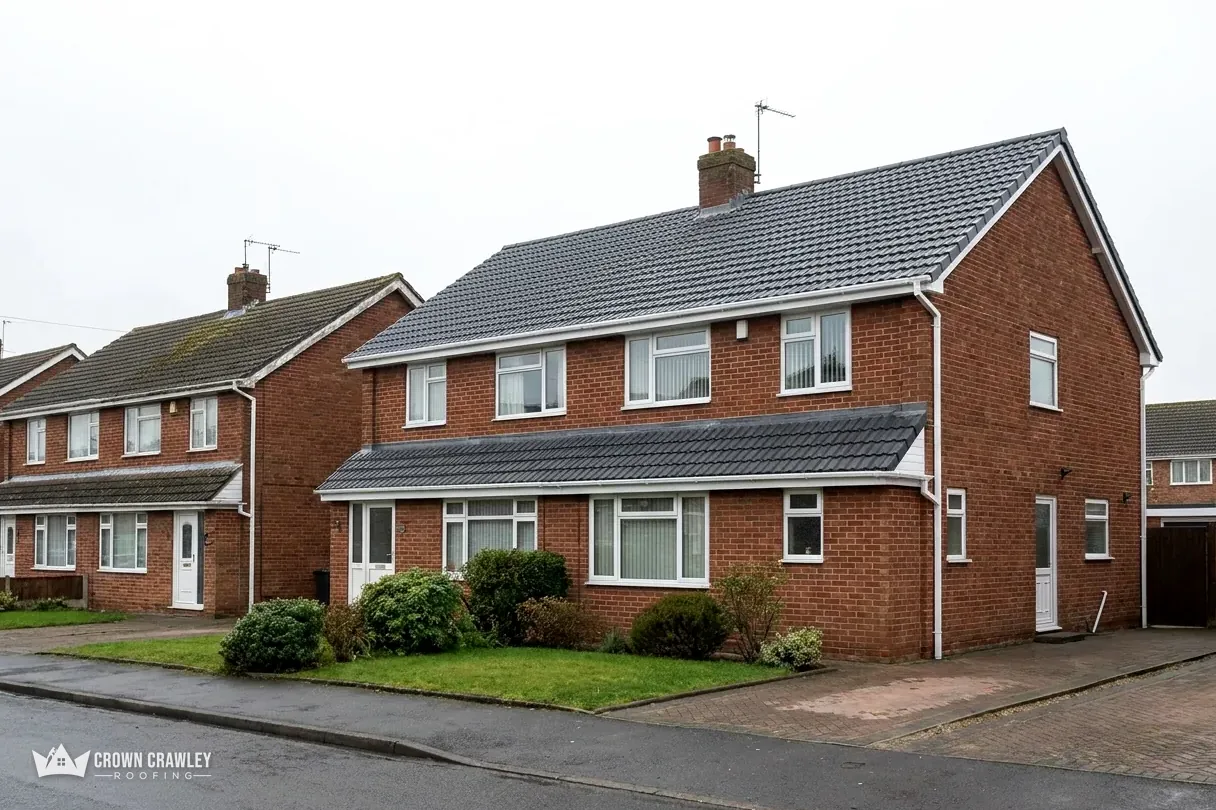
Detached red brick houses with grey tiled roofs on a quiet road

Stage 02 · Permissions

National Park, conservation area and Article 4

Ditchling sits inside the South Downs National Park and a conservation area, so who decides a roof question depends on the work involved.

Three layers of protection can meet on one Ditchling roof, and it helps to know which one applies before a ladder goes up. Asking first and repairing second is the sensible order here, and the questions are quick to put.

Who decides planning for a Ditchling roof?

In the Lewes area the South Downs National Park Authority handles planning applications directly, calling it a recovered area. A planning question about your roof therefore goes to the Park, not to the district council. Building control is a separate matter. The Park Authority does not run it, so for a larger re-roof we ask Lewes District Council which building control team covers the address before fixing a date, and the written price records the answer we were given. The Planning Portal puts the usual test at less than 25 per cent of the building envelope and less than 50 per cent of the roof, though a heavier new covering can change the answer.

What about the conservation area and the 1972 direction?

Ditchling has a conservation area. Separately, an Article 4 direction made by Chailey Rural District Council in 1972 covers High Street, South Street and parts of Lewes Road, West Street and East End Lane. What it controls at a given address is for the Park Authority's planners to confirm. If you live on one of those streets and want to change anything on the roof beyond a repair, put the question to its planners before you sign a price. The Authority's own advice is that routine upkeep and small repairs made like for like need no listed building consent, which helps on older houses, but altering a listed roof does.

Words you may be sent

National Park
Protected area with its own planners
Conservation area
Place where local character is protected
Article 4 direction
Removes certain permitted development rights
Like for like
A repair in the same material and pattern
Listed consent
Approval for changes to a listed building

Does a listed house change how we work?

Anne of Cleves House, facing the church, is listed Grade I, and the church is listed Grade I as well. Plenty of other old houses in the village may or may not be listed, and the national list entry for your own address settles it, so we look it up before quoting for anything beyond a repair. On a listed roof we match the existing covering, keep the repair as small as the fault allows and photograph each step, so a clear record exists afterwards. For the bigger question of when to ask the council first, our guide to planning permission for roof work is the place to start.

Stage 03 · On site

Lead, scaffold and bats on a village job

Old roofs bring lead flashings, awkward access and sometimes bats, and each has a plain answer before any work begins.

Most of the practical questions on an old village roof come down to three things: the metalwork, the access and the wildlife. We settle each of them during the survey visit, well before any scaffold arrives.

What do we check on lead flashings?

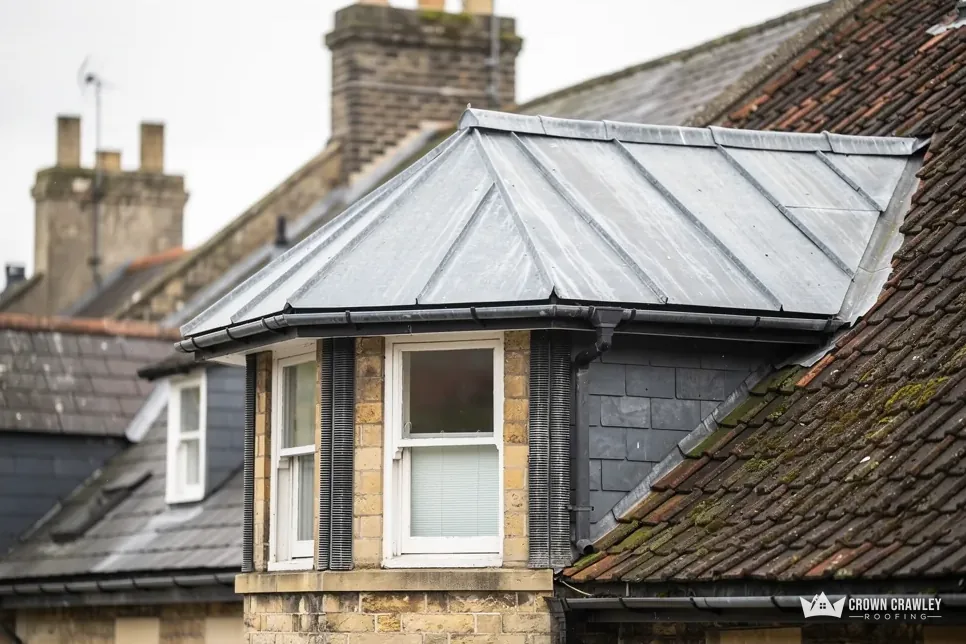
Where a roof meets a chimney, a parapet or a taller wall, a lead flashing is what keeps rain out of the joint. Lead flashing is put at over 80 years of life by one cost guide, but it still splits at the folds, lifts at its edges and gets tugged loose by a chimney that has shifted. We press along each joint, look for daylight and staining, and tell you straight whether a repair or a new strip is the right answer. Our lead work page explains the lead codes and how a flashing is dressed. On a High Street building with a parapet behind the shop front, the lead can matter as much as the tiles.

Before the scaffold goes up

Pavement
Highway licence if scaffold stands there
Private land
No highway licence needed
Lead
Every flashing joint checked
Bats
Work pauses if signs appear
Waste
Taken away, site left tidy
Lead-covered bay roof and chimney stack on a slate and tile roof

Does scaffold at a Ditchling house need a licence?

Scaffolding that blocks a pavement or road needs a licence, issued by the highway authority. In this village the licensing body is East Sussex County Council, and its licences go through East Sussex Highways. Ask who applies; we line the licence up with the scaffolder so the dates match. Poles standing wholly inside your boundary need no highway licence, because private land is outside it. Either way we plan the start with you and tell the neighbours before the poles go up.

What happens if bats are found?

GOV.UK says the law gives every bat species full protection, along with where they breed and rest, and its examples of work that can harm a roost include repairing or replacing a roof. So if the survey turns up droppings, staining or a gap that bats use, we pause the job and discuss the options with you before a single tile is lifted. In a village house with deep eaves, a timber frame or a quiet loft, we keep a close eye out from the start and note every gap the survey photos show, including those under the lowest course of tiles. To begin, email or message us a picture of the flashing, slope or chimney that worries you, along with your Ditchling postcode and the name of your street.

Ditchling: questions and answers

What should I check before repairing a roof on Ditchling High Street?

Start with the street itself. An Article 4 direction made in 1972 covers High Street, South Street and parts of Lewes Road, West Street and East End Lane, and the village also has a conservation area. Matching what is already there is the simpler route. Anything that alters how the roof looks is a question for the Park's planning team before you agree a price.

Is Ditchling inside the South Downs National Park for planning?

Yes. The National Park Authority makes planning decisions directly in the Lewes area, so a planning question about your roof goes to the Park and not the district council. Building control is not the Park's; ask Lewes District Council. When a re-roof is large, we find out which body applies before agreeing a start date, and the written price notes it.

Is an old Ditchling slate roof worth repairing?

Often the answer lies in the fixings, not the slates. Natural slate can last 100 years or more if well maintained, so a roof with sound slates and rusted nails may need only re-fixing and a few matching replacements. The survey photos show which slates are good and which are cracked, and one written price covers whichever route suits.

Does the scaffold at my Ditchling house need a highway licence?

Only if it occupies a public pavement or road. The licensing highway authority is East Sussex County Council, working through East Sussex Highways. Ask who applies; on our jobs the scaffolder and Crown arrange it jointly. If the poles stand on your property at the front or back, no highway licence comes into it, and we agree the access with you at the survey.

Book a Ditchling survey

Message us a picture of the slate, tile or flashing you are unsure about, plus the street you live on, and the survey is next.

01293 974253

10-year workmanship guarantee, in writing.

Call Get a free quote