Roofers in Wivelsfield

Weald clay, Horsham slates and tall brick stacks over old Wivelsfield.

Wivelsfield is a Weald parish whose old records name Horsham slates, clay tiles and great brick chimney-stacks. We read the roof above your head, send survey photos from it and write down one price.

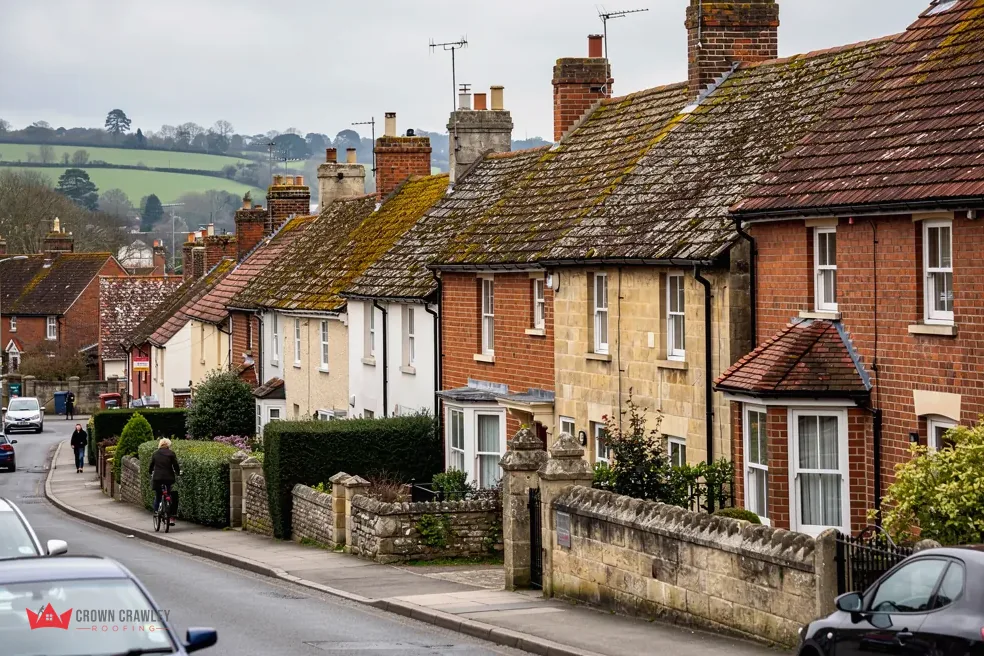
Village street of brick and render houses with old tiled roofs

Up on the roofs of Wivelsfield

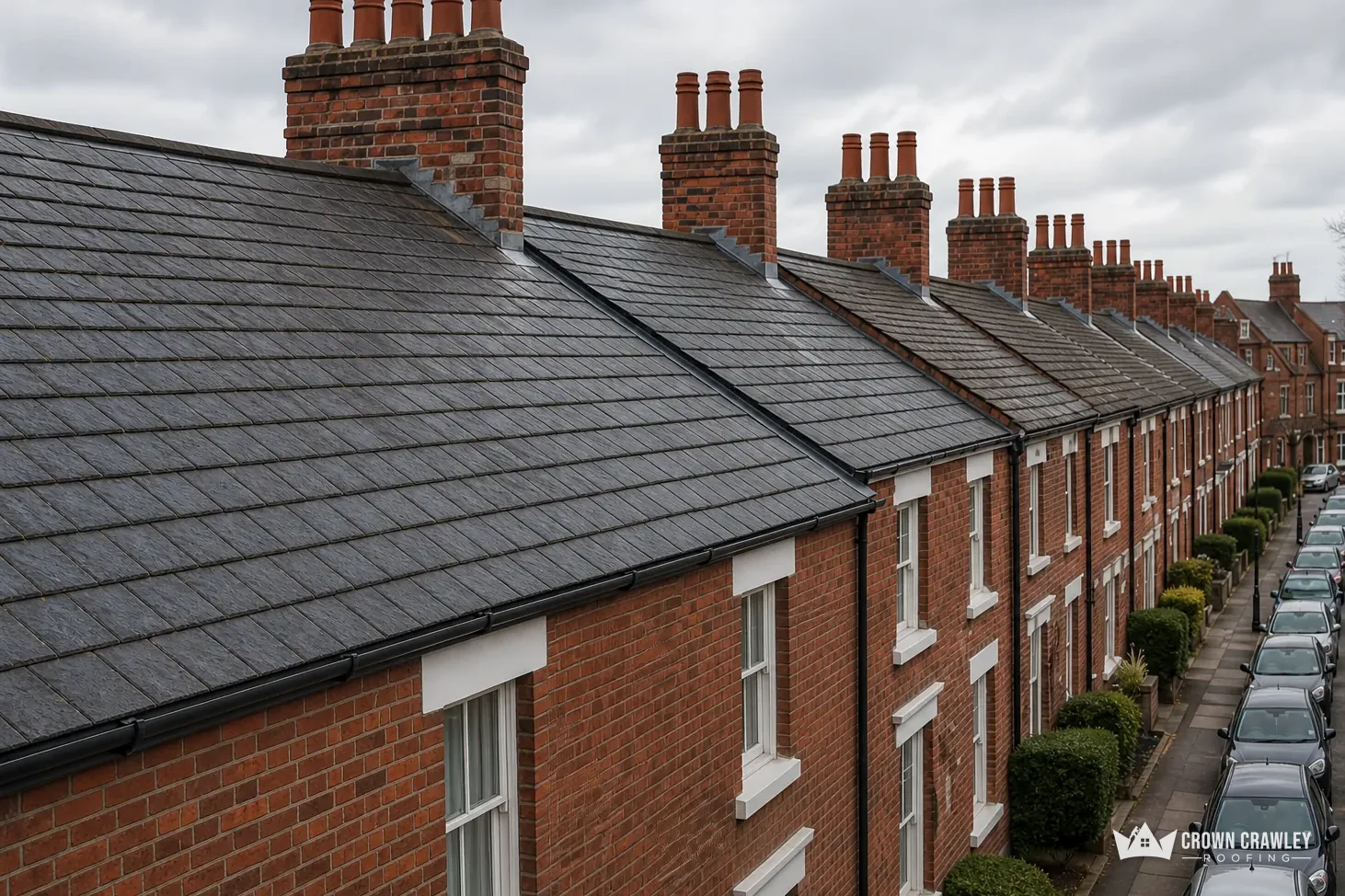
Long terrace of slate roofs with a line of brick chimneys

Horsham slate roofs

The 1940 parish history records Horsham slates on the roofs of Great Ote Hall. Despite the name these are heavy stone slabs, not true slate, so a repair starts with how each piece is held and how the weight is carried.

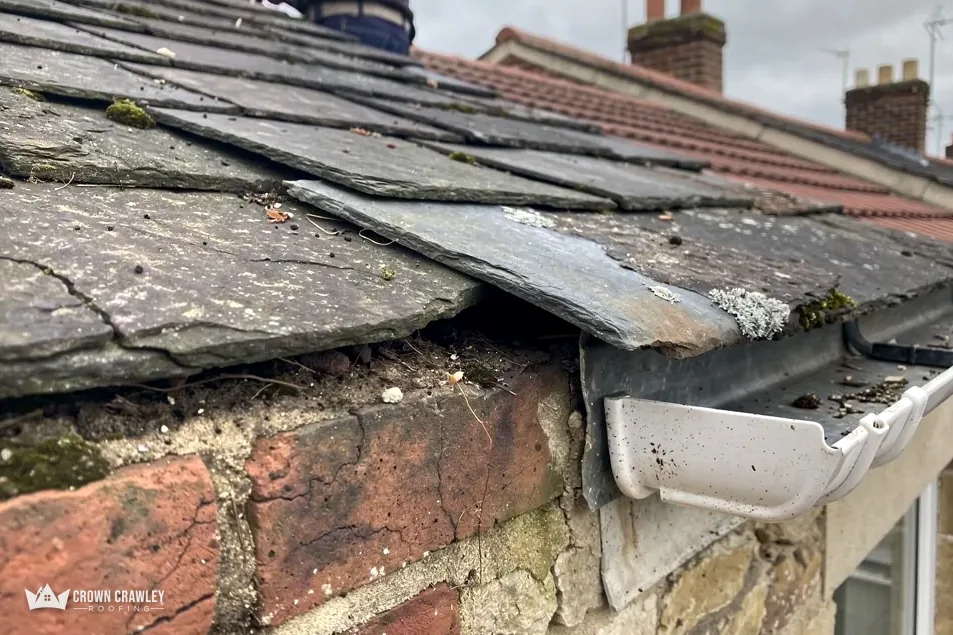
Stone slab roof, close view

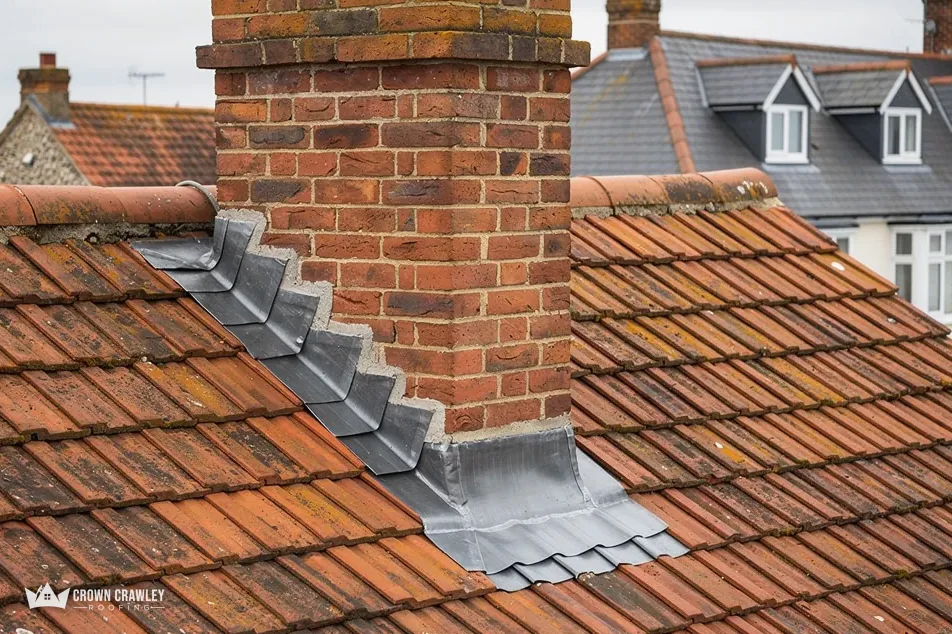
Brick chimney with lead flashing on a clay tiled roof

Tiled roofs and a capped tower

St Peter and St John the Baptist has tiled roofs, and its tower carries a timber-covered cap. Tile, slate and timber each wear in their own way, so each repair is matched to its covering.

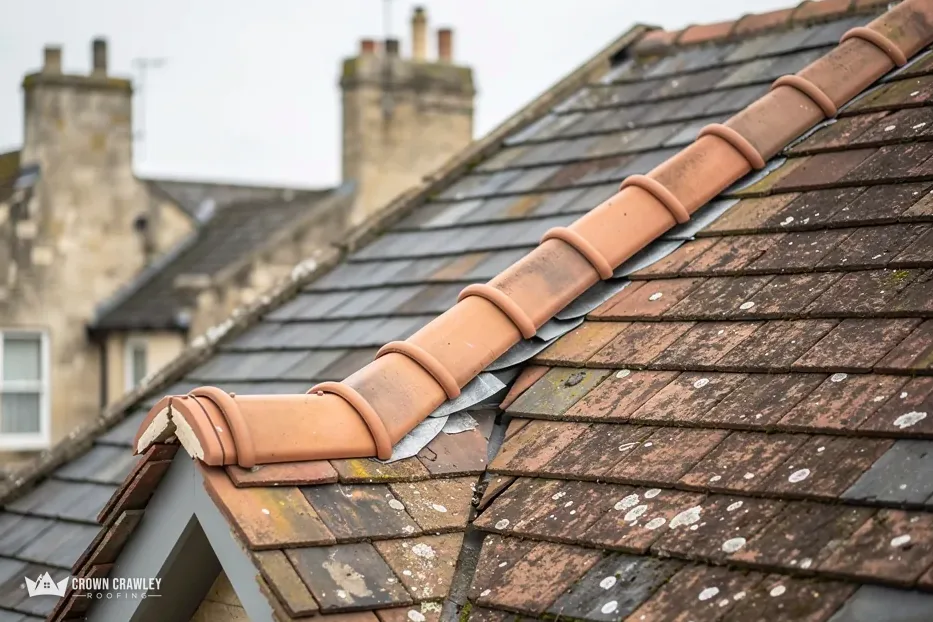
Clay tiles on a pitched roof

Stepped lead flashing around a brick chimney on a red tiled roof

Late 16th-century stacks

The Post Office has an external chimney-stack of the late 16th century. A stack that old is read from the top down: the pot, the flaunching, the brick joints and the lead flashing at its foot.

Brick chimney stack with lead flashing

Wivelsfield, between Haywards Heath and Ditchling

Map of Wivelsfield and the neighbourhoods around it, with Crawley for reference.

Wivelsfield lies in the Weald, and in 1934 parts of the old parish passed to Cuckfield and Burgess Hill.

Distance
14.6 road miles from Crawley, to the south-east
Drive
About 25 minutes
Council
Lewes District Council and East Sussex County Council
Planning authority
Lewes District Council
Conservation area
Wivelsfield
Ground
Clay and mixed sand over clay and sandstone
Get a free quote

Working in Wivelsfield

Reading roofs in a Weald parish

Three short chapters on the slate, tile and brick named in the old records, how an older roof is repaired, and the permissions that follow from the conservation area.

Stage 01 · First look

Slate, tile and a capped tower

The old records describe three different roof coverings in the parish, and each one wants its own kind of repair.

Wivelsfield is a parish in the Weald, on clay and on mixed sand over clay and sandstone. The Victoria County History of 1940 notes carnation-growing as an industry of the parish. The houses it describes range from the 16th century to the 18th, with modern ones since, so there is no single street pattern to lean on. Each survey begins with the roof above the house, not with an assumption about the neighbourhood.

What do the old records say about local roofs?

A fair amount, for the oldest buildings. The same history describes Great Ote Hall as half-timbered on sandstone plinths, with three massive brick chimney-stacks and roofs covered with Horsham slates, its east wing dated 1600; Historic England lists it at Grade I. The church itself, which carries two dedications to saints Peter and John the Baptist, has sandstone rubble and ashlar walls beneath tiled roofs, with a timber-covered cap on its tower. Near the church, the Post Office has an external chimney-stack of the late 16th century, and a three-bayed brick and tiled house farther east has a stepped stack of slightly earlier type. They show the range: Horsham stone, plain tile and a shingled tower cap, with heavy brick stacks rising above.

Wivelsfield survey: what we note

Covering
Slate or tile, and its fixings
Stack
Brick joints, pot and flaunching
Lead
Flashings sound where stack meets roof
Timbers
No rot in battens or rafters
Gutters
Clear, with no water on walls
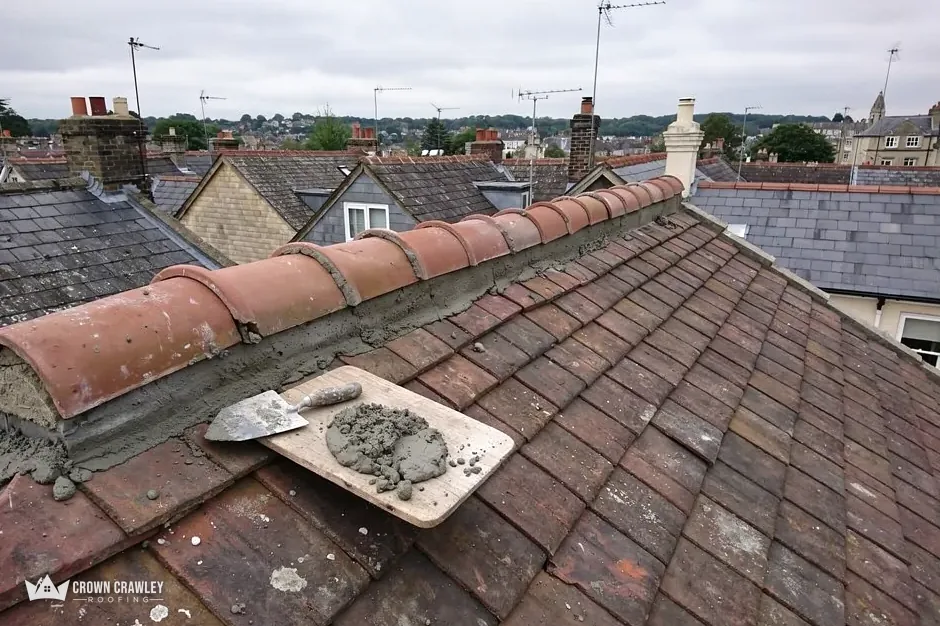
Ridge tile bedded in fresh mortar with a trowel resting on the roof

Does an older house need a different kind of repair?

It needs a slower look. An older roof may carry hand-made tiles, reclaimed slates or a frame that has shifted over generations. BS 5534, the standard covering slating and tiling, warns that its advice may not suit every older roof, especially one laid with older or reused materials. So we never press a modern method onto a roof that cannot take it. We check the battens, the wooden laths that carry the covering, then the fixings, the lap of each course and the rafters beneath. After that we tell you what a repair can achieve and where its limits lie.

Natural slate, where a house has it, repays that patience: the Confederation of Roofing Contractors reckons well-maintained slate can last 100+ years. That is a typical range and no promise, but it is why we would rather re-fix and patch a sound slate roof than strip it. A slipped covering is a modest job: Checkatrade's October 2026 table shows replacement of up to five tiles at £170 to £500, depending on access. That is a national range and your own figure comes from our survey. Our pitched roofing page explains how tiles, slates, battens and underlay are repaired.

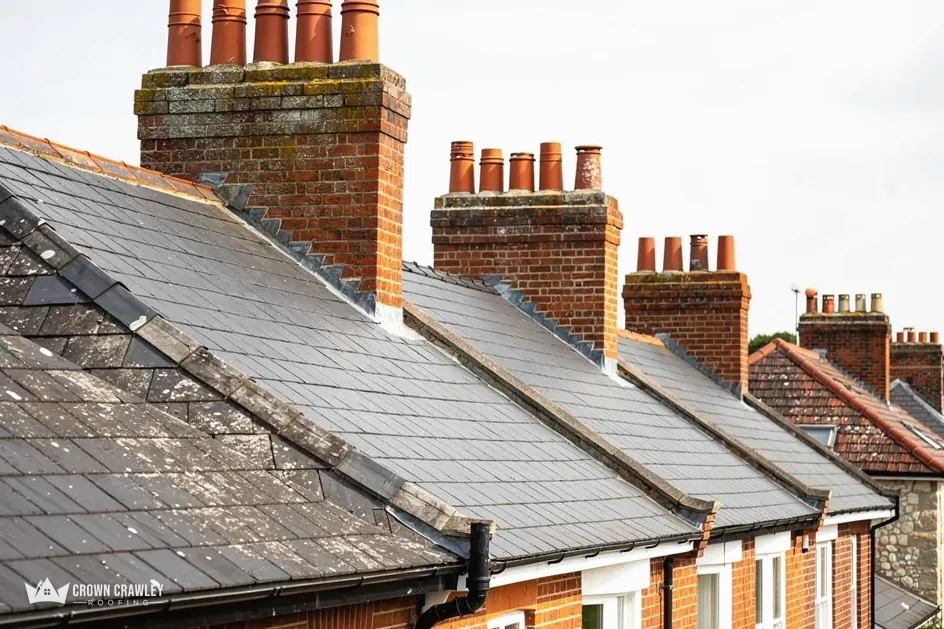
Row of terraced chimney stacks above slate roofs

Stage 02 · Older buildings

Chapels, chimneys and old brickwork

Chapels from the 1770s and a stack from the 1500s share one parish, and their weak points differ from a newer house's.

Wivelsfield has some notable dates. Ote Hall Congregational Chapel was put up in 1778 by the Countess of Huntingdon, who lived at Ote Hall, and the Baptist chapel followed in 1780. We make no assumption about what covers either one. They make a useful point, though: buildings of that age have seen centuries of weather, patching and changes of owner, and the roof carries the sum of it.

Why do chimney stacks cause so many leaks?

A stack is the most exposed part of any roof. It stands up in the wind with all four faces wet, and it has a join with the roof slope on every side. Water gets in at the top first, where the flaunching, the mortar slope that sheds rain off the stack, cracks and lets go. It then finds the brick joints, and finally the lead flashing, the strip that seals the base of the stack to the roof. On a stack as old as the late 16th-century one by the church, the brick joints are often the first thing to check, since open joints let rain into the stack itself.

Chimney and roof words

Stack
Brick chimney rising through the roof
Flaunching
Mortar slope that sheds water off the top
Flashing
Lead strip sealing stack to roof
Pointing
Mortar filling the joints between bricks

What can be fixed from the roof?

Most of it. Repointing, renewing the flaunching, replacing a cracked pot and dressing new lead can all be done without taking the stack down. Checkatrade's October 2026 guide gives an average of around £750 for chimney repointing, with a small, low stack nearer £300 and a rebuild above the roofline from £1,000 to £3,500. Those are typical national figures, set by the stack's height, the state of the brick and how easily it can be reached. Scaffold is a large part of the swing, so getting to the stack counts for a good deal of the price. A stack that leans, or whose bricks crumble when pressed, is a rebuild rather than a repair, and we put that plainly in the survey when we see it.

On an old building we look at what is already there before choosing a mortar or a pot, and we photograph each stage so you can see what changed. The detail is on our chimney repairs page, and flashing work is covered under lead work. If a damp patch has appeared on a chimney breast inside, tell us which room, because the line of the stain often points to the part of the stack that is letting water in.

Stage 03 · Permissions

A conservation area and what it asks

Wivelsfield has a mapped conservation area, so before any larger job the question to settle is whether the work alters how the roof looks.

Most small jobs here stay outside the rule book. Swapping in matching tiles, or patching a valley gutter, leaves the house the way the lane already knows it. Paperwork enters the picture when the covering changes, when the roofline is altered, or when a listing or a protected area applies.

What does the Wivelsfield conservation area change?

The national planning dataset records a conservation area named Wivelsfield, held on a Lewes District Council record. Land in a conservation area counts as article 2(3) land, which takes away some permitted development rights, so a plan to alter how a roof appears merits a conversation with the Lewes planning officers first. Like-for-like replacement draws far less attention. A listed house is firmer ground still, because works touching its character call for listed building consent, and our answer on re-roofing a listed building sets out how that goes.

Checks ahead of larger work

Planning
Lewes District Council
Conservation area
Wivelsfield, mapped by Lewes
Scaffold on road
East Sussex Highways licence
Extension
Apply 5 working days before expiry
Bat signs
Stop and take advice first
Clay ridge tiles along the hip of a weathered tiled roof

Does a bigger Wivelsfield re-roof need building control?

Planning Portal guidance puts the starting line at less than 25 per cent of the building envelope and less than 50 per cent of the roof, below which approval is not normally required. Cross either line, add weight, or choose a covering that behaves differently in a fire, and the answer changes. On anything resembling a full slope, your building control body hears from us before dates are agreed, and the written price records the outcome. The wider job is described on our roof replacement page.

Does the scaffold in a Wivelsfield lane need a licence?

Not if the poles stay inside your boundary: private land carries no highway licence. A scaffold on the carriageway or footway is another story, and the highway authority issues that licence. For Wivelsfield the authority is East Sussex County Council, working through East Sussex Highways, and our practice is to sort it out together with the scaffolder. East Sussex Highways lists £127 for a 28-day licence, with a 2.77 per cent rise from 1 April 2026, and an extension must be applied for at least five working days before the old licence expires.

Roofs sometimes shelter bats. The government's bat guidance says each species is protected in law, along with the spots where bats breed and rest, and it lists roof repair with the jobs that can disturb them. Should the loft survey turn up signs, that part of the job is paused and we talk the options through with you. For a first step, tell us which stack, slope or room shows the trouble and add your postcode.

Wivelsfield roof queries, answered

My Wivelsfield house has a slate roof with a leak. Do I need a whole new roof?

Rarely on a first leak. Slate that is looked after can last 100 years or more, so a slipped or cracked slate, a failed flashing or a worn stack joint is the usual cause. We trace where water gets in, show you photos from your own roof, and price the repair in writing. If failure is widespread, we explain it.

Would a new roof colour be noticed in the Wivelsfield conservation area?

It could be, since Lewes District Council's boundary for the Wivelsfield conservation area appears in the national dataset. Work in matching materials is a lighter matter than altering how the roof looks. Before changing a roof, a window or a chimney, speak to Lewes District Council's planning team, particularly if the house is listed, and ask for their answer in writing.

Can old chimney stacks be repaired without taking them down?

Often, yes. Repointing, new flaunching, a replacement pot and fresh lead flashing can all be done from the roof. A stack that leans or crumbles is different and may need rebuilding. Checkatrade's October 2026 guide shows repointing at around £750 on average, a national figure only, and your own written price follows our survey of the stack.

Why does a shingled tower cap wear differently from tiles?

Timber, clay tile and slate age in different ways: one wears thin or splits, another cracks or loses its nibs, another slips out of place. Churches also have their own consent route, because a parish church used for worship needs a faculty, the Church of England's own permission, in place of listed building consent. A family home follows ordinary planning rules, plus listing if it applies.

Your Wivelsfield quote

Tell us which stack, slope or room shows the trouble, add your Wivelsfield postcode, then expect a call from us to book your survey.

01293 974253

10-year workmanship guarantee, in writing.

Call Get a free quote