Clay ground and a pottery trade
Chailey's soil is strong clay, and Chailey Potteries on South Common worked it from about 1740. What covers a given roof is a question for the survey, not for local legend.
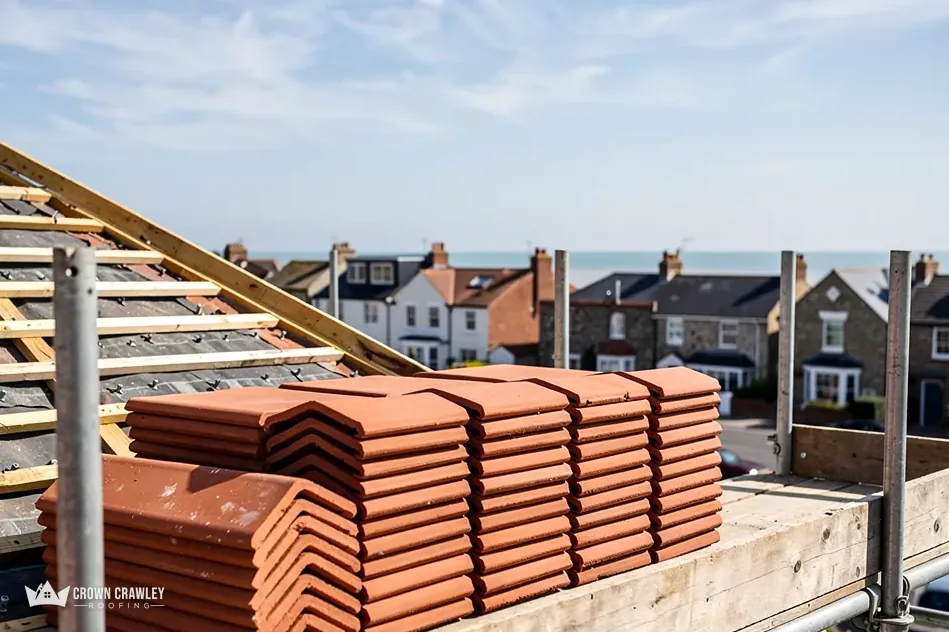
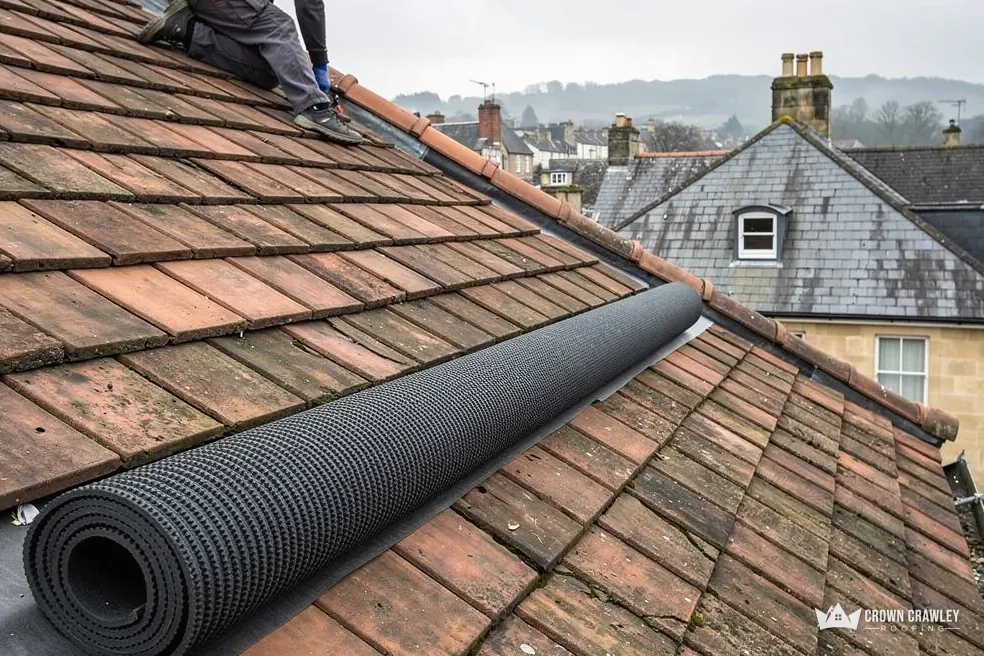
Clay tiles on a pitched roof
Roofs on strong Low Weald clay around South Common and its pottery.
South Chailey grew up on clay: the soil is strong clay and a pottery worked it from about 1740. Before any price is given, we find out what really covers your roof.
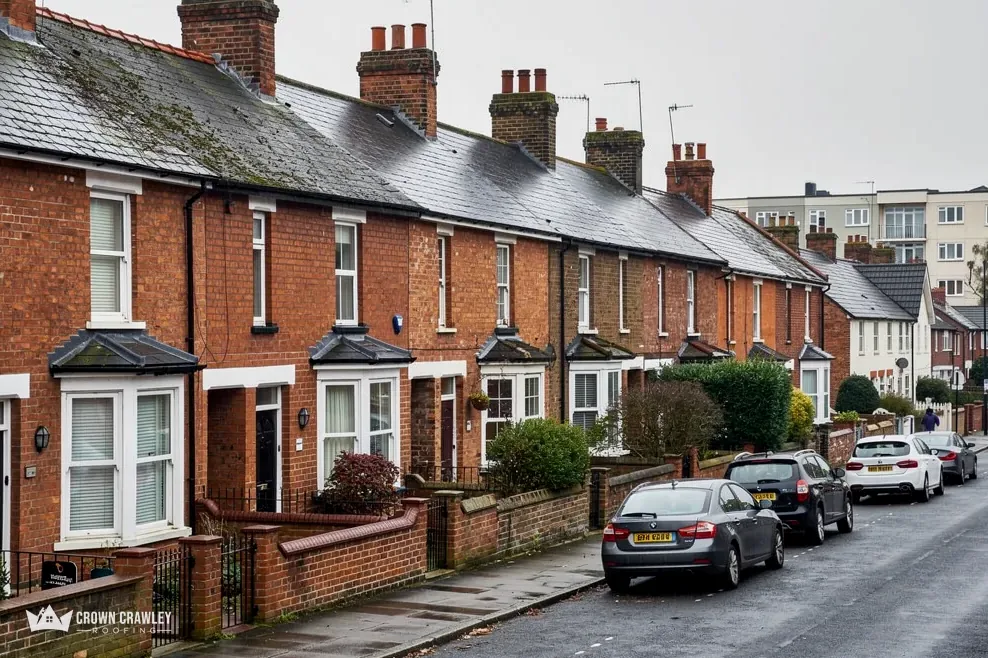
Chailey's soil is strong clay, and Chailey Potteries on South Common worked it from about 1740. What covers a given roof is a question for the survey, not for local legend.
Clay tiles on a pitched roof
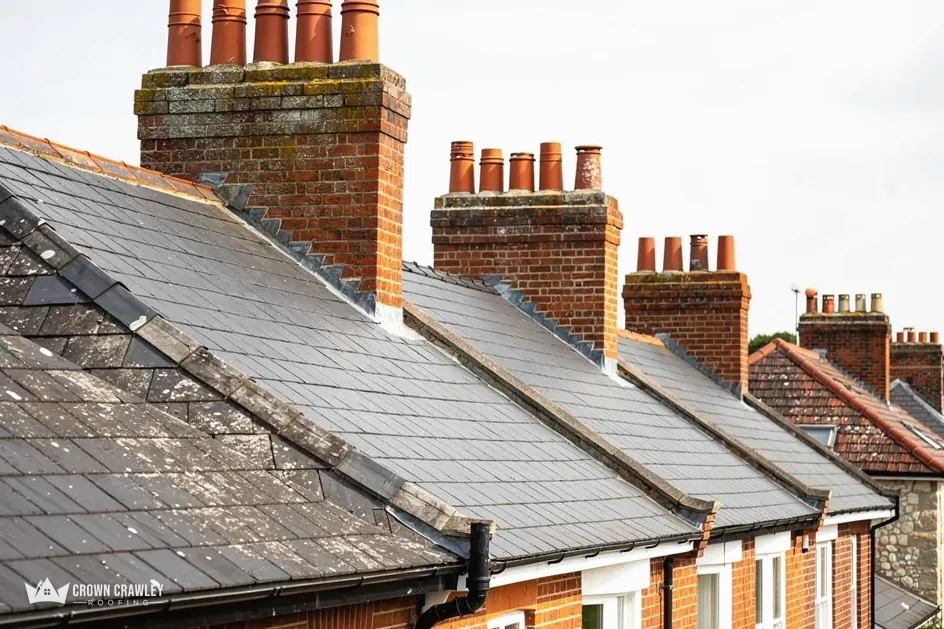
St Peter's church in Chailey village, north of South Chailey, uses Horsham slates everywhere but its tiled chancel. Slate and tile can share one roofline, so we read each slope on its own.
Stone slates on an old roof
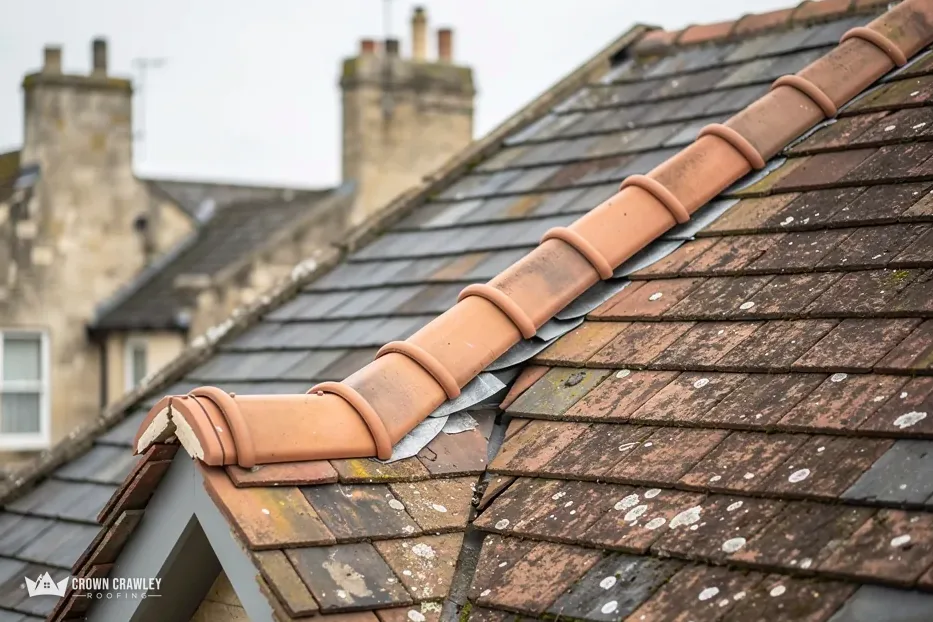
St John's Mission Church on South Common dates from 1895, and there was a Nonconformist mission hall there as well. Buildings of that period get a close look at their verges, gables and gutters.
Small gabled roof with a tiled verge
Map of South Chailey and the neighbourhoods around it, with Crawley for reference.
South Chailey sits on strong clay in the Low Weald, south of Chailey village and around South Common.
Roofing in South Chailey: the diary
Three short chapters on local clay and tile, the mixed coverings of the parish church, and the Lewes and East Sussex paperwork behind a bigger job.
Stage 01 · The ground
A pottery on the common shows that clay was worked here; what covers a particular house is settled on its own roof.
The Victoria County History of Sussex describes Chailey as a large Wealden parish whose soil is strong clay, with potteries in the south-east of the parish. Chailey Potteries, opposite St John's on South Common, were started in about 1740 by the Norman family and were still in their hands in 1940. A road ran west from South Common to the Chailey Institution. It is a picture of a place that lived off the ground beneath it, and it is tempting to assume that every roof here is therefore clay tile. The same account picks out Ovendean, a late 16th-century cottage near South Common Post Office on the east side of the Lewes road, with some timber framing showing and the rest in brick and weather-boarding around a central chimney-stack. The parish is large and its edges differ, so the survey of one house says little about the next.
Reading a clay-tile slope
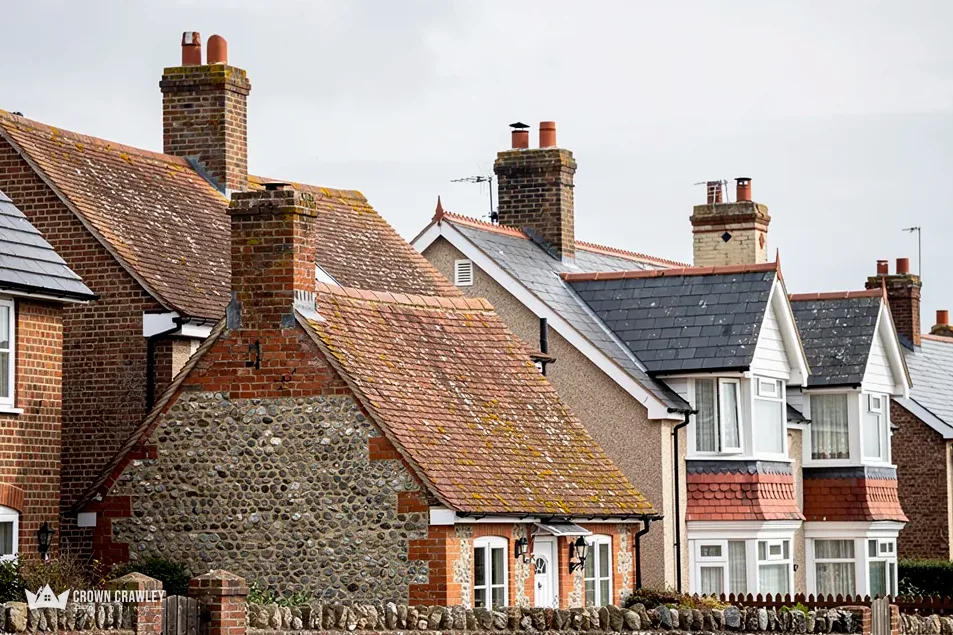
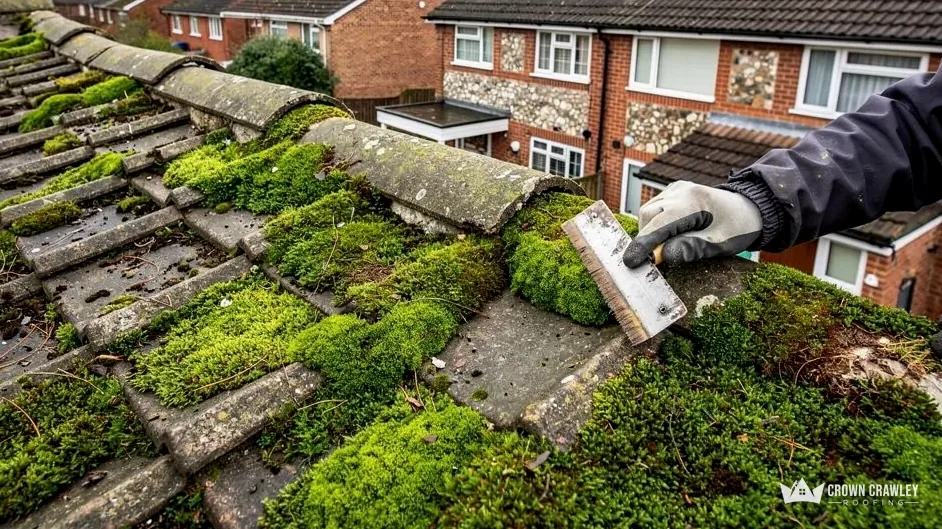
Not necessarily. A pottery on the common is not proof of a tile works, and houses have been re-covered many times since 1740. So we do what we do anywhere: we climb up and read the slope. The profile of the tile, whether it is hand-made or machine-made, the shape of the nibs and the position of the nail holes all tell us what we have and roughly how it has been treated. Then the survey photographs go to you, with a note of anything that needs matching if tiles are replaced. Our pitched roofing page explains the repairs we carry out on tiles, battens and underlay.
Building Research Establishment figures give clay tile a minimum of 60 years. For old peg tiles, a conservation article warns the figure is not a reliable guide, so on an old roof the state of the tiles beats the calendar. Marley quotes around 60 years for concrete tiles as well, and disclaims it as any promise of longevity. Slipping, flaking and worn nibs show up on the slope well before anything dramatic happens in the loft, which is why a survey can be useful long before a leak.
A pottery on the common tells us about clay, and only the roof tells us about tiles.
When the repairs start to outnumber the sound tiles, or when the battens beneath them no longer hold a nail. Then a strip and recover, keeping the reusable tiles where we can, may cost less over time than another round of mends. A recover also lets us check the battens and underlay along the whole slope, which a patch never does. The written price lays out the decision plainly, and the choice stays yours.
Stage 02 · Mixed coverings
St Peter's in Chailey village wears a tiled chancel, a wood-clad spire and Horsham slates elsewhere, a neat lesson in mixed roofs.
The parish church of St Peter stands in Chailey village, to the north of South Chailey and not on South Common. The Victoria County History says it is built of plastered sandstone rubble, with a tiled roof over the chancel, a wood-clad spire on the tower, and Horsham slates used everywhere else. One building, three coverings, and each one ages in its own way.
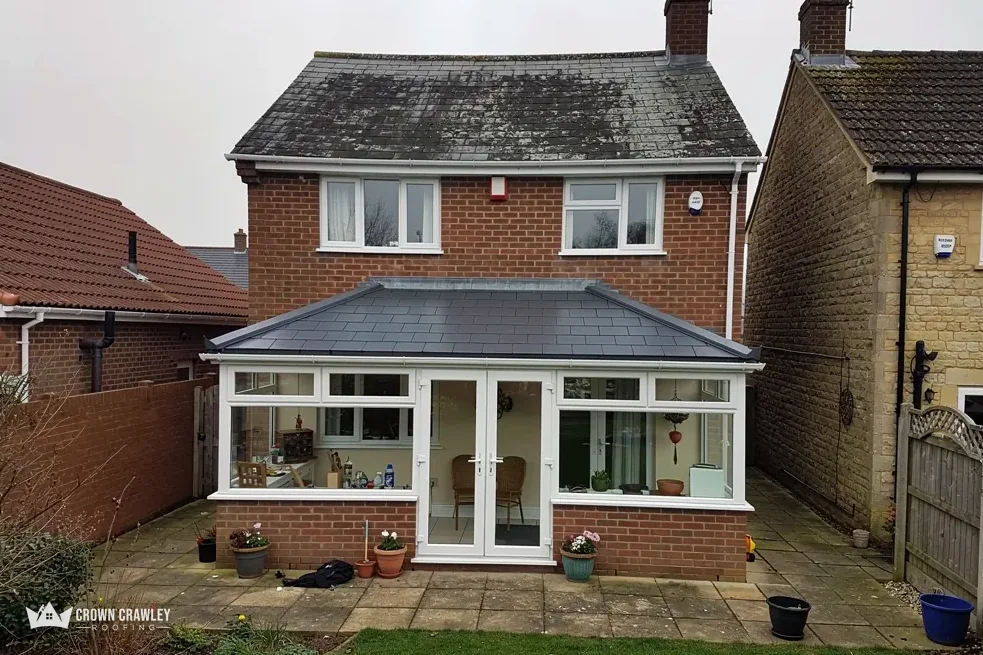
That is the line where water most likely finds a way in. A slate slope ending against a tiled one needs a flashing or a soaker to throw the water out over both, and the junction has to be lapped correctly. The same logic applies on a house with an extension in a different material, or a porch roof added later. When we survey a roof like that, we spend as long at the junctions as we do on the open slopes, because the slopes themselves are the simple part. We photograph each junction from both sides, up on the roof and from inside the loft, so you can see whether daylight or damp is reaching it.
Terms from the church roofs
Quite a lot, with a pair of binoculars and ten minutes. Look along the ridge for dips, along the eaves for slipped or missing tiles, and at the gutters for plants or overflow stains on the wall below. A dark patch on the ceiling that follows rain is worth noting down with the date. None of this replaces the survey, but a few notes make the visit quicker and the findings clearer. The rainwater side of the same walk round, meaning gutters, soffits and fascias, gets its own survey notes.
St John's Mission Church on South Common was built in 1895, and the same history mentions a Nonconformist mission hall at South Common. On buildings of that size the roof is a big part of what you see: a steep gable, long verges either side, and a ridge that runs the full length. That makes the verge and ridge the first things we check, since a small building has no spare roof to hide a weak edge. Whatever the age or purpose, the survey records what is up there in photographs, and the price follows.
Stage 03 · Permissions
Lewes District Council decides planning, East Sussex County Council licenses the road, and each has a say when a repair grows.
A like-for-like mend on a South Chailey roof rarely involves an official. Someone has to be asked when whole slopes are renewed, when the covering is switched, or once scaffold takes road space.
Start with Lewes District Council, which is the planning authority here. Ask it whether your South Chailey house lies in a conservation area, since for a particular house on South Common the council has the final word. For building control, ask the council which team handles your property rather than assuming. The Planning Portal's test is the common starting point: no building control application is normally needed while less than 25 per cent of the building envelope is affected and less than 50 per cent of the roof. On South Common, though, a swap to a covering 15 per cent or more heavier than the existing one does call for approval. Coverings differ in weight, which is why we weigh up what is on the roof before suggesting a change. Our roof replacement page shows how a full renewal runs, and our post on planning permission for roof work covers the planning side.
South Chailey paperwork at a glance
If the scaffold takes up road or pavement, East Sussex County Council licenses it through East Sussex Highways. The published fee for a new or renewed licence is £127 for 28 days, with a 2.77% rise on application fees from 1 April 2026, and the fee is paid at application. A licence extension has to be requested five working days ahead of expiry. The East Sussex Highways terms rule out road scaffolding during the annual bonfire celebrations, so dates are planned around them. The scaffold firm and we deal with the licence between us, and a frame kept within your own boundary stays off the highway. The survey also tells us how much access the job needs, since a small repair may not need a full scaffold.
If water is already getting in, the roof is made safe before the scaffold is planned. Our emergency and general roof repairs page explains how that works. Roofs can also hold bats, and every species is fully protected, so a sighting during the survey pauses the work while we talk it through. Name your road and tell us where the roof is leaking or slipping.
A birthday does not settle it. Clay tile carries a 60-year minimum in Building Research Establishment figures, but a flaking face, broken nibs, loose fixings and daylight from the loft side matter more. Our survey records each of those in photographs, and from them you can judge with us whether to mend the slope or recover it.
Lewes District Council holds the official conservation area list and can tell you in writing whether your South Chailey home is covered, along with the record of any listed building near you. Listed buildings are separate, and a plan that changes how the roof looks is worth raising with the planning team before any price is agreed.
East Sussex Highways lists £127 for a new or renewed 28-day scaffold licence, with application fees rising by 2.77% from 1 April 2026, payable when you apply. The scaffold firm and we look after that paperwork, and poles kept on your own ground are off the highway. The written price tells you whether your particular job needs one at all.
Planning for South Chailey sits with Lewes District Council, while the highway belongs to East Sussex County Council. For building control on a larger renewal, ask Lewes District Council which team deals with your address. A matching covering rarely raises questions, whereas a different material or weight is worth checking before work starts, and the survey notes which of the two applies to you.
Name your road, say what covers the roof if you know, and tell us where it leaks or slips. We will book the survey.
Message us on WhatsApp