Roofers in Newick

Roofs round a village green, with two conservation areas.

Newick's houses stand round a green near the River Ouse, and some date from about 1600. We read the roof you have, repair it to match, then price it in writing.

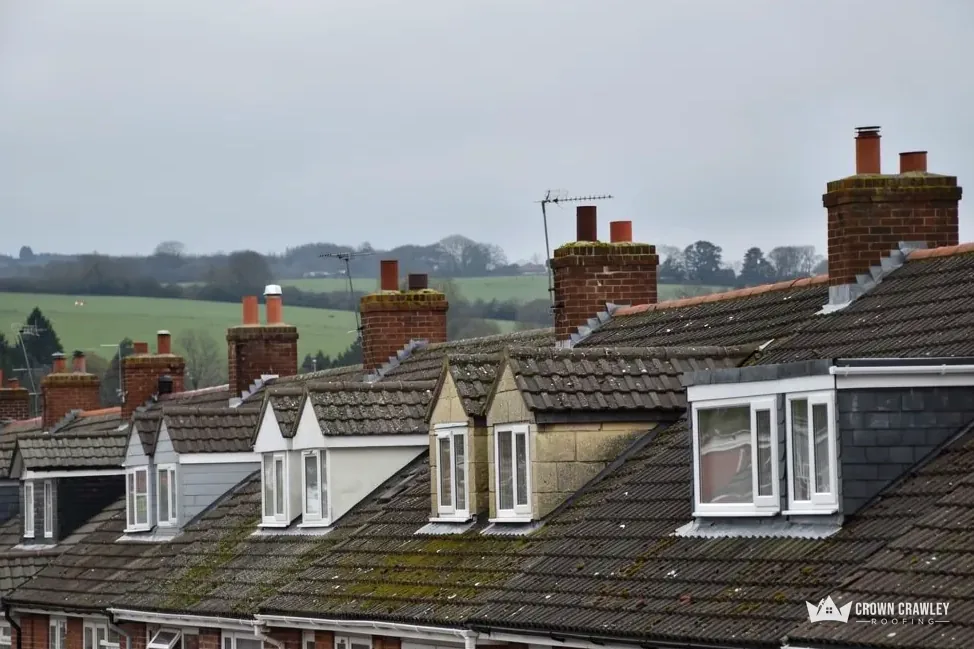
Dormer windows on a weathered tiled roof facing open fields

Roofs round Newick Green

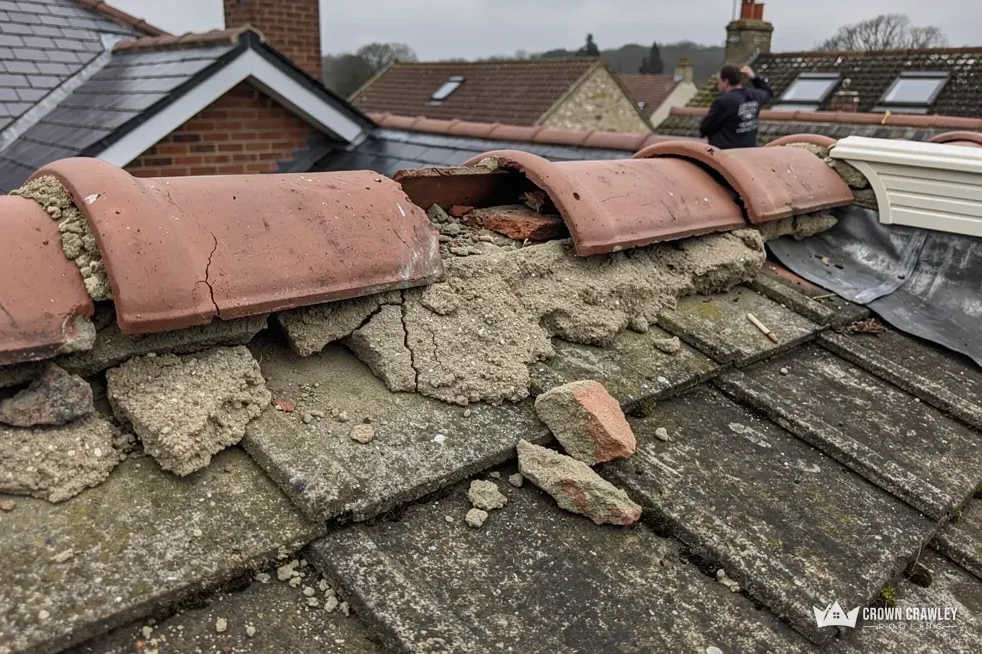
Crumbling mortar and cracked ridge tiles on a roof

A timber frame under a hipped roof

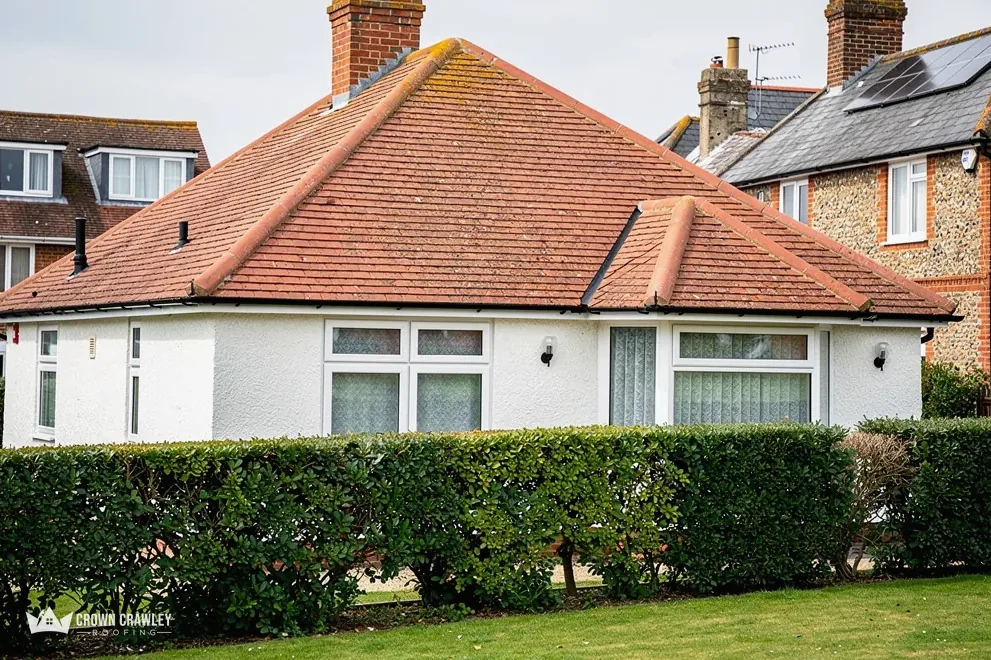
The Manor House, once Church Farm, is timber-framed and dated 1599. Its roof was changed to the hipped type in the late 17th century, and hips need their own bedding, fixings and care when we repair them.

Hipped tile roof on an old house

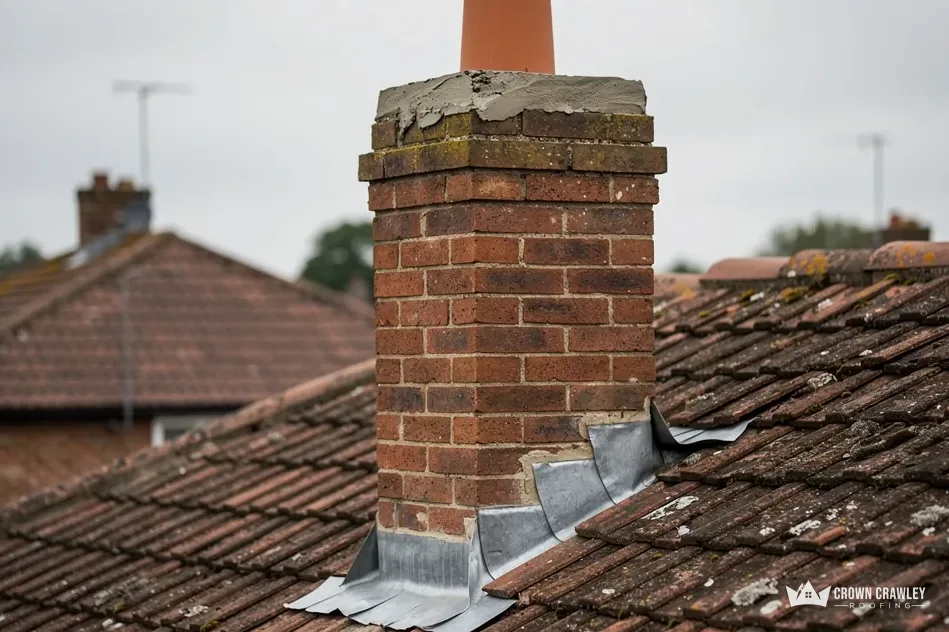
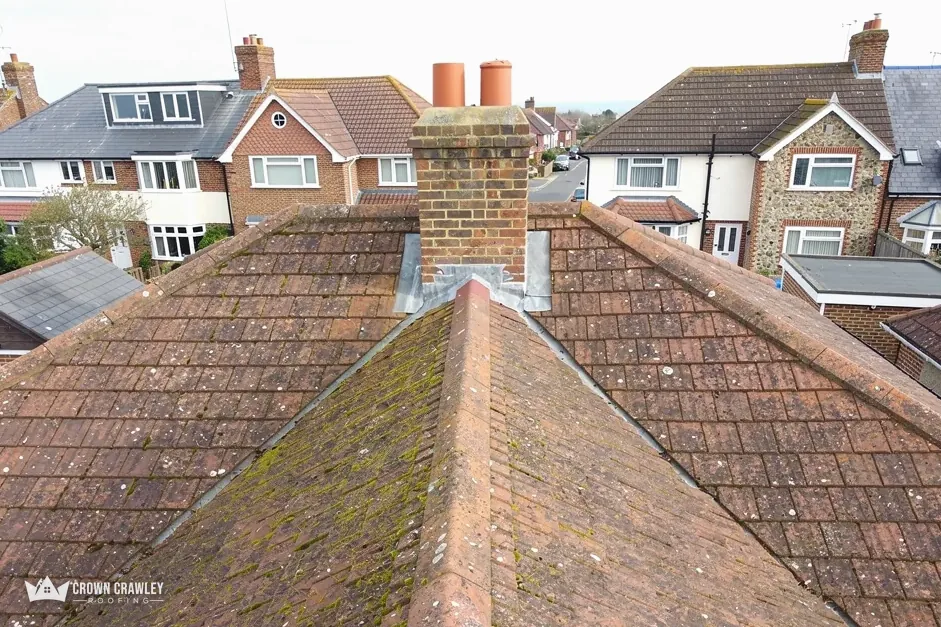
Brick chimney with lead flashing on an old tiled roof

Chimney-stacks of about 1600

The Bull Inn on the green has two chimney-stacks of about 1600. A stack that old is exposed on every face, so we check the pointing, the flaunching and the lead where it meets the roof.

Old brick chimney stack and pots

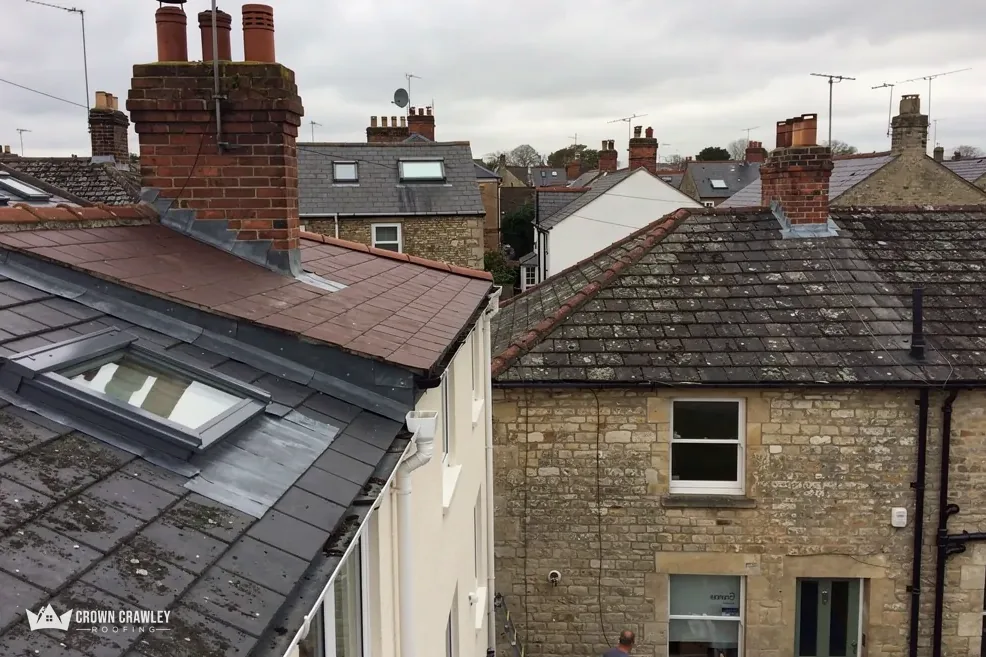
Slate and tiled roofs with a roof window beside a stone cottage

Tiled roofs on the village church

St Mary's has walls of sandstone and ironstone and tiled roofs. Old stonework and tiling meet at the eaves and gables, which is where we look hardest on any building of that age.

Tiled roof beside stone walls

Newick, round its green

Map of Newick and the neighbourhoods around it, with Crawley for reference.

Newick's houses ring a green, with roads west to Chailey and south to Barcombe; the Ouse bounds the parish to the east.

Distance
18.5 road miles from Crawley, to the south-east
Drive
About 32 minutes
Council
Lewes District Council and East Sussex County Council
Planning authority
Lewes District Council
Conservation area
Newick (The Green); Newick (Church Road)
Population
2,687 (Census 2021, Newick built-up area)
Land use in 1940
A large amount used for fruit growing and market gardens
Get a free quote

Notes from Newick

Reading a roof round Newick Green

Three short chapters on the village's two conservation areas, its hips and old stacks, and how a scaffold and a wildlife check fit into a Newick job.

Stage 01 · Boundaries

Newick's two conservation areas

Lewes District Council maps one conservation area at The Green and another along Church Road, so the address matters before the covering does.

Newick has two conservation areas on Lewes District Council's records, one called Newick (The Green) and one called Newick (Church Road). The village is built round a green, with roads running west to Chailey and south to Barcombe, so the two areas sit close to what residents would call the middle of the village. Whether your house falls inside one is a matter of a line on a map, and settling that comes first whenever a Newick roof is up for survey.

Can I fix a slipped tile inside the Green area?

Yes, and the rules are mild for that kind of job. Putting an identical tile back where the old one sat changes nothing the street can see, and the same goes for rebedding a ridge, renewing a valley or rehanging a gutter that has dropped. Questions arise once a roof starts to look different. Another tile colour, clay swapped for concrete, a roof window cut into a street-facing slope or a stack raised higher are all changes to put to the planning team before anyone orders materials. Our guide to planning permission for roof work covers the national rules, so the detail stays there.

Swap a tile for its twin and the street never notices; change the material and the council might.

Before work in Newick

Boundary
The Green or Church Road area?
Covering
Match colour, profile and material
Planning
Lewes District Council's planning team
Roof look
Ask before changing it
Photos
Your own roof, before pricing
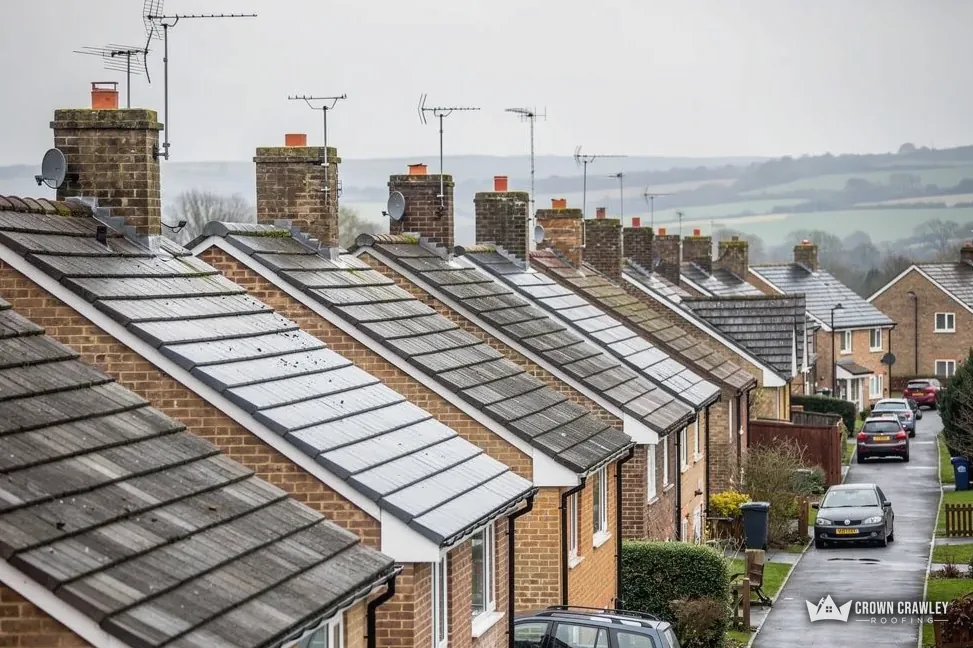
Terraced street with new grey tiled roofs

Is there an Article 4 direction on my street?

An Article 4 direction lets a council withdraw specified permitted development rights across a defined area. Whether a direction reaches a given Newick street is a question only the council can answer, so put it to Lewes District Council's planning team before any job that alters how the roof looks. The reply takes a short email, and it sits in your file beside our written price.

What does a survey in either area involve?

One of us looks over the roof from the ground and from a ladder, then goes into the loft. We note the tile, how the ridge and verges are held, what lies beneath the tile and whether the eaves can breathe, and the pictures we take of your roof are sent to you. Where the covering is old clay, we say whether a repair can hold, and a replacement tile is matched for colour and profile before it is ordered. The quote that follows is a single written total, with the access we have assumed spelled out. If the findings point to a bigger job, our roof replacement page shows how that runs, and the same survey photos can go to the planning team if you need to ask them anything.

Hipped tiled roof with a chimney at the ridge

Stage 02 · Older roofs

Timber frames, hips and old stacks

Newick has buildings dated to about 1600, and a roof or stack that old asks different questions from a house built last century.

Newick's older buildings are well documented. The Manor House, formerly Church Farm, is a timber-framed building dated 1599. In the late 17th century its roof was changed to the hipped type and its south front was refaced in brick. The Bull Inn on the green has two chimney-stacks of about 1600. We mention them because they show what a roofer here may be asked to look after: frames altered over the centuries, hips that need their own care, and stacks that have stood for a very long time.

What changes when a roof is hipped?

A hip is the sloping ridge where two roof planes meet at an outside corner, so a hipped house falls away on every side rather than finishing in a flat gable wall. Every hip carries a covering along its line, either hip tiles bedded in mortar or a dry-fix system. Hips are among the first places we look on a leaking roof, because the bedding can crack or let go as the building moves. Marley points out that the 2014 revision of BS 5534 ended reliance on mortar by itself for ridge and hip tiles, so when we rebed a hip we add mechanical fixings too.

Old-roof terms

Hip
Sloping ridge at an outside corner
Flaunching
Mortar crown that holds chimney pots
Flashing
Lead sealing a roof junction
Pointing
Mortar filling between bricks

How do we look after an old chimney-stack?

A stack takes weather on every face, so water gets in through the flaunching, the pointing and the lead flashings where it meets the roof. Old brickwork shows plenty from the ground: open joints, a lean, pots that have worked loose. We photograph what is visible, climb up for a closer look and describe the repair in plain words. Sometimes that is repointing and fresh flaunching; sometimes the lead needs renewing. The details are on our chimney repairs page. A stack on a listed building needs more care still, because works that affect a listed building's character need listed building consent, so a repair there should be put to the council before it starts.

The church gives another reference point. St Mary's has walls of sandstone and ironstone and tiled roofs, and its nave, which dates from about 1100, was lengthened in the restoration of 1886 to 1887. We approach any old Newick roof the way we would approach a building with a long past: read the earlier repairs before adding to them, and match what is already there. A picture of the stack or the hip as it looks from your garden gives us something to talk through with you ahead of the visit.

Stage 03 · On site

Scaffold, access and wildlife in Newick

A highway licence depends on where the poles go, and the loft survey tells us whether wildlife is present before a tile moves.

Newick lies in East Sussex, so the highway authority is East Sussex County Council, and its scaffold licences are handled through East Sussex Highways. Under section 169 of the Highways Act 1980, a scaffold obstructing a highway needs the highway authority's licence. Scaffold poles set inside your own boundary are a different case, and no highway licence comes into it.

Will the scaffold at my Newick house need a licence?

It comes down to where the poles go. Where a front garden or drive offers room, we stand the scaffold there and no highway licence applies. If it has to sit on the pavement or the road edge, the licence is a joint job for the scaffolding firm and ourselves, and the first working day follows its approval. Neighbours hear from us before any pole goes up. Check on any quote you receive whether VAT and scaffolding are included. Our written price states whether a licence is part of it, so the first morning holds no surprises.

Newick site set-up

Highway
East Sussex County Council
Licence
Only if scaffold is on the road
Private ground
No highway licence needed
Wildlife
Bats found means a pause
Daily update
What was done, what is next
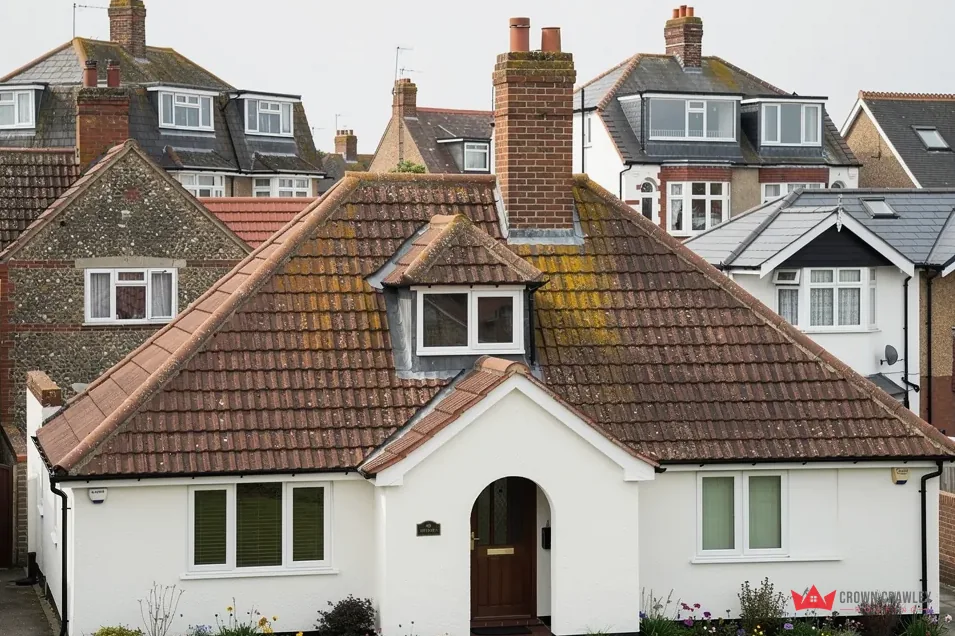
White rendered bungalow with a hipped tiled roof and dormer

Could there be bats or nests in a Newick roof?

Bats are legally protected, roost sites included, and the government's bat guidance lists roofing jobs among those that can disturb them. A bird's nest has the same cover while it is occupied or still going up. Our survey takes in the eaves, the ridge and the loft. If we spot droppings, staining or a nest, we stop, show you what we have seen and talk through the options before anything is disturbed. That check applies equally to an old timber-framed building, a roof with a stack on it and a house with a hipped slope, so none of them is treated as a special case.

What happens on each day of the job?

You are given a start date before the scaffold goes up. Every morning you hear what the day holds, the site is kept tidy, and the waste leaves with us rather than piling up on your drive. For a pitched roof the work is tiles, battens and underlay, and our pitched roofing page explains each of those. If a gutter or fascia has been letting water down a wall, we look at that during the same visit so the repair is not undone by the next shower. Before you decide on a bigger job, a clear picture of the troublesome part, sent with your Newick postcode, is the quickest start.

Newick roofs and the rules around them

My Newick house is near the green: does a like-for-like roof repair need the council?

Fitting the same tile where the old one sat keeps the street view unchanged, which is a different matter from re-roofing in new materials. Newick has two conservation areas, The Green and Church Road. If you want a new colour, material or opening, ask Lewes District Council's planning team before ordering anything, and keep their reply with your quote.

Can an old Newick chimney-stack be repaired instead of rebuilt?

Often, yes. Leaks tend to start at the flaunching, the pointing or the lead flashings rather than in the whole stack. We photograph each part from the roof, show you what is open or loose and give one total for either the repair or the rebuild. If the building is listed, check with the council before any work starts.

Does re-covering part of a Newick roof need Building Regulations approval?

The Planning Portal's usual test is that a building control application is not needed while under 25 per cent of the building envelope and under 50 per cent of the roof is involved; a covering 15 per cent or more heavier than the old one, or with significantly different fire performance, needs approval regardless. Ask your building control body before a bigger job.

What should I send before a Newick survey?

One clear photo of the troubling slope, hip or stack, from wherever you get a good view, plus your postcode and a line on any stain or drip you have seen indoors. A ceiling mark that appears after rain is worth mentioning. We use it to plan the visit and tell you what we will check first.

Send us your Newick roof

Tell us which side of the green you are on and send a photo of the stack or hip, and we will arrange your survey.

01293 974253

10-year workmanship guarantee, in writing.

Call Get a free quote