Roofers in Scaynes Hill

Roofs in a small Mid Sussex village with a Grade II church.

Scaynes Hill is a village of 717 people with a listed house and a Grade II church. Each roof is judged after a visit, then priced on paper.

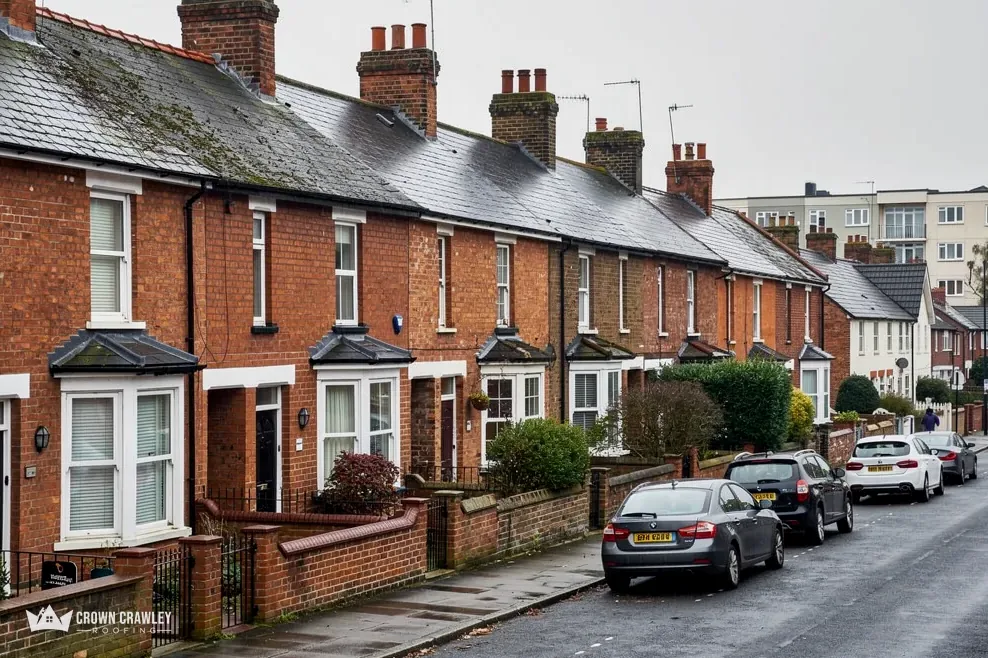
Victorian brick terrace with bay windows and parked cars

What we look for on Scaynes Hill roofs

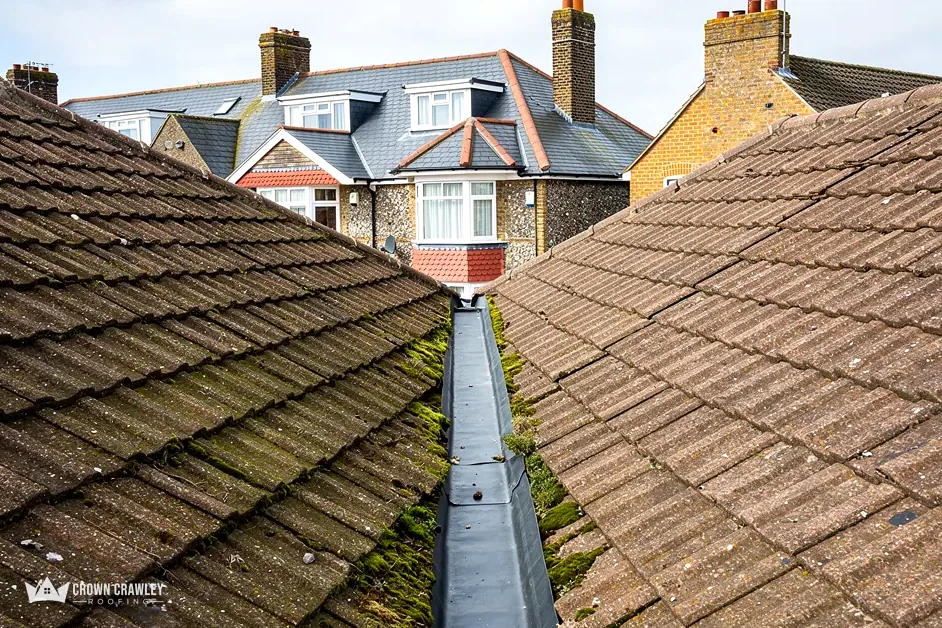
Lead-lined valley gutter between two tiled roof slopes

The Church of St Augustine

The National Heritage List includes the Church of St Augustine of Canterbury at Grade II, first listed in August 2006. A listed roof gets a photographic record of its present state before we suggest any change.

Pitched church roof with a bell cote

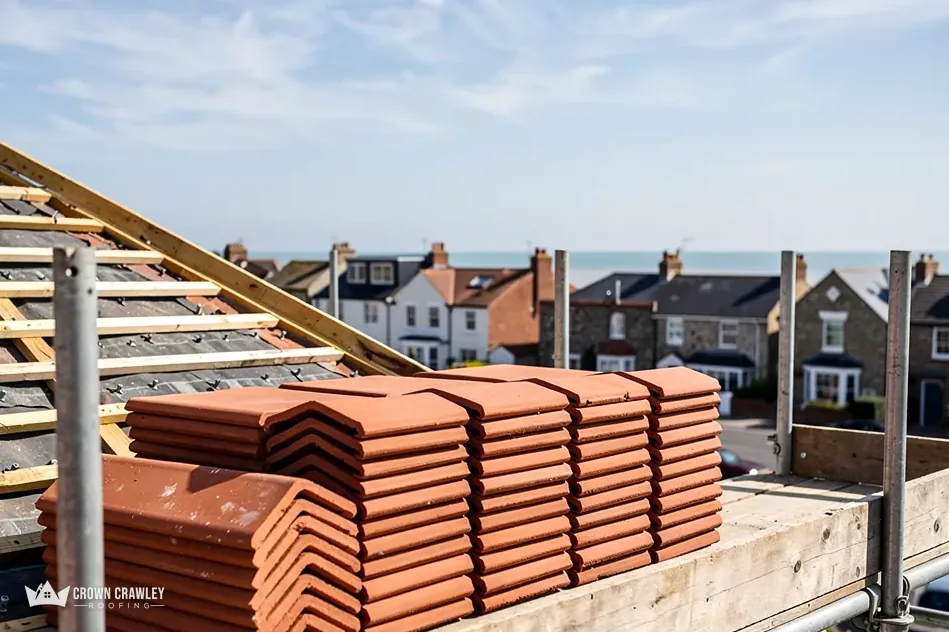
Stack of new clay tiles on scaffold beside roof timbers

Inces House, also Grade II

Inces House is another Grade II listing in the village. On an older listed house we study the covering, the chimneys and the lead together, since a fault in one often shows up in another.

Older house with tiles and chimneys

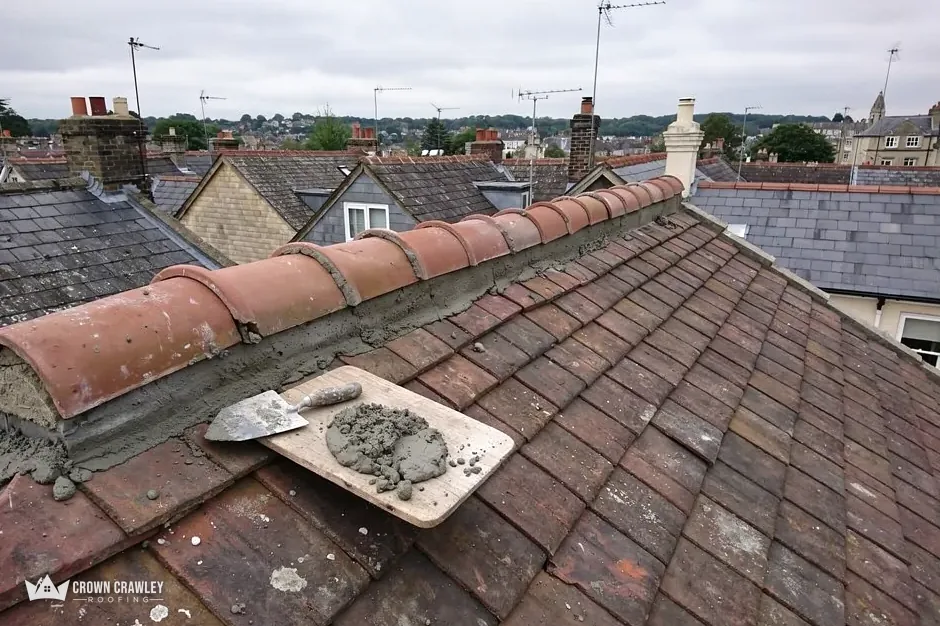
Ridge tile bedded in fresh mortar with a trowel resting on the roof

Area checks before a repair

Mid Sussex's planners will confirm if a Scaynes Hill house is in a conservation area. A repair matching the existing covering is simple on an ordinary house, while a listed building stays a separate matter that we ask about first.

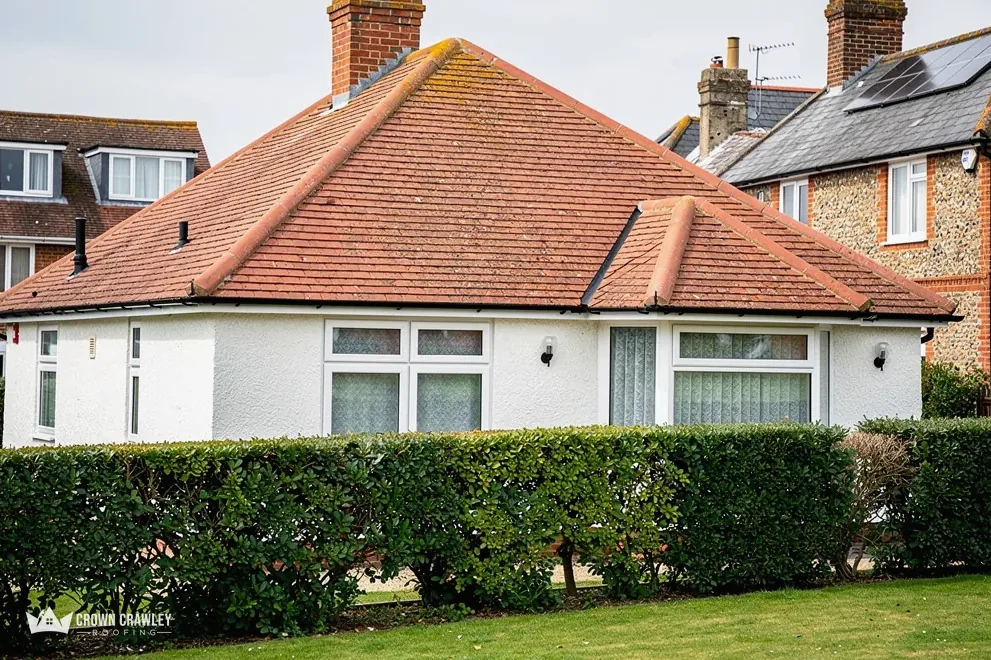
Ordinary house roof with tiles

Scaynes Hill, a village in Mid Sussex

Map of Scaynes Hill and the neighbourhoods around it, with Crawley for reference.

A small village south-east of Crawley in Mid Sussex district, where the 2021 Census counted 717 people in the built-up area.

Distance
14.3 road miles from Crawley, to the south-east
Drive
About 25 minutes
Council
Mid Sussex District Council and West Sussex County Council
Planning authority
Mid Sussex District Council
Building control
Mid Sussex District Council's own service
Other listing
Inces House, Grade II
Get a free quote

Scaynes Hill in three stages

Three chapters for a village of 717 people

Three short chapters: how we work out what covers a roof, what listing means for the church and Inces House, and which offices matter once a job gets bigger.

Stage 01 · First look

Naming the covering above you

A village this size has no single roof pattern we can promise, so every survey starts by naming the covering and how it is fixed.

The 2021 Census counted 717 people in the Scaynes Hill built-up area. We do not assume what is on a roof in a village this size. Houses from several decades often stand side by side, and a previous owner may have re-covered one slope and left the rest. So the first job at a survey is to name the covering, work out how it is held down and photograph the details for you.

What can you tell from the ground?

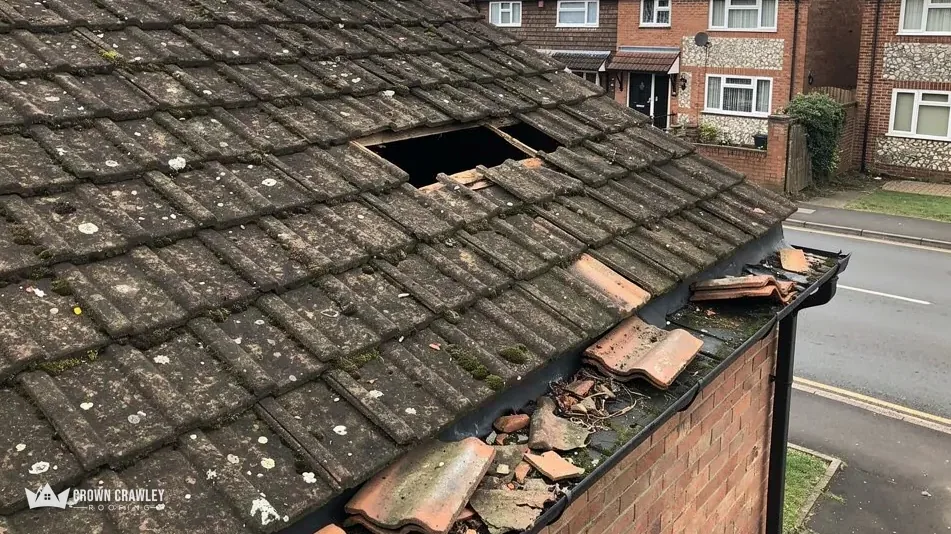
Quite a lot: ten minutes with binoculars is well spent before anyone climbs a ladder. Look along the ridge for a dip or a lean, which can mean a tired timber beneath. Count the slipped or missing tiles and note where they cluster, because a patch near the gutter points to a different problem from a patch near the top. Look for green growth that holds water against the covering, for stains under the gutter line and for gaps where a chimney meets the slope. Pass on what you spot, and we will tell you what it probably means.

What we identify first

Covering
Clay, concrete, slate or another
Underlay
Felt or breathable membrane
Ridge
Mortar only, or mechanically fixed
Verge
Mortar, clips or a dry system
Eaves gap
Open for air, or blocked
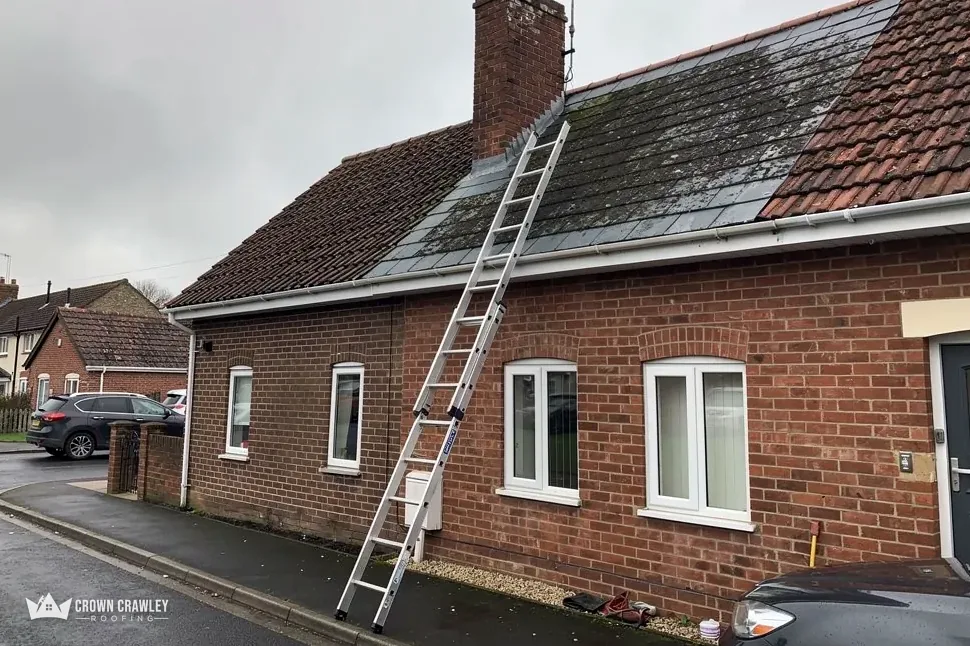
Brick bungalow with a ladder leaning against its tiled roof

Published lifespans give a rough scale and nothing more: about 60 years for concrete tile, with Marley adding that it is no guarantee; clay tile at a 60-year minimum in Building Research Establishment guidance; and 100+ years for slate kept in good order. A roof's real condition depends on its fixings, its shelter and the repairs it has already had, which is why we look at the roof itself and not at the date on the deeds.

Why does the way a ridge is fixed matter?

For many years, ridge and hip tiles were bedded in mortar and left. Marley reports that the 2014 revision of BS 5534 changed the advice, so bedded tiles now need a mechanical fixing as well. Following BS 5534 is good practice and is not itself a legal duty. Dry-fixed ridges, hips and verges are tested to BS 8612. We check which method your roof has and repair to match; our dry ridge and dry verge page compares them.

We read the roof first, and the price follows from what we find.

What does the loft show us?

A damp smell, dark marks on the battens or beads of water under the covering all hint at poor air flow. For an underlay that does not breathe, Marley's guidance is an eaves opening of 25 mm at pitches up to 15 degrees and 10 mm above that. Insulation stuffed into the corner can shut that opening, and clearing it protects the timber. Our pitched roofing page covers the rest of a tiled or slated slope.

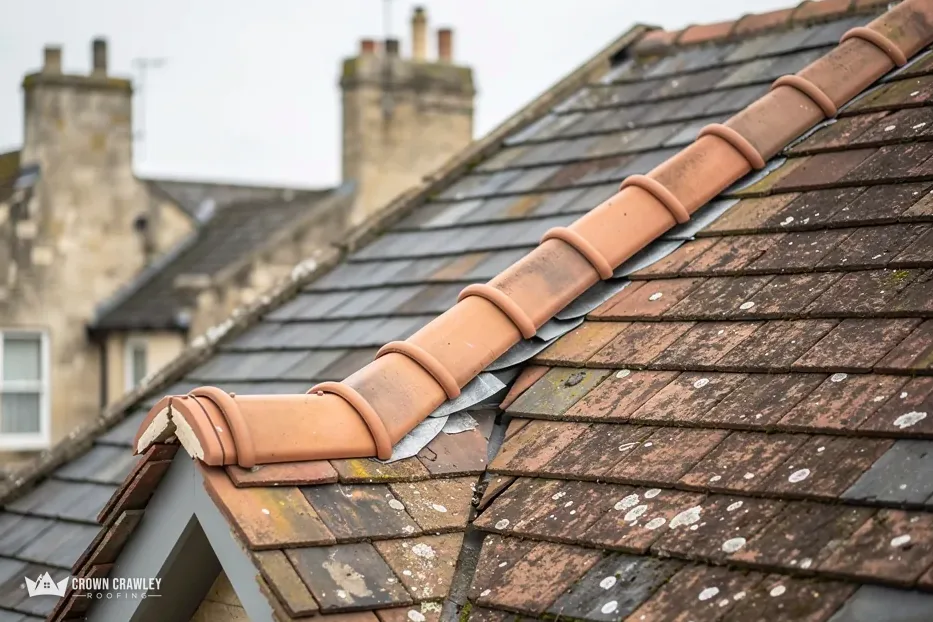
Clay ridge tiles along the hip of a weathered tiled roof

Stage 02 · Listed buildings

The church, Inces House and listing

The national list holds two Grade II entries here, so anyone with an older address should look before ordering work.

The National Heritage List includes the Church of St Augustine of Canterbury, entry 1391733, first listed on 11 August 2006, and Inces House, entry 1025625, both at Grade II. The online list takes an address, and a couple of minutes is enough to find out whether your own home appears. If you are unsure, check before you ask anyone to price a roof, because the answer changes how the work is described and who has to agree to it.

What does listing mean for a roof repair?

Under the Planning (Listed Buildings and Conservation Areas) Act 1990, altering a listed building in any way that would affect its special character requires listed building consent first. Mid Sussex District Council is the office to ask about your address. Refitting one cracked tile with an identical one is a smaller ask than a new covering, but the council decides which is which, and a reply in writing from the planning team beats an assumption. If the house is listed, say so when you first get in touch.

How do we survey a listed roof gently?

We go over it from the ridge, the eaves, the valleys and the loft, handling as little as we can. The photographs reach you before any price is written, so that you and the council can look at the same evidence. A replacement tile or slate is chosen to sit with what is already there, and we record the dimensions, thickness and shade of the existing covering. Where a stack needs attention, our post on chimney repairs on listed buildings explains how that is handled.

Who looks after a church roof?

A building in use as a church may follow its own approval route, and which route applies depends on the denomination and on the building. The church's own office will know how the process works. We can survey a roof and set out the findings in plain language for a parish meeting or an inspecting architect, and the price comes as one total once the survey is done. Old roofs also carry old repairs, so we note which parts look original and which are later patches, and photograph both for the file. If a past patch has failed, that is useful to know before anyone decides how much of the slope to disturb, and it often shows where water has been getting in.

Listing words

Listed building
Protected for special historic interest
Grade II
Lowest of three listing grades
Consent
Permission to alter a listed building
Record
Photographs of the roof before work

Stage 03 · Permissions

Mid Sussex planning and West Sussex scaffold

Mid Sussex District Council covers planning and building control, while scaffold on the road needs West Sussex County Council's licence.

A repair in the same covering needs no forms at all. The picture changes when a job grows, and Mid Sussex District Council is both the local planning authority and the provider of building control for Scaynes Hill, so the questions go to one office, and a single reply can cover planning and approvals together.

When is building control involved in a re-roof?

Planning Portal guidance says no application is normally needed where under 25 per cent of the building envelope and under 50 per cent of the roof is affected. Two cases do call for approval: a replacement covering that adds 15 per cent or more to the load, or one whose fire performance would differ markedly. If our survey points towards a large re-cover, we put the question to the council before we offer a date, and its reply goes into the written price. Our roof replacement page describes a whole-roof renewal day by day.

Questions for the bigger jobs

Planning
Mid Sussex District Council
Building control
Mid Sussex District Council
Road scaffold
Licence from the county council
Notice
10 working days minimum
Listed roof
Consent before any change
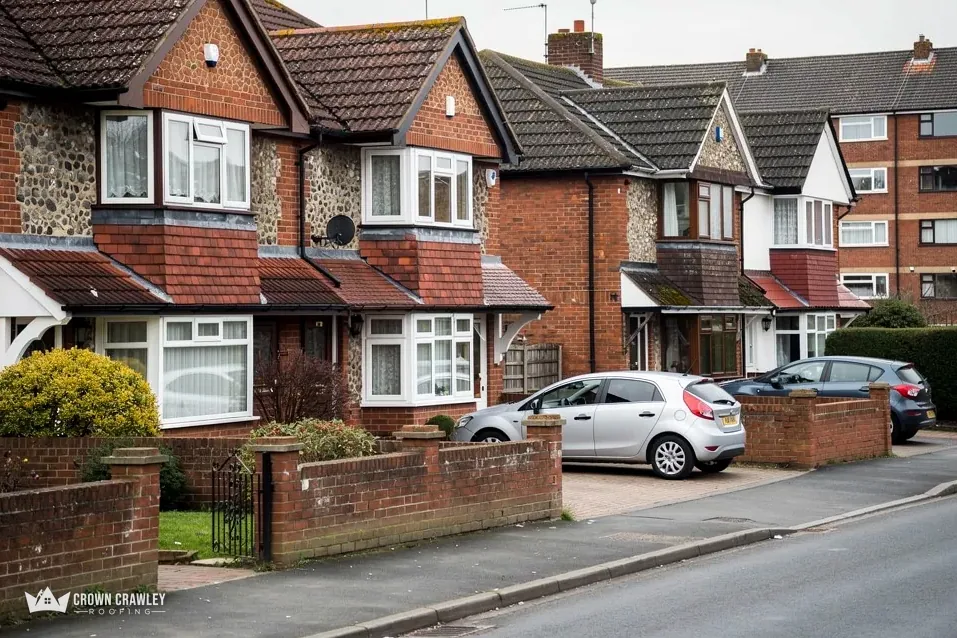
Brick semi-detached houses with tiled roofs and parked cars

What will the county charge for scaffold on a Scaynes Hill road?

West Sussex County Council is the body that licenses scaffold over the highway here. Its page lists £266 for one month and £178 for an extension, and wants at least 10 working days between application and erection. A fast-track option, which the council aims to process within 1 working day, costs an extra £52, and the licensing team asks to be emailed first. Nothing on the page says who applies, so that is settled between us and the scaffolding firm at booking, before any date is promised to you. Where scaffold sits entirely inside your boundary, no highway licence arises.

How do we plan around weather and neighbours?

Roof work waits for high wind and heavy rain. Your neighbours hear when the scaffold is arriving and when it comes down, and bins, drive access and parking are agreed before the first delivery. Waste leaves as the job goes along, so the site stays tidy and nobody has to step round a skip full of old battens. At the end of each day we tell you what got done and what is planned next, and if the forecast turns you hear about it the evening before rather than on the morning. If a hidden fault turns up once the covering is off, such as a rotten batten or a split rafter end, we show you with a photograph, explain what it means and settle the next step together before going on.

Some Scaynes Hill roof answers

How do you find out what is on a Scaynes Hill roof before pricing?

We climb up and look. The survey names the covering, checks the battens and underlay, records the fixing at ridge and verge, and examines the eaves from the loft. Photographs of your roof come to you, and the written price grows out of what we saw instead of a guess made from the road, so you can compare it fairly with any other quote.

Is my Scaynes Hill house listed?

You can look up an address on the National Heritage List, which records two Grade II entries in the village, the Church of St Augustine of Canterbury and Inces House. If your home is neither, look up its own name or number. Mid Sussex District Council can also confirm the position before you ask for a price.

How far ahead must a road scaffold licence be sought in Scaynes Hill?

At least 10 working days between application and erection, according to the county council's page. Fast-track costs an extra £52 and begins with an email. One month costs £266. If the scaffold can stand wholly on your own land, there is no highway licence and no wait for one. Ask us early, because the date of the application sets the date of the job.

Should the ridge on my older Scaynes Hill roof be mortar or dry-fix?

Either can be sound. Marley advises that since the 2014 revision of BS 5534, bedded ridge and hip tiles carry mechanical fixings as well as mortar. Dry systems are tested to BS 8612. We see which you have, then give a written price for repairing it as it stands or for changing it. Matching what is already on the roof is usually the simpler choice.

Next step for Scaynes Hill roofs

Describe what you can spot from the garden, add your Scaynes Hill postcode, and we will find you a survey slot.

01293 974253

10-year workmanship guarantee, in writing.

Call Get a free quote