Roofers in Haywards Heath

Slate, clay tile and concrete roofs in a town the railway made.

The 1841 railway established Haywards Heath, and its conservation area appraisal names slate and Wealden clay tiles on local roofs. We survey, show you photos and price in writing.

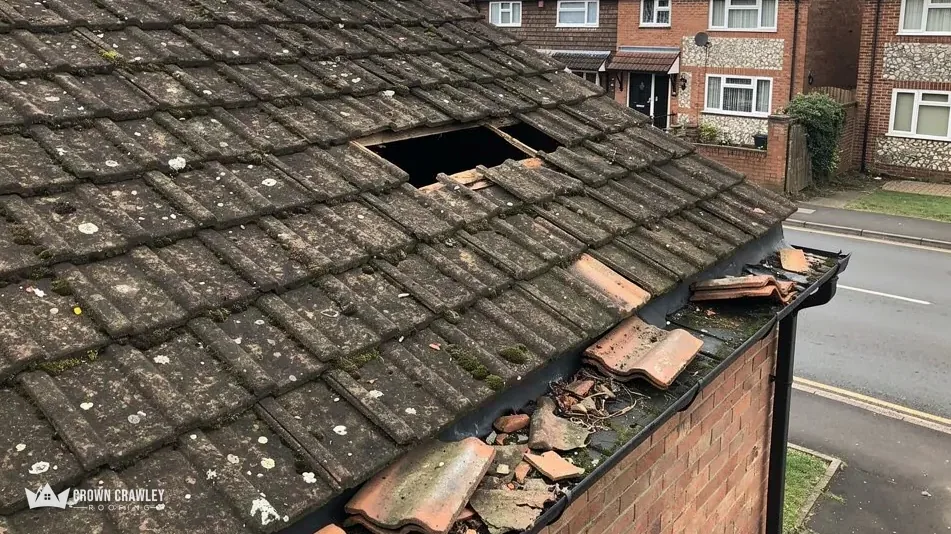
Storm-damaged tiled roof with the battens exposed and tiles on the ground

What the appraisal says about Haywards Heath roofs

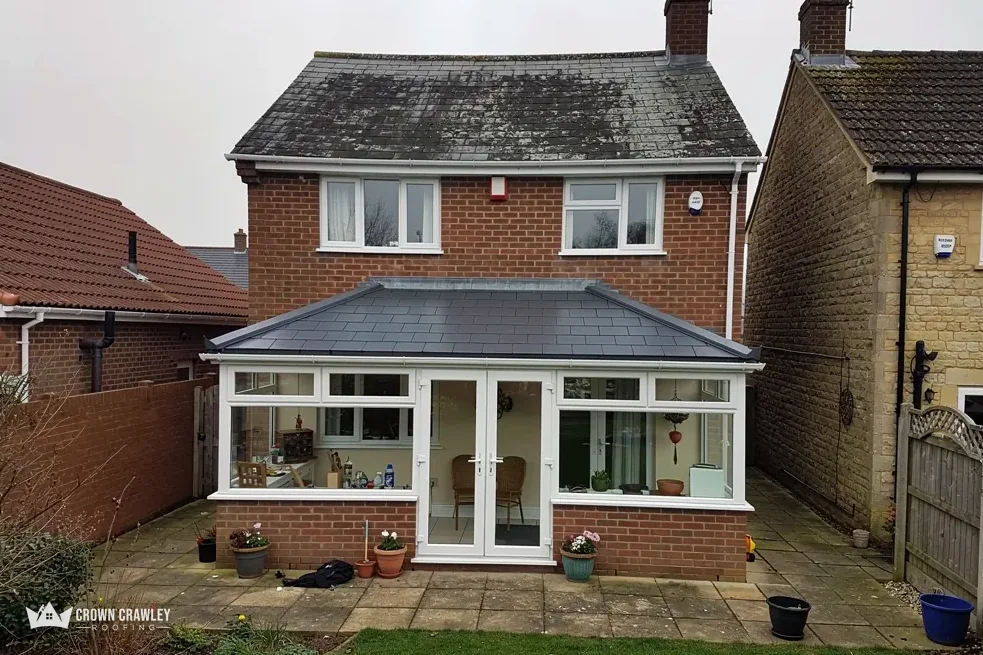
Rear of a brick house with a glazed extension and slate-effect roof

Slate on Victorian and Edwardian houses

The Heath appraisal says slate is commonly used on the town's Victorian and Edwardian houses. We check each slate for slip, cracking and rusted nails before we suggest anything bigger than a repair.

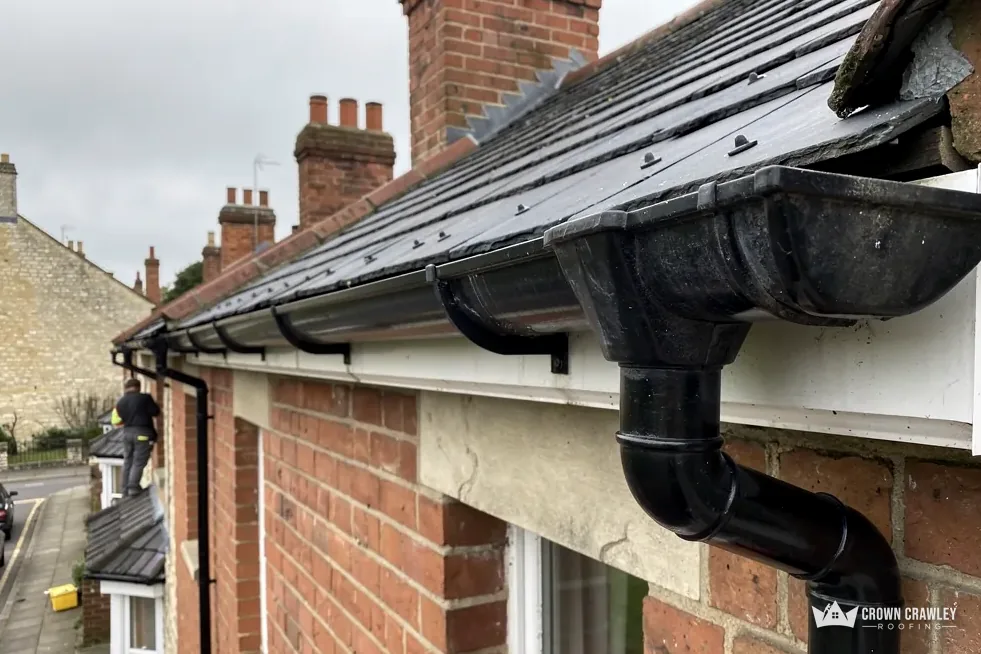
Natural slate roof, close up

Dormer window with white cladding in a clay tiled roof

Wealden clay tiles

The same document records Wealden clay tiles on roofs and on tile hanging. Clay can be repaired tile by tile, so we match colour and texture first, then look hard at the battens under them.

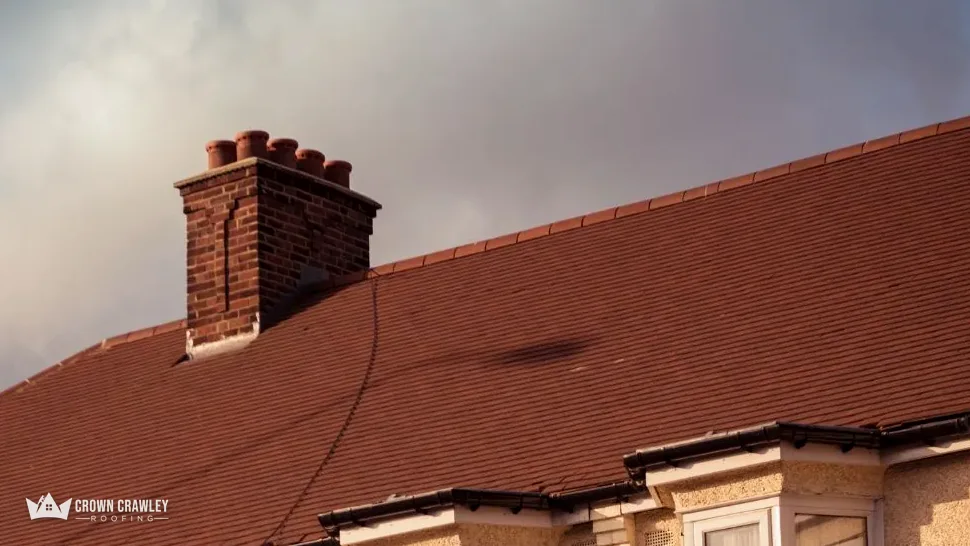
Clay tiles on a pitched roof

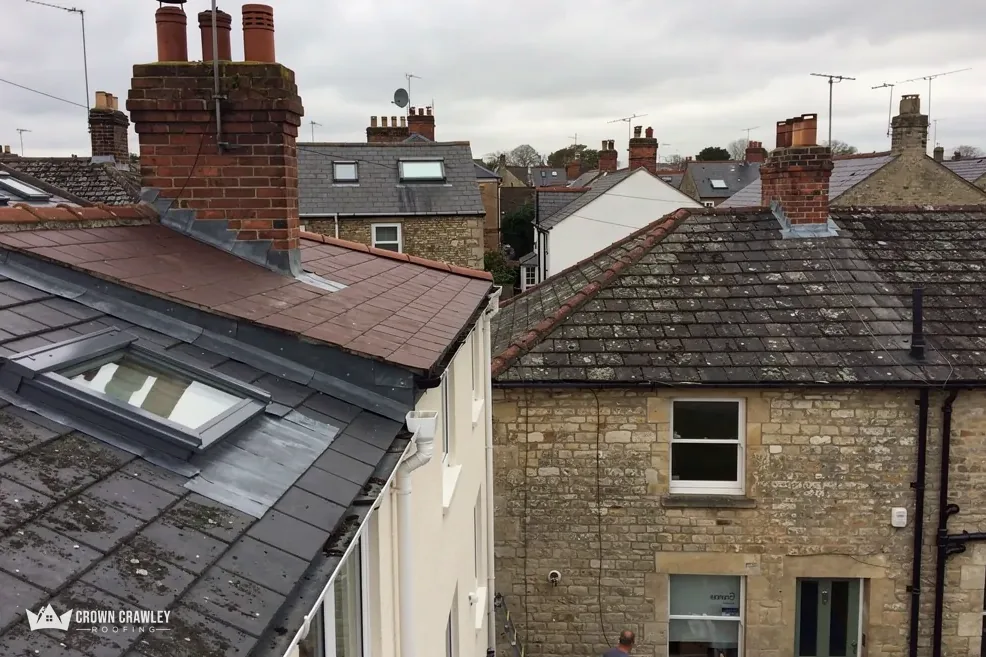
Slate and tiled roofs with a roof window beside a stone cottage

Slate resurfaced in concrete

On some Sydney Road houses, original slate has been resurfaced in concrete tiles. Concrete is heavier, so it matters what the rafters were built to carry before any covering is swapped.

Concrete tiles on a pitched roof

Haywards Heath, between Cuckfield and Lindfield

Map of Haywards Heath and the neighbourhoods around it, with Crawley for reference.

This was open heathland between Cuckfield and Lindfield until the London to Brighton line was routed across it. The town now sits south-east of Crawley.

Distance
11.5 road miles from Crawley, to the south-east
Drive
About 19 minutes
Council
Mid Sussex District Council and West Sussex County Council
Planning authority
Mid Sussex District Council
Conservation area
Muster Green (first of six; The Heath designated 21 March 1989) (designated 1979)
Population
40,184 (Census 2021, built-up area)
Civil parish
From 1894, after separating from Cuckfield
Get a free quote

Haywards Heath survey diary

What a railway town's roofs can show you

Three short chapters on the slate and clay the appraisal names, what follows when slate gives way to concrete, and the six conservation areas to check before work starts.

Stage 01 · Background

The railway, the Heath and its roofs

The London to Brighton line created the town in 1841, and the roof coverings its own appraisal names tell us what to look for first.

Haywards Heath is a young town by Sussex standards. Before 1841 there was heathland between Cuckfield and Lindfield, and the railway from London to Brighton was routed straight across it. The town grew around the line. The county asylum, later St Francis Hospital, was built in 1859 in the Italianate style. The Victoria County History dates the enclosure of the Heath to 1861, the town was officially recognised in 1862, and in 1865 it was carved out of Cuckfield as a parish in its own right.

What does a railway-era date tell us about a roof?

It tells us where to begin looking, not what we will find. Mid Sussex District Council's appraisal of The Heath Conservation Area says slate is commonly used as a roofing material for Victorian and Edwardian houses, alongside Wealden clay tiles for tile hanging and roofs. So on a house of that period we expect slate or clay, then read the roof in front of us. Over a century or more, roofs get patched, partly recovered and sometimes changed altogether, and two neighbours can end up with quite different coverings.

On a Haywards Heath slate roof

Slates
Any slipping, splitting or delaminating
Nails
Rusted through or pulled loose
Flashings
Lead still sound at walls and stacks
Valleys
Lead whole, with no splits or lifting
Battens
Firm timber, not soft or crumbling
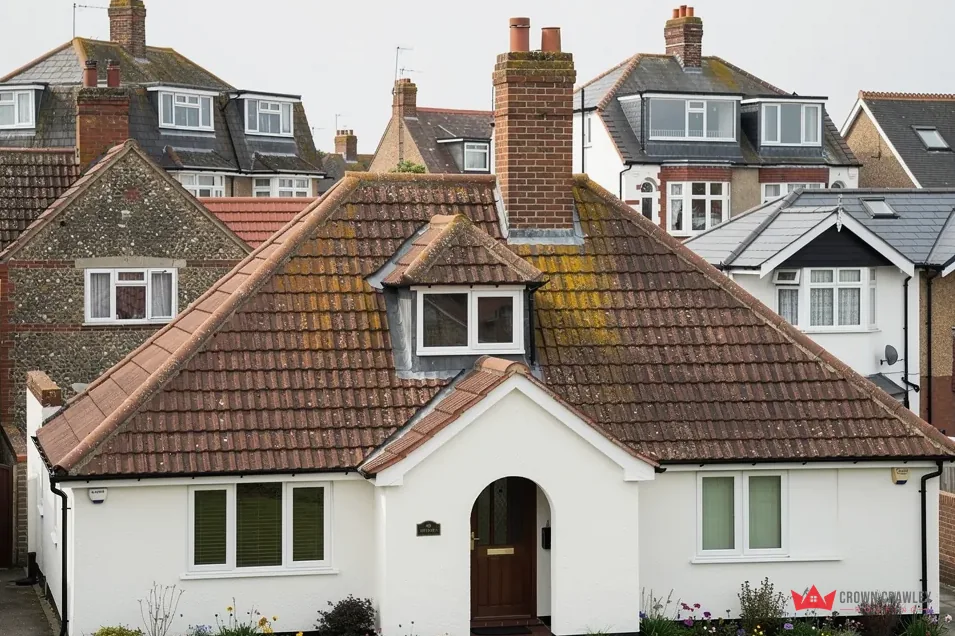
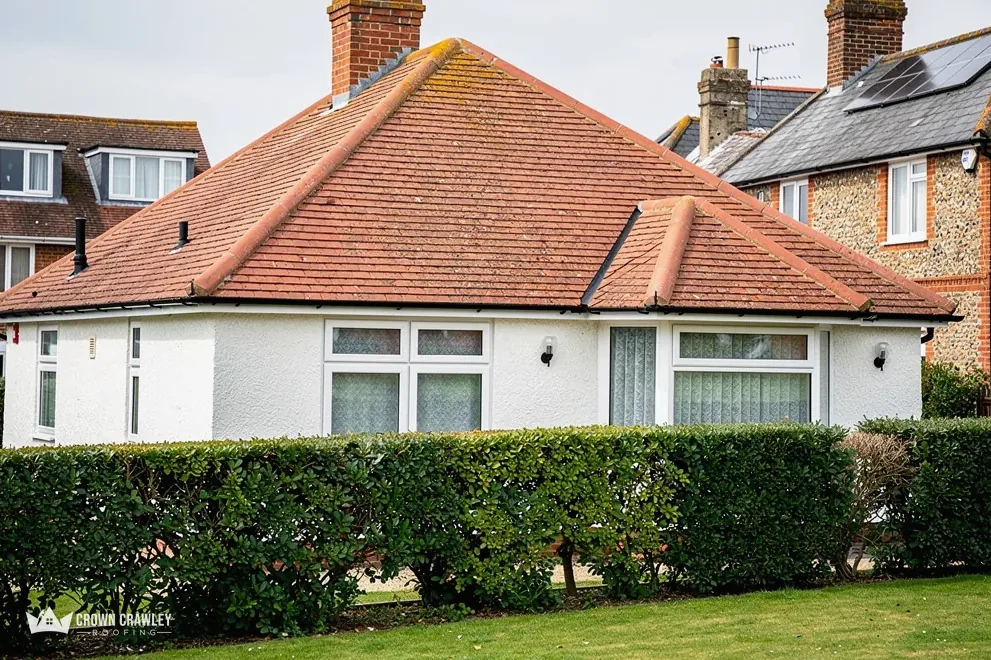
White rendered bungalow with a hipped tiled roof and dormer

Is an old slate roof worth repairing?

Very often, yes. The Confederation of Roofing Contractors gives well-kept slate a life of 100+ years. The slate itself is rarely what gives up first. The iron nails that hold it rust through, individual slates slip, and lead dressed round stacks, up walls and along valleys thins with age. Slate that is sound but has lost its fixings can be lifted, refixed and put back. Slate that is cracked or flaking is replaced with matching pieces, taken from the same roof where we can, for instance from a rear slope that nobody sees.

Repair wins when the battens and rafters under the slate are firm. We check them from the loft and show you photographs of what we find, whether that is dry timber or a soft, dark patch beneath a leaking valley. If they are failing, we tell you plainly and explain why patching the slate would be money wasted. Our pitched roofing page sets out how we work on slate and tile roofs, from a single slipped slate to a full re-cover.

At the survey we also run along the gutters, the fascia boards behind them and the lead dressed around any chimney. A small gap in one of those can mimic a failed slate on the ceiling inside, so we trace the water back to where it actually gets in before we put a price on anything. Daylight in the loft, a damp batten and a stained rafter tell the story faster than guesswork from the ground.

New slate-effect roof on a bungalow with white fascias and guttering

Stage 02 · Coverings

Slate, clay tile and concrete on top

The appraisal names slate and Wealden clay tiles, and it records original slate on Sydney Road houses that was later resurfaced in concrete.

Walk the older streets and you can see the three coverings the appraisal describes: slate, clay and, on some houses, concrete laid over what used to be slate. Each one asks for a different kind of care.

Why did Sydney Road lose some of its slate?

The appraisal notes that original slate roofs on some Sydney Road houses have been resurfaced with concrete tiles, and it counts slate roofs replaced by concrete tiles or pantiles among the unsatisfactory alterations permitted development has allowed. The reasons behind each change are not recorded, so we leave them alone and stick to what a roofer can check. Concrete tiles weigh more than slate. Under the Planning Portal's guidance, Building Regulations approval follows once a replacement covering adds 15 per cent or more to the weight. It also suggests asking an engineer or surveyor to look at the structure beforehand. Natural slate also has a minimum pitch of 20 degrees under BS 5534, so the slope has to suit whichever covering you choose.

Words you will hear on site

Tile hanging
Clay cladding hung on a wall face
Nail sick
Slates loose because the nails rusted
Flashing
Metal strip that seals a junction
Abutment
Junction of a slope and brickwork

Can clay tiles on a Haywards Heath roof be repaired?

Yes, one tile at a time. Clay carries a 60-year Building Research Establishment minimum, as Marley reports it, while buildingconservation.com doubts that number for handmade peg tiles. In practice a tile roof is judged on its own condition. We look for tiles with crumbling nibs, battens that have rotted at the nail holes, and a ridge whose mortar has cracked away. Replacements are matched for colour, size and texture, because a bright new tile among weathered ones sits badly on a roof.

Tile hanging is a separate matter. It clads walls rather than roofs, but where it meets the roof slope the junction needs lead flashing and careful lapping, and a failed abutment there can send water down inside the wall. If the tiles are sound and only the junction has gone, we repair the junction and leave the rest alone.

Swapping slate for concrete changes the load on the rafters as well as the look.

Once a survey shows a slope is past sensible repair, our roof replacement page takes a complete strip and re-cover step by step, and you receive one total price in writing for it. Between those two ends sits the common situation: a roof that is sound in places and tired in others. For that we mark up the photographs so you can see which areas we would touch and which we would leave alone, and you decide how far to go.

Stage 03 · Permissions

Six conservation areas and the paperwork

Mid Sussex District Council lists six conservation areas in the town, from Muster Green in 1979 to Mill Hill Close in 2000.

Refixing a few slates, swapping some clay tiles or renewing a leaking valley changes nothing about how the house looks, so none of those jobs involves a form. Paperwork starts when a covering changes, when a re-roof covers a large share of the building, or when poles must go up on a public road.

Does my street sit inside one of the six areas?

Mid Sussex District Council's summary booklet lists Muster Green (designated in June 1979), Franklands Village, Lewes Road, Lucastes and The Heath (all in March 1989) and Mill Hill Close (January 2000). Each has its own boundary, so a house a few streets from one may sit outside it. Give the council's planning team your postcode and they will confirm either way. Inside a conservation area, a new covering is the kind of change to raise with them before you commit, and the appraisal's own list of threats shows why. Our post on whether roof work needs planning permission explains the difference between a repair and a change.

Paperwork on a Haywards Heath job

Planning
Mid Sussex District Council
Approvals
Mid Sussex building control
Scaffold
Licence needed on the public road
Notice
10 working days for West Sussex
Street check
Compare postcode with six areas
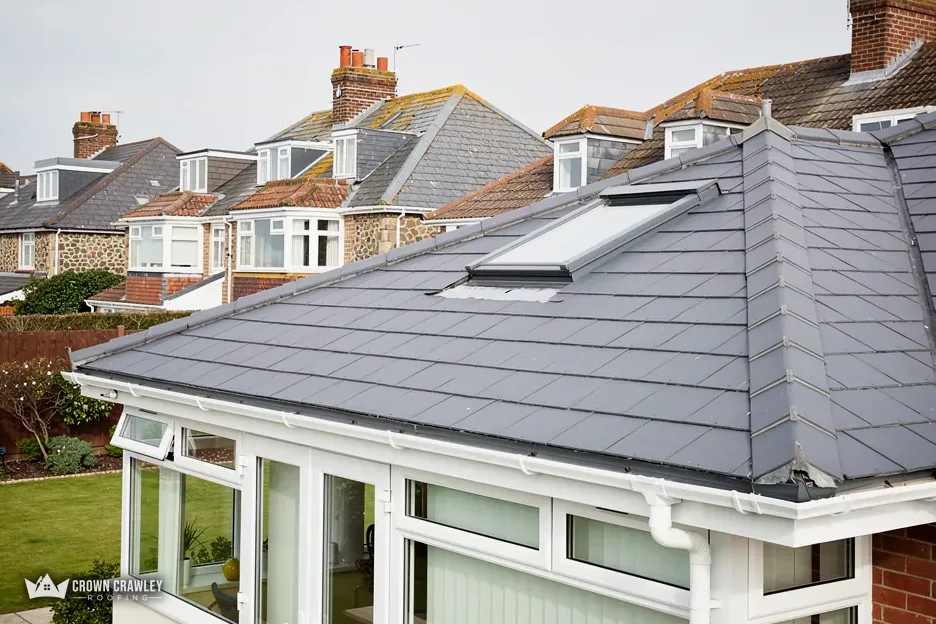
Slate-effect roof over a conservatory on a suburban house

How much of a Haywards Heath roof can be renewed before approval is needed?

Mid Sussex District Council runs its own building control service. Under the Planning Portal's test, approval is not normally needed while less than 25 per cent of the building envelope and less than 50 per cent of the roof are affected. Weight and fire behaviour sit outside those percentages, so a tile 15 per cent or more heavier, or a covering that burns differently, needs approval anyway. On a large re-roof, Mid Sussex building control hears from us before the diary is filled, and your written price reflects their answer.

Where will the scaffold stand?

Any frame on a Haywards Heath road or pavement is licensed by West Sussex County Council. The council wants at least 10 working days' notice and charges £266 for one month. Our scaffolder and we work out the licence together, so ask who applies when you read any quote. If the poles can stand inside your boundary, the highway is not involved and no licence applies. Should we see signs of bats at the survey, work pauses while we discuss it with you, since bats and their roosts have full legal protection. For a leak that cannot wait, our emergency and general roof repairs page explains how we make it safe first.

Keep reading

To begin, send us your street name and a photo of the slate, tile or valley that worries you, taken from the pavement or the garden.

Some Haywards Heath roof answers

Why do some Haywards Heath houses on Sydney Road have concrete tiles where there was slate?

The conservation appraisal records original slate roofs on some Sydney Road houses that were resurfaced with concrete tiles, and it treats the loss of slate as a threat. It gives no reasons. Concrete weighs more, so the roof structure needs checking first, and inside a conservation area it is worth asking Mid Sussex District Council before changing a covering.

Should an old slate roof here be repaired or replaced?

The nails, battens and rafters decide it more than the slate does. Slate can last 100+ years when well kept, so a roof with rusted nails and a few cracked slates is usually a repair job. If the wood beneath has softened, patching only delays the bill. The survey photographs show which case you have.

Who confirms whether my house is near The Heath or Muster Green?

Mid Sussex District Council's planners will check a given address for you. The town has six conservation areas with separate boundaries, so living close to one does not put you inside it. If the house is also listed, that is a separate consent from planning permission, so mention it when you ask the council, and ask what they need to see.

Will the scaffold for my roof need a licence in Haywards Heath?

Only where it occupies a road or footway. West Sussex County Council wants at least 10 working days' notice and charges £266 for one month. A frame kept to your front garden or drive involves the council not at all. When a licence is required, our scaffolder and we deal with it, and we let your neighbours know when the poles go up and come down.

Book a survey for your Haywards Heath roof

Tell us your street and attach a photo of the slate, tile or valley you are worried about, and we will arrange a visit.

01293 974253

10-year workmanship guarantee, in writing.

Call Get a free quote