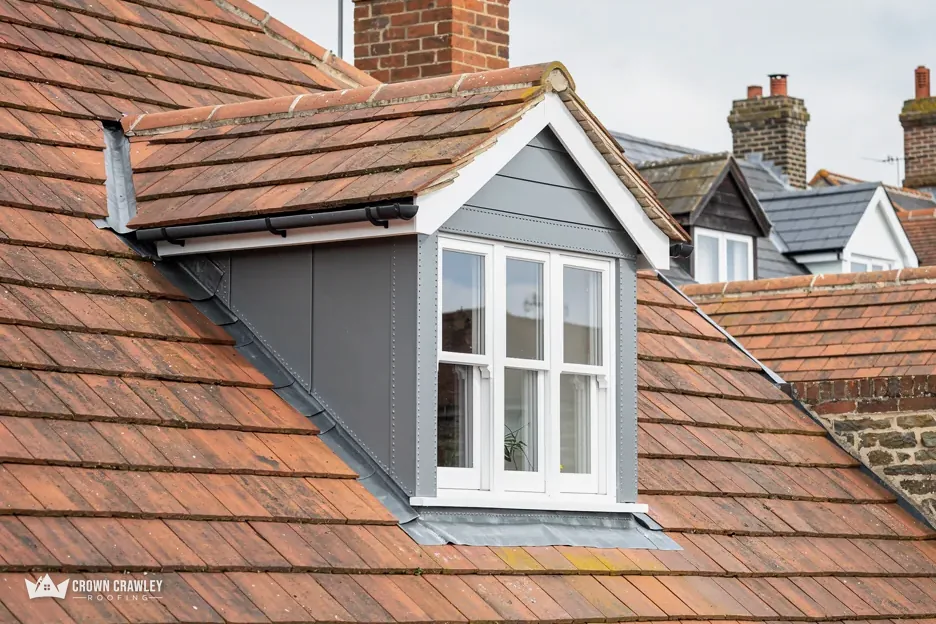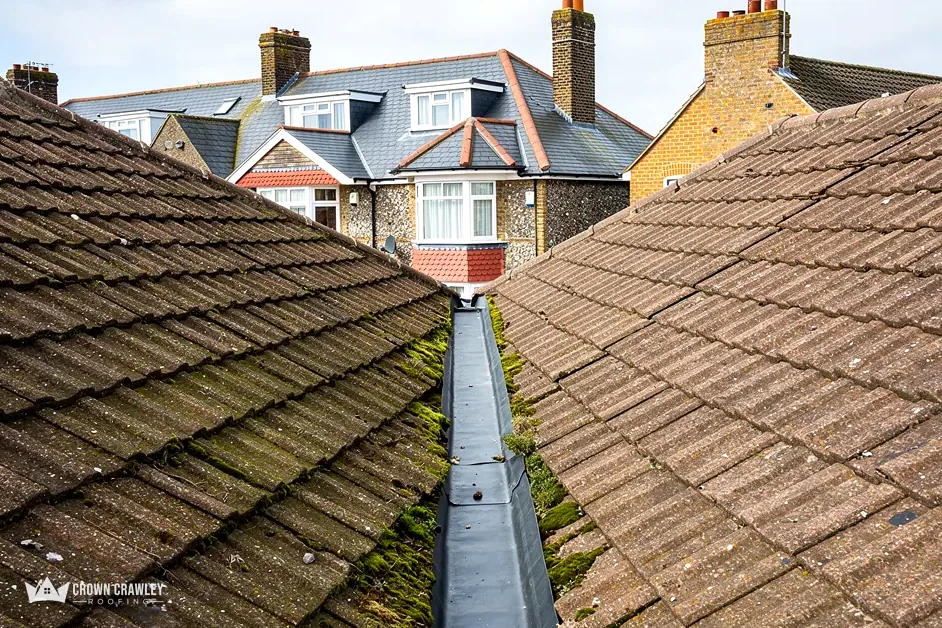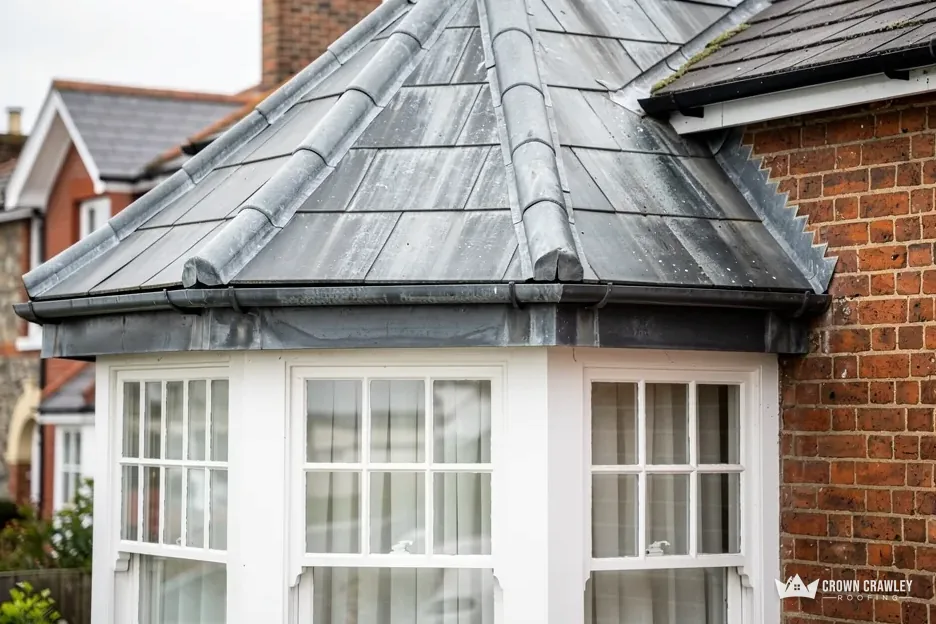
Walk down almost any older street and look at the small roofs rather than the big ones. The bay window over the front room, the porch, the little flat section behind the chimney, the junction of a roof slope and a gable wall. Quite often the metal sitting there is lead, dull grey and slightly creased, and it has been keeping the rain out for longer than anyone living in the house can remember.
Lead is not used for everything. On a plain tiled slope, the tiles do the work and lead only appears at the edges. Where a roof is too small, too flat or too awkwardly shaped for tiles, lead comes into its own. It can be folded, tucked and shaped on site to follow a corner that no ready-made product would fit. This post explains what makes it so lasting, how it behaves on a roof, what it looks like as it ages and how it compares with the alternatives. It replaces an older post on the same subject that made bigger promises than any material can keep.
Where lead is still the right metal
Lead earns its keep where tiles cannot reach. Think of a flat-topped bay window roof, a porch canopy, a dormer cheek, a valley between two slopes, or the strip of sheet that dresses the join between a roof slope and a brick wall. Each of these is a place where water collects or changes direction, and each needs a covering that bends to the shape of the building rather than the other way round.
What do bays, porches and valleys have in common?
They are all small, all exposed and all awkward. A bay roof sits above a window with no room for a deep gutter. A valley carries the water from two slopes at once, so it takes more water than its size suggests. A porch roof is low enough to be seen up close, so the finish matters. Lead copes with each because it is heavy enough to lie flat and soft enough to be worked into the corners with hand tools.
Is lead only for old houses?
No. It is chosen on new work too, and on extensions that join an old roof to a new one. A modern brick house with a flat-roofed bay is just as likely to have lead on it. If you have a bay on your house and want to know how it is usually done, our guide to lead bay window roofs goes through the build-up layer by layer.
Across Crawley and the villages around it, you will meet lead on every era of house, from older brick-and-tile cottages to the porches added to post-war estates. A bay on a 1930s semi and a porch on a 1960s estate house may carry the same grade of sheet, laid by different methods, so the age of the building tells you little about what is on top. If you are not sure what is up there on yours, the survey and the pictures we take of it will tell you.
How long does a lead roof last?
Lead has a reputation for lasting, and the published figures back it up, within limits. A cost guide to replacing chimney leadwork rates lead flashing as lasting over 80 years (MyJobQuote, page updated 22 September 2026). Zinc, often offered as an alternative, is quoted by VM Zinc at 100 years, citing a Building Research Establishment declaration. A well-kept natural slate roof is also described as lasting 100 years or more. Lead sits comfortably in that company.
Why does it outlast the tiles around it?
Tiles, felt and timber all age. Lead does too, but it does so on the surface. The grey film that forms on the sheet is a protective layer, and the metal underneath stays flexible and watertight. Rot, rust and cracking frost damage, the failures that finish other coverings, do not trouble it in the same way. Lead can still fail, usually because of how it was fixed rather than the metal itself. A sheet laid too long, fixed too tightly or left unsupported at an edge will crack as the weather moves it.
Treat any published lifespan as a rough guide and never as a promise. How long your lead lasts depends on the thickness used, the size of each sheet and how well the details were made.
What shortens its life?
Three things matter most. Sheets cut too large expand and contract more than the fixings can take, so they ripple and split. Thin lead used where a thicker code was needed wears through sooner. And water that has nowhere to run, because a gutter is blocked or a fall is wrong, sits on the sheet and eats at the seams. All three are matters of workmanship at the outset, which is why the person who lays the lead matters as much as the metal itself.
Thickness: what the codes mean
Lead sheet comes in numbered grades called codes, and you may see one named on a quote or a delivery note. The numbers run from 3 to 8, and each one stands for a thickness and a weight. Royston Lead's brochure for cast lead sheet gives the following figures.
| Code | Thickness | Weight per m² |
|---|---|---|
| Code 3 | 1.32 mm | 14.97 kg |
| Code 4 | 1.80 mm | 20.41 kg |
| Code 5 | 2.24 mm | 25.40 kg |
| Code 6 | 2.65 mm | 30.05 kg |
| Code 7 | 3.15 mm | 35.72 kg |
| Code 8 | 3.55 mm | 40.26 kg |
Which code goes where?
The same brochure recommends Code 3 for soakers only. A soaker is a little folded lead tab that tucks under the courses beside a wall or chimney. Code 4 appears in the brochure for four uses: soakers, flashings, pitched valleys and dormers. Code 5 and Code 6 are listed for flashings, dormers and several gutter types, from valleys to parapets. Codes 7 and 8 drop flashings and soakers from the list but keep the gutters and dormers. A flashing is the lead strip that dresses the junction between roof and wall.
So a thicker code is not automatically better. It is the right code for the job, and the manufacturer's own table says as much. Our guide to lead sheet codes covers how to read a quote that names one. If a roofer names a code, ask what part of the roof it is for.
Workable, repairable and made to fit
The quality that matters most to the person on the roof is how workable lead is. It is soft. With a dresser, a bossing stick and a mallet, a roofer can push a flat sheet into an internal corner, round an external one and tuck it under a brick course, all without a join. No factory product matches that freedom, and it is why lead remains the standard for details on historic and unusual buildings.
Can lead be repaired?
Yes, and often cheaply compared with replacing it. A split can be cut out and patched, a lifted edge dressed back and refixed, a failed joint remade. Where the metal has thinned or the sheets were cut too large, a repair only delays the problem, and replacing that run is the better choice. Our answer on whether lead flashing can be repaired sets out how to tell the two apart.
Does it suit a listed building?
It often does, because lead is traditional on such buildings, but the rules are separate from the choice of metal. Listed buildings need listed building consent for works that affect their character, and the South Downs National Park Authority says consent is not needed for routine upkeep and small repairs made in the same material and in place. Ask your council's planning team before changing a detail, and see our note on lead roof repairs on a listed building.
How lead looks and how it ages
Fresh lead is bright, soft grey and slightly shiny, a bit like a new pencil lead. Within weeks outdoors, it dulls down. A pale oxide film forms on the surface and the sheet settles to a flat, matt grey that sits easily beside brick and tile. This film is called patina. It is part of how lead protects itself, and it is also what gives an old lead roof its quiet, settled look beside brick and tile.
Is the white powder a problem?
Sometimes a white, chalky bloom appears, particularly on new lead or in sheltered spots where rain cannot wash it off. It looks alarming but is usually surface staining rather than damage, and it often fades once the lead has weathered. If you have seen it on your own roof, our answer about white residue on lead flashing explains when to leave it and when to ask someone to look.
What about staining on the brickwork below?
Rain running off lead can leave pale streaks on the wall beneath, and there is a separate answer on lead run-off staining. It is a cosmetic matter, and it rarely harms the wall itself. The way to limit it is in the detailing at the edge of the sheet rather than in any treatment applied later.
Kerb appeal is partly a matter of how a house looks from the road. A bay with a neat grey lead top and clean rolls reads as cared for. A bay with a patched felt roof does not. On a prominent front elevation, the covering is worth getting right.
Recycling, theft and what to ask a roofer
Lead is a metal that can be melted down and made into sheet again, and it has scrap value. That is good for waste, because old sheet taken off a roof does not have to go to landfill. It is also the reason lead gets stolen. If your roof has lost lead, our guide to what to do when lead is stolen from a roof covers the steps, including telling your insurer and making the opening watertight first.
Is lead safe to have on a roof?
Handling lead needs sensible care, since it is a toxic metal, but a weathered sheet on a roof is not something that harms anyone standing in the garden. We cover the detail in our answer on whether lead flashing is dangerous. Whoever works on it should wash their hands before eating and take the offcuts away.
What should you ask before agreeing to lead?
Ask which code is going where and why. Ask how large each sheet will be, because sheet size is what keeps lead from splitting. Ask what happens to the old lead. Finally, ask for the price in writing as one figure. Our lead work page describes how we run a job from survey to sign-off, and the same questions are fair to put to any roofer.
If you would like a roofer to look at the lead you already have, share a handful of photos showing the bay, porch or flashing and tell us where it is leaking. We will say where we would look first.
Part of our Lead Work & Lead Flashing in Crawley
More about lead on roofs
Is lead cheaper than zinc or copper?
Prices move with the metal market and with the size and complexity of the job, so a fixed comparison would soon be out of date. What matters more is the detail: lead suits tight corners that other metals struggle with. Ask for the price in writing as a single figure for the metal you have chosen.
Does a lead roof need planning permission?
Replacing lead with lead, to the same appearance, is normally like-for-like work that the Town and Country Planning Act does not treat as development. A change of look, a listed building or a conservation area can alter that, so ask your council's planning team first.
Is it possible to lay lead over an existing flat roof?
Sometimes, if the deck underneath is sound, dry and correctly sloped. Lead needs a firm, even support, and it cannot make up for a deck that has rotted or ponds water. The survey checks the boards and the falls first. Our guide to lead flat roofs explains what a suitable deck looks like.