Most lead roofs are forgotten about until a stain appears on a ceiling. That is understandable, because lead is quiet. It does not slip like a tile or crack like a render. It sits there, going greyer, for decades. But the metal is only half of a leadwork detail. The other half is everything that holds it in place and lets water run off it: the wedges in the wall, the pointing above them, the laps between sheets, the gutter at the bottom. Those parts wear out faster than the metal does.
A short check once a year, ideally in autumn before the wet weather, catches nearly all of it. You do not need to climb up. Most of the checks can be made from the ground, from a bedroom window or from the loft. This post lists them in the order we would do them, then explains the jobs to leave alone. This is a rewrite of an older piece that suggested coatings, sealants and pressure washing, none of which a lead roof needs.
What a yearly leadwork check covers
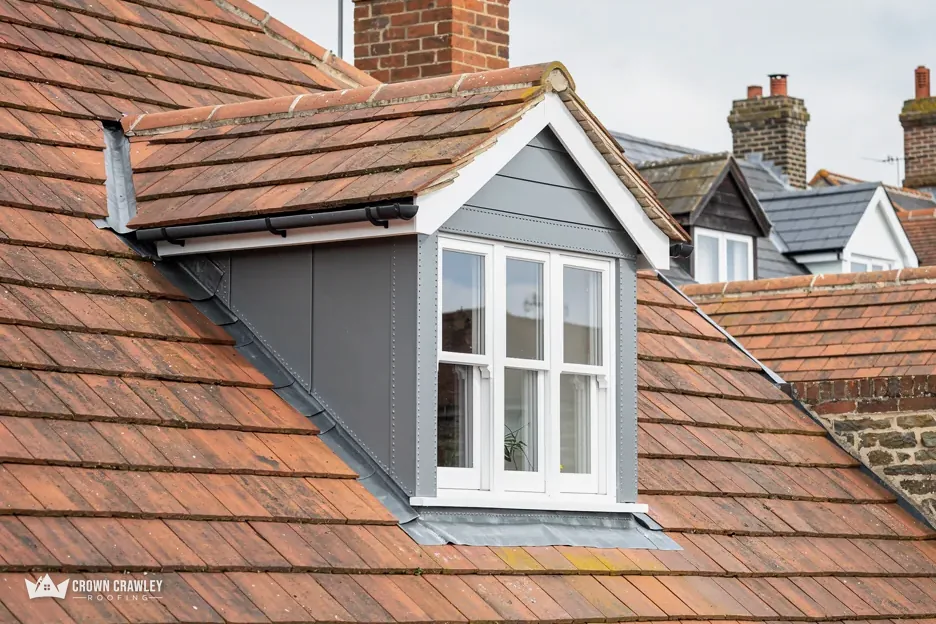
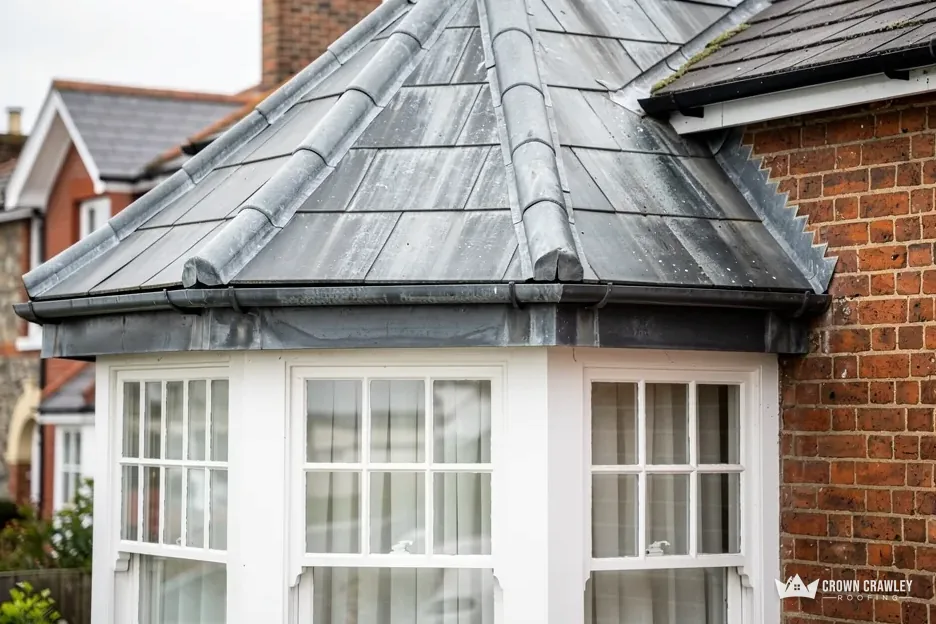
Leadwork is any place where sheet lead is used on a roof: the flashing that covers a join between slope and wall, the soaker folded under tiles beside a chimney, the lining of a valley, the covering of a bay or porch. The check below works on all of them. Do it in daylight, after a dry spell, so any damp stands out.
Where should you start?
Start inside. Look at the ceilings and walls under every lead detail for fresh stains, flaking paint or a musty smell. Then go outside and look up from the garden. Binoculars help. You are checking that lead lies flat, that no edge has lifted and that nothing has slid out of place. A strip that looks wavy, bulged or pulled away from the wall deserves a closer look from someone with proper access.
What are you looking for?
Five things: lead that has split or cracked; edges that have lifted; wedges that have dropped out or gone loose; mortar above the lead that has crumbled; and blockages in the gutter or valley below. We take each in turn below. If a yearly check turns up more than one of them in the same place, that is a sign the detail has come to the end of its working life rather than needing another small fix.
Never go onto a roof to check lead yourself. Lead is soft and slippery when wet, and a fall from a bay or porch roof can do serious harm. A roofer with a ladder or scaffold tower sees far more than you can from the garden, and our lead work surveys include photographs of what they find.
Wedges, pointing and the wall edge
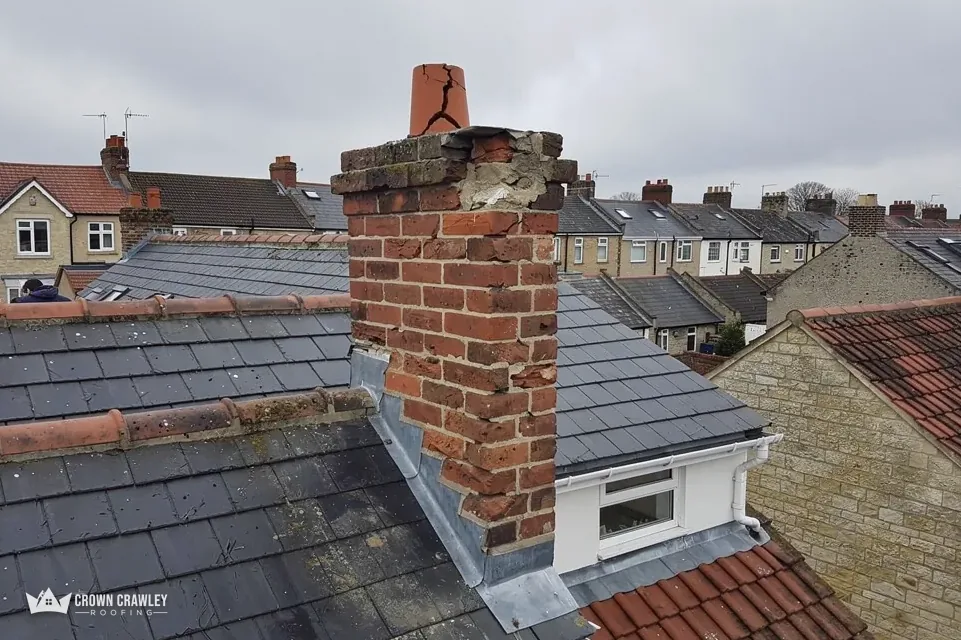
Where a flashing meets a brick wall, the lead's upper edge is bent into a slot cut along a mortar joint, called a chase. Small folded strips of lead, known as wedges, are hammered in to hold the edge in place, and the groove is then filled with mortar or sealant. This is the weakest point in most leadwork, because it depends on materials that age faster than the lead does.
How do you spot a failed wedge?
From a distance, you will see the top edge of the flashing sagging away from the brick, or a thin dark gap along the wall. Up close, a loose wedge sits proud of the joint or has dropped out altogether. Without it, the lead edge hangs on the mortar alone and the first strong gust lifts it.
Does the pointing need renewing?
The mortar over the top of a flashing is exposed to frost, rain and sun, and in time it shrinks, crumbles or falls out. Once it does, rain runs down behind the sheet into the brickwork. Repointing the chase is usually a small job compared with replacing the flashing, and it is the most common repair on older leadwork. Our answer on repointing lead flashing explains how it is done and why the mortar matters.
If you can see daylight between the lead and the wall, or the flashing has come away completely, read lead flashing coming away from the wall. A lifted flashing is not a job to leave over winter.
Laps, rolls and drips
A lead roof is made from many sheets, and the joins between them are designed. A roll is a rounded timber batten that the lead is folded over on a flat roof, running with the fall. Each drip is a step cut into the deck, across the fall, that lets water drop from one sheet to the next. Where two pieces overlap without a roll or drip, the overlap is called a lap, and its width is what stops rain being blown or drawn up under it.
What does a healthy join look like?
Flat, tidy, with the lead tight against the timber and the upper sheet clearly over the lower one. The line of a roll should be straight and even. A drip should show a clean step with no pooled water standing on the flat above it.
Which warning signs matter?
Look for ripples across the sheet, which show that it has been moving; thin cracks at the corners of rolls and where the lead turns over an edge; and any place where the metal has creased and folded back on itself. Water standing on a flat section for days after rain means the fall is wrong or a gutter is blocked. Our guide to lead drips and rolls shows how a correct detail is built, which makes a faulty one easier to recognise.
Cracks in lead are rarely down to age alone. They usually point to a sheet cut too large or a fixing that stopped it moving, so the cause needs fixing as well as the crack.
Debris, gutters and standing water
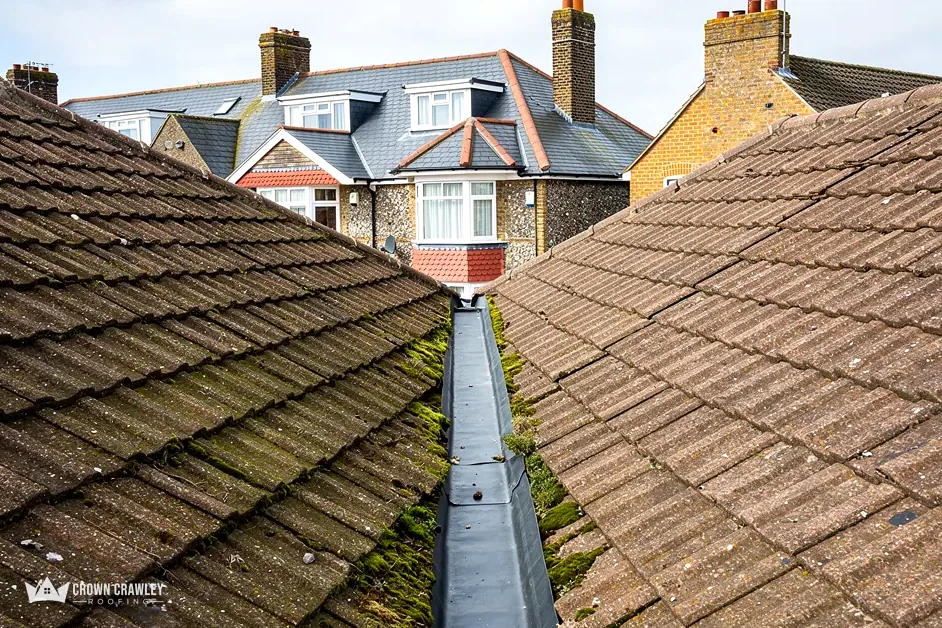
Leaves, moss, bird droppings and seeds collect in valleys, behind chimneys and at the foot of bay roofs, where the lead meets a gutter. This is the most useful part of the check, because clearing debris costs nothing and prevents most of the water problems that follow.
Why does debris matter on lead?
A blocked outlet holds water on the sheet. Lead is meant to shed water, not sit under it. Standing water finds laps and seams, and wet debris can stay damp for weeks, keeping the surface soaked and staining it. In a valley, a pile of leaves can also push water sideways over the edge and under the tiles.
How should you clear it?
By hand and from safe access. A soft brush or a gloved hand is enough. Never use a metal scraper or a spade, because lead is soft and a sharp tool can cut it. Do not use a jet wash on lead or on the tiles around it. Marley, the tile maker, warns off powerful jet washing of slate and tile, since it can mark the surface and shorten its working life. If a gutter below needs clearing too, gutters, soffits and fascias are a service we cover.
Tree overhang is worth a thought. A branch that scrapes the lead in the wind will wear through it in time, and an overhanging tree drops leaves exactly where you do not want them. Cutting it back is cheaper than repairing a worn bay. Ask the tree's owner first if the branch is not yours, and use a tree surgeon for anything large rather than reaching from a ladder.
Patina, staining and what to leave alone
This is the section that saves people money. Lead protects itself. Within weeks of being laid, it forms a pale grey oxide film, called patina, and from then on the metal underneath is shielded. It is meant to be there. Several well-meant treatments strip it, hide it or trap moisture beneath it.
Should you paint or coat lead?
Generally not. Paint and sealer on lead often peel and trap water, and they cover a problem rather than curing it. Our answer on whether you can paint lead flashing covers the exceptions and the reasons.
Is the white powder harmful?
A chalky white bloom can appear on new lead and in sheltered spots. It is usually surface staining that fades as the metal weathers. See white residue on lead flashing for how to tell staining from damage. Leave it unless the lead underneath looks thin or pitted.
What about silicone on a split?
Smearing sealant over a crack may stop a drip for a season, but the lead goes on moving and the crack comes back wider. A proper repair means cutting out the split, patching with new lead of the right code, and finding out why it split. Skip the harsh cleaners, wire brushes and pressure washers too. They scratch the surface and remove the film that protects it. A soft brush and clean water remove dirt without harm.
When maintenance stops and replacement starts
Good maintenance stretches the life of lead, but it cannot make it last for ever. A chimney leadwork cost guide says lead flashing may last beyond 80 years (MyJobQuote, updated 22 September 2026). That is a typical range, not a promise, and whether a particular roof reaches it depends on how well it was built.
How do you know a repair is no longer enough?
Three signs point to replacement. The lead has thinned so much that it looks like foil, or you can see pinholes. The same run has split in several places in a few seasons. Or the detail was made badly to begin with, such as sheets too long, or a flashing with no proper chase. In each case a repair only delays the work and costs money twice. Our note on the lifespan of a lead valley gives a sense of how long different parts last.
What does a roofer need to see?
Close photographs of each fault, taken from safe access, and a note of where the stains show indoors. With those, we can tell you if you are looking at a small repair or a bigger job. You get the price in writing after the survey, as a single figure for the whole job.
For sibling reading, our post on the art of installing lead roofing describes how a good detail is built, which makes a check of an existing one far easier. If you would like the check done for you, share a handful of photos of each lead detail and tell us where it leaks; we will say where we would start.
Part of our Lead Work & Lead Flashing in Crawley
More about looking after lead
How often should lead be inspected?
Once a year is a sensible habit, preferably in autumn before the wet months, and again after a severe storm. Checks from the ground and the loft cost nothing. A closer inspection from proper access is worth arranging whenever you see a stain, a lifted edge or lead that has moved.
Can I walk on a lead roof?
Avoid it. Lead is soft, so footsteps leave dents and can crack the sheet at folds and rolls, and wet lead is slippery. Anyone who does need to cross it should be a roofer using boards that spread the weight. Look from a ladder or the ground instead.
Does lead need cleaning?
Rarely. Rain keeps most lead tidy, and the grey patina is protective, so scrubbing it away does no good. Clear leaves and moss by hand, keep outlets open, and leave the surface alone. Harsh cleaners and high-pressure washers are the two things most likely to harm it.