Open a roofer's quote or a specification for leadwork and you will see words like Code 4 or Code 5 lead. It is easy to read past them, but the code decides how thick the metal is, how much it weighs, how well it copes with movement and, in the end, how long it protects the junction it covers. Choose too light a code for a long, exposed run and the lead can crack in a few seasons. Choose too heavy a code for a small flashing and you have paid for metal that adds nothing.
The system is simple once you see the pattern. The higher the number, the thicker and heavier the sheet. Each code also has a colour that the maker prints on the roll, so a site manager can tell them apart at a glance. Below we run through the table, what each code is used for according to the maker's brochure, how the codes map to the parts of a roof, and how to read the code on a quote with confidence.
What a lead code means
A lead code is a weight class for rolled or cast sheet. Lead is sold by the weight of a square metre, and the code is the shorthand for that weight and the thickness that goes with it. Code 3 is the lightest in common use, and Code 8 is the heaviest. The numbers do not stand for millimetres or kilograms. They are labels, and the thickness and weight sit beside them in the table.
Royston Lead, a manufacturer of cast lead sheet, publishes the following in its cast lead brochure, and the table is the one we work from. The final column lists the uses the brochure gives, using its own letters: A for soakers, B for flashings, C for pitched valley gutters, D for parapet gutters, box gutters and tapered valley gutters, and E for dormers.
| Code | Thickness (mm) | Weight (kg per m²) | Colour | Used for |
|---|---|---|---|---|
| 3 | 1.32 | 14.97 | Green | A |
| 4 | 1.80 | 20.41 | Blue | A, B, C, E |
| 5 | 2.24 | 25.40 | Red | B, C, D, E |
| 6 | 2.65 | 30.05 | Black | B, C, D, E |
| 7 | 3.15 | 35.72 | White | C, D, E |
| 8 | 3.55 | 40.26 | Orange | C, D, E |
Notice that a Code 8 sheet is more than two and a half times as thick as Code 3. That extra body is what lets heavier codes ride out heat and cold.
Code 3 and Code 4: soakers and light flashings
Soakers are small bent pieces of lead, one slipped under each course of tiles or slates along a wall or chimney side. Our page on what lead soakers are shows how they overlap. They stay out of sight from the ground, and each one carries very little water, so the lightest code can be enough. Because they are small, a roll of Code 3 goes a long way, and the material cost on a soaker course is modest even though fitting each piece takes time. Think of soakers as the one place where light lead is the designed choice rather than a compromise. Royston Lead recommends Code 3 for lead soakers only. It lists no other use for it.
Is Code 3 a flashing?
Not by the brochure. A flashing is exposed, longer and more easily buckled by weather, so Code 3 does not appear against it. If you are offered Code 3 for anything other than soakers, ask the roofer why.
Where does Code 4 fit?
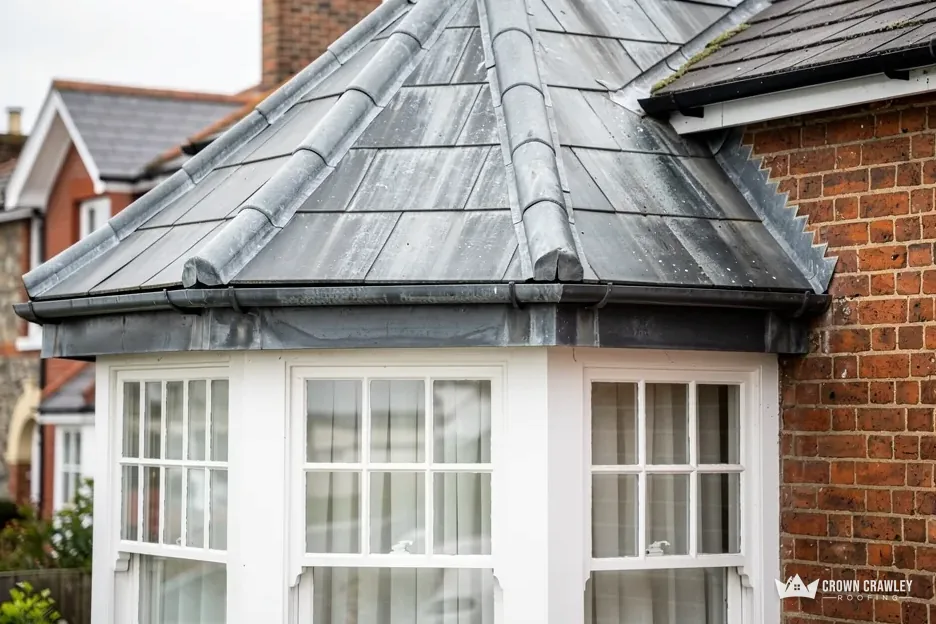
Code 4, the blue roll, is the first code the brochure lists for flashings, along with pitched valley gutters and dormers, as well as soakers. It is the lighter end of what is sensible for a short flashing on a sheltered part of a roof. A small stretch of apron over a bay window roof or a short back gutter behind a chimney is the sort of place it makes sense.
Code 4 is a sound choice when the run is short and the location sheltered, and it keeps the cost of a small job down. It is not an upgrade path to long, exposed or heavily walked areas, which is where heavier codes belong.
Code 5 and Code 6: the flashing workhorses
For general flashings the two codes you will meet most often are 5 and 6. Both appear against flashings (B), pitched valley gutters (C), parapet and box gutters (D) and dormers (E) in the Royston table.
Why is Code 5 so common?
At 2.24 mm and 25.40 kg per m² it is thick enough to dress over brick and stand up to years of expansion, yet light enough to handle on a scaffold. Checkatrade's roof repair guide, June 2026, gives £80 to £120 per m for stepped lead flashing in Code 5, which shows that Code 5 is a common reference point when flashing is priced.
When do you step up to Code 6?
Code 6 is 2.65 mm and 30.05 kg per m². Roofers choose it for a flashing that is long, high, exposed to wind, or hard to reach again. A chimney on an exposed gable end, or a wall abutment on a three-storey house, may justify the extra weight because replacing the lead later means more scaffold.
Heavier lead costs more, and not every junction needs it. A fair quote names the code for each detail. If you are told only that the job is in lead, ask which code and where. Our answer on what code of lead is used for flashing covers the most common job in a few lines.
On a large roof you may find one code on the chimney, a heavier one in the valley and the lightest in the soaker course. That is a sign of care, not confusion, because each part works under different conditions. It also means that a quote naming a single code for everything deserves a question about whether every detail was looked at.
Code 7 and Code 8: valleys and gutters
The two heaviest codes, 7 (white) and 8 (orange), come in at 3.15 mm and 3.55 mm. Royston lists them for valley gutters, parapet, box and tapered valley gutters, and dormers. Soakers and flashings are not on their list.
Why are gutters given the heaviest lead?
A valley or box gutter carries the water from a whole roof slope or a large catchment, and it is walked on by anyone cleaning or inspecting. The lead is working harder than a flashing: it takes constant water, collects debris, warms in sun and cools overnight. Heavier sheet gives it more reserves against cracking along the folds.
What about small flat roofs and canopies?
The brochure does not give a code for flat roofs as a heading. Its gutter uses, such as parapets, boxes and tapered valleys, are flat-lined channels, so a flat lead roof or canopy is generally specified in the heavier end of the table. For a small lead flat roof or canopy, ask what standard it is being laid to and how it will drain. BS 6229:2025 is written for flexible membranes rather than lead, but its minimum 1:80 finished fall for general roof areas is a reminder that water should never sit on the lead.
Heavier lead can be harder to dress into tight shapes, which is why a roofer may use two codes on one roof: a heavy sheet in the gutter and a lighter one on the flashings that rise from it. That mix is normal, and a good quote spells out which code goes where so you can see the thinking.
Matching code to the part of the roof
Putting the table to work, here is how the codes line up against the parts of a house you are likely to be quoted for.
Chimneys
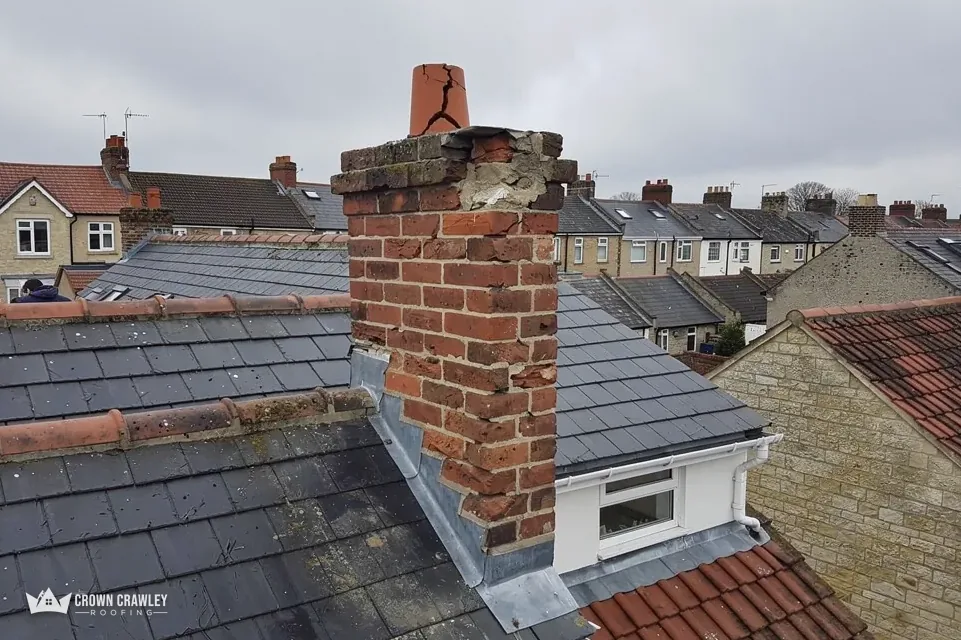
Flashings at a chimney sit in the B column, so Code 4, 5 or 6 can all appear on the brochure. The longer and more exposed the stack, the more reason to move up. MyJobQuote, updated 22 September 2026, gives a full chimney leadwork range of £350 to £460 without scaffold and £700 to £920 with it, as a typical UK figure.
Valleys
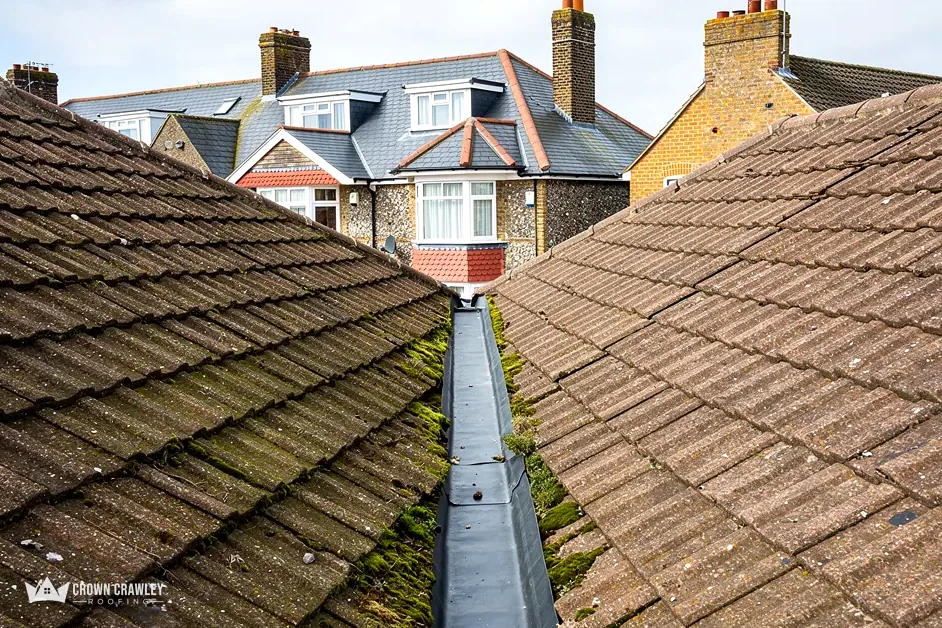
A pitched valley gutter is listed for Codes 4 to 8. The longer the valley and the bigger the slopes feeding it, the heavier the code should be. See lead valleys: lifespan, leaks and replacement for what goes wrong.
Dormers and bay windows
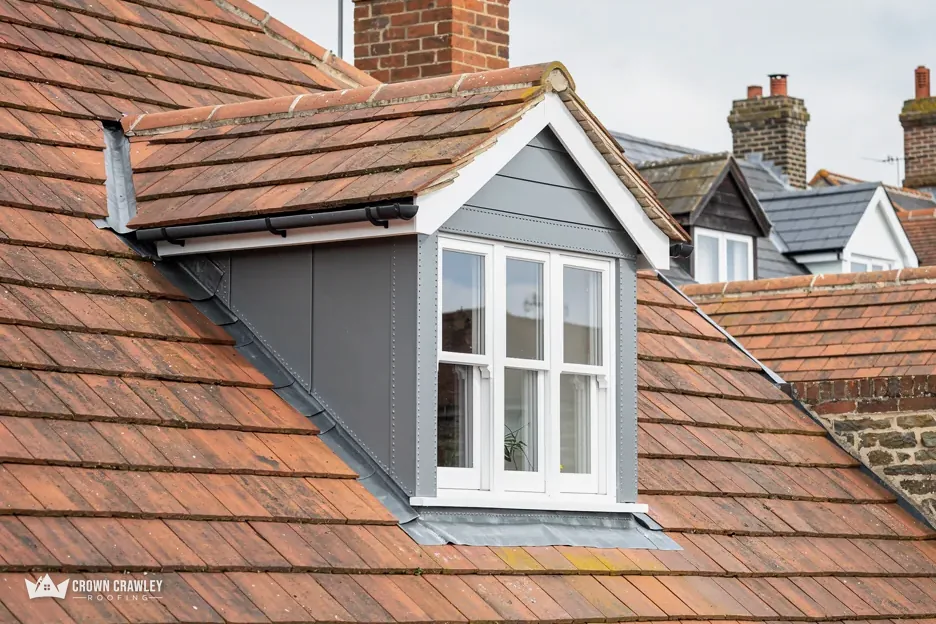
Dormer cheeks and roofs are listed under E at Codes 4 to 8. A dormer has cheeks, a front and a roof, and each may take a different code. Bay window and porch roofs are similar small jobs where the exposed top is often the part that earns the heavier sheet.
Parapets and box gutters
These are D uses, so Code 5 and above. On a parapet there is little room for error, so many specifiers take the heavier end.
Reading the code on a quote
Codes belong on a written quote because they are one of the few things you can check without climbing a roof. A roll of lead carries its code, and the colour band printed on it is easy to see on site.
What should the quote say?
It should name the code for each type of detail, such as Code 4 for soakers and Code 5 for the chimney flashings, and give one total price after the survey. Check as well whether the total takes in VAT and scaffold.
Is the heaviest code always best?
No. A heavier code costs more and is stiffer to work, and where the table lists a lighter code for the job, the extra weight may add cost without adding years. On the other hand, a quote that offers Code 3 for flashings is departing from the brochure, and you should ask why.
What about the standard behind the table?
The table above comes from one manufacturer's cast lead brochure. Rolled lead and the fuller industry guidance use similar codes, so ask your roofer which guidance a specification follows if you have an unusual roof. If you would like us to price a lead job, send photos of each junction and say which parts leak. At the survey we check the length, the exposure and the access, then name a code for every detail. Our lead work page shows the full range of jobs.
Part of our Lead Work & Lead Flashing in Crawley
Lead code questions
What is the most common lead code for flashing?
Code 5 sits in the middle of the flashing range, and Checkatrade's roof repair guide prices stepped lead flashing in Code 5. Code 4 appears for short, sheltered runs and Code 6 where the run is long or exposed. Your roofer should name the code for each detail on the quote.
How can I tell which code a roll of lead is?
Look at the colour band. In the Royston brochure, Code 3 is green, Code 4 blue, Code 5 red, Code 6 black, Code 7 white and Code 8 orange. Thickness is the other check: Code 5 is 2.24 mm, and a fair roofer will show you the roll or the delivery note on request.
Can I use a lighter code to save money?
You can for the jobs the table allows, such as soakers in Code 3 or short sheltered flashings in Code 4. Going lighter than the brochure suggests risks early cracking and a second visit. We look at the length and exposure at the survey and name the code for each detail in the written price.