Bay windows and porches stick out from the front of a house, and the little roof over each one is often covered in lead. That roof is low, flat or only slightly pitched, and it meets the main wall on one side and the window head on another. It is also the one passers-by can see from the street, so a failing one is hard to ignore.
Lead suits these roofs because it can be shaped into corners and tucked into brickwork without a seam. When it fails, the cause is nearly always at the edges rather than in the middle of the sheet. A split at a corner, a gap where the lead meets the wall, a crack along a joint, or a gutter that has silted up. Water finds those weak points and runs into the ceiling of the bay, or down the inside of the wall.
This guide covers where bay and porch roofs leak, how they are re-leaded, how long lead should last, what the codes and falls mean, and when a different covering is the better choice.
Where bay and porch roofs leak
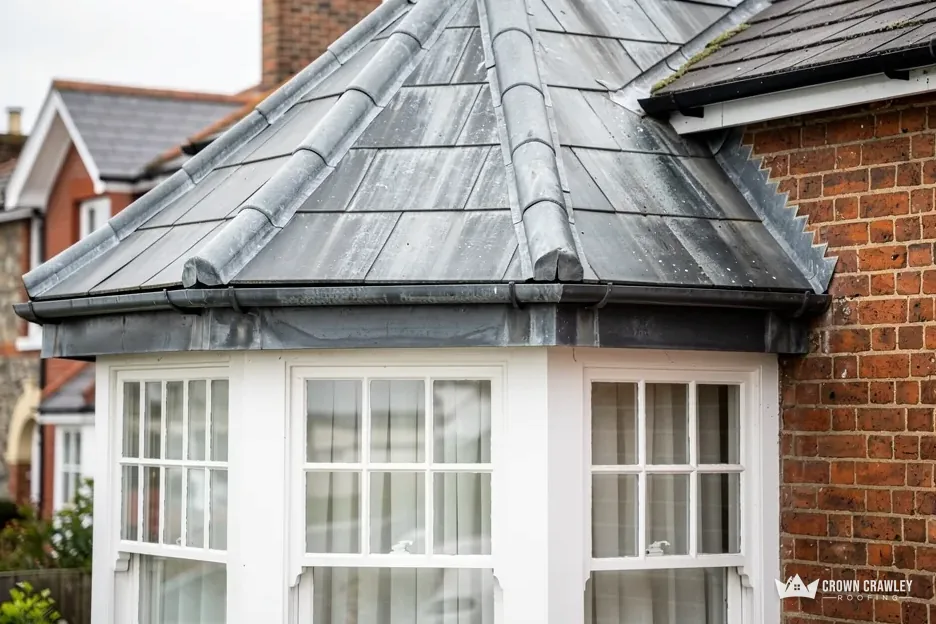
Start with the shape. A typical bay roof has a flat or gently sloping top, a wall on the house side, a front edge over the window and two short sides at the angled corners. Each edge needs its own detail, and each detail can fail.
Where does the roof meet the house wall?
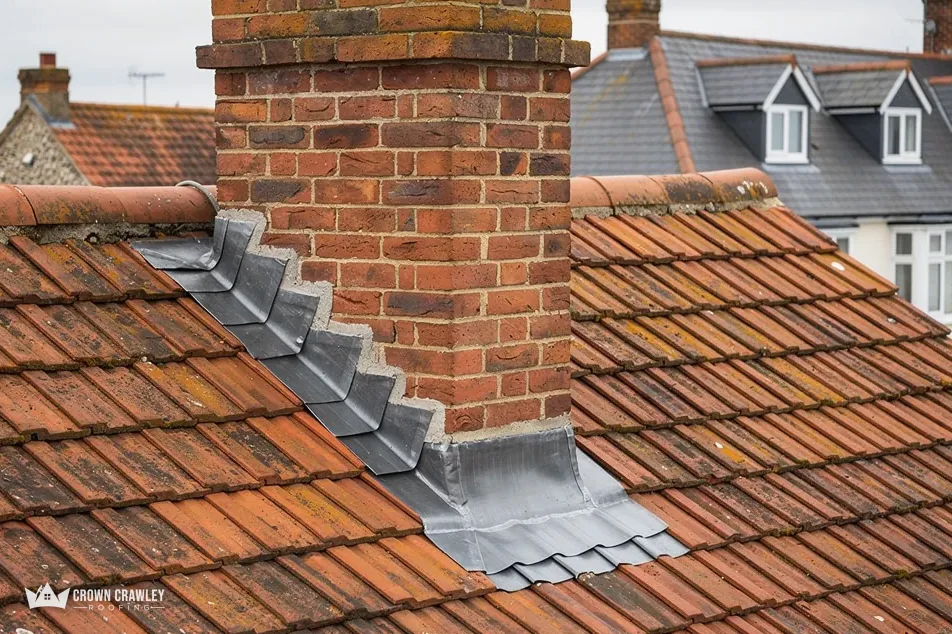
This is the junction that fails most often. The lead turns up the wall as an apron flashing, tucked into a cut slot in the brickwork or a mortar joint, and held with wedges. If the pointing has dropped out, the slot lets water behind the lead. If the lead has lifted, rain blows under it. Our page on lead apron flashing shows how that detail is built.
What about the corners and the front edge?
Angled corners are where a flat sheet has to be folded into a shape it does not naturally take. Folds that are tight or poorly dressed crack with temperature changes. At the front edge the lead must turn down into the gutter or over a drip. If the drip is blocked, short or missing, water runs back across the sheet instead of into the gutter and stays on the window head.
Is the covering itself ever the problem?
Sometimes. Old lead can thin out, split along a crease or develop tiny holes from nails put in the wrong place. A bay that has been patched before may have mastic and bitumen smeared over the joints. That hides the failure for a season and then lets go again.
Signs the bay needs attention
You can read most of the warning signs from indoors and from the pavement without climbing anything. A bay roof is low enough to see, but that is not an invitation to walk on it.
What will you see inside?
A brown ring on the bay ceiling, paint blistering at the head of the window, damp on the plaster beside the wall junction, or a musty smell in the corner of the window recess. Water that tracks along a joist can show up some distance from the real source, so stains are a starting point rather than a diagnosis.
What will you see outside?
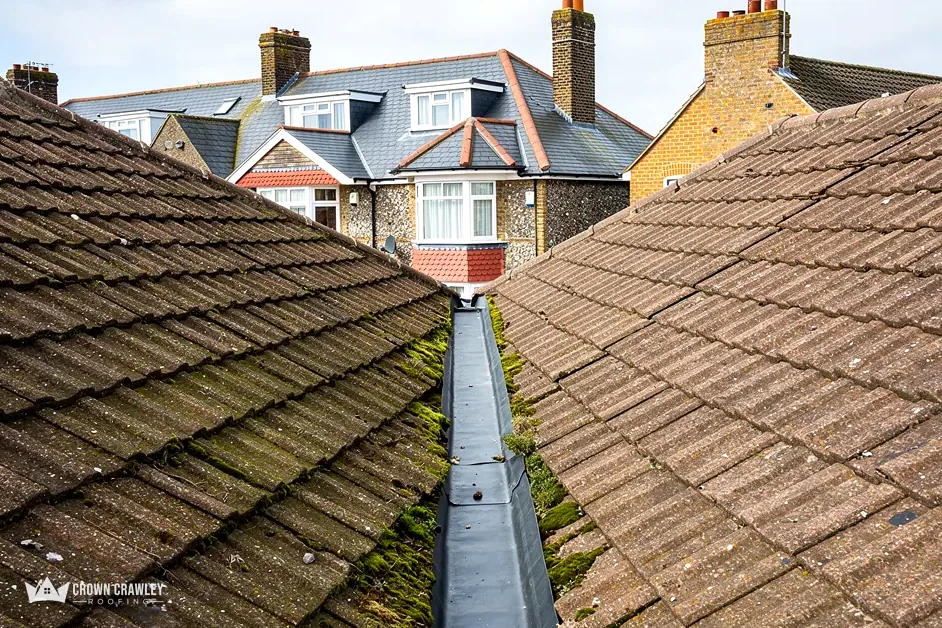
Lead that has lifted at the top edge of the wall flashing, open or crumbling mortar along the flashing line, a visible crack across a corner, ponded water that stays on the sheet after the rain has stopped, and green staining or silt sitting in the gutter. White powdery marks on lead are a normal surface layer, so they are not a failure in themselves; see our page on white residue on lead flashing.
A bay roof is not built to be a platform. Lead is soft and shows every footprint, and it will not take a ladder foot or a person's weight without damage.
If the leak is coming through right now, put a bucket under it and take photos. We can make a leaking roof safe first and then look at the lead properly once the weather clears.
Re-leading a bay roof, step by step
Re-leading is more than laying a new sheet over the old one. The roof structure beneath has to be right first, because lead is only a covering. It cannot hold water out of rotten boards.
What comes off, and what is checked?
The old lead is removed and the deck is inspected. Timber boarding that has taken damp is cut out and replaced. The roofer checks the joists, the wall plate and the top of the window frame, and fixes any rot before any new material goes on. The surface is cleaned and, in most designs, an underlay is laid to protect the lead from the rough deck beneath.
How is the new lead laid?
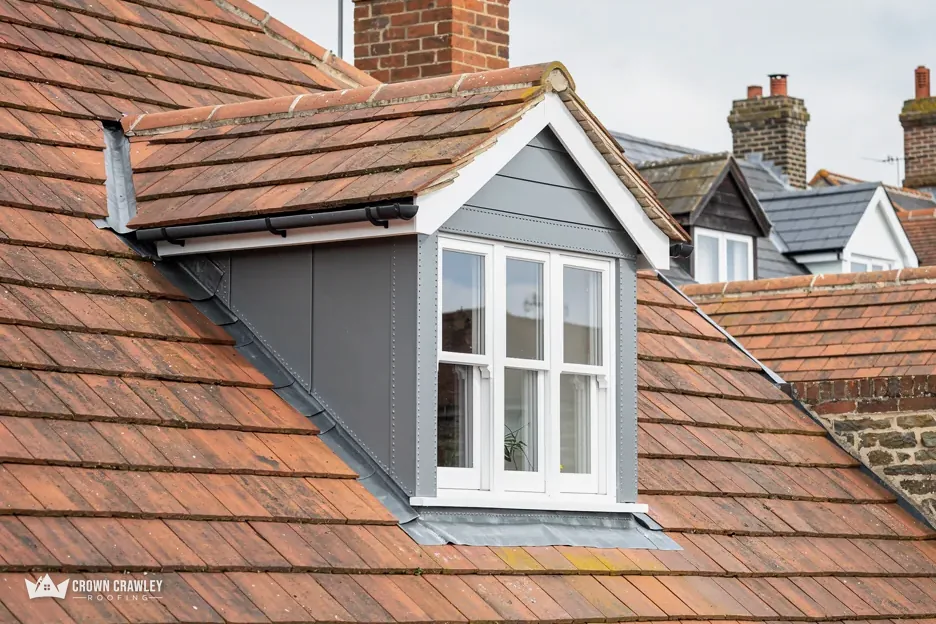
Falls are set first, so water runs to the gutter and stops nowhere on the way. The lead is then cut and dressed in sections, with rolls or drips where one section ends and the next begins. Corners are folded and bossed, or joined by welding where the design calls for it; we compare the methods in our page on lead welding against bossing. The wall flashing is tucked into a fresh slot, wedged and pointed, and the front edge is dressed into the gutter or over a new drip.
Finally the gutter is cleared and checked, because a perfect lead roof draining into a full gutter still leaks. Waste is cleared at the end of each day, and you hear from us about what is happening on site.
Lead codes, falls and how long lead lasts
Lead sheet is sold by code, a number that stands for thickness and weight. The codes, from Royston Lead's cast-lead brochure, run from Code 3 at 1.32mm and 14.97kg per square metre up to Code 8 at 3.55mm and 40.26kg per square metre. Royston lists Code 5 to Code 8 for parapet and box gutter uses, while Code 4 and Code 5 sit in the flashing range. Your roofer should state the code in the written price and say why it suits the job. Our page on lead sheet codes explained goes through the full table.
How much fall should a bay roof have?
For a membrane bay roof, BS 6229:2025 covers flat and curved roofs up to a pitch of 10 degrees; lead sheet falls outside it. The finished fall it keeps is 1:80 at the least, which means about 12.5mm of drop per metre. Because boards settle and tolerances eat into the slope, IKO suggests aiming for 1:40 on the drawing. If a puddle lingers on your bay long after the rain has gone, the fall has probably been lost. Our guide to the minimum fall for a flat roof explains the figures.
How long should lead last?
According to MyJobQuote, lead flashing can see out 80 years and more. That is a typical figure for sound lead, not a promise for any one roof, and the supporting deck and the pointing around the flashing wear out on a different clock. Lead that has failed after a short time usually has an underlying cause, such as movement, poor detailing or theft damage, not simple age.
Repair, re-lead or change the covering
A bay roof does not always need a complete new covering. The right answer depends on how much of the lead is failing and why. The three routes below cover most cases.
When is a repair enough?
Where the lead is sound and the water gets in at one edge, the roofer can re-point the wall slot, replace a section of flashing or rebuild one corner. Checkatrade's roof repair table, dated June 2026, gives lead flashing repair at £50 to £70 per metre and stepped flashing at £80 to £120 per metre in Code 5. Treat them as national guides, since your bay will be priced after a survey. See also whether lead flashing can be repaired.
When does the whole bay need re-leading?
When the lead is cracked in several places, the deck beneath is damp, or the sheet is so thin that patches will not take, a full re-lead is the better buy. Repeated repairs on a roof this small usually cost more in total than doing it properly once.
What are the alternatives to lead?
Zinc is a lead-free metal option, and VMZinc says its environmental declaration states 100 years; our page on zinc against lead compares them. For a flat bay, a single-ply membrane such as EPDM is also used; GreenSpec lists a service life of 20 to 30 years for EPDM. Our lead-free flashing page covers the flashing side. Lead can still be used at the wall and edges even if the main surface is another material.
Costs, rules and planning the work
Four things set the price of a bay roof: access, area, the lead code and the state of the deck once the old covering is off. Small does not always mean cheap, because the detailing is dense and any deck repairs stay unknown until the lead is lifted.
What affects the written price?
The size of the bay, whether the front needs scaffold or a tower, the lead code, the condition of the deck and the number of joints and corners all count. A low bay can sometimes be worked from a tower, while a porch under a high window may need full scaffold. Whatever the quote says, find out whether VAT and any scaffolding sit inside the total. Our page on lead flashing replacement cost shows what moves the figure.
Do the rules apply to a small roof?
Under Approved Document L, relaying the waterproofing of a flat roof counts as renovation, and the thresholds are measured against the whole external envelope. A bay or porch roof is a small slice of a house, so it seldom approaches them, but if you are unsure, ask your building control body before work starts. Raising the roof or changing its shape is another matter, and the council's planning team should hear about that first.
Send photos of the bay from the street and a note of where the stain shows inside, and we will tell you which junction we would open up first. Our lead work page lists the rest of what we do in lead.
Part of our Lead Work & Lead Flashing in Crawley
Bay and porch roof queries
Can I paint a lead bay roof to stop it looking tired?
Lead does not need paint, and paint on a roof that moves with the weather tends to flake. Patination oil is sometimes applied to new lead to limit the first white marks. If the lead looks dull, the roof is probably doing its job. If it looks cracked, the problem is structural, and painting would hide it.
Why does my porch roof leak only in strong wind?
Wind-driven rain gets behind a lifted flashing or through a gap at the wall that stays dry in a calm shower. Check the pointing along the top edge and the corners where lead meets brick. A roofer should lift the flashing, find the entry point and fix it, not simply seal the surface.
Is it worth replacing a lead bay roof with a rubber one?
Sometimes, if the roof is flat and the lead has failed in many places. EPDM is cheaper to lay on a simple shape, but lead is more durable at corners and wall junctions. Many bays end up with a mix: a membrane across the top and lead at the edges. Ask for both options in writing.