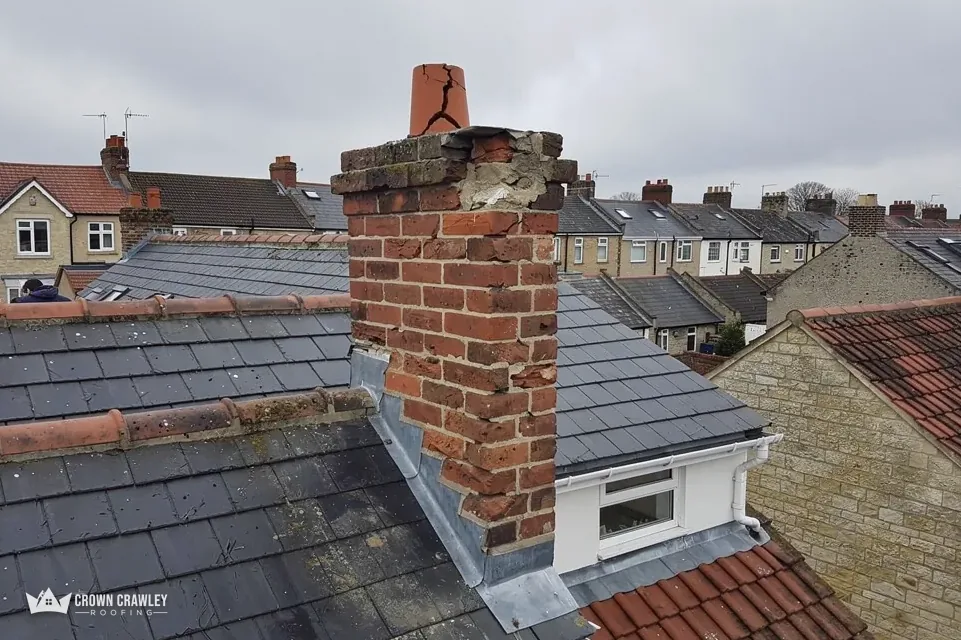
Lead theft is rarely noticed on the day it happens. The first sign is often a patch of damp on a ceiling after rain, a neighbour who spotted a figure on a roof, or a roll of bare, torn edges where the flashing used to sit around a chimney. By then the roof has been open to the weather for some time, and water is running into the structure behind.
The sensible order is to protect people, stop the water, report the crime, tell your insurer, and only then decide what goes back. Each of those steps has a reason, and skipping one can make a claim harder or a repair more expensive. This guide goes through them in that order. It explains how to look at the damage without putting yourself at risk, what to tell the police and the insurer, how a temporary make-safe works, what you can replace the lead with, and how to make a second visit from thieves less likely. Where a roof is leaking, the make-safe comes ahead of everything else we do, and the permanent options follow once the weather is kept out.
First, keep yourself safe
Do not climb onto the roof to look. Thieves may have loosened tiles and ridge pieces to get at valleys and flashings, and a roof that has been stripped of its lead is not a place to stand. Look from the ground with binoculars if you have them, or from an upstairs window, and take photos.
What should you photograph?
Take wide shots that show where on the building the damage is, then close ones of bare timber, torn edges and displaced tiles. Photos are the evidence an insurer works from, and IStructE makes the same point in its storm damage advice from January 2025. Theft is different from weather, but the need for dated pictures is the same. Add the date and time to your notes, and keep the original files rather than screenshots.
What about the inside?
If the loft hatch is easy to reach, take a torch up and look under the area that was stolen from. Wet insulation, drips, dark patches on timber and stained plasterboard tell the story of how long the roof has been open. Put a bucket under any drip and move belongings away. Do not poke at a bulging ceiling, because it may be holding a lot of water.
If you can see daylight through the roof or the ceiling is sagging, treat it as urgent and get a roofer to look as soon as you can reach one. A temporary cover can go on before any permanent repair is agreed.
Report it to the police
Theft from a roof is a crime, and reporting it matters for two reasons. It gets the incident recorded, and your insurer may well ask for a crime reference number before it considers a claim.
How do you report it?
Use the non-emergency route unless the thieves are still on site, in which case call 999. Say what was taken, where on the building, when you think it happened, and whether any scaffolding, ladders or vehicles were involved. Keep the reference number somewhere safe with your photos.
What helps the police?
Anything that places a person or vehicle near the house. Neighbours who noticed a van, a doorbell or driveway camera that caught movement, and the last date you knew the lead was in place all help. If you have an old photo of the roof, even a family picture with the chimney in the background, keep it. It shows what was there before.
Should you tell neighbours?
Yes. Thieves often work along a road, and a neighbour who knows what happened may spot someone returning. They may also have footage. Mention it to any local residents group you belong to as well.
Reporting does not cost anything and it does not commit you to any particular repair. It simply creates the record that everything else depends on.
Tell your insurer before you repair
Contact your insurer first, before you agree a permanent repair. Most policies expect to be told promptly, and some set conditions on what you can do before they have seen the damage.
What do they need from you?
Expect to give the crime reference number, the photos, the date you found the damage and a description of what is missing. Keep receipts for anything you spend on temporary repairs, because many policies deal with reasonable costs to stop further damage, though yours may differ. Which? reported in November 2025 that most insurers run emergency helplines, so check your policy documents for the number to ring.
Will the claim be paid?
We cannot say, and neither can anyone who has not read your policy. Cover differs between insurers and between policy levels, and the theft cover on a buildings policy has its own terms. Read yours for any limit on unoccupied properties, any excess and any requirement to show forced entry. Our job is to describe the damage and the repair in writing, in terms your insurer can follow. The claim stays with you and your insurer.
When you disagree with the decision
Make a complaint to the insurer first. If you are still not satisfied after that, the Financial Ombudsman Service looks at disputes between consumers and financial businesses. Keep every letter and email in one folder.
Hold back any permanent repair until the insurer has either inspected or confirmed in writing that you can go ahead. A short delay while they look is far better than a dispute over work that has already been done and covered over.
Stopping the water: a temporary make-safe
While the claim and the permanent repair are being sorted, the roof has to stay dry. Water that reaches timber, insulation and plasterboard turns a theft into a rot problem.
What does a temporary repair look like?
A roofer fits a weathertight cover over the exposed joint. That can be a temporary flexible flashing strip, a membrane secured over the gap, or a sheet of material fixed to hold the edge down while tiles are put back in place. It is not meant to last. It is meant to stop leaks for the weeks it takes to agree and order the permanent work. A make-safe also covers refixing loose tiles and ridge pieces that thieves disturbed.
Who should do it?
Someone with safe access to the roof. On a chimney or a high valley that usually means scaffold or a tower, set up properly, and the wider site left tidy with the waste taken away. Ask your insurer what they want to see before the work, and keep dated photos from before and after it. Tidy handling matters here too: slipped tiles refixed, loose debris cleared from gutters and the waste taken away, so the next rainfall has nothing to block.
What then?
A survey follows, with photos of your own roof shared with you, so that you can see what is damaged beyond the missing metal. Often a valley sub-structure, a soaker course or the mortar around a chimney has been disturbed too, and the permanent quote has to cover it. See our guide to lead valleys for what a valley needs once the lead is gone.
Replace with lead, or choose another material
Once the roof is dry and the insurer has been informed, you can decide what goes back.
Putting lead back
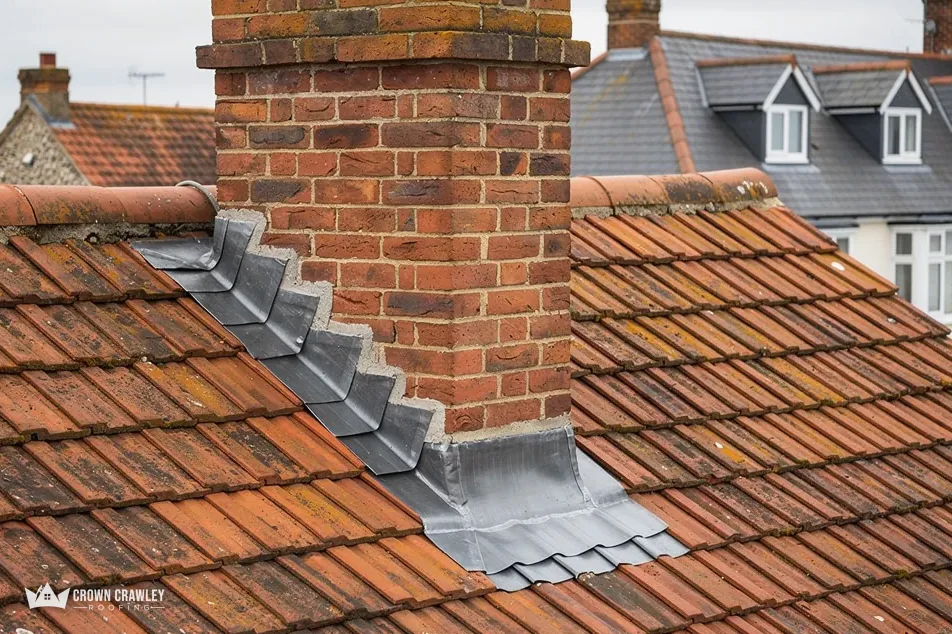
Lead is the like-for-like repair, and it is the one most likely to satisfy a conservation officer on an older or listed building. Many people also simply prefer it, because it ages well and can be dressed to any shape. Typical UK ranges from Checkatrade's roof repair guide in June 2026 are £50 to £70 per m for lead flashing repair, with stepped lead in Code 5 at £80 to £120 per m. MyJobQuote, updated 22 September 2026, gives £350 to £460 for chimney leadwork without scaffold and £700 to £920 with it. Those are national yardsticks. The price for your roof is fixed in writing once the survey is done, so ask whether any quote includes VAT and scaffold.
Choosing an alternative
A product containing no lead has no scrap value. Our guide to lead-free flashing against lead compares them, and zinc is covered in zinc against lead. A conservation area, a listed building or a house in a National Park changes the picture, so check with the council's planning team before agreeing a different material.
Which heavier lead?
Whatever you choose, the code of the lead matters for the replacement as much as the original. If the thieves took a thin sheet, replacing it with the same thin sheet repeats the weakness. Ask for the code to be named on the quote, detail by detail, and compare it with the table in our guide to lead sheet codes.
Do the surroundings need work too?
Often. Thieves lever up tiles, kink ridge pieces and leave boards exposed, so the survey should record those parts. Repairing the flashing and leaving a cracked valley edge behind would simply invite the next leak. The written price should cover the whole job as agreed, not only the metal.
Making a second theft less likely
A roof that has been targeted once is known to be reachable. A few practical steps make a return visit harder, and none of them promises protection.
Take away the way up
Thieves use ladders, wheelie bins, outbuilding roofs, climbing plants and trellis. Lock ladders away, move bins from walls, and consider anti-climb measures on any low roof beside the house. Ask your roofer to check any scaffold is taken down fully at the end of the job.
Add light and eyes
Motion-activated lighting at the rear, a camera covering the access routes and a visible alarm all raise the chance of being seen. Tell neighbours when you are away.
Reduce what is worth taking
This is where material choice comes in. Lead-free flashing on the most reachable details removes the reward, and you can keep lead on high or awkward parts where it is hard to get at. Some owners also choose to have the lead roofs of outbuildings and porches reviewed at the same time, because thieves go for the easiest metal on a property.
Check after bad weather and holidays
Walk round the outside from the ground and look for missing flashings, shifted tiles or fresh scrapes on a ridge. Finding a problem early keeps the damage small. When you send photos, say where the lead used to be, whether you have an old picture of it and what the insurer has told you, and we will start from there. Our lead work page gives the range of jobs.
Part of our Lead Work & Lead Flashing in Crawley
After a lead theft
Do I have to report stolen roof lead to the police?
You should. It is a crime, and an insurer may want a crime reference number before it will consider a claim. Report it on the non-emergency line unless the thieves are still there, then keep the reference with your photos, dates and any receipts for temporary repairs.
Should I wait for the insurer before getting the roof covered?
Tell the insurer first, but do not leave the roof open. A temporary cover to stop leaks is normally reasonable, and policies commonly ask that you limit further damage. Keep photos from before and after and every receipt, and hold off permanent work until the insurer has responded.
Is lead-free flashing a good replacement after a theft?
It can be on simple, reachable details, because it has no scrap value. On complex shapes or protected buildings lead may still be the better material. We look at each junction during the survey, explain the options with photos of your roof, and give one written price.