Lead has sealed the joints of British roofs for centuries, and it is still the metal most roofers reach for around a chimney, a valley or a dormer. It is also the metal thieves reach for. That tension has created a market in lead-free flashing: self-adhesive strips, bitumen-based rolls, aluminium-backed products and other sheet materials sold as stand-ins for lead.
Some of these products are sensible on the right roof. Others are a poor swap for the job in hand. The difference depends on where the flashing sits, what the building is, and what you are trying to protect against. Below we cover what lead-free flashing is, how the theft argument really works, what life you can expect from each material, where alternatives are accepted and where they are not, and the questions to put to any roofer before you agree a material. We make the same recommendation on a roof whichever way it points, because we look before we price.
What counts as lead-free flashing
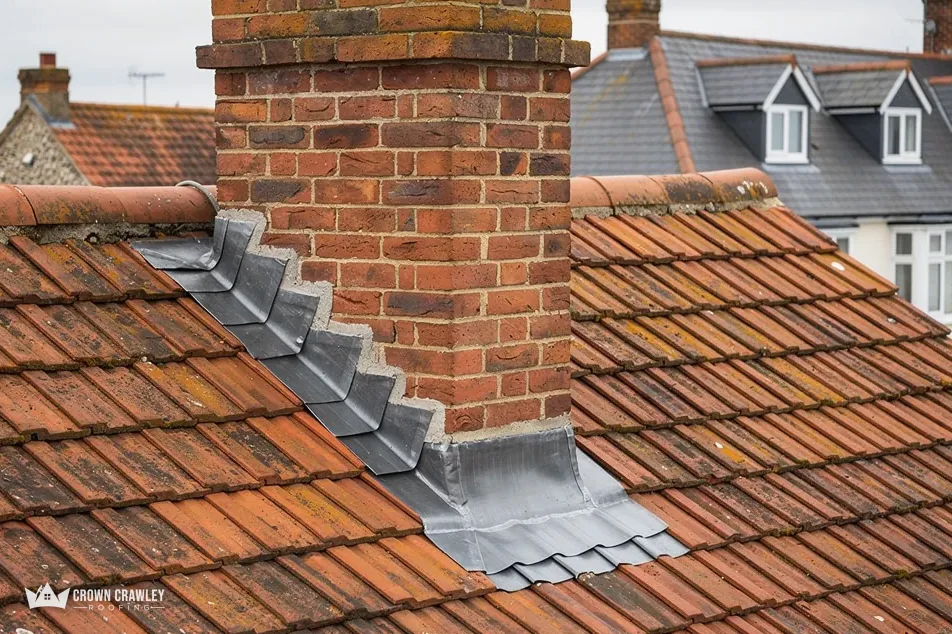
Flashing is the strip of waterproof material that seals the junction where a roof meets something else: a chimney, a wall, a dormer cheek or a roof window. Sheet lead has done this job for a very long time because it can be dressed, which means beaten and shaped by hand, into almost any profile and then stays put.
Lead-free products try to copy that behaviour with other ingredients. You will meet three broad families.
Self-adhesive flexible strips
These are rolls with a sticky backing, often a bitumen layer faced with a metallic or mineral finish. They are pressed into the angle between roof and wall and sealed along the top edge. They are quick to fit and cheap to carry, and they are the products the phrase lead-free alternative usually brings to mind when a customer raises it.
Other metals and membranes
Aluminium, zinc, copper and stainless steel can all form flashings, along with single-ply membranes made for the purpose. Zinc is covered in its own right in our guide to zinc against lead. Each metal behaves differently when it is bent, soldered or exposed to weather, so a product that suits a flat chimney tray may not suit a stepped run beside a wall.
Preformed parts
Some manufacturers make ready-shaped corners, trays and soakers so a roofer is not dressing sheet at all. They save time on simple details but cannot adapt to an awkward junction the way a sheet can.
Whichever family a product belongs to, its performance comes from the manufacturer's data sheet and the way it is fitted, so ask to see both before you agree to it.
Theft: how much does lead-free really help
Lead is stolen because it can be sold as scrap. A product with no lead in it has no such value, so a thief who climbs up and looks at it has little reason to strip it. That is the whole of the theft argument, and it is a reasonable one. If your roof has already lost lead once, or you live where roofs are targeted, an alternative can take away the incentive.
What lead-free does not do
It does not make a roof theft-proof, and it does not stop a person determined to climb up for other metal, such as copper pipes or aluminium fascia capping. It also does nothing about the damage thieves cause when they tear off tiles to reach a valley. So treat the material as one layer of protection, alongside lighting, secure access and a roof that is not easy to climb.
Does the price drop?
Sometimes. A self-adhesive strip costs less per metre than dressed sheet and takes less time to fit. But the figure on the page depends on the length, the number of corners and whether scaffold is needed, and we do not quote an alternative price from a data sheet. Every job gets one written total after the survey. As a yardstick for lead, Checkatrade's roof repair guide, in its June 2026 table, shows lead flashing repair at £50 to £70 per m and stepped lead flashing in Code 5 at £80 to £120 per m. Treat them as a national yardstick only; they are a guide to the market and say nothing firm about your chimney. Look for VAT being included or left out when quotes come in. If you are weighing costs, our page on lead flashing replacement cost sets out what moves them.
Life expectancy of each material
Lifespans are ranges, not promises, and a manufacturer's guarantee is a different thing from how long a material will last on a roof.
Lead
The cost guide at MyJobQuote, last updated on 22 September 2026, gives a life for lead flashing of "over 80 years" when well fitted. That is a long time even allowing for the optimism of any published figure, and it matches the fact that old lead is still sealing roofs that are older than the people living under them. Lead gets there because it is dense, it does not rot and it moves a little without splitting when it has been dressed and fixed properly.
Alternatives
There is no single figure for the whole group, because the group covers bitumen strips, bare metals and membranes with quite different chemistry. VM Zinc's own FAQ gives 100 years for zinc, citing the Environmental Product Declaration, which tells you that a metal can match lead on paper. A bitumen-based adhesive strip is another matter, and its sealing edge is the part that tends to open first as sun and cold work on it. For any product you are offered, ask what life the maker states, what that statement is based on, and what the guarantee covers if the flashing lifts.
The honest comparison is that lead has the longest track record and the most predictable ageing. A newer product may be perfectly good, but it has been on roofs for less time, and that matters when a flashing has to survive a hundred winters rather than ten.
Where lead-free flashing is accepted
Alternatives fit best where the junction is simple and the building has no heritage protection. A modern house with a plain chimney stack, a straight roof-to-wall run on an extension, or a garage block with a low parapet can often take a well-chosen alternative without anybody objecting.
Do you need permission to change the material?
Replacing flashing like for like is repair. Swapping lead for another material alters the appearance and the behaviour of the junction, so it is worth checking first. A small change of finish on a modern house may not matter in planning terms. On a conservation area home, a listed building or a house in the South Downs National Park, ask the council's planning team for their view before a material is agreed. The South Downs National Park Authority treats small repairs that match the existing material as outside listed building consent, and replacing lead with a different material is not like for like.
Lead on a listed roof is often part of the building's character, which is why conservation officers commonly expect lead to go back where lead came off. For more, see our guide to lead roof repairs on a listed building.
Finally, ask your roofer whether the work reaches beyond the flashing into the roof covering itself. If it does, the Building Regulations questions on re-roofing apply, and your roofer should check them with the building control body before starting. A flashing swap on its own is a smaller matter, but the question costs nothing to ask.
Where lead is still the right choice
Some details are simply better in lead, even when an alternative would be quicker for us to fit. That is the advice you should expect from a roofer who has looked at your roof first.
Complex shapes and old buildings
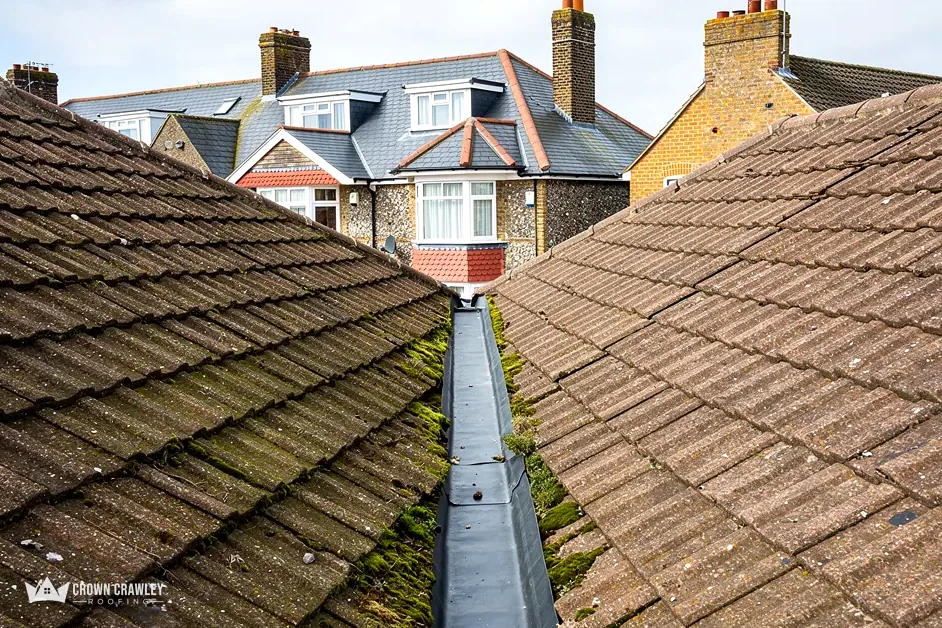
Stepped flashings against brick, soakers where slate or plain tiles meet a wall, valleys, and the cheeks of a dormer all ask the material to follow a changing line. Sheet lead can be dressed to that line and left alone. A rolled-out strip has to bend the same way and stay stuck, and it may not manage both on a stepped run. Step flashings, cover flashings and dormer cheeks all need that kind of shaping, and a flat strip struggles to follow them.
Roofs with a long future
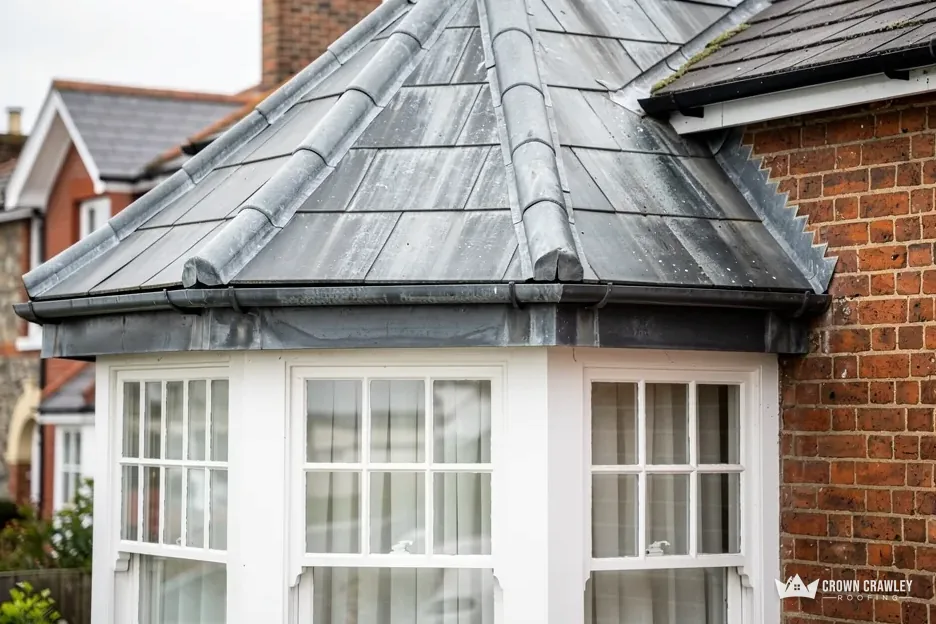
If you plan to keep the house for years and want to fit the flashing once, lead's record is the strongest argument. It can be repaired in place, patched with a welded or bossed repair, recycled when it finally goes, and replaced to match, so the roof keeps the profile it has always had, which also keeps the street view the same.
Roofs where theft is the only worry
Theft alone is not a reason to put a weaker material on a detail that needs a strong one. If the junction is awkward, it can be better to use lead, make it harder to reach and fit alarms or lighting. If you cannot get that comfortable, a metal such as zinc or stainless steel may sit between the two. We would rather tell you that on the roof than sell you whatever is in the van.
Questions to ask before you choose
You do not need to know the chemistry to make a good decision. You need a handful of questions that bring a weak answer to the surface, and they are below.
What exactly is going on which junction?
Ask for the material named detail by detail: chimney front, chimney sides, valley, wall abutment. A sound plan can use lead in one place and an alternative in another, so a roofer who suggests a single product for everything is making a shortcut.
What does the maker say about life and fixing?
Ask for the data sheet. It should name the fixing method, the minimum overlap and the temperature range for sealing. If a product relies on adhesive alone, ask what happens when the adhesive ages.
What happens if I want to change back?
Removing an adhesive strip from brick or a chimney can leave residue and loose mortar behind it. Putting lead back later is harder than putting it on first, so choose with the future in mind.
What does the written price include?
One total, after the survey, with a statement of whether VAT and scaffold are in it. If a quote only shows the cheap line, the gap will turn up later.
When you ask us to look at a roof, send photos of the junctions that worry you, and tell us whether lead has been taken before. That lets us suggest a material for each detail and explain the reasoning in plain words. For the wider picture, start from our lead work page.
Part of our Lead Work & Lead Flashing in Crawley
Choosing between lead and alternatives
Is lead-free flashing less likely to be stolen?
It gives a thief no scrap value to sell, so the motive largely goes. It is still sensible to keep ladders locked away, light the rear of the house and check the roof after bad weather. Thieves who find nothing worth taking usually move on to a roof that has something.
Can I put lead-free flashing on a listed building?
Not without checking first. Changing the material alters the look and character of the roof, which can need listed building consent. Ask the council's conservation team before you agree. Like for like repair, with lead going back where lead came off, is the safer route and is more likely to be approved.
Does lead-free flashing last as long as lead?
Rarely on a long-term basis. An online cost guide gives lead flashing a life beyond 80 years, while many alternatives have a shorter track record. Zinc is a metal that compares well. Ask the maker for a stated life and read what its guarantee covers, because a guarantee is not the same as how long it lasts.