Anyone can buy a roll of lead. Laying it so that it stays watertight through frost, sun and fifty winters is the skill. A lead roof is not glued down or clipped together like a modern membrane. Each sheet floats on its deck, held at the top and free to move at the bottom, and every join is shaped by hand to carry water over rather than let it through. Get that right and the roof is quiet and permanent. Get it wrong and the sheet cracks within a few seasons.
This post walks through a lead installation in the order the work happens: the deck underneath, the layer between deck and metal, how the sheets are sized and fixed, how the joins are made, and how the corners are shaped by bossing or joined by welding. The aim is to help a homeowner read a quote and judge a method, rather than to coach anyone through doing the job alone. It replaces an older post that described tools more than technique and left out the points that cause failures.
Start with the deck, not the metal
A lead job is only as good as what is under it. The deck is the flat base that the lead lies on, usually boards or sheet timber, and it has to be sound, dry, even and laid to a fall so water runs off. Lead takes the shape of whatever is beneath it, so a hump, a nail head or a soft board shows through the sheet and wears it from underneath.
What is checked before any lead goes down?
Timber is tested for rot and fixed down firmly. Any board that rocks or springs is replaced. The surface is checked with a straight edge for dips where water would sit. Falls are set before the metal arrives. For membrane flat roofs the current code, BS 6229:2025, keeps a minimum finished fall of 1:80 over the main areas as well as in internal gutters, and the design aims higher. Our own guide to lead flat roofs covers how it applies to lead.
Why does the deck matter so much?
Because a lead detail cannot hide a fault underneath it. If the boards are damp when the sheet goes on, they rot in the dark. If the fall is flat, water ponds and finds the seams. A roofer who wants to talk about the deck before the lead is thinking about the right things, and our lead work surveys start there.
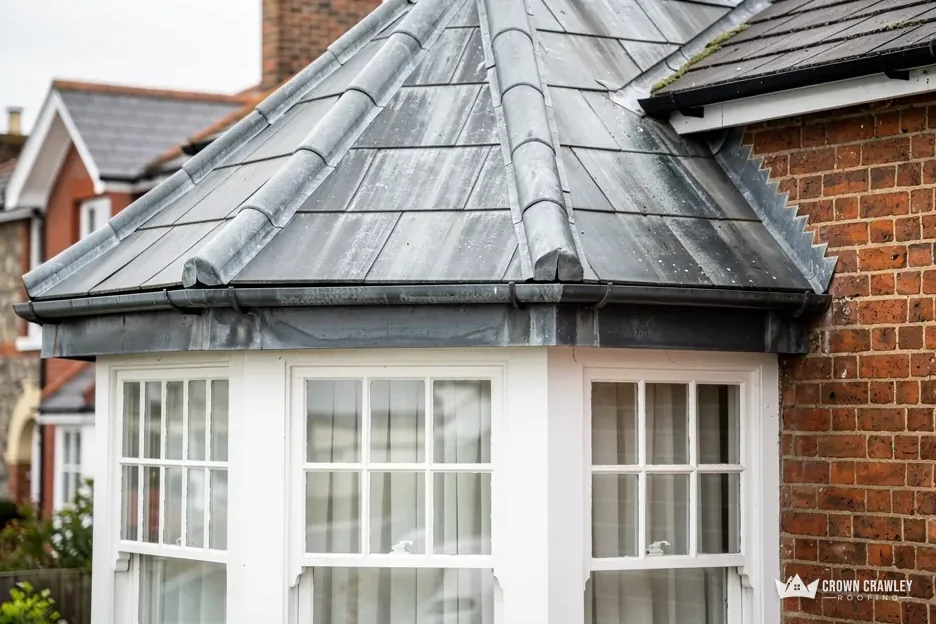
On a bay window or porch, the deck is small, so it is tempting to skip these checks. Don't. Small decks often sit directly above a window or doorway, where a leak is both visible and awkward to put right afterwards.
Underlay, ventilation and the cold deck question
Between the timber and the lead goes a layer called the underlay, sometimes called a separating layer. Its job is to stop the lead sticking to the timber, to protect it from rough surfaces, and to let the sheet slide as it expands and contracts. Without it, the lead can bond to the deck and tear when it moves.
Why does ventilation come into it?
Condensation. Warm, damp air from the living space rises into the roof void and meets something cold. Under a lead roof the chilled spot is the metal's inner face, so droplets can form there, soak the timber and corrode the lead from below. Standard guidance on moisture in buildings is set out in BS 5250:2021, which is listed as current but under review. It asks designers to manage moisture in the build-up of a roof, and on some roofs that means a ventilated gap under the deck.
Is a ventilated deck always needed?
Not always. It depends on whether the roof is built as a cold deck, with insulation below and a ventilated void above, or a warm deck, with insulation on top of the structure and no void. Each has its own detailing. Ask a roofer which one your roof is and how they will keep moisture from collecting under the sheet. If the answer is vague, that is worth knowing before the work starts.
When an older bay roof is stripped, it is common to find that its original felt and boards survived while the lead failed, or the reverse. What we find tells us which route to take for the replacement, and we share photos of it so you can see the same thing we saw. It also settles whether the old timber can stay or must be renewed, which is a common surprise on small roofs.
Choosing the code and sizing the sheets
Lead is supplied by code, from 3 to 8, and each code is a set thickness. In Royston Lead's cast lead brochure, Code 3 is 1.32 mm and 14.97 kg per square metre, Code 4 is 1.80 mm, Code 5 is 2.24 mm, Code 6 is 2.65 mm, Code 7 is 3.15 mm and Code 8 is 3.55 mm. The brochure puts Code 3 on soakers alone. Code 4 covers soakers, flashings, pitched valleys and dormers, and from Code 5 upwards the list moves towards gutters, with Codes 5 and 6 still suited to flashings.
Why do sheet sizes matter more than thickness?
Lead expands in the heat and contracts in the cold. A long sheet moves further than a short one, and if it is pinned down it has nowhere to go, so it buckles and eventually splits. This is why lead roofs are laid in bays of limited length, with joins between them. We do not quote one maximum for every job, because the right size depends on the code, the pitch and the exposure. Ask what size each bay will be and why.
What is a bay in this sense?
It is one sheet's worth of roof between two joins, not the bay window. The roofer sets out the roof on paper first, so the rolls and drips fall in sensible places and the joins line up. If you want to know what the code on your quote means, read lead sheet codes explained.
A thicker code costs more and weighs more, but it is not a cure for long sheets. Size and fixing matter as much as thickness.
Fixings, clips and how a sheet is held
A well-laid lead sheet is held at the top and left free below. The upper edge is fixed with a line of nails or screws, covered by the next layer, and the lower edge sits loose or is held by clips that let it slide. That way the sheet can grow and shrink without tearing at the fixings.
Which fixings suit lead?
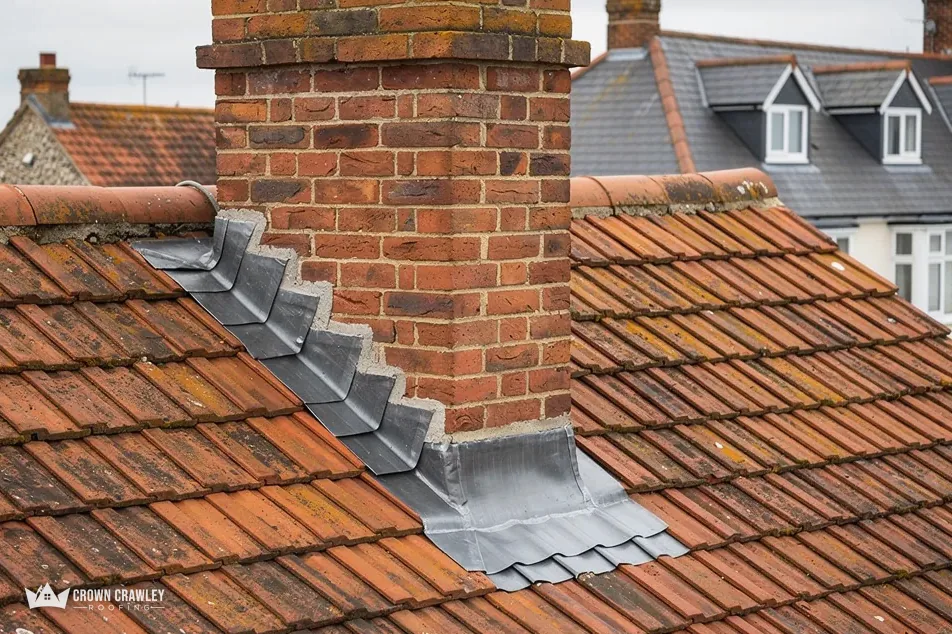
Copper or stainless steel, never plain steel, which rusts and stains the lead. On sloping details, sheets are held by lead or copper clips folded into the join. On walls, flashings are held in a chase by lead wedges and finished with mortar or sealant. If a detail is only nailed through the face of the sheet, expect it to split as it moves. Our guide on how lead flashing is fixed shows how this works at a wall.
What else holds the lead on?
Gravity and good design. Lead is heavy enough to lie flat, but in exposed spots, wind can lift an edge. Wind is dealt with by clips, fold-downs and the geometry of the joins, not by extra nails. Where a lead roof meets tiles at a chimney or wall, a soaker or step flashing is woven in, which we explain in our comparison of step flashing and cover flashing.
Fixings are hidden in the finished roof, so you rely on the roofer's method and on the photos taken as the work goes on. Ask to see them.
Drips and rolls: how the water is led away
Lead joins are made by shape, not by sealant. On a flat or low-pitched roof there are two kinds of join. A roll runs with the fall: a rounded timber batten is fixed to the deck and the lead is dressed up and over it, one sheet tucked under the cap of the next. A drip runs across the fall: the deck is stepped down, and the sheet drops off the step onto the one below.
Which one is used where?
Rolls go along the direction of the water and drips across it. A well-planned roof has both, set out so no sheet is longer than it should be. Rolls are also the neat finish people notice from the street, so the spacing is worth getting right. Our answer on lead drips and rolls covers the sizes and the reasoning.
What goes wrong with them?
A drip that is too shallow lets wind-driven rain run back up the step. A roll that is too tight pinches the sheet, so it cannot move. A joint where the cap does not overlap the undercloak far enough admits water. All of these show up as leaks within a few winters, and none can be fixed from the surface. They require the join to be reopened and remade.
This is also where a poor job is most obvious to the trained eye. Even rolls with clean, tight edges and crisp corners, with no dents, are the signature of someone who has done it properly.
Bossing or welding: shaping corners and joins
Where a sheet has to turn a corner or join another, there are two ways to do it. Bossing is the traditional method: the roofer works the lead cold with dressers and a bossing mallet, stretching and folding it into the shape of the corner. Lead welding uses a flame to fuse two pieces of lead into one, so a seam is made of the metal itself.
Which is better?
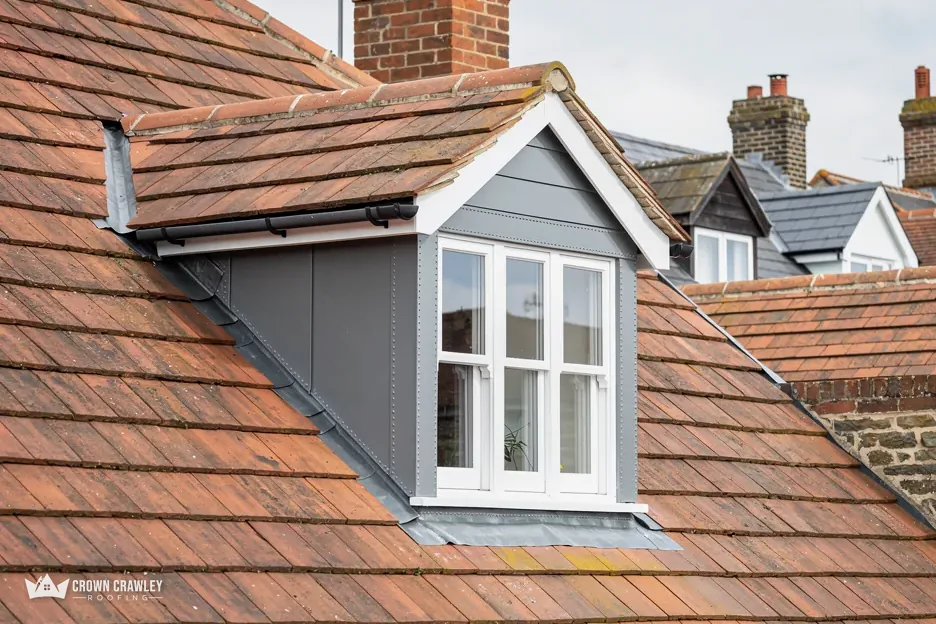
Neither is better in every case. Bossing keeps the sheet in one piece, with no seam to fail, and suits internal corners, dormer cheeks and bay edges where the shape can be formed with care. Welding suits places where a join cannot be folded, such as certain valleys or complex junctions. The skill lies in choosing, and in making either one well. Our short answer on lead welding versus bossing goes through the trade-offs, and our guide to lead dormer cheeks shows bossing in a real detail.
What should a homeowner ask?
Ask which method is planned for each corner, and why. Ask for the old detail to be photographed before it comes off, so you can see what was there. Ask for a single written figure for the whole job. If you have a bay, porch or flat section you are thinking of recovering, send us photos of it and describe what it does now, and we will tell you which questions to ask first. You can also read how maintaining your lead roof keeps new work in good order.
Part of our Lead Work & Lead Flashing in Crawley
More about laying lead
How long does it take to install a lead roof?
It depends on the size, the shape and the weather. A small porch or bay can be done in a short job, while a run of valleys and flashings takes longer because each detail is formed by hand. Dry weather matters, since the deck must stay dry. You hear each evening what happens next.
Can lead be laid straight onto the roof boards?
No. An underlay goes between the boards and the lead so the sheet can slide freely as it warms and cools, and so rough timber does not wear it from beneath. Without that layer, lead tends to stick, tear and fail early. The survey also checks that the boards are dry and sound.
Is lead welding safer than soldering?
Both involve heat and need a trained hand, and any hot work on a roof carries a fire risk that has to be managed with care. Lead sheet is traditionally welded or bossed rather than soldered. Ask your roofer how they manage the fire risk and what they do after the work is finished.