Roofers in Washington

Roofs on the Greensand ridge below Chanctonbury Hill and the Downs.

Washington is a downland-edge village of brick, flint, clunch and sandstone inside the South Downs National Park. We survey the roof, show you photos and write one total price.

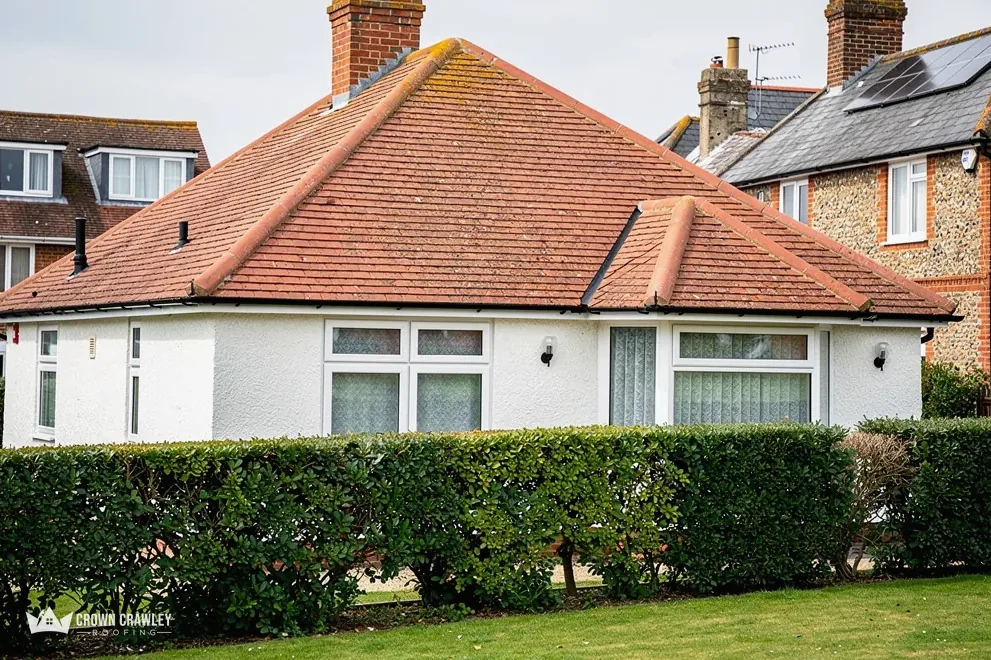
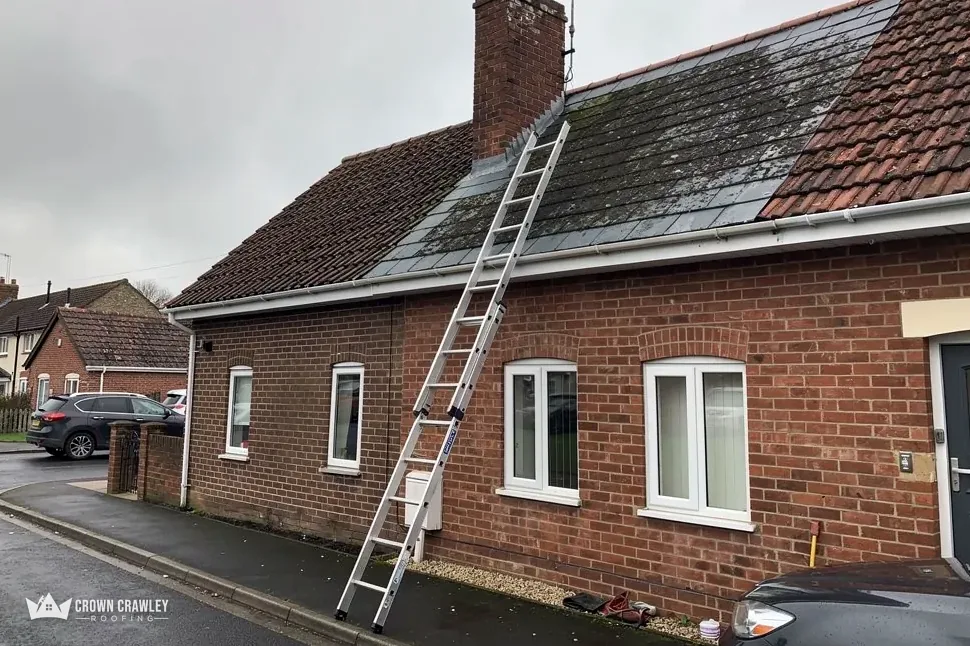
Brick bungalow with a ladder leaning against its tiled roof

What we look at in Washington

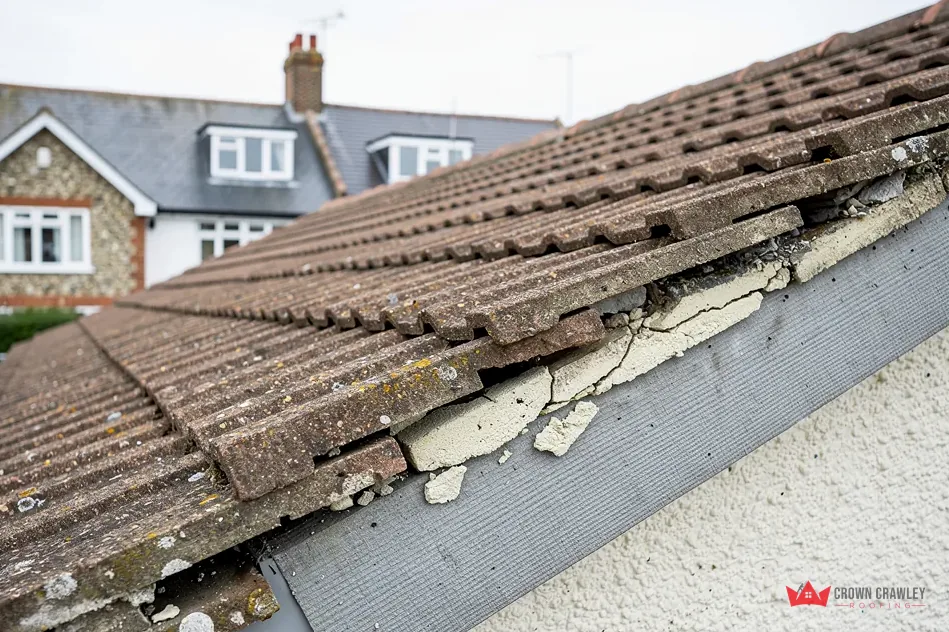
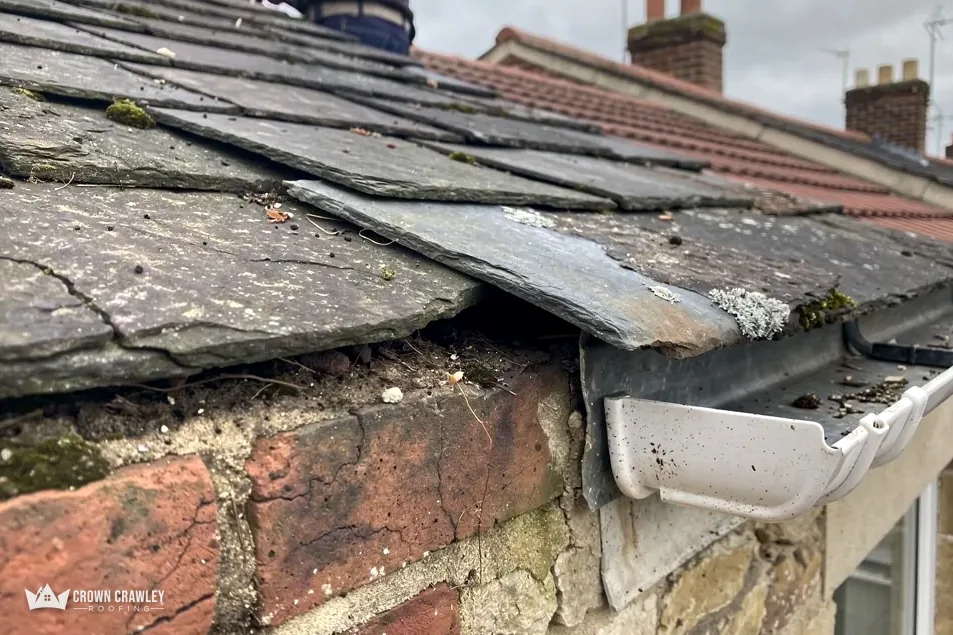
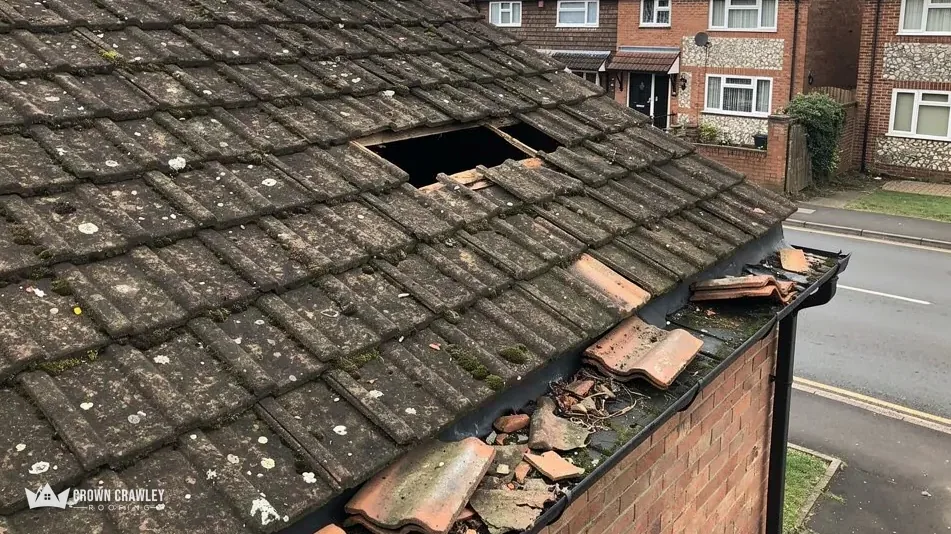
Lifted tiles and worn verge along a gable end

A ridge of Upper Greensand

The village stands on a narrow ridge of Upper Greensand north of the chalk, with Chanctonbury Hill (782 ft) on the parish's south-east border. With open country close by, a Washington survey begins at the roof's edges and its top line.

Tiled roof against open sky

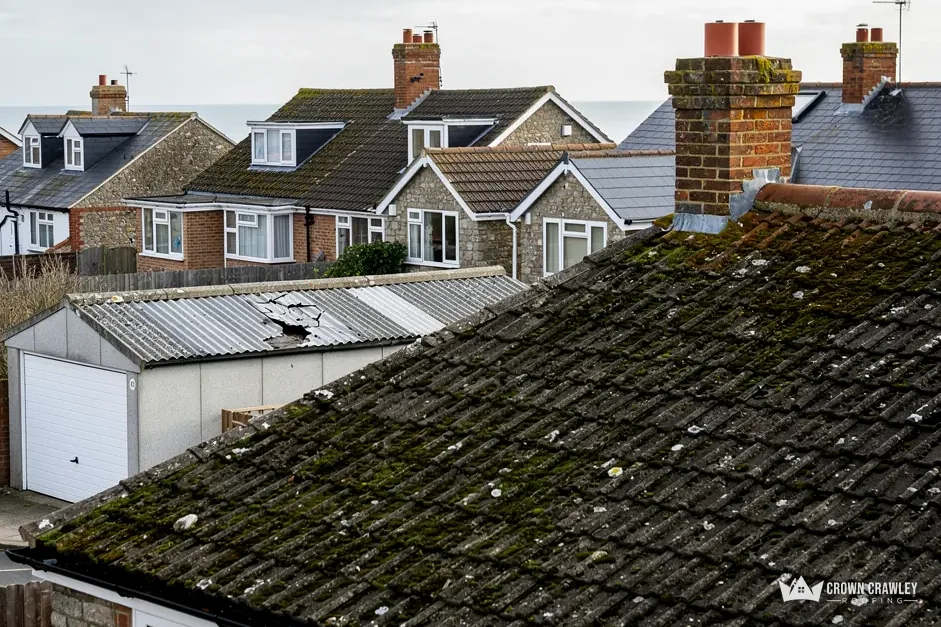
Moss-covered tiled roof sloping down towards garages

Brick, flint, clunch and sandstone

The village's buildings are of brick, flint, clunch and sandstone, set between the downs and the Weald. Where a roof meets walls like these, the flashing and the joint behind it get a close look.

Brick and flint wall under a roof

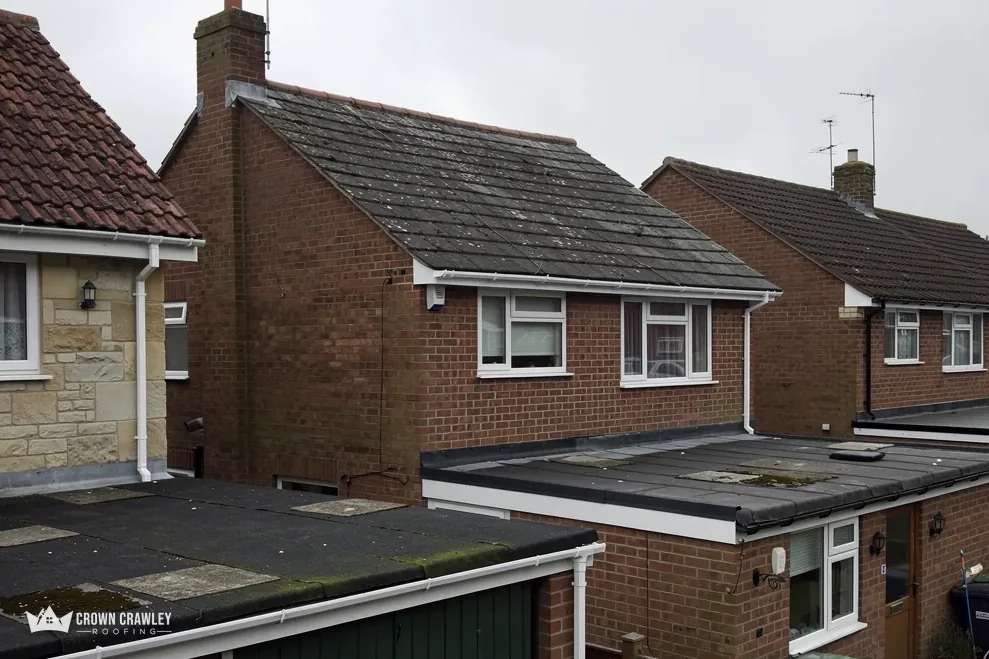
Flat roof extension on a brick-built house with a garage

St Mary's and a conservation area

St Mary's church, built of ashlar, is listed Grade II*, and Washington has its own conservation area. Check with the park authority's planners before a change that alters a roof's appearance.

Church roof with stone walls

Washington, below Chanctonbury Hill

Map of Washington and the neighbourhoods around it, with Crawley for reference.

Washington sits on the Greensand under Chanctonbury Hill, where the South Downs begin, and lies inside the South Downs National Park.

Distance
21.9 road miles from Crawley, to the south-west
Drive
About 29 minutes
Council
Horsham District Council and West Sussex County Council
Planning authority
South Downs National Park Authority
Conservation area
Washington Conservation Area
National park
South Downs National Park
Population
2,130 (Census 2021, Washington parish)
Get a free quote

Washington work notes

Roofs at the foot of the Downs

Three short chapters on stone, flint and brick in the village, who decides what in the National Park, and how scaffold, gutters and wildlife are handled.

Stage 01 · First look

Greensand, flint and brick

Washington's buildings come from the ground around it, and the join between roof and wall is where that shows most.

Washington stands on a narrow ridge of Upper Greensand north of the chalk, in a parish whose south-east border reaches Chanctonbury Hill at 782 ft. The Victoria County History calls the buildings of the village brick, flint, clunch and sandstone, a mix that suits a place between the downs and the Weald. Materials were near at hand: a large brickworks on the Gault clay north of the village ran from 1839 to 1899, and a chalk quarry near the top of Washington Bostal was being worked from at least 1839. St Mary's church is built of ashlar, though everything except its tower and north arcade was rebuilt in the 19th century.

How do flint and stone walls change the work?

A flashing has to be dressed into the wall, either into a mortar joint or into a chase cut for it. In walls of flint and stone the joints run unevenly, so setting metal neatly takes patience, and a flashing pushed into a loose joint will let go sooner than one set into sound mortar. We look at the lead and at the wall behind it together, because a perfect strip of metal in a crumbling joint is still a leak waiting to happen. Where only the flashing has failed, the written price is for the flashing, and the photos show you the gap.

On a downland-edge survey

Verge
Clips or mortar holding edge tiles
Ridge
Caps firm when pressed
Abutment
Flashing set in a sound joint
Eaves
Ventilation gap left open
Underlay
Whole, not torn or perished
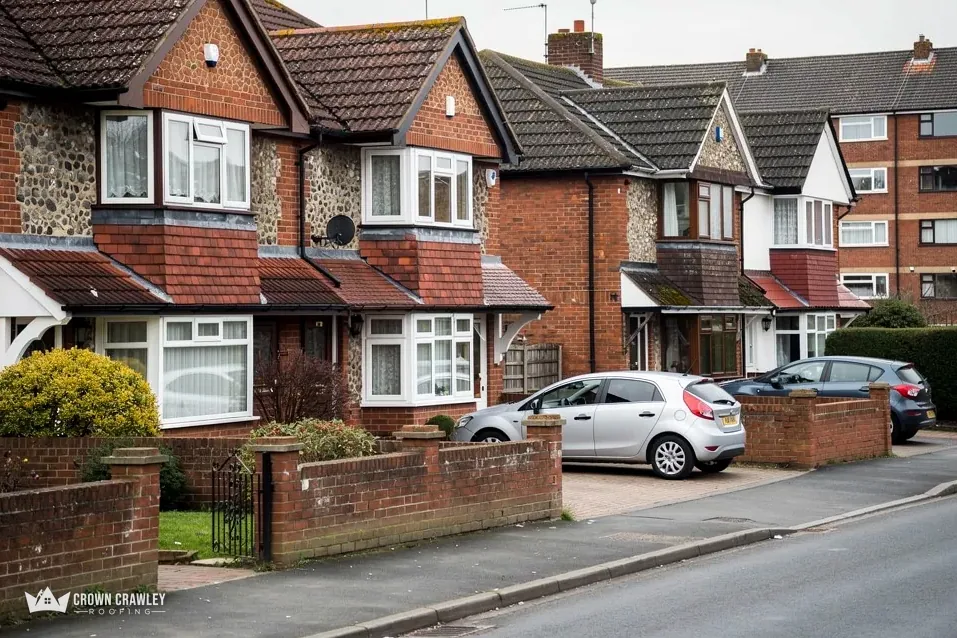
Brick semi-detached houses with tiled roofs and parked cars

Why does the loft matter to the tiles?

Damp air rises from the house and, if it has nowhere to go, condenses on the timber under the tiles. Where the underlay is non-breathable, BS 5250 as quoted by Marley asks for a 25mm opening along the eaves at pitches up to 15 degrees and a 10mm opening on steeper roofs. Insulation pushed hard into the eaves can choke that opening, so we check it early. On lifespans, Marley offers about 60 years for concrete tiles without a guarantee, the Building Research Establishment expects 60 years at the least from clay, and CoRC says slate can pass 100. Our pitched roofing page covers repairs to tiles, battens and underlay.

What happens along the verge and ridge?

With open ground on one side, the roof edges are the first parts to loosen. We press each ridge cap, check whether the verge tiles are held by mortar, clips or both, and look for the hairline cracks that let water into the bedding. A dry system, which uses clipped caps in place of mortar, is one option when mortar has failed, and the survey photos decide whether it suits your roof. Fixing a loose cap early is a small job; leaving it can let water reach the battens, and replacing those is a bigger one.

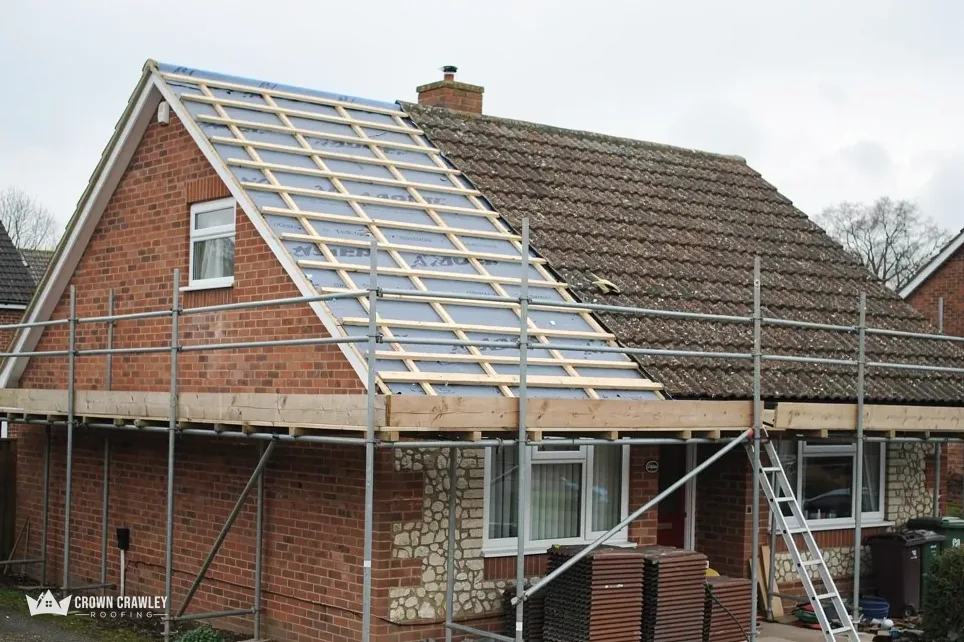
Brick bungalow with scaffold and new roof membrane on the slope

Stage 02 · Permissions

National Park rules for a Washington re-roof

Washington lies within the South Downs National Park, so its planning goes to the Park's own authority while Horsham District Council keeps building control.

Two bodies matter. Since 1 April 2011 the South Downs National Park Authority has held the statutory planning role for the Park, and for this part of Horsham district it decides applications directly. Building control is different: it stays with Horsham District Council, which trades as Sussex Building Control. West Sussex County Council is the highway authority. Which body to ring depends on the question: planning goes to the Park authority, approval for a change of covering to Sussex Building Control, and scaffold on the road to the county council.

Does the National Park change what I can do to a roof?

Putting back matching tiles on a house that otherwise stays unchanged seldom needs permission. Alterations are another matter. National Parks and conservation areas are designated land, and planning law gives that land extra limits on changes that would normally go ahead without an application, dormers above all. Our post on planning permission for roof work goes through the detail. The South Downs authority publishes a map of the Washington Conservation Area, so check where the line runs on your road, and ask the authority whether anything further restricts work there.

Who is who

Planning authority
Here the South Downs authority
Building control
Checks work meets Building Regulations
Designated land
Park, landscape or conservation area
Listed consent
Approval for altering a listed house

What about St Mary's and older houses?

St Mary's, The Street, is listed Grade II*. The Park authority's listed buildings guidance treats regular upkeep and minor matching repairs carried out in place as outside listed building consent, which helps an owner who only wants slipped tiles replaced. A larger change is a different conversation. St Mary's itself, being Anglican and in use, would go through the diocese's faculty system rather than the authority. Mention a listing when you first ring, and we will leave the decision about consent to you and the authority, with our survey photos to support it.

How big can a Washington roof job get before Sussex Building Control is involved?

Planning Portal guidance: building control approval is not normally needed while under 25 per cent of the building envelope and under 50 per cent of the roof is being worked on. Sign-off is needed for a replacement covering at least 15 per cent heavier, as does a covering whose reaction in a fire is significantly unlike the existing one's. If the survey shows a whole-roof renewal makes sense, we state it in the price, and a word with Sussex Building Control before dates are fixed saves surprises. A decision on a bigger change can take time, so ask early and send the authority clear photos of the existing roof; ours are yours to use. Our roof replacement page covers how that job is run.

Planning and building control sit with different bodies here, so one call is rarely enough.

Stage 03 · On site

Scaffold, gutters and wildlife below the Downs

West Sussex asks for notice before scaffold goes on the highway, and the same visit is the time to check gutters and look for wildlife.

West Sussex County Council runs the highway licences for Washington, and its scaffold page was last updated on 27 July 2026.

How much notice does a scaffold licence need?

Anything standing on the highway needs West Sussex's licence first, applied for at least 10 working days ahead of erection. A month costs £266 and an extension £178. The scaffolder and ourselves sort out the paperwork together, the start date follows, and neighbours hear in good time. West Sussex words that licence around the public highway, so the survey also looks at whether your garden can take the frame. In a village of 2,130 people, according to the 2021 census, scaffold gets noticed, so we keep it within the agreed footprint and say how long it will stay. Ask any roofer whether VAT and scaffolding are included in the price they give you.

Site checks

Notice
10 working days for West Sussex
Fee
£266 for one month
Your own drive
Checked at the survey
Gutters
Joints tight, outlets clear
Wildlife
Work halts if roosts are found
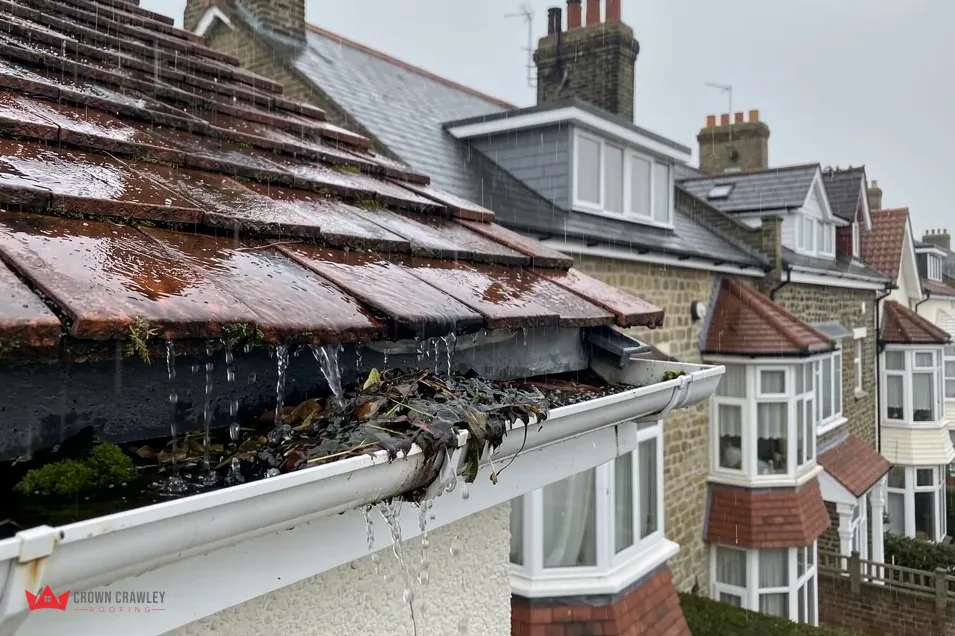
Blocked guttering full of debris below a wet tiled roof

Where do the gutters fit in?

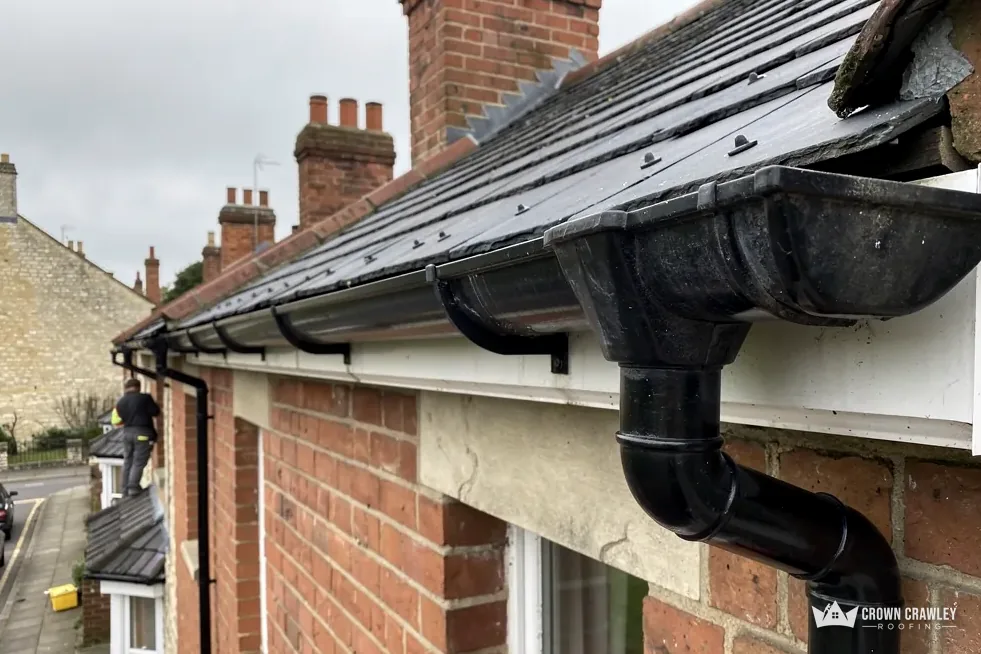
Scaffold is up for the roof, so it is also the sensible moment to deal with the roof edge. Checkatrade's October 2026 guide gives £650 to £1,700, averaging £1,000, for 15 to 20 metres of guttering with three downpipes, and the spread reflects access and material. We look for sagging runs, leaking joints, and fascia boards that have gone soft behind the gutter. A gutter that overflows at a joint can stain the brick or flint below and soak the fascia behind it. Soffit boards under the overhang often carry vents that feed the roof space with air, so we check that paint, new boards or insulation have not blocked them. Our guttering, soffits and fascias page explains what a full replacement involves.

What happens if wildlife has moved into the roof?

Government bat guidance protects the animals along with every breeding site and resting place, and it recognises roof repairs among the works that can affect bats; birds' nests are covered while in use. Droppings, staining or birds slipping in at the eaves make us pause and talk it through before any tile moves. A slope is opened in sections and sealed again when the day's work stops, you hear what each day involves, from scaffold to sealing the roof, and waste goes with us. Send a photo of the edge or slope that concerns you, with your Washington postcode, and the survey comes next.

Washington roof queries answered

Does living in the South Downs National Park change how a Washington roof is repaired?

Not when a repair uses the same covering in the same shape. The Park matters for something new, a dormer above all, since protected land limits what can proceed without an application. The South Downs authority decides planning here, so put the question to its team and pass the answer to us.

Do flint and clunch walls make roof work harder?

They slow one part of it: the flashing where roof meets wall. Irregular joints mean the metal must be dressed in carefully, and any loose mortar behind it has to be dealt with first or the new work will not hold. Most of the roof is ordinary tile or slate work, and the survey photos show you which part of yours needs the extra time.

Is the Washington Conservation Area a problem for a like-for-like re-roof?

A like-for-like job leaves the roof's appearance alone, which is the safest ground. Conservation areas are designated land, though, so changes to appearance, materials or openings deserve a question to the park authority before you book. Find the boundary on its published map, let us know which side your house falls, and the survey allows for that.

Who deals with building control for a Washington re-roof?

Horsham District Council, trading as Sussex Building Control. Inside the National Park, the park authority handles planning, but building control stays with the district council. Approval is a question of how much roof is being renewed and how the new covering compares for weight and fire performance; the price we write up flags it where relevant.

Start with a photo and a postcode

Give us your Washington postcode and the part of the roof causing doubt, and the survey is the next thing we book.

01293 974253

10-year workmanship guarantee, in writing.

Call Get a free quote