Roofers in Storrington

Roofs below the Downs, in Carstone, brick, flint and clay tile.

Storrington stands between the Downs scarp and the River Stor, with a conservation area, a Grade II* church and local clay tiles and stone slates. A surveyor reads each roof, then we quote one total.

Terraced street with new grey tiled roofs

Above the gutters in Storrington

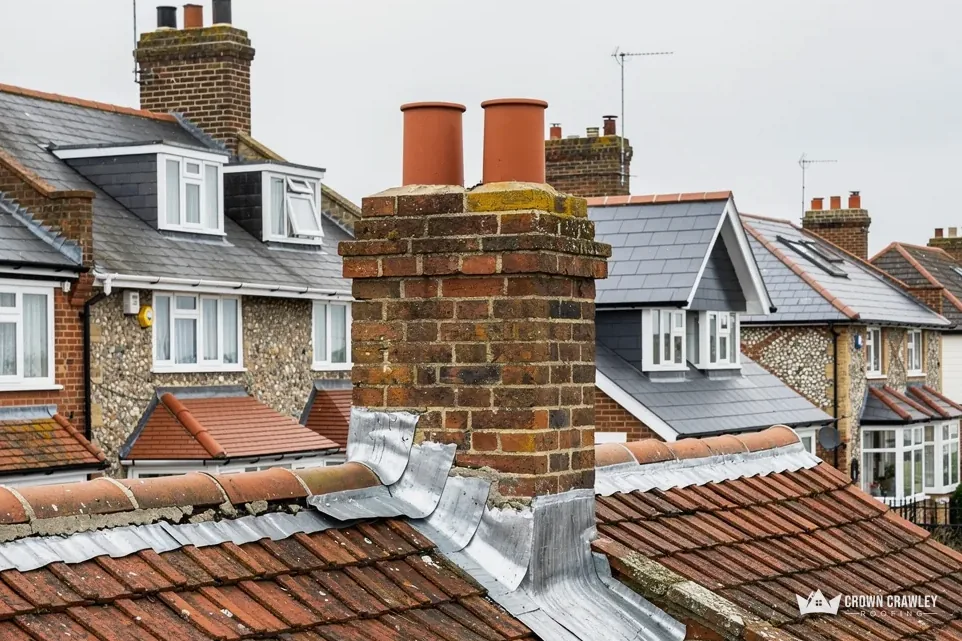
Chimney stack with orange pots and lead flashing among tiled roofs

Many types of local clay tile

The conservation area appraisal lists the local materials as Carstone, Sussex brick and flint, some Horsham slab stone slates and many types of local clay tiles. Matching a clay tile starts with its profile and colour.

Handmade-look clay tiles on a roof

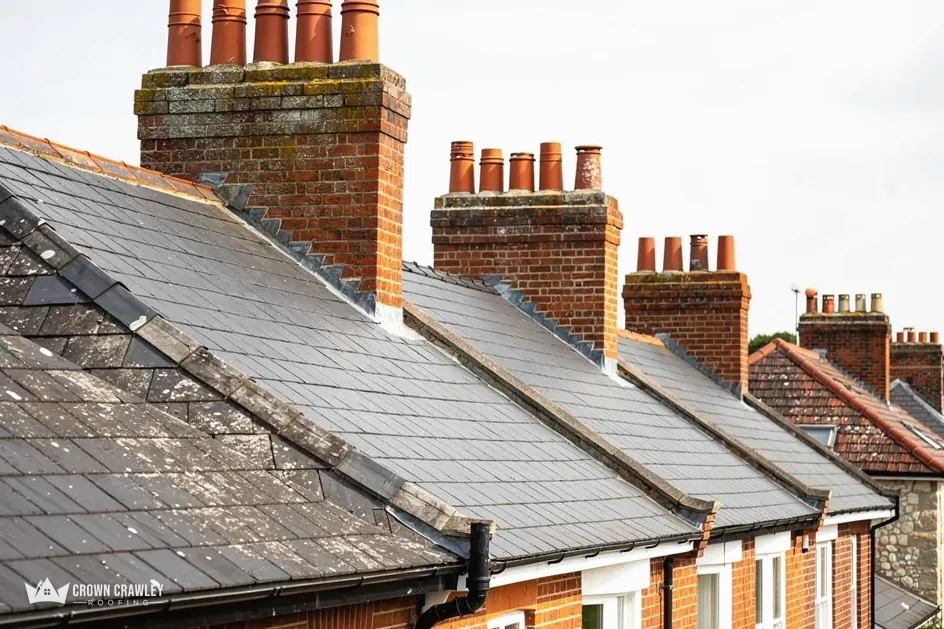
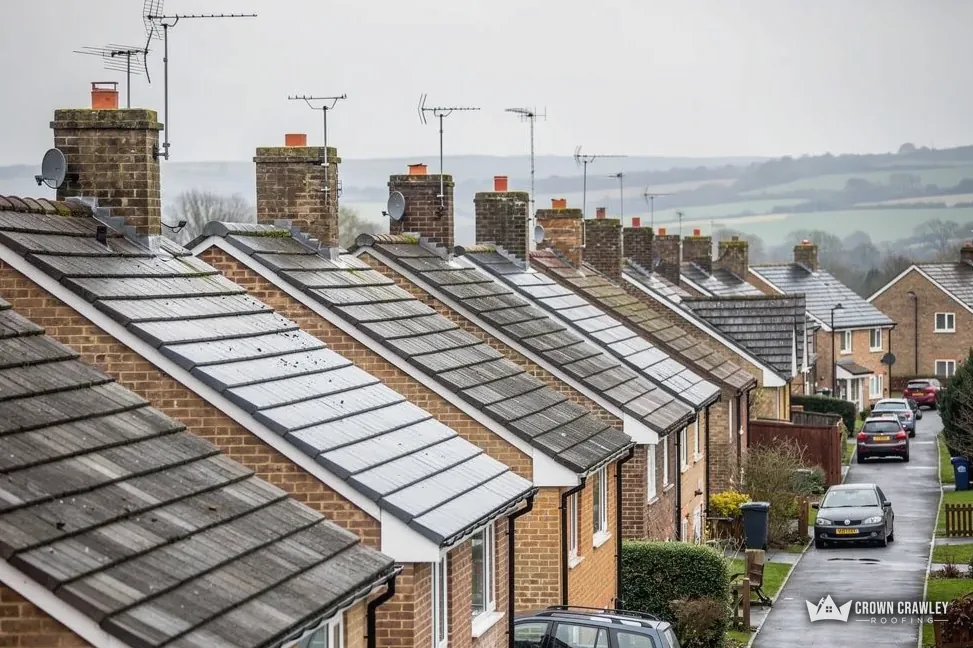
Row of terraced chimney stacks above slate roofs

Horsham stone slates

The appraisal says more prestigious early roofs carried Horsham stone slates, with plain clay tiles common from the mid 17th century. Old stone slate is lifted and relaid with care, never casually.

Stone slate roof with moss

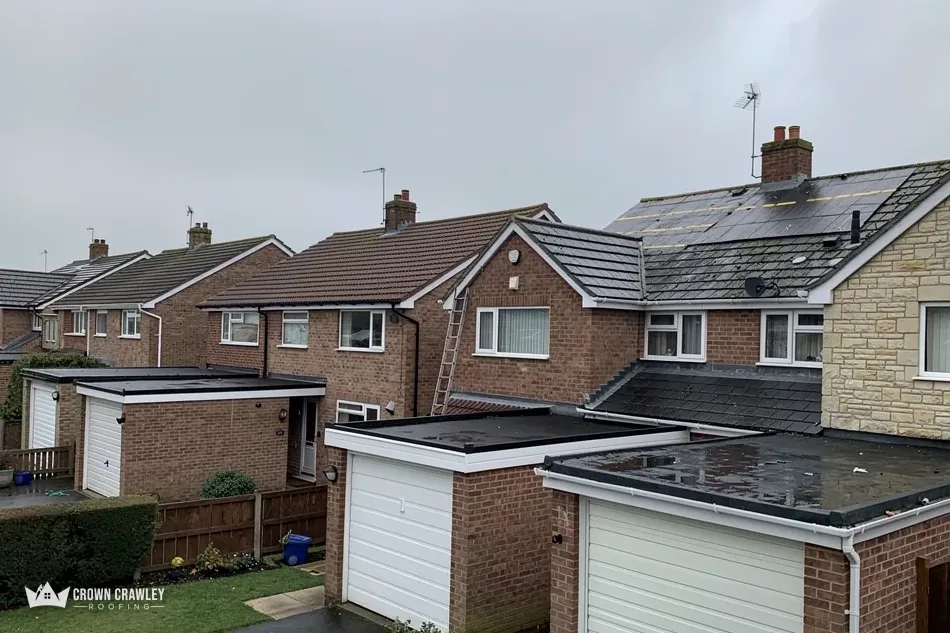
Flat-roofed garages at the back of semi-detached houses

Roofs around St Mary's church

The parish church of St Mary the Virgin carries Grade II* listing. Near historic buildings, we explain what the council is likely to ask before any roof work is booked.

Church roof beside old buildings

Storrington, at the foot of the Downs

Map of Storrington and the neighbourhoods around it, with Crawley for reference.

Storrington sits beneath the South Downs scarp on a band of Folkestone sandstone by the River Stor, outside the National Park boundary.

Distance
23.5 road miles from Crawley, to the south-west
Drive
About 32 minutes
Council
Horsham District Council and West Sussex County Council
Planning authority
Horsham District Council
Conservation area
Storrington Conservation Area
Population
8,709 (Census 2021, built-up area)
Railway
Never had one, says the appraisal
Get a free quote

Under the Downs scarp

A sandstone village, from thatch to clay tile

Three chapters: the materials the appraisal records, how the conservation area beside the Park shapes roof work, and the West Sussex terms for scaffold.

Stage 01 · First look

Carstone, brick, flint and clay tile

A sandstone band beneath the village gave it Carstone, and its roofs moved from thatch to stone slate to clay tile.

Horsham District Council's appraisal of the Storrington Conservation Area says the village lies on an 800m-wide band of Folkestone Formation sandstone below the Downs, the source of the brown sandy ironstone known as Carstone. It lists the local building materials as Carstone, some imported stone, Sussex brick and flint, some Horsham slab stone slates and many types of local clay tiles. For a roofer, that list is useful because it shows what a repair in this village has to sit beside.

How did roofs in Storrington begin?

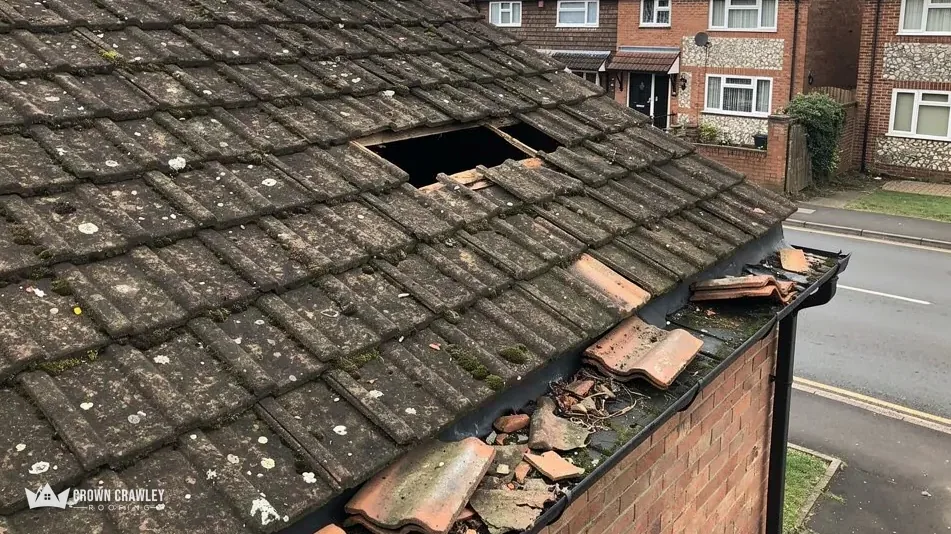
According to the appraisal, thatch came first, Horsham stone slates went on grander buildings, and plain clay tiles spread from the mid 17th century. That is history and not a verdict on your house. Many roofs have been re-covered since, and the only reliable witness is the roof itself. A surveyor checks the covering, the battens and the underlay, and photographs whatever is hard to see from the ground. From the lane a slope may look even while cracked tiles, rusted nails or softened battens lie underneath.

Before the strip starts

Covering
Clay tile, slate or stone slate
Nibs, pegs
Intact and still holding
Ridge
Mortar and caps sound
Gutters
Level and draining
Loft
Dry, with clear eaves air
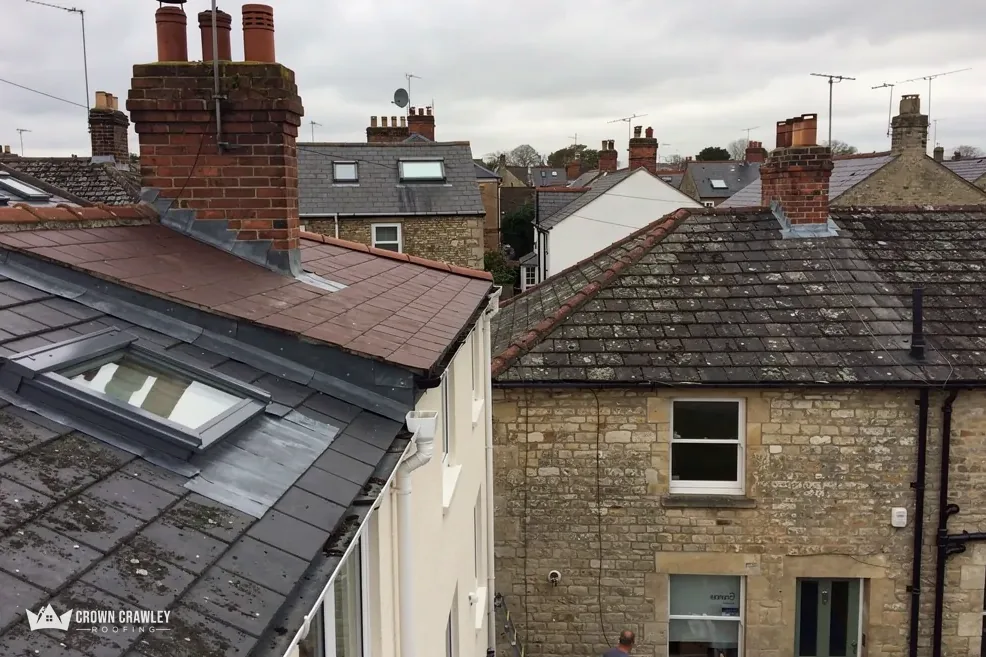
Slate and tiled roofs with a roof window beside a stone cottage

Can an old clay tile be matched?

By studying the tile in the hand. Plain clay tiles differ in size, camber, colour and surface, and a mismatch shows from the lane. We take a sound tile away to compare, and if no close match exists, tiles from a less visible slope may be moved to repair the front one. Age is a poor guide anyway. The Building Research Establishment sets 60 years as a clay tile's minimum life, and even that figure is a weak guide for old peg tile, so what the survey finds outweighs the date on a deed.

What tires first is often the detail around the tile: ridge mortar, fixings, and the strip of underlay draped into the gutter. The loft gets a look too, for daylight, damp timber and insulation shoved into the eaves, which blocks the air gap a roof needs. The pitched roofing page explains how a worn tile, a split batten or a perished strip of underlay is put right. Afterwards the photographs arrive with a single total price, and the choice of next step stays with you. Tiles that come off for the repair are sorted, and sound ones go back where they came from. Cut tiles at hips and valleys, and the half-round caps along a ridge, are checked one by one, because a single cracked cap lets in more water than a missing field tile. Carstone and flint walls that meet the roof get the same scrutiny at the abutments.

Rear of a brick detached house with a tiled roof and garden

Stage 02 · Permissions

The conservation area beside the Park

The Storrington Conservation Area runs up to the edge of the South Downs National Park, and the council takes an interest in roofs inside it.

The appraisal says the South Downs National Park, designated in 2010, comes up to the southern edge of the Storrington Conservation Area. The village itself sits outside the Park on the national planning map, so Horsham District Council decides its planning applications. The distinction matters because inside the Park, decisions in this part of West Sussex are taken by the National Park Authority and not by the district.

Can a roof inside the conservation area be replaced?

Work that keeps the same material and the same appearance leaves the look of a building untouched, and that is the safe end of the job. Swapping to another covering, adding a roof window or converting the loft is another matter. The council has more say in a conservation area, and we do not presume what it will allow, because an assumption made on the doorstep can cost a homeowner dearly later. We put bigger jobs to Horsham District Council's planning team and report back what it said. For a historic roof, the lowest quote can turn out to cost the most, so we set the repair beside the replacement in the written price. Our re-roofing in a conservation area answer lists what to put to the council.

Planning words explained

Conservation area
Land protected for local character
Planning authority
The council that decides applications
Matching repair
Same material, same appearance
Listed building
Home protected for its character

Inside a conservation area, the first call goes to Horsham District Council, not to us.

What applies to the church and other old buildings?

The National Heritage List carries St Mary the Virgin in Church Street at Grade II*. The law treats churches in use differently from other listed buildings, and the route to approval depends on the denomination, so a church roof is for the parish and its governing body to arrange. For a listed home, the council decides what needs listed building consent, and we wait for that answer. It is worth learning early because it affects timing.

The national planning map shows one Article 4 direction in the village, relating to land adjacent to Oldfield Cottage, Fryern Road; Horsham's planning team can say what it withdraws and whether any other direction reaches your street. Weight also counts, because the Planning Portal advises taking a structural opinion before anything heavier is fitted, and a clay tile and a stone slate do not load the timbers alike. Any such check comes before the order for materials, and it costs far less than finding out afterwards. That is why our first suggestion on an older roof is to keep its existing covering and renew what has worn.

Stage 03 · On site

West Sussex terms for scaffold and building control

West Sussex County Council sets the scaffold licence terms, and Horsham District Council runs building control.

A tiled roof is worked on from scaffold, and where the scaffold stands decides what paperwork you need. Along the village streets around Storrington there is not always room on a drive, so the pavement can come into play.

What does scaffold on a Storrington pavement cost?

Poles set on the village pavement or road fall under a West Sussex County Council licence. Its stated minimum is a 10 working day wait, counted from the application date to erection, and a month on the road costs £266, with £52 added for a fast-track request. Because its page names no applicant, we put that question to the council, then divide the paperwork with the scaffolding firm. Land you own is different: poles kept within your boundary are off the highway, provided the space is wide enough. Where neither works, a narrower scaffold or a smaller footprint is sometimes possible, and we talk it through at the survey, with measurements, before anyone orders poles. Gaps between neighbouring houses are often the deciding factor.

West Sussex, before work starts

Planning
Horsham District Council
Building control
Sussex Building Control
Highway notice
10 working days minimum
One month licence
£266 for scaffold on the highway
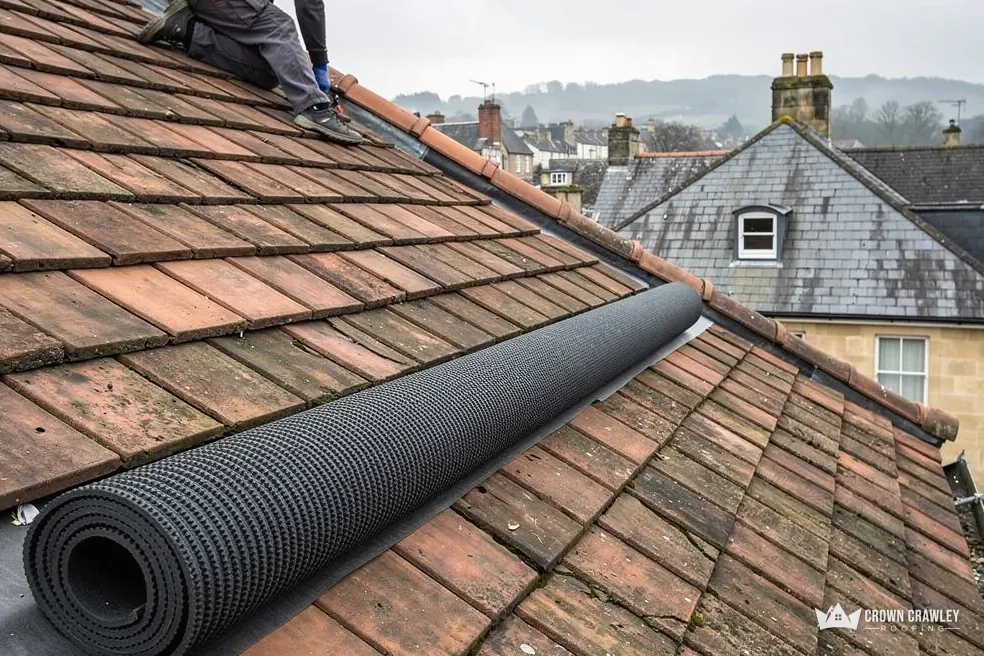
Roll of roofing membrane lying on a clay tiled roof

Who looks after building control in Storrington?

Horsham District Council runs a building control service branded Sussex Building Control. The Planning Portal's national yardstick is under 25 per cent of the building envelope together with under 50 per cent of the roof before approval comes into play, and a replacement covering 15 per cent or more above the old weight does need approval. For a full re-roof we call building control before a start date is chosen, and the reply goes into the quote. If water is already coming in, the emergency and general roof repairs page explains how the roof is made safe first.

Old tiles can shelter protected wildlife. Bats have legal cover, and so does an occupied bird's nest, which means a trace found at the survey halts that part of the job while we talk with you. You hear which days the frame goes up and comes down, plants at the foot of the wall are shielded, and waste leaves site each evening. A long drive up from the road, a steep garden or a narrow lane can change how materials reach the roof, so the route gets walked at the survey and we agree where the skip and the stacked tiles will sit. Pavements in the village can be narrow, which is another reason to ask about a road licence early.

Storrington roofs: your queries

Is it possible to match old clay tiles on a Storrington roof?

We try. Plain clay tiles vary in size, camber, colour and surface, so a sound tile goes against what is on the market. Where no close match exists, good tiles from a quiet slope can mend the front. The survey photographs show what is possible before you commit to a price, and you decide which route to take.

Can I add a roof window to an old house near Storrington's Church Street?

Ask Horsham District Council first. The Storrington Conservation Area has an appraisal that maps its boundary, and a new roof window changes how a roof looks. If the house is listed, consent may be needed too. Send us the council's reply and we will price the window and its flashing to suit.

How soon must I apply for a road scaffold licence near Storrington?

The county council asks for at least 10 working days from the moment you apply until the poles can rise. A month costs £266, and a fast-track request adds £52. We build the start date around that notice, or use your drive if there is room, and you have the dates in hand before a booking is made. Ask early.

Is a Horsham stone slate roof worth mending instead of renewing?

Often it is. The appraisal records Horsham stone slates on more prestigious early roofs, and sound slates can be lifted and relaid. We repair what has worn, replace what has failed and show you every finding. The photographs make it plain whether a repair will last or a whole slope is spent, and the price follows.

Your Storrington roof, written up

Email a shot of the worrying tile, slate or ridge and your Storrington postcode; a survey date comes back.

01293 974253

10-year workmanship guarantee, in writing.

Call Get a free quote